
- Squoosh Overview: Google's free, browser-based tool optimizes image files efficiently.
- Core Benefits: Improves website loading, reduces storage, enhances user experience, and simplifies sharing.
- Key Features: Advanced algorithms, browser-based, offline functionality, open-source, real-time preview.
- Limitations: Lacks batch processing and advanced editing features; not a comprehensive media solution.
- Ideal Users: Perfect for web developers, casual users needing quick optimization, and privacy-conscious individuals.
- Comparison: Squoosh excels in privacy and offline use; UniConverter offers broader features, batch processing, and speed.
- Risks: Online tools pose privacy risks; aggressive compression can degrade quality; internet dependence for some alternatives.
- UniConverter Solution: A robust desktop alternative for efficient batch processing of images, audio, and video.
- Decision Factor: Choose Squoosh for quick, single-image optimization; UniConverter for comprehensive, high-volume media tasks.
In this article
- Part 1: What is Squoosh Image Compressor?
- Part 2: Squoosh Image Compressor's Core Features, Pros, and Cons
- Part 3: Squoosh Image Compressor's Ideal Users and Use Cases
- Part 4: Squoosh Image Compressor and Alternatives Comparison
- Part 5: Risks and Pitfalls to Consider
- Part 6: How to Use UniConverter to Efficiently Compress Audio and Video
- Part 7: Conclusion
- Part 8: FAQs
Squoosh Image Compressor: A Comprehensive Scenario-Based Review
When I first stumbled upon Squoosh Image Compressor, I was immediately intrigued. As someone constantly battling with large image files for my website and personal projects, the promise of efficient, high-quality compression directly in my browser sounded like a dream. This tool, developed by Google, aims to democratize image optimization, making it accessible to everyone without the need for complex software installations. In this Squoosh Image Compressor review, I'll dive deep into its features, compare it with its competitors, and help you understand if it's the right solution for your image compression needs, whether you're a web developer, a casual blogger, or just someone looking to shrink those hefty photo files.
Part 1: What is Squoosh Image Compressor?
Squoosh Image Compressor is a powerful, open-source web application designed to reduce the file size of images while maintaining visual quality. Developed by Google Chrome Labs, it runs entirely in your web browser, leveraging WebAssembly to perform complex compression tasks client-side. This means your images never leave your device, offering a significant privacy advantage over many online tools. My initial impression was how incredibly fast and responsive it felt, even with larger files. It's not just a simple compressor; it offers a range of codecs and settings, allowing for fine-grained control over the output. The core problem it solves is the ever-present challenge of balancing image quality with file size, crucial for web performance and storage efficiency.
The Need for Efficient Image Compression
* Faster Website Loading Times: Large images are often the biggest culprits behind slow-loading web pages, frustrating users and impacting SEO.
* Reduced Storage Costs: For individuals and businesses, smaller image files mean less storage space required, whether on cloud services or local drives.
* Improved User Experience: Quick-loading images contribute to a smoother, more enjoyable browsing experience, especially on mobile devices with limited bandwidth.
* Easier Sharing: Smaller files are quicker to upload and download, making sharing photos and graphics across platforms much more efficient.
Part 2: Squoosh Image Compressor's Core Features, Pros, and Cons
Squoosh Image Compressor excels in providing a user-friendly interface with powerful compression capabilities. It allows you to upload an image and then experiment with various codecs like MozJPEG, WebP, AVIF, and OxiPNG, each offering different compression ratios and quality levels. The real-time preview slider is a game-changer, letting you see the quality difference side-by-side as you adjust settings. I particularly appreciate the ability to fine-tune every aspect, from quality percentages to color space.
Pros:
* High-Quality Compression with Advanced Algorithms: Squoosh utilizes cutting-edge compression algorithms that deliver impressive file size reductions without noticeable degradation in visual quality.
* Browser-Based Accessibility and Offline Functionality: Being a web app, it's accessible from any device with a browser, and once loaded, it can even work offline, which is incredibly convenient.
* Open-Source and Community-Driven Development: Its open-source nature means continuous improvements and transparency, fostering trust and innovation.
Cons:
* Limited Batch Processing Capabilities: While you can process multiple images, it's a one-by-one process, which can be time-consuming for large quantities of files.
* Lack of Advanced Editing Features: Squoosh is purely a compressor; it doesn't offer any cropping, resizing, or other image manipulation tools beyond compression.
Part 3: Squoosh Image Compressor's Ideal Users and Use Cases
Squoosh Image Compressor is a versatile tool, but it truly shines for specific user groups and scenarios. I've found it to be an indispensable part of my workflow for certain tasks, while for others, I might reach for a different tool. It's perfect for anyone who needs quick, high-quality image optimization without the hassle of installing software.
Scenario 1: Web Developers Optimizing Website Performance
For web developers like me, Squoosh is a godsend. Before deploying images to a website, I always run them through Squoosh. The ability to compare different compression formats (WebP vs. JPEG, for instance) and see the file size and quality impact in real-time is invaluable. It helps me ensure my sites load quickly, improving user experience and SEO. Its offline capability also means I can optimize images even when my internet connection is spotty.
Scenario 2: Casual Users Needing Quick Image Resizing
My friends and family often ask me how to shrink photos to email or upload to social media without losing too much quality. Squoosh is my go-to recommendation for them. It's incredibly straightforward: drag and drop, adjust a slider, and download. They don't need to understand complex settings; the default options usually provide excellent results for casual use. It's a quick, free, and effective solution for everyday image optimization.
Part 4: Squoosh Image Compressor and Alternatives Comparison
When it comes to image compression, Squoosh isn't the only player in the game. I've tried numerous tools, and each has its strengths. Here's how Squoosh stacks up against some popular alternatives, including UniConverter.
| Feature/Tool | Squoosh | TinyPNG | Compressor.io | ImageOptim | UniConverter |
| Compression Quality | Excellent | Very Good | Good | Excellent | Excellent |
| Batch Processing | Limited | Yes | Yes | Yes | Yes |
| Offline Use | Yes | No | No | Yes | Yes |
| Advanced Features | No | No | No | Yes (metadata stripping) | Yes (editing, conversion) |
| Price | Free | Freemium | Free | Free | Freemium |
| Processing Speed | Fast (client-side) | Moderate (server-side) | Moderate (server-side) | Fast (local) | Very Fast (GPU acceleration) |
| Ease of Use | High | High | High | Moderate | High |
| Output Formats | Many (WebP, AVIF, JPEG, PNG) | PNG, JPEG | JPEG, PNG, SVG, GIF | JPEG, PNG, GIF | Many (WebP, AVIF, JPEG, PNG, etc.) |
Key Differentiators: Browser-Based vs. Desktop, Open-Source vs. Proprietary
Squoosh stands out primarily due to its browser-based, client-side processing, and open-source nature. This offers unparalleled privacy and offline functionality that many online competitors like TinyPNG and Compressor.io lack, as they rely on server-side processing. ImageOptim, being a desktop application, offers similar offline capabilities and excellent compression but requires installation. UniConverter, while also a desktop application, goes beyond simple compression, offering a comprehensive suite of tools for various media conversions and editing, making it a more robust solution for diverse needs. If you prioritize privacy and offline access for quick, single-image optimizations, Squoosh is fantastic. For batch processing or more advanced features, other tools might be more suitable.
Part 5: Risks and Pitfalls to Consider
While Squoosh is a fantastic tool, like any other, it's important to be aware of potential risks and limitations, especially when considering its alternatives or using online tools in general. I've learned through experience that convenience sometimes comes with trade-offs.
Data Privacy Concerns with Online Tools
Many online image compressors require you to upload your images to their servers. This immediately raises privacy concerns, especially for sensitive or proprietary images. While Squoosh processes everything client-side (meaning your images never leave your browser), many of its competitors do not. Always check the privacy policy of any online tool before uploading personal or confidential data.
Potential Loss of Image Quality
The primary goal of compression is to reduce file size, but this often comes at the cost of some image quality. While Squoosh does an excellent job of minimizing this, aggressive compression settings on any tool can lead to noticeable artifacts, blurriness, or color banding. It's crucial to use the preview features and find a balance that works for your specific needs. Don't just blindly hit "compress" without checking the output.
Dependence on Internet Connectivity (for some alternatives)
While Squoosh can function offline once loaded, most other web-based compressors require a constant internet connection to upload, process, and download your images. If you're frequently working in environments with unreliable internet, this can be a significant bottleneck and frustrate your workflow. Desktop applications or Squoosh's offline mode are better choices in such situations.
Lack of Advanced Features for Professional Use
Squoosh is brilliant for compression, but it's a specialized tool. It doesn't offer features like cropping, resizing to specific dimensions, watermarking, or other advanced image editing capabilities that professionals often need. Relying solely on Squoosh for all image tasks would mean constantly switching between tools, which can be inefficient for complex projects. For a comprehensive workflow, you'll need additional software.
Part 6: How to Use UniConverter to Efficiently Compress Audio and Video
Sometimes, Squoosh can feel a bit limited—especially when batch processing is restricted or when I need more than just image compression. In those situations, I usually turn to UniConverter as a more versatile desktop alternative. It works well for both image compression and video compression, making it a practical choice when I need to handle different types of media in one place. I also like that it can help compress videos without quality loss as much as possible, while GPU acceleration improves processing speed and efficiency. Since it also supports audio compression, it works well as an all-in-one solution for managing media files without the usual limitations of many online tools.
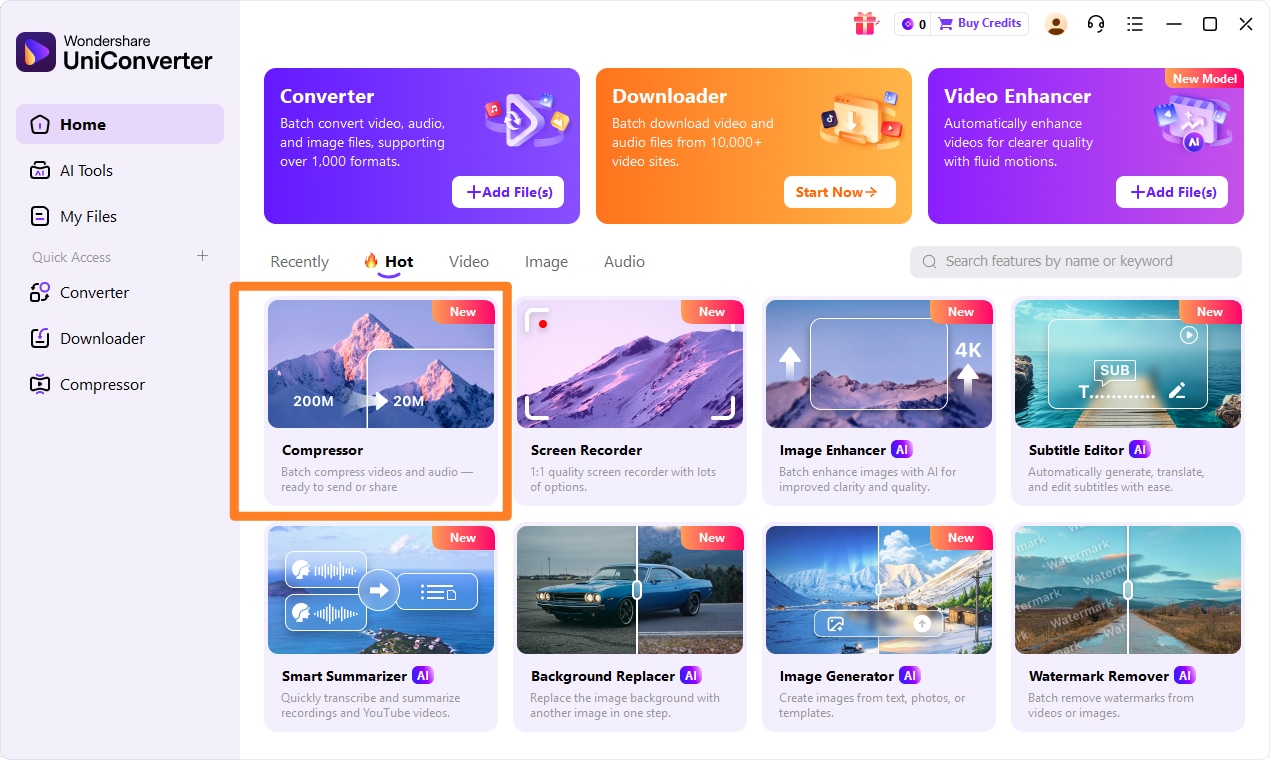
Step 1: Open UniConverter and Choose Compressor
Launch UniConverter on your computer. From the main interface, navigate to the "Toolbox" tab and select the "Image Compressor" or "Video Compressor" option, depending on your file type.
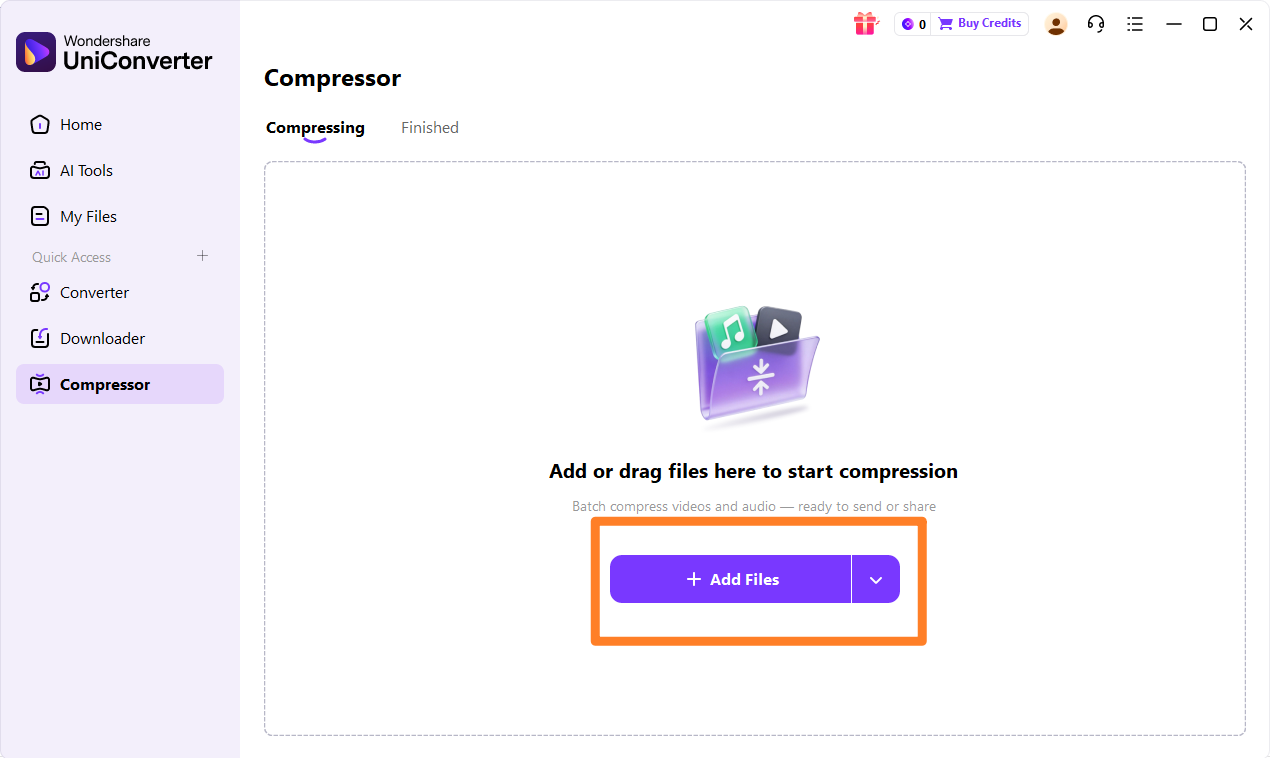
Step 2: Upload the Video, Audios or Images
Drag and drop your desired video, audio, or image files directly into the UniConverter window. You can add multiple files for batch processing.
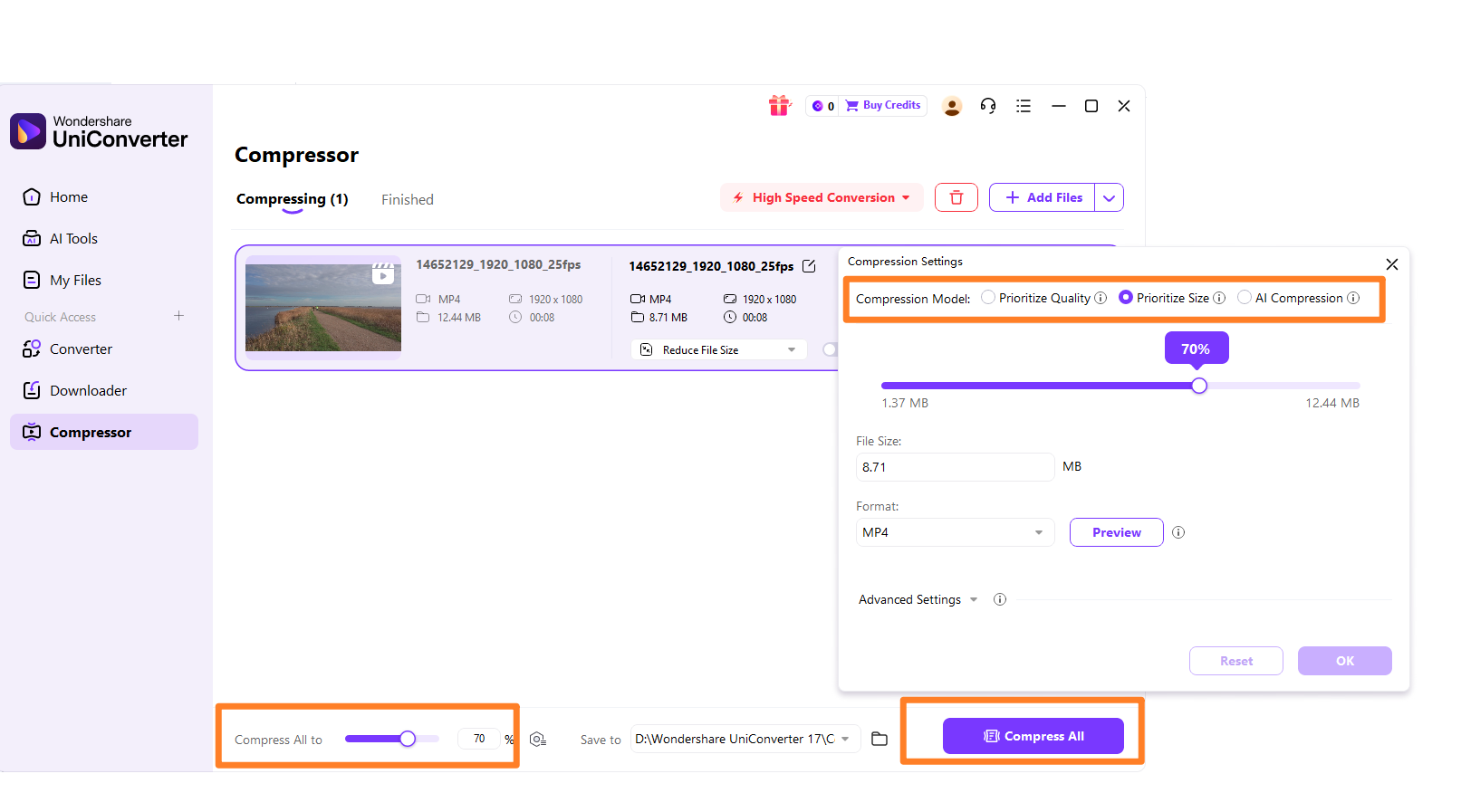
Step 3: Choose Required Parameters
For images, adjust the quality slider to balance file size and visual fidelity. For videos and audios, you can select output format, resolution, bitrate, and other parameters to achieve your desired compression level.
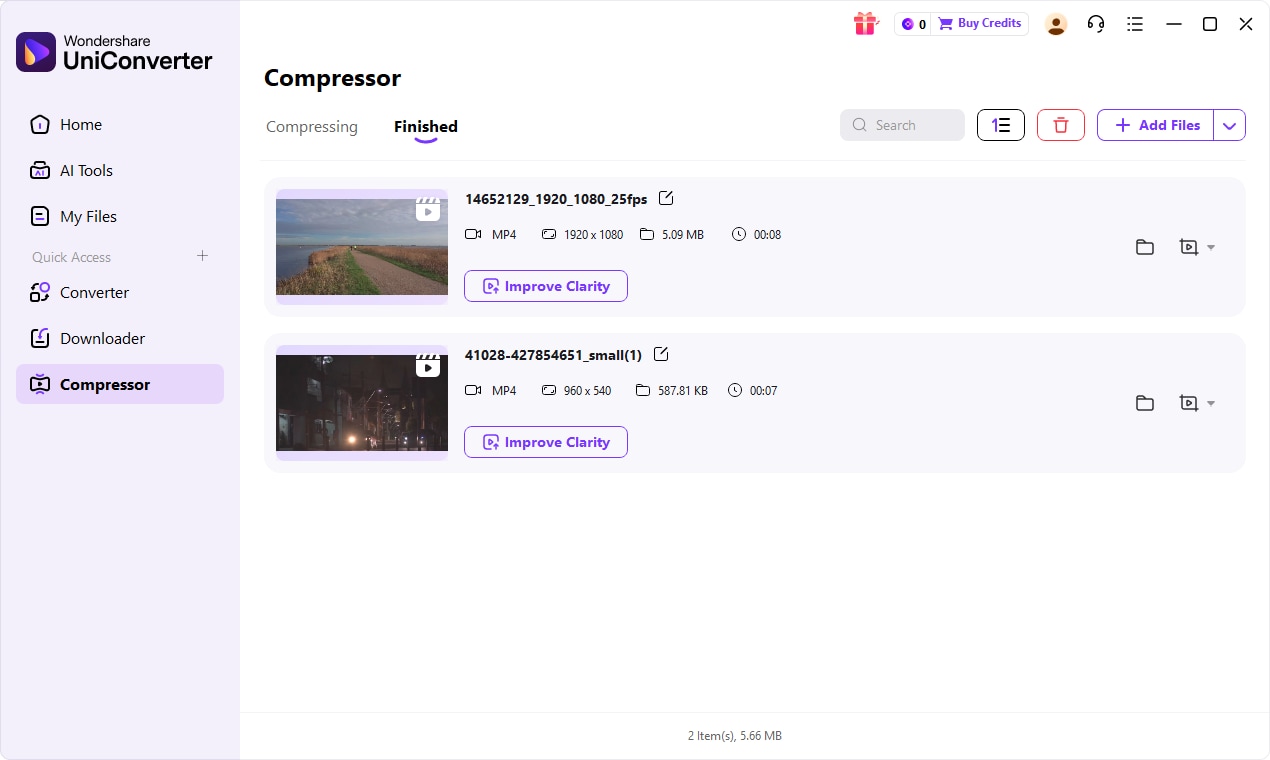
Step 4: Save the Compressed File
Once you're satisfied with the settings, click the "Compress" or "Start All" button. UniConverter will process your files quickly, and you can then save the optimized versions to your chosen destination.

Need a Squoosh Alternative for Image Compression?
Part 7: Conclusion
In conclusion, the Squoosh Image Compressor review reveals it to be an outstanding tool for anyone needing quick, high-quality image compression directly in their browser. Its client-side processing offers excellent privacy, and its open-source nature ensures continuous improvement. For web developers and designers, it's an invaluable asset for optimizing website performance, while casual users will appreciate its simplicity for everyday image resizing. However, its limitations in batch processing and lack of advanced editing features mean it might not be the sole solution for professional workflows. For those requiring extensive batch processing, advanced editing capabilities, or comprehensive media conversion for both images and videos, dedicated desktop software like UniConverter offers a more robust and efficient alternative, providing stability, speed, and a broader feature set. Ultimately, the best tool depends on your specific needs and workflow, but Squoosh remains a top-tier choice for on-the-fly image optimization.
Part 8: FAQs
-
1. Is Squoosh Image Compressor completely free to use?
Yes, Squoosh is entirely free and open-source, with no hidden costs or premium features.
-
2. Does Squoosh support all image formats?
Squoosh supports common image formats like JPEG, PNG, WebP, AVIF, and GIF. It can also convert between these formats during compression.
-
3. Can I use Squoosh offline?
Yes, once you've loaded Squoosh in your browser, it can function offline, allowing you to compress images without an internet connection.
-
4. How does Squoosh compare to desktop image compression software?
Squoosh offers comparable compression quality to many desktop tools and the convenience of being browser-based. However, desktop software like UniConverter often provides more advanced features, better batch processing, and faster performance due to GPU acceleration.
-
5. What are the best alternatives to Squoosh for batch processing?
For efficient batch processing, tools like TinyPNG (online, freemium), ImageOptim (desktop, free), or UniConverter (desktop, freemium) are excellent alternatives that can handle multiple images simultaneously. UniConverter is particularly strong for batch processing across various media types with high efficiency.
