
- Sound Forge Compressor: Offers precise control for professional audio dynamics within its ecosystem.
- Value Proposition: Ideal for mastering/mixing engineers needing granular control over audio levels.
- Comparison: More advanced than basic DAW compressors, but less versatile than DAW-agnostic plugins.
- Limitations: Steep learning curve, potentially overkill for quick fixes, and resource-intensive.
- Risks: Over-compression, compatibility issues with older DAWs, and potential for unwanted artifacts.
- UniConverter Alternative: User-friendly for basic audio/video compression, stable, and efficient.
- Decision Factor: Balance advanced control with workflow needs and technical expertise.
In this article
- Part 1: What is Sound Forge Audio Compressor?
- Part 2: Sound Forge Audio Compressor: Core Features, Pros, and Cons
- Part 3: Sound Forge Audio Compressor: User and Use Cases
- Part 4: Sound Forge Audio Compressor & Competitors: A Comparative Analysis
- Part 5: Risks and Pitfalls to Avoid
- Part 6: How to Use UniConverter for Efficient Audio/Video Compression
- Part 7: Conclusion
- Part 8: FAQs
Sound Forge Audio Compressor: A Deep Dive into Audio Dynamics
Welcome to my in-depth Sound Forge Audio Compressor review. As a seasoned product evaluation expert, I've spent countless hours dissecting audio tools, and today we're diving deep into one of the industry's stalwarts. Sound Forge has long been a name synonymous with professional audio editing, and its integrated compressor is a crucial component of its appeal. This review will cut through the marketing jargon, offering you a real-world perspective on its capabilities, comparing it against its rivals, and helping you understand if it's the right fit for your audio production needs. We'll explore its core features, pinpoint its ideal users, and highlight potential pitfalls, ensuring you make an informed decision in the crowded landscape of audio compression software.
Part 1: What is Sound Forge Audio Compressor?
The Sound Forge Audio Compressor review focuses on a powerful, integrated dynamic processing tool within the Sound Forge suite, designed for meticulous control over audio levels. In the realm of digital audio workstations (DAWs), effective compression is paramount for achieving professional-sounding mixes and masters. It’s not just about making things louder; it’s about shaping the sonic landscape, ensuring consistency, and enhancing clarity across various playback systems. This review aims to clarify its position in the market and help you decide if it aligns with your workflow.
The Landscape of Audio Compression Software
The audio industry demands sophisticated tools for dynamic control, and the market is flooded with options. However, discerning users often face a dilemma:
* Balancing precision with ease of use: Many powerful compressors come with a steep learning curve.
* Integration with existing workflows: Compatibility and seamless operation within a chosen DAW are critical.
* Cost-effectiveness versus feature set: Deciding if a premium tool justifies its price tag over more affordable alternatives.
* Maintaining audio fidelity: Ensuring that compression enhances, rather than degrades, the original sound quality.
Part 2: Sound Forge Audio Compressor: Core Features, Pros, and Cons
The Sound Forge Audio Compressor is a robust tool, offering a comprehensive set of controls for dynamic processing. It's built to deliver high-fidelity results within the Sound Forge environment.
Core Features:
* Threshold Control: Precisely sets the level at which compression begins.
* Ratio Adjustment: Determines the amount of gain reduction applied once the threshold is crossed.
* Attack and Release Times: Fine-tune how quickly the compressor reacts to and recovers from signals.
* Knee Control: Offers options for hard or soft knee compression, influencing the transition into compression.
* Gain Make-up: Compensates for the reduction in overall level caused by compression.
Pros:
* Precise control over compression parameters for nuanced sound shaping.
* Integration within the Sound Forge ecosystem for seamless workflow.
* High-quality algorithms for transparent and artifact-free compression.
Cons:
* Steeper learning curve for beginners due to advanced features.
* Can be resource-intensive on older systems.
Part 3: Sound Forge Audio Compressor: User and Use Cases
The Sound Forge Audio Compressor caters to a specific segment of audio professionals, though its capabilities can extend to others with varying degrees of efficiency.
Best Use Case: Professional Mastering and Mixing Engineers
* Scenario: A mastering engineer needs to achieve a specific loudness target and dynamic range for a commercial music release, requiring granular control over attack, release, ratio, and threshold. Sound Forge's compressor allows for meticulous adjustments to sculpt the audio precisely, ensuring the final product meets industry standards for streaming and broadcast while preserving musicality. Its detailed visual feedback and advanced parameter controls are invaluable for these critical tasks.
Limited Use Case: Quick Fixes for Casual Podcasters
* Scenario: A podcaster needs to quickly even out vocal levels in a raw recording before publishing. While Sound Forge can certainly accomplish this, its extensive features might be overkill and time-consuming for a simple task. For someone who just needs to normalize levels and perhaps apply a gentle compression for consistency, a more streamlined, one-knob compressor or a simpler DAW's built-in tool would be far more efficient and less daunting to use.
Part 4: Sound Forge Audio Compressor & Competitors: A Comparative Analysis
When evaluating the Sound Forge Audio Compressor, it's essential to see how it stacks up against other industry-leading tools. Here’s a comparison with some prominent alternatives.
| Feature/Software | Sound Forge Audio Compressor | FabFilter Pro-C 2 | Waves Renaissance Compressor | UniConverter |
| Interface Complexity | Advanced | Moderate | Moderate | Beginner-Friendly |
| Algorithm Transparency | High | Very High | High | Good (for basic compression) |
| CPU Usage | Moderate-High | Low-Moderate | Low-Moderate | Low |
| Price Point | High (as part of Sound Forge) | High | Moderate | Moderate (for full suite) |
| Workflow Integration | Sound Forge Ecosystem | DAW Agnostic | DAW Agnostic | Standalone/Utility |
Sound Forge excels in its deep integration within its own ecosystem, offering unparalleled control for those already invested in the platform. FabFilter Pro-C 2 is renowned for its exceptional transparency and visual feedback, making it a favorite for precise dynamic shaping across various DAWs. Waves Renaissance Compressor offers a classic, warm sound with a more straightforward interface, appealing to those who prioritize character and ease of use. UniConverter, while not a dedicated audio compressor in the professional sense, offers basic, efficient compression as part of a broader multimedia toolkit, ideal for quick adjustments without the complexity.
Part 5: Risks and Pitfalls to Avoid
Using advanced audio compression tools like Sound Forge requires a nuanced understanding to avoid common pitfalls that can degrade your audio quality.
Over-compression and Loss of Dynamics
One of the most common mistakes is applying too much compression. This "squashes" the audio, eliminating its natural dynamic range and making it sound lifeless, fatiguing, and unnatural. You'll lose the punch of drums and the subtle nuances of vocals.
Compatibility Issues with Older DAWs
While Sound Forge is a standalone editor, if you're trying to use its components as plugins or integrate its processed files into older or less common DAWs, you might encounter compatibility issues with file formats or plugin standards, leading to workflow interruptions.
Steep Learning Curve for New Users
The sheer number of parameters and the subtle impact of each setting can be overwhelming for those new to audio compression. Without a solid grasp of attack, release, ratio, threshold, and knee, you risk making arbitrary adjustments that worsen the sound rather than improve it.
Potential for Unwanted Artifacts if Misused
Incorrect settings, especially with attack and release times, can introduce audible artifacts like "pumping" (where the volume noticeably swells and dips) or "breathing" (a subtle, unwanted noise floor modulation). These artifacts are highly undesirable and can ruin an otherwise good recording.
Part 6: How to Use UniConverter for Efficient Audio/Video Compression
More specialized software can sometimes be overkill, especially when the goal is simply to compress files quickly without dealing with a steep learning curve. In that kind of workflow, UniConverter is a practical alternative because it handles both audio compression and video compression in a much more straightforward way. It also supports batch processing, broad file compatibility, and GPU acceleration, which helps speed things up without making the process more complicated. For video files, it can even help compress videos without quality loss as much as possible, making it a useful all-in-one option for everyday media tasks.
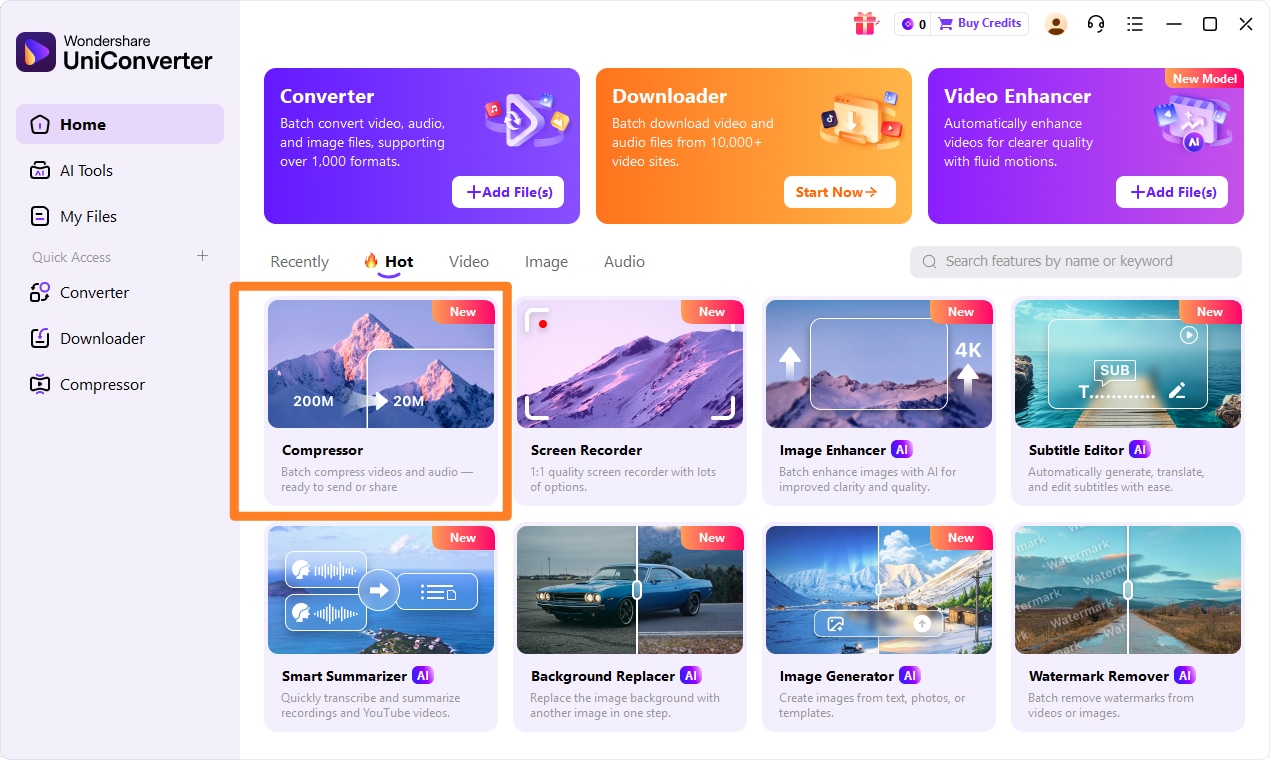
Step 1: Open UniConverter and Choose Compressor
Launch UniConverter and navigate to the "Compressor" tool from the main interface.
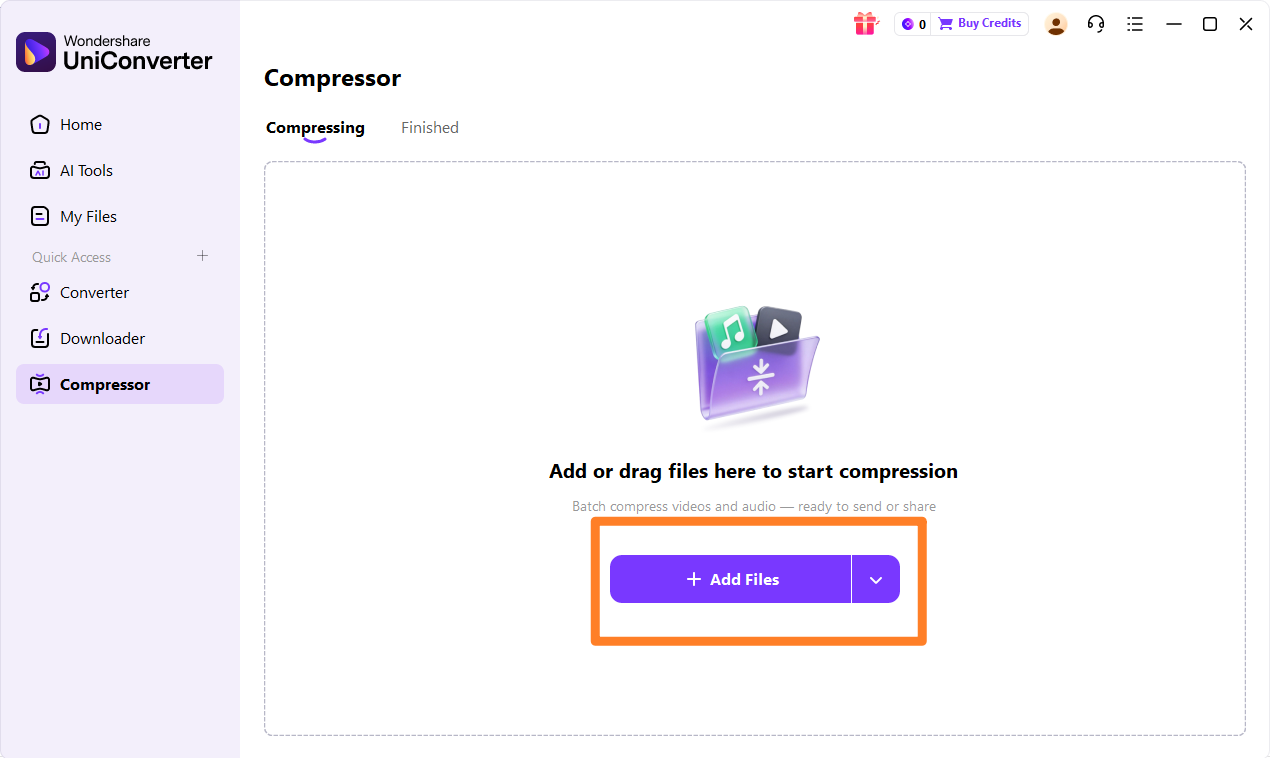
Step 2: Upload the Video, Audios or Images
Drag and drop your audio files (or video/image files) into the UniConverter window, or click "Add Files" to browse your computer.
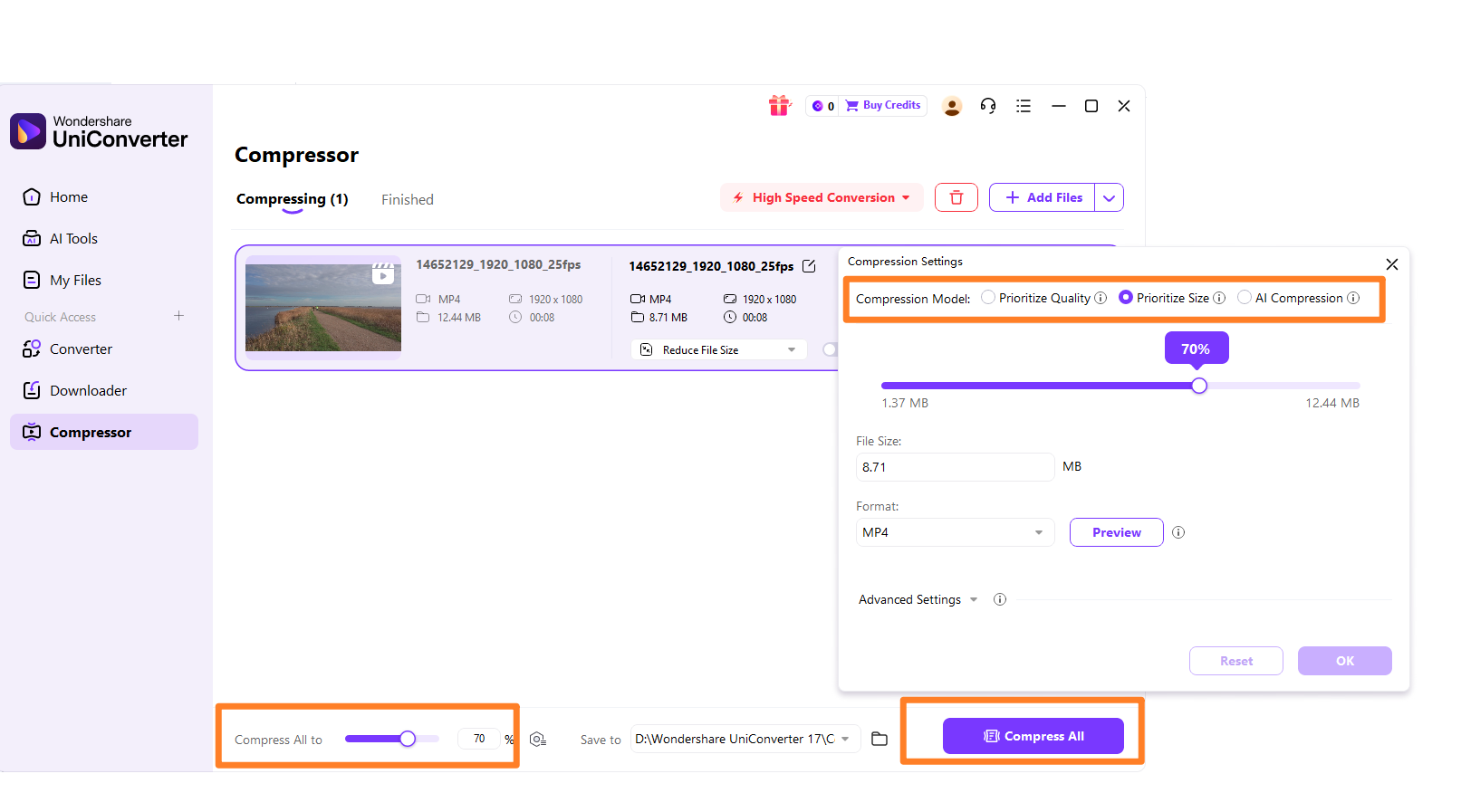
Step 3: Choose Required Parameters
Adjust the compression settings such as output size, quality, and format. You can preview the changes before applying them.
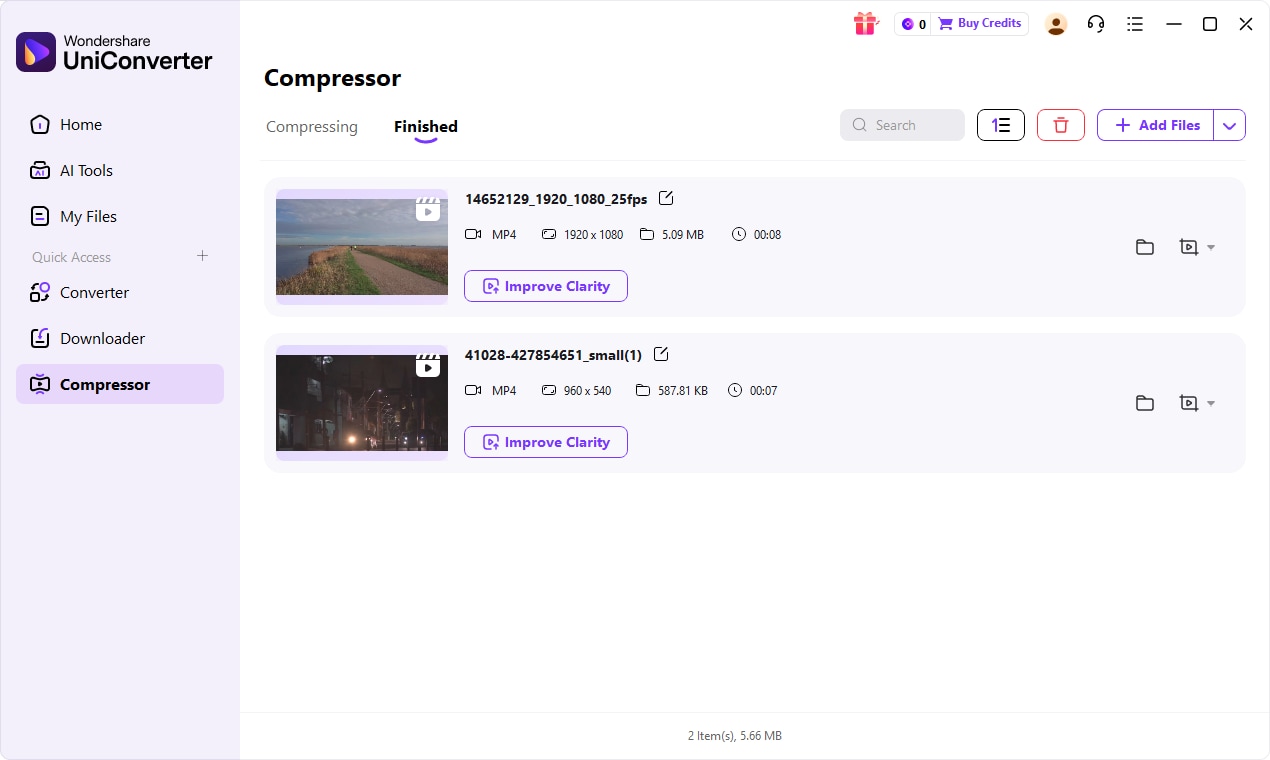
Step 4: Save the Compressed File
Select your desired output folder and click "Compress" to start the process. Your compressed file will be ready in moments.

Sound Forge Audio Compressor Alternative?
Part 7: Conclusion
My Sound Forge Audio Compressor review reveals it as a robust and highly capable tool, particularly for professionals deeply embedded in the Sound Forge ecosystem. Its granular control and high-quality algorithms make it an excellent choice for mastering and mixing engineers who demand precision and transparency in their dynamic processing. However, its advanced features and steeper learning curve mean it might be overkill for casual users or those needing quick fixes. For these individuals, simpler, more intuitive tools or even a basic compressor within a DAW might offer better workflow efficiency. Ultimately, the choice hinges on balancing the need for quality and control with the practicalities of your specific workflow and technical expertise. Understanding the principles of compression is paramount, regardless of the tool you choose, to avoid common pitfalls and achieve optimal audio results.
Part 8: FAQs
-
1. What is audio compression and why is it important?
Audio compression reduces the dynamic range of an audio signal, making the quiet parts louder and the loud parts quieter. This is important for achieving consistent loudness, improving clarity, and making audio suitable for various playback environments, ensuring it sounds good on different speakers and devices.
-
2. Is Sound Forge Audio Compressor suitable for live sound applications?
While Sound Forge is primarily a studio tool, its compression algorithms are high quality. However, dedicated live sound compressors are often preferred for their real-time performance, hardware integration, and robust physical controls, which are more practical in a live setting.
-
3. Can I use Sound Forge Audio Compressor as a standalone plugin?
Sound Forge Audio Compressor is typically integrated within the Sound Forge software suite. While some components might be available as VST/AU plugins, the full experience and all its advanced features are generally accessed within the Sound Forge environment itself.
-
4. How does Sound Forge's compressor compare to a DAW's built-in compressor?
Sound Forge's compressor often offers more advanced controls, specialized algorithms, and detailed visual feedback compared to basic built-in DAW compressors. This allows for more precise and nuanced dynamic processing, which is crucial for professional-level mixing and mastering. For simpler tasks, a DAW's built-in compressor might suffice, or you could consider a user-friendly tool like UniConverter for quick adjustments.
-
5. What are the common mistakes to avoid when using an audio compressor?
Common mistakes include over-compression (leading to a "squashed" sound), incorrect attack/release settings (causing pumping or breathing artifacts), not understanding the impact of ratio and threshold on the audio, and failing to use make-up gain properly. Always listen critically and make subtle adjustments.
