
- Value:Simple Image Resizer & Image Compressor offers quick, free online image optimization for basic needs.
- Comparison:It excels in simplicity for casual users, while UniConverter provides advanced, comprehensive media optimization.
- Decision:Choose based on your needs: free online tools for quick tasks, or robust software for quality and control.
- Risks:Be aware of data privacy, intrusive ads, potential quality loss, and lack of offline functionality with free online tools.
- Solution:UniConverter offers an ad-free, high-quality, offline alternative for efficient image and video compression.
In this article
- Part 1: What is Simple Image Resizer & Image Compressor
- Part 2: Simple Image Resizer & Image Compressor: Core Features, Pros, and Cons
- Part 3: Target Audience and Use Cases for Simple Image Resizer & Image Compressor
- Part 4: Simple Image Resizer & Image Compressor and Alternatives Comparison
- Part 5: Risks and Pitfalls to Consider
- Part 6: How to Use UniConverter to Compress High-Efficiency Videos and Images
- Part 7: Conclusion
- Part 8: FAQs
In today's digital landscape, where visual content reigns supreme, the ability to efficiently manage image file sizes is no longer a luxury but a necessity. From personal blogs to professional e-commerce sites, oversized images can significantly hamper website performance, user experience, and even SEO rankings. This is where tools like Simple Image Resizer Image Compressor review come into play, offering a quick and often free solution to a pervasive problem. This review will delve into the functionalities, target audiences, and comparative advantages of Simple Image Resizer & Image Compressor, helping you navigate the crowded market of image optimization tools and make an informed decision for your specific needs.
Part 1: What is Simple Image Resizer & Image Compressor
Simple Image Resizer & Image Compressor is an online utility designed to help you reduce the file size and/or dimensions of your images. It's a straightforward tool that aims to simplify the often-complex process of image optimization, making it accessible to users without technical expertise. My experience with it has been largely positive for quick tasks, but I've also encountered its limitations when more nuanced control is needed. This review will explore its core capabilities, compare it with alternatives, and ultimately help you decide if it's the right fit for your image management workflow.
The Growing Need for Efficient Image Management
* Website Performance: Large image files are a primary culprit behind slow website loading times, frustrating visitors and increasing bounce rates.
* Storage Limitations: Whether it's cloud storage or local disk space, unoptimized images can quickly consume valuable resources.
* Social Media & Email: Many platforms have strict file size limits for uploads, making resizing and compression essential for sharing.
* Mobile Experience: Users on mobile devices often have slower internet connections, making optimized images crucial for a smooth browsing experience.
Part 2: Simple Image Resizer & Image Compressor: Core Features, Pros, and Cons
Simple Image Resizer & Image Compressor offers a focused set of features aimed at making image optimization as effortless as possible. When I use it, I appreciate its direct approach. It primarily focuses on two key aspects: resizing images to specific dimensions or percentages, and compressing them to reduce file size. It supports common image formats like JPEG, PNG, and GIF, making it versatile for most everyday needs. The interface is intuitive, allowing for quick uploads and adjustments without a steep learning curve.
* Image Resizing: Allows you to change image dimensions by pixel, percentage, or predefined sizes.
* Image Compression: Reduces file size with adjustable quality settings.
* Format Support: Handles popular formats including JPG, PNG, and GIF.
* Batch Processing: Offers basic functionality to process multiple images simultaneously.
* Preview Functionality: Lets you see the optimized image before downloading.
- Pros:
- User-friendly interface for quick operations.
- Supports a wide range of image formats.
- Effective compression with customizable quality settings.
- Cons:
- Limited advanced editing features.
- Potential for quality degradation on aggressive compression.
Part 3: Target Audience and Use Cases for Simple Image Resizer & Image Compressor
Simple Image Resizer & Image Compressor truly shines for individuals and small businesses who need a quick and easy solution for basic image optimization. If you're not a graphic designer or a professional photographer, but rather someone who regularly uploads images to websites, social media, or sends them via email, this tool is designed for you. I find myself reaching for it when I need to quickly get an image ready for a blog post or a social media update without getting bogged down in complex software.
- Optimal Scenario: Bloggers and social media managers needing fast, on-the-fly image optimization for web uploads. For example, if you're managing a small e-commerce site and need to quickly resize product images to a uniform size and reduce their file size for faster loading, Simple Image Resizer & Image Compressor is a perfect fit. It allows you to process images rapidly without needing to open more complex software like Photoshop.
- Limited Scenario: Professional photographers requiring precise control over image quality and advanced batch processing. If you're a professional photographer preparing a portfolio for print or a client, the limited control over compression algorithms and lack of advanced color management in Simple Image Resizer & Image Compressor would be a significant drawback. You'd likely need a tool that offers more granular control to maintain the integrity of your high-resolution work.
Part 4: Simple Image Resizer & Image Compressor and Alternatives Comparison
When I look at the landscape of image optimization tools, Simple Image Resizer & Image Compressor sits comfortably in the "easy-to-use, quick-fix" category. It's great for what it does, but it's important to understand how it stacks up against others. For instance, TinyPNG is renowned for its excellent compression ratios, often achieving impressive reductions with minimal perceived quality loss, though it's primarily focused on PNG and JPEG. Adobe Photoshop Express, on the other hand, offers a more robust set of editing features alongside resizing and compression, making it a better choice if you need to do more than just optimize. UniConverter, as I've found, is a versatile all-in-one solution that goes beyond just images, offering comprehensive media conversion capabilities.
| Feature/Tool | Simple Image Resizer & Image Compressor | TinyPNG | Adobe Photoshop Express | UniConverter |
| Ease of Use | High | High | Medium | High |
| Compression Ratio | Good | Excellent | Good | Excellent |
| Batch Processing | Basic | Advanced | Basic | Advanced |
| Advanced Editing | Limited | None | Moderate | Basic (for images) |
| Price | Free/Freemium | Free/Freemium | Freemium | Paid (Free Trial) |
| Customer Support | Limited (Online FAQs) | Limited (Online FAQs) | Extensive (Adobe Community) | Dedicated (Email/Chat) |
| Security | Standard (Online) | Standard (Online) | High (Adobe Cloud) | High (Offline/Online) |
Key Differentiators: Simplicity vs. Advanced Functionality
Simple Image Resizer & Image Compressor excels in its simplicity, making it ideal for users who prioritize speed and ease of use over advanced features. TinyPNG is a specialist in compression, offering superior file size reduction for specific formats. Adobe Photoshop Express provides a balance of basic editing and optimization, catering to users who need a bit more than just resizing. UniConverter stands out as an all-in-one media solution, offering robust image optimization alongside video and audio conversion, making it a powerful choice for users with diverse media needs.
Part 5: Risks and Pitfalls to Consider
While the convenience of online tools like Simple Image Resizer & Image Compressor is undeniable, I've learned to be cautious about certain aspects, especially when dealing with sensitive content or when quality is paramount. It's easy to get drawn in by the promise of a free and fast solution, but understanding the potential downsides is crucial for a smooth workflow and protecting your digital assets.
Data Privacy Concerns with Online Tools
When you upload images to an online tool, you're essentially entrusting your data to a third-party server. While most reputable services have privacy policies, it's always wise to consider what happens to your images after they're processed. For sensitive or proprietary images, I always recommend using offline software to avoid any potential data breaches or unauthorized access.
Intrusive Advertisements and Pop-ups
Many free online tools rely on advertising for revenue. This often translates to a user experience cluttered with ads, pop-ups, and redirects, which can be incredibly disruptive and time-consuming. I've personally found myself closing multiple ad windows before even getting to the actual image processing, which defeats the purpose of a "quick" tool.
Unacceptable Quality Loss on Aggressive Settings
While compression is about reducing file size, aggressive settings can lead to noticeable and often unacceptable quality degradation. Details can become blurry, colors can shift, and artifacts can appear, especially in images with fine textures or gradients. It's a fine line between a smaller file and a compromised image, and some tools make it too easy to cross that line without sufficient warning.
Lack of Offline Functionality
Being entirely web-based means Simple Image Resizer & Image Compressor requires an active internet connection. This can be a significant limitation if you're working offline, in an area with poor connectivity, or if you prefer to keep your image processing local for security or speed reasons.
Limited Customer Support
Free online tools typically offer minimal to no direct customer support. If you encounter a bug, have a question, or face an issue, you're often left to scour FAQs or community forums, which can be frustrating when you need a quick resolution.
Part 6: How to Use UniConverter to Compress High-Efficiency Videos and Images
A dependable all-in-one tool becomes much more important once batch processing, output quality, and support for different media types start to matter. That’s why I often use UniConverter instead of relying on lighter web-based options. It works especially well for both image compression and video compression, giving me a smoother workflow without the usual drawbacks of many free online tools. I also like its broad format support and GPU acceleration, which help speed up larger jobs, while features designed to compress videos without quality loss make it easier to reduce file size without sacrificing too much visual quality. Overall, it’s a practical choice for anyone who wants a more stable and efficient media optimization solution.
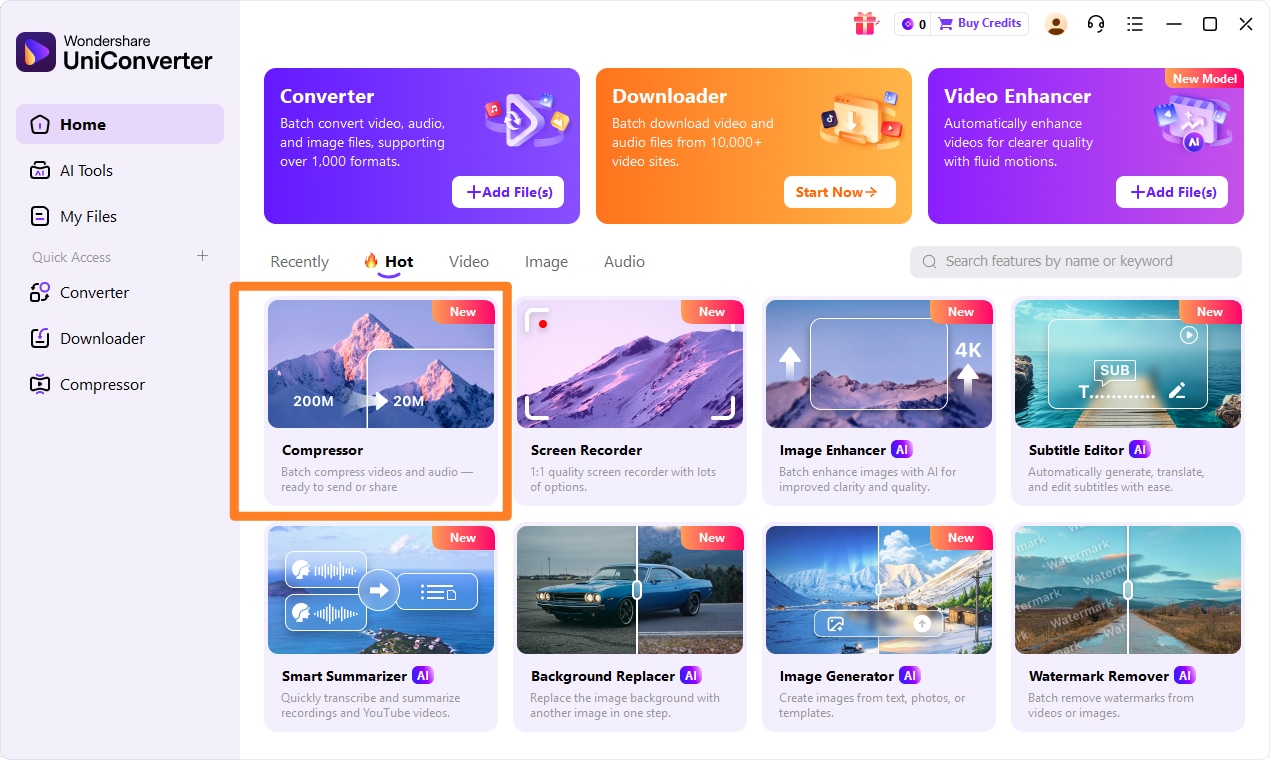
Step 1: Open UniConverter and Choose Compressor
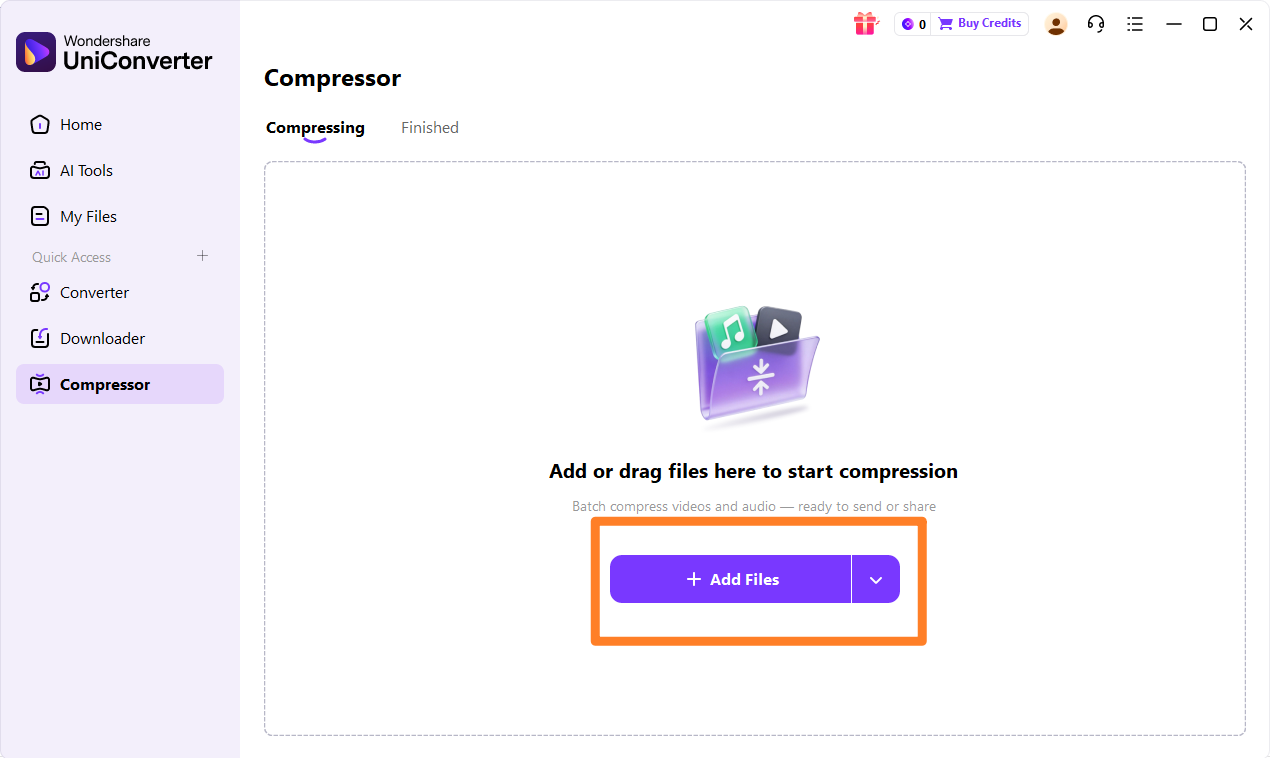
Step 2: Upload the Video, Audios or Images
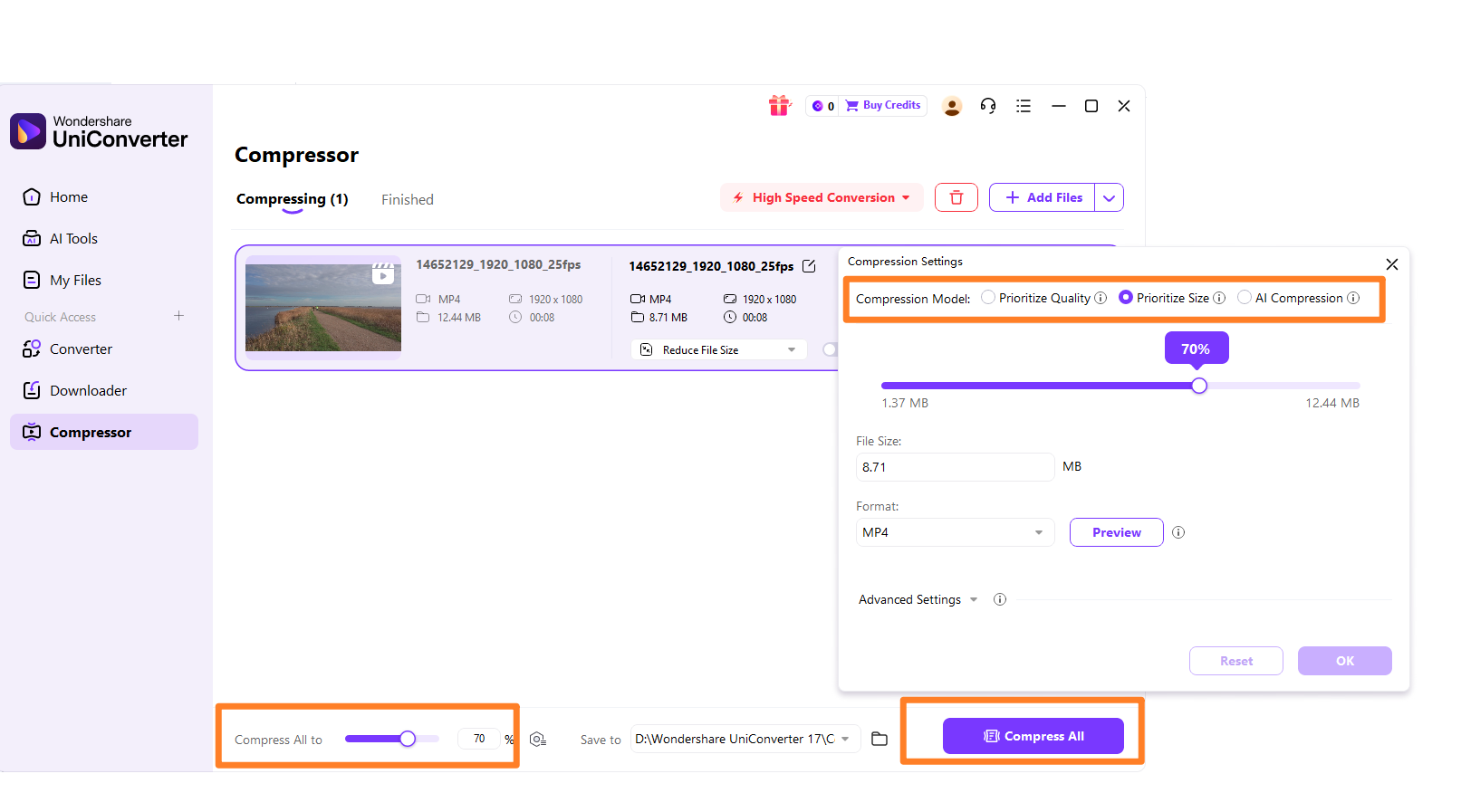
Step 3: Choose Required Parameters
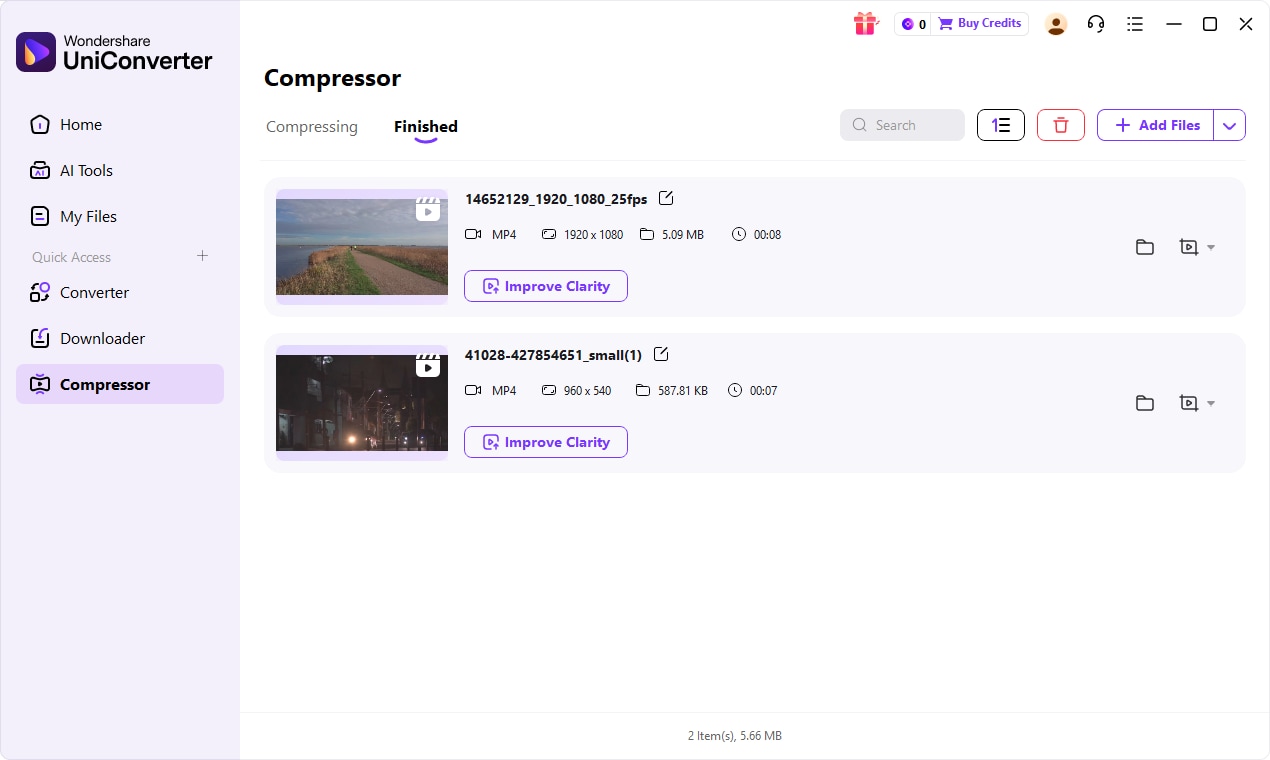
Step 4: Save the Compressed File

Need a Better Simple Image Resizer & Compressor?
Part 7: Conclusion
After thoroughly exploring Simple Image Resizer & Image Compressor and comparing it with its alternatives, my final verdict is clear: it's a highly effective tool for its intended audience. For casual users, bloggers, and social media managers who prioritize speed and ease of use for basic image optimization tasks, Simple Image Resizer Image Compressor review offers a straightforward and often free solution. However, for professionals and power users who demand precise control over image quality, advanced batch processing capabilities, or a broader suite of media tools, investing in more comprehensive software like UniConverter or leveraging specialized tools like TinyPNG for specific needs would be a more suitable choice. The key lies in balancing the need for speed and simplicity with the importance of quality and advanced functionality, making a crucial decision based on your specific use case.
Part 8: FAQs
-
1. What is the main difference between image resizing and image compression?
Resizing changes the dimensions of an image (e.g., from 1920x1080 to 800x600 pixels), while compression reduces its file size by removing redundant data or applying more efficient encoding, without necessarily altering its dimensions.
-
2. Can Simple Image Resizer & Image Compressor handle batch processing?
Yes, it offers basic batch processing capabilities, allowing you to upload and process multiple images at once. However, for advanced batch operations with more granular control, you might find tools like UniConverter more efficient.
-
3. Is it safe to use online image compression tools for sensitive images?
It's generally advisable to exercise caution. Always review the privacy policy of any online tool before uploading sensitive content. For maximum security, consider using offline desktop software like UniConverter, which processes files locally on your computer.
-
4. How much quality loss can I expect with image compression?
The amount of quality loss depends on the compression level chosen. Higher compression settings typically result in a smaller file size but with more noticeable quality reduction. Simple Image Resizer & Image Compressor usually allows you to adjust this balance, but for critical applications, I recommend previewing the output carefully.
-
5. Are there any offline alternatives to Simple Image Resizer & Image Compressor?
Yes, several desktop applications offer offline image manipulation. UniConverter is an excellent all-in-one option for both image and video optimization, providing robust features without requiring an internet connection. Other alternatives include GIMP (free and open-source) or commercial software like Adobe Photoshop.
