
- ScreenPal Overview: Integrated, user-friendly video compressor for quick sharing within its ecosystem.
- Target Audience: Ideal for educators and casual users prioritizing ease and quick content sharing.
- Feature Limitations: Lacks advanced compression controls, batch processing, and extensive format support.
- Quality vs. Size: Aggressive compression can lead to noticeable quality loss; balance is key.
- Free Version Caveats: Expect watermarks, ads, and limited features without a paid subscription.
- UniConverter Comparison: Offers superior control, batch processing, speed, and format versatility.
- Decision Factor: Choose ScreenPal for simplicity; UniConverter for power, precision, and professional needs.
In this article
- Part 1: What is ScreenPal Video Compressor?
- Part 2: ScreenPal Video Compressor: Core Features, Pros & Cons
- Part 3: ScreenPal Video Compressor: Target Audience & Use Cases
- Part 4: ScreenPal Video Compressor vs. Competitors
- Part 5: Risks and Pitfalls to Consider
- Part 6: How to Use UniConverter to Compress Efficient Videos
- Part 7: Conclusion
- Part 8: FAQs
ScreenPal Video Compressor: A Comprehensive Scenario-Based Review
When it comes to creating and sharing video content, file size can often be a major hurdle. Whether you're an educator sharing lessons, a content creator uploading to social media, or a business professional presenting a pitch, large video files can lead to slow uploads, storage issues, and a frustrating viewing experience for your audience. This is where video compressors like ScreenPal Video Compressor come into play. In this ScreenPal Video Compressor review, I'll dive deep into its features, compare it with leading alternatives, and help you understand if it's the right tool for your specific needs. My goal is to provide a user-centric perspective, highlighting real-world scenarios where this tool shines or falls short, so you can make an informed decision.
Part 1: What is ScreenPal Video Compressor?
ScreenPal Video Compressor is a component of the broader ScreenPal (formerly Screencast-O-Matic) ecosystem, designed to help users reduce the file size of their video recordings. It's primarily known for its ease of use and integration with ScreenPal's screen recording and video editing tools. The compressor aims to make video sharing more efficient by optimizing files for various platforms and purposes. My experience with it suggests it's built for convenience, especially for those already embedded in the ScreenPal workflow.
The Landscape of Video Compression Tools
The need for efficient video compression has never been greater. I often find myself facing these challenges:
* Slow Uploads and Downloads: Large video files can significantly increase upload and download times, impacting productivity and user experience.
* Storage Limitations: Uncompressed videos quickly consume valuable storage space on devices and cloud platforms.
* Bandwidth Constraints: Sharing high-quality, large videos can strain internet bandwidth, leading to buffering and poor streaming quality.
* Platform Restrictions: Many online platforms have file size limits for uploads, making compression a necessity.
Part 2: ScreenPal Video Compressor: Core Features, Pros & Cons
ScreenPal Video Compressor offers a straightforward approach to reducing video file sizes, making it accessible even for beginners. Its core capabilities revolve around simplifying the compression process without requiring extensive technical knowledge. From my perspective, its strength lies in its integration within the ScreenPal suite, allowing for a seamless transition from recording to editing to compression.
Core Capabilities:
* One-Click Compression: I find it incredibly easy to compress videos with minimal fuss.
* Adjustable Quality Settings: It allows me to choose between different compression levels, balancing file size and visual quality.
* Format Compatibility: It supports common video formats, ensuring most of my projects can be handled.
* Preview Functionality: I can preview the compressed video before saving, which is a huge plus for quality control.
* Direct Integration: Its tight integration with ScreenPal's recorder and editor streamlines my workflow significantly.
Pros:
* Intuitive Interface for Quick Compressions: I appreciate how simple it is to navigate and compress videos quickly.
* Integrated Screen Recording and Editing Capabilities: The all-in-one nature of the ScreenPal ecosystem is a major time-saver for me.
* Cloud Storage and Sharing Options: The ability to directly upload compressed videos to ScreenPal's cloud or other platforms is very convenient.
Cons:
* Limited Advanced Compression Settings: I sometimes wish for more granular control over bitrates and codecs.
* Potential for Watermarks in Free Version: The free version can be restrictive with watermarks, which isn't ideal for professional use.
Part 3: ScreenPal Video Compressor: Target Audience & Use Cases
ScreenPal Video Compressor is designed with a specific user base in mind, primarily those who prioritize ease of use and integration within a content creation ecosystem. Based on my experience, it's not a one-size-fits-all solution, but it excels in certain scenarios.
Best Use Case: Quick Sharing of Educational Content
For me, as someone who occasionally creates educational tutorials or quick demonstrations, ScreenPal Video Compressor is a lifesaver. I can record my screen, make a few quick edits, and then compress the video for easy sharing with students or colleagues. The focus here is on speed and efficiency rather than broadcast-quality output. For example, when I need to send a short explainer video via email or upload it to a learning management system, the reduced file size makes the process incredibly smooth. It's perfect for educators, trainers, and anyone needing to share instructional content without technical headaches.
Limited Use Case: Professional Video Production with Specific Output Requirements
However, when I'm working on a professional video project that demands precise control over compression parameters, such as specific bitrates, codecs, or resolutions for broadcast or high-end web delivery, ScreenPal Video Compressor falls short. Its simplified interface, while a pro for casual users, becomes a con for me in these situations. I've found that it doesn't offer the granular control needed to maintain the absolute highest quality or meet very specific technical specifications required by professional platforms. For instance, if I'm compressing a 4K video for a client's website and need to ensure minimal quality loss while hitting a target file size, I'd look for a more advanced tool.
Part 4: ScreenPal Video Compressor vs. Competitors
When evaluating video compressors, I always consider how a tool stacks up against its rivals in various scenarios. Here's how ScreenPal Video Compressor compares with some other popular options, including UniConverter, HandBrake, and Adobe Media Encoder.
| Feature/Scenario | ScreenPal Video Compressor | UniConverter | HandBrake | Adobe Media Encoder |
| Ease of Use (Beginner) | Excellent | Good | Fair | Moderate |
| Advanced Settings (Pro) | Limited | Excellent | Excellent | Excellent |
| Batch Processing | Basic | Advanced | Advanced | Advanced |
| Output Quality Control | Moderate | High | High | High |
| Integration with Other Tools | Good (ScreenPal Ecosystem) | Good (Wondershare Ecosystem) | Limited | Excellent (Adobe Creative Cloud) |
| Processing Speed | Good | Excellent (GPU acceleration) | Good | Excellent |
| Supported Formats | Common formats | Extensive | Extensive | Extensive |
| Customer Support | Good | Excellent | Community-based | Excellent |
| Security | Standard | High | Standard | High |
Key Differentiators:
ScreenPal's strength lies in its integrated ecosystem for content creation and quick sharing. If I'm already using ScreenPal for screen recording and editing, its compressor is a natural and convenient extension. UniConverter, on the other hand, excels in offering a comprehensive suite of video tools with granular control over compression parameters, making it a strong contender for those who need more power and versatility. HandBrake is a fantastic free option for advanced users who don't mind a steeper learning curve, offering excellent quality control. Adobe Media Encoder is the go-to for professionals deeply integrated into the Adobe Creative Cloud, providing unparalleled integration and advanced features.
Part 5: Risks and Pitfalls to Consider
While ScreenPal Video Compressor offers convenience, it's crucial to be aware of potential risks and limitations, especially if you're relying on the free version or have specific requirements. My experience has highlighted several areas where users should exercise caution.
Data Privacy Concerns
When I upload videos to any cloud-based service, including ScreenPal's ecosystem, I always consider data privacy. While ScreenPal states its commitment to privacy, it's essential to understand their data handling policies, especially for sensitive content. For me, if I'm compressing confidential business presentations or personal videos, I'd prefer a desktop-based solution where my files never leave my local machine.
Advertisements in Free Tier
The free version of ScreenPal often includes advertisements, which can be disruptive to the workflow. I've found that these ads can interrupt my focus and make the experience less professional. For continuous, uninterrupted work, a paid subscription is almost a necessity, which adds to the cost.
Potential Loss of Fine Details in Aggressive Compression
Aggressive compression, while effective at reducing file size, can lead to a noticeable loss of fine details, especially in videos with complex textures or fast-moving scenes. I've sometimes found that when I push the compression too far with ScreenPal, the output quality isn't quite as crisp as I'd like, resulting in blockiness or blurring. It's a trade-off I have to constantly balance.
Compatibility Issues with Niche Formats
While ScreenPal supports common video formats, I've run into situations where it struggles with more niche or professional-grade codecs and containers. If my source video is in an unusual format, I might need to convert it first, adding an extra step to my workflow. This can be a minor inconvenience but worth noting for users dealing with diverse media types.
Subscription Model Limitations
The full functionality of ScreenPal, including advanced compression options and watermark removal, is locked behind a subscription. If I only need to compress videos occasionally, the recurring cost might not be justified. This can be a pitfall for casual users who might find themselves paying for features they don't frequently use.
Part 6: How to Use UniConverter to Compress Efficient Videos
Tools like ScreenPal can be convenient for simple tasks, but they often feel limited once batch processing, output stability, or better quality control becomes important. In those cases, UniConverter is usually the more reliable option for video compression. It offers broader format support, GPU acceleration for faster processing, and a cleaner workflow without the ads or watermarks that often get in the way with lighter tools. I also like that it can help compress videos without quality loss as much as possible, which makes it a practical choice when file size needs to come down without sacrificing too much quality. Since it also supports audio compression and image compression, it works well as a dependable all-in-one media solution.
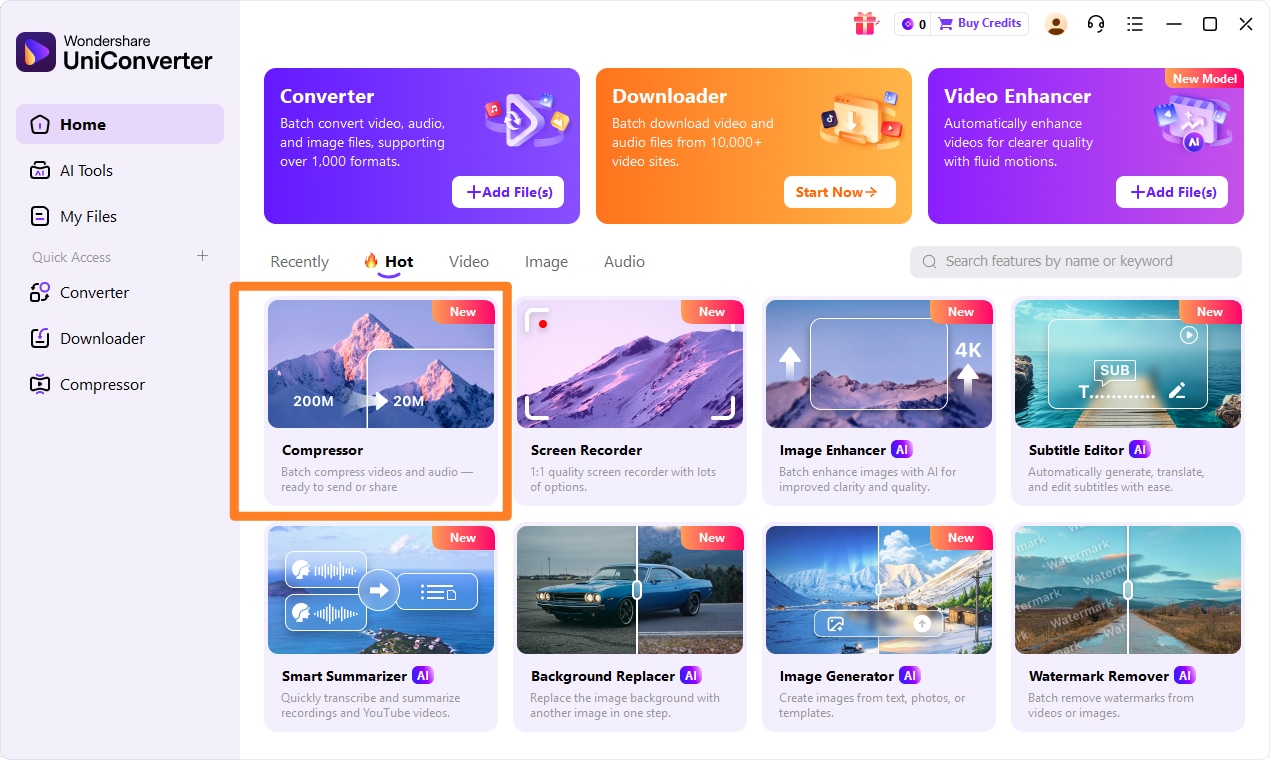
Step 1: Open UniConverter and Choose Compressor
First, I launch UniConverter on my computer. On the left sidebar, I navigate to the "Compressor" tab. This is where all the magic happens for reducing file sizes.
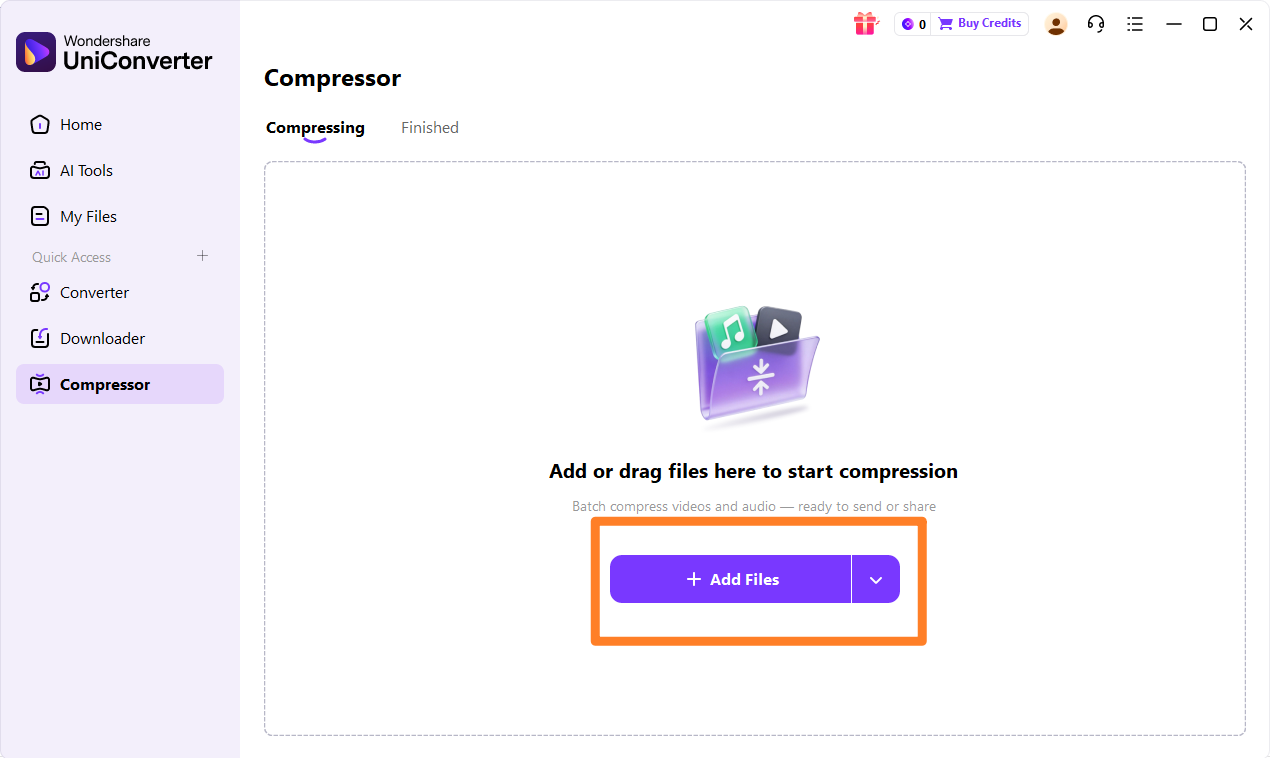
Step 2: Upload the Video, Audios or Images
Next, I click the "Add Files" button or simply drag and drop the video, audio, or image files I want to compress into the UniConverter interface. I can add multiple files for batch processing, which is incredibly efficient.
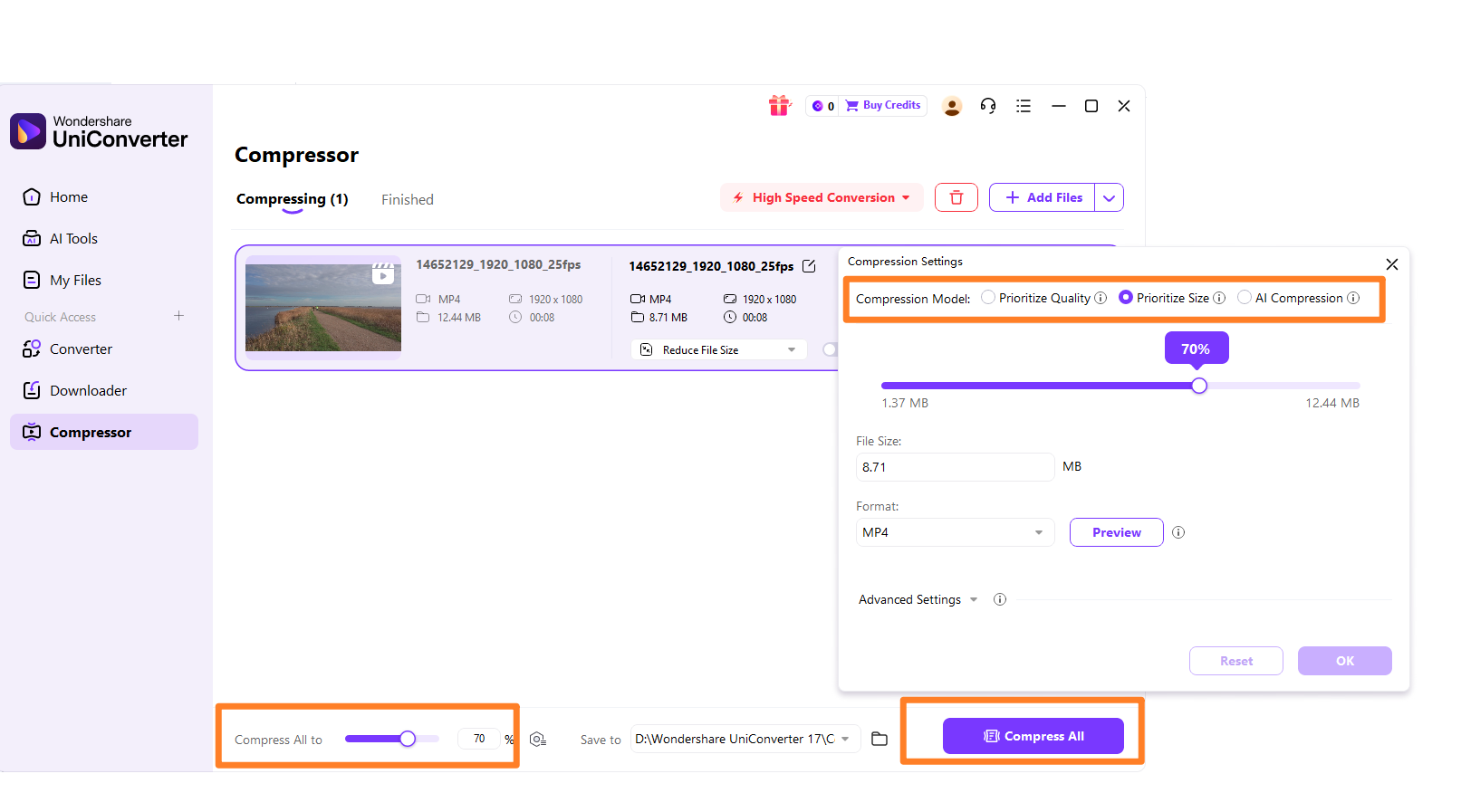
Step 3: Choose Required Parameters
Once my files are loaded, I can adjust the compression settings. UniConverter gives me granular control over file size, format, resolution, and bitrate. I can use the slider to quickly set the desired compression ratio or manually input specific values.
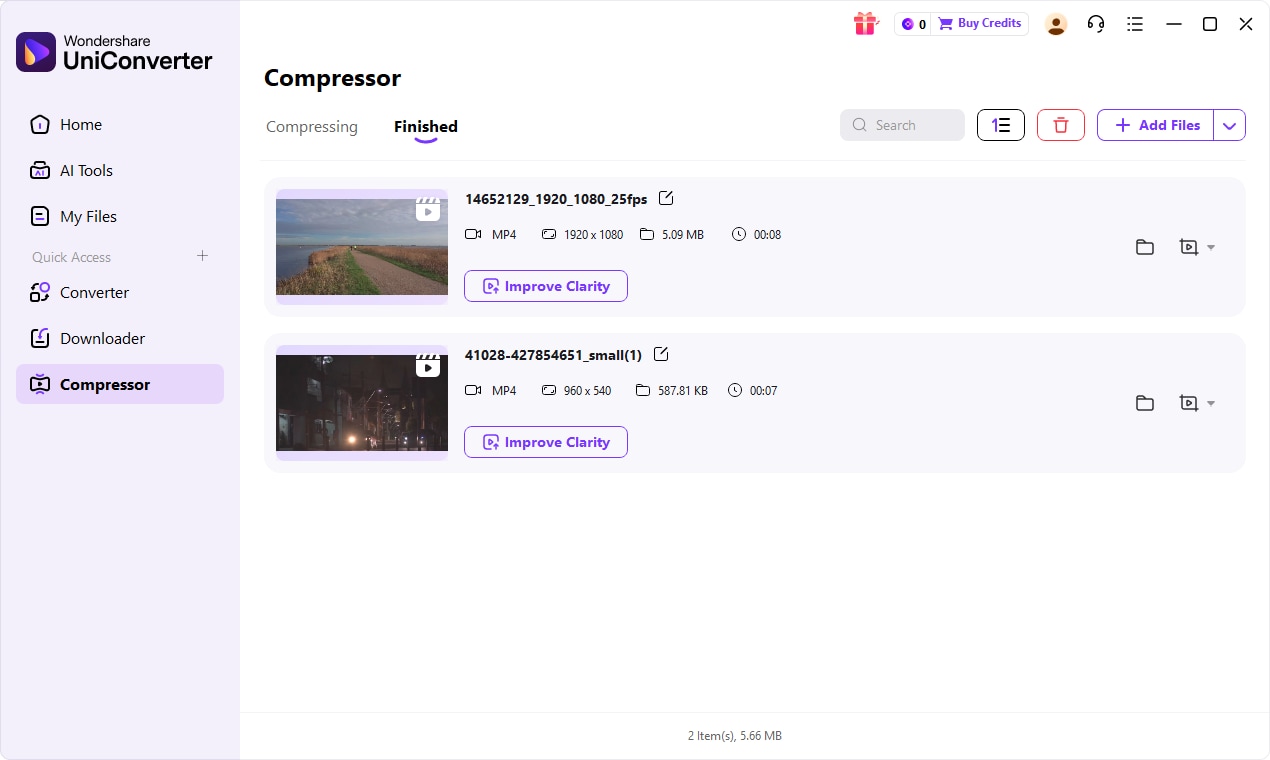
Step 4: Save the Compressed File
After I've set my parameters, I click the "Compress" button. UniConverter quickly processes the files, and once it's done, I can find my compressed videos in the designated output folder.

Need a Better ScreenPal Video Compressor Alternative?
Part 7: Conclusion
In conclusion, the ScreenPal Video Compressor review reveals it as a highly accessible and integrated tool, particularly well-suited for educators, content creators, and casual users who prioritize ease of use and quick sharing within the ScreenPal ecosystem. Its intuitive interface and seamless integration with screen recording and editing make it an excellent choice for straightforward video compression tasks. However, for professionals or users requiring granular control over compression parameters, advanced batch processing, or uncompromising output quality, its limitations become apparent. While it excels in convenience, it may not satisfy the demands of high-end video production. For those seeking a more robust, feature-rich, and versatile solution that offers extensive format support, GPU acceleration, and precise control without the limitations of free tiers, alternatives like UniConverter present a compelling option. Ultimately, the best choice depends on your specific use case, technical requirements, and budget.
Part 8: FAQs
-
1. Is ScreenPal Video Compressor free to use?
Yes, ScreenPal offers a free version of its video compressor, but it often comes with limitations such as watermarks on compressed videos, fewer features, and potential advertisements. For full functionality and an ad-free experience, a paid subscription is required.
-
2. How does ScreenPal Video Compressor affect video quality?
ScreenPal Video Compressor aims to reduce file size while maintaining acceptable video quality. However, the degree of quality loss depends on how aggressively you compress the video. More aggressive compression will result in a smaller file size but may lead to a noticeable reduction in visual fidelity, such as blockiness or blurring.
-
3. Can I compress multiple videos at once with ScreenPal?
The batch processing capabilities in ScreenPal Video Compressor are relatively basic compared to more advanced tools. While you can often add multiple files, the level of control over individual file settings in a batch might be limited in the free version.
-
4. What are the main differences between ScreenPal and UniConverter?
ScreenPal Video Compressor is primarily part of a larger screen recording and editing ecosystem, focusing on ease of use and integration. UniConverter, on the other hand, is a comprehensive video toolkit offering extensive format support, advanced compression settings, GPU acceleration, and a broader range of video editing and conversion features, making it more suitable for users needing powerful and versatile capabilities.
-
5. Is ScreenPal suitable for compressing large video files?
ScreenPal can compress large video files, but its efficiency and output quality might be less optimal compared to dedicated, more powerful compression software. For very large files or those requiring precise quality retention, I'd recommend a tool like UniConverter, which is designed to handle such tasks with greater stability and control.
