
- Value: ScreenPal excels for quick, integrated audio compression within its ecosystem, ideal for content creators.
- Comparison: ScreenPal prioritizes ease for general users; professionals need advanced tools like Audition or UniConverter.
- Decision: Choose ScreenPal for simple, fast optimization; opt for UniConverter for comprehensive, high-quality audio management.
- Pitfalls: Over-compression degrades quality; cloud processing raises privacy concerns; limited format support exists.
- Recommendation: UniConverter offers superior batch processing, format support, and stable, near-lossless compression.
In this article
- Part 1: What is ScreenPal Audio Compressor?
- Part 2: ScreenPal Audio Compressor: Core Features, Pros, and Cons
- Part 3: Who Benefits from ScreenPal Audio Compressor? (And When to Look Elsewhere)
- Part 4: ScreenPal Audio Compressor vs. Competitors
- Part 5: Risks and Pitfalls to Consider
- Part 6: How to Use UniConverter for Comprehensive Audio Management
- Part 7: Conclusion
- Part 8: FAQs
ScreenPal Audio Compressor Review: Optimizing Your Audio for Every Scenario
In the fast-paced world of digital content creation, efficient audio management is no longer a luxury but a necessity. As a seasoned product reviewer, I've seen countless tools promise to simplify this process, and today we're diving deep into the ScreenPal Audio Compressor review. This tool, often bundled with ScreenPal's broader suite, aims to offer a straightforward solution for creators looking to optimize their audio files. My goal in this review is to provide you with a comprehensive, scenario-based comparison, helping you understand where ScreenPal shines and where its limitations might lead you to explore alternatives. We'll dissect its features, weigh its pros and cons, and pit it against key competitors to help you make an informed decision about your audio compression needs.
Part 1: What is ScreenPal Audio Compressor?
ScreenPal Audio Compressor is an integrated feature within the ScreenPal (formerly Screencast-O-Matic) platform, primarily known for its screen recording and video editing capabilities. It's designed to help content creators reduce the file size of their audio tracks, making them easier to upload, share, and store. This tool isn't a standalone professional audio workstation but rather a utility built for efficiency within a broader content creation workflow. My review aims to clarify its place in your toolkit, especially when considering the growing demands for optimized digital content.
The Growing Need for Audio Compression in Digital Content Creation
* Faster Uploads and Downloads: Large audio files can significantly slow down content delivery, impacting audience engagement.
* Reduced Storage Footprint: With ever-increasing content volume, efficient storage management is crucial for creators.
* Improved Streaming Performance: Compressed audio ensures smoother playback, especially for viewers with slower internet connections.
* Enhanced Mobile Experience: Smaller file sizes are essential for mobile users, reducing data consumption and improving loading times.
Part 2: ScreenPal Audio Compressor: Core Features, Pros, and Cons
ScreenPal Audio Compressor offers a user-friendly approach to audio optimization, focusing on accessibility for creators who might not have extensive audio engineering knowledge. Its core capabilities revolve around reducing file size while attempting to maintain acceptable audio quality. It integrates seamlessly into the ScreenPal ecosystem, allowing for quick adjustments after recording or during video editing.
* Adjustable Compression Levels: Provides presets or sliders for varying degrees of compression.
* Real-time Preview: Allows you to listen to the compressed audio before finalizing changes.
* Batch Processing (Limited): While primarily for individual files, some project-level compression might be available.
* Common Format Support: Handles widely used audio formats like MP3 and WAV.
* Integration with Video Projects: Directly applies compression to audio tracks within video edits.
- Pros:
- Intuitive User Interface for Quick Adjustments: I found it incredibly easy to navigate and apply basic compression settings.
- Integrated with ScreenPal's Recording and Editing Suite: The seamless workflow within the ScreenPal platform is a significant time-saver.
- Effective for Reducing File Size Without Significant Quality Loss: For most general content, the quality reduction is negligible.
- Cons:
- Limited Advanced Customization Options for Professional Users: If you need granular control over parameters, you'll feel constrained.
- May Introduce Minor Artifacts with Aggressive Compression Settings: Pushing the compression too far can sometimes result in noticeable audio degradation.
Part 3: Who Benefits from ScreenPal Audio Compressor? (And When to Look Elsewhere)
ScreenPal Audio Compressor is designed with a specific user base in mind, catering to those who prioritize speed and simplicity over highly specialized audio control. Understanding its ideal user and scenario is key to determining if it's the right tool for you.
- Best Use Case: Content Creators on a Budget Needing Quick Audio Optimization
- Scenario: I'm a vlogger who publishes daily video logs. My priority is to get my content out quickly, and I often record directly into ScreenPal. The integrated audio compressor allows me to reduce the file size of my audio tracks almost instantly, which means faster uploads to YouTube and less storage consumed on my hard drive. I don't have the budget for expensive audio software, nor do I have the time to learn complex editing techniques. ScreenPal's compressor handles the basic optimization for me, keeping my workflow smooth and efficient.
- Limited Use Case: Professional Audio Engineers or Music Producers
- Scenario: As a sound engineer, I'm mastering an album for a client. This process demands absolute precision over every audio parameter – multi-band compression, advanced noise reduction, equalization, and dynamic range control. ScreenPal's compressor simply doesn't offer the level of detail or the specialized algorithms required for professional-grade audio production. I need tools that provide surgical control over frequencies and dynamics, which is far beyond what ScreenPal is designed to deliver. For this kind of work, I rely on dedicated digital audio workstations (DAWs) like Pro Tools or Logic Pro.
Part 4: ScreenPal Audio Compressor vs. Competitors
When evaluating ScreenPal Audio Compressor, it's crucial to see how it stacks up against other popular tools in the market. Each competitor offers a different balance of features, ease of use, and cost, catering to various user needs.
| Feature/Aspect | ScreenPal Audio Compressor | Audacity | Adobe Audition | Online Audio Converter |
| Ease of Use | Very High | Moderate | Low | High |
| Integration | ScreenPal Ecosystem | Standalone | Adobe Creative Cloud | Web-based |
| Advanced Features | Basic | Moderate | Extensive | Basic |
| Cost | Part of ScreenPal Subscription | Free | Subscription | Free (with ads/limits) |
| Output Quality | Good | Very Good | Excellent | Variable |
| Processing Speed | Fast | Moderate | Fast | Moderate |
| Customer Support | ScreenPal Support | Community/Forums | Adobe Support | Limited/FAQ |
| Security | ScreenPal Privacy Policy | Local Processing | Adobe Security | Varies by site |
Key Differentiators: Simplicity vs. Professional Control
ScreenPal excels in simplicity and integration within its own ecosystem, making it ideal for quick, no-fuss audio compression during video creation. Audacity, while free, offers more control over audio parameters and better output quality for those willing to learn its interface. Adobe Audition is the powerhouse, delivering professional-grade features and superior output quality, but it comes with a steep learning curve and a subscription cost. Online Audio Converters are convenient for one-off tasks but often lack consistency in quality and can be riddled with ads. If you prioritize ease of use within a video creation workflow, ScreenPal is strong. For more detailed editing or professional results, Audacity or Adobe Audition are better choices.
Part 5: Risks and Pitfalls to Consider
While ScreenPal Audio Compressor offers convenience, it's important to be aware of potential risks and limitations, especially when dealing with your valuable audio content. Understanding these pitfalls can help you make more informed decisions and avoid unexpected issues.
Potential for Quality Degradation with Over-Compression
One of the most significant risks I've encountered with any audio compressor, including ScreenPal's, is the potential for irreversible quality loss. If you push the compression settings too aggressively in an attempt to achieve the smallest file size, you might introduce audible artifacts like "pumping," "breathing," or a general loss of richness and clarity. This is particularly true for nuanced audio like music or delicate voiceovers. Once compressed too much, it's nearly impossible to fully restore the original quality. Always preview your audio and err on the side of caution with compression levels.
Data Privacy Concerns with Cloud-Based Processing
Since ScreenPal is often a cloud-integrated platform, there can be data privacy considerations. While ScreenPal has its own privacy policies, uploading sensitive or proprietary audio content to any cloud service always carries a degree of risk. You should always review their terms of service regarding data handling, storage, and security. For highly confidential projects, I prefer local processing tools where my data never leaves my machine.
Limited Format Support Compared to Dedicated Tools
ScreenPal's compressor primarily supports common formats suitable for video projects, such as MP3 and WAV. However, if your workflow involves less common or higher-fidelity formats like FLAC, AIFF, or specialized broadcast formats, you'll quickly find its capabilities lacking. This limitation means you might need to convert your audio to a supported format first, potentially adding another step and another layer of quality degradation before compression.
Performance Issues on Older Systems
While ScreenPal aims for efficiency, running its full suite, including the compressor, on older or underpowered computers can lead to performance issues. I've experienced slower processing times, occasional crashes, or a generally sluggish interface when trying to compress larger audio files on less robust machines. This can be frustrating and counterproductive, especially when you're on a tight deadline.
Hidden Costs or Upsells within the ScreenPal Ecosystem
While the compressor is part of the ScreenPal subscription, it's worth noting that the platform itself operates on a tiered pricing model. You might find that certain features or higher quality outputs are locked behind more expensive plans. Always check the specific features included in your subscription tier to avoid unexpected limitations or the need for an upgrade just to access a particular level of functionality.
Part 6: How to Use UniConverter for Comprehensive Audio Management
When other tools fall short with batch compression, unstable results, or unacceptable quality loss, UniConverter emerges as a robust and user-friendly solution for audio compression and video conversion and compression needs. It helps avoid common issues found in many tools, supports a wide range of formats, delivers stable output quality, and works especially well for repeated and large-file tasks. For users looking for a practical media solution with support for MOV compression and other formats, UniConverter stands out as an efficient all-in-one choice.
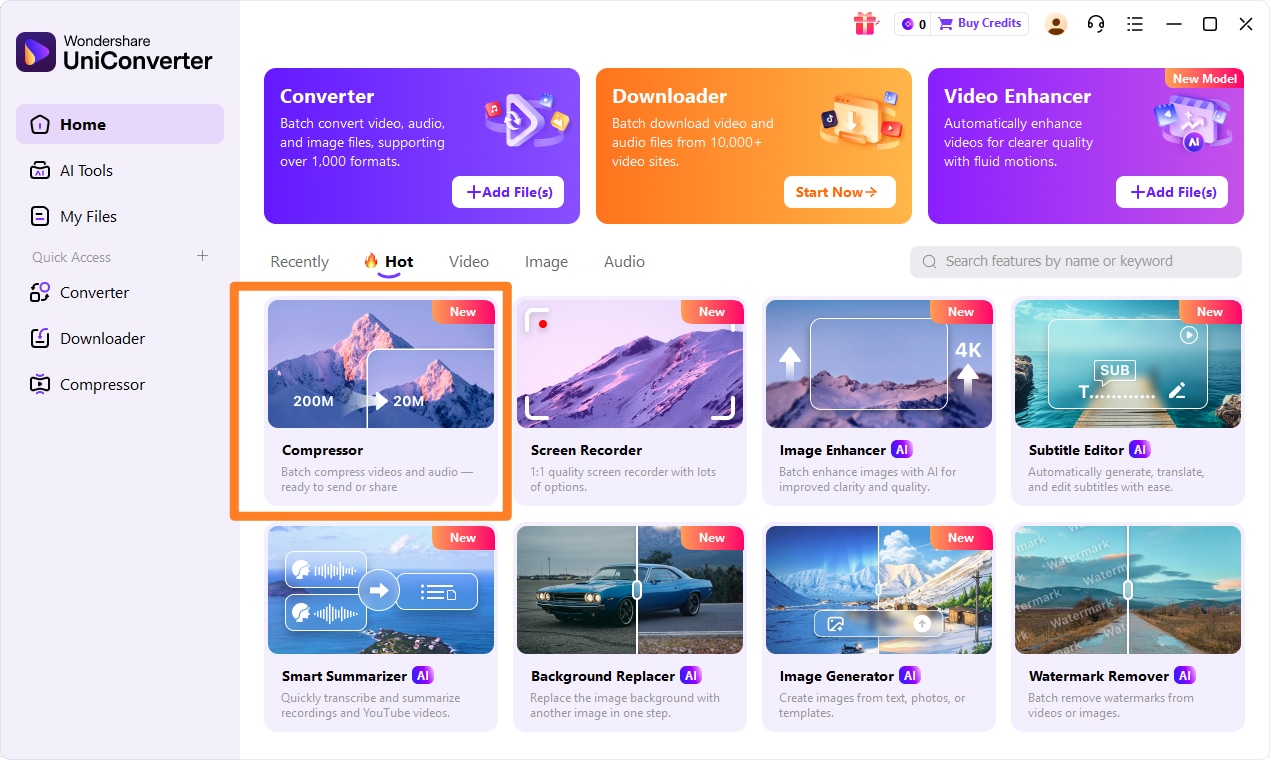
Step 1: Open UniConverter and Choose Compressor
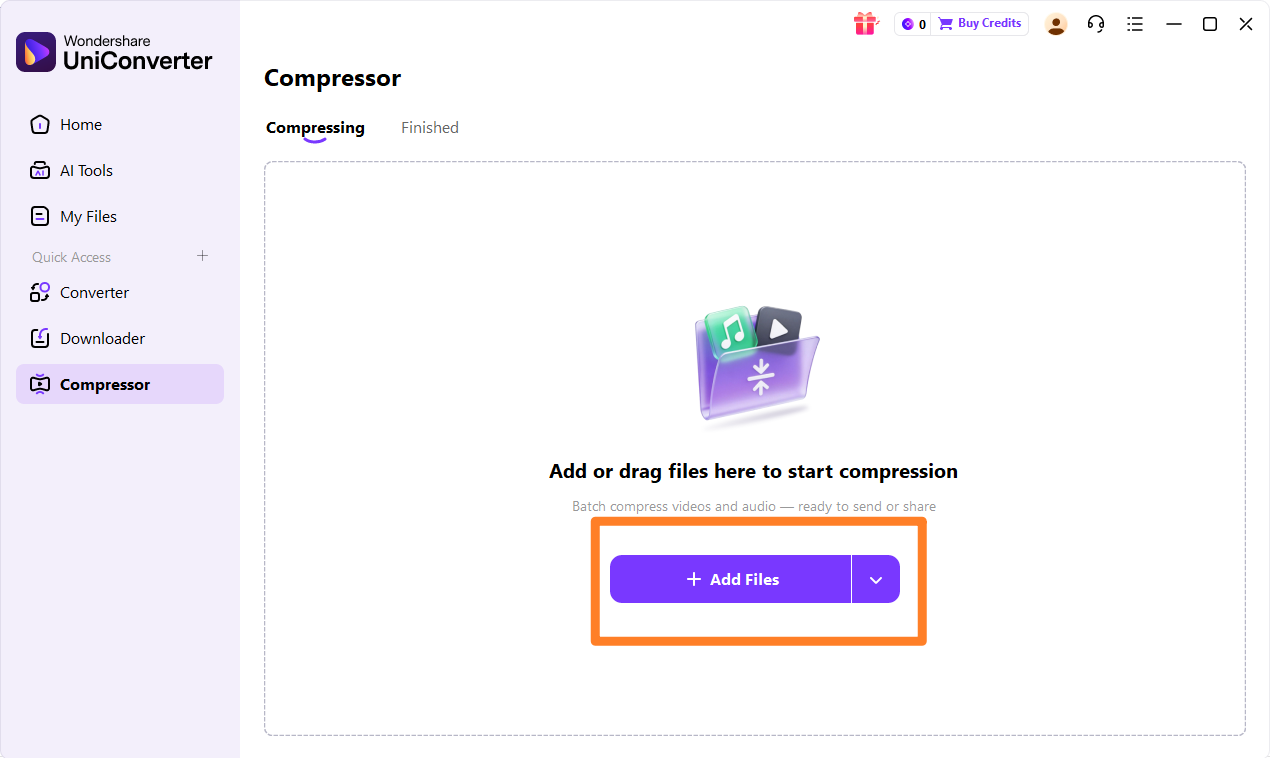
Step 2: Upload the Video, Audios or Images
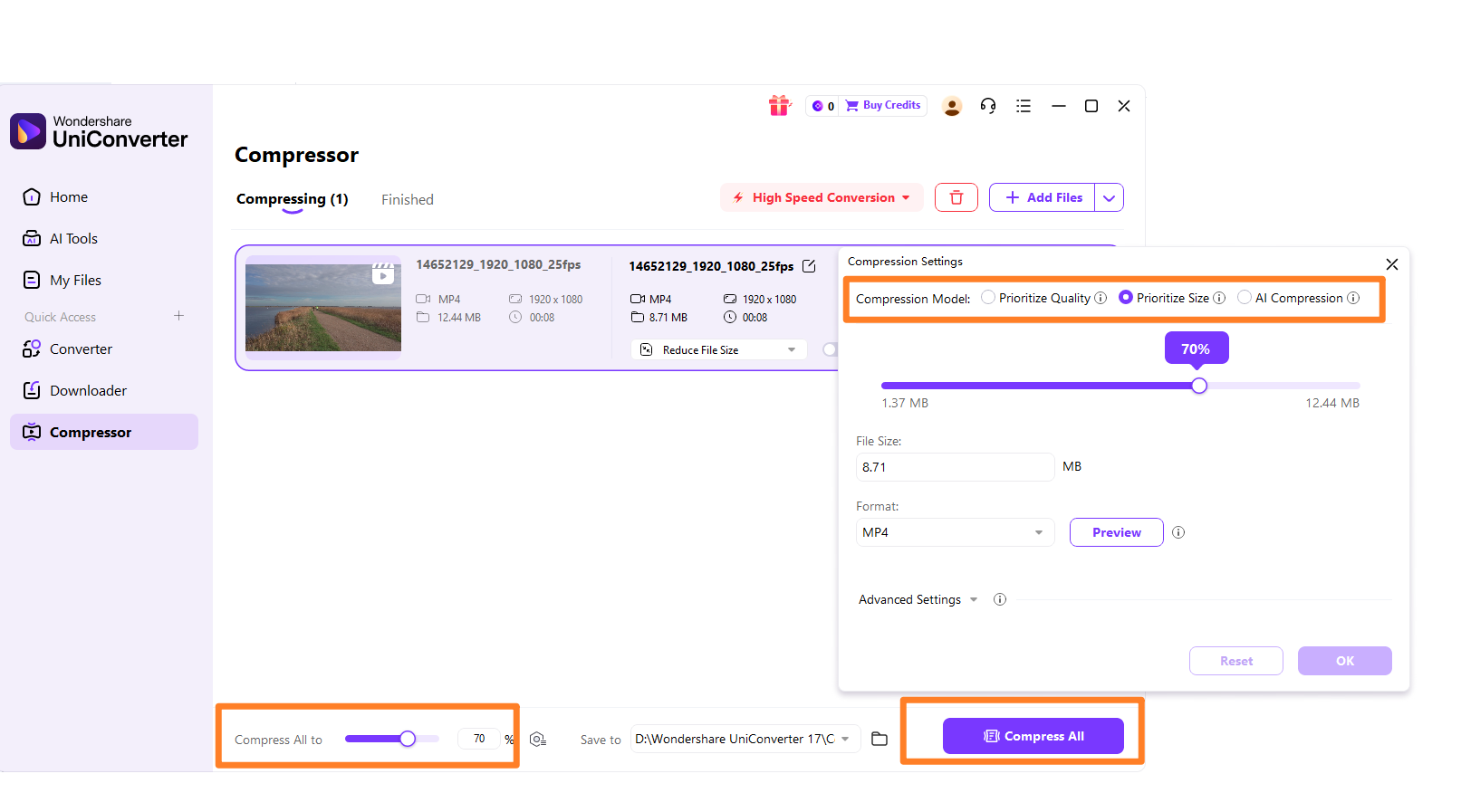
Step 3: Choose Required Parameters
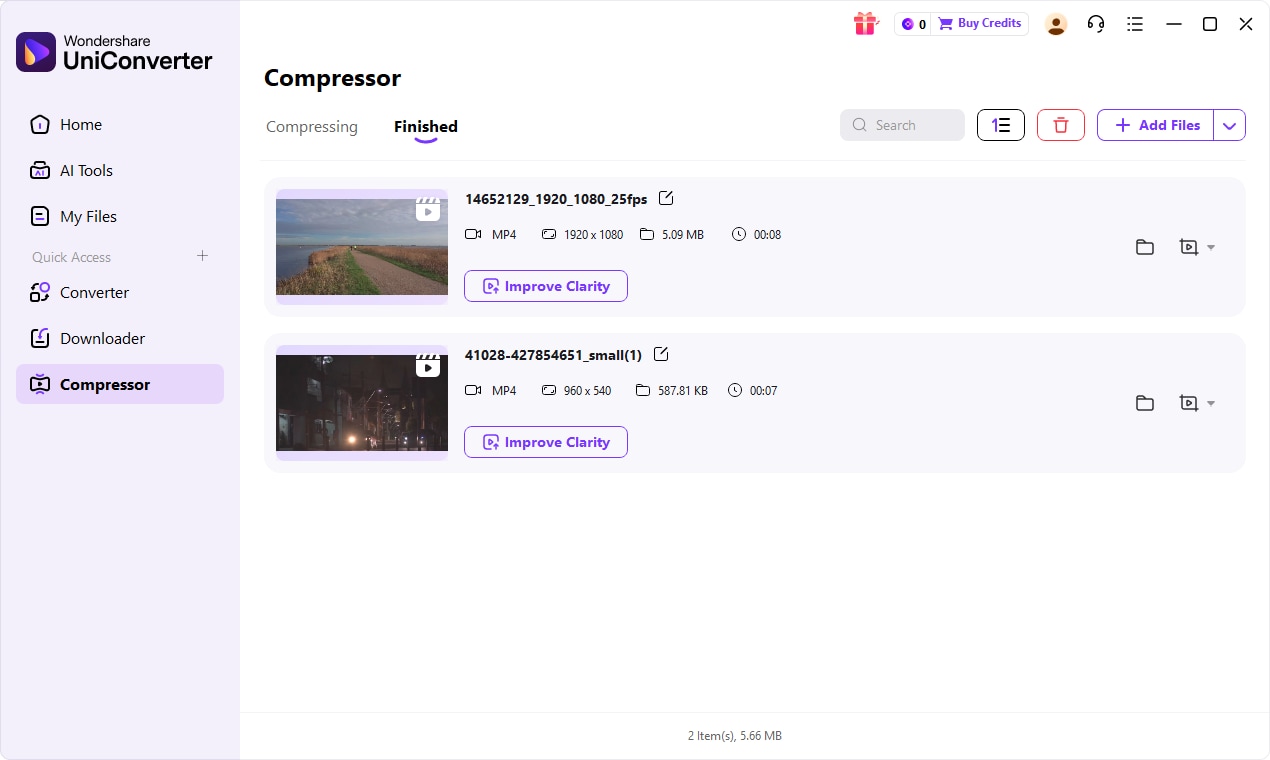
Step 4: Save the Compressed File

ScreenPal Audio Compressor Alternative?
Part 7: Conclusion
In conclusion, the ScreenPal Audio Compressor review reveals a tool that is undeniably convenient and effective for its target audience: content creators who need quick, no-fuss audio optimization within the ScreenPal ecosystem. Its ease of use and seamless integration make it a valuable asset for vloggers, educators, and small business owners focused on producing video content efficiently. However, its limitations in advanced features and precise control mean it's not suited for professional audio engineers or music producers who require granular command over every aspect of their sound. For those seeking a balance of functionality, ease of use, and comprehensive features beyond basic compression, alternatives like UniConverter offer a more robust and versatile solution, handling a wider array of formats and providing more control without sacrificing user-friendliness. Ultimately, your choice should align with your specific workflow, technical requirements, and the level of audio fidelity your projects demand.
Part 8: FAQs
-
1. Does ScreenPal Audio Compressor support batch processing?
ScreenPal's audio compressor primarily focuses on individual file processing within its editing suite. For efficient batch processing of multiple files, dedicated tools like UniConverter might be more effective.
-
2. Can I compress audio without losing quality using ScreenPal?
While ScreenPal aims to minimize quality loss, some degradation is inherent in compression, especially with aggressive settings. For truly lossless compression, different techniques or formats are required, which ScreenPal does not primarily offer.
-
3. Is ScreenPal Audio Compressor available as a standalone tool?
No, the audio compressor is integrated into the broader ScreenPal platform, typically as part of its video editing and screen recording features, rather than being offered as a separate standalone application.
-
4. What audio formats does ScreenPal Audio Compressor support?
ScreenPal generally supports common audio formats like MP3, WAV, and AAC, especially those frequently used in video projects. For broader format compatibility, I'd recommend a tool like UniConverter.
-
5. How does ScreenPal's compression compare to online free tools?
ScreenPal often offers a more integrated and potentially higher-quality compression experience than many free online tools, which can vary widely in effectiveness, security, and the presence of ads. However, for advanced control or specific needs, dedicated desktop software or a comprehensive solution like UniConverter will generally outperform both.
