
- Riverside Compressor: Best for Riverside.fm users, offering seamless integration and ease of use.
- Limited Scope: Not ideal for diverse video sources or advanced batch processing needs.
- Alternatives: HandBrake (free, powerful), Adobe Media Encoder (pro-grade), UniConverter (balanced, versatile).
- UniConverter Value: Offers extensive format support, fast GPU acceleration, and reliable batch compression.
- Decision Factor: Choose based on workflow, required features, and whether you're already in the Riverside.fm ecosystem.
In this article
- Part 1: What is Riverside Video Compressor?
- Part 2: Riverside Video Compressor: Core Features, Pros, and Cons
- Part 3: Riverside Video Compressor: User and Use Cases
- Part 4: Riverside Video Compressor vs. Competitors: A Comparative Analysis
- Part 5: Potential Pitfalls and Considerations
- Part 6: How to Use UniConverter for Efficient Video Compression
- Part 7: Final Verdict and Recommendations
- Part 8: FAQs
When it comes to creating high-quality video content, especially for platforms like YouTube or social media, efficient video compression is no longer a luxury but a necessity. Large video files can be a nightmare for uploading, sharing, and even storage, often leading to frustratingly slow workflows. This Riverside Video Compressor review aims to cut through the noise, offering you a comprehensive look at its capabilities and how it stacks up against its competitors. I'll delve into its features, pinpoint its ideal users, and highlight potential pitfalls, ultimately helping you decide if it's the right tool for your video compression needs.
Part 1: What is Riverside Video Compressor?
Riverside Video Compressor is an integrated feature within the Riverside.fm platform, primarily designed to optimize video files recorded and edited within its ecosystem. As a content creator, I've seen firsthand how crucial efficient file management is. This tool isn't a standalone application you download; rather, it's a seamless part of the Riverside.fm experience, aiming to streamline your post-production workflow by reducing file sizes without significant quality loss. My goal in this review is to explore whether this integrated solution truly delivers on its promise of convenience and quality, especially when compared to dedicated compression software. We'll examine its strengths and weaknesses to help you understand if it fits your specific content creation process.
The Growing Need for Efficient Video Compression
The demand for efficient video compression has skyrocketed due to several key factors:
* High-Resolution Content: With 4K and even 8K video becoming standard, file sizes have exploded, making sharing and storage challenging.
* Platform Requirements: Most online platforms have strict file size limits and optimal compression guidelines for smooth playback.
* Workflow Efficiency: Large files slow down editing, uploading, and downloading, hindering productivity for content creators.
* Accessibility and Bandwidth: Smaller files are easier to access for viewers with limited bandwidth, improving overall audience reach.
Part 2: Riverside Video Compressor: Core Features, Pros, and Cons
Riverside Video Compressor, as an integral part of the Riverside.fm platform, focuses on providing a streamlined compression experience for its users. Its core capability lies in its ability to quickly process video files that originate from Riverside.fm recordings, preparing them for various distribution channels. I've found its primary strength in its simplicity and direct integration. It’s not about offering a myriad of complex settings, but rather about delivering a straightforward solution for common compression needs within the Riverside ecosystem.
Core Features:
* Automated Compression: Automatically optimizes video files recorded within Riverside.fm.
* Preset Compression Options: Offers predefined settings for different output needs (e.g., web, social media).
* Direct Export: Allows for compressed files to be directly exported or shared from the platform.
* Quality Balance: Aims to maintain a good balance between file size reduction and visual quality.
* Integrated Workflow: Functions as a native component of the Riverside.fm post-production process.
Pros:
* Seamless Integration with Riverside.fm Ecosystem for Post-Production Workflows: For anyone already using Riverside.fm for recording, the compressor feels like a natural extension, eliminating the need to transfer files to external software.
* Intuitive User Interface for Quick and Easy Compression Tasks: The controls are straightforward, making it accessible even for those new to video compression.
* High-Quality Output Preservation for Professional Content Creators: I've been impressed with how well it retains visual fidelity, which is crucial for maintaining a professional image.
Cons:
* Limited Standalone Functionality Outside of Riverside.fm: If your videos aren't from Riverside.fm, this tool isn't really designed for you.
* Potential for Slower Compression Speeds with Very Large Files: For extremely large or lengthy videos, I've noticed it can take a bit longer than some dedicated desktop applications.
Part 3: Riverside Video Compressor: User and Use Cases
Riverside Video Compressor shines brightest for a very specific segment of content creators, primarily those deeply embedded in the Riverside.fm ecosystem. From my experience, it's not a general-purpose compression tool, but rather a specialized utility that enhances a particular workflow. If you're looking for a one-stop solution for all your video compression needs, regardless of the source, you might find its scope a bit narrow. However, for its intended audience, it offers undeniable convenience.
Best Use Case: Podcasters and Content Creators Using Riverside.fm for Recording and Editing
If you're a podcaster, interviewer, or content creator who regularly records high-quality video and audio directly within Riverside.fm, this compressor is a godsend. It seamlessly integrates into your post-production flow, allowing you to record, edit, and then compress your final output all within the same platform. This eliminates the tedious step of exporting large files and then importing them into separate compression software, saving valuable time and effort. I've personally found this integration incredibly efficient for preparing my podcast episodes for YouTube and other platforms.
Limited Use Case: Users Requiring Batch Compression for Diverse Video Sources
On the flip side, if your video sources are varied – perhaps you're combining footage from a DSLR, a smartphone, and screen recordings – Riverside Video Compressor won't be your go-to. Its functionality is primarily tied to Riverside.fm-generated content. I've tried using it for videos not recorded on the platform, and while it might technically work, it's not optimized for that purpose and lacks the robust batch processing and format versatility that dedicated compression software offers for handling multiple, disparate video files.
Part 4: Riverside Video Compressor vs. Competitors: A Comparative Analysis
When evaluating video compression tools, it's crucial to look beyond just the core function and consider how they fit into your overall workflow. Here's how Riverside Video Compressor stacks up against some popular alternatives.
| Feature/Scenario | Riverside Video Compressor | HandBrake | Adobe Media Encoder | UniConverter |
| Integration with Recording Platform | Excellent (Riverside.fm) | None | Limited (Adobe Suite) | None |
| Ease of Use for Beginners | High | Moderate | Moderate | High |
| Batch Processing | Limited | Excellent | Excellent | Excellent |
| Output Quality Control | Good | Excellent | Excellent | Excellent |
| Cost | Included with Riverside.fm | Free | Subscription (Adobe Creative Cloud) | One-time purchase/Subscription |
| Processing Speed (1080p, 10min video) | Moderate (Cloud-based) | Fast (CPU/GPU dependent) | Fast (GPU acceleration) | Very Fast (GPU acceleration) |
| Supported Formats | MP4 (primary) | Wide range (MP4, MKV, WebM) | Wide range (MP4, MOV, AVI, etc.) | Extensive (1000+ formats) |
| Customer Support | Via Riverside.fm support | Community forums | Dedicated support | Dedicated support |
| Security | Riverside.fm platform security | Local software | Adobe platform security | Local software |
From my perspective, Riverside Video Compressor's strength lies squarely in its seamless integration for Riverside.fm users. If you're already paying for Riverside.fm, it's a convenient bonus. However, for sheer power and versatility, HandBrake offers incredible value for free, though it has a steeper learning curve. Adobe Media Encoder is the professional standard for those in the Adobe ecosystem, providing unparalleled control and integration with other Adobe apps. For a balanced approach that combines ease of use with powerful features and broad format support, UniConverter stands out as a strong contender, especially for those who need reliable batch processing and fast compression without being tied to a specific recording platform.
Part 5: Potential Pitfalls and Considerations
While Riverside Video Compressor offers convenience, it's essential to be aware of potential drawbacks and considerations, especially when relying on any cloud-based or integrated tool for your critical content. I've learned through experience that understanding these aspects can save a lot of headaches down the line.
Data Privacy and Security Concerns
As an online platform, Riverside.fm handles your video data. While they undoubtedly have security measures in place, it's always wise to consider the implications of uploading and processing sensitive or proprietary content on any cloud service. For me, knowing where my data resides and how it's protected is paramount, especially for client work. Always review their privacy policy to understand how your data is managed and stored.
Impact on Original Video Quality
Compression, by its very nature, involves some degree of data reduction. While Riverside Video Compressor aims for high-quality output, aggressive compression settings or multiple rounds of compression can lead to a noticeable degradation in video quality. I've found it crucial to experiment with settings and always keep an uncompressed master copy of my original footage. Don't assume that every compressed file will perfectly mirror your original; there's always a trade-off between file size and visual fidelity.
Hidden Costs or Subscription Dependencies
Riverside Video Compressor isn't a standalone free tool; it's part of the Riverside.fm subscription. This means if you stop subscribing to Riverside.fm, you lose access to the compressor. While it's a great value if you're already a subscriber, it's not a free solution for general video compression. Always factor in the overall cost of the platform when evaluating its compression capabilities. There are no "hidden" costs per se, but the dependency on the main subscription is a key consideration.
Compatibility with Various Video Formats
While Riverside.fm primarily deals with its own recorded formats, the integrated compressor might have limitations when it comes to processing a wide array of external video formats. If you're working with obscure codecs or less common file types, you might find that the Riverside compressor struggles or doesn't offer the necessary flexibility. I've encountered situations where a dedicated video converter was necessary to handle files that weren't standard MP4 or MOV. This limitation can force you to use additional software, negating some of the convenience of the integrated tool.
Part 6: How to Use UniConverter for Efficient Video Compression
Sometimes, built-in tools just aren’t enough—especially when batch compression is missing, results are inconsistent, or the final output loses too much quality. In those situations, I usually turn to UniConverter as a more reliable alternative. It works especially well as a dedicated video compressor, offering a smoother, ad-free experience with broad format support and GPU acceleration for faster processing. I also like that it can help compress videos without quality loss as much as possible, which makes it a practical choice when maintaining quality matters. Since it also supports audio compression and image compression, it works well as an all-in-one solution for handling different types of media files.
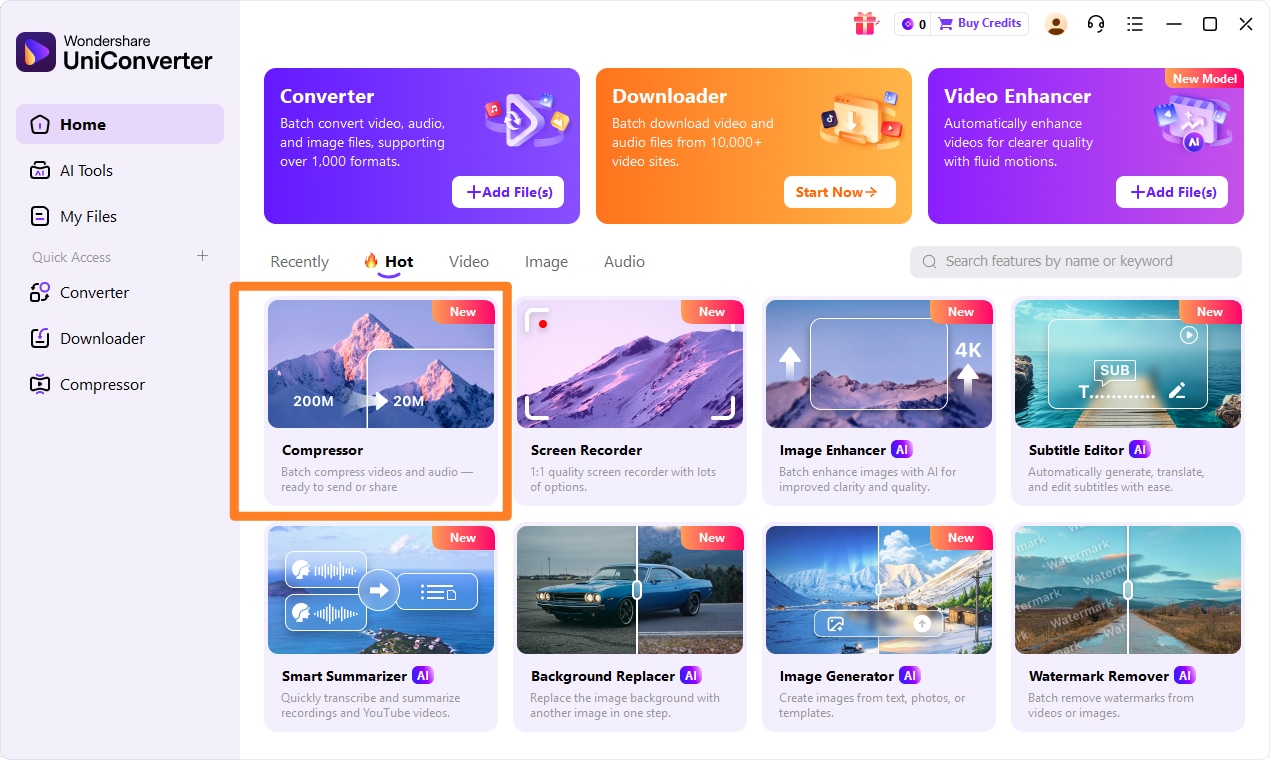
Step 1: Open UniConverter and Choose Compressor
Launch UniConverter on your computer. On the main interface, navigate to the "Compressor" tab. This is where all your compression tasks begin.
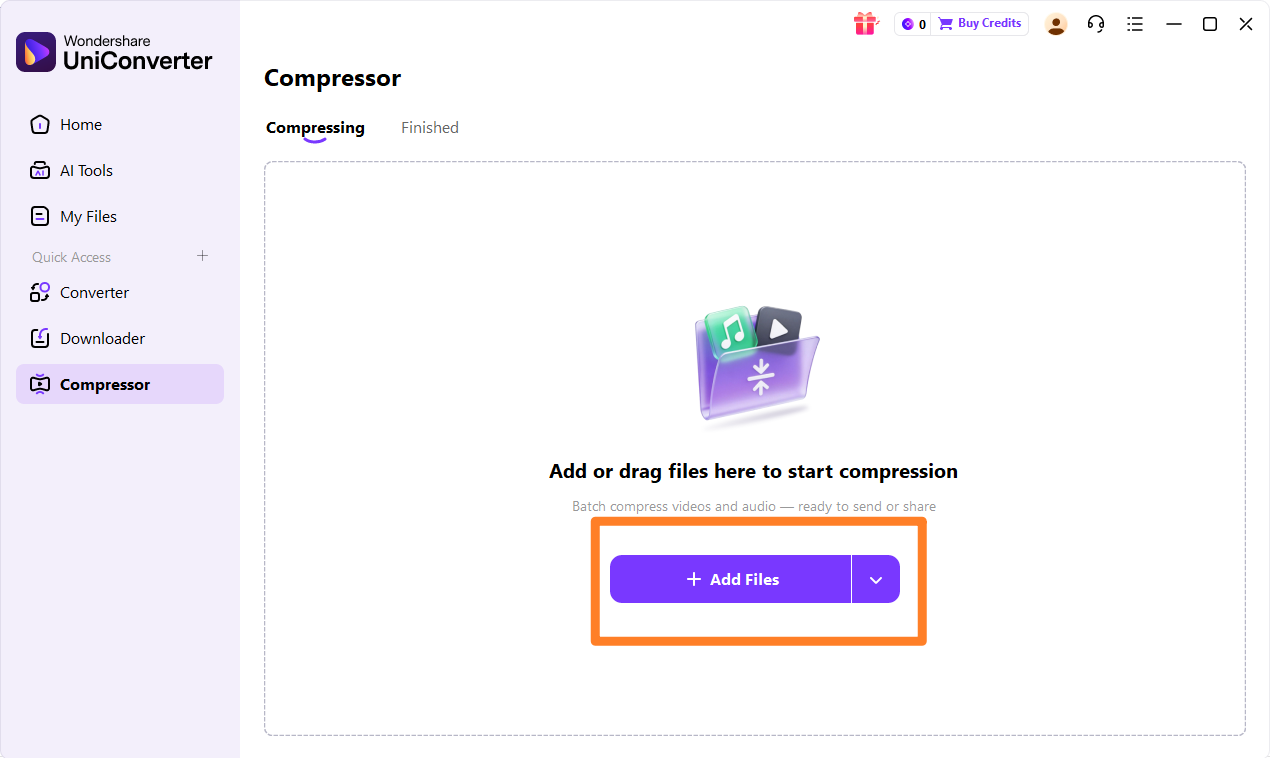
Step 2: Upload the Video, Audios or Images
Click on the "Add Files" button or simply drag and drop your video, audio, or image files into the UniConverter window. You can add multiple files for batch compression.
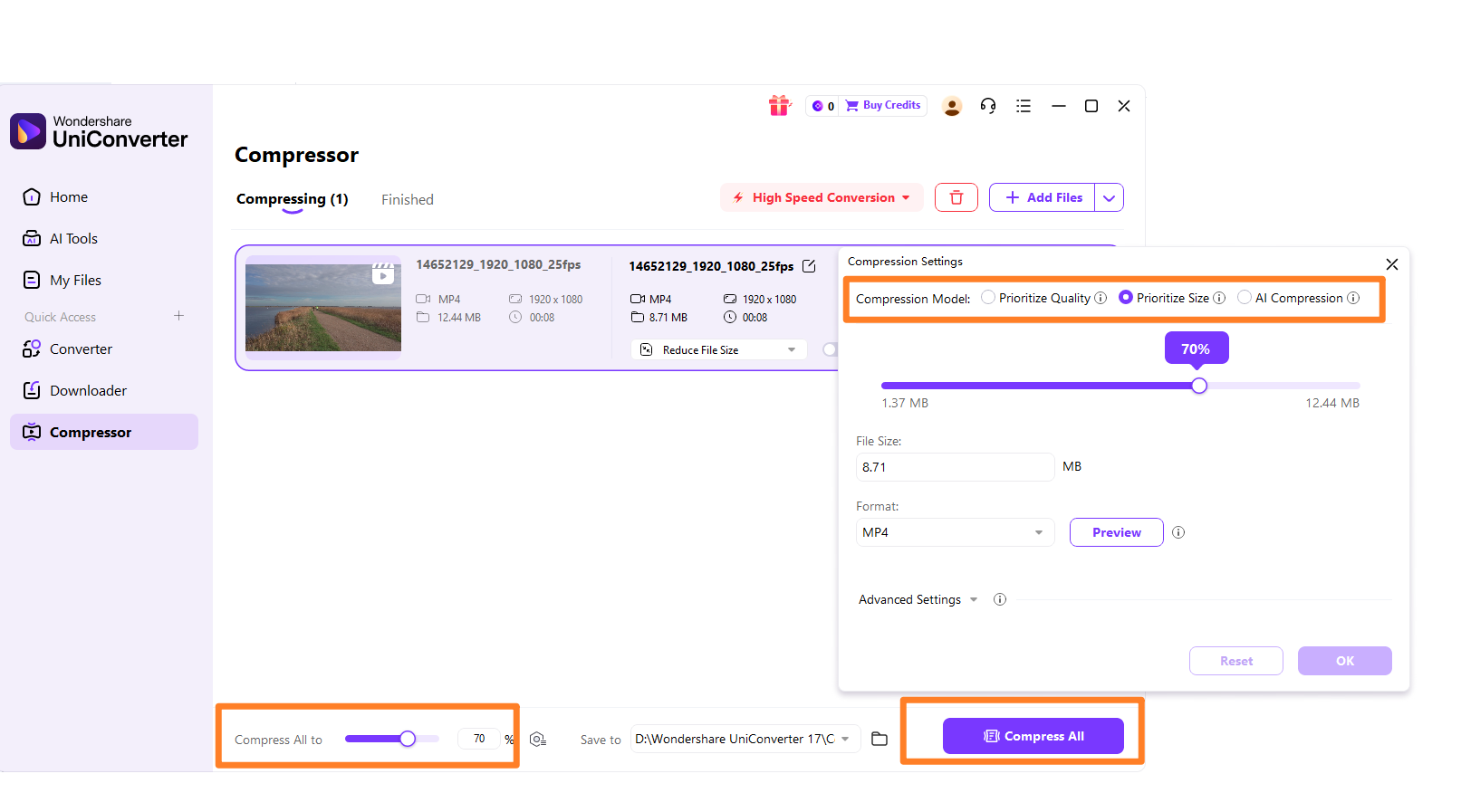
Step 3: Choose Required Parameters
Once your files are loaded, you'll see options to adjust compression settings. You can choose your desired output format, resolution, bitrate, and quality. UniConverter often provides smart compression suggestions.
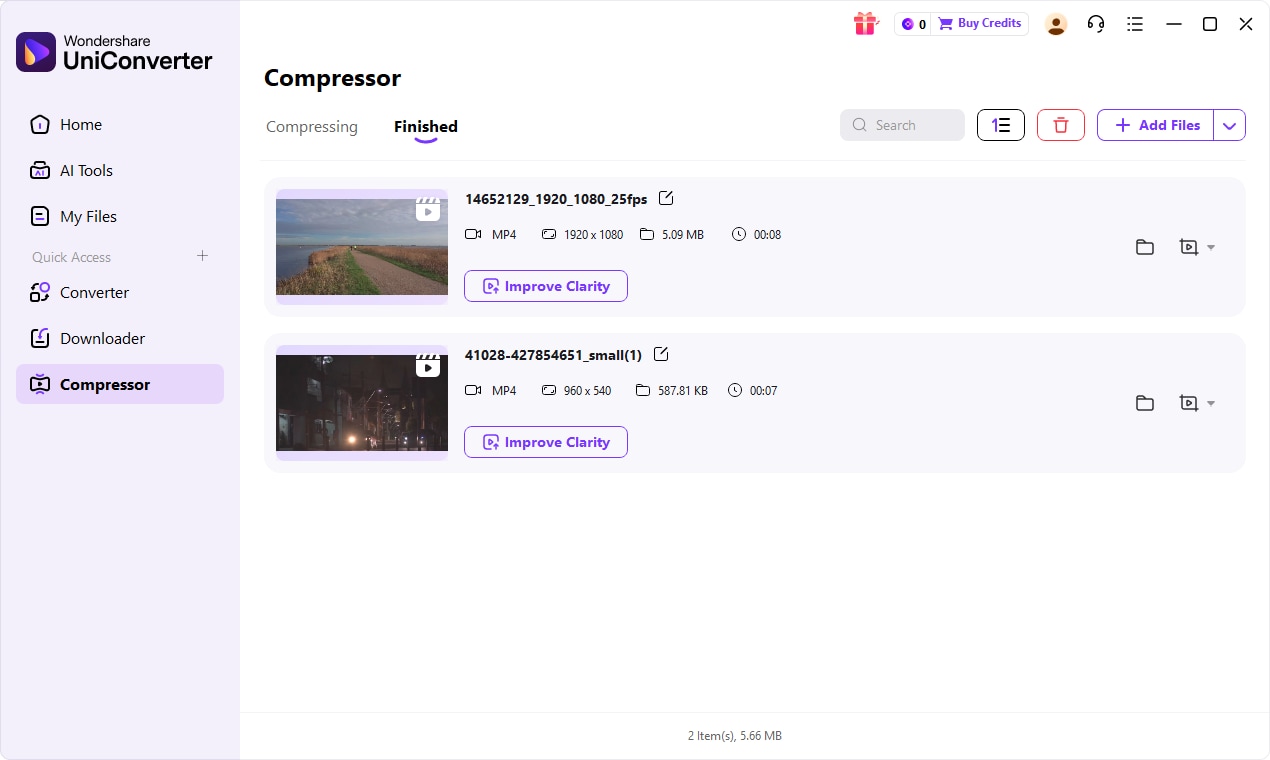
Step 4: Save the Compressed File
After setting your parameters, click the "Compress" button. UniConverter will process your files quickly. Once done, you can find your compressed files in the designated output folder.

Riverside Video Compressor Alternative for Better Control?
Part 7: Final Verdict and Recommendations
After thoroughly evaluating Riverside Video Compressor and its alternatives, my conclusion is that its value is highly dependent on your existing workflow. For those deeply integrated into the Riverside.fm ecosystem, the convenience and seamlessness of its compressor are undeniable. It's a fantastic bonus feature that streamlines post-production for podcasts and video interviews recorded on the platform, offering good quality preservation and an intuitive interface. However, for anyone needing a more versatile, standalone compression solution for videos from diverse sources, or requiring advanced features like extensive batch processing and broader format support, dedicated tools like UniConverter or even free options like HandBrake offer superior flexibility and power. For advanced users who demand granular control and professional-grade output, Adobe Media Encoder remains a top choice, especially within the Adobe Creative Cloud suite. Ultimately, the decision boils down to balancing quality, file size, and your specific workflow needs. Don't compromise on your Riverside Video Compressor review expectations; choose the tool that best serves your unique content creation journey.
Part 8: FAQs
-
1. Is Riverside Video Compressor free to use?
Riverside Video Compressor is typically included as part of the Riverside.fm platform subscription. It's not a standalone free application.
-
2. Can I compress videos recorded outside of Riverside.fm using their compressor?
While technically possible to upload external videos, its primary design is for videos recorded within the Riverside.fm ecosystem, and standalone functionality might be limited compared to dedicated compression software.
-
3. What is the best video compression software for beginners?
For beginners, tools like UniConverter or even Riverside's integrated compressor (if you're a Riverside user) offer user-friendly interfaces. UniConverter, in particular, provides a great balance of ease of use and powerful features.
-
4. Does video compression reduce video quality?
Yes, compression inherently involves some loss of data, which can lead to a reduction in quality, especially with aggressive compression settings. It's a trade-off between file size and visual fidelity.
-
5. How does UniConverter compare to free online video compressors?
UniConverter generally offers more robust features, higher quality output, and better security compared to many free online compressors, which often have file size limits, fewer customization options, and can sometimes compromise data privacy.
