
- Riverside Compressor: Simplifies audio leveling for Riverside.fm users, ideal for quick podcast/interview fixes.
- Core Features: Offers automatic leveling and basic noise reduction, integrated seamlessly within Riverside.fm for ease of use.
- User Profile: Best for podcasters and content creators prioritizing speed over granular control in their workflow.
- Versus Competitors: Lacks advanced customization of Audacity or Adobe Audition; excels in Riverside.fm integration.
- Potential Pitfalls: Limited customization, tied to Riverside.fm ecosystem, not for high-fidelity audio mastering.
- UniConverter Alternative: Offers versatile, efficient audio/video compression for diverse formats and batch processing needs.
In this article
- Part 1: What is Riverside Audio Compressor?
- Part 2: Riverside Audio Compressor: Core Features, Pros, and Cons
- Part 3: Riverside Audio Compressor: The Users and Use Cases
- Part 4: Riverside Audio Compressor vs. Competitors
- Part 5: Potential Pitfalls and Considerations
- Part 6: How to Use UniConverter for Efficient Audio/Video Compression
- Part 7: Conclusion
- Part 8: FAQs
When I'm looking for tools to streamline my content creation, especially for audio, the Riverside Audio Compressor review always piques my interest. As a podcaster and online educator, I constantly grapple with inconsistent audio levels, background noise, and the sheer time it takes to polish recordings. This review dives deep into Riverside's built-in compressor, exploring its features, comparing it to popular alternatives like Audacity and Adobe Audition, and ultimately helping you decide if it's the right fit for your workflow. I'll also highlight potential pitfalls and introduce a versatile alternative, UniConverter, for those needing more comprehensive audio and video compression solutions. My goal is to provide a practical, scenario-based analysis to guide your decision-making process.
Part 1: What is Riverside Audio Compressor?
The Riverside Audio Compressor is an integrated feature within the Riverside.fm platform, designed to automatically normalize and optimize audio levels for recordings made directly through their service. It aims to simplify the post-production process for content creators, particularly podcasters and video interviewers, by ensuring a consistent and professional sound without requiring extensive audio engineering knowledge. My experience with it has shown it to be a quick solution for common audio issues, making my voice sound more even and present. This review will address whether its convenience outweighs its limitations, especially when compared to more robust, standalone audio editing software.
The Growing Need for Efficient Audio Processing
* Inconsistent Audio Levels: Guests or hosts often have varying microphone setups and speaking volumes, leading to jarring differences in audio.
* Time-Consuming Manual Editing: Manually adjusting levels, reducing noise, and mastering audio can take hours, especially for longer episodes.
* Accessibility for Non-Experts: Many content creators lack the technical expertise or budget for professional audio engineers.
Part 2: Riverside Audio Compressor: Core Features, Pros, and Cons
The Riverside Audio Compressor is built for simplicity, offering a straightforward approach to audio normalization. Its core capability lies in automatically detecting and adjusting audio peaks and troughs to create a more uniform sound profile. I've found it particularly useful for quickly processing interview segments where guests might have fluctuating volume.
* Automatic Leveling: Intelligently adjusts audio levels to a consistent loudness.
* Noise Reduction (Basic): Offers some degree of background noise attenuation.
* One-Click Processing: Simplifies the compression process to a single action.
* Integrated Workflow: Works directly within the Riverside.fm recording environment.
* Export Options: Allows for compressed audio export alongside video.
- Pros:
- Intuitive User Interface for Quick Edits: I can literally click a button and have my audio processed.
- High-Quality Output with Minimal Artifacts: For basic leveling, the results are surprisingly clean.
- Seamless Integration with Riverside.fm Platform: It's part of the ecosystem, so no extra steps are needed.
- Cons:
- Limited Advanced Customization Options: I can't fine-tune attack, release, or ratio settings.
- Dependency on Riverside.fm Ecosystem: It's not a standalone tool I can use with any audio file.
Part 3: Riverside Audio Compressor: The Users and Use Cases
The Riverside Audio Compressor is clearly designed with a specific user in mind: the busy content creator who prioritizes speed and convenience over granular control. I’ve found it to be a lifesaver when I need to get an episode out quickly without spending hours in a digital audio workstation (DAW).
- Best Use Case: Podcasters and content creators on Riverside.fm needing fast, consistent audio levels. If you're recording interviews or solo episodes directly on Riverside.fm and just need your audio to sound more polished and even, this tool is perfect. I use it for my weekly podcast, where consistent guest audio is crucial but I don't have a dedicated sound engineer. It ensures my audience doesn't have to constantly adjust their volume.
- Limited Use Case: Professional audio engineers requiring granular control and specialized tools. If you're a professional audio engineer working on music production, complex sound design, or highly nuanced voice-overs, this compressor will fall short. I wouldn't use it for a client project that demands specific compression curves or advanced mastering techniques, as it simply doesn't offer that level of control. It's a quick fix, not a comprehensive solution.
Part 4: Riverside Audio Compressor vs. Competitors
When I look at audio compression tools, I consider a few key aspects: how easy it is to use, how well it integrates with my workflow, and the level of control it offers. Here's how the Riverside Audio Compressor stacks up against some popular alternatives:
| Feature/Scenario | Riverside Audio Compressor | Audacity | Adobe Audition | UniConverter |
| Ease of Use for Beginners | Excellent | Good | Moderate | Excellent |
| Integration with Recording Platform | Native (Riverside.fm) | None | Adobe Creative Cloud | Standalone/Versatile |
| Advanced Audio Editing | Basic | Moderate | Excellent | Basic (for audio) |
| Real-time Processing | Yes | No | Yes | Yes (preview) |
| Cost | Included with Riverside.fm | Free | Subscription | One-time/Subscription |
| Output Quality | Good (for basic leveling) | Variable (user skill) | Excellent | Good (for compression) |
| Batch Processing | Varies (check updates) | Manual | Yes | Yes |
| Customer Support | Riverside.fm support | Community/Forums | Adobe Support | Dedicated Support |
| Security | Riverside.fm platform security | Local file processing | Adobe cloud security | Local file processing |
Key Differentiators: Simplicity vs. Power
For me, the Riverside Audio Compressor shines in its simplicity and seamless integration within the Riverside.fm ecosystem. If I'm already recording there, it's a no-brainer for quick audio fixes. Audacity offers more manual control and is free, making it great for those willing to learn, but it lacks real-time processing. Adobe Audition is the powerhouse, providing unparalleled control and advanced features, ideal for professionals, but it comes with a steep learning curve and a subscription cost. UniConverter, while not a dedicated audio editor, excels in its batch processing capabilities and ease of use for general audio/video compression across various formats, making it a strong contender for cross-platform needs.
Part 5: Potential Pitfalls and Considerations
When I consider using any new tool, especially one that processes my content, I always look beyond the immediate benefits to potential risks. The Riverside Audio Compressor, while convenient, has its own set of considerations that I keep in mind.
Data Privacy and Security Concerns
Since Riverside.fm is a cloud-based platform, my audio files are uploaded and processed on their servers. While Riverside.fm generally adheres to industry standards for data security, I always consider the implications of my raw audio, and potentially sensitive conversations, residing on a third-party server. For highly confidential recordings, I might opt for local processing with a desktop application.
Hidden Costs or Subscription Dependencies
The compressor is "included" with a Riverside.fm subscription. This means it's not a standalone free tool. If I decide to stop using Riverside.fm for recording, I lose access to this compressor. It's not an additional cost per se, but it ties me into their ecosystem, which might not be ideal if my recording needs change or if I want to use it with audio from other sources.
Compatibility with Non-Riverside.fm Workflows
This is a big one for me. The Riverside Audio Compressor is primarily designed for audio recorded within Riverside.fm. While I might be able to export audio from other sources and then re-upload it to Riverside.fm to use the compressor, it's an clunky workaround. It's not a universal audio compression tool that I can just drag and drop any WAV or MP3 file into, which limits its utility outside of the Riverside.fm environment.
Output Quality Limitations for High-Fidelity Audio
While the compressor does a good job of leveling, it's not designed for high-fidelity audio mastering. If I'm working on a music project or a podcast that demands pristine audio quality with specific sonic characteristics, I find its automated approach too blunt. It lacks the fine-tuning capabilities (like adjusting attack, release, or ratio) that professional audio engineers rely on to achieve specific creative effects or to meticulously clean up complex audio issues. It's a "good enough" solution, not a "best possible" one.
Part 6: How to Use UniConverter for Efficient Audio/Video Compression
Sometimes, I find that dedicated tools like the Riverside Audio Compressor, while useful for a specific niche, do not offer the flexibility or broader features I need for different audio compression and video compression tasks. When I run into limitations with batch processing, unstable results, or noticeable quality loss, I turn to UniConverter. It offers a more complete solution with broad format support, stable output quality, and efficient handling for repeated tasks. It is also a practical choice for users looking for a reliable media compression tool that works well across different file types.
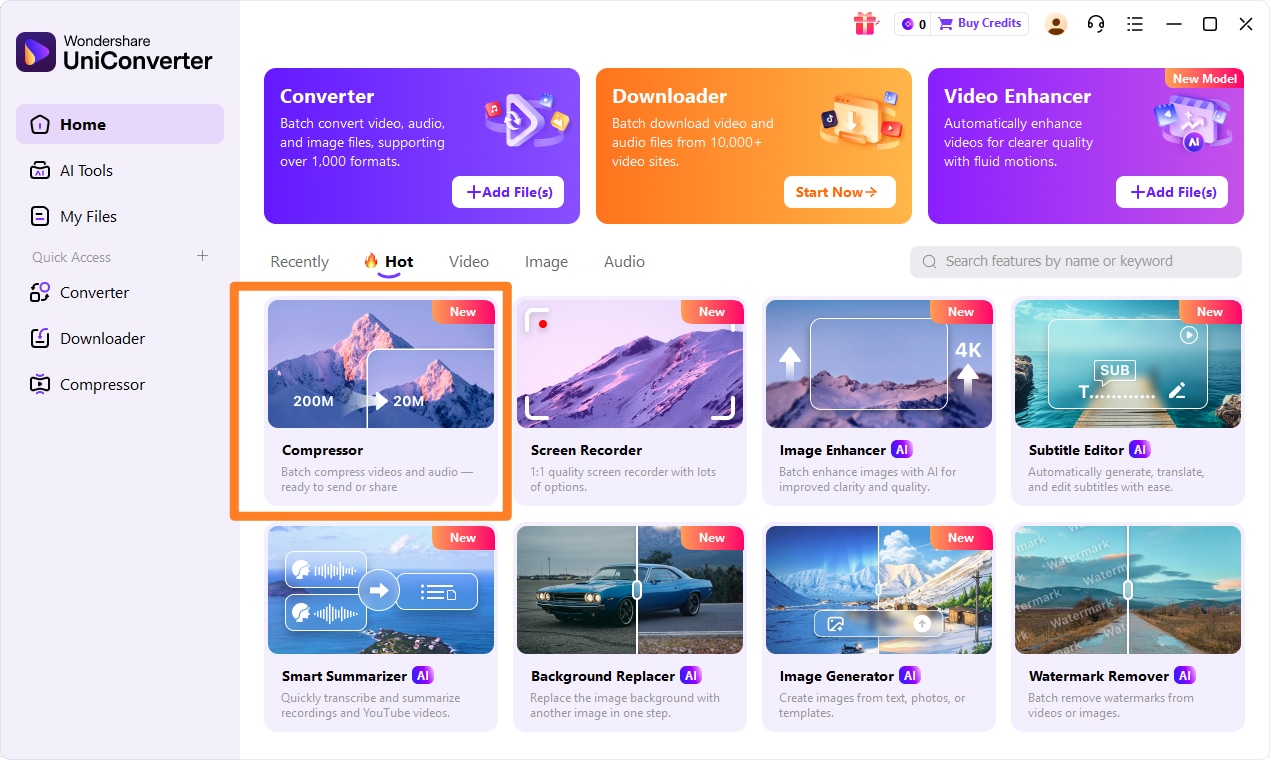
Step 1: Open UniConverter and Choose Compressor
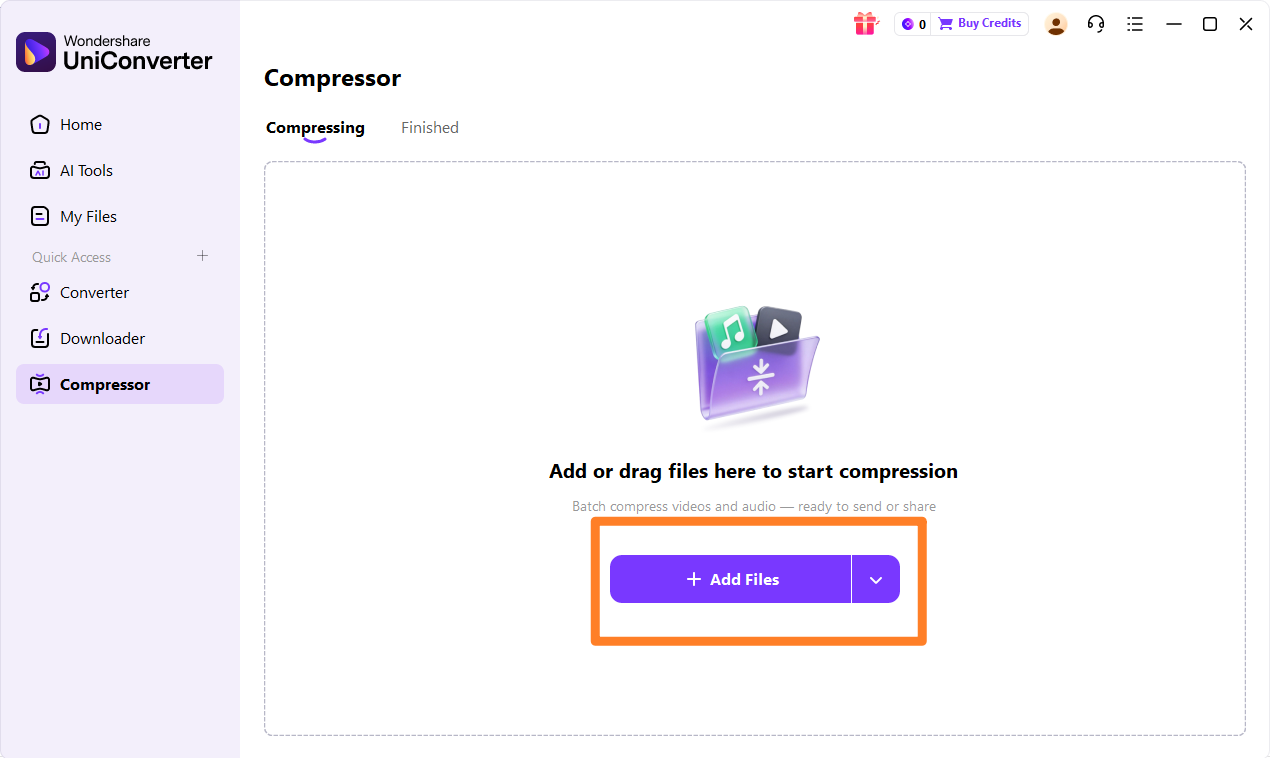
Step 2: Upload the Video, Audios or Images
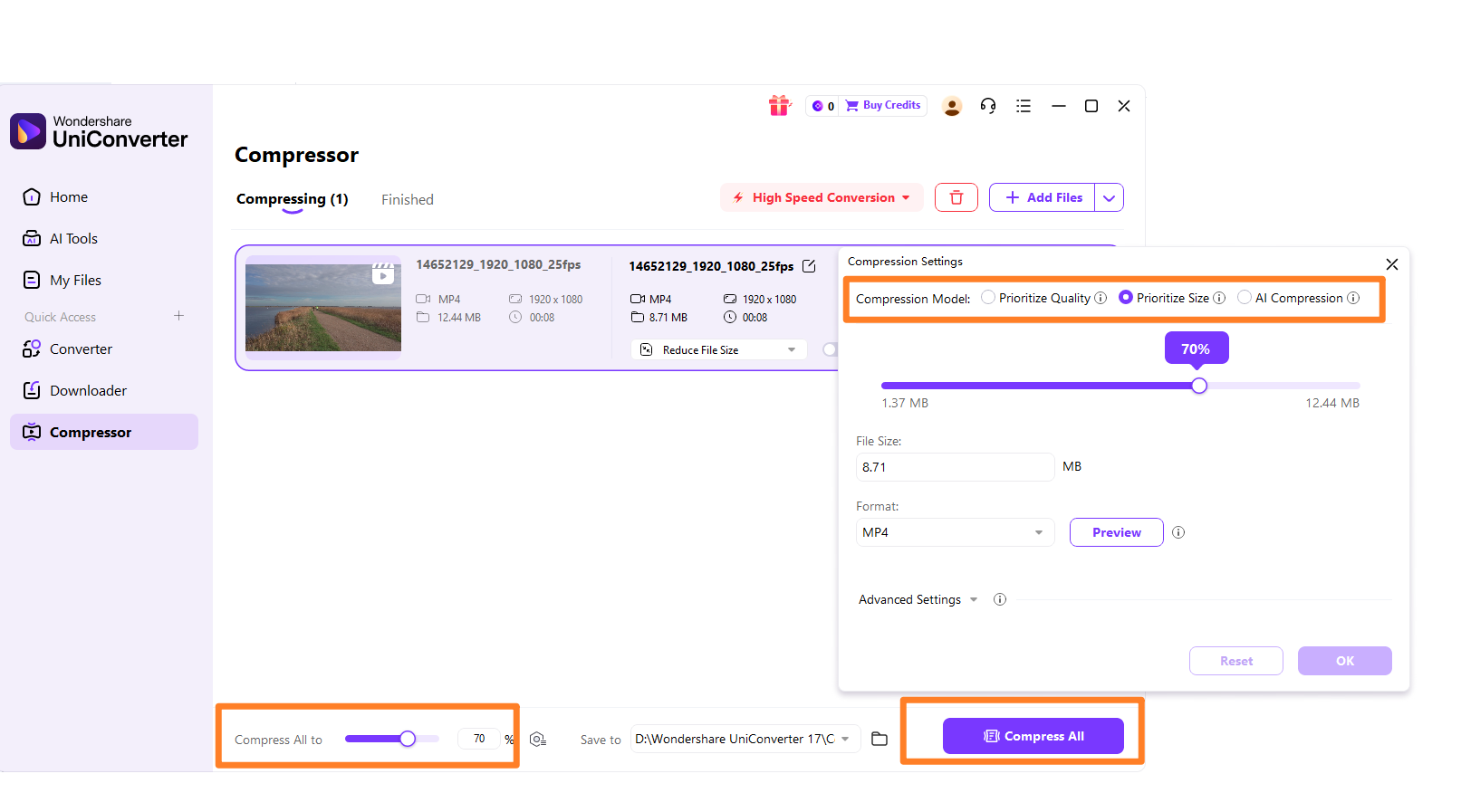
Step 3: Choose Required Parameters
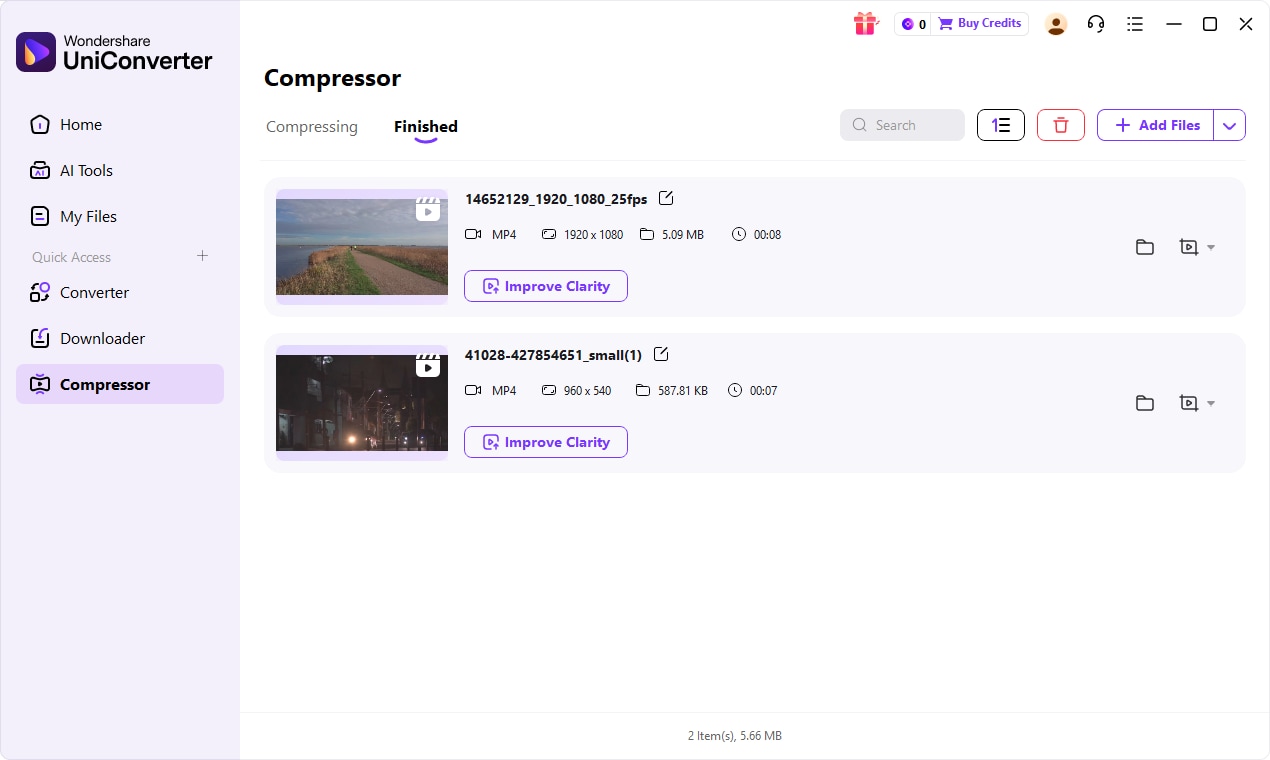
Step 4: Save the Compressed File

Riverside Audio Compressor Alternative for Better Audio
Part 7: Conclusion
After thoroughly exploring the Riverside Audio Compressor review, I've come to a clear understanding of its place in the content creation landscape. For me, as a podcaster already ingrained in the Riverside.fm ecosystem, it's an incredibly convenient and efficient tool for quickly leveling audio and ensuring a consistent listening experience for my audience. Its ease of use makes it a fantastic option for beginners who are intimidated by complex audio software. However, I recognize its limitations for advanced users or professional audio engineers who require granular control over compression parameters and specialized editing capabilities. For those who record outside of Riverside.fm or need a more versatile solution for various audio and video compression tasks, alternatives like Audacity offer more manual control, while Adobe Audition provides professional-grade features. For cross-platform needs, batch processing, and a broader range of media compression, UniConverter emerges as a strong, user-friendly contender that I often rely on. Ultimately, the best choice depends on your specific workflow, technical expertise, and the level of control you demand from your audio processing tools.
Part 8: FAQs
-
1. Is Riverside Audio Compressor free to use?
It's typically included as part of the Riverside.fm subscription. You won't find it as a standalone free application.
-
2. Can I use Riverside Audio Compressor with audio recorded outside of Riverside.fm?
While primarily designed for Riverside.fm recordings, some export/import options might exist, but it's not its primary function and can be cumbersome. For audio from other sources, I'd recommend a more versatile tool like UniConverter for easy compression.
-
3. How does Riverside Audio Compressor compare to professional DAWs like Logic Pro or Pro Tools?
It's a simpler, more automated tool focused on basic audio leveling, not a full-fledged Digital Audio Workstation. Professional DAWs offer extensive editing, mixing, and mastering capabilities that the Riverside compressor does not.
-
4. Does Riverside Audio Compressor support batch processing?
This feature may vary; I'd advise checking the latest Riverside.fm updates. If batch processing is crucial for your workflow, UniConverter is an excellent alternative that handles multiple files efficiently.
-
5. What are the main benefits of using an audio compressor?
The main benefits are to even out audio levels, make speech clearer and more consistent, and prevent sudden loud or quiet parts, creating a more comfortable listening experience for your audience.
