
- RIOT's Value: Free, offline, granular control for single JPEG, GIF, PNG image compression.
- RIOT's Limitations: Outdated UI, no batch processing, lacks modern features like WebP support.
- Best Use Case: RIOT excels for quick, single-image optimizations for casual web uploads.
- Comparative Advantage: UniConverter offers batch processing, modern UI, and broader format support.
- Decision Factor: Choose RIOT for simplicity and offline use; UniConverter for efficiency and advanced features.
In this article
- Part 1: What is RIOT Image Compressor?
- Part 2: RIOT Image Compressor: Core Features, Pros, and Cons
- Part 3: RIOT Image Compressor: User & Scenario Analysis
- Part 4: RIOT Image Compressor & Competitors: A Comparative Analysis
- Part 5: Risks and Pitfalls When Using RIOT Image Compressor
- Part 6: How to Use UniConverter for Efficient Image Compression
- Part 7: Conclusion
- Part 8: FAQs
When I first started dabbling in web design, optimizing images was a constant headache. Large files meant slow loading times, and nobody wants to wait around for a website to load. That's when I stumbled upon RIOT Image Compressor review. It promised a simple, free solution to a common problem. This RIOT Image Compressor review aims to give you an honest, in-depth look at this classic tool, comparing it to modern alternatives and helping you decide if it still holds up in today's fast-paced digital world. We'll explore its features, pinpoint its strengths and weaknesses, and guide you through various scenarios to see where it truly shines—or falls short.
Part 1: What is RIOT Image Compressor?
RIOT (Radical Image Optimization Tool) Image Compressor is a free image optimizer that allows you to visually adjust compression parameters for JPEG, GIF, and PNG image formats. Developed as a standalone application, it has been a go-to for many users seeking to reduce image file sizes without significant quality loss. My initial impression was that it was a no-frills tool, focused solely on its core function. This review will delve into whether its simplicity remains a virtue or a limitation in the current market.
The Landscape of Image Compression Tools
The need for efficient image compression has never been greater. With the proliferation of high-resolution cameras and the demand for faster web experiences, optimizing images is crucial for:
* Website Performance: Faster loading times improve user experience and SEO rankings.
* Storage Efficiency: Smaller files consume less disk space, whether on local drives or cloud servers.
* Bandwidth Conservation: Reduced file sizes mean less data transfer, beneficial for both users and service providers.
* Mobile Responsiveness: Optimized images load quicker on mobile devices, enhancing the on-the-go browsing experience.
Part 2: RIOT Image Compressor: Core Features, Pros, and Cons
RIOT Image Compressor, at its heart, is about giving you control over your image compression. I've found its core capabilities to be quite straightforward, focusing on direct manipulation of compression settings.
Core Features:
* Visual Compression Adjustment: I can see the impact of compression in real-time.
* Format Support: It handles JPEG, GIF, and PNG, covering most common web image types.
* Metadata Removal: I can strip EXIF data to further reduce file size.
* Basic Image Editing: It offers simple resizing and rotation options.
* Color Quantization: For PNGs and GIFs, I can adjust color palettes.
Pros:
* Highly customizable compression settings for granular control. I appreciate being able to fine-tune the quality slider and see the immediate effect.
* Supports a wide range of image formats (JPEG, GIF, PNG, etc.). This covers almost all my basic image optimization needs.
* Real-time preview of compressed images for immediate feedback. This feature is a lifesaver for balancing quality and file size.
Cons:
* Outdated user interface and limited modern features. The UI feels like a relic from the early 2000s, which can be a bit jarring.
* Lack of batch processing for large numbers of images. This is a significant drawback when I have dozens of images to optimize.
Part 3: RIOT Image Compressor: User & Scenario Analysis
RIOT Image Compressor caters to a specific type of user and workflow. From my experience, it's not a one-size-fits-all solution, but it does excel in particular niches.
Best Use Case: Optimizing Single Images for Web Uploads
When I need to quickly optimize one or two images for a blog post or a social media update, RIOT is incredibly handy. I can drag and drop an image, tweak the compression settings until I'm happy with the quality/size balance, and save it. The real-time preview makes this process efficient and intuitive for individual files. For someone who doesn't deal with images in bulk and just needs a reliable, free tool for occasional optimization, RIOT fits the bill perfectly. It's like having a dedicated, simple tool for a single, recurring task.
Limited Use Case: Large-Scale Image Processing for E-commerce Platforms
However, if I'm managing an e-commerce store with hundreds or thousands of product images, RIOT quickly becomes impractical. The absence of batch processing means I'd have to open, optimize, and save each image individually. This is an enormous time sink and completely unfeasible for large-scale operations. For such scenarios, I definitely need a tool that can handle multiple images simultaneously, apply consistent settings, and ideally integrate with cloud storage or content management systems. RIOT simply isn't built for that kind of heavy lifting.
Part 4: RIOT Image Compressor & Competitors: A Comparative Analysis
When I look at RIOT Image Compressor in the broader market, it's clear where it stands. It’s a solid, free, offline tool, but it lacks the bells and whistles of more modern, often paid, alternatives.
| Feature/Tool | RIOT Image Compressor | UniConverter | TinyPNG | ImageOptim |
| Batch Processing | No | Yes | Yes | Yes |
| Cloud Integration | No | Yes | Yes | No (Desktop) |
| UI/UX | Outdated | Modern | Modern | Modern |
| Advanced Features | Limited | Extensive | Limited | Extensive |
| Output Quality | Good | Excellent | Excellent | Excellent |
| Ease of Use | Moderate | High | High | High |
RIOT is great for quick, single-image tasks where I don't need internet access. UniConverter, on the other hand, offers a comprehensive suite for various media tasks, including robust batch image compression with excellent quality. TinyPNG is fantastic for web-based, lossy PNG and JPEG compression, often yielding impressive file size reductions. ImageOptim, for macOS users, provides advanced optimization algorithms for multiple formats. If I prioritize offline functionality and granular control over single images, RIOT is fine. But for efficiency, quality, and a broader feature set, especially with batch processing or cloud integration, UniConverter, TinyPNG, or ImageOptim are significantly stronger contenders.
Key Differentiators: Offline Functionality vs. Cloud-Based Solutions
The most significant difference I've observed is RIOT's purely offline nature versus the increasing prevalence of cloud-based or cloud-integrated tools. RIOT doesn't require an internet connection, which is a huge plus if I'm working in an environment with limited or no connectivity. However, this also means it misses out on the convenience of cloud storage, automatic syncing, and the powerful processing capabilities that cloud services offer. Modern tools often leverage cloud infrastructure for faster processing and easier sharing, which RIOT simply cannot do.
Part 5: Risks and Pitfalls When Using RIOT Image Compressor
While RIOT Image Compressor is a free and functional tool, I've encountered several potential issues and limitations that users should be aware of, especially if they rely on it for critical tasks.
Potential for Quality Degradation with Aggressive Compression
One of the biggest risks I've faced is pushing the compression too far. While RIOT gives me granular control, it's easy to overdo it, especially with JPEG compression. If I set the quality too low, the image can quickly develop noticeable artifacts, color banding, and a general loss of detail that makes it unusable. The real-time preview helps, but it still requires a keen eye and understanding of acceptable quality levels for different contexts. There's no "undo" button for a saved, aggressively compressed image, so I always make sure to save a copy.
Lack of Regular Updates and Security Patches
RIOT Image Compressor hasn't seen significant updates in years. This lack of ongoing development means it might not be optimized for newer operating systems or hardware. More critically, it could potentially harbor unpatched security vulnerabilities, though for an offline image compression tool, this risk is generally lower than for internet-connected software. Still, it's something to consider if I'm running a tight ship on system security.
Limited Support for Newer Image Formats (e.g., WebP)
As web technologies evolve, so do image formats. WebP, for instance, offers superior compression to JPEG and PNG, but RIOT doesn't support it. This means if I want to leverage the benefits of modern formats for web optimization, I have to turn to other tools. RIOT's focus remains on the older, more established formats, which can be a limitation for forward-thinking web developers or content creators.
Absence of Cloud Backup or Sync Features
Since RIOT is a desktop-only application, it lacks any form of cloud integration. This means my optimized images are saved locally, and there's no automatic backup or syncing across devices. If my hard drive fails, those optimized images are gone unless I've manually backed them up. For collaborative workflows or simply peace of mind, this absence of cloud features can be a significant drawback, requiring me to implement my own backup strategies.
Part 6: How to Use UniConverter for Efficient Image Compression
When I need more advanced features than RIOT can offer—especially for batch processing, support for modern file formats, or a smoother overall workflow—I usually turn to UniConverter as a more capable alternative. It works especially well as a reliable video compressor, offering a cleaner experience without intrusive ads or unnecessary complexity. I also like that it can help compress videos without quality loss as much as possible, while GPU acceleration helps speed up processing. Since it also supports image compression and other media tools, it works well as a practical all-in-one solution for everyday file compression and media management.
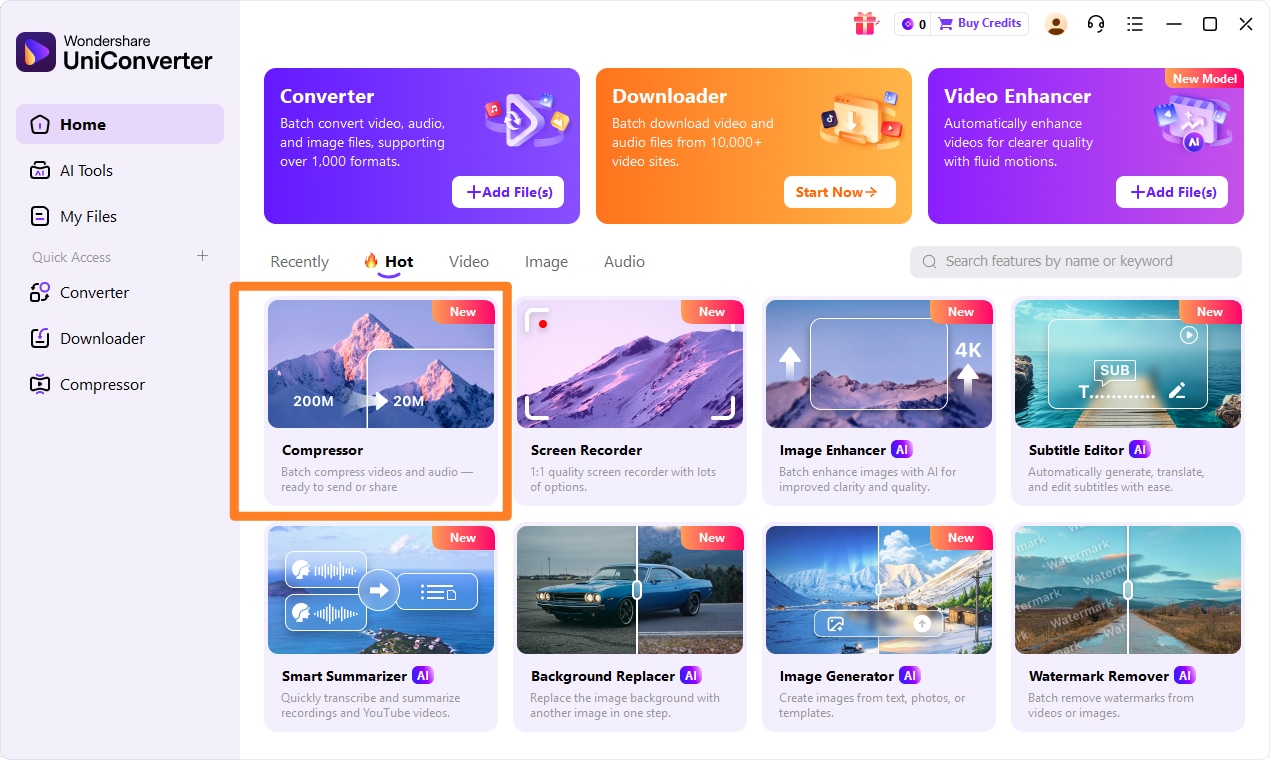
Open UniConverter and Choose Compressor
First, I launch UniConverter and navigate to the "Compressor" tool. It's typically easy to find on the main interface.
Step 1: Open UniConverter and Choose Compressor
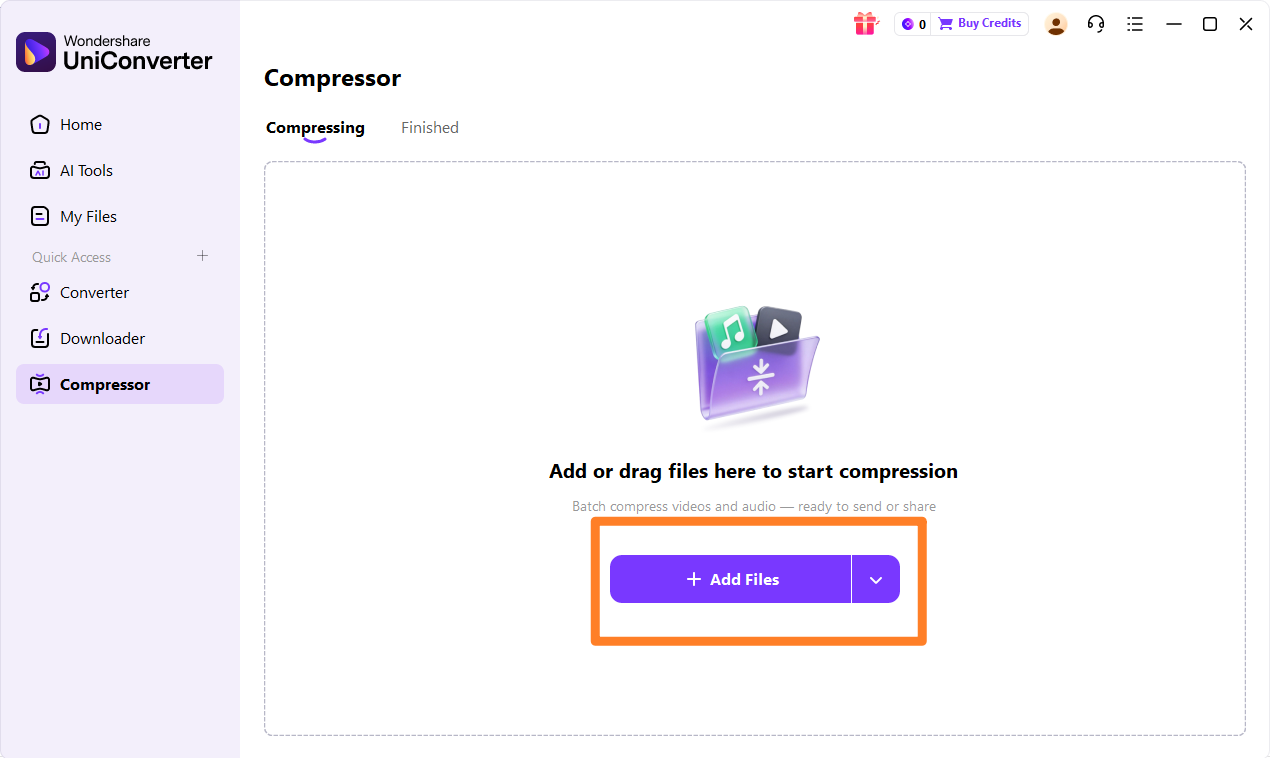
Upload the Video, Audios or Images
Next, I simply drag and drop the images (or videos/audios, as UniConverter supports all these media types) I wish to compress into the designated area. I can add multiple files simultaneously for efficient batch processing.
Step 2: Upload the Video, Audios or Images
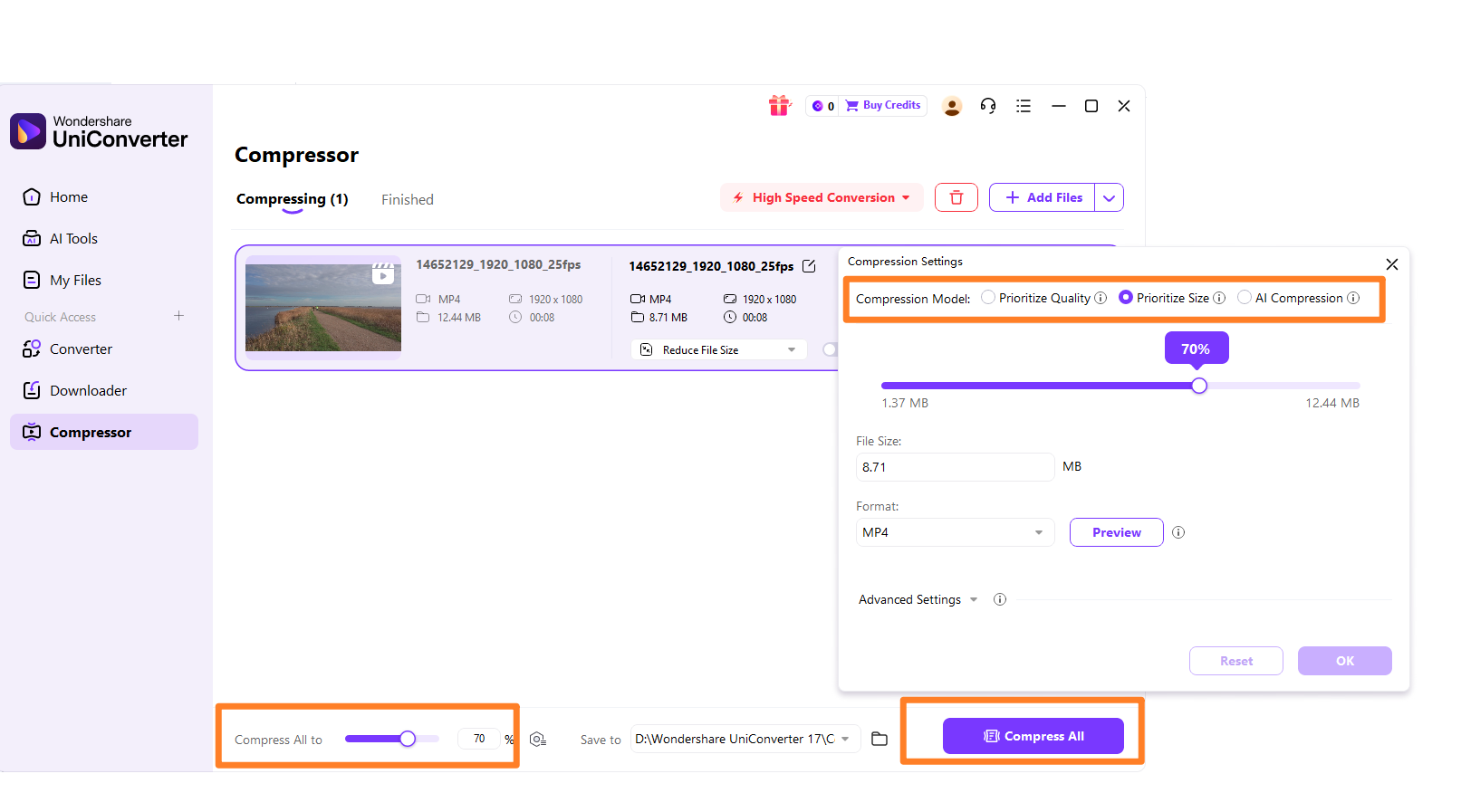
Choose Required Parameters
Then, I select my desired compression settings. UniConverter provides various presets and allows for customization of output quality, resolution, and format. I can preview the estimated file size reduction before proceeding.
Step 3: Choose Required Parameters
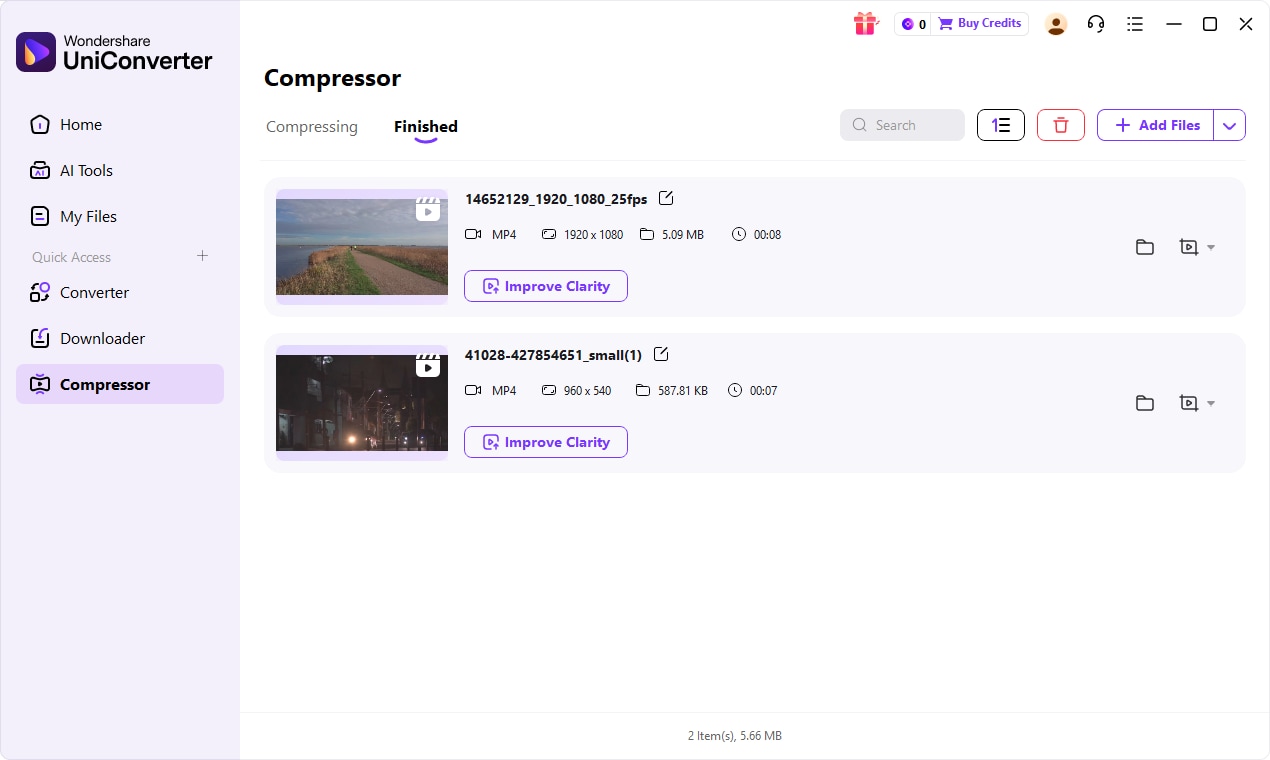
Save the Compressed File
Finally, I choose my output folder and click "Compress." UniConverter processes the files rapidly, utilizing GPU acceleration for speed, and saves them to my specified location.
Step 4: Save the Compressed File

Seeking a RIOT Image Compressor Alternative?
Part 7: Conclusion
After spending considerable time with RIOT Image Compressor review, I've come to a clear understanding of its place in the image optimization landscape. For casual users who occasionally need to shrink a single image for a blog post or email, RIOT's simplicity and free nature make it a perfectly adequate choice. Its granular control over compression settings for JPEG, GIF, and PNG is commendable for individual file adjustments. However, for professionals or anyone dealing with a large volume of images, its limitations become glaring. The outdated interface, lack of batch processing, and absence of support for modern formats like WebP significantly hinder its utility in a fast-paced, high-demand environment. While it offers a valuable offline solution, the risks of quality degradation with aggressive settings and the lack of ongoing updates are points of concern. For those requiring efficiency, advanced features, and a comprehensive solution that supports batch processing and modern formats, exploring alternatives like UniConverter is not just an option, but a necessity. Balancing quality and file size remains a crucial consideration, and the right tool depends entirely on your specific workflow and needs.
Part 8: FAQs
-
1. Is RIOT Image Compressor free to use?
Yes, RIOT Image Compressor is a free, open-source tool.
-
2. Does RIOT Image Compressor support batch processing?
No, RIOT Image Compressor does not offer native batch processing capabilities. You would need to process images one by one.
-
3. Can RIOT Image Compressor optimize images for web use?
Yes, it provides various options to optimize images for web platforms by reducing file size and allowing quality adjustments.
-
4. What are the main limitations of RIOT Image Compressor?
Its main limitations include an outdated interface, lack of batch processing, limited advanced features, and no support for newer image formats like WebP.
-
5. Is UniConverter a better alternative for image compression?
For users requiring batch processing, modern features, support for a wider range of formats (including WebP), and a comprehensive media toolkit, UniConverter is generally a superior alternative, offering a more efficient and feature-rich experience.
