
- Resmush.it Value: Free, easy image optimization, especially for web developers and WordPress users.
- Core Features: Compresses JPEG, PNG, GIF with lossy/lossless methods; batch processing and WordPress integration.
- Limitations: Lacks advanced customization, relies on external servers, unsuitable for professional photography workflows.
- Comparative Advantage: UniConverter offers advanced control, offline capability, video compression, and enhanced privacy.
- Risks: Potential data privacy concerns, metadata loss, inconsistent quality, and over-reliance on automated settings.
- Decision Factor: Choose Resmush.it for quick, basic web optimization; UniConverter for professional, comprehensive control.
In this article
- Part 1: What is Resmush.it
- Part 2: Resmush.it: Core Features, Pros, and Cons
- Part 3: Resmush.it: Ideal Use Cases and Limitations
- Part 4: Resmush.it & Competitors: A Comparative Analysis
- Part 5: Risks and Pitfalls to Consider
- Part 6: How to Use UniConverter to Compress Efficiently
- Part 7: Conclusion
- Part 8: FAQs
When I'm looking to optimize images for my websites, I often find myself navigating a sea of online tools. Resmush.it Image Compressor is one of those tools that frequently pops up, promising quick and efficient image size reduction. This review aims to cut through the noise, offering a comprehensive look at Resmush.it's capabilities, its strengths, and its weaknesses, especially when stacked against its competitors. I'll delve into its core features, explore ideal use cases, and highlight potential pitfalls. By the end, you'll have a clear understanding of whether Resmush.it is the right fit for your image optimization needs or if an alternative like UniConverter might serve you better. My goal is to provide you with the insights needed to make an informed decision, grounded in real-world usage scenarios.
Part 1: What is Resmush.it
Resmush.it is a free online image optimization tool designed to reduce the file size of images without significantly compromising their visual quality. It primarily targets web developers, bloggers, and anyone looking to improve website loading speeds by compressing images. The tool operates by using various optimization algorithms to strip unnecessary data from image files, making them lighter and faster to load. My experience with Resmush.it has shown it to be a straightforward solution for basic compression tasks, particularly for those who need a quick fix without delving into complex software. This review will explore how it stands up to the demands of different users and scenarios.
The Landscape of Online Image Optimization
The need for efficient image optimization has never been greater, driven by several key factors:
* Website Performance: Large image files are a primary culprit behind slow website loading times, directly impacting user experience and SEO rankings.
* Mobile-First Indexing: With a growing number of users accessing content on mobile devices, optimized images are crucial for fast loading on varying network conditions.
* Storage and Bandwidth Costs: Reducing image file sizes can lead to significant savings in hosting costs and bandwidth consumption for websites with extensive image libraries.
* User Experience: Faster loading times contribute to a smoother, more enjoyable browsing experience, reducing bounce rates and increasing engagement.
Part 2: Resmush.it: Core Features, Pros, and Cons
Resmush.it primarily focuses on providing a simple and effective way to compress images for web use. Its core capability lies in its ability to process various image formats like JPEG, PNG, and GIF, applying lossy or lossless compression techniques to reduce file size. While it doesn't boast a plethora of advanced editing tools, its strength is in its specialized function: making images web-ready with minimal fuss. I've found its performance to be generally reliable for everyday tasks, though it does have its limitations.
Pros:
* Effortless Batch Processing for Web Developers: I can easily upload multiple images at once, which is a huge time-saver when I'm deploying a new website or updating a gallery.
* Seamless WordPress Integration: The dedicated WordPress plugin is a godsend for my blog. It compresses images automatically as I upload them, keeping my site lean without extra steps.
* Free and Accessible for Basic Needs: For my smaller projects or when I'm just starting out, the fact that it's free makes it an incredibly cost-effective solution.
Cons:
* Limited Advanced Customization Options: I often wish I had more granular control over the compression settings. Sometimes, the automated quality reduction isn't exactly what I need for specific projects.
* Dependency on External Servers for Processing: I've noticed that during peak times or when I'm compressing very large files, the processing can be noticeably slower, which can interrupt my workflow.
Part 3: Resmush.it: Ideal Use Cases and Limitations
From my experience, Resmush.it shines in specific scenarios but falls short in others. It's a tool I reach for when simplicity and speed are paramount, but not when precision and control are critical. Understanding these boundaries helps me choose the right tool for the job every time.
Best Use Case: Optimizing Website Images for Faster Loading
I find Resmush.it incredibly useful when I'm working with a small business owner who needs to prepare product images for their e-commerce store. They often don't have deep technical knowledge, and Resmush.it provides a quick and efficient way to compress images without needing to understand complex settings. I just upload the images, and it handles the optimization, making their site load faster and improving the customer experience. It's perfect for getting images web-ready with minimal fuss.
Limited Use Case: Professional Photography Workflow
However, I would never recommend Resmush.it to a professional photographer. When I'm dealing with client deliverables, I need precise control over every aspect of image quality and metadata preservation. Resmush.it's automated settings, while convenient, simply aren't sufficient for maintaining the integrity and detail required for high-end photography. I need tools that allow me to fine-tune compression, manage color profiles, and ensure no critical metadata is lost, which Resmush.it doesn't offer.
Part 4: Resmush.it & Competitors: A Comparative Analysis
When I compare Resmush.it with other tools, I look at how they perform across different features and scenarios. This helps me decide which tool is best suited for a particular task.
| Feature/Scenario | Resmush.it | TinyPNG | Compressor.io | UniConverter |
| Batch Processing | Yes (Web & WordPress) | Yes (Web & API) | Yes (Web) | Yes (Desktop & Web) |
| Customization | Basic (Quality slider) | Basic (Quality slider) | Basic (Quality slider) | Advanced (Quality, Format, Resolution) |
| Offline Capability | No | No | No | Yes |
| Video Compression | No | No | No | Yes |
| Privacy Concerns | Standard (Images processed on external servers) | Standard (Images processed on external servers) | Standard (Images processed on external servers) | Enhanced (Local processing for desktop app) |
| Pricing Model | Free | Free (limited), Paid API | Free | Free (limited), Paid Subscription |
| Target User | Webmasters, Bloggers | Webmasters, Developers | Casual Users, Bloggers | Professionals, Content Creators |
Key Differentiators:
From my perspective, Resmush.it truly excels with its free WordPress integration, which is a huge plus for my blogging projects. TinyPNG, on the other hand, offers a more robust API that I find invaluable when I'm developing custom web applications. Compressor.io is my go-to for quick, no-frills web-based compression. However, when I need comprehensive functionality, especially for both images and videos, UniConverter stands out with its desktop capabilities and advanced customization options, giving me much more control and addressing my privacy concerns with local processing.
Part 5: Risks and Pitfalls to Consider
While online image compression tools like Resmush.it offer convenience, I've learned to be aware of several risks and pitfalls, especially when relying on free versions. It's crucial to understand these before committing to any tool for critical projects.
Potential Data Privacy Concerns with Online Tools
When I upload my images to an online compressor, I'm essentially sending my data to an external server. This raises questions about how my images are stored, who has access to them, and for how long. For sensitive or proprietary images, this can be a significant privacy concern. I always advise caution and recommend reviewing the service's privacy policy before uploading anything confidential.
Loss of Image Metadata During Compression
A common issue I've encountered with many online tools, including Resmush.it, is the loss of image metadata. This can include crucial information like EXIF data (camera model, date taken, aperture settings), copyright information, and location tags. For photographers or anyone who relies on this data, its removal can be a major drawback, making it harder to organize or prove ownership of images.
Inconsistent Compression Quality Across Different Image Types
I've observed that the compression quality can be inconsistent depending on the image type. While Resmush.it might do a decent job with JPEGs, it might struggle with PNGs that have transparency or complex color gradients, leading to noticeable artifacts or a less-than-ideal file size reduction. This inconsistency means I can't always rely on it for every image without manual inspection.
Over-reliance on Automated Settings for Critical Projects
The convenience of automated settings can be a double-edged sword. For critical projects where image quality is paramount, over-relying on a tool's default compression can lead to suboptimal results. I've learned that without the ability to fine-tune settings, I risk compromising the visual integrity of my images, which can be detrimental to professional work.
Annoying Ads or Upsells on Free Platforms
Many free online tools, including some competitors, often come with the trade-off of intrusive ads or constant upsell prompts. While Resmush.it is relatively clean in this regard, it's a common pitfall in the free online tool landscape. These distractions can disrupt my workflow and make the user experience less enjoyable, pushing me towards paid or more robust solutions.
Part 6: How to Use UniConverter to Compress Efficiently
When online tools like Resmush.it aren’t enough—especially for batch processing, consistent compression, or maintaining good file quality—I usually turn to UniConverter as a more dependable alternative. It works well for both image compression and video compression, offering a smoother experience than many free web-based tools. I also like that it can help compress videos without quality loss as much as possible, while GPU acceleration helps speed up the process and batch tasks run more efficiently. With broad format support and a cleaner workflow, it’s a practical all-in-one solution for optimizing media files without the usual limitations of online compressors.
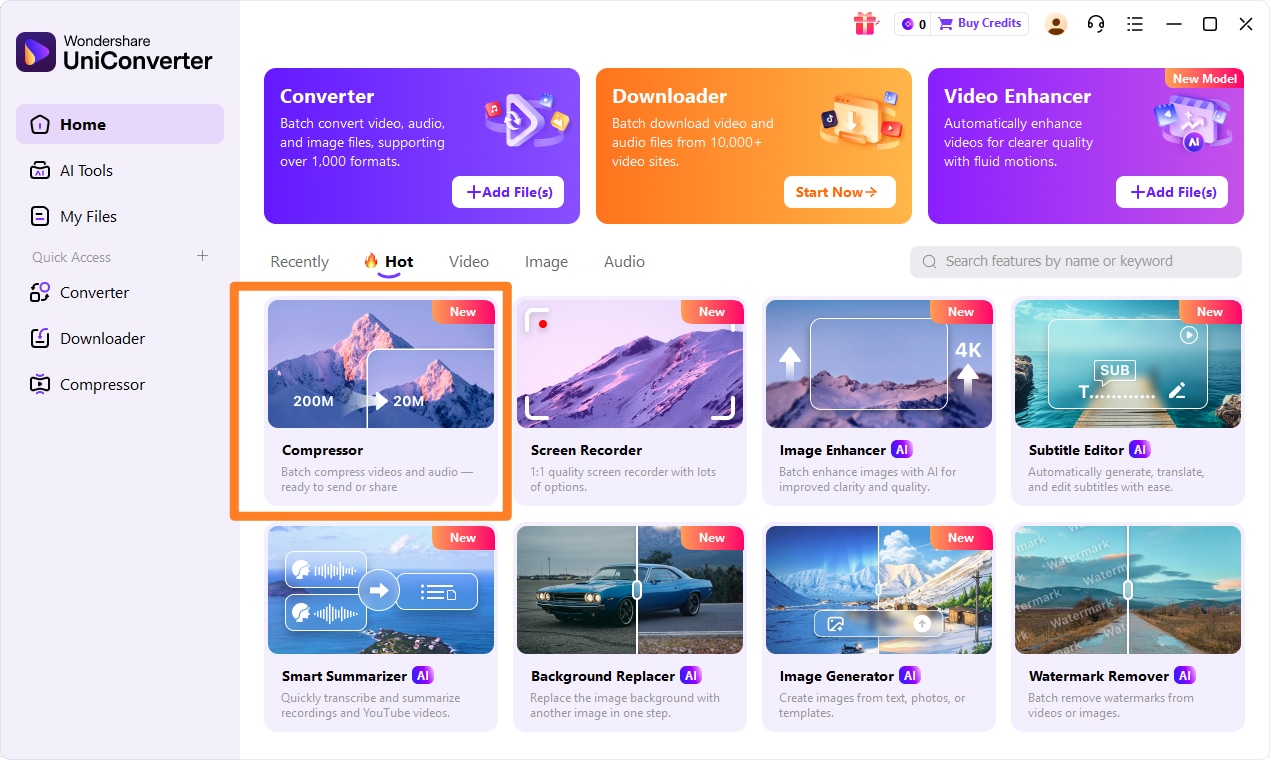
Step 1: Open UniConverter and Choose Compressor
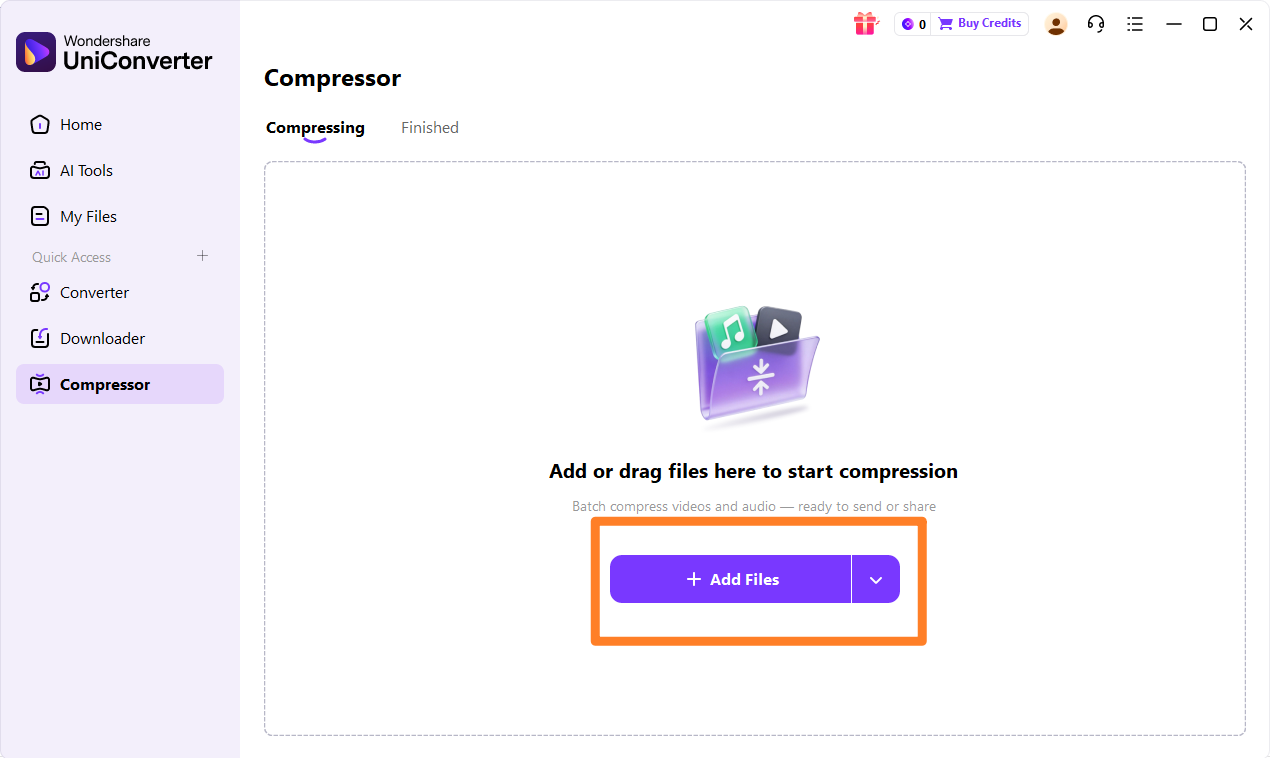
Step 2: Upload the Video, Audios or Images
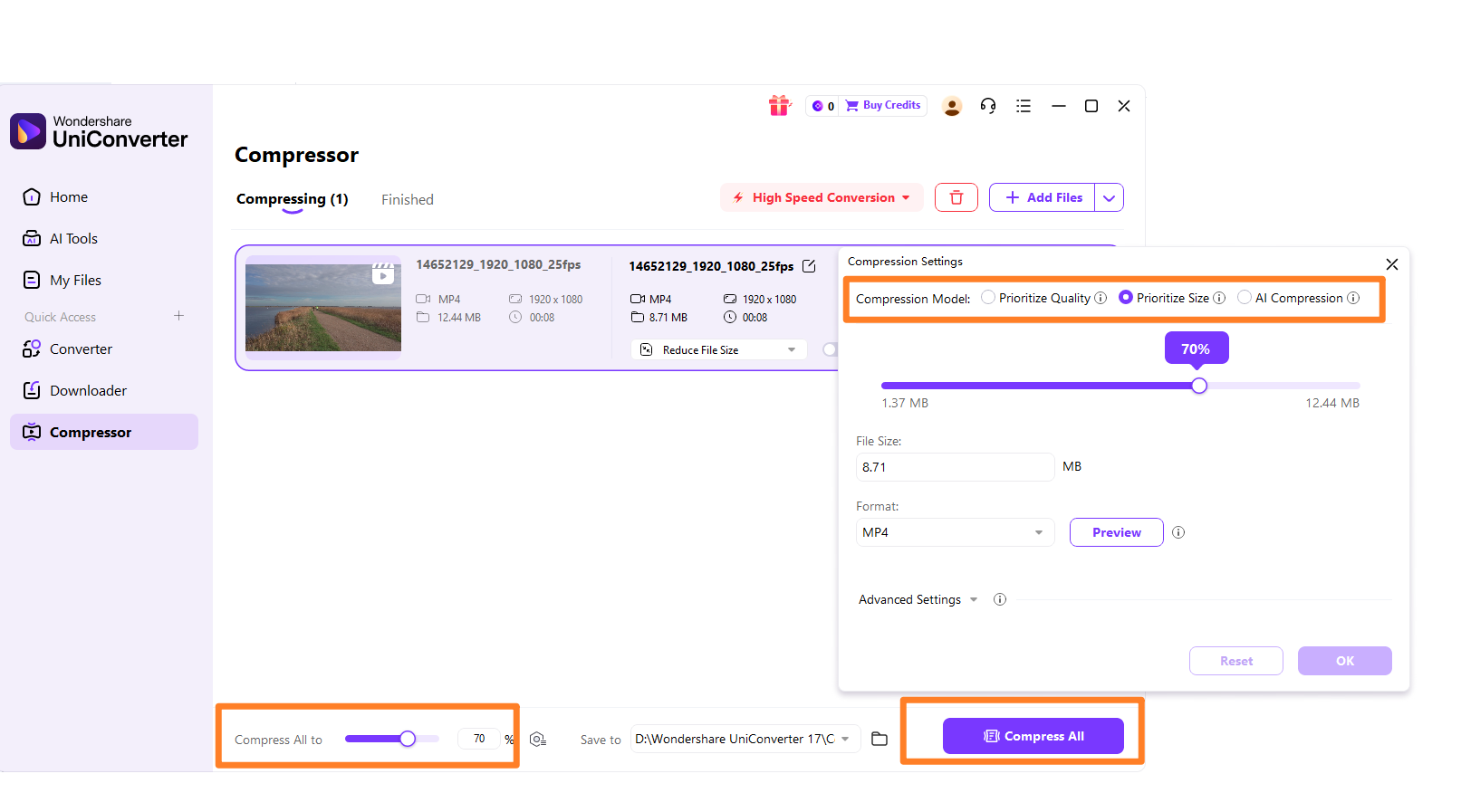
Step 3: Choose Required Parameters
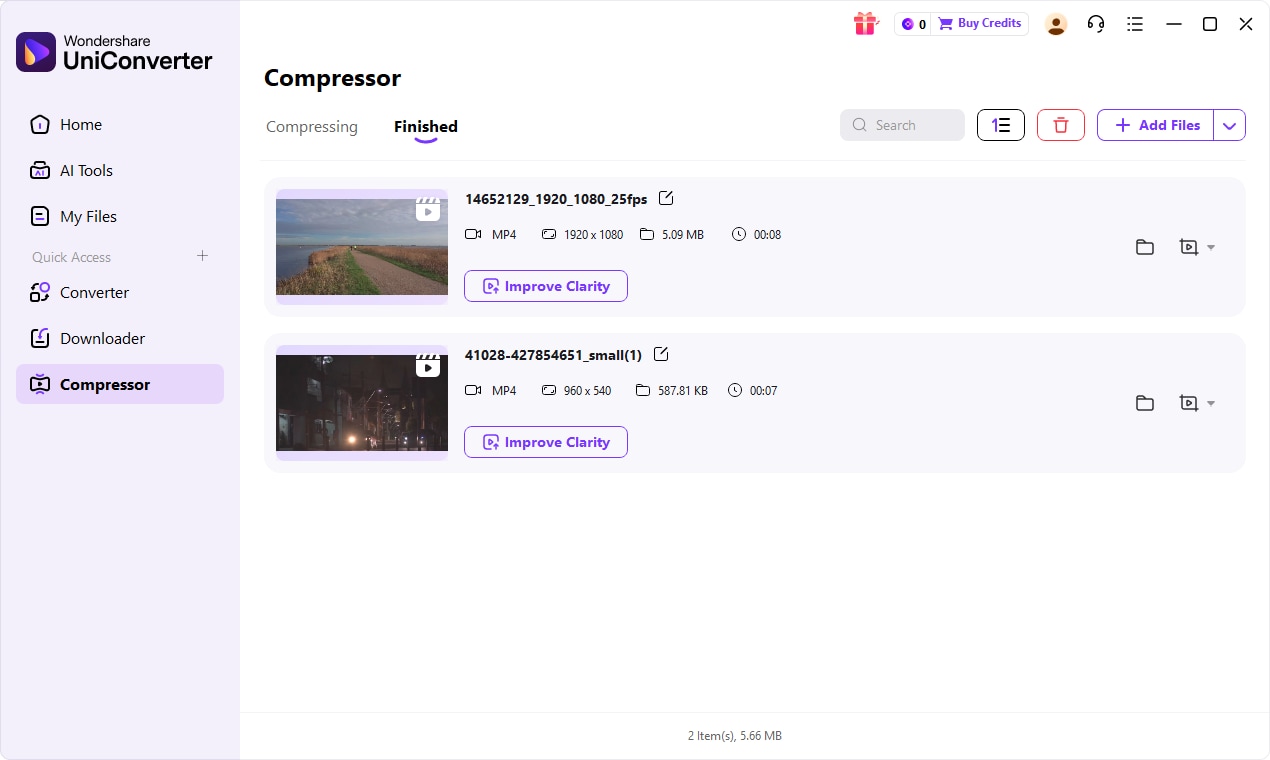
Step 4: Save the Compressed File

Seeking a Resmush.it Alternative for Image Compression?
Part 7: Conclusion
After thoroughly exploring Resmush.it Image Compressor and comparing it with its alternatives, I can confidently say that its value largely depends on your specific needs. For web developers and bloggers on a tight budget who primarily use WordPress, Resmush.it offers a convenient and free solution for basic image optimization. Its seamless WordPress integration is a significant advantage, streamlining the process of getting images web-ready. However, if you're a professional photographer or designer who requires precise control over image quality, metadata preservation, and advanced customization, Resmush.it's limitations become apparent. In such cases, tools like UniConverter, with their advanced settings, offline capabilities, and enhanced privacy, present a superior choice. Similarly, for content creators needing both image and video optimization, UniConverter stands out as a comprehensive solution. While Resmush.it is excellent for quick, no-cost web optimization, it's crucial to weigh its benefits against its constraints, especially concerning data privacy, quality consistency, and the need for granular control in critical projects.
Part 8: FAQs
-
1. Is Resmush.it completely free to use?
Yes, Resmush.it is completely free to use for its web-based compression and WordPress plugin. There are no hidden costs or premium tiers for its core functionality.
-
2. Does Resmush.it preserve image quality after compression?
Resmush.it aims to reduce file size with minimal impact on visual quality. However, it uses lossy compression for JPEGs, meaning some data is permanently removed. While often imperceptible to the human eye for web use, it's not truly lossless. For critical projects where absolute quality preservation is paramount, I'd consider a tool like UniConverter that offers more control over compression levels.
-
3. Can I use Resmush.it for images on platforms other than WordPress?
Absolutely. While Resmush.it has a dedicated WordPress plugin, its web-based tool allows you to upload and compress images from any source. You simply drag and drop your images onto their website, and it processes them for you.
-
4. What are the main differences between Resmush.it and TinyPNG?
Both Resmush.it and TinyPNG are excellent free online image compressors. The main differences I've observed are that Resmush.it offers a direct WordPress plugin for easy integration, while TinyPNG provides a more robust API for developers to integrate compression into their own applications. Both offer similar basic quality sliders, but TinyPNG often has a slight edge in its compression algorithms for PNGs.
-
5. Is it safe to upload sensitive images to online compression tools like Resmush.it?
When I upload sensitive images to any online tool, including Resmush.it, I always exercise caution. While these services generally state they don't store your images long-term, the data is still processed on external servers. For truly sensitive or confidential images, I prefer desktop software like UniConverter, which processes files locally on my computer, eliminating the need to upload them to the cloud.
