
- Value: ResizePixel offers quick, free, web-based image compression for basic needs like web uploads.
- Comparison: It excels in simplicity but lacks advanced features and batch processing compared to tools like UniConverter.
- Decision: Choose ResizePixel for casual, single-image tasks; opt for UniConverter for professional, high-quality, or batch compression.
- Risk: Be aware of potential quality loss, privacy concerns, and intrusive ads with free online compressors.
- Solution: UniConverter provides robust, ad-free, offline compression with superior control for both images and videos.
In this article
- Part 1: What is ResizePixel Image Compressor?
- Part 2: ResizePixel Image Compressor: Core Features, Pros, and Cons
- Part 3: Who is ResizePixel Image Compressor For? Use Cases & Limitations
- Part 4: ResizePixel Image Compressor & Competitors: A Comparative Analysis
- Part 5: Risks and Pitfalls When Using Online Image Compressors
- Part 6: How to Use UniConverter to Efficiently Compress Videos and Images
- Part 7: Conclusion
- Part 8: FAQs
When it comes to optimizing images for the web, finding the right tool can significantly impact your workflow and website performance. This ResizePixel Image Compressor review delves into one such online utility, offering a detailed look at its capabilities and how it stacks up against its competitors. I'll provide you with a comprehensive analysis, including its core features, ideal use cases, and potential pitfalls, helping you make an informed decision about whether it's the right solution for your image compression needs.
Part 1: What is ResizePixel Image Compressor?
ResizePixel Image Compressor is a free, web-based tool designed to quickly reduce the file size of images without requiring any software installation. Its primary purpose is to help users optimize their images for faster loading times on websites, social media, or for easier sharing via email. My goal in this review is to explore whether this simplicity translates into effective and reliable image compression, and to what extent it meets the diverse needs of different users.
The Landscape of Online Image Compression Tools
The digital world demands efficiency, and image compression is a crucial part of that.
* Faster Loading Times: Large image files can significantly slow down website loading, impacting user experience and SEO.
* Reduced Storage Space: Optimizing images helps save valuable storage space on servers and devices.
* Improved User Experience: Quick-loading images contribute to a smoother and more enjoyable browsing experience.
* Ease of Sharing: Smaller files are easier and quicker to upload and share across various platforms.
Part 2: ResizePixel Image Compressor: Core Features, Pros, and Cons
ResizePixel Image Compressor focuses on delivering a straightforward image compression experience. Its core capabilities revolve around making image optimization accessible to everyone, regardless of technical expertise. I've found it to be particularly useful for quick, one-off tasks where speed is of the essence.
* Direct Upload & Download: You simply upload your image and download the compressed version.
* Adjustable Compression Level: While not highly granular, you can often choose between different compression strengths.
* Preview Functionality: It usually offers a preview of the compressed image before you download it.
* Basic Resizing Options: Beyond compression, it often includes basic image resizing capabilities.
* No Account Required: You can use it instantly without the need for registration or login.
Pros:
* User-friendly interface for quick compression
* Supports multiple image formats (JPG, PNG, GIF)
* No software installation required, browser-based
Cons:
* Limited advanced customization options
* Potential for quality degradation with aggressive compression
Part 3: Who is ResizePixel Image Compressor For? Use Cases & Limitations
From my experience, ResizePixel Image Compressor shines in scenarios where you need a quick fix for image size without delving into complex settings. It's a tool built for convenience, not for professional-grade precision.
Best Use Case: Quick, On-the-Fly Image Optimization for Web Uploads
If you're a blogger, a small business owner managing your own website, or someone who frequently uploads images to social media, ResizePixel is incredibly handy. When I need to quickly compress a few photos for a blog post or an online listing, its simplicity is unmatched. I just drag and drop, and within seconds, I have a web-ready image. It's perfect for those moments when you don't want to open heavy photo editing software.
Limited Use Case: Professional Photography or Graphic Design Work Requiring Precise Quality Control
However, for professional photographers or graphic designers, ResizePixel's limitations become apparent. When I'm working on client projects where every pixel matters and precise control over compression artifacts is crucial, I wouldn't rely on it. The lack of granular control over quality settings means you might end up with an image that doesn't meet professional standards, especially with aggressive compression. For these tasks, I always turn to more robust desktop applications.
Part 4: ResizePixel Image Compressor & Competitors: A Comparative Analysis
When I compare ResizePixel Image Compressor to other tools, its strengths and weaknesses become clearer. Each tool has its niche, and understanding these differences is key to choosing the right one for your specific needs.
| Feature/Tool | ResizePixel Image Compressor | TinyPNG | Compressor.io | UniConverter |
| Ease of Use | High | High | Medium | Medium |
| Supported Formats | JPG, PNG, GIF | JPG, PNG, WebP | JPG, PNG, SVG, GIF | All popular formats |
| Advanced Features | Basic | Basic | Moderate | Extensive |
| Offline Capability | No | No | No | Yes |
| Batch Processing | No | Limited | Limited | Yes |
| Output Quality Control | Basic | Basic | Moderate | High |
Key Differentiators:
ResizePixel excels in simplicity for single-image tasks. Its interface is incredibly intuitive, making it a go-to for quick, no-fuss compression. However, when I need more power, competitors often offer more advanced features like batch processing or broader format support. For instance, TinyPNG is fantastic for PNG and WebP optimization, often achieving impressive compression ratios with minimal perceived quality loss. Compressor.io provides a bit more control over the output quality, which is a step up from ResizePixel's basic options. UniConverter, on the other hand, is in a different league entirely, offering a comprehensive suite of tools beyond just image compression, including offline capability and extensive batch processing.
Part 5: Risks and Pitfalls When Using Online Image Compressors
While online image compressors like ResizePixel offer convenience, I've learned that they come with their own set of risks and potential pitfalls that users should be aware of. It's not just about the compression; it's about the entire experience and the security of your data.
Data Privacy Concerns with Uploaded Images
When you upload an image to an online compressor, you're essentially sending your data to a third-party server. I always worry about what happens to those images after compression. Do they get stored? For how long? Are they used for other purposes? Many free online tools have vague privacy policies, and for sensitive or personal images, this can be a significant concern. It's crucial to understand that once an image is uploaded, you lose a degree of control over it.
Intrusive Advertisements and Pop-ups
Many free online services, including some image compressors, rely on advertising revenue. This often translates into a user experience riddled with intrusive ads, pop-ups, and sometimes even redirects to unrelated sites. I've found that this can be incredibly disruptive and frustrating, turning a simple task into a battle against unwanted content. It detracts from the efficiency that these tools are supposed to provide.
Unpredictable Image Quality Loss
While the goal is to reduce file size, the extent of quality loss can be unpredictable with basic online compressors. I've experienced instances where a seemingly moderate compression setting resulted in noticeable artifacts or a significant drop in image clarity. Without granular control over compression algorithms or the ability to fine-tune settings, you're often at the mercy of the tool's default processes, which might not always align with your quality expectations.
Dependence on Internet Connectivity
Online tools, by their very nature, require an active internet connection. This might seem obvious, but it's a pitfall if you frequently work offline or in areas with unreliable internet access. If my internet goes down, I can't compress my images, which can halt my workflow. Desktop applications offer a significant advantage in this regard, providing uninterrupted service regardless of connectivity.
Lack of Advanced Editing Features
Most online image compressors are single-purpose tools. They compress, and that's often it. If I need to crop, resize precisely, add watermarks, or perform any other basic editing tasks, I have to use a separate tool. This fragmented workflow can be inefficient, especially when dealing with multiple images that require more than just compression.
Part 6: How to Use UniConverter to Efficiently Compress Videos and Images
Once online compressors start feeling too limited—especially when batch processing is restricted, results vary from file to file, or quality drops more than expected—I usually switch to UniConverter for a more dependable desktop workflow. It works especially well for both image compression and video compression, so it’s easy to handle different media types in one place without relying on ad-heavy web tools. I also like its broad format support and GPU acceleration, which make larger jobs much faster and more efficient. For video files, it can even help compress videos without quality loss as much as possible, making it a practical all-in-one solution for stable, high-quality media compression.
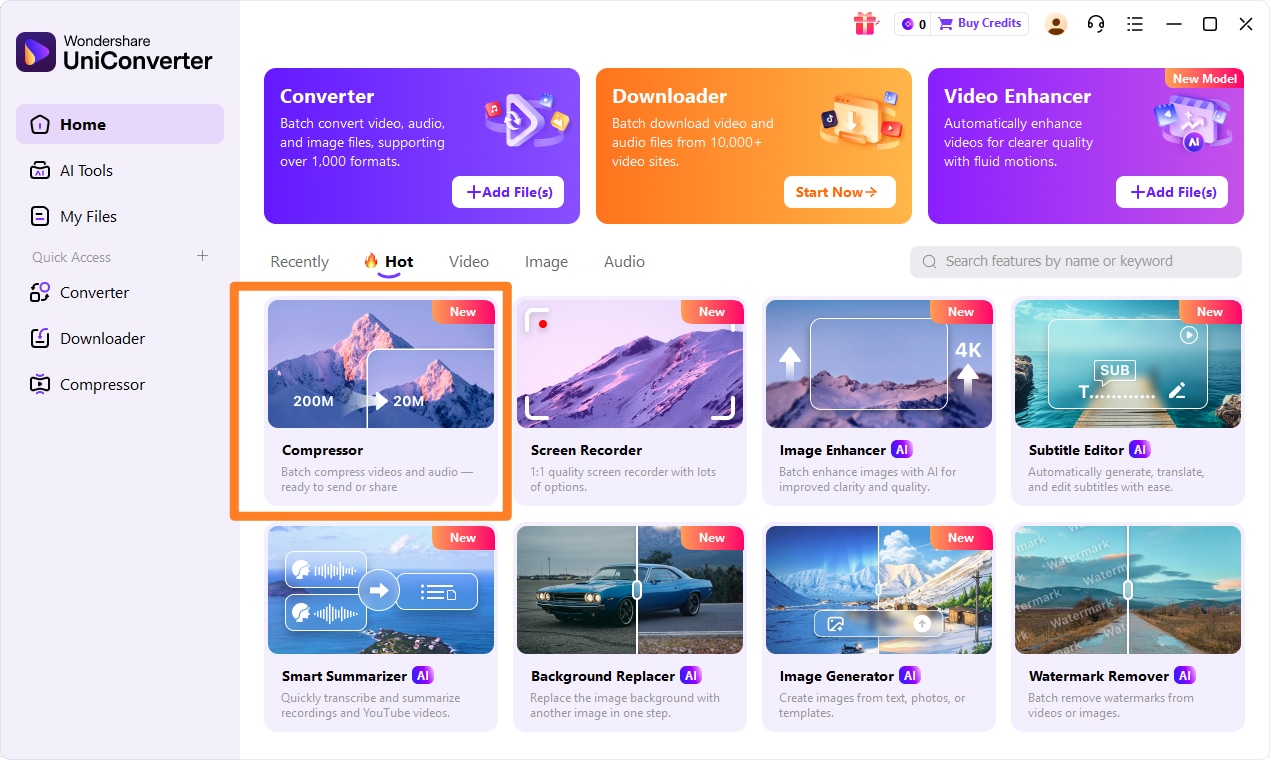
Step 1: Open UniConverter and Choose Compressor
First, I launch UniConverter on my desktop. From the main interface, I navigate to the "Toolbox" section and select either the "Image Compressor" or "Video Compressor" option, depending on my optimization needs.
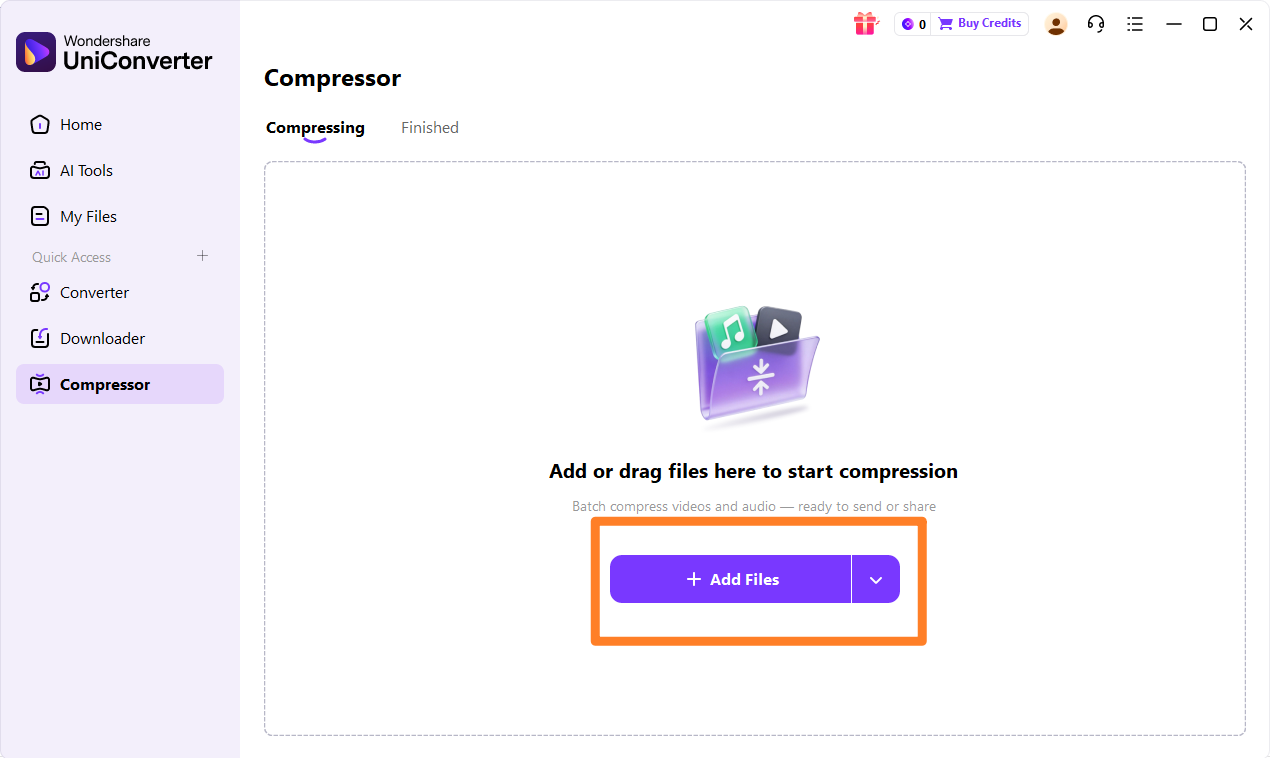
Step 2: Upload the Video, Audios or Images
Next, I click the "Add Files" button or simply drag and drop the images or videos I intend to compress into the program window. UniConverter supports a wide array of formats, so I rarely encounter compatibility issues.
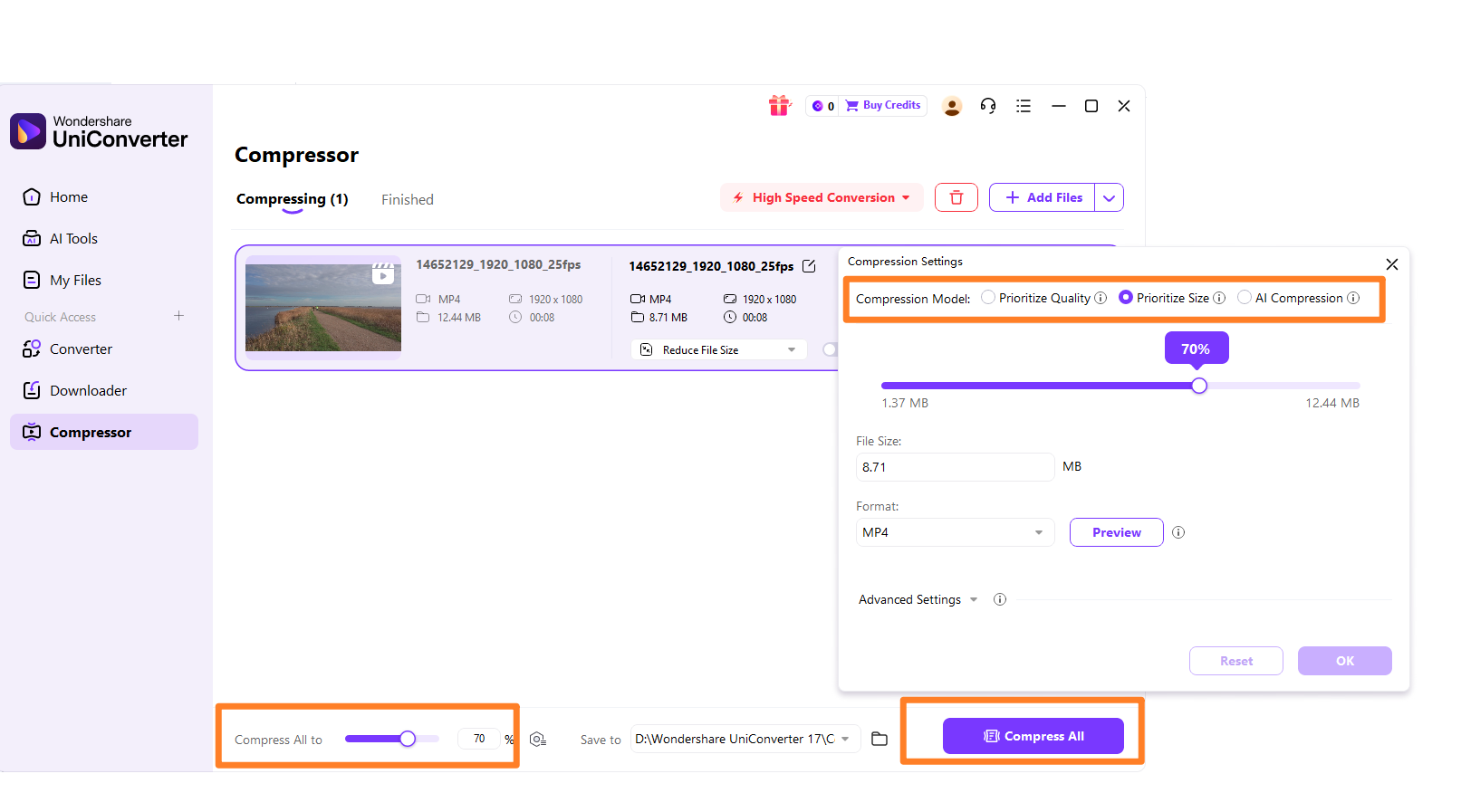
Step 3: Choose Required Parameters
Before initiating the compression, I have the flexibility to customize the output settings. For images, I can adjust the quality percentage. For videos, I can select the output format, resolution, bitrate, and even preview the estimated file size. This detailed control allows me to achieve the ideal balance between file size and quality.
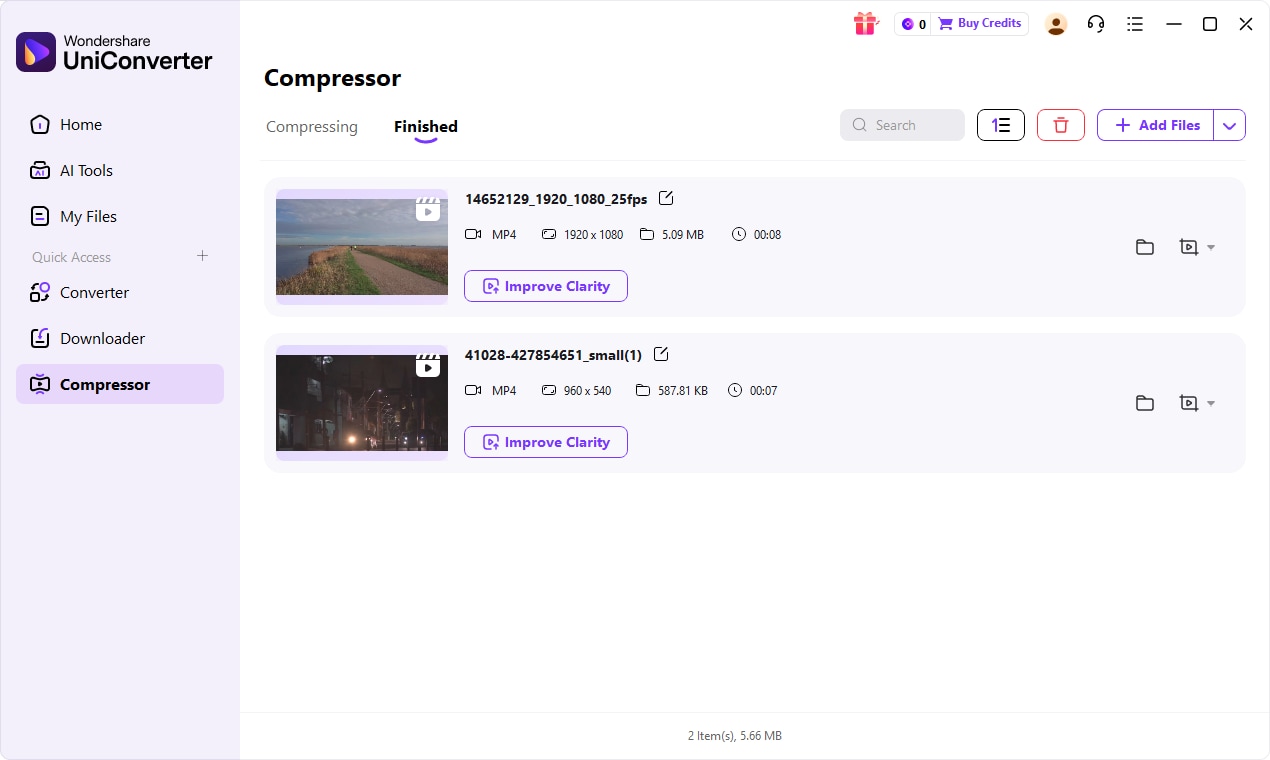
Step 4: Save the Compressed File
Once I am satisfied with the chosen settings, I click the "Compress" button. UniConverter processes the files swiftly, particularly with GPU acceleration. After the compression is complete, I can specify the output folder and save my optimized images or videos.

Need a Better ResizePixel Alternative?
Part 7: Conclusion
In conclusion, my ResizePixel Image Compressor review reveals it as a highly accessible and straightforward tool, best suited for users needing quick, no-frills image compression for web uploads or casual sharing. Its browser-based nature and ease of use are undeniable advantages for those who prioritize speed and simplicity. However, its limitations in advanced customization and batch processing mean it falls short for professionals requiring precise quality control or handling large volumes of images. For casual users, ResizePixel offers simplicity, effectively addressing basic compression needs without any fuss. For professionals, I strongly recommend considering tools with advanced features and offline capabilities, as these provide the necessary control and reliability for critical projects. Finally, for batch processing and overall versatility, UniConverter stands out as a comprehensive solution, offering a robust feature set that addresses many of the shortcomings of basic online compressors. Regardless of your choice, always prioritize privacy and quality, especially for sensitive projects, and choose a tool that aligns with your specific workflow and requirements.
Part 8: FAQs
-
1. Is ResizePixel Image Compressor free to use?
Yes, ResizePixel Image Compressor is generally free for basic use.
-
2. Does ResizePixel Image Compressor reduce image quality significantly?
It can, especially with higher compression settings. The degree of quality loss depends on the original image and chosen compression level. For critical projects where quality is paramount, I'd suggest using desktop software like UniConverter, which offers more control over compression settings to minimize quality loss.
-
3. Can I compress multiple images at once with ResizePixel?
No, ResizePixel Image Compressor typically processes images one at a time. If you need to compress multiple images simultaneously, a tool with batch processing capabilities, such as UniConverter, would be a more efficient choice.
-
4. Are there any privacy concerns when using online image compressors?
Yes, users should be aware of potential privacy risks as images are uploaded to third-party servers. Always review the service's privacy policy. For sensitive images, I prefer using offline desktop software to ensure my data remains on my device.
-
5. What is the best image compressor for maintaining high quality?
For maintaining high quality, desktop software like UniConverter or professional image editing tools often offer more control and better results than basic online compressors. These tools allow for more granular adjustments to compression parameters, helping to preserve image integrity.
