
- Value: ReduceImages offers quick, free online image compression for web use, ideal for bloggers and casual users.
- Comparison: While simple, it lacks advanced features and offline capabilities found in tools like UniConverter.
- Decision: Choose ReduceImages for basic web optimization; opt for UniConverter for comprehensive media compression and control.
- Pitfalls: Be aware of potential quality loss, privacy concerns with online uploads, and intrusive ads on free tiers.
In this article
- Part 1: What is ReduceImages Image Compressor?
- Part 2: ReduceImages Image Compressor: Core Features, Pros, and Cons
- Part 3: ReduceImages Image Compressor: Ideal Users and Use Cases
- Part 4: ReduceImages Image Compressor vs. Competitors
- Part 5: Risks and Pitfalls to Consider
- Part 6: How to Use UniConverter to Compress Efficiently
- Part 7: Final Verdict and Recommendations
- Part 8: FAQs
ReduceImages Image Compressor: A Comprehensive Review and Comparison
When I'm working on a website or a blog, one of the biggest headaches is dealing with large image files. They slow down page loading, eat into bandwidth, and can frustrate visitors. That's where image compressors come in. I've spent countless hours trying different tools, and today, I'm going to dive deep into ReduceImages Image Compressor to give you my honest take. This ReduceImages Image Compressor review will cover its features, compare it to popular alternatives, highlight its ideal use cases, and point out potential pitfalls, helping you decide if it's the right tool for your image optimization needs.
Part 1: What is ReduceImages Image Compressor?
ReduceImages Image Compressor is an online tool designed to shrink the file size of your images without significantly compromising visual quality. It's built for speed and simplicity, allowing you to quickly upload images, apply compression, and download the optimized versions. My primary goal with this review is to determine how effectively it balances file size reduction with image fidelity, especially when stacked against other prominent tools in the market. I'm looking to answer whether it truly delivers on its promise of efficient image optimization for various scenarios.
The Growing Need for Efficient Image Compression
* Website Performance: Large images are notorious for slowing down websites, impacting SEO rankings and user experience.
* Storage and Bandwidth Costs: Smaller files mean less storage space required and lower bandwidth consumption, which can save money for businesses and individuals.
* Mobile Responsiveness: Optimized images load faster on mobile devices, crucial for a seamless browsing experience on the go.
* Email and Social Media Sharing: Compressed images are easier and quicker to share across different platforms without hitting file size limits.
Part 2: ReduceImages Image Compressor: Core Features, Pros, and Cons
ReduceImages Image Compressor focuses on delivering straightforward image optimization. Its core capability lies in its ability to significantly reduce image file sizes. I've found it to be quite efficient in processing various image types, though its strength truly shines with web-focused formats. It doesn't boast a plethora of advanced editing features, but what it does, it does well – compress images effectively and quickly.
Key Features:
* Supports common image formats like JPEG, PNG, and GIF.
* Offers both lossy and lossless compression options.
* Provides a simple drag-and-drop interface for uploads.
* Allows for adjustable compression levels.
* Includes a preview function to compare original and compressed images.
Pros:
* Highly effective compression ratios for web optimization, making my websites load noticeably faster.
* User-friendly interface for quick and easy use, even for someone who isn't tech-savvy.
* Batch processing capabilities for multiple images, saving me a lot of time when dealing with many files.
Cons:
* Limited advanced editing features beyond compression, meaning I often need another tool for cropping or resizing.
* Potential for noticeable quality degradation at highest compression settings, which can be an issue for images where detail is crucial.
Part 3: ReduceImages Image Compressor: Ideal Users and Use Cases
From my experience, ReduceImages Image Compressor is best suited for users who prioritize speed and simplicity in their image optimization workflow. If you're constantly uploading images to a website or sharing them online, and you need a quick way to reduce their size without getting bogged down in complex settings, this tool is a strong contender. It's not designed for professional photographers who demand pixel-perfect preservation, but for everyday web content creators, it hits the sweet spot.
Best Use Case: Web Developers and Bloggers Optimizing Site Speed
As a blogger, I constantly need to optimize images for my articles. ReduceImages Image Compressor is perfect for this. I can quickly upload all the images for a post, compress them in a batch, and download them ready for my CMS. This significantly speeds up my workflow and ensures my site remains fast and responsive for my readers.
Limited Use Case: Professional Photographers Requiring Lossless Compression
If I were a professional photographer, I wouldn't rely on ReduceImages Image Compressor for my final output. The potential for quality degradation, even slight, at higher compression settings is a deal-breaker when every pixel counts. For archival or client delivery, I'd opt for tools that guarantee lossless compression or offer more granular control over image quality.
Part 4: ReduceImages Image Compressor vs. Competitors
When I look at ReduceImages Image Compressor against its rivals, it's clear each tool has its niche. My goal here is to help you see where each excels so you can pick the best one for your specific needs.
| Feature/Tool | ReduceImages Image Compressor | TinyPNG | JPEGmini | ImageOptim |
| Compression Type | Lossy/Lossless | Lossy | Lossy | Lossy/Lossless |
| Batch Processing | Yes | Yes | Yes | Yes |
| Advanced Features | Basic | Basic | Basic | Advanced |
| Pricing Model | Free/Premium | Free/Premium | Premium | Free |
| Output Quality | Good for web | Excellent for PNG | Excellent for JPEG | Very High |
| Ease of Use | Very High | Very High | High | Medium |
Key Differentiators:
ReduceImages Image Compressor excels in simplicity and speed for general web use, making it my go-to for quick optimizations. TinyPNG offers excellent PNG compression with a similar ease of use, often providing slightly better results for that specific format. JPEGmini focuses on maintaining visual quality with significant file size reduction, especially for JPEGs, though it comes at a premium. ImageOptim provides more granular control for advanced users, offering a desktop solution with a wider range of optimization algorithms.
Part 5: Risks and Pitfalls to Consider
While free online tools like ReduceImages Image Compressor are incredibly convenient, I've learned that they come with their own set of risks and potential pitfalls that you should be aware of before committing your images. It’s not just about the compression; it’s about the overall experience and security.
Privacy Concerns with Online Uploads
When I upload images to an online compressor, I'm essentially sending my data to a third-party server. For sensitive or proprietary images, this raises privacy concerns. I always question who has access to these files and how long they are stored. If you're dealing with confidential information, an offline solution is always safer.
Intrusive Advertisements on Free Tiers
Many free online tools, including some image compressors, rely on advertising to sustain their operations. This can lead to intrusive ads, pop-ups, or even redirects that disrupt my workflow and can be quite annoying. I've encountered instances where ads cover parts of the interface or lead to accidental clicks.
Unacceptable Quality Loss at Extreme Settings
While the goal is to reduce file size, pushing the compression settings too high can result in unacceptable quality loss. I've seen images become pixelated, blurry, or develop artifacts that make them unusable, especially for professional purposes. It's a delicate balance, and sometimes the "highest compression" option is just too aggressive.
Lack of Offline Functionality
A significant drawback for me is the reliance on an internet connection. If I'm working offline or in an area with poor connectivity, online compressors become useless. This limits my flexibility and can be a major inconvenience when I need to optimize images on the go.
Part 6: How to Use UniConverter to Compress Efficiently
Tools like ReduceImages Image Compressor are fine for quick tasks, but they can feel restrictive once you need better quality control, offline access, or support for more than just images. In those cases, UniConverter is a more versatile option because it covers image compression, video compression, and audio compression within a single workflow. What makes it especially useful is its broad format support, GPU acceleration for faster processing, and a smoother desktop experience without the interruptions that often come with free online tools. For video files, it can also help compress videos without quality loss as much as possible, making it a practical all-in-one solution for everyday media conversion and compression.
Step 1: Download and Install UniConverter
First, I download and install UniConverter on my computer. This ensures I have an offline tool ready for any compression task.
Step 2: Import Your Images for Compression
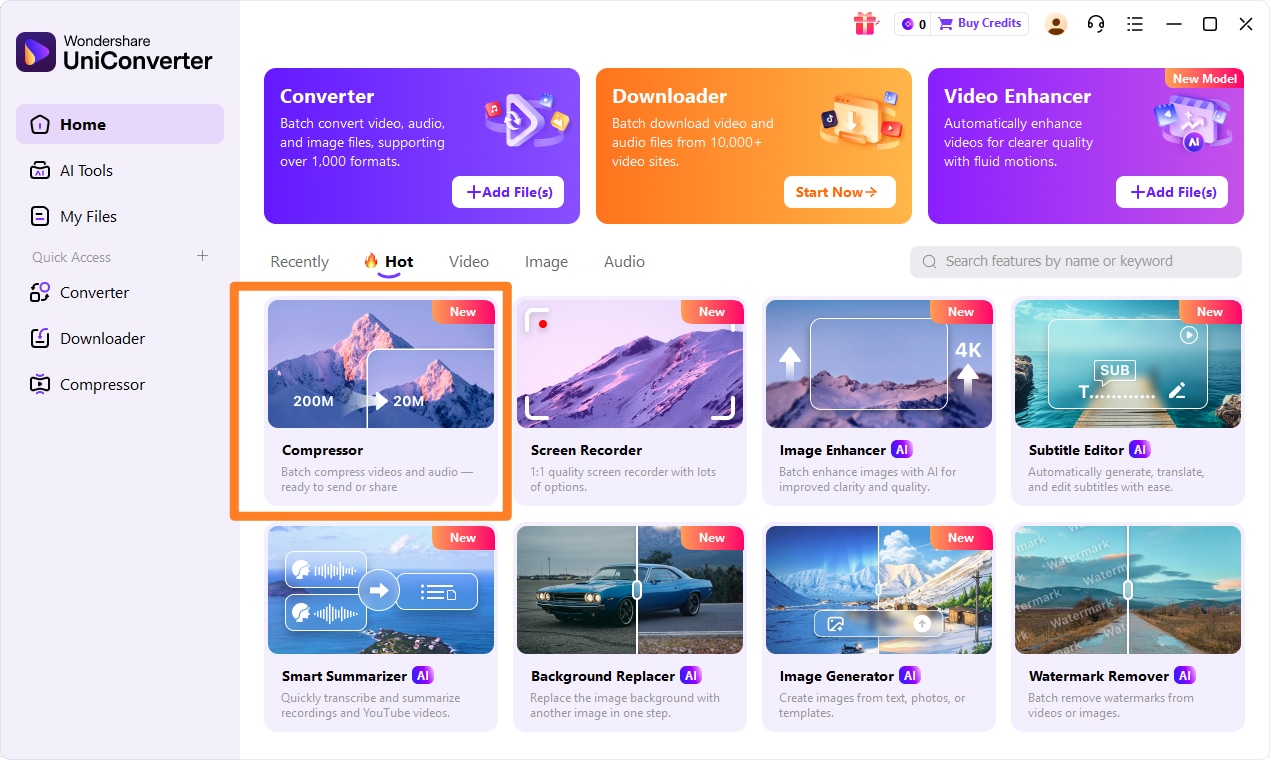
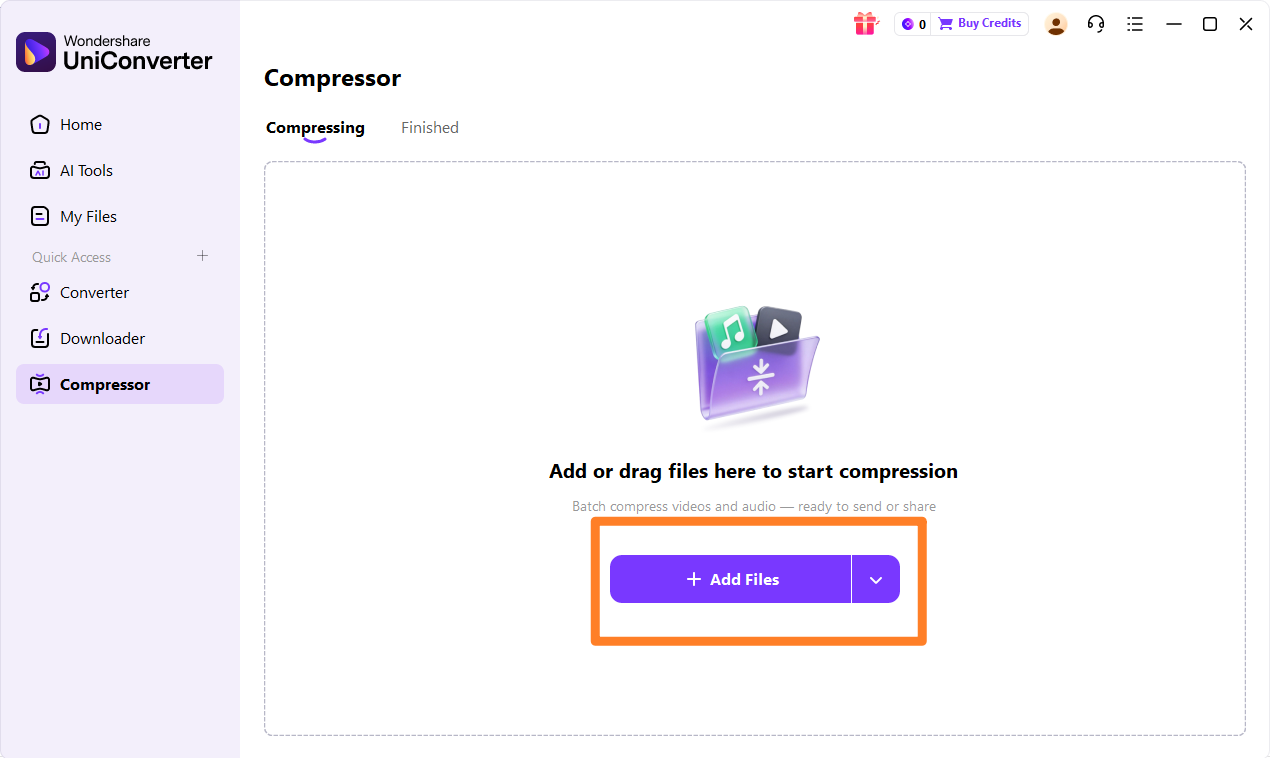
Next, I open UniConverter and navigate to the "Compressor" section. I then drag and drop my images, videos, or audio files directly into the interface.
Step 3: Select Desired Compression Settings and Output Format
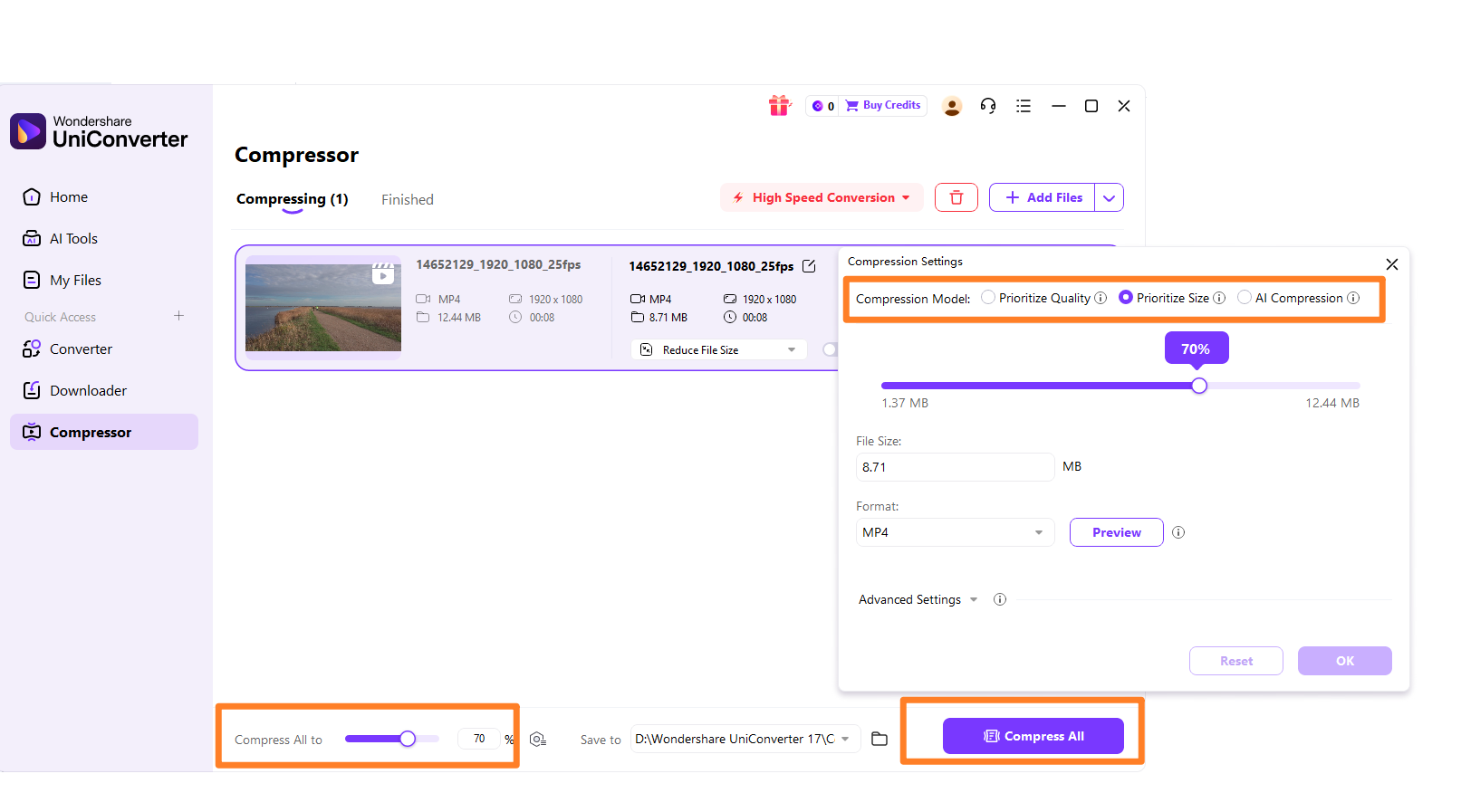
UniConverter offers various compression settings. I choose my desired output format, adjust the compression ratio, and preview the quality before committing.
Step 4: Start Compression and Save Your Optimized Images
Once I'm satisfied with the settings, I click the "Compress" button. UniConverter quickly processes the files, and I can then save my optimized media to my chosen destination.

Need a Better ReduceImages Alternative?
Part 7: Final Verdict and Recommendations
After thoroughly evaluating ReduceImages Image Compressor, I can confidently say it serves a specific segment of users very well. For casual users and bloggers who need a quick, free, and straightforward way to reduce image file sizes for web use, ReduceImages Image Compressor is a solid option. Its ease of use and effective compression for general purposes make it a convenient choice. However, for web professionals who require more comprehensive features, greater control over output quality, and perhaps offline functionality, I would strongly recommend considering UniConverter. It offers a broader suite of tools that go beyond simple compression, providing a more robust solution. Professional photographers, whose work demands lossless or near-lossless compression to preserve every detail, should prioritize tools specifically designed for that purpose, as the potential for quality degradation with ReduceImages Image Compressor at higher settings might not meet their stringent requirements. Finally, for anyone with significant batch processing needs across various media types, evaluating tools with robust batch capabilities, like UniConverter, will save considerable time and effort in the long run.
Part 8: FAQs
-
1. Does ReduceImages Image Compressor support all image formats?
ReduceImages primarily supports common formats like JPEG, PNG, and GIF. For a wider range of formats or more specialized ones, you might need a more versatile tool like UniConverter.
-
2. Is it safe to upload sensitive images to online compressors?
While most reputable services prioritize security, for highly sensitive images, offline tools are generally recommended to ensure your data remains private.
-
3. How much quality loss can I expect with ReduceImages?
Quality loss is dependent on the compression level chosen; higher compression leads to more noticeable degradation. Always preview your images to ensure the quality is acceptable for your needs.
-
4. Can I use ReduceImages Image Compressor offline?
ReduceImages is primarily an online tool and requires an internet connection. For offline compression, desktop software like UniConverter would be a better choice.
-
5. What are the main advantages of using UniConverter over ReduceImages?
UniConverter offers a broader range of features including video conversion, editing, and more advanced image compression options, often with better control over output quality. It also provides offline functionality and a more comprehensive media management toolkit.
