
- Reason Compressor: Controls dynamic range, integrates seamlessly with Reason, and functions as a powerful VST/AU plugin.
- Features & Quality: Offers intuitive controls (threshold, ratio, attack, release, gain) and delivers professional-grade output.
- Use Cases: Ideal for music production, especially for independent artists, enhancing drums, vocals, and overall mix cohesion.
- Comparison: Strong for Reason users, but competitors like FabFilter Pro-C 2 offer more advanced customization and lower CPU usage.
- Risks: Watch for over-compression, potential DAW compatibility quirks, and a slight learning curve for non-Reason users.
- Alternative: UniConverter provides a user-friendly, all-in-one solution for efficient, lossless audio and video compression.
In this article
- Part 1: What is Reason Audio Compressor?
- Part 2: Reason Audio Compressor: Core Features, Pros, and Cons
- Part 3: Reason Audio Compressor in Action
- Part 4: Reason Audio Compressor vs. Competitors
- Part 5: Risks and Pitfalls to Consider
- Part 6: How to Use UniConverter to Compress Efficient Audio and Video
- Part 7: Conclusion
- Part 8: FAQs
Reason Audio Compressor: A Deep Dive into Audio Optimization
Welcome to my in-depth Reason Audio Compressor review. As someone who's spent countless hours tweaking audio for various projects, I understand the critical role a good compressor plays. This review aims to cut through the marketing jargon and provide you with a real-world perspective on Reason Audio Compressor, exploring its features, strengths, and weaknesses. We'll also dive into how it stacks up against its competitors, helping you decide if it's the right tool for your audio optimization needs. My goal is to equip you with the knowledge to make an informed decision, whether you're a seasoned professional or just starting your audio journey.
Part 1: What is Reason Audio Compressor?
Reason Audio Compressor is a native device within the Reason Studios digital audio workstation (DAW), designed to control the dynamic range of audio signals. It's an integral part of the Reason ecosystem, offering seamless integration and a familiar interface for users already accustomed to the platform. For those outside the Reason environment, it functions as a powerful VST/AU plugin, bringing its capabilities to a wider range of DAWs. My experience with it has shown it to be a robust tool for shaping audio, from subtle dynamic control to aggressive sound design. This review will delve into its practical applications and help you understand where it fits in the broader landscape of audio compression tools.
Understanding the Market Landscape of Audio Compression Tools
The audio compression market is vast and varied, catering to a wide spectrum of users and needs.
* The Need for Dynamic Control: Every audio engineer, producer, and content creator faces the challenge of managing dynamic range to achieve a polished, professional sound.
* Diverse User Base: From bedroom producers to professional mastering engineers, the demand for effective compression tools is universal, but their specific requirements differ significantly.
* The Search for the "Perfect" Compressor: Many users are constantly seeking a compressor that offers the ideal balance of transparency, character, and ease of use for their particular workflow.
Part 2: Reason Audio Compressor: Core Features, Pros, and Cons
Reason Audio Compressor is a versatile tool that offers a comprehensive set of features for dynamic range control. Its core capabilities include threshold, ratio, attack, release, and gain controls, allowing for precise shaping of audio dynamics. I've found its sidechaining capabilities particularly useful for creative mixing, enabling me to duck background music under vocals or create rhythmic pumping effects. The visual feedback on the interface also makes it easier to understand how the compression is affecting the signal in real-time.
Pros:
* Intuitive Interface for Quick Edits: The layout is clean and easy to navigate, making it simple to dial in settings quickly.
* High-Quality Output for Professional Projects: When used correctly, it delivers transparent and musical compression suitable for professional mixes.
* Versatile Presets for Various Audio Types: A good selection of starting points for different instruments and vocal types, which I often tweak to my specific needs.
Cons:
* Resource-Intensive for Older Systems: I've noticed it can be a bit heavy on the CPU, especially when running multiple instances on an older machine.
* Limited Advanced Customization Options: While solid, it doesn't offer the deep, granular control found in some specialized third-party compressors.
Part 3: Reason Audio Compressor in Action
Reason Audio Compressor shines in scenarios where you need reliable and musical dynamic control within the Reason environment or as a solid workhorse plugin in other DAWs. I've personally found it indispensable for tightening up drum tracks and bringing vocals forward in a mix. Its straightforward controls mean I can quickly achieve the desired effect without getting bogged down in endless parameters.
Best Use Case: Music Production for Independent Artists
For independent artists working within Reason or using it as a VST/AU plugin, Reason Audio Compressor is an excellent choice. It provides the necessary tools to achieve a polished, radio-ready sound for instruments and vocals without requiring a steep learning curve or a massive budget. I use it regularly to add punch to my basslines and glue my drum bus together, giving my tracks a more cohesive feel.
Limited Use Case: Large-Scale Broadcast Audio Processing
While capable, Reason Audio Compressor might not be the top choice for large-scale broadcast audio processing where highly specialized, often hardware-based, or extremely transparent software compressors are preferred. In these environments, the absolute highest level of transparency and specific ITU-R BS.1770 compliance might lead engineers to other dedicated solutions. It's good, but for that level of precision, I'd likely reach for something else.
Part 4: Reason Audio Compressor vs. Competitors
When comparing Reason Audio Compressor to other tools, it's essential to look at specific use cases. I've used many compressors over the years, and each has its strengths. For instance, while Reason Audio Compressor offers good output quality, a tool like FabFilter Pro-C 2 provides unparalleled visual feedback and advanced sidechaining options, making it a favorite for intricate mixing. On the other hand, a free option like TDR Nova, while excellent, might not offer the same level of intuitive integration for Reason users.
| Feature/Scenario | Reason Audio Compressor | FabFilter Pro-C 2 | Waves Renaissance Compressor | TDR Nova (Free) |
| Ease of Use (Beginner) | Excellent | Good | Fair | Good |
| Professional Output Quality | Excellent | Excellent | Excellent | Good |
| CPU Usage (Complex Projects) | High | Moderate | Low | Moderate |
| Price Point | Mid-Range (Part of Reason) | High | Mid-Range | Free |
| Advanced Customization | Moderate | Excellent | Moderate | Excellent (EQ Comp) |
Key Differentiators: Why Choose or Avoid Reason Audio Compressor
Reason Audio Compressor stands out for its seamless integration within the Reason ecosystem and its intuitive interface, making it a strong contender for users already familiar with Reason. However, if you require the absolute lowest CPU usage for massive projects or demand the most granular control over every compression parameter, you might find alternatives like Waves Renaissance Compressor or FabFilter Pro-C 2 more suitable. For those on a tight budget, TDR Nova offers surprisingly powerful features for a free plugin.
Part 5: Risks and Pitfalls to Consider
Using any audio compressor, including Reason Audio Compressor, comes with potential risks if not handled carefully. My experience has taught me that understanding these pitfalls is crucial for achieving optimal results and avoiding common mistakes.
Potential for Over-Compression Artifacts
One of the biggest dangers is over-compression. It's easy to push the compressor too hard, especially when you're aiming for a loud mix. This can lead to undesirable pumping, breathing, or even distortion, making your audio sound unnatural and fatiguing to listen to. I always recommend using your ears and making small, incremental adjustments rather than drastic ones.
Compatibility Issues with Certain DAWs
While Reason Audio Compressor is available as a VST/AU plugin, I've occasionally encountered minor compatibility quirks with certain DAWs. These are usually resolved with updates, but it's something to be aware of, especially if you're working on a less common or older DAW version. Always test it thoroughly in your specific setup.
Learning Curve for Non-Reason Users
If you're not a Reason user, the interface, while intuitive for Reason veterans, might have a slight learning curve. The visual language and workflow are distinctly "Reason," which can take a little getting used to if you're coming from a different DAW or plugin ecosystem. It's not insurmountable, but expect a short adjustment period.
Subscription Model vs. One-Time Purchase
Reason Studios offers various ways to access their products, including subscription models. This can be a risk if you prefer a one-time purchase and own your software outright. While subscriptions offer flexibility and continuous updates, they can become a long-term cost that outweighs a perpetual license for some users. Always consider your budget and ownership preferences.
Lack of a Dedicated Mobile App
In today's mobile-first world, the absence of a dedicated mobile app for Reason Audio Compressor means you're tied to your desktop or laptop for any compression work. While most serious audio production happens on larger systems, having a companion app for quick edits or monitoring on the go could be a valuable addition for some users.
Part 6: How to Use UniConverter to Compress Efficient Audio and Video
For simple compression tasks, a dedicated audio utility can sometimes feel like more than you actually need. That’s where UniConverter tends to be a more practical option, especially if you want a straightforward workflow for audio compression without sacrificing flexibility. It also handles video compression, which makes it more useful than single-purpose tools when different media types are involved. I also like the broad format support, GPU acceleration for faster processing, and cleaner ad-free experience. For video files, it can even help compress videos without quality loss as much as possible, making it a practical all-in-one solution for everyday media compression and conversion.
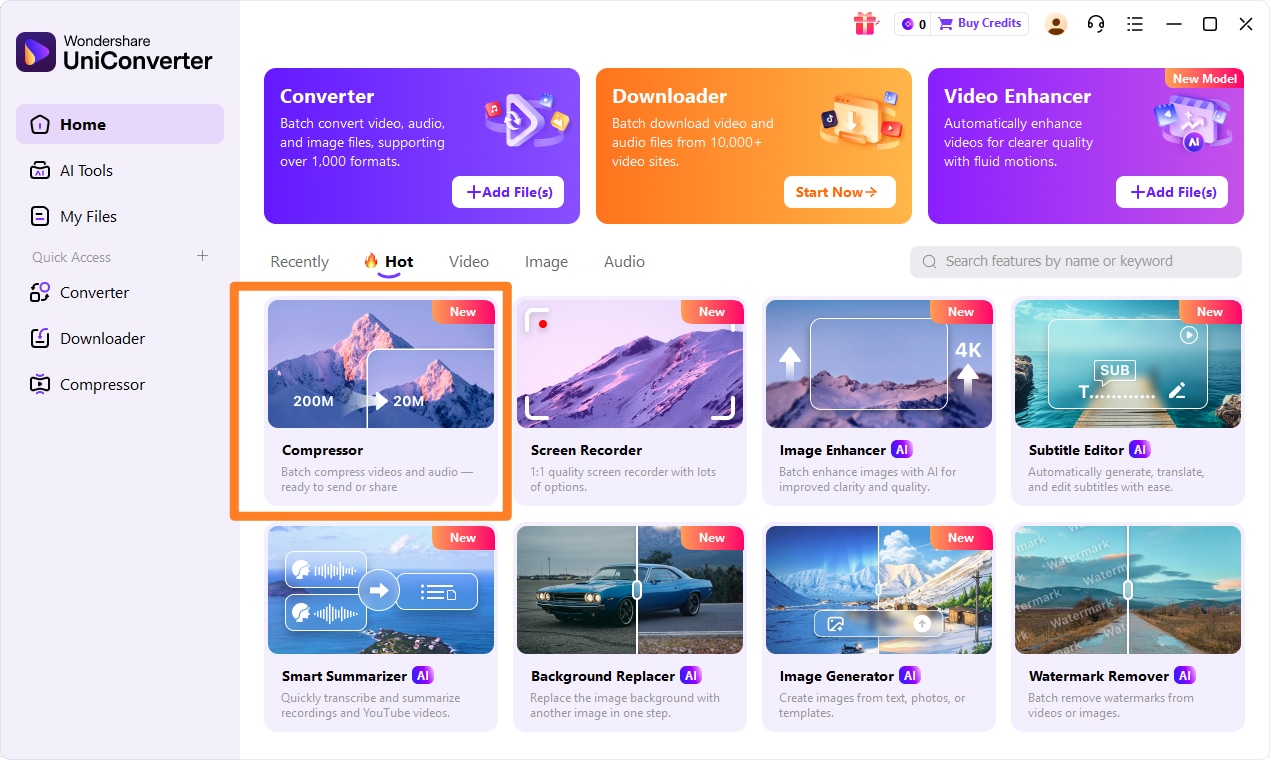
Step 1: Open UniConverter and Choose Compressor
Install and open UniConverter and locate the converter on the dashboard.
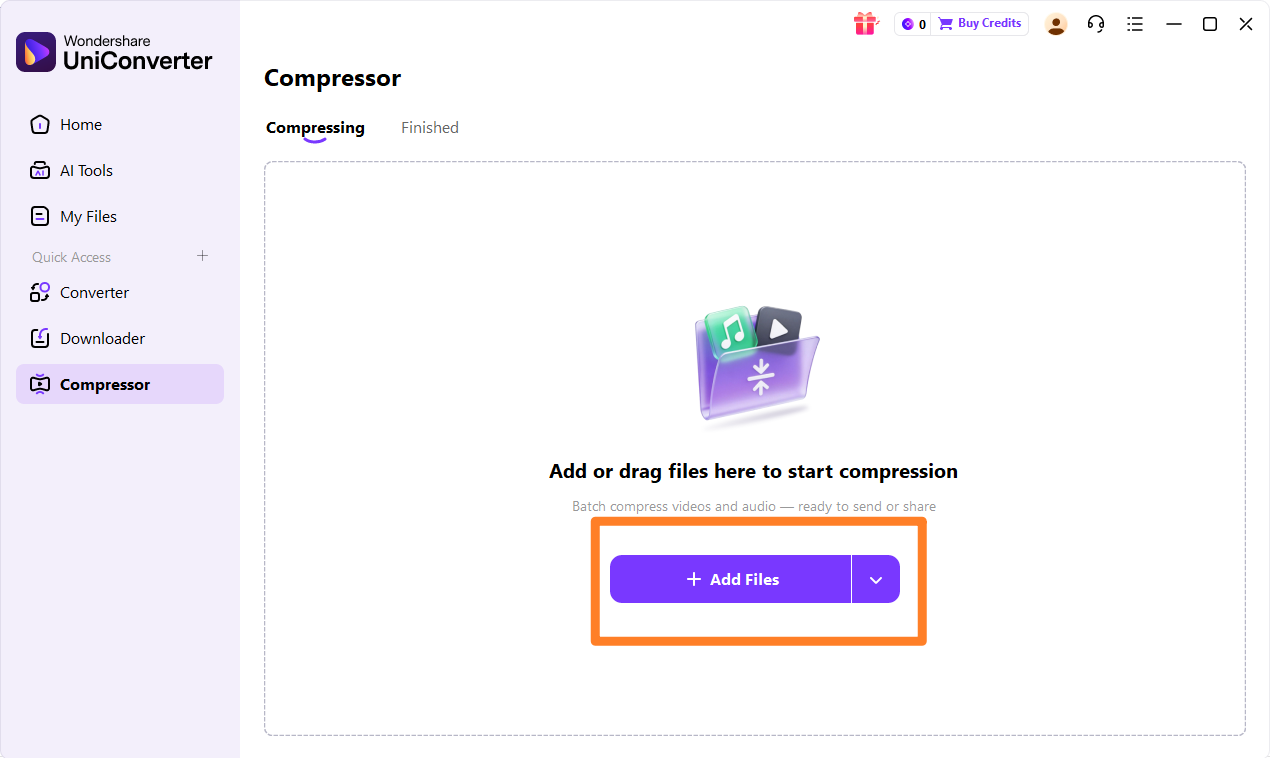
Step 2: Upload the Video, Audios, or Images
Click on 'Add Files' and upload video, audio, or image files you need to compress.
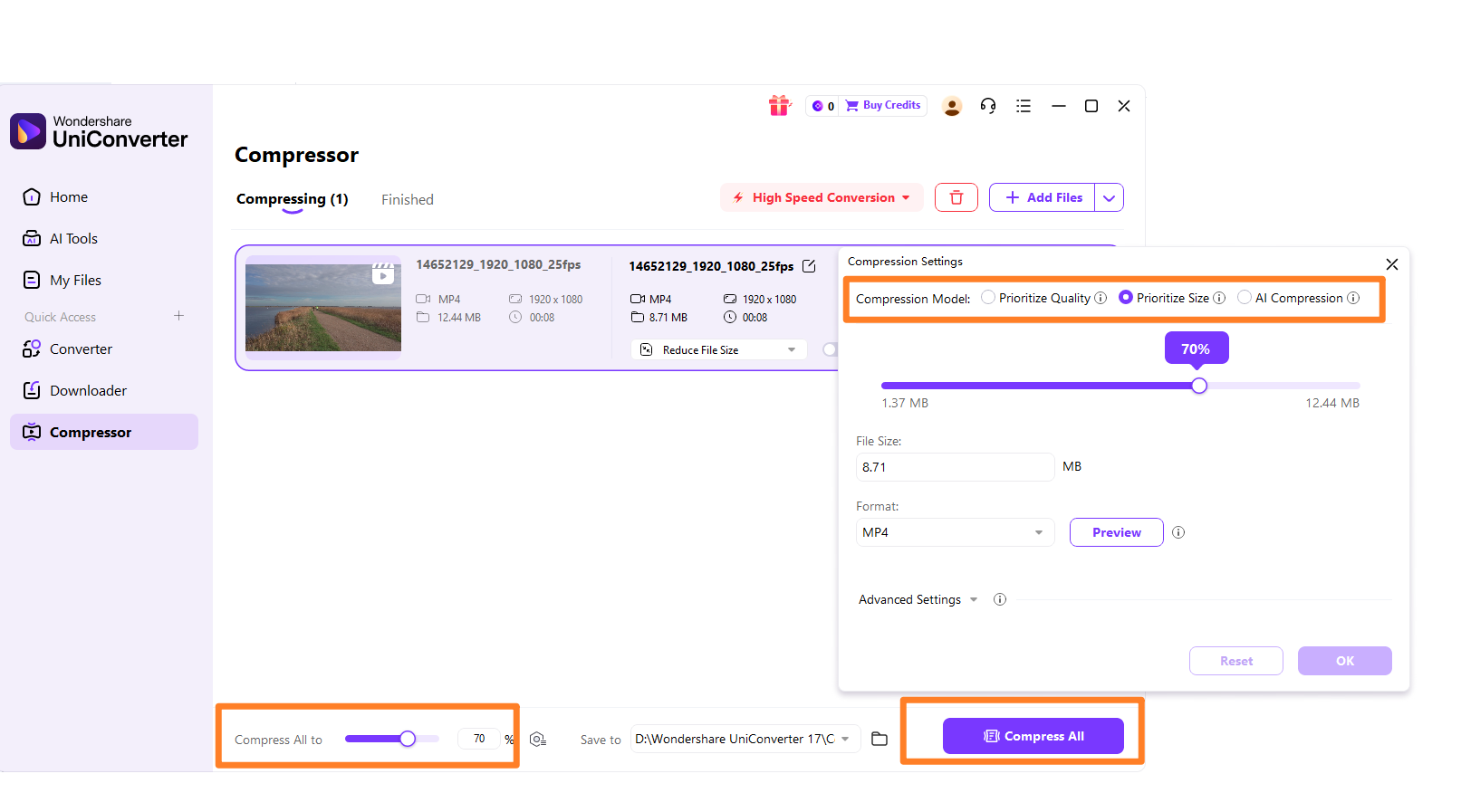
Step 3: Choose Required Parameters
Choose the ratio of files you need to compress and then click to compress all.
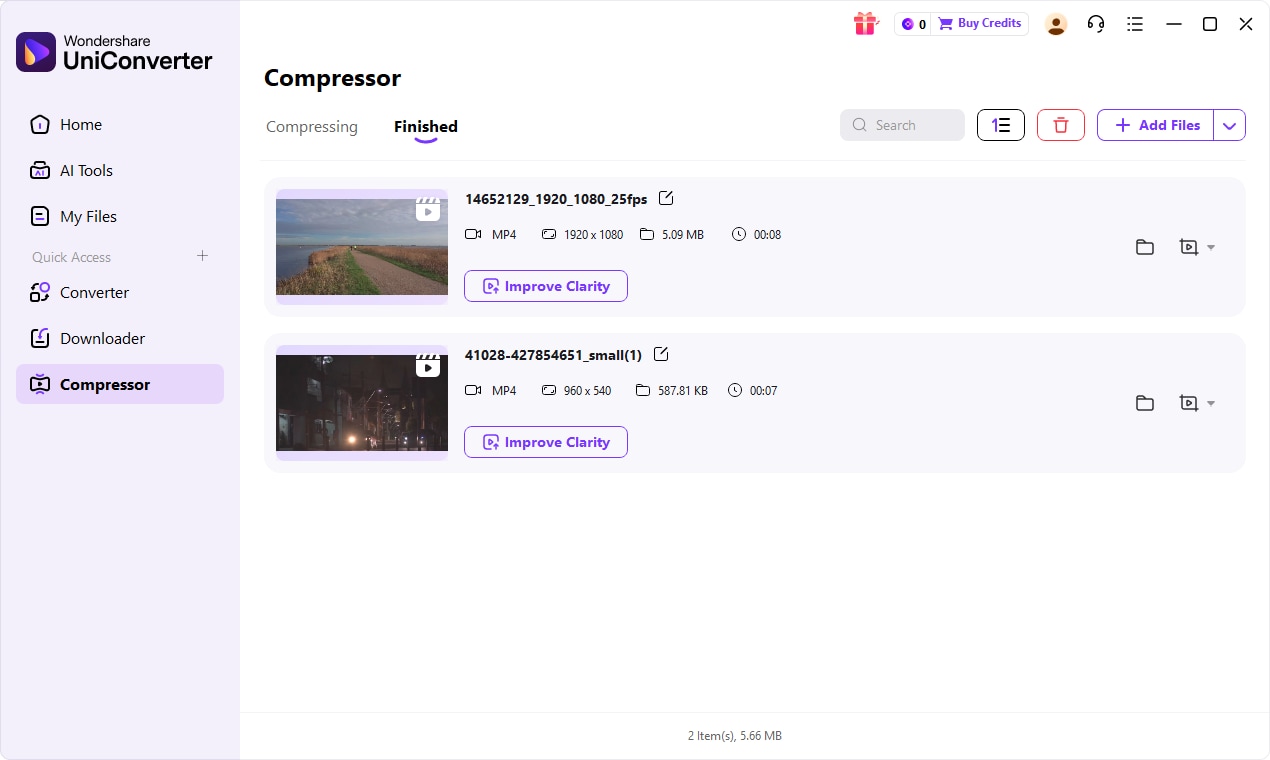
Step 4: Save the Compressed File
You can find those compressed files in the 'Finished’ tab.

Need a Better Audio Compressor Alternative?
Part 7: Conclusion
After spending significant time with the Reason Audio Compressor review, it's clear that this tool holds a strong position in the audio production landscape. For users deeply integrated into the Reason ecosystem, it offers unparalleled workflow efficiency and high-quality results. Its intuitive interface and versatile presets make it a solid choice for independent artists and producers who need reliable dynamic control without excessive complexity. However, its resource intensity and moderate customization options might lead some professional mastering engineers or those with older systems to explore alternatives. For beginners and hobbyists, it provides an excellent entry point into understanding audio compression. For podcasters and content creators, it's more than capable of delivering clear, consistent audio. If you're on a budget and already own Reason, it's a no-brainer. Ultimately, your choice will depend on your existing setup, specific needs, and desired level of control.
Part 8: FAQs
-
1. What is the main purpose of an audio compressor?
An audio compressor's main purpose is to reduce the dynamic range of an audio signal, making the loud parts quieter and the quiet parts louder. This results in a more consistent and controlled sound, often making the audio "punchier" or "fuller."
-
2. How does Reason Audio Compressor compare to built-in DAW compressors?
Reason Audio Compressor often offers a more refined sound and a more intuitive interface than many generic built-in DAW compressors. While built-in compressors are functional, Reason's version benefits from being part of a well-designed ecosystem, often providing a more musical and transparent compression character.
-
3. Can I use Reason Audio Compressor for video projects?
Reason Audio Compressor itself is an audio plugin, so you can't directly use it on video files. However, you can export the audio from your video project, process it with Reason Audio Compressor in your DAW, and then re-import the compressed audio back into your video editor. For a more integrated solution for video and audio compression, consider UniConverter.
-
4. What are common mistakes to avoid when compressing audio?
Common mistakes include over-compression, which can lead to a lifeless or "squashed" sound, setting attack and release times incorrectly, which can cause pumping or loss of transients, and not using your ears enough, relying too heavily on visual meters. Always aim for subtle, musical compression.
-
5. Is a hardware compressor better than a software compressor like Reason Audio Compressor?
Neither is inherently "better"; they offer different characteristics. Hardware compressors often impart a unique analog warmth and character that software can emulate but rarely perfectly replicate. Software compressors like Reason Audio Compressor offer convenience, recallability, and often more precise control at a fraction of the cost. For most modern productions, high-quality software compressors are more than sufficient.
