
- Reaper Compressor Value: Deep control, resource efficiency, and seamless integration for audio professionals.
- Core Features: Highly customizable algorithms, advanced sidechaining, and transparent compression for nuanced sound shaping.
- User Scenario: Ideal for audio engineers and sound designers needing granular control over dynamics in complex mixes.
- Comparison Insight: Outperforms many stock compressors in depth but has a steeper learning curve than simpler alternatives.
- Potential Pitfalls: Complex UI, limited presets, and high learning curve may deter beginners seeking quick solutions.
- UniConverter Alternative: Offers a user-friendly, efficient solution for general audio/video compression tasks, prioritizing ease over intricate control.
In this article
- Part 1: What is Reaper Audio Compressor?
- Part 2: Reaper Audio Compressor: Core Features, Pros, and Cons
- Part 3: Reaper Audio Compressor: User and Usage Scenarios
- Part 4: Reaper Audio Compressor and Alternatives Comparison
- Part 5: Potential Pitfalls and Considerations
- Part 6: How to Use UniConverter for Efficient Audio/Video Compression
- Part 7: Conclusion
- Part 8: FAQs
The Reaper Audio Compressor review delves into one of the most powerful yet often underestimated tools within the digital audio workstation landscape. For many audio professionals, finding the right compressor is crucial for shaping dynamics, adding punch, or simply taming unruly peaks. This review aims to dissect Reaper's native compressor, examining its capabilities, strengths, and weaknesses, especially when pitted against popular third-party alternatives. We'll explore its nuanced controls, resource efficiency, and the learning curve involved, ultimately guiding you toward an informed decision about whether it fits your workflow.
Part 1: What is Reaper Audio Compressor?
The Reaper Audio Compressor is an integral, native dynamic processing tool embedded within Cockos' Reaper Digital Audio Workstation (DAW). Unlike many DAWs that offer basic stock compressors, Reaper's built-in solution provides an exceptionally deep level of control and flexibility, often rivaling dedicated third-party plugins. It's designed to be a workhorse, capable of everything from subtle dynamic shaping to aggressive limiting, all while maintaining a remarkably low CPU footprint. My experience with it has shown it to be an incredibly versatile tool, but its power comes with a certain expectation of user proficiency. This review will address the core question: does Reaper's native compressor stand up to the industry's best, and for whom is it the ideal choice?
The Evolving Landscape of Audio Compression
* Demand for Granular Control: Modern audio production increasingly requires precise control over every aspect of a sound's dynamics.
* Resource Efficiency: As project sizes grow, the need for powerful yet lightweight plugins becomes paramount.
* Integration with Workflow: Seamless integration within a DAW can significantly streamline the production process.
* Balancing Power and Usability: The challenge for developers is to offer advanced features without overwhelming the user.
Part 2: Reaper Audio Compressor: Core Features, Pros, and Cons
Reaper's native compressor is a powerhouse for dynamic control, offering a comprehensive suite of parameters that allow for meticulous shaping of audio signals. Its core capabilities include standard threshold, ratio, attack, and release controls, but it extends far beyond with features like pre-comp, lookahead, soft knee, and various detection modes (RMS, peak). You can also engage sidechaining with intricate filtering options, making it incredibly versatile for complex mixing scenarios. The ability to customize its behavior through its open-ended parameter set is truly its defining characteristic.
* Flexible Compression Algorithms: Offers various detection modes (RMS, peak) and knee types (hard, soft).
* Advanced Sidechaining: Comprehensive sidechain input with filtering options for precise ducking and pumping effects.
* Pre-comp and Lookahead: Allows for extremely transparent compression by anticipating transients.
* Wet/Dry Mix: Built-in parallel compression for blending compressed and uncompressed signals.
* Graphical Display: Provides visual feedback on gain reduction and input/output levels.
Pros:
* Highly customizable and flexible compression algorithms.
* Extremely lightweight and efficient on system resources.
* Seamless integration within the Reaper DAW environment.
Cons:
* Steeper learning curve for beginners due to extensive options.
* User interface can appear less modern compared to some competitors.
Part 3: Reaper Audio Compressor: User and Usage Scenarios
The Reaper Audio Compressor is primarily designed for audio engineers, producers, and sound designers who demand absolute control over their dynamics processing. If you're someone who likes to get under the hood and tweak every parameter to achieve a specific sonic outcome, this compressor will be your best friend. It's not a "one-knob wonder," but rather a precision instrument for those who understand the nuances of compression.
Ideal Scenario: I find myself reaching for Reaper's compressor when I'm working on complex mixes where I need granular control over individual tracks, like shaping the attack of a kick drum, taming harsh vocals with multi-band sidechaining, or subtly gluing a bus together. Its resource efficiency means I can use dozens of instances without bogging down my system, which is crucial for large projects. It’s perfect for professional audio engineers and sound designers requiring granular control over dynamics processing within a flexible DAW.
Limited Scenario: If you're a casual user just looking for a quick way to make your podcast sound louder or apply a simple "pop" to a vocal without diving deep into parameters, Reaper's compressor might feel overwhelming. For those seeking quick, one-knob compression solutions for basic audio tasks, its extensive options can be a barrier rather than a benefit. I wouldn't recommend it for someone who just wants to drag and drop a preset and move on.
Part 4: Reaper Audio Compressor and Alternatives Comparison
When I compare Reaper's native compressor to other popular options, I always consider the balance between power, usability, and cost.
| Feature/Scenario | Reaper Audio Compressor | FabFilter Pro-C 2 | Waves Renaissance Compressor | UniConverter |
| Workflow Integration | Native to Reaper, highly integrated | VST/AU/AAX, excellent integration | VST/AU/AAX, good integration | Standalone application |
| Customization Depth | Extremely high | High | Moderate | Basic |
| CPU Usage | Very low | Moderate | Moderate | Low |
| Learning Curve | High | Moderate | Low | Very Low |
| Visual Feedback | Functional, but less polished | Excellent, detailed | Good, intuitive | Clear, simple |
| Processing Speed | Instantaneous (real-time) | Real-time | Real-time | Fast (batch processing) |
| Output Quality | Professional-grade | Professional-grade | Professional-grade | High (for target use) |
| Ease of Use | Complex | Moderate | Simple | Extremely Easy |
| Customer Support | Community-driven | Dedicated support | Dedicated support | Dedicated support |
| Security | Local processing | Local processing | Local processing | Local processing |
Key Differentiators Summarized:
Reaper's compressor excels in deep customization and resource efficiency, ideal for power users who want to sculpt every aspect of their sound. FabFilter Pro-C 2 offers a more polished visual experience and intuitive workflow for complex tasks, making it a favorite for those who value both power and clarity. Waves Renaissance Compressor provides a simpler, more "set-and-forget" approach with a classic, musical sound, perfect for those who prioritize speed and a familiar sonic character. UniConverter, on the other hand, is designed for users who need quick, efficient audio compression for general media tasks, prioritizing ease of use and batch processing over intricate sonic sculpting.
Part 5: Potential Pitfalls and Considerations
When diving deep into the Reaper Audio Compressor, there are several potential pitfalls and considerations that I've personally encountered and that you should be aware of. While its power is undeniable, it's not without its challenges, especially for certain types of users.
Complexity and Time Investment for Mastery
The sheer number of parameters and options can be overwhelming. Unlike some compressors that guide you with a few intuitive knobs, Reaper's compressor expects you to know what each setting does and how it interacts with others. This means a significant time investment in learning and experimentation before you can truly harness its full potential. If you're on a tight deadline and need quick results, this initial learning curve can be a major roadblock.
Lack of Presets for Quick Starts
While it offers immense customization, the stock presets are often basic or non-existent for specific scenarios. This means you'll frequently be starting from scratch, which can slow down your workflow if you're not already an expert in compression. Many third-party plugins come with a vast library of professionally designed presets that can get you 80% of the way there, something Reaper's native compressor largely lacks.
User Interface Aesthetics
Let's be honest, Reaper's UI, including its compressor, is functional but not always visually inspiring. It lacks the sleek, modern look and detailed visual feedback that many contemporary plugins offer. While this doesn't affect the sound quality, it can impact the user experience, especially for those who rely on visual cues to understand what the compressor is doing to their audio. This can make it harder to quickly grasp complex gain reduction curves or sidechain behavior.
Limited Standalone Functionality
A crucial point to remember is that Reaper's compressor is an integrated component of the Reaper DAW. It cannot be used as a standalone plugin in other DAWs. If your workflow involves multiple DAWs or you need a compressor that can be loaded into any host, you'll need to look at third-party alternatives. This limitation ties you directly to the Reaper ecosystem for its use.
No "Magic" Button
Unlike some plugins that promise to instantly make your audio sound "professional" with minimal effort, Reaper's compressor requires a deep understanding of audio dynamics. There's no "magic" button here; it's a tool that rewards knowledge and careful application. If you're looking for quick fixes without understanding the underlying principles, you might find yourself frustrated with the results.
Part 6: How to Use UniConverter for Efficient Audio/Video Compression
A smoother workflow matters most when compression tools start failing on batch jobs, producing uneven results, or reducing file quality more than expected. That’s why I often recommend UniConverter as a more dependable all-in-one option for video compression, audio compression, and image compression. Its interface is easy to work with, the format support is broad, and GPU acceleration helps speed up processing without making the workflow complicated. For video files, it can also help compress videos without quality loss as much as possible, which makes it a practical choice for anyone who wants more stable and efficient media compression.
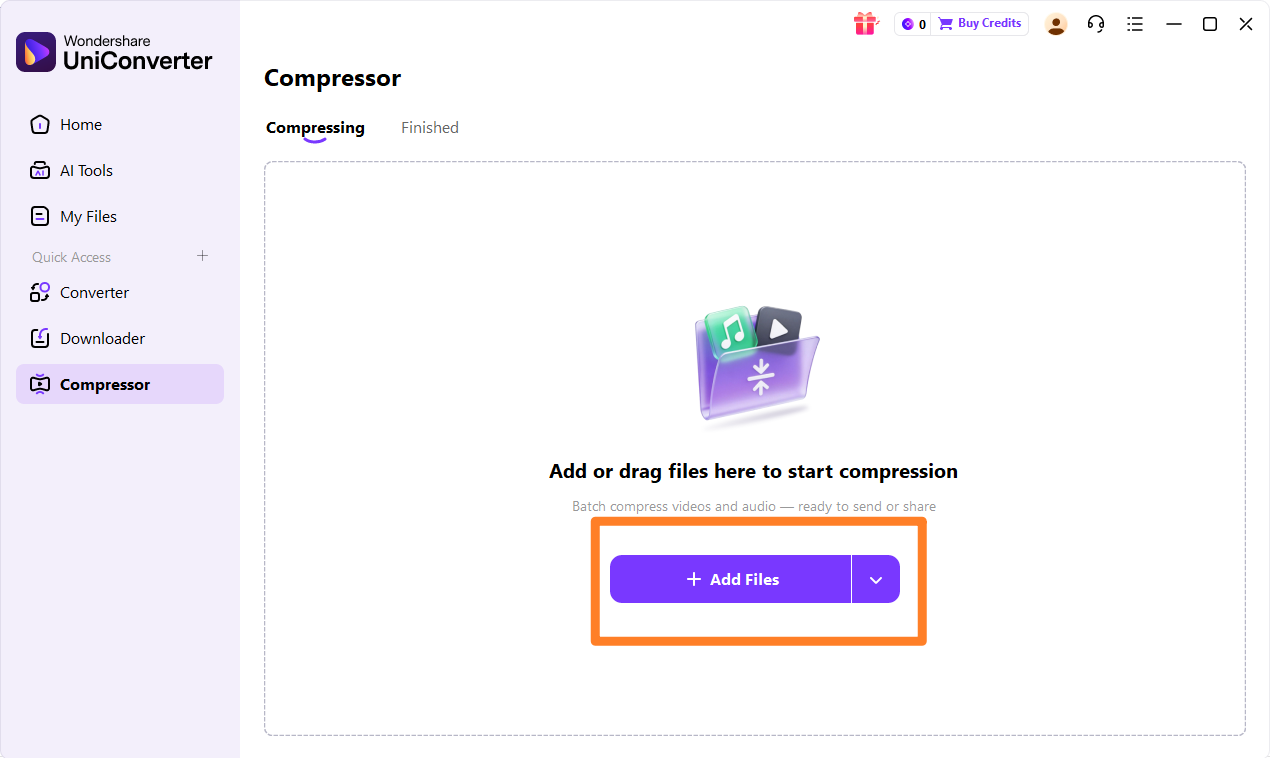
Step 1: Open UniConverter and Choose Compressor

Step 2: Upload the Video, Audios or Images
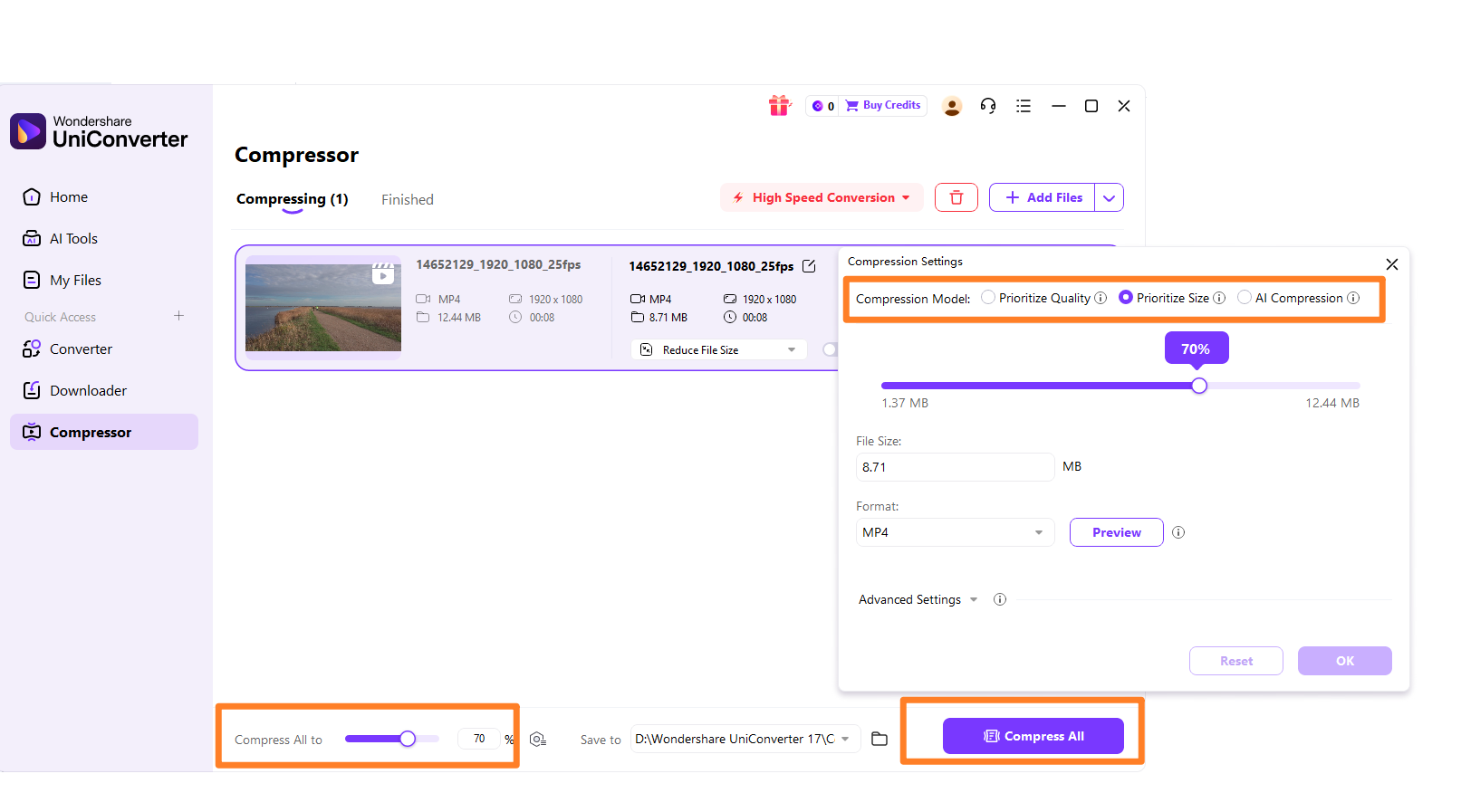
Step 3: Choose Required Parameters
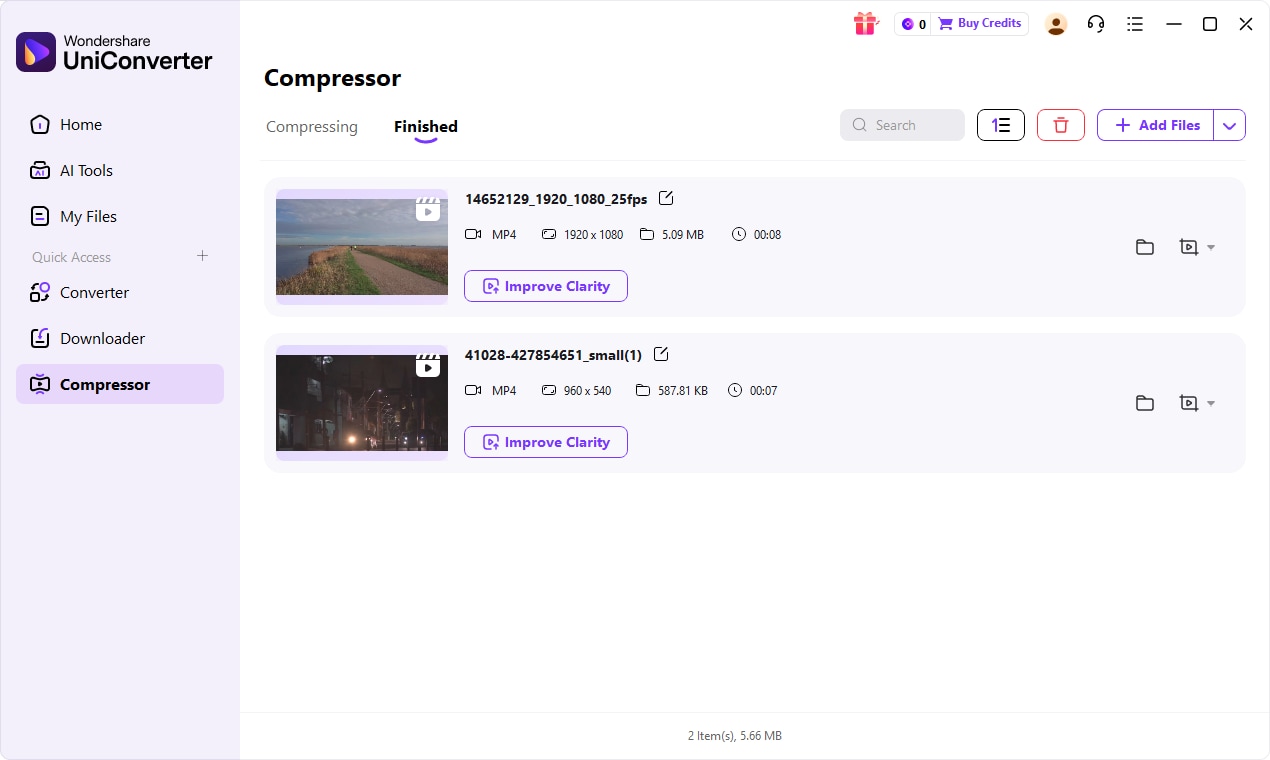
Step 4: Save the Compressed File

Reaper Audio Compressor Alternatives for Better Audio
Part 7: Conclusion
The Reaper Audio Compressor review reveals it to be an exceptionally powerful and resource-efficient tool, deeply integrated within the Reaper DAW. For the budget-conscious power user or the professional seeking granular control, its unparalleled customization and low CPU footprint make it an indispensable asset. However, its steep learning curve and less modern interface might deter beginners or those seeking quick, intuitive solutions. While it excels in complex mixing and mastering scenarios, casual users might find alternatives like UniConverter more suitable for straightforward compression tasks, prioritizing ease of use and quick results. Ultimately, your choice depends on your technical proficiency, workflow demands, and the specific balance you seek between deep control and user-friendliness.
Part 8: FAQs
-
1. Is Reaper Audio Compressor suitable for mastering?
Yes, with its extensive controls, it can be effectively used for mastering, especially for engineers who prefer a highly customizable approach to dynamics processing.
-
2. Does Reaper Audio Compressor offer sidechain compression?
Absolutely, sidechaining is a core feature and is highly configurable within Reaper, allowing for intricate ducking and pumping effects with various filter options.
-
3. How does Reaper Audio Compressor compare to stock compressors in other DAWs?
It generally offers far more flexibility and control than most stock compressors found in other DAWs, often rivaling dedicated third-party plugins in terms of parameter depth and sonic versatility.
-
4. Can I use Reaper Audio Compressor as a standalone plugin?
No, it's an integrated component of the Reaper DAW and cannot be used independently as a VST, AU, or AAX plugin in other host applications.
-
5. What are the main advantages of using Reaper's native compressor over third-party options?
The main advantages are seamless integration within the Reaper ecosystem, minimal CPU usage even with multiple instances, and unparalleled customization options that allow for extremely precise dynamic shaping. If you need a simpler, faster way to compress audio or video files for general use, UniConverter offers a streamlined, user-friendly experience with excellent results.
