
- QuickTime Player: Native macOS tool for basic video playback, editing, and rudimentary compression.
- Compression Challenges: Users face balancing quality/size, speed, feature limitations, and ease of use.
- QuickTime Pros: Free, pre-installed, user-friendly for basic tasks, seamless macOS integration.
- QuickTime Cons: Limited advanced options, slow for large files, no batch processing, quality loss.
- Best Use Cases: Quick compression for small files (email/messaging), basic social media trimming/resizing.
- When QuickTime Fails: Inefficient for batch processing, professional editing, or precise quality control.
- UniConverter Advantage: Offers superior speed, batch processing, extensive formats, and advanced controls.
- Decision Factor: QuickTime for casual, simple tasks; UniConverter for efficient, high-quality, professional compression.
In this article
- Part 1: What is QuickTime Player?
- Part 2: QuickTime Player's Core Features, Pros, and Cons
- Part 3: QuickTime Player's Users and Scenarios
- Part 4: QuickTime Player and Alternatives: A Comparative Analysis
- Part 5: Risks and Pitfalls of Using QuickTime Player for Compression
- Part 6: How to Use UniConverter for Efficient Audio and Video Compression
- Part 7: Conclusion
- Part 8: FAQs
QuickTime Player as a Video Compressor: A Comprehensive Review
As a macOS user, you've probably encountered QuickTime Player – Apple's default media player. While it excels at playback, many wonder about its capabilities as a video compressor. In this QuickTime Player Video Compressor review, I'll dive deep into its features, compare it with leading alternatives, and help you determine if it's the right tool for your compression needs. We'll explore its strengths and weaknesses, identify ideal use cases, and highlight potential pitfalls, ensuring you make an informed decision about your video compression workflow.
Part 1: What is QuickTime Player?
QuickTime Player is Apple's native multimedia framework and application, pre-installed on every macOS device. It's primarily known for its seamless video and audio playback, but it also offers basic editing and recording functionalities, including a rudimentary video compression feature. For many Mac users, it's the first tool they turn to when needing to quickly trim a video or reduce its file size. However, the core question this review aims to address is whether QuickTime Player truly stands up as a reliable and efficient video compressor, especially when compared to dedicated compression software.
Addressing the Core Compression Challenges
When it comes to video compression, users often face several key challenges:
* Balancing Quality and File Size: The eternal dilemma of reducing file size without sacrificing too much visual fidelity.
* Speed and Efficiency: How quickly can a video be compressed, especially large files or multiple videos?
* Feature Limitations: The need for advanced controls, batch processing, and broad format support.
* Ease of Use: A desire for a straightforward and intuitive compression process.
Part 2: QuickTime Player's Core Features, Pros, and Cons
QuickTime Player, while primarily a media player, offers a few core functionalities that touch upon video compression. Its main ability in this regard is to export videos in different resolutions, which inherently reduces file size. It can also trim and split videos, further contributing to file size reduction for specific segments.
Core Capabilities:
* Resolution-based Export: Allows you to export videos at various resolutions (e.g., 4K, 1080p, 720p, 480p), directly impacting file size.
* Basic Trimming and Splitting: You can easily cut unwanted parts of a video, reducing its overall length and size.
* Screen Recording: While not directly compression, it's a related feature that often leads to users needing to compress the recorded output.
* Simple Playback: Its primary function, offering smooth playback of various media formats.
* Limited Format Support for Export: Primarily exports to MOV and MP4 formats.
Pros of QuickTime Player for Video Compression
* Seamless Integration with macOS Ecosystem: It's built into macOS, offering a native and familiar experience.
* User-Friendly Interface for Basic Compression Tasks: The interface is incredibly simple, making basic exports straightforward.
* Free and Pre-installed on Mac Devices: No additional cost or installation required.
Cons of QuickTime Player for Video Compression
* Limited Advanced Compression Options: Lacks control over bitrate, codecs, and other crucial compression parameters.
* Slower Compression Speed for Large Files: Can be quite sluggish when dealing with larger video files.
Part 3: QuickTime Player's Users and Scenarios
QuickTime Player's video compression capabilities are best suited for specific user profiles and situations, primarily those who need quick, no-frills solutions for everyday tasks. It's not designed for professional-grade compression or complex workflows.
Best Use Cases for QuickTime Player Compression
If you're looking for a quick and easy way to reduce the size of a small video file, QuickTime Player is perfectly adequate. For example:
* Quick Compression of Small Video Files for Email or Messaging: When you need to send a short video clip via email or a messaging app and the file size is just a bit too large, QuickTime Player can quickly export it at a lower resolution.
* Basic Video Trimming and Resizing for Social Media Sharing: If you've recorded a short video on your iPhone and want to trim the beginning or end, and then export it at a smaller size for Instagram or Twitter, QuickTime Player handles this with ease.
Scenarios Where QuickTime Player Falls Short
However, there are many situations where QuickTime Player simply isn't up to the task:
* Batch Compression of Multiple Videos: If you have a folder full of videos that all need to be compressed, QuickTime Player requires you to process each one individually, which is incredibly inefficient.
* High-Quality Compression for Professional Video Editing: For content creators, filmmakers, or anyone needing precise control over compression settings to maintain visual fidelity for professional projects, QuickTime Player's lack of advanced options makes it unsuitable. You'll likely end up with noticeable quality degradation.
Part 4: QuickTime Player and Alternatives: A Comparative Analysis
When it comes to video compression, QuickTime Player is just one option among many. Let's see how it stacks up against some popular alternatives.
Comparison Table Placeholder
| Feature/Competitor | QuickTime Player | HandBrake | VLC Media Player | UniConverter |
| Compression Quality | Basic | Advanced | Moderate | Excellent |
| Speed | Moderate | Fast | Moderate | Very Fast |
| Batch Processing | No | Yes | No | Yes |
| Output Formats | Limited | Extensive | Extensive | Extensive |
| Ease of Use | High | Moderate | Moderate | High |
Key Differentiators
QuickTime Player shines in its simplicity and deep integration with macOS. It's your go-to for quick, basic tasks. HandBrake is an open-source powerhouse, offering granular control over compression for those who don't mind a steeper learning curve. Its advanced settings allow for superior quality retention. VLC Media Player is a versatile player with basic conversion capabilities, but it's not optimized for dedicated compression tasks, often resulting in less efficient file sizes or slower processing. UniConverter stands out as an all-in-one solution, blending advanced features with an intuitive interface, making it ideal for users who need both power and ease of use, especially for high-quality and fast compression.
Part 5: Risks and Pitfalls of Using QuickTime Player for Compression
While QuickTime Player offers a convenient way to compress videos on your Mac, relying on it for anything beyond the most basic tasks comes with several risks and potential pitfalls that I've personally encountered.
Potential Loss of Video Quality
My biggest concern with QuickTime Player's compression is the inevitable loss of video quality. Since it primarily relies on reducing resolution or using default, often aggressive, compression settings, you don't have the fine-grained control to balance file size with visual fidelity. I've often found that videos compressed with QuickTime Player look noticeably softer or pixelated, especially when viewed on larger screens. This can be a significant issue if you're trying to preserve the integrity of your original footage.
Limited Output Format Support
Another major drawback is the limited range of output formats. QuickTime Player predominantly exports to MOV and MP4. While these are widely compatible, there are many scenarios where I've needed other formats – perhaps for a specific device, platform, or professional workflow. Having to then convert the already compressed video again in another tool adds an unnecessary extra step and can further degrade quality.
Inefficient for Large File Sizes
When dealing with large video files, QuickTime Player becomes incredibly inefficient. I've spent frustrating amounts of time waiting for it to process even moderately sized videos. Its compression algorithms aren't optimized for speed, especially compared to dedicated compression software that leverages hardware acceleration. This makes it impractical for anyone working with significant amounts of footage or high-resolution files.
Lack of Advanced Customization Options
The most significant limitation for me is the complete absence of advanced customization options. I can't adjust the bitrate, choose specific codecs, set a target file size, or fine-tune other parameters that are crucial for achieving optimal compression. This lack of control means I'm at the mercy of QuickTime Player's default settings, which rarely meet my specific needs for quality or file size. It's a "one-size-fits-all" approach that often leads to compromises.
Part 6: How to Use UniConverter for Efficient Audio and Video Compression
When QuickTime Player starts to feel limiting—especially for batch compression, consistent output, or maintaining good quality—I usually switch to UniConverter for a more reliable solution. It offers a smoother workflow and works especially well as a dedicated video compressor for reducing file size efficiently without the usual hassles. I also like that it can help compress videos without quality loss as much as possible, while GPU acceleration makes processing faster and more stable. Beyond video, it also supports audio compression and image compression, making it a practical all-in-one choice for everyday media compression and management.
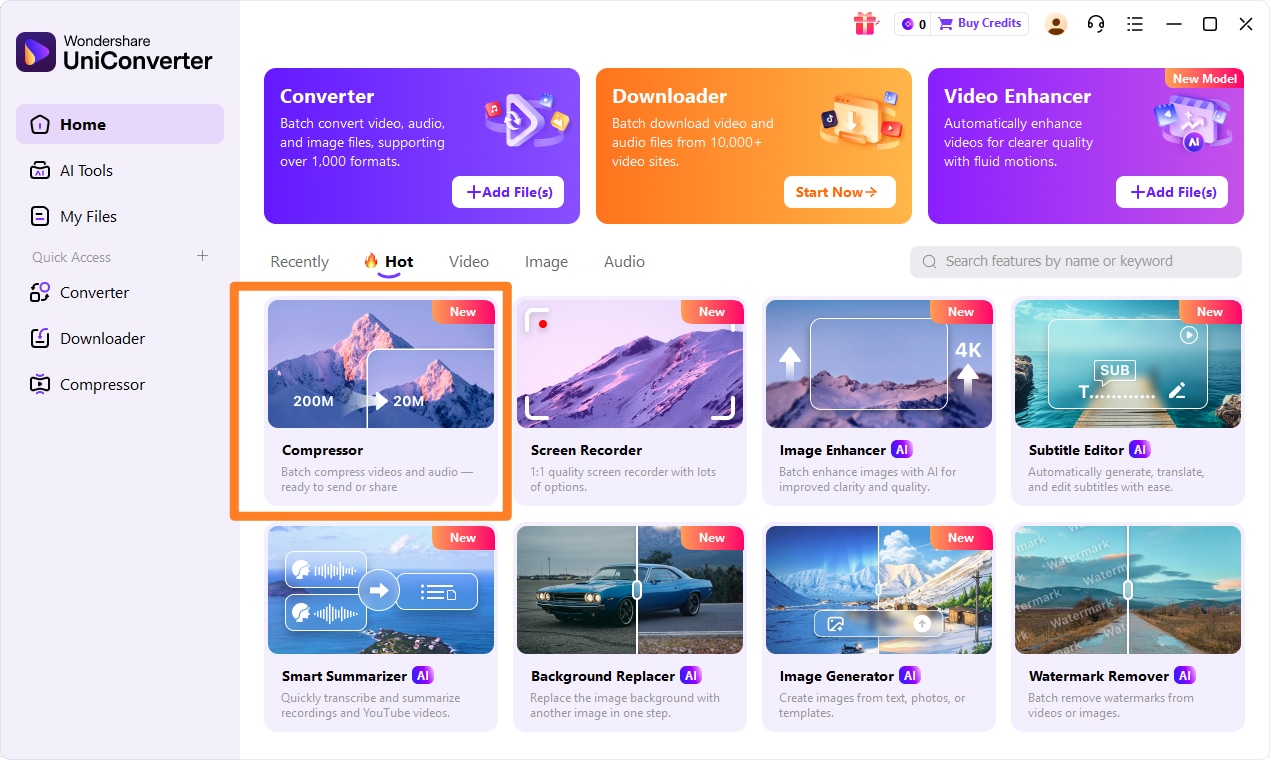
Step 1: Open UniConverter and Choose Compressor
First, launch UniConverter on your computer. On the main interface, navigate to the "Compressor" tab.
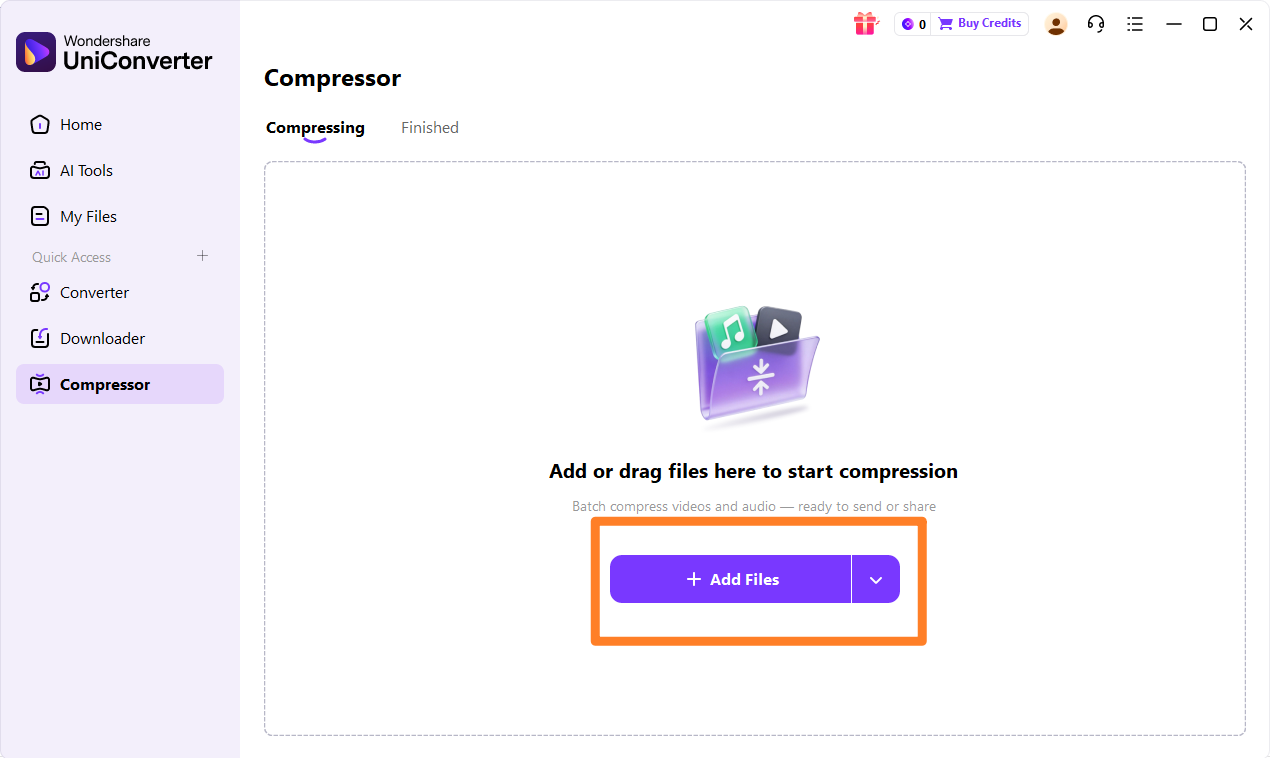
Step 2: Upload the Video, Audios or Images
Click on the "Add Files" button or simply drag and drop your video, audio, or image files into the program window.
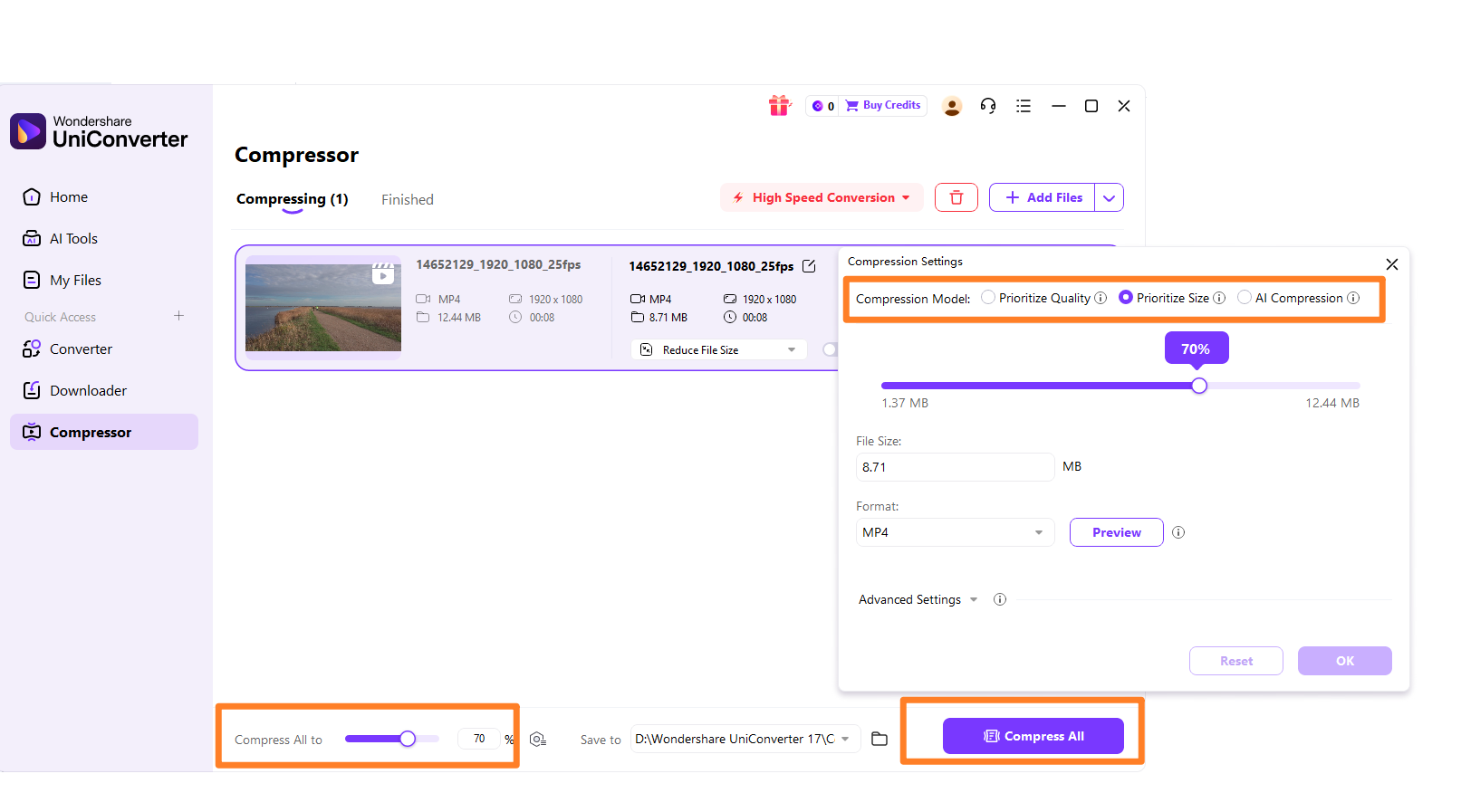
Step 3: Choose Required Parameters
Once your files are loaded, you can adjust the compression settings. UniConverter allows you to customize output format, resolution, bitrate, and quality to achieve your desired file size and quality balance.
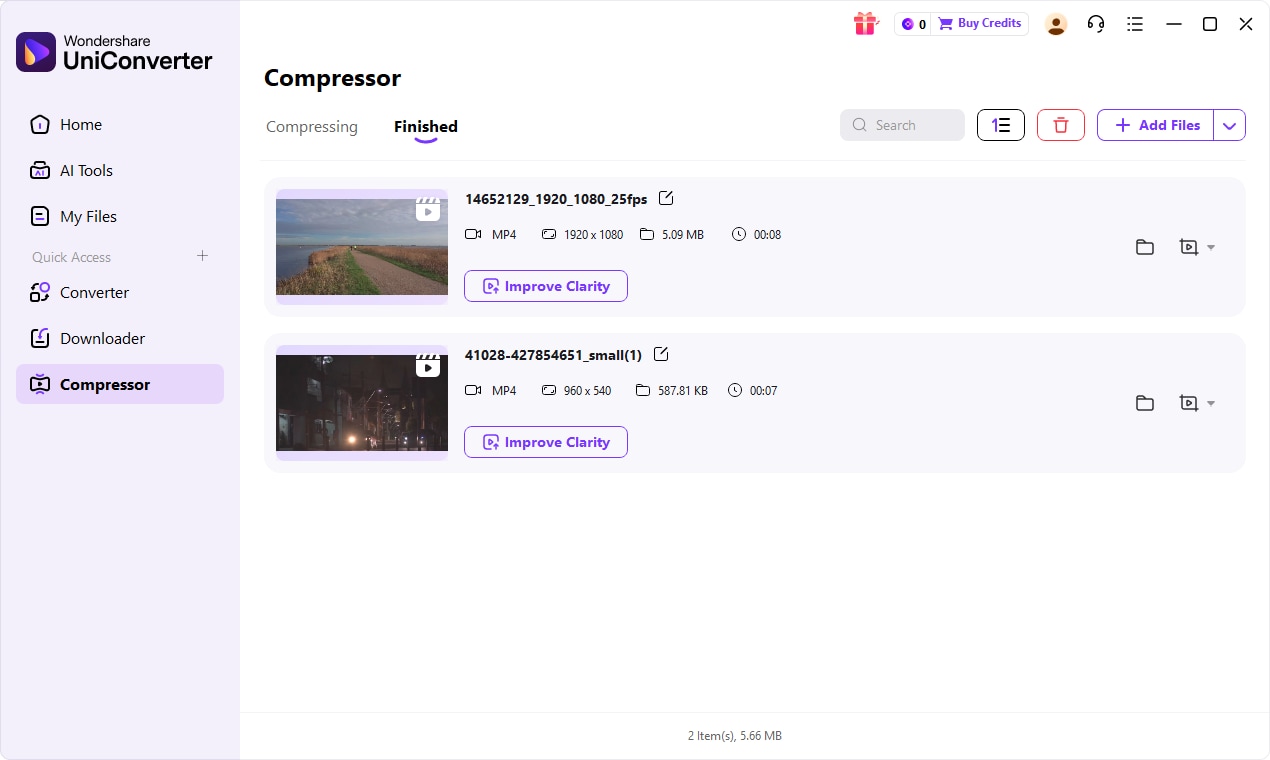
Step 4: Save the Compressed File
After configuring your settings, click the "Compress" button. UniConverter will quickly process your files, and you can then choose the destination folder for your compressed media.

Need a Better QuickTime Video Compressor Alternative?
Part 7: Conclusion
In conclusion, my QuickTime Player Video Compressor review reveals that it serves as a convenient, pre-installed tool for basic video compression tasks on macOS. Its simplicity and seamless integration make it ideal for casual users needing to quickly trim a video or reduce the file size of small clips for sharing via email or social media. However, its limitations in advanced features, speed for large files, and lack of batch processing capabilities mean it falls short for more demanding or professional compression needs. For those requiring precise control over quality, faster processing, broader format support, or batch compression, dedicated tools like UniConverter offer a far superior and more efficient solution. Ultimately, your choice should hinge on your specific compression requirements and how much control you need over the output.
Part 8: FAQs
-
1. Can QuickTime Player compress videos without losing quality?
QuickTime Player can reduce file size, but some quality loss is generally inevitable with its compression methods, especially when exporting at lower resolutions. You don't have the fine-tuned control to minimize this.
-
2. Is QuickTime Player faster than other video compressors?
For very basic, small file tasks, it can feel quick due to its native integration. However, for larger files or more complex compression, dedicated video compressors like UniConverter are generally much faster and more efficient.
-
3. What video formats does QuickTime Player support for compression?
QuickTime Player primarily supports MOV and MP4 for compression output. Its format support is quite limited compared to more versatile compression tools.
-
4. Can I batch compress videos with QuickTime Player?
No, QuickTime Player does not support batch compression. You have to process each video individually, which is time-consuming if you have multiple files. For batch processing, you'll need an alternative like UniConverter.
-
5. Is UniConverter a free alternative to QuickTime Player?
UniConverter offers a free trial version with limited functionalities. The full version, which unlocks all its advanced features for high-quality and efficient compression, requires a purchase.
