
- Pro Tools Compressor: Industry-standard for professional audio, offering precise dynamic control within its ecosystem.
- Core Features: Threshold, ratio, attack, release, knee, and side-chain for versatile sound shaping.
- Ideal Users: Best for seasoned professionals needing granular control in complex mixing and mastering projects.
- Limitations: Steep learning curve and high CPU usage; overkill for simple tasks like casual podcasts.
- Vs. Competitors: Offers native integration and precision; alternatives like FabFilter Pro-C 2 (visuals) or Waves Renaissance (warmth) offer different strengths.
- Risks: Over-compression, compatibility issues, high CPU load, and misunderstanding parameters can lead to poor audio.
- UniConverter Alternative: Provides efficient, user-friendly audio compression for various media, ideal for quick, quality-preserving tasks.
- Final Verdict: Pro Tools compressor is powerful for pros; UniConverter offers a simpler, effective solution for general users.
In this article
- Part 1: What is Pro Tools Audio Compressor?
- Part 2: Pro Tools Audio Compressor: Core Features, Pros, and Cons
- Part 3: Pro Tools Audio Compressor: Ideal Users and Use Cases
- Part 4: Pro Tools Audio Compressor vs. Competitors
- Part 5: Risks and Pitfalls When Using Pro Tools Audio Compressor
- Part 6: How to Use UniConverter for Efficient Audio Compression
- Part 7: Final Verdict and Recommendations
- Part 8: FAQs
Pro Tools Audio Compressor: A Deep Dive into Professional Audio Dynamics
When it comes to professional audio production, Pro Tools Audio Compressor review is a topic that frequently comes up. As someone deeply embedded in the world of sound engineering, I've spent countless hours dissecting the nuances of digital audio workstations (DAWs) and their integrated tools. Pro Tools, developed by Avid, has long been the industry standard, and its native audio compressor is a fundamental component for shaping dynamics. This review aims to provide a comprehensive, scenario-based comparison, helping you understand its strengths, weaknesses, and how it stacks up against other leading compressors in the market. We'll explore its core features, ideal use cases, potential pitfalls, and even suggest alternatives for different user needs, ensuring you make an informed decision for your audio projects.
Part 1: What is Pro Tools Audio Compressor?
The Pro Tools Audio Compressor is an integral part of the Avid Pro Tools digital audio workstation, designed to control the dynamic range of audio signals. It's not a standalone plugin but rather a native effect that comes bundled with every Pro Tools license. Its primary function is to reduce the difference between the loudest and quietest parts of an audio signal, making it sound more consistent, punchy, or smooth, depending on the desired effect. For decades, Pro Tools has been the backbone of countless professional studios, and its integrated compressor has evolved alongside it, offering a robust and reliable tool for audio engineers.
The Critical Need for Dynamic Control in Audio Production
In today's competitive audio landscape, mastering dynamic control is paramount.
* Achieving Professional Loudness: Consistent loudness is crucial for broadcast, streaming, and commercial releases.
* Enhancing Clarity and Punch: Compression can bring out details and add impact to instruments and vocals.
* Taming Unruly Peaks: Preventing clipping and distortion is essential for clean, high-quality audio.
* Creating Sonic Cohesion: Blending different elements in a mix requires careful dynamic shaping to sound unified.
Part 2: Pro Tools Audio Compressor: Core Features, Pros, and Cons
The Pro Tools Audio Compressor provides a comprehensive set of controls for dynamic processing. It offers threshold, ratio, attack, release, and make-up gain, along with various knee settings and side-chain capabilities. Its core strength lies in its deep integration within the Pro Tools environment, allowing for efficient workflow and precise control over every parameter.
Core Capabilities:
* Threshold Control: Sets the level at which compression begins.
* Ratio Adjustment: Determines the amount of gain reduction applied.
* Attack and Release Times: Controls how quickly the compressor reacts and recovers.
* Knee Settings: Allows for hard or soft knee compression for different sonic characteristics.
* Side-chain Functionality: Enables external signals to trigger the compression.
Pros:
* Industry-standard precision and control for detailed sound shaping.
* Seamless integration within the Pro Tools ecosystem for efficient workflows.
* Versatile compression algorithms suitable for various audio sources.
Cons:
* Steep learning curve for beginners due to advanced functionalities.
* Resource-intensive, potentially impacting system performance on older machines.
Part 3: Pro Tools Audio Compressor: Ideal Users and Use Cases
The Pro Tools Audio Compressor is primarily designed for audio professionals who demand granular control and seamless integration within a Pro Tools-centric workflow. If you're a seasoned mixing engineer, mastering engineer, or a music producer working on complex, multi-track projects, this compressor is built for your needs.
Best Use Case: Professional Mixing and Mastering for Complex Productions
Imagine you're mixing a dense orchestral piece or a rock anthem with multiple layers of instruments and vocals. The Pro Tools Audio Compressor shines here, allowing me to meticulously sculpt the dynamics of each track. I can apply subtle compression to vocals to keep them upfront without sounding squashed, or use more aggressive settings on drums to add punch and energy. Its precise controls empower me to achieve a balanced and polished sound across the entire mix, ensuring every element sits perfectly in the sonic landscape.
Limitation Scenario: Quick Fixes for Casual Podcasting or Voiceovers
However, if I'm just doing a quick voiceover for a casual podcast or a simple YouTube video, the Pro Tools Audio Compressor can feel like overkill. The extensive parameters and detailed interface can be time-consuming to navigate for basic tasks. For these scenarios, where speed and simplicity are prioritized over intricate control, I often find myself reaching for simpler, more intuitive compressors that offer a "set it and forget it" approach, or even dedicated audio editing software with streamlined dynamic processing.
Part 4: Pro Tools Audio Compressor vs. Competitors
When it comes to audio compression, the market offers a diverse range of tools. Here's how the Pro Tools Audio Compressor stacks up against some popular alternatives:
| Feature/Compressor | Pro Tools Audio Compressor | FabFilter Pro-C 2 | Waves Renaissance Compressor | Universal Audio 1176 |
| Workflow Integration | Native Pro Tools | VST/AU/AAX | VST/AU/AAX | UAD Platform |
| Control Depth | High | Very High | Medium | Medium-High |
| CPU Usage | Medium-High | Medium | Low-Medium | Medium |
| Sound Character | Transparent/Versatile | Transparent/Flexible | Warm/Musical | Aggressive/Punchy |
| Price Point | Included with Pro Tools | Premium | Mid-Range | Premium (UAD Hardware) |
Key Differentiators:
Pro Tools' native integration offers unparalleled workflow efficiency within its DAW, making it my go-to for projects exclusively within Pro Tools. FabFilter Pro-C 2, on the other hand, excels in visual feedback and advanced sidechaining, which is invaluable for complex dynamic shaping. Waves Renaissance Compressor provides a classic, musical sound with lower CPU demands, often my choice for adding warmth without taxing my system. Universal Audio 1176, with its iconic hardware emulation, delivers a distinct aggressive and punchy sonic signature that's hard to replicate.
Part 5: Risks and Pitfalls When Using Pro Tools Audio Compressor
While the Pro Tools Audio Compressor is a powerful tool, it's not without its potential pitfalls. As an experienced engineer, I've learned to navigate these challenges, but beginners often fall into common traps.
Over-compression Leading to Unnatural Sounding Audio
One of the most common mistakes is applying too much compression. This can "squash" the dynamics out of your audio, making it sound lifeless, fatiguing, and unnatural. Vocals can lose their expressiveness, and instruments can lose their impact. It's a fine line between controlled dynamics and a completely flattened sound.
Incompatibility Issues with Older Pro Tools Versions
Like any software, the Pro Tools Audio Compressor can sometimes have compatibility quirks with older versions of Pro Tools. If you're working on a project started in an older version or collaborating with someone using an outdated setup, you might encounter unexpected behavior or even plugin crashes. Always ensure your Pro Tools installation is up-to-date.
High CPU Load Affecting Real-time Performance
The advanced algorithms and detailed processing of the Pro Tools Audio Compressor can be quite CPU-intensive, especially when used across many tracks in a large project. On older or less powerful machines, this can lead to high CPU load, causing audio dropouts, latency, or even system crashes, severely hindering real-time mixing and editing.
Misunderstanding Advanced Parameters Resulting in Suboptimal Mixes
The compressor offers a wealth of parameters – threshold, ratio, attack, release, knee, sidechain – each with a significant impact on the sound. For someone new to compression, misunderstanding how these parameters interact can lead to suboptimal mixes. Instead of enhancing the audio, incorrect settings can introduce pumping, breathing, or a generally unpleasant sonic character.
Part 6: How to Use UniConverter for Efficient Audio Compression
A smoother workflow becomes especially important when compression tools start falling behind on batch support, output stability, or quality retention. In those cases, UniConverter is a practical alternative for handling audio compression, video compression, and image compression in one place. Its ad-free interface, broad format compatibility, and GPU acceleration help make the entire process faster and more reliable. For video projects, it can also help compress videos without quality loss as much as possible, making it a practical all-in-one toolkit for everyday media compression.
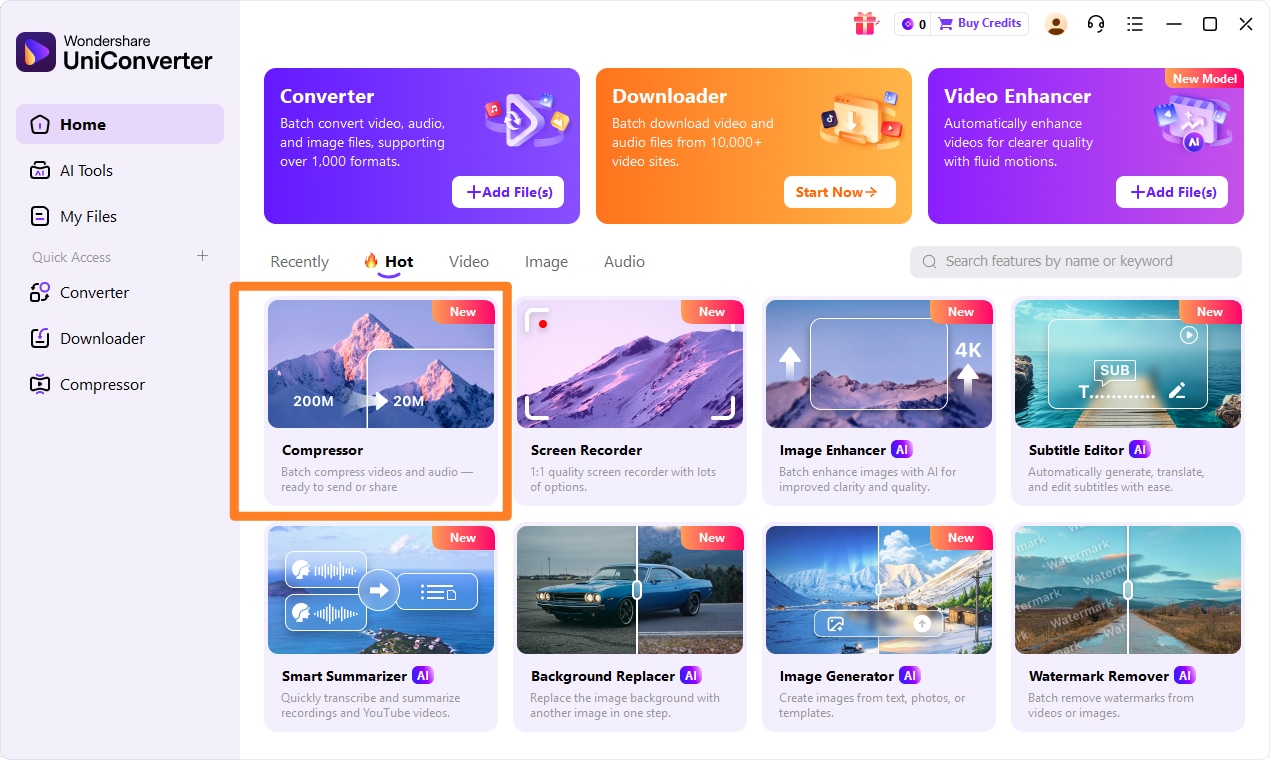
Step 1: Open UniConverter and Choose Compressor
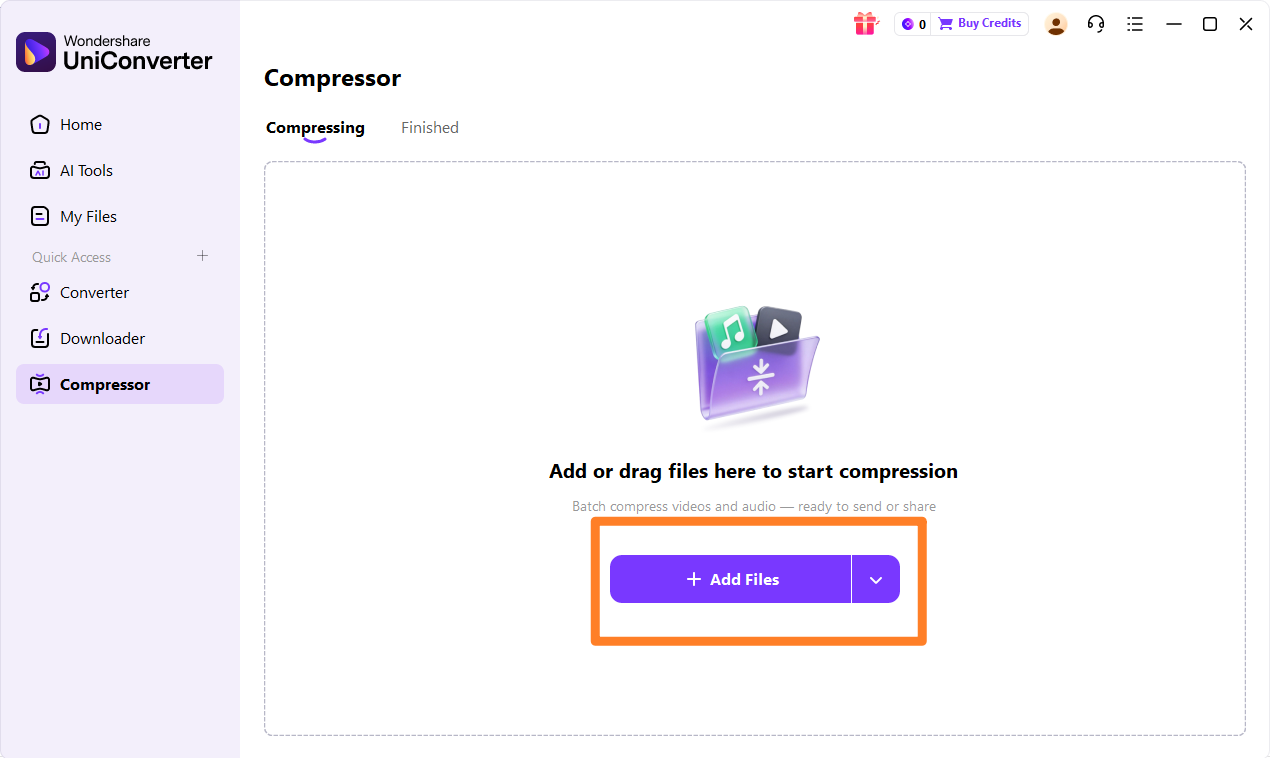
Step 2: Upload the Video, Audios or Images
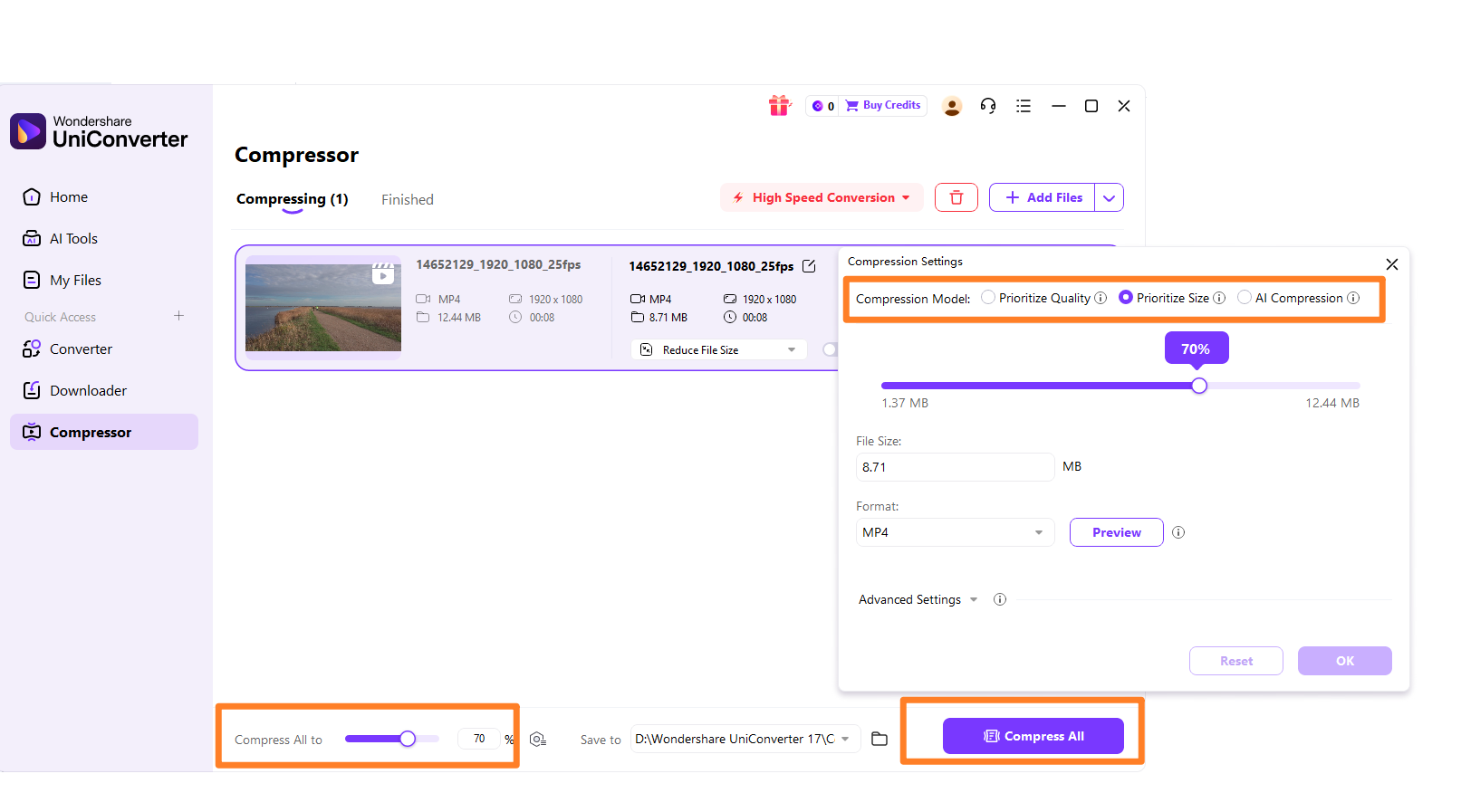
Step 3: Choose Required Parameters
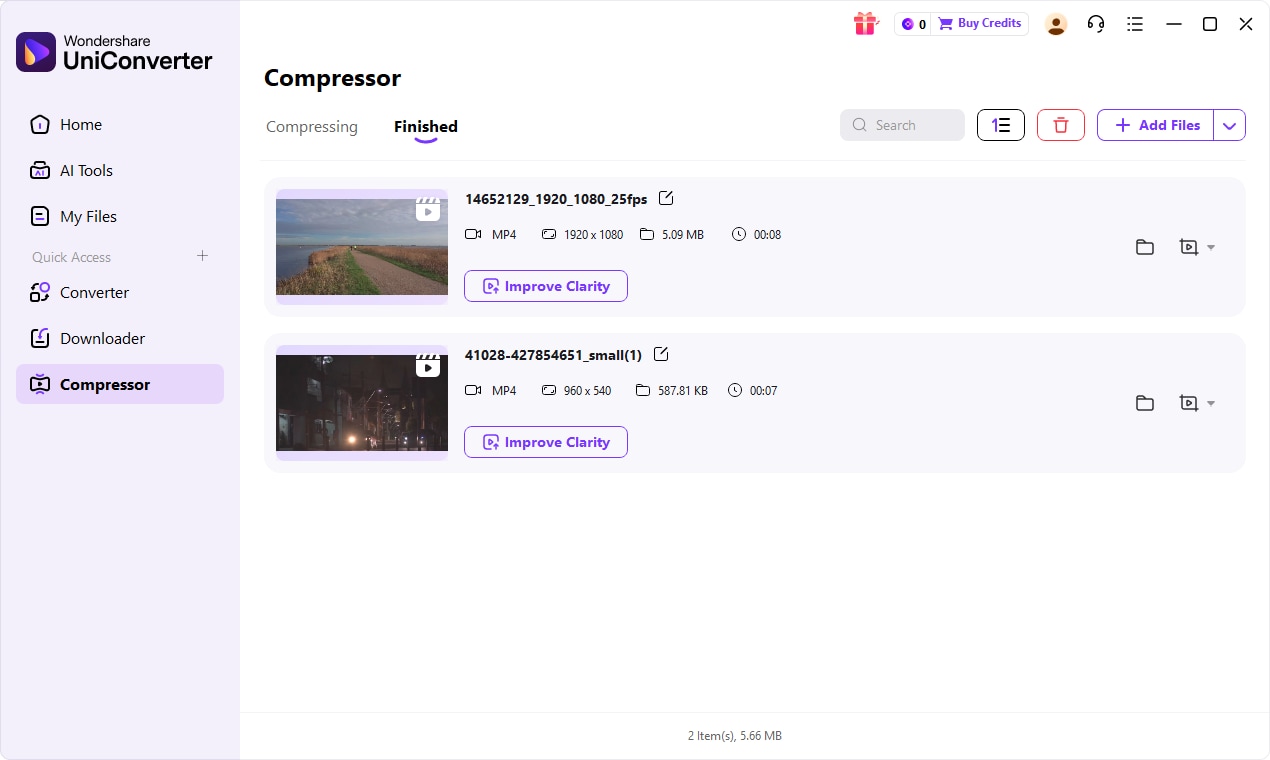
Step 4: Save the Compressed File

Seeking a Pro Tools Audio Compressor Alternative?
Part 7: Final Verdict and Recommendations
After extensively exploring the Pro Tools Audio Compressor review, it's clear that this tool remains a cornerstone for professional audio production. For seasoned audio engineers, its deep integration within the Pro Tools ecosystem, coupled with its precise control and versatile algorithms, makes it an indispensable asset for complex mixing and mastering tasks. The ability to meticulously sculpt dynamics within a familiar environment offers unparalleled workflow efficiency. However, for home studio enthusiasts who might not require such granular control or who are working with less powerful systems, the steep learning curve and potential CPU demands could be a deterrent. In these cases, simpler, more intuitive compressor plugins or even the built-in compressors in other DAWs might offer a better balance of functionality and ease of use. For casual users, especially those focused on quick fixes for podcasts or voiceovers, the Pro Tools compressor can feel like overkill. Here, dedicated, user-friendly tools like UniConverter offer a fantastic balance of ease and quality, providing efficient compression without the complexity. Ultimately, the best choice depends on your specific needs, skill level, and the demands of your projects.
Part 8: FAQs
-
1. Is Pro Tools Audio Compressor suitable for beginners?
While powerful, its complexity can be challenging for beginners. Simpler compressors or dedicated tools might be a better starting point. For basic compression needs without the steep learning curve, UniConverter offers a much more user-friendly experience.
-
2. Can I use Pro Tools Audio Compressor with other DAWs?
No, the native Pro Tools compressor is exclusive to the Pro Tools environment. It's designed for seamless integration within its own ecosystem.
-
3. How does Pro Tools Audio Compressor compare to hardware compressors?
Software compressors like Pro Tools' offer more flexibility and recallability, allowing for precise adjustments and easy A/B comparisons. Hardware units, on the other hand, often provide a unique analog warmth and character that many engineers covet, though they lack the digital flexibility.
-
4. What are the common mistakes to avoid when using Pro Tools Audio Compressor?
Over-compressing, not using proper gain staging, and neglecting attack/release settings are common pitfalls. It's crucial to listen carefully and make subtle adjustments rather than drastic ones to avoid an unnatural sound.
-
5. Is there a free alternative to Pro Tools Audio Compressor?
Yes, many DAWs include basic free compressors, and there are also numerous free VST/AU compressor plugins available. For those looking for a comprehensive solution that handles various media types, UniConverter also offers robust compression features, often with a free trial or basic version.
