
- Premiere Pro Integration: Seamlessly integrates into Adobe workflows, offering advanced controls for professional editors.
- Feature Rich: Supports extensive codecs, custom presets, and precise bitrate control for high-quality output.
- Ideal Users: Best for professionals needing granular control; less suitable for quick, casual compression tasks.
- Comparative Advantage: Excels in professional workflows, but UniConverter offers better ease-of-use and versatility.
- Compression Risks: Beware of quality loss, privacy concerns with online tools, and software compatibility issues.
- UniConverter Solution: Offers efficient, stable, and high-quality compression for various media, including batch processing.
- Decision Guide: Choose based on workflow, technical comfort, and output quality needs; UniConverter balances power and ease.
In this article
- Part 1: What is Premiere Pro Video Compressor?
- Part 2: Premiere Pro Video Compressor: Core Features, Pros, and Cons
- Part 3: Premiere Pro Video Compressor: Ideal Users and Use Cases
- Part 4: Premiere Pro Video Compressor & Competitors: A Comparative Analysis
- Part 5: Risks and Pitfalls of Video Compression
- Part 6: How to Use UniConverter to Compress Efficiently
- Part 7: Conclusion
- Part 8: FAQs
Welcome to my in-depth Premiere Pro Video Compressor review and comparison. As a seasoned product evaluation expert, I've spent countless hours dissecting video compression tools, and today, I'm focusing on how Adobe's offering stacks up against its rivals. In a world saturated with video content, efficient compression is no longer a luxury but a necessity. Whether you're a professional filmmaker battling massive file sizes or a casual creator sharing clips online, the right compressor can save you time, storage, and headaches. This review will cut through the noise, providing you with a clear, scenario-based analysis to help you make an informed decision about which tool truly fits your needs.
Part 1: What is Premiere Pro Video Compressor?
Premiere Pro Video Compressor, inherently integrated within Adobe Premiere Pro, isn't a standalone application but rather a powerful suite of compression functionalities accessible through the export module. It leverages Adobe Media Encoder to handle the heavy lifting, allowing you to shrink video file sizes while maintaining optimal quality for various distribution platforms. My goal with this review is to demystify its capabilities, compare it with other prominent solutions, and ultimately guide you toward the best video compression strategy for your specific workflow.
Market Landscape of Video Compression Tools
The video compression market is diverse and competitive, driven by the ever-increasing demand for high-quality video content across various platforms.
* Growing Demand for High-Quality Content: With 4K and even 8K becoming more common, managing large video files is a constant challenge for creators.
* Platform-Specific Requirements: Different social media platforms, streaming services, and broadcast standards have unique specifications for video codecs, resolutions, and bitrates.
* Need for Efficiency: Creators require tools that can quickly and reliably compress videos without significant loss of visual fidelity, saving both time and storage space.
Part 2: Premiere Pro Video Compressor: Core Features, Pros, and Cons
Premiere Pro's video compression capabilities are deeply embedded within its export workflow, offering a robust solution for professionals. Its core strength lies in its tight integration with the Adobe ecosystem and its granular control over output settings.
Core Features:
* Extensive Codec Support: It supports a wide array of codecs, including H.264, H.265 (HEVC), ProRes, and more, catering to diverse needs.
* Customizable Export Presets: You can create and save custom export presets for specific platforms or quality requirements, streamlining your workflow.
* Bitrate Control: Offers both VBR (Variable Bitrate) and CBR (Constant Bitrate) options, allowing precise control over file size and quality.
* Resolution Scaling: Easily scale your video resolution up or down to meet specific output demands.
* Frame Rate Adjustment: Adjust frame rates to match target platforms or reduce file size.
Pros:
* Seamless integration with Adobe ecosystem for professional workflows.
* Advanced customization options for compression settings (bitrate, resolution, codec).
* High-quality output preservation for professional video projects.
Cons:
* Steep learning curve for beginners and non-Adobe users.
* Resource-intensive, requiring powerful hardware for efficient operation.
Part 3: Premiere Pro Video Compressor: Ideal Users and Use Cases
From my experience, Premiere Pro's compression tools are best suited for a specific demographic, while others might find it overkill or too complex.
Best Use Case: Professional Video Editors and Filmmakers
If you're a professional video editor, filmmaker, or content creator who already uses Adobe Premiere Pro for editing, then its integrated compressor is your best bet. The seamless workflow, advanced controls, and ability to maintain high-quality output are invaluable. For example, when I'm finishing a client project that requires specific broadcast standards or delivering master files, Premiere Pro's precise control over codecs and bitrates ensures the final product meets all specifications without compromising visual integrity. It's about maintaining creative control from start to finish within a single, powerful environment.
Limited Use Case: Quick Compression for Social Media or Casual Sharing
However, if your primary need is quick compression for social media uploads, casual sharing with friends, or simply reducing a large video file for email, Premiere Pro can be a bit cumbersome. The extensive options, while powerful, can be overwhelming for someone who just needs a smaller file without delving into technical details. For instance, if I just need to quickly compress a vacation video to share on WhatsApp, firing up Premiere Pro feels like using a sledgehammer to crack a nut. The time it takes to open the project, navigate to export settings, and render, often outweighs the benefit for such simple tasks.
Part 4: Premiere Pro Video Compressor & Competitors: A Comparative Analysis
When evaluating video compression tools, I always look at how they perform across different scenarios. Here's how Premiere Pro stacks up against some popular alternatives:
| Feature/Scenario | Premiere Pro Video Compressor | HandBrake | UniConverter | Online Compressor X |
| Professional Workflow Integration | Excellent | Good | Moderate | Poor |
| Compression Quality Control | Excellent | Good | Very Good | Fair |
| Ease of Use | Moderate | Moderate | Excellent | Excellent |
| Batch Processing | Yes | Yes | Yes | Limited |
| File Size Reduction | High | High | High | Moderate |
| Supported Formats | Extensive | Broad | Extensive | Limited |
Key Differentiators:
Premiere Pro excels in professional, integrated workflows with granular control, making it ideal for those already deep in the Adobe ecosystem. HandBrake offers powerful, free, open-source compression for various needs, especially for those comfortable with a bit of technical tweaking. UniConverter provides a user-friendly interface with a strong balance of features and ease, making it a great all-rounder. Online compressors prioritize speed and simplicity for basic, one-off needs, but often come with limitations.
Part 5: Risks and Pitfalls of Video Compression
While video compression is essential, it's not without its dangers. I've encountered numerous issues over the years, and it's crucial to be aware of them, especially when choosing a tool.
Potential Loss of Video Quality
This is perhaps the most common pitfall. Aggressive compression can lead to noticeable artifacts, pixelation, and a general degradation of image quality. I've seen countless videos ruined by over-compression, especially when trying to achieve extremely small file sizes. It's a delicate balance between file size and visual fidelity, and pushing too hard on one often sacrifices the other.
Privacy Concerns with Online Compressors
When using online compression tools, you're essentially uploading your video files to a third-party server. This raises significant privacy concerns, especially for sensitive or proprietary content. I always advise caution when using free online services, as their data handling policies might not be transparent, and your files could be vulnerable.
Software Compatibility Issues
Not all compression software plays nicely with every operating system or hardware configuration. I've experienced crashes, failed exports, and unexpected errors due to compatibility problems, particularly with less-maintained or older software. Ensuring your chosen compressor is regularly updated and compatible with your system is vital for a smooth workflow.
Unexpected File Size Increases
Paradoxically, sometimes attempting to compress a video can result in a larger file size. This usually happens when you try to re-compress an already heavily compressed video or use inappropriate settings (e.g., a higher bitrate than the original). It's a frustrating experience that can waste time and resources.
In-App Advertisements and Upsells
Many free or freemium compression tools, especially desktop applications, are riddled with intrusive ads or constant prompts to upgrade to a paid version. This can severely disrupt your workflow and create a frustrating user experience. I find these interruptions particularly annoying when I'm trying to focus on a task.
Part 6: How to Use UniConverter to Compress Efficiently
When other tools struggle with batch compression, deliver unstable results, or cause quality loss, I consistently rely on UniConverter. It stands out as a robust solution that effectively sidesteps many common issues, providing a stable and high-quality compression experience free from intrusive ads. This software supports an extensive range of formats and utilizes GPU acceleration for impressive speed. It truly is an all-in-one solution for video, audio, and image compression. UniConverter can also convert various file types, making it a versatile tool for all your media needs. For instance, you can easily convert MP4 to MP3 or even convert images in batches.
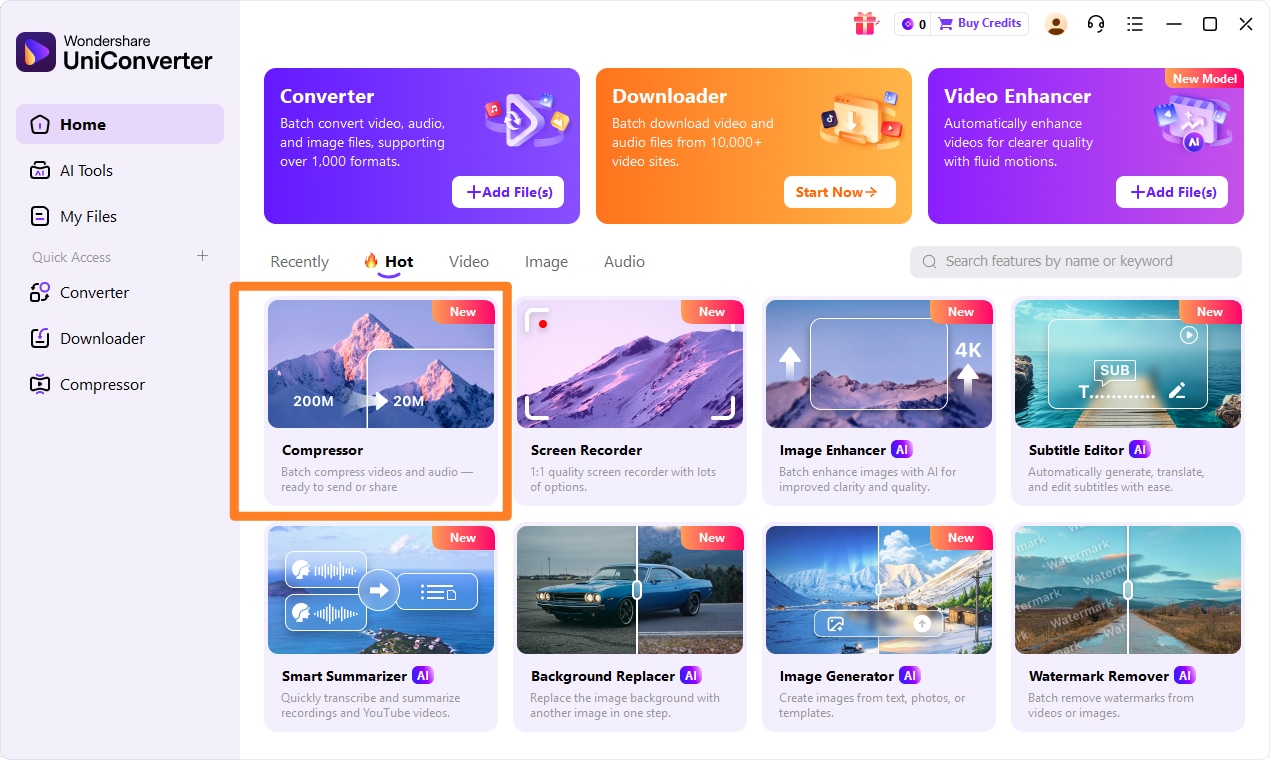
Step 1: Open UniConverter and Choose Compressor
Launch UniConverter and navigate to the "Video Compressor" tool from the main interface.
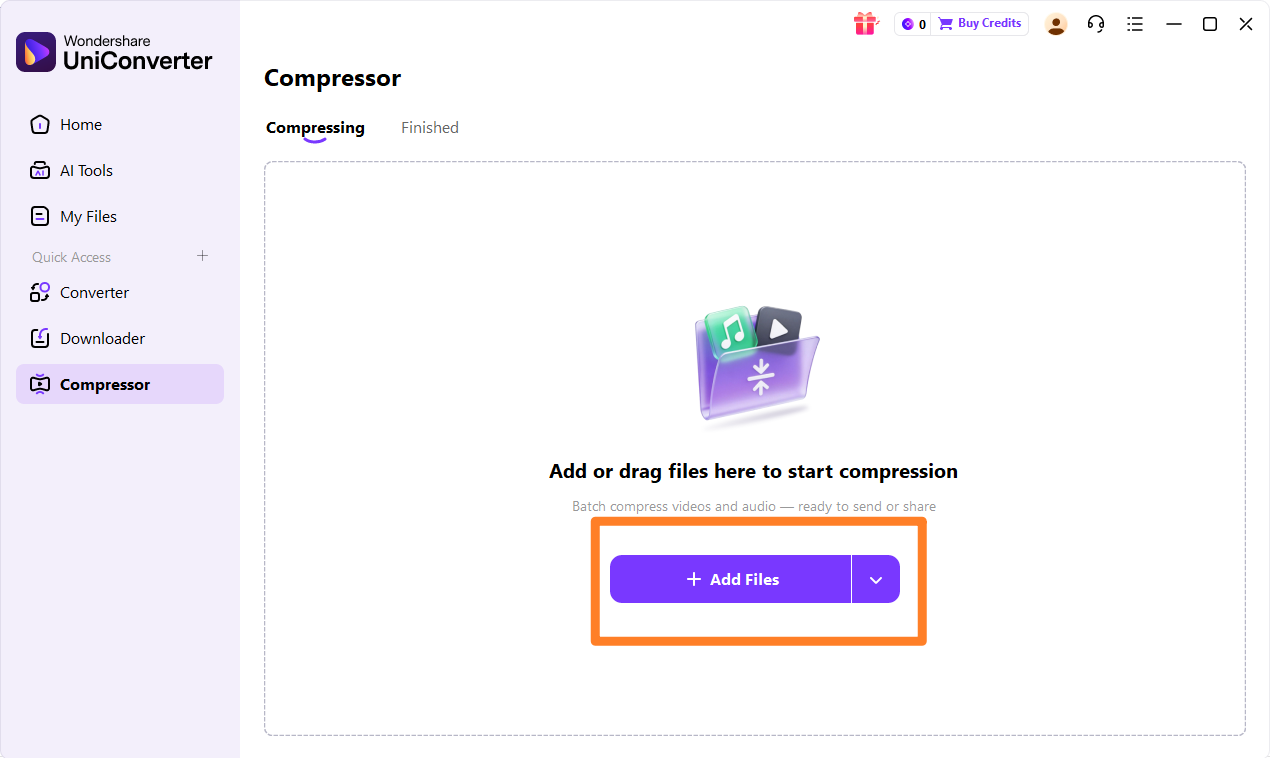
Step 2: Upload the Video, Audios or Images
Click "Add Files" to import the video, audio, or image files you wish to compress. You can drag and drop multiple files for batch processing.
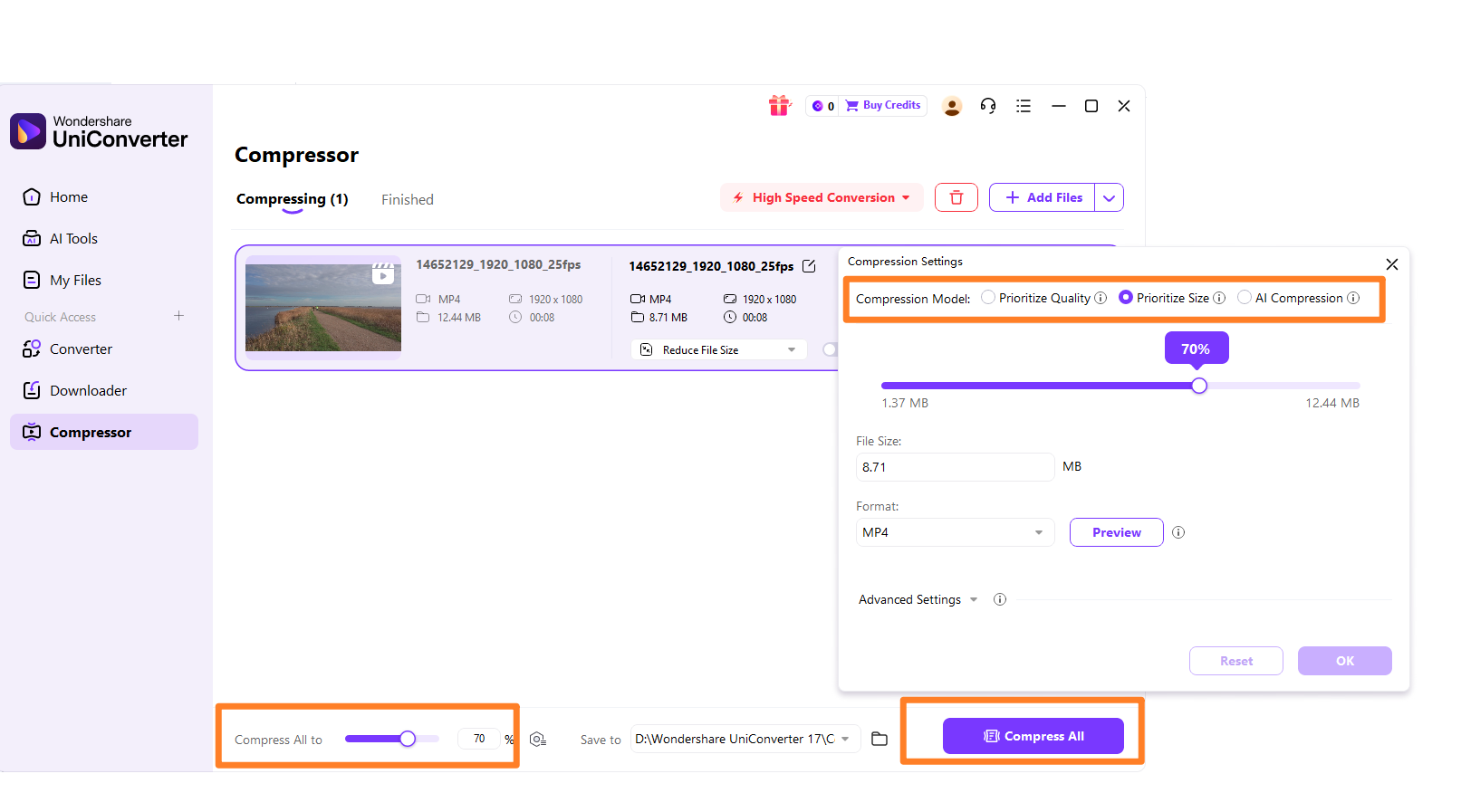
Step 3: Choose Required Parameters
Select your desired output format, resolution, and quality settings. UniConverter offers various presets or allows for custom adjustments to balance file size and quality.
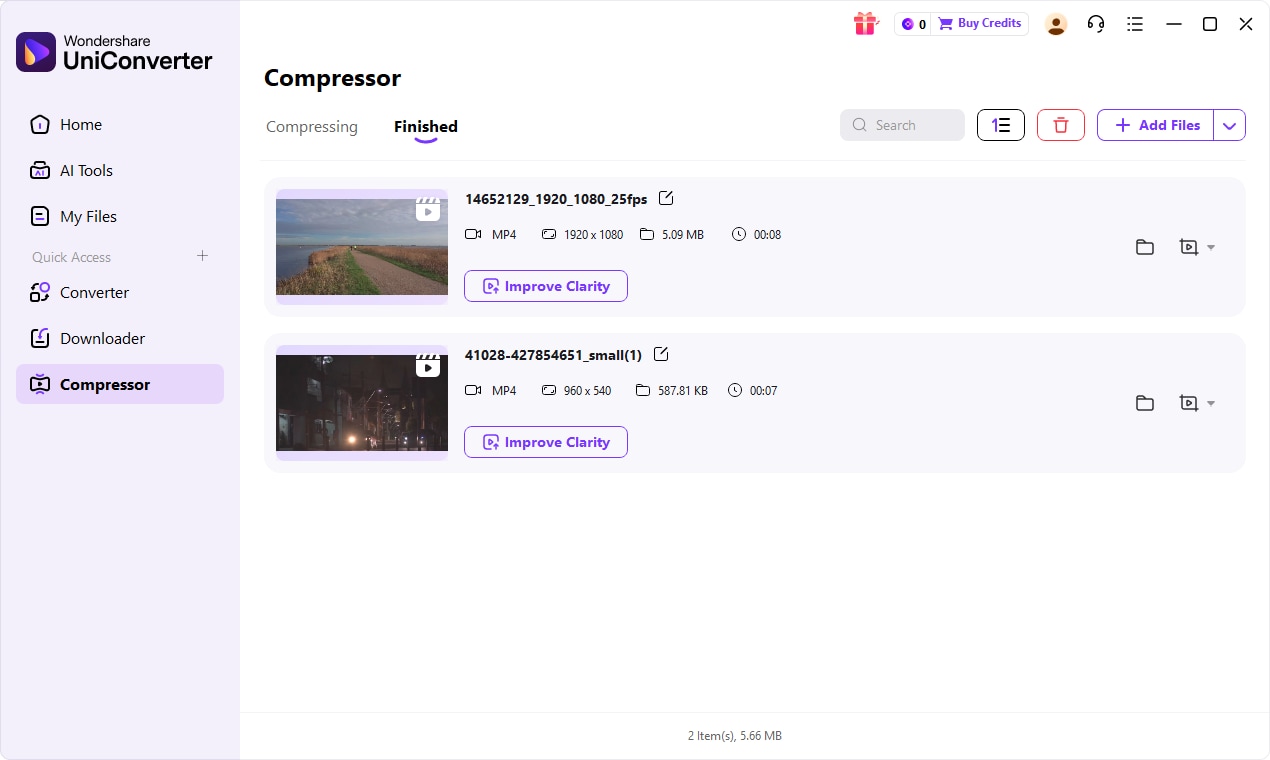
Step 4: Save the Compressed File
Click the "Compress" button to start the process. Once complete, your compressed files will be saved to your specified output folder.

Need a Simpler Premiere Pro Video Compressor Alternative?
Part 7: Conclusion
After thoroughly exploring the Premiere Pro Video Compressor review and its alternatives, it's clear that no single tool is a one-size-fits-all solution. For professional editors and filmmakers deeply embedded in the Adobe ecosystem, Premiere Pro remains the undisputed king. Its seamless integration, advanced controls, and commitment to quality make it indispensable for high-stakes projects. However, its steep learning curve and resource demands make it less ideal for casual users. For those who need a user-friendly yet powerful solution that balances quality with ease of use, UniConverter stands out as an excellent all-rounder, offering a clean interface and robust features for various compression needs. Budget-conscious users will find HandBrake a fantastic free and open-source option, albeit with a slightly steeper learning curve than UniConverter. Finally, for quick, one-off compressions of non-sensitive material, online tools can serve their purpose, but always with an awareness of their limitations and potential privacy concerns. Ultimately, your choice should align with your specific workflow, technical comfort level, and the importance of output quality.
Part 8: FAQs
-
1. **Does Premiere Pro compress videos automatically?**
No, Premiere Pro does not automatically compress videos. You need to manually go through the export settings and choose your desired compression parameters. It's a deliberate process that gives you full control over the output.
-
2. **What is the best video format for compression without losing quality?**
For the best balance of compression and quality retention, H.264 (AVC) and H.265 (HEVC) are generally recommended. H.265 offers better compression efficiency at the same quality level compared to H.264, making it ideal for 4K and higher resolutions.
-
3. **Can I compress a 4K video in Premiere Pro without losing detail?**
Yes, you can compress 4K video in Premiere Pro while minimizing detail loss. This involves using efficient codecs like H.265, choosing appropriate bitrates, and potentially employing two-pass encoding. However, some level of quality reduction is inherent in compression; the goal is to make it imperceptible.
-
4. **Are there any free alternatives to Premiere Pro for video compression?**
Absolutely! HandBrake is a widely popular free and open-source alternative that offers powerful compression capabilities. For a more user-friendly experience that still delivers excellent results, I often recommend UniConverter, which has a free trial and is a fantastic all-in-one solution.
-
5. **How does video compression affect SEO for websites?**
Video compression significantly impacts website SEO by reducing file sizes, which leads to faster page load times. Faster loading speeds improve user experience and are a crucial ranking factor for search engines. Smaller files also consume less bandwidth, benefiting both your hosting and your users.
