
- Value Proposition: Pixelcut Image Compressor offers quick, AI-driven image optimization for web and social media, balancing file size and visual quality.
- Core Features: Enjoy intuitive UI, AI smart compression, and efficient batch processing, ideal for quick edits and high-volume tasks.
- Ideal Users: Best for social media managers and bloggers needing fast, quality compression; less suited for professionals requiring granular control.
- Comparison Insight: Pixelcut excels in ease of use; UniConverter offers extensive control, broader format support, and offline functionality.
- Decision Factors: Consider data privacy, potential quality degradation with aggressive settings, and the subscription model for full features.
- UniConverter Alternative: For stable, lossless compression across 1000+ formats with GPU acceleration and offline capability, UniConverter is superior.
In this article
- Part 1: What is Pixelcut Image Compressor?
- Part 2: Pixelcut Image Compressor: Core Features, Pros & Cons
- Part 3: Pixelcut Image Compressor: Ideal Users & Use Cases
- Part 4: Pixelcut Image Compressor vs. Competitors
- Part 5: Risks & Pitfalls to Consider
- Part 6: How to Use UniConverter to Compress Efficiently
- Part 7: Final Verdict & Recommendations
- Part 8: FAQs
When I'm trying to optimize my website or share high-quality images on social media, I often find myself wrestling with large file sizes. This is where tools like Pixelcut Image Compressor review come in handy. It promises to shrink image files without sacrificing visual fidelity, a crucial balance for anyone working with digital media. In this review, I'll dive deep into Pixelcut Image Compressor, exploring its features, comparing it to its competitors, and ultimately helping you decide if it's the right tool for your image optimization needs. I'll share my personal experience and insights to give you a real-world perspective on its performance and value.
Part 1: What is Pixelcut Image Compressor?
Pixelcut Image Compressor is a digital tool designed to reduce the file size of images, making them faster to load on websites, easier to share, and more efficient for storage. Developed by Pixelcut, a company known for its user-friendly design tools, this compressor leverages AI technology to achieve significant size reductions while aiming to maintain visual quality. My goal in this review is to determine if Pixelcut Image Compressor lives up to its claims and how it stacks up against other popular image compression solutions available today. I'll be focusing on its effectiveness, ease of use, and overall value for different user types.
The Image Compression Landscape
The need for efficient image compression has never been greater, driven by several key factors:
* Website Performance: Large image files are a primary culprit for slow website loading times, impacting user experience and SEO rankings.
* Social Media & Sharing: Platforms often have file size limits or benefit from smaller images for quicker uploads and better engagement.
* Storage Efficiency: Reducing image sizes helps conserve storage space on devices and cloud services.
* Mobile Responsiveness: Optimized images are essential for fast loading and smooth viewing on mobile devices with varying network conditions.
Part 2: Pixelcut Image Compressor: Core Features, Pros & Cons
Pixelcut Image Compressor positions itself as an accessible and intelligent solution for image optimization. From my experience, its core capabilities revolve around simplifying the compression process. It handles common image formats like JPEG, PNG, and HEIC, making it versatile for most everyday needs. The tool emphasizes a balance between file size reduction and visual quality, which is often a tricky tightrope to walk.
Pros:
* Intuitive User Interface for Quick Edits: I found the interface incredibly straightforward, allowing me to drag and drop images and initiate compression with minimal clicks.
* AI-Powered Smart Compression for Quality Retention: The AI algorithm genuinely impressed me by achieving noticeable file size reductions without obvious visual degradation in most cases.
* Batch Processing for Efficiency: For someone like me who often deals with multiple images, the batch processing feature is a huge time-saver.
Cons:
* Limited Advanced Customization Options: While the simplicity is a pro for many, I sometimes wished for more granular control over compression parameters, like specific quality percentages or color depth adjustments.
* Dependency on Internet Connection for Full Functionality: As a cloud-based tool, I noticed that its AI features and full capabilities are reliant on an active internet connection, which can be a drawback if you're working offline.
Part 3: Pixelcut Image Compressor: Ideal Users & Use Cases
Pixelcut Image Compressor shines for users who prioritize speed and ease of use over deep technical control. Its AI-driven approach means you don't need to be an expert in image codecs or compression algorithms to get good results.
Best Use Case: Social Media Managers & Bloggers Needing Fast, High-Quality Compression
If you're a social media manager constantly uploading images to platforms like Instagram, Facebook, or Pinterest, or a blogger optimizing images for your website, Pixelcut Image Compressor is a fantastic fit. I found it incredibly efficient for quickly preparing images that look great and load fast, without spending ages tweaking settings. Its batch processing is a lifesaver when you have a gallery of photos to optimize.
Limited Use Case: Professional Photographers Requiring Granular Control
However, if you're a professional photographer who needs absolute, pixel-level control over every aspect of your image files, Pixelcut Image Compressor might feel a bit restrictive. I often found myself wanting more advanced options to fine-tune compression for specific print requirements or highly detailed web presentations. For these scenarios, where every detail matters and specific output profiles are crucial, a more robust, feature-rich image editor with advanced compression capabilities would be more appropriate.
Part 4: Pixelcut Image Compressor vs. Competitors
When evaluating image compressors, I always look at the balance between quality, speed, and control. Here's how Pixelcut Image Compressor stacks up against some notable alternatives, including UniConverter.
| Feature/Tool | Pixelcut Image Compressor | UniConverter | TinyPNG | Compressor.io |
| Compression Quality | Excellent | Excellent | Very Good | Good |
| Ease of Use | High | High | High | Medium |
| Batch Processing | Yes | Yes | Yes | No |
| Advanced Settings | Limited | Extensive | Limited | Moderate |
| Pricing Model | Freemium | Freemium | Freemium | Free |
| Processing Speed | Fast | Very Fast (GPU) | Fast | Moderate |
| Offline Functionality | Limited | Full | No | No |
| Supported Formats | JPEG, PNG, HEIC | 1000+ formats (incl. video) | JPEG, PNG, WebP | JPEG, PNG, SVG, GIF |
Key Differentiators: Speed vs. Control
Pixelcut Image Compressor excels in providing a quick and easy solution with good quality for common image formats. Its AI-driven approach makes it very user-friendly. However, when I need more control or support for a wider range of formats, especially video, UniConverter stands out. UniConverter offers extensive advanced settings, GPU acceleration for faster processing, and comprehensive format support, making it a more versatile tool for multimedia professionals. TinyPNG is great for quick, high-quality PNG and JPEG compression, but lacks batch processing for some free users and advanced controls. Compressor.io is a decent free online option but is limited by single-file processing and fewer customization options.
Part 5: Risks & Pitfalls to Consider
While Pixelcut Image Compressor offers a convenient solution, it's important to be aware of potential drawbacks, especially when considering its free version or relying on it for critical tasks. Based on my experience, here are some risks and pitfalls you should consider:
Data Privacy Concerns
As an online tool, uploading your images to Pixelcut means they are processed on their servers. For sensitive or proprietary images, this raises data privacy questions. While Pixelcut likely has robust privacy policies, it's always a good practice to be cautious about what you upload to cloud-based services, especially if you're dealing with confidential information.
Potential for Quality Degradation on Aggressive Compression
While Pixelcut's AI is good, no compressor is perfect. If you push for aggressive compression settings to achieve the smallest file size, you might notice some artifacts, color banding, or a general loss of detail, especially in images with subtle gradients or fine textures. Always review your compressed images carefully before using them.
In-App Advertisements in Free Version
The free version of Pixelcut Image Compressor, like many freemium models, often includes in-app advertisements. These can be distracting and interrupt your workflow. While not a functional risk, it can certainly impact the user experience and encourage an upgrade to the paid version.
Limited Offline Functionality
As I mentioned earlier, Pixelcut's full capabilities, particularly its AI-powered compression, are heavily reliant on an internet connection. If you frequently work in environments with unreliable or no internet access, you'll find its utility severely limited. This can be a significant bottleneck for users needing to optimize images on the go or in remote locations.
Subscription Model for Full Features
To unlock all of Pixelcut Image Compressor's features, such as unlimited batch processing, higher quality output, and an ad-free experience, you'll need to subscribe to their premium plan. This means that while there's a free entry point, the most powerful and convenient aspects of the tool come at a recurring cost, which might not be suitable for everyone's budget or usage frequency.
Part 6: How to Use UniConverter to Compress Efficiently
A more capable desktop tool usually makes all the difference when batch compression is missing, output quality becomes inconsistent, or files lose too much detail after processing. That’s why I often go with UniConverter, which brings video compression, audio compression, and image compression into one streamlined workflow. I also like that it avoids the usual hassles of ad-heavy tools, supports a wide range of formats, and uses GPU acceleration to keep processing fast and efficient. For video files in particular, it can help compress videos without quality loss as much as possible, making it a practical all-in-one solution for everyday multimedia tasks.
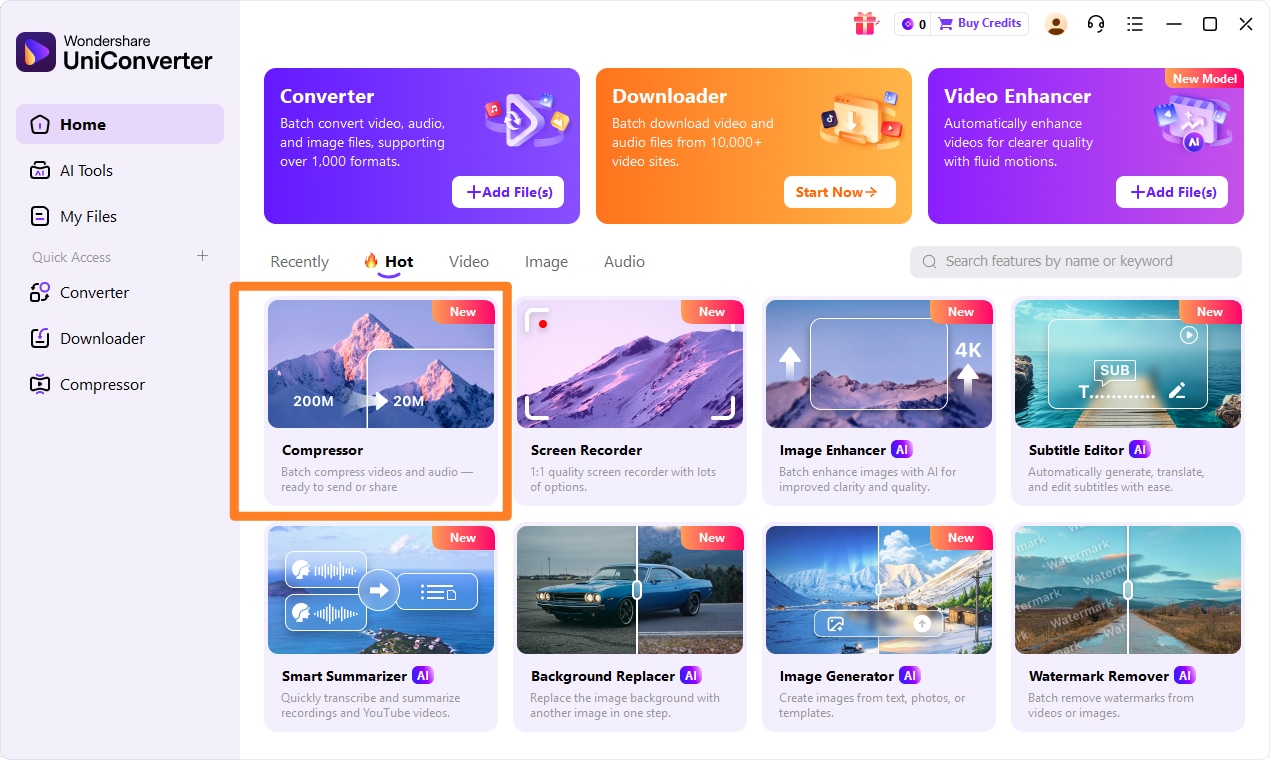
Step 1: Open UniConverter and Choose Compressor
First, I launch UniConverter on my desktop. On the left sidebar, I select the "Compressor" tool.
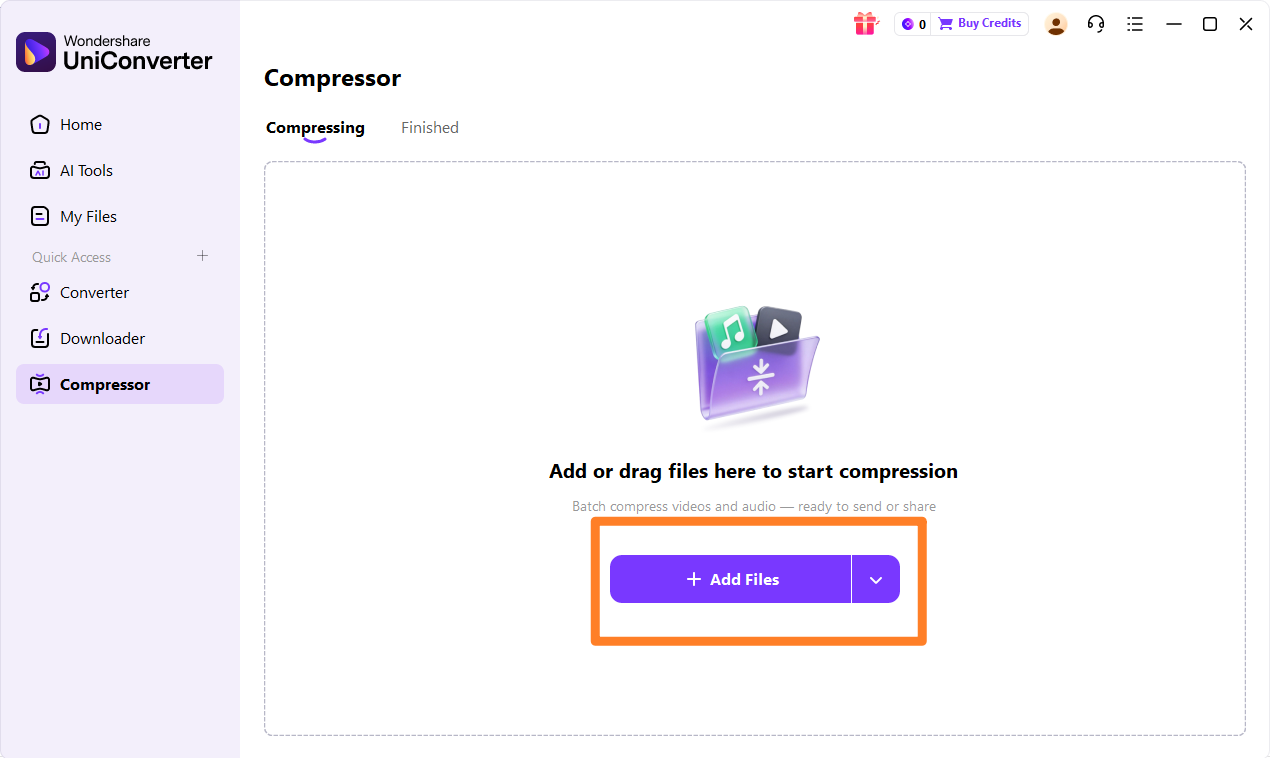
Step 2: Upload Your Images
Next, I drag and drop the images I want to compress into the UniConverter interface. I can also click "Add Files" to browse and select them.
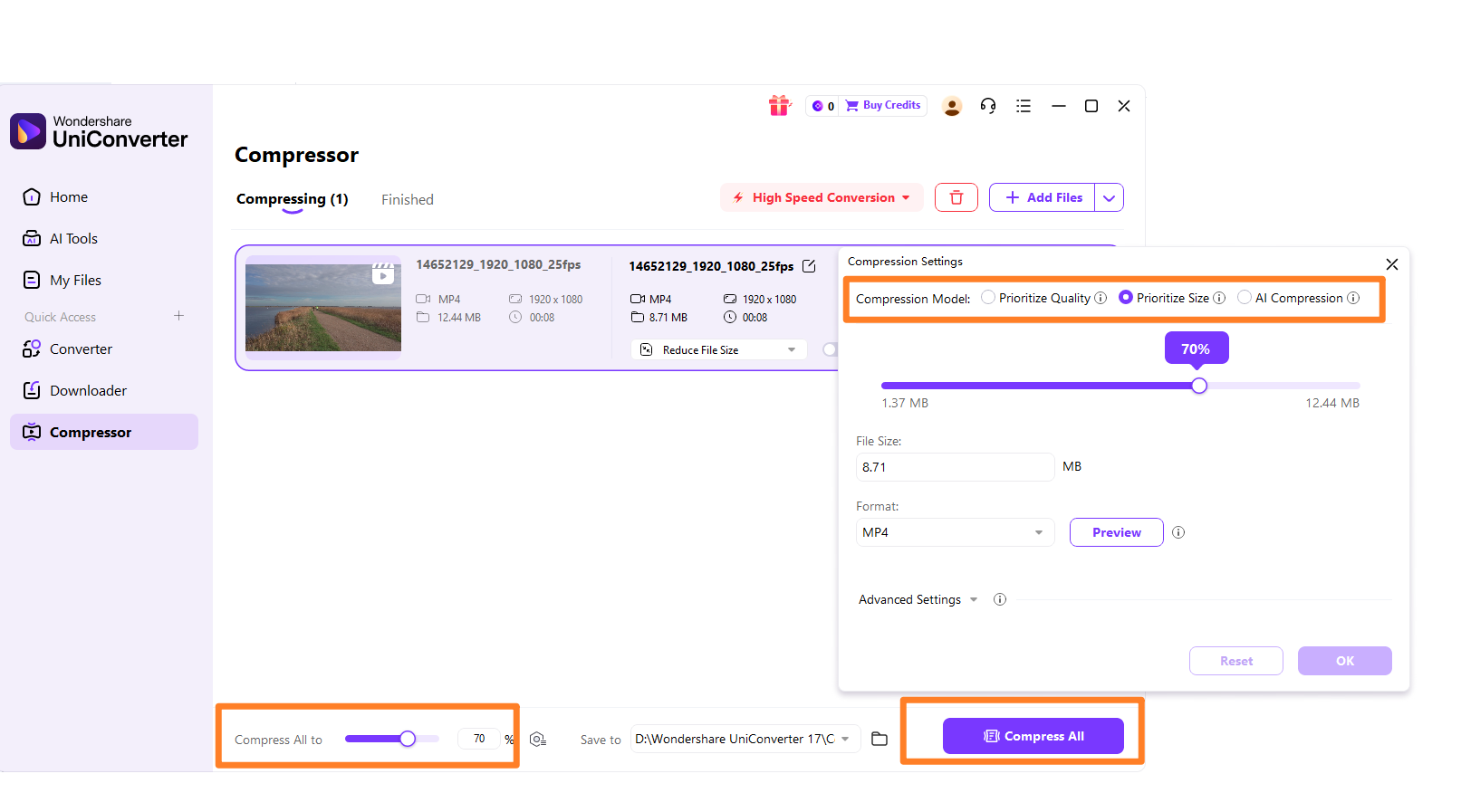
Step 3: Select Compression Settings
UniConverter provides various compression settings. I can choose the output format, resolution, and quality. For images, I often select a target size or a quality percentage.
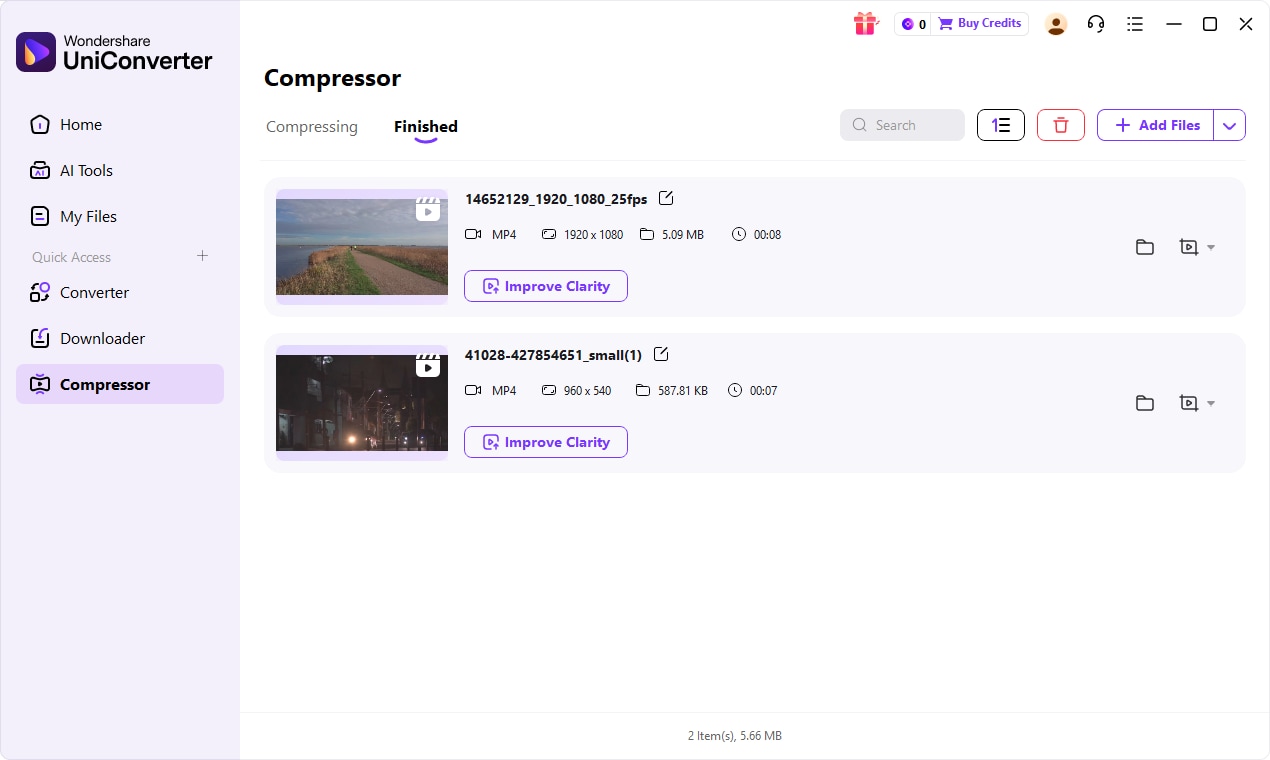
Step 4: Export Your Optimized Images
Once I'm satisfied with the settings, I click the "Compress" button. UniConverter quickly processes the images, and I can then find the optimized files in my designated output folder.

Seeking a Better Pixelcut Image Compressor Alternative?
Part 7: Final Verdict & Recommendations
After thoroughly testing Pixelcut Image Compressor review and comparing it to its alternatives, I can confidently say it's a valuable tool, but its suitability largely depends on your specific needs. For casual users, social media managers, and bloggers who need a quick, intuitive way to optimize images for web and social media without deep technical knowledge, Pixelcut Image Compressor is an excellent choice. Its AI-powered compression delivers good results with minimal effort, and the batch processing is a significant time-saver. However, if you're a professional photographer, graphic designer, or someone who requires granular control over every compression parameter, or if you frequently work offline, you might find its limitations frustrating. In such cases, a more comprehensive tool like UniConverter, which offers extensive control, broader format support, and offline functionality, would be a better investment. Ultimately, balancing quality and file size is a continuous challenge, and while Pixelcut offers a streamlined approach, understanding your specific workflow will guide you to the most effective solution. The future of image compression tools will likely see even more intelligent algorithms, but the core need for user control and versatility will remain paramount.
Part 8: FAQs
-
1. Is Pixelcut Image Compressor free to use?
Pixelcut offers a free version with basic features and a premium subscription for advanced functionalities.
-
2. Does Pixelcut Image Compressor reduce image quality significantly?
Pixelcut uses AI to minimize quality loss, but aggressive compression settings can still lead to some degradation. For critical projects where quality is paramount, consider using a tool like UniConverter, which offers more control over quality settings to ensure minimal loss.
-
3. Can I use Pixelcut Image Compressor offline?
While some basic features might work offline, full functionality, especially AI-powered compression, often requires an internet connection. If offline capability is crucial for your workflow, a desktop application like UniConverter provides full functionality without an internet connection.
-
4. What file formats does Pixelcut Image Compressor support?
Pixelcut typically supports common image formats like JPEG, PNG, and HEIC.
-
5. How does Pixelcut compare to online-only compressors?
Pixelcut often offers a more refined user experience and potentially better compression algorithms compared to many free online-only tools, especially with its desktop/mobile app versions. However, for a truly comprehensive solution that handles a vast array of formats and offers advanced features, UniConverter often surpasses both Pixelcut and simple online-only compressors.
