
- Picsart Compressor: Value for casual users and social media, offering quick, integrated image optimization within the Picsart ecosystem.
- Professional Use: Decision against Picsart for professional photography or print, due to limited control and potential quality loss.
- Competitor Comparison: Value of UniConverter for advanced needs, batch processing, and superior quality over Picsart's simplicity.
- Risks & Pitfalls: Decision to avoid online tools with privacy concerns, ads, unrecoverable quality loss, and inefficient batch processing.
- UniConverter Solution: Value in UniConverter for stable, high-quality, ad-free, and efficient batch image compression, surpassing Picsart's limitations.
In this article
- Part 1: What is Picsart Image Compressor?
- Part 2: Picsart Image Compressor: Core Features, Pros, and Cons
- Part 3: Picsart Image Compressor: Ideal Use Cases and Limitations
- Part 4: Picsart Image Compressor vs. Competitors: A Head-to-Head Battle
- Part 5: Risks and Pitfalls to Avoid When Using Image Compressors
- Part 6: How to Use UniConverter for Efficient Image Compression
- Part 7: Final Verdict and Recommendations
- Part 8: Frequently Asked Questions (FAQs)
When I'm looking to optimize my digital workflow, especially with images, I often find myself needing a reliable compressor. Picsart Image Compressor review is a deep dive into one such tool, examining its capabilities, comparing it to its rivals, and ultimately helping you decide if it's the right fit for your needs. In this comprehensive Picsart Image Compressor review, I'll explore its features, weigh its pros and cons, and offer a clear perspective on where it shines and where it falls short. This review aims to provide you with all the necessary information to make an informed decision, whether you're a casual user or a professional content creator.
Part 1: What is Picsart Image Compressor?
Picsart Image Compressor is an integrated feature within the popular Picsart photo and video editing application, designed to reduce the file size of images. It's not a standalone product but rather a convenient tool for users already within the Picsart ecosystem. My primary goal with this review is to evaluate its effectiveness as a compression tool and to see how it stacks up against dedicated compression software, especially for users who prioritize both quality and efficiency.
The Growing Need for Image Compression in Digital Content Creation
The digital landscape today demands optimized images for various reasons, and I've personally experienced the challenges firsthand:
* Faster Loading Times: Large image files can significantly slow down website loading speeds, impacting user experience and SEO.
* Reduced Storage Space: With the sheer volume of photos I take, compressing them helps manage storage on my devices and cloud services.
* Efficient Sharing: Smaller files are quicker to upload and share across social media platforms and messaging apps.
* Improved Performance: Optimized images contribute to smoother performance in applications and on web pages.
Part 2: Picsart Image Compressor: Core Features, Pros, and Cons
Picsart Image Compressor offers a straightforward approach to reducing image file sizes, primarily catering to users who are already familiar with the Picsart editing suite. Its core capability lies in its ability to quickly process images with varying degrees of compression. I've found it to be quite accessible for everyday use.
Core Features:
* Adjustable Compression Levels: I can choose between different compression presets to balance file size and quality.
* Real-time Preview: It allows me to see the estimated file size and quality before committing to the compression.
* Integration with Picsart Editor: The compressor is seamlessly built into the Picsart app, making it easy to compress images directly after editing.
* Support for Common Image Formats: It handles popular formats like JPEG and PNG without issues.
* Simple User Interface: The controls are intuitive, even for someone new to image compression.
Pros:
* User-friendly interface for quick compression: I appreciate how easy it is to navigate and compress images without a steep learning curve.
* Integration with Picsart's editing suite for seamless workflow: Being able to edit and compress within the same app saves me a lot of time and hassle.
* Multiple compression levels for flexibility: I can choose how much I want to compress, which is great for different needs.
Cons:
* Limited advanced compression options compared to dedicated tools: I sometimes wish for more granular control over compression parameters.
* Potential for quality degradation at higher compression settings: If I push the compression too far, I notice a noticeable drop in image quality.
Part 3: Picsart Image Compressor: Ideal Use Cases and Limitations
From my experience, Picsart Image Compressor is a fantastic tool for specific scenarios, but it's important to understand its boundaries. It's designed for convenience and quick results rather than professional-grade precision.
Best Scenario: Quick Social Media Sharing and Casual Editing
I find Picsart Image Compressor perfect when I need to quickly optimize photos for sharing on platforms like Instagram, Facebook, or WhatsApp. After a quick edit in Picsart, I can compress the image and upload it without worrying about large file sizes slowing down my post. It's also great for casual bloggers or anyone who needs to reduce image sizes for personal websites or emails without spending too much time on technical details. For these uses, the quality reduction is often negligible and the speed is a huge plus.
Limited Scenario: Professional Photography and Print Media
However, I would not recommend Picsart Image Compressor for professional photography, print media, or any project where image fidelity is paramount. When I'm working on high-resolution images for client portfolios or print publications, I need absolute control over every compression parameter to preserve the finest details and color accuracy. In these situations, the potential for quality degradation, even slight, is unacceptable. The tool's limited advanced settings mean I can't achieve the precise balance of quality and file size that professional work demands.
Part 4: Picsart Image Compressor vs. Competitors: A Head-to-Head Battle
When I compare Picsart Image Compressor to other tools on the market, I see a clear distinction in their strengths and target users. Here's how it stacks up against some notable alternatives, including UniConverter, which I often turn to for more advanced needs.
| Feature/Tool | Picsart Image Compressor | UniConverter | TinyPNG | ImageOptim |
| Compression Quality | Good | Excellent | Very Good | Excellent |
| Speed | Fast | Very Fast | Fast | Moderate |
| Batch Processing | No | Yes | Yes | Yes |
| Advanced Settings | Limited | Extensive | Moderate | Extensive |
| Price | Free (with Picsart sub) | Paid (Free trial) | Free (limited) | Free |
Key Differentiators: What Sets Them Apart
Picsart Image Compressor excels in its integration and ease of use for existing Picsart users. It's a quick, convenient option for casual compression needs. However, when I need superior compression quality and advanced features like batch processing and granular control, UniConverter is my go-to. UniConverter offers a more robust solution, especially for those dealing with a high volume of images or requiring lossless compression. TinyPNG is fantastic for web optimization, particularly for PNG files, offering impressive file size reductions with minimal perceived quality loss. ImageOptim, on the other hand, provides a powerful desktop solution for Mac users, offering a range of optimization tools and plugins for various formats. Each tool has its niche, and my choice depends heavily on the specific task at hand.
Part 5: Risks and Pitfalls to Avoid When Using Image Compressors
While image compressors are incredibly useful, I've learned that they come with their own set of risks and potential pitfalls, especially when I'm not careful about which tools I use or how I use them. It's crucial to be aware of these to protect my data and the quality of my work.
Data Privacy Concerns with Online Tools
When I upload my images to online compression tools, I always consider the privacy implications. Many free online compressors might collect my data, track my usage, or even store my images on their servers, potentially exposing sensitive or personal content. I always make sure to read their privacy policies carefully before uploading anything I wouldn't want publicly accessible.
Unwanted Advertisements and Pop-ups
A common annoyance with many free online image compressors is the bombardment of advertisements and pop-ups. These can disrupt my workflow, slow down my browser, and sometimes even lead to malicious websites. I find it incredibly frustrating when I'm trying to get a quick task done and I'm constantly battling intrusive ads.
Unrecoverable Quality Loss
This is perhaps the most critical pitfall. While the goal is to reduce file size, aggressive compression, especially with tools that lack fine-tuned controls, can lead to irreversible quality degradation. I've had instances where images became pixelated, colors shifted, or details were lost, making them unusable for their intended purpose. Always keep a backup of the original image before compressing.
Batch Processing Inefficiencies
Some compressors claim to offer batch processing, but in practice, they can be slow, crash frequently, or produce inconsistent results across a large set of images. If I'm compressing hundreds of photos, I need a reliable tool that can handle the load efficiently without requiring constant supervision or re-processing.
File Format Limitations
Not all compressors support every image format equally well. I've encountered tools that struggle with less common formats or that convert everything to JPEG, even when PNG or another format would be more appropriate for transparency or lossless compression. This limitation can force me to use multiple tools or compromise on the final output.
Part 6: How to Use UniConverter for Efficient Image Compression
When batch compression is missing, results are inconsistent, or file quality drops more than expected, UniConverter is usually a much more dependable option. It works well for image compression, video compression, and audio compression, so there’s no need to switch between multiple tools for different file types. I also like the ad-free workflow, broad format support, and GPU acceleration, which all make processing faster and more efficient. For video files, it can also help compress videos without quality loss as much as possible, making it a practical all-in-one solution for everyday media compression.
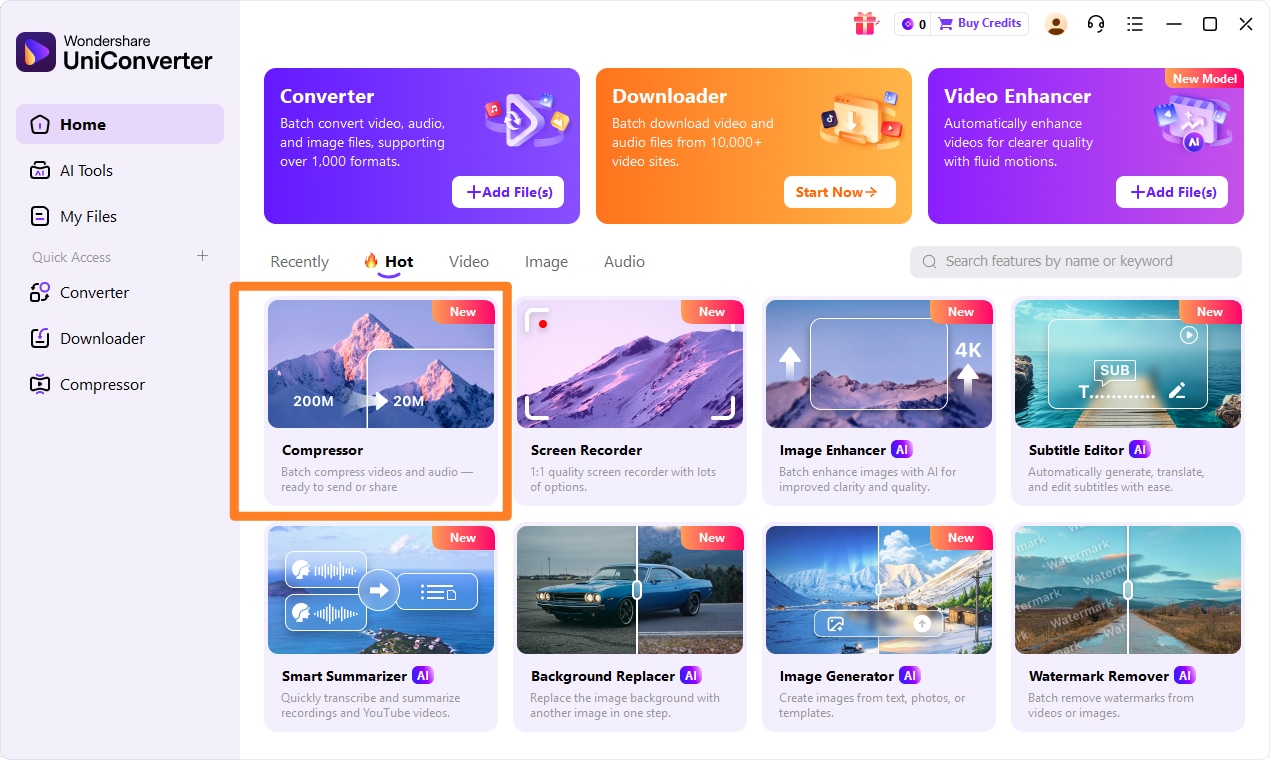
Step 1: Open UniConverter and Choose Compressor
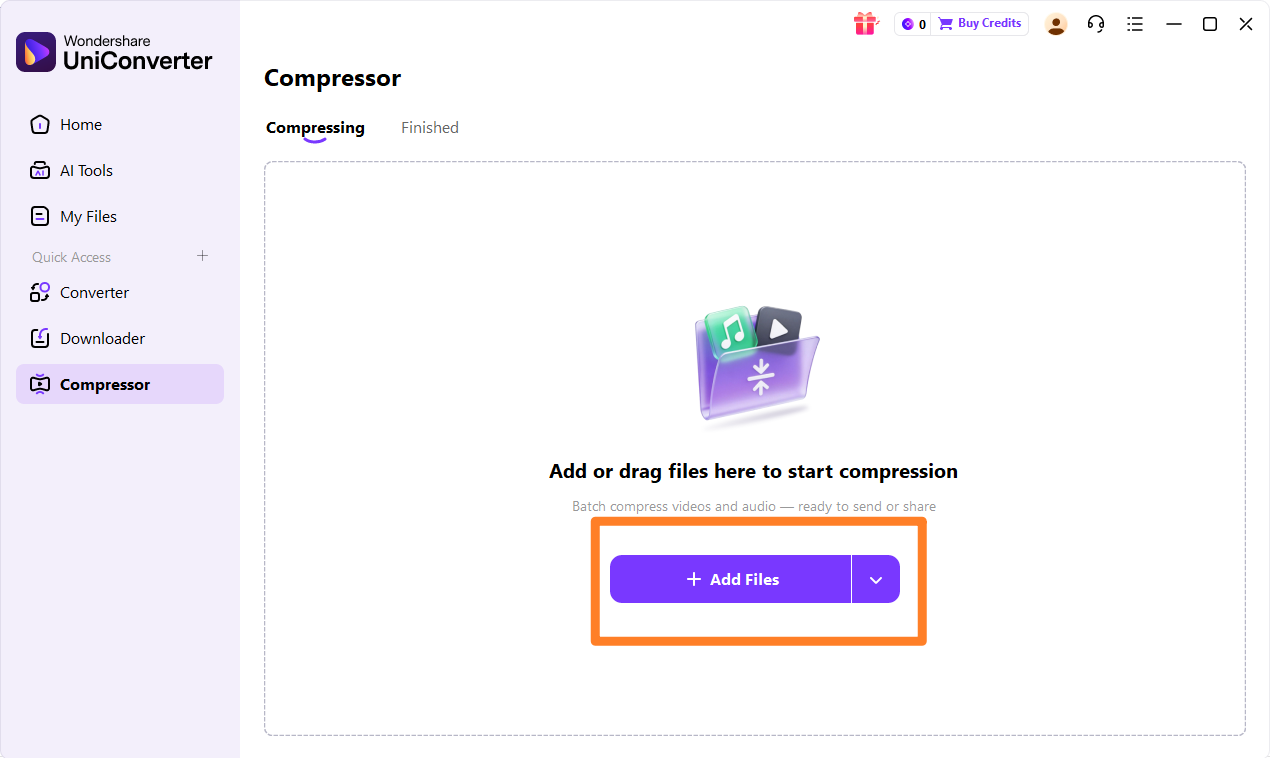
Step 2: Upload the Video, Audios or Images
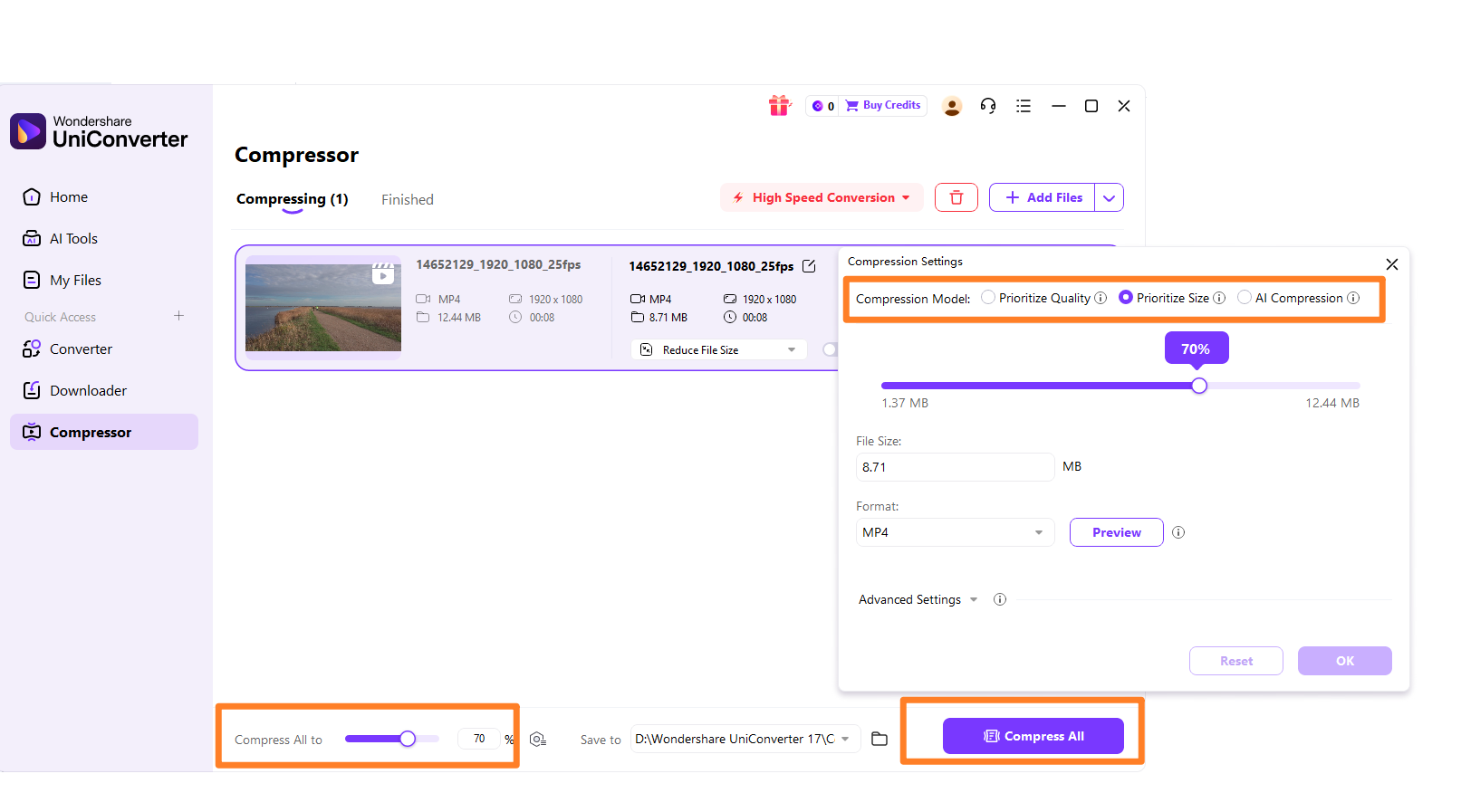
Step 3: Choose Required Parameters
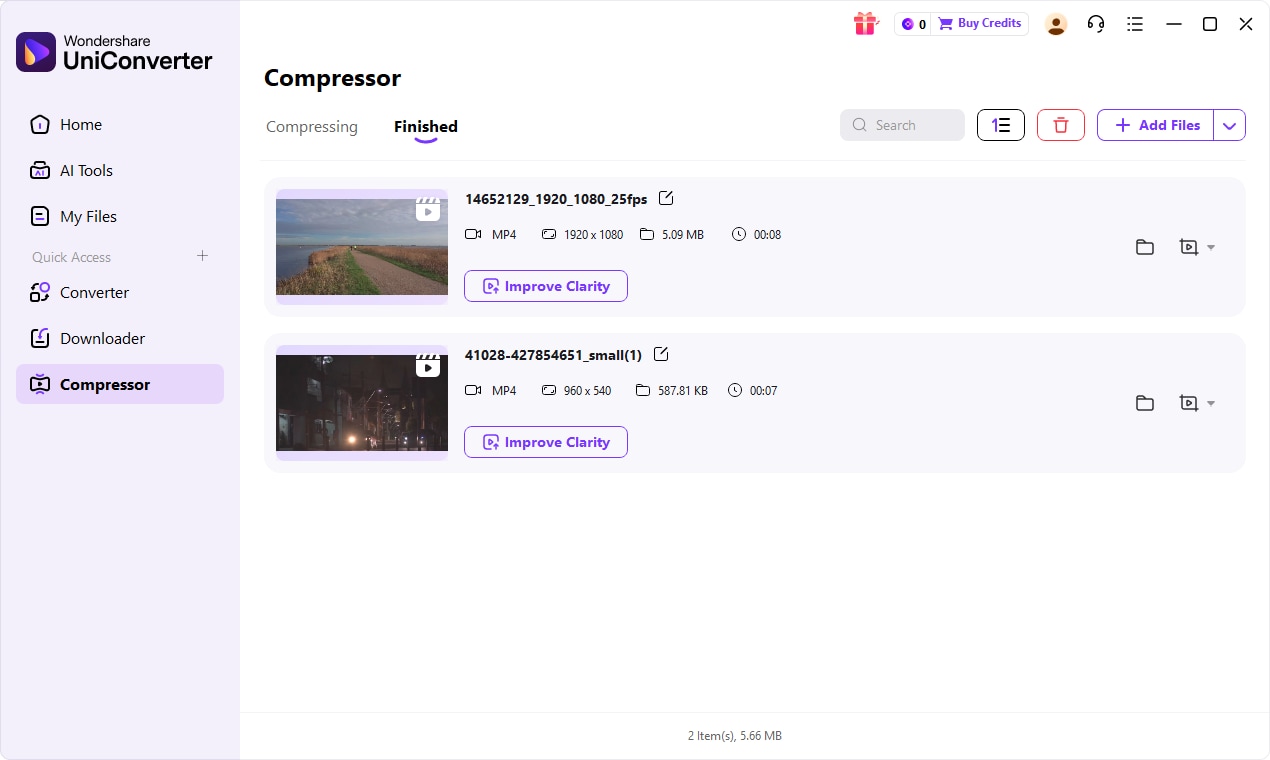
Step 4: Save the Compressed File

Need a Better Picsart Image Compressor Alternative?
Part 7: Final Verdict and Recommendations
After thoroughly reviewing Picsart Image Compressor review and comparing it with its competitors, I can confidently say that its utility largely depends on your specific needs and workflow. For casual users and social media enthusiasts who are already integrated into the Picsart ecosystem, this tool offers unparalleled convenience and speed for quick image optimization. It’s perfect for reducing file sizes for Instagram stories or Facebook posts without leaving the editing app. However, for content creators and bloggers who require a balance of quality and efficiency for their websites, while Picsart can handle basic needs, I'd suggest exploring alternatives that offer more control over compression settings to ensure better image fidelity for SEO and user experience. For professional photographers and designers, or anyone dealing with print media, Picsart Image Compressor falls short due to its limited advanced options and potential for quality degradation at higher compression levels. In these scenarios, dedicated software like UniConverter or ImageOptim, which provide extensive control and lossless options, are indispensable. Finally, for users prioritizing batch processing and advanced control over their image compression, UniConverter emerges as the superior choice, offering robust features, high-quality output, and efficient handling of multiple files simultaneously, making it a worthwhile investment for serious creators.
Part 8: Frequently Asked Questions (FAQs)
-
1. Does Picsart Image Compressor reduce image quality significantly?
The extent of quality reduction depends on the compression level you choose. At higher compression settings, you might notice a significant drop in quality, especially for detailed images. For casual sharing, it's often acceptable, but for professional use, it might be too much.
-
2. Can I use Picsart Image Compressor for batch processing?
No, Picsart Image Compressor does not currently support batch processing. You have to compress images one by one, which can be time-consuming if you have many files to optimize. For batch processing, I recommend looking into tools like UniConverter or TinyPNG.
-
3. Are there any free alternatives to Picsart Image Compressor with similar features?
Yes, there are several free online and desktop alternatives. Online tools like TinyPNG and Compressor.io offer good compression with a simple interface. For desktop, ImageOptim (Mac) or FileOptimizer (Windows) provide more advanced features and batch processing capabilities, often with better quality control.
-
4. How does image compression affect SEO?
Image compression significantly affects SEO by improving website loading speed. Faster loading times lead to a better user experience, lower bounce rates, and can positively influence your search engine rankings. Search engines like Google prioritize websites that load quickly.
-
5. What is the best image format for web use after compression?
For web use, JPEG is generally best for photographs and images with many colors due to its efficient lossy compression. PNG is ideal for images with transparency or sharp lines, like logos and graphics, as it supports lossless compression. WebP is an emerging format that offers superior compression for both lossy and lossless images, often resulting in smaller file sizes than JPEG and PNG while maintaining quality.
