
- PhotoRoom Value: AI-driven compression for quick, quality image optimization, ideal for web and social media.
- Target Audience: Perfect for social media managers and e-commerce sellers needing fast, easy image prep.
- Limitations: Lacks advanced controls; not for professionals needing lossless quality or specific formats.
- Comparison: PhotoRoom excels in ease of use and batch processing over Compressor.io; TinyPNG offers more control.
- Risks: Cloud-based processing raises privacy concerns; aggressive compression can degrade quality.
- UniConverter Alternative: Desktop solution for comprehensive, lossless, and private media compression (images, audio, video).
In this article
- Part 1: What is PhotoRoom Image Compressor?
- Part 2: PhotoRoom Image Compressor: Core Features, Pros & Cons
- Part 3: PhotoRoom Image Compressor: Target Audience & Use Cases
- Part 4: PhotoRoom Image Compressor and Alternatives Comparison
- Part 5: Risks & Pitfalls to Consider
- Part 6: How to Use UniConverter to Compress Efficient Audio and Video
- Part 7: Conclusion
- Part 8: FAQs
PhotoRoom Image Compressor Review: A Scenario-Based Comparison
When it comes to digital content, image size can significantly impact load times, storage, and overall user experience. As a seasoned product reviewer, I've seen countless tools promise efficient image compression. Today, I'm diving deep into PhotoRoom Image Compressor review, a tool that's gained traction for its AI-driven approach. This review will provide a comprehensive, scenario-based comparison, helping you understand where PhotoRoom shines and where alternatives might be a better fit for your specific needs. I'll break down its features, pit it against key competitors like TinyPNG and Compressor.io, and even explore potential pitfalls, ultimately guiding you to make an informed decision for your image compression workflow.
Part 1: What is PhotoRoom Image Compressor?
PhotoRoom Image Compressor is an online tool designed to reduce the file size of images without significantly compromising their visual quality. It leverages AI algorithms to analyze image content and apply smart compression techniques, aiming for an optimal balance between file size reduction and visual fidelity. In today's fast-paced digital world, where every millisecond of load time counts and storage space is valuable, efficient image compression is no longer a luxury but a necessity. This review aims to assess how effectively PhotoRoom addresses this critical need, especially for users who prioritize ease of use and quick results.
The growing need for efficient image compression in digital workflows:
* Faster website loading times for improved SEO and user engagement.
* Reduced storage costs for cloud-based assets.
* Quicker sharing of images across various platforms.
* Optimized performance for mobile applications.
Part 2: PhotoRoom Image Compressor: Core Features, Pros & Cons
PhotoRoom Image Compressor stands out with its AI-powered approach to image optimization. Its core strength lies in its ability to intelligently analyze images and apply compression that maintains visual integrity while significantly reducing file size. I've found its batch processing capability to be a real time-saver, allowing me to compress multiple images simultaneously with just a few clicks. The user interface is incredibly intuitive, making it accessible even for those with minimal technical expertise.
Here are its key features:
* AI-powered smart compression for optimal quality-to-size ratio.
* Batch processing capabilities for multiple images.
* User-friendly interface for quick and easy operation.
* Support for common image formats like JPG and PNG.
* Real-time preview of compressed images.
Pros
* AI-powered smart compression for optimal quality-to-size ratio: The AI truly makes a difference in achieving a good balance.
* Batch processing capabilities for multiple images: This is a huge time-saver for anyone dealing with numerous images.
* User-friendly interface for quick and easy operation: I found it incredibly easy to navigate and use from the first try.
Cons
* Limited advanced customization options for compression settings: For those who need granular control, this can be a drawback.
* Potential for watermarks or feature limitations in the free version: The free tier can be restrictive, pushing you towards a subscription.
Part 3: PhotoRoom Image Compressor: Target Audience & Use Cases
From my experience, PhotoRoom Image Compressor is a fantastic tool for individuals and small businesses that need quick, effective image optimization without delving into complex settings. If you're managing a social media presence or running an e-commerce store, this tool is practically tailor-made for you. It simplifies a often tedious task, allowing you to focus on content creation and sales.
Best Use Case: Social Media Managers & E-commerce Sellers
I've personally used PhotoRoom to quickly optimize product photos and social media graphics. The ability to get smaller files without noticeable quality loss means faster loading times for my online store and improved engagement on social platforms. It's perfect for when you need to upload dozens of images and don't have time for manual adjustments.
Limited Use Case: Professional Photographers & Graphic Designers
However, for professional photographers or graphic designers, PhotoRoom might fall short. When I need to preserve every single detail for high-fidelity image archives or print-ready assets, I find its limited granular control and lack of lossless compression options to be a significant drawback. For these critical tasks, I often turn to more specialized software that offers precise control over every compression parameter.
Part 4: PhotoRoom Image Compressor and Alternatives Comparison
When I compare PhotoRoom Image Compressor review to its rivals, its AI-driven approach often gives it an edge in ease of use and automated quality. While TinyPNG offers a similar level of compression efficiency, I find PhotoRoom's interface slightly more intuitive for quick tasks. Compressor.io, though simple, lacks the crucial batch processing feature that PhotoRoom and TinyPNG both offer, which is a deal-breaker for me when dealing with multiple images.
| Feature/Scenario | PhotoRoom Image Compressor | TinyPNG | Compressor.io | UniConverter |
| Ease of Use | Very High | High | Medium | High |
| Compression Ratio | Excellent | Excellent | Good | Excellent |
| Batch Processing | Yes | Yes | No | Yes |
| Advanced Settings | Limited | Moderate | Moderate | Extensive |
| Output Quality | Very Good | Very Good | Good | Excellent (Lossless options) |
| Pricing Model | Freemium | Freemium | Freemium | Freemium (Desktop) |
| Processing Speed | Fast | Fast | Medium | Very Fast (GPU Acceleration) |
| Customer Support | Email/FAQ | Email/FAQ | Email/FAQ | 24/7 Live Chat/Email |
| Security | Cloud-based (Standard) | Cloud-based (Standard) | Cloud-based (Standard) | Local (Desktop) |
PhotoRoom's AI often delivers superior results with minimal user input, making it incredibly efficient for general use. TinyPNG, on the other hand, provides a bit more fine-tuned control, especially for PNGs, which can be useful for specific graphic design tasks. Compressor.io, while straightforward, simply doesn't offer the batch processing I often need. For ultimate control and a desktop-based solution with advanced features, UniConverter stands out, offering lossless compression and GPU acceleration.
Part 5: Risks & Pitfalls to Consider
When I use any cloud-based image compression tool, including PhotoRoom, I always keep a few potential risks in mind. The convenience often comes with trade-offs, especially concerning privacy and quality control. It's crucial to be aware of these before committing your valuable images to any service.
Privacy Concerns with Cloud-Based Processing
Since PhotoRoom processes images on its servers, I'm always mindful of the privacy implications. While they likely have robust security measures, uploading sensitive or proprietary images to any cloud service inherently carries a small risk of data breaches or unauthorized access. Always review their privacy policy to understand how your data is handled.
Potential for Quality Degradation on Aggressive Compression
While PhotoRoom's AI is smart, aggressive compression settings can still lead to noticeable quality degradation. I've found that if I push the compression too far, especially on images with fine details or gradients, I can end up with artifacts or color banding. It's always best to preview the compressed image and perhaps do a test run on a few samples before batch processing.
Annoying Ads or Upsell Prompts in Free Versions
Like many freemium tools, the free version of PhotoRoom can sometimes be cluttered with ads or persistent prompts to upgrade to a paid subscription. While understandable for their business model, I sometimes find these interruptions disruptive to my workflow, especially when I'm trying to get a task done quickly.
Compatibility Issues with Certain Image Formats
While PhotoRoom supports common formats like JPG and PNG, I've occasionally encountered issues with less common or specialized image formats. If you work with TIFFs, RAW files, or other niche formats, you might find PhotoRoom's support to be limited, requiring you to convert them first or seek out a more versatile tool.
Part 6: How to Use UniConverter to Compress Efficient Audio and Video
Cloud-based tools like PhotoRoom can be convenient, but they’re not always ideal when batch processing is limited, privacy matters, or output quality needs to stay consistent. In those cases, UniConverter is a more dependable desktop alternative for handling image compression, video compression, and audio compression in one place. I also like that it avoids many of the usual downsides of free online tools, such as ads, restricted format support, and uneven results. For video files, it can even help compress videos without quality loss as much as possible, while GPU acceleration makes batch processing faster and more efficient.
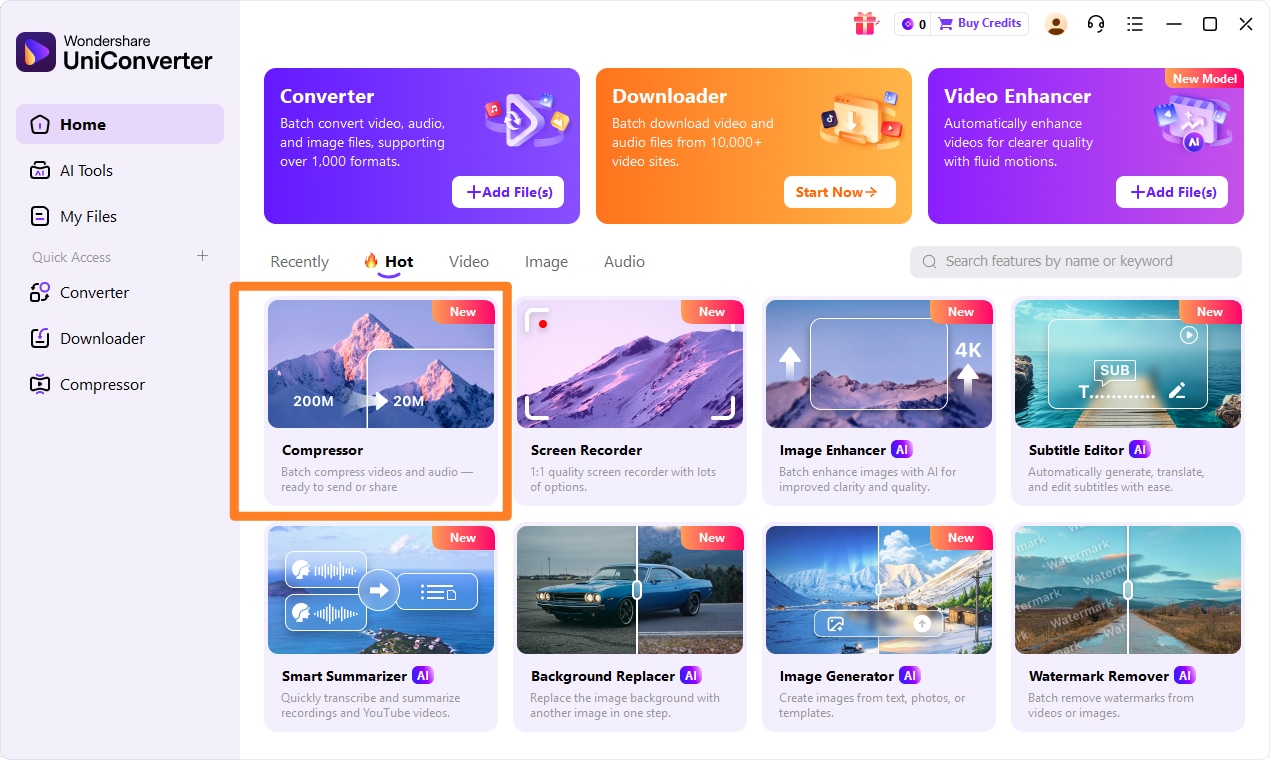
Step 1: Open UniConverter and Choose Compressor
First, I launch UniConverter on my desktop. From the main interface, I navigate to the "Compressor" tab on the left sidebar.
Step 2: Upload the Video, Audios or Images
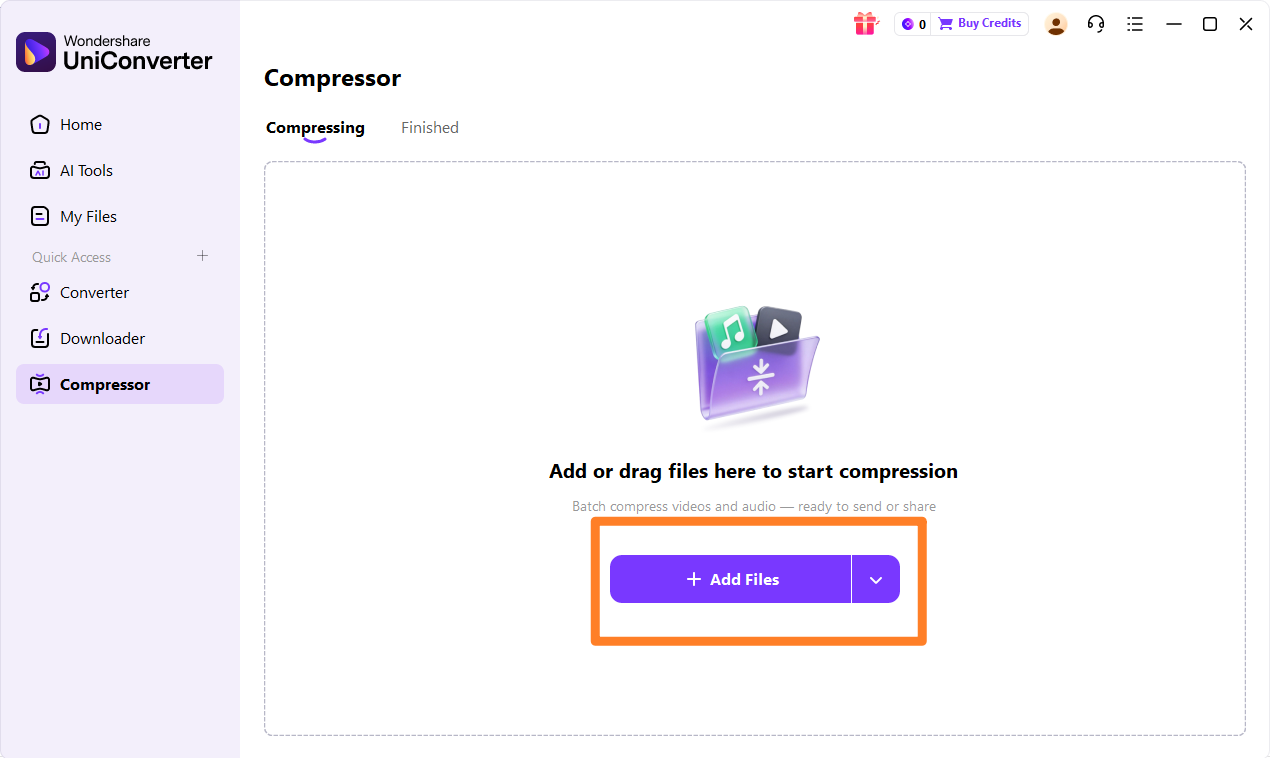
Next, I click the "Add Files" button or simply drag and drop the videos, audio files, or images I want to compress into the program window. UniConverter supports a wide range of formats.
Step 3: Choose Required Parameters
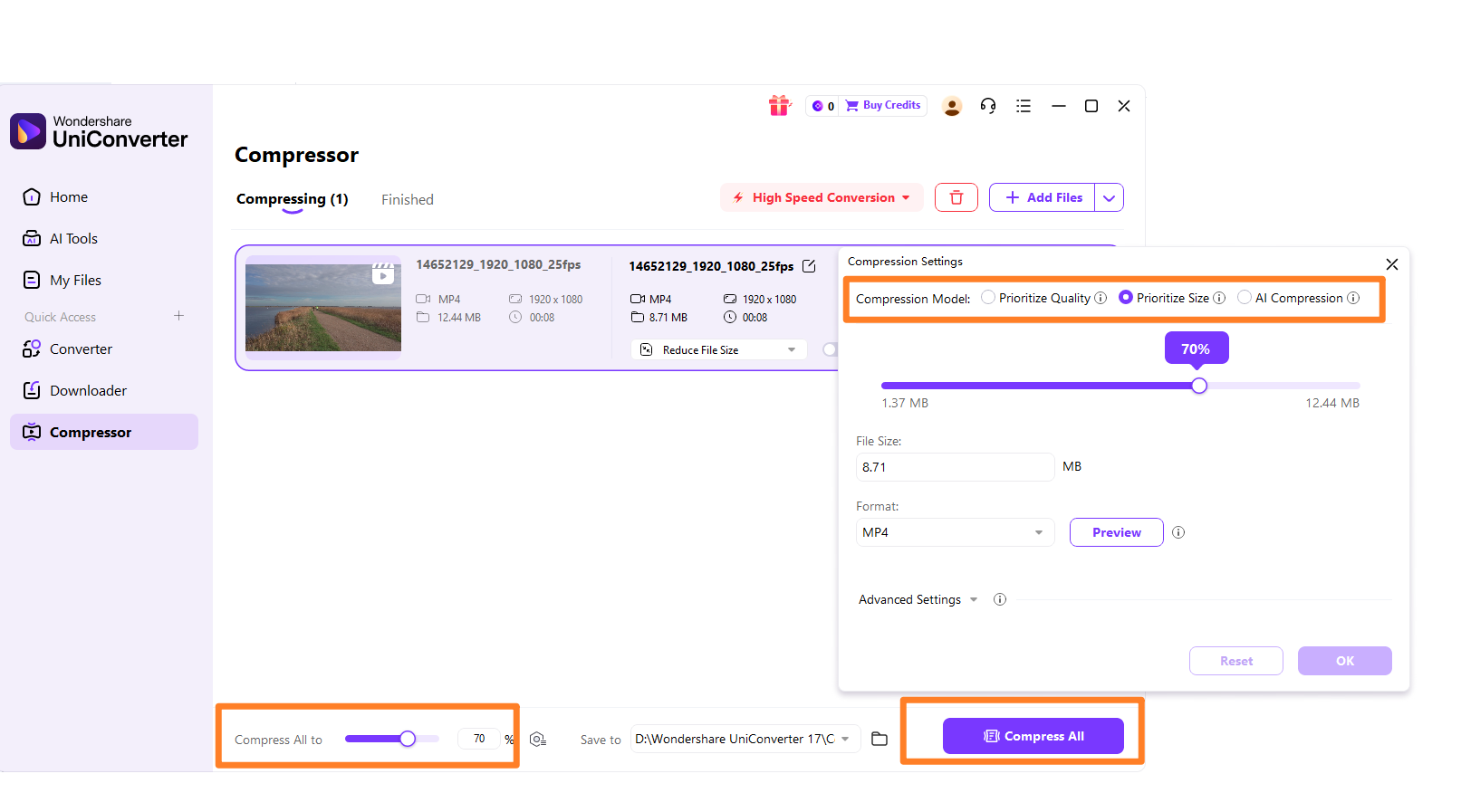
Once my files are loaded, I can select the output format and adjust the compression settings. I can choose the desired quality, resolution, and bitrate for videos and audio, or adjust image quality for pictures. UniConverter provides a real-time preview to help me find the perfect balance.
Step 4: Save the Compressed File
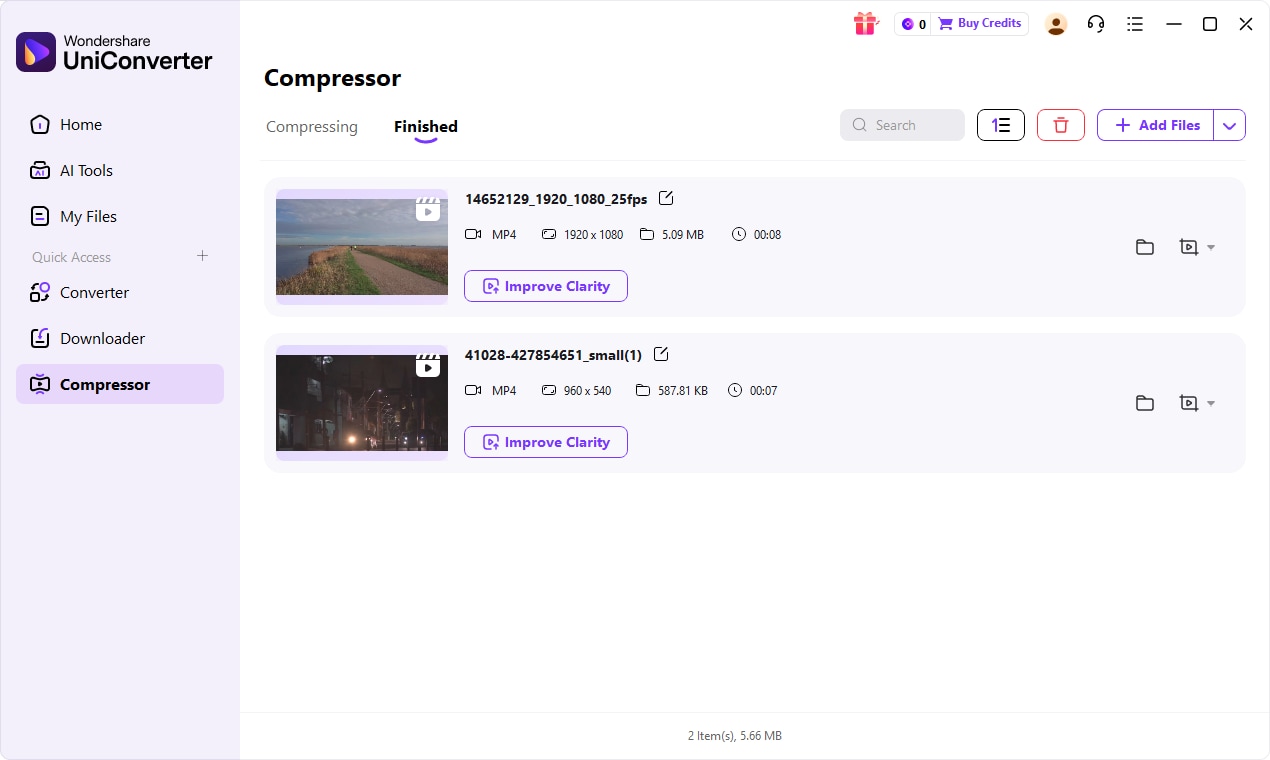
After configuring the settings, I choose my output folder and click the "Compress" button. UniConverter quickly processes the files, often leveraging GPU acceleration for faster results, and saves the optimized versions to my chosen location.

Need a Better PhotoRoom Image Compressor Alternative?
Part 7: Conclusion
In conclusion, my PhotoRoom Image Compressor review reveals it as an excellent tool for quick, high-quality image compression, especially for everyday users, social media managers, and e-commerce sellers. Its AI-driven approach and user-friendly interface make it incredibly efficient for optimizing images for web use and reducing file sizes without significant effort. However, for professional photographers, graphic designers, or anyone requiring granular control over compression settings, lossless options, or handling sensitive data, alternatives like UniConverter or more specialized desktop software might be more suitable. Always test the compression results on a few images before batch processing to ensure the output meets your quality standards. Ultimately, your choice should align with your specific needs for batch processing, output quality, and privacy considerations.
Part 8: FAQs
-
1. Is PhotoRoom Image Compressor free to use?
PhotoRoom offers a free version with certain limitations, such as potential watermarks or restricted features. A premium subscription unlocks full functionality.
-
2. Does PhotoRoom Image Compressor reduce image quality significantly?
PhotoRoom utilizes smart compression algorithms designed to minimize quality loss while maximizing file size reduction. For most web and social media uses, the quality reduction is negligible.
-
3. Can I compress multiple images at once with PhotoRoom?
Yes, PhotoRoom supports batch image compression, allowing you to process several images simultaneously, which is a significant time-saver.
-
4. What image formats does PhotoRoom Image Compressor support?
PhotoRoom typically supports common image formats like JPG, PNG, and HEIC. For broader format support or specialized files, you might consider a tool like UniConverter.
-
5. Is PhotoRoom Image Compressor safe for my private images?
While PhotoRoom aims for data security, as a cloud-based tool, it's always wise to review their privacy policy regarding how your uploaded images are handled and stored. For maximum privacy, a desktop solution like UniConverter processes files locally.
