
- OptiPNG Focus: Lossless PNG optimization via command line, ideal for web developers and automated workflows.
- Strengths: Guarantees no quality loss, highly configurable, excellent for scripting and build processes.
- Weaknesses: PNG-only support, steep learning curve due to command-line interface, no GUI.
- Ideal Users: Developers and designers needing precise, automated PNG compression in their pipelines.
- Alternatives: TinyPNG (web-based, multi-format), ImageOptim (macOS GUI), UniConverter (all-in-one GUI for diverse media).
- Risks: Can be time-consuming at aggressive levels, lacks visual feedback, requires command-line proficiency.
- UniConverter Value: User-friendly GUI, broad format support (images/video/audio), batch processing, GPU acceleration, no ads.
- Decision: Choose OptiPNG for pure lossless PNG automation; UniConverter for versatile, user-friendly, multi-format compression.
In this article
- Part 1: What is OptiPNG?
- Part 2: OptiPNG's Core Features, Strengths, and Weaknesses
- Part 3: OptiPNG's Ideal Users and Use Cases
- Part 4: OptiPNG and Alternatives Comparison
- Part 5: Risks and Pitfalls When Using OptiPNG
- Part 6: How to Use UniConverter for Efficient Audio and Video Compression
- Part 7: Conclusion
- Part 8: FAQs
When I'm looking for ways to optimize my digital assets, especially images, I often find myself diving deep into various compression tools. Today, I'm going to share my insights on OptiPNG Image Compressor review, a tool that frequently comes up in discussions about efficient image optimization. This review will cover its core features, strengths, weaknesses, and how it stacks up against its competitors, helping you decide if it's the right fit for your specific needs. We'll also explore potential pitfalls and offer alternative solutions for different use cases, ensuring you make an informed decision in your image optimization journey.
Part 1: What is OptiPNG?
OptiPNG is a command-line utility designed specifically for optimizing PNG (Portable Network Graphics) image files. Its primary goal is to reduce the file size of PNG images without sacrificing any visual quality, making it a "lossless" compression tool. This means that every pixel remains exactly the same as in the original image, ensuring perfect fidelity. For me, when I'm working on web projects, maintaining image quality while reducing load times is paramount, and OptiPNG aims to address this directly. This review will delve into whether OptiPNG truly delivers on its promise of efficient, lossless PNG optimization and where it stands in the broader landscape of image compression tools.
The Landscape of Image Compression Tools
* The constant demand for faster web performance: In today's digital world, website speed is critical for user experience and SEO.
* The challenge of balancing image quality with file size: High-quality images often come with large file sizes, slowing down websites.
* The need for automated solutions in development workflows: Manual optimization can be time-consuming and inefficient for large projects.
* The proliferation of various image formats and compression techniques: Different tools cater to different formats and compression needs, making choice difficult.
Part 2: OptiPNG's Core Features, Strengths, and Weaknesses
OptiPNG is a specialized tool that I've found to be incredibly effective for its intended purpose: optimizing PNG files. Its core capability revolves around re-compressing PNG data streams to achieve the smallest possible file size without any loss of image information. It achieves this by applying various filters and compression strategies.
* Lossless Compression: Guarantees no quality degradation for PNG files.
* Multiple Optimization Levels: Offers different compression levels, from fast to highly aggressive.
* Metadata Preservation/Removal: Allows control over preserving or stripping metadata like EXIF.
* Color Type and Bit Depth Reduction: Can reduce color depth if possible without visual impact.
* Error Checking: Includes mechanisms to detect and fix minor PNG file errors.
Pros:
* Lossless Compression for PNG Files: This is its biggest selling point for me; I never have to worry about image quality.
* Highly Configurable Optimization Levels: I can fine-tune the compression intensity based on my needs, balancing speed and file size.
* Command-Line Interface for Automation: Perfect for integrating into scripts and build processes, saving me a ton of manual work.
Cons:
* Limited File Format Support (PNG only): If I have JPEGs or GIFs, I need another tool.
* Steep Learning Curve for Non-Technical Users: My less tech-savvy colleagues often struggle with the command line.
Part 3: OptiPNG's Ideal Users and Use Cases
From my experience, OptiPNG isn't a one-size-fits-all solution, but it excels in specific niches. It's a tool for those who appreciate precision and automation over a graphical user interface. If you're someone who spends a lot of time in a terminal or integrating tools into larger systems, OptiPNG will feel right at home. It's less about casual, quick edits and more about robust, repeatable optimization.
Best Use Case: Web Developers and Designers Automating PNG Optimization in Build Pipelines
For me, as a web developer, OptiPNG is invaluable. I integrate it directly into my build scripts (e.g., Gulp, Webpack, or simple shell scripts). Every time I deploy new PNG assets, OptiPNG automatically processes them, ensuring they are as small as possible without any quality loss. This automation saves me countless hours and guarantees consistent optimization across all my projects. It’s perfect for static site generators or large-scale web applications where every kilobyte counts.
Limited Use Case: Casual Users Needing Quick, Multi-Format Image Compression with a GUI
If you're a casual user who just wants to drag and drop a few images of different formats (like JPEGs, GIFs, and PNGs) into a program and get a smaller file, OptiPNG is definitely not for you. It lacks a graphical interface, and its command-line nature makes it intimidating for those unfamiliar with terminals. For quick, diverse image compression, I'd always recommend a tool with a user-friendly GUI that supports multiple formats.
Part 4: OptiPNG and Alternatives Comparison
When I'm evaluating image compression tools, I look at their primary focus, interface, automation capabilities, ease of use, and supported formats. Here's how OptiPNG stacks up against some popular alternatives I've used:
| Feature/Tool | OptiPNG | TinyPNG | ImageOptim | UniConverter |
| Primary Focus | Lossless PNG | Lossy/Lossless PNG/JPEG | Lossy/Lossless Multi-Format | Lossy/Lossless Multi-Format |
| Interface | Command-Line | Web-based/API | GUI | GUI |
| Automation | High | Moderate (API) | Moderate (CLI integration) | Moderate (Batch Processing) |
| Ease of Use | Low | High | Medium | High |
| Supported Formats | PNG | PNG, JPEG, WebP | PNG, JPEG, GIF, SVG | PNG, JPEG, GIF, BMP, WebP, TIFF |
Key Differentiators:
OptiPNG excels in pure lossless PNG optimization via command line, ideal for integration into automated workflows. TinyPNG is fantastic for quick, web-based compression with good results for both PNG and JPEG. ImageOptim offers a great balance with a GUI and multi-format support on macOS. UniConverter stands out as an all-in-one solution with a user-friendly GUI, broad format support, and robust batch processing for both images and videos, making it highly versatile for various media compression needs.
Part 5: Risks and Pitfalls When Using OptiPNG
While OptiPNG is a powerful tool for lossless PNG compression, I've encountered several risks and pitfalls that users, especially those new to command-line tools, should be aware of. It's not always as straightforward as it seems, and understanding these potential issues can save you a lot of frustration.
Potential for Over-Optimization (Time vs. Size)
OptiPNG offers various optimization levels, some of which can be extremely aggressive. While these levels aim for the smallest possible file size, they can significantly increase compression time. I've found myself in situations where a slight reduction in file size took an inordinate amount of time, especially with very large PNGs. It's crucial to balance the desired file size reduction with the time you're willing to spend, particularly in automated workflows where build times are critical.
Lack of Visual Feedback During Compression
Unlike GUI-based tools that might show a progress bar or a preview of the compressed image, OptiPNG operates silently in the background (unless verbose output is enabled). This lack of immediate visual feedback can be unsettling, especially when you're compressing many files. You don't see the "before" and "after" side-by-side, which can make it harder to gauge the effectiveness or confirm that the process completed as expected without manually checking each file.
Dependency on Command-Line Proficiency
This is perhaps the biggest hurdle for many. OptiPNG is purely a command-line tool. If you're not comfortable navigating your terminal, understanding command syntax, or writing scripts, you'll find it challenging to use effectively. This dependency limits its accessibility to a more technical audience and can be a significant barrier for casual users or those who prefer a visual interface.
No Built-in Batch Processing for Diverse Formats
OptiPNG is designed exclusively for PNGs. If I have a folder containing a mix of PNGs, JPEGs, and GIFs that I want to compress, OptiPNG will only handle the PNGs. I'd need to use other command-line tools or write complex scripts to process the other formats, which adds another layer of complexity and requires more advanced scripting knowledge. It's not an integrated solution for multi-format batch processing.
Compatibility Issues with Certain PNG Variants
While rare, I've occasionally encountered specific PNG files, often generated by specialized software, that OptiPNG struggles with or fails to optimize significantly. These might be PNGs with unusual color profiles or metadata structures. While OptiPNG is generally robust, it's not foolproof, and in some edge cases, it might not deliver the expected compression ratios or could even report errors.
Part 6: How to Use UniConverter for Efficient Audio and Video Compression
Sometimes, when I'm dealing with a mix of image and video files, or when other tools don't offer stable compression, good quality, or batch processing, I turn to UniConverter. It's a comprehensive solution that avoids many of the pitfalls I've mentioned, offering a user-friendly experience without ads, supporting a vast array of formats, leveraging GPU acceleration for speed, and ensuring stable, lossless (or near-lossless) compression with robust batch processing. It truly is an all-in-one media toolkit.
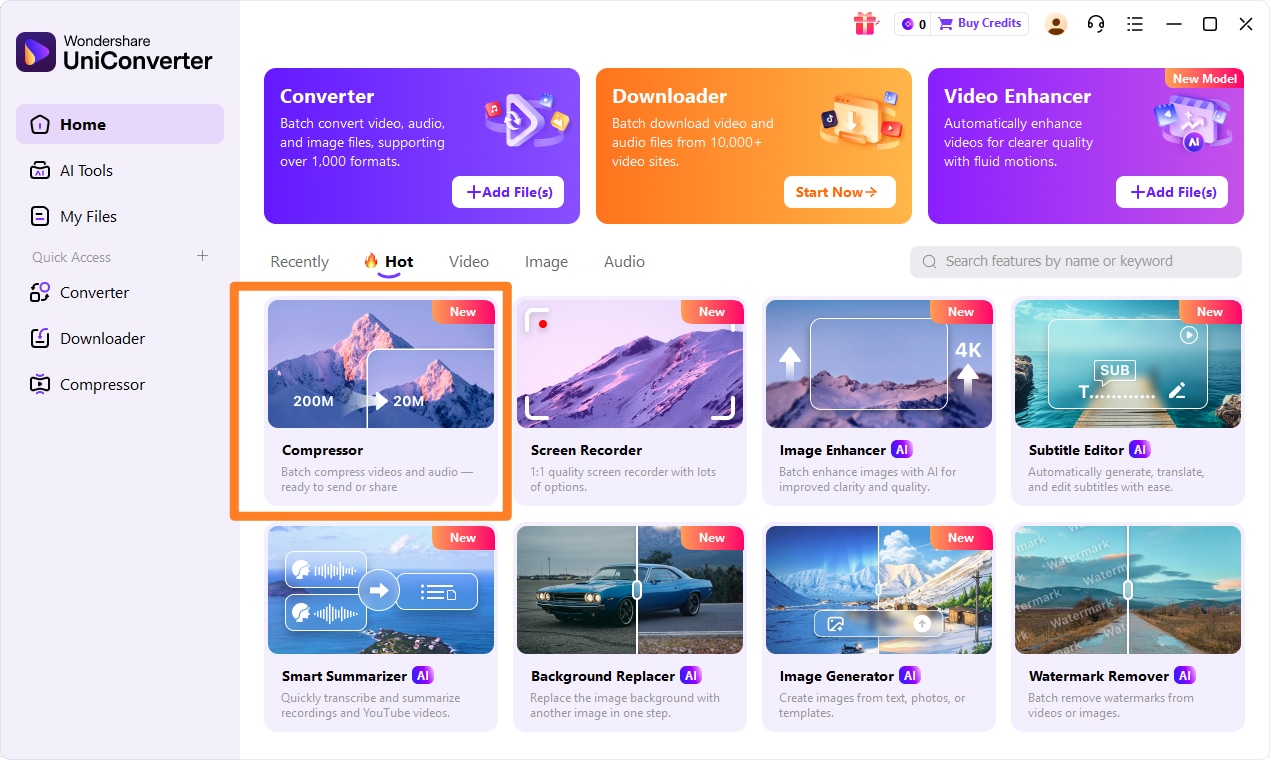
Step 1: Open UniConverter and Choose Compressor
Launch UniConverter on your computer. From the main interface, navigate to the "Toolbox" section and select the "Image Compressor" or "Video Compressor" option, depending on your needs.
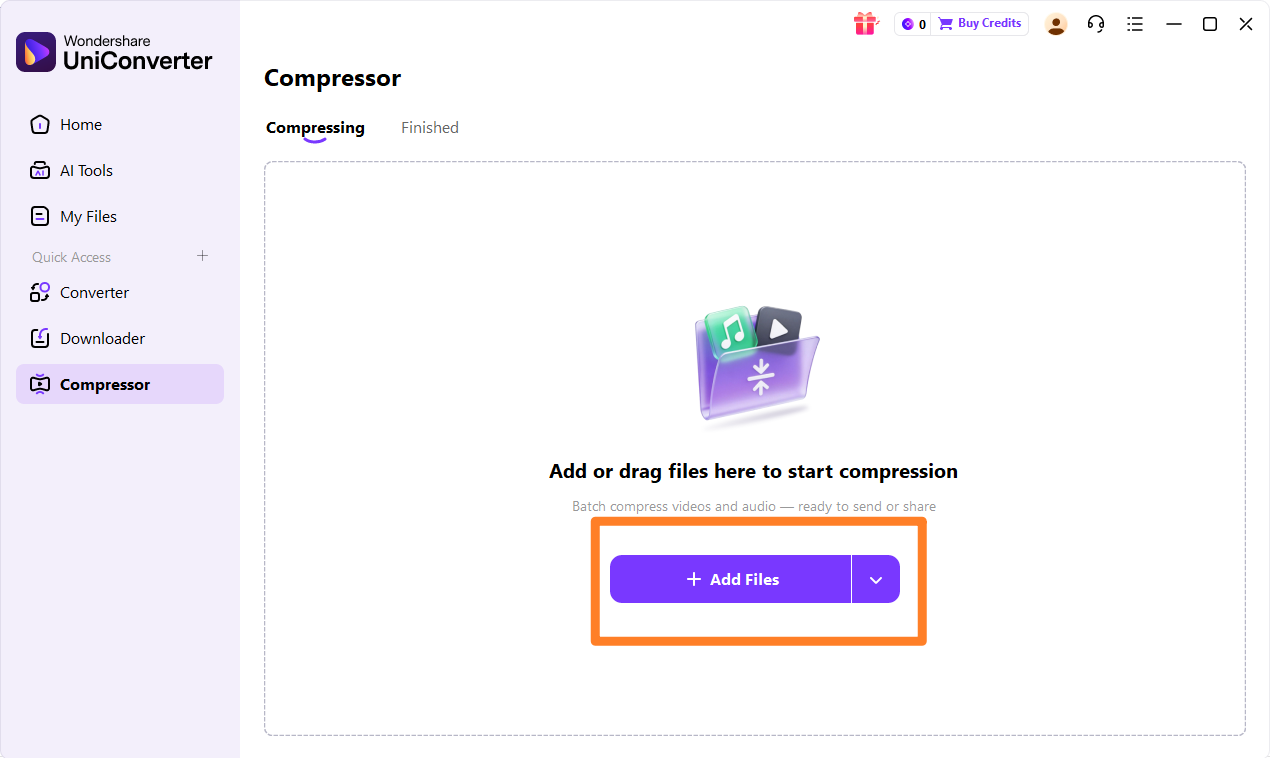
Step 2: Upload the Video, Audios or Images
Drag and drop your desired image files (PNG, JPEG, GIF, etc.) or video/audio files directly into the UniConverter window. You can also click the "Add Files" button to browse and select them from your computer.
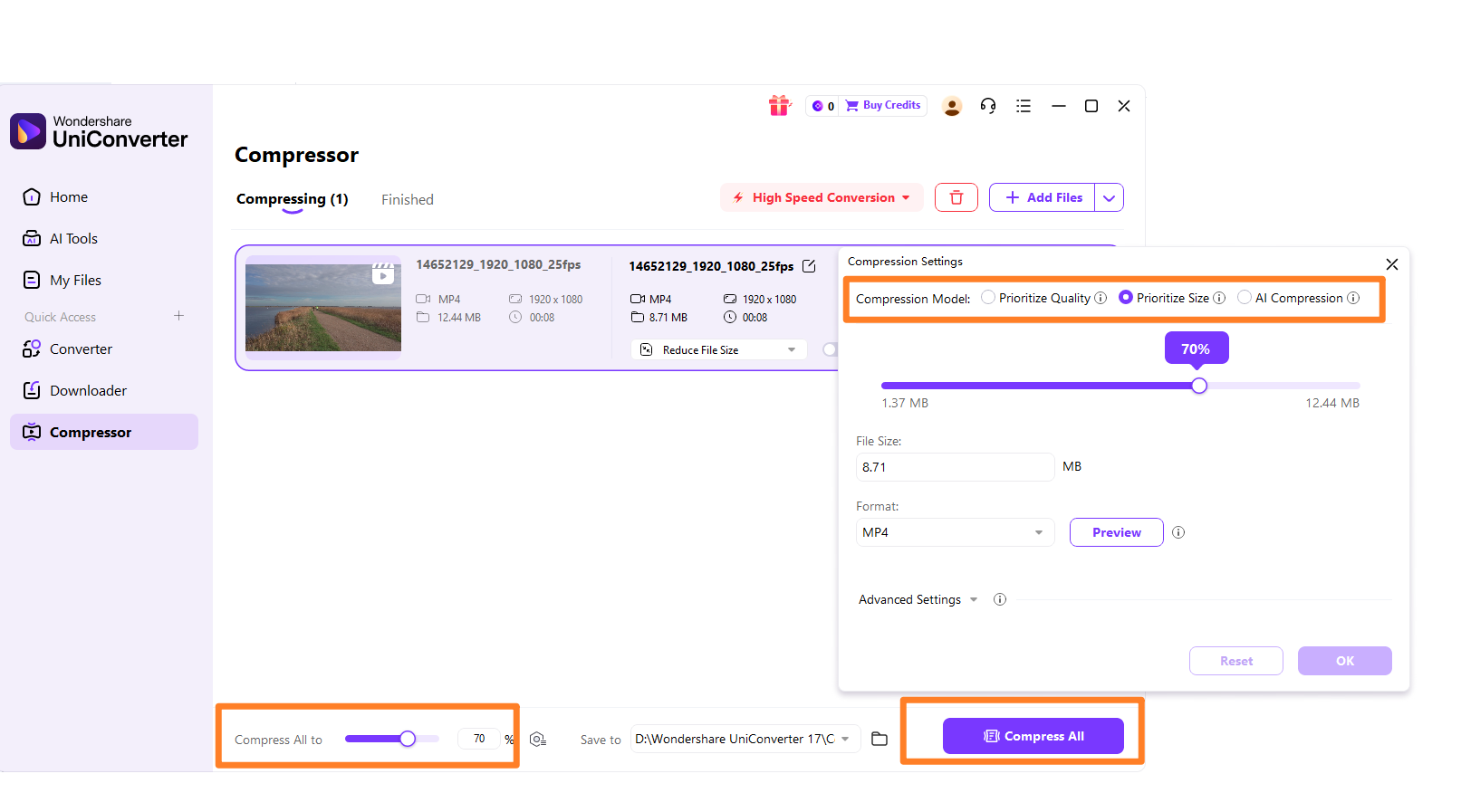
Step 3: Choose Required Parameters
Once your files are loaded, you can customize the compression settings. For images, choose your desired output format and adjust the quality slider to balance file size and visual fidelity. For videos and audios, you can select output format, resolution, bitrate, and other parameters.
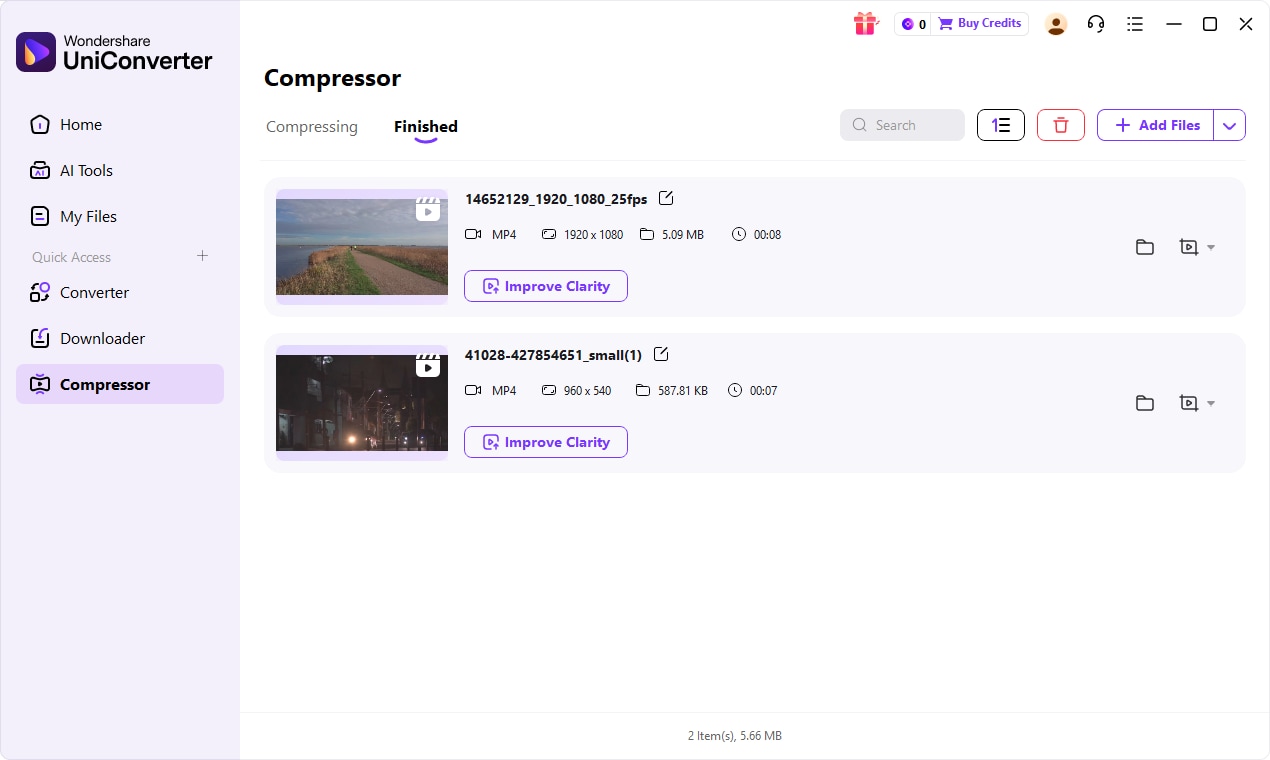
Step 4: Save the Compressed File
After configuring your settings, click the "Compress" or "Start All" button. UniConverter will process your files efficiently. Once completed, you can find your optimized files in the designated output folder.

Seeking an OptiPNG Alternative for Image Compression?
Part 7: Conclusion
After thoroughly exploring OptiPNG Image Compressor review, it's clear to me that this tool holds a distinct and valuable place in the image optimization ecosystem. For developers and automation enthusiasts who primarily work with PNG files and are comfortable with a command-line interface, OptiPNG is an unparalleled choice for achieving truly lossless compression and integrating seamlessly into automated workflows. Its strength lies in its precision and configurability, allowing for deep optimization without compromising image quality. However, for general users, those needing multi-format support, or individuals who prefer a graphical user interface, OptiPNG presents significant limitations due to its technical barrier and single-format focus. In such cases, alternatives like UniConverter offer a more comprehensive, user-friendly, and versatile solution for various image and video compression needs. Ultimately, the best tool depends entirely on your specific requirements, technical proficiency, and the types of files you need to optimize.
Part 8: FAQs
-
1. What is the difference between lossless and lossy compression?
Lossless compression reduces file size without discarding any data, meaning the original data can be perfectly reconstructed. Lossy compression, on the other hand, achieves greater file size reduction by permanently removing some data, which can lead to a reduction in quality but is often imperceptible for images and videos.
-
2. How does OptiPNG achieve lossless compression?
OptiPNG achieves lossless compression by re-compressing the PNG data stream using various filtering and compression strategies (like zlib's deflate algorithm) to find the most efficient way to store the image data without altering any pixel information. It essentially reorganizes the existing data more efficiently.
-
3. Can OptiPNG compress JPEG files?
No, OptiPNG is specifically designed for PNG files only. If you need to compress JPEG files, you'll need to use a different tool that supports the JPEG format, such as TinyPNG or UniConverter.
-
4. Is command-line image compression still relevant today?
Absolutely. Command-line image compression tools like OptiPNG are highly relevant, especially for developers, system administrators, and anyone involved in automated workflows. They allow for batch processing, integration into build scripts, and consistent optimization without manual intervention, which is crucial for large-scale projects and continuous deployment environments.
-
5. What are the best practices for optimizing images for web?
Best practices include choosing the right format (JPEG for photos, PNG for graphics with transparency, WebP for modern web), resizing images to their display dimensions, using appropriate compression (lossless for critical detail, lossy for general photos), and leveraging tools like OptiPNG for PNGs or UniConverter for a broader range of formats and automation.
