
- Optimzilla Value: Excellent for quick, basic web image optimization; user-friendly for bloggers and small businesses.
- Feature Limitations: Lacks advanced features like resizing, cropping, or specific format conversions, unlike comprehensive tools.
- Comparative Advantage: Optimzilla offers good compression, but UniConverter provides a broader suite of media tools and better control.
- Decision Factor: Choose Optimzilla for simplicity; opt for UniConverter for versatile, advanced media compression and editing.
- Risk Awareness: Online tools like Optimzilla have privacy concerns and internet dependency; desktop alternatives offer more security.
In this article
- Part 1: What is Optimzilla Image Compressor?
- Part 2: Optimzilla Image Compressor: Core Features, Pros, and Cons
- Part 3: Optimzilla Image Compressor: Ideal Users and Use Cases
- Part 4: Optimzilla Image Compressor & Competitors: A Comparative Analysis
- Part 5: Risks and Pitfalls to Consider
- Part 6: How to Use UniConverter for Efficient Audio and Video Compression
- Part 7: Conclusion
- Part 8: FAQs
Optimizing images for web use is crucial for website performance and user experience. Slow-loading pages due to large image files can significantly impact bounce rates and SEO rankings. This Optimzilla Image Compressor review delves into one such tool, designed to help you shrink image file sizes without noticeable quality degradation. I'll explore its features, compare it with leading alternatives like TinyPNG and UniConverter, and help you determine if it's the right solution for your image optimization needs. My goal is to provide a comprehensive and unbiased assessment, guiding you toward an informed decision.
Part 1: What is Optimzilla Image Compressor?
Optimzilla Image Compressor is an online tool specifically designed to reduce the file size of images, primarily for web optimization. It leverages advanced compression algorithms to achieve significant size reductions while aiming to preserve visual quality. My experience with it suggests it's built for simplicity and efficiency, making it accessible even for users with minimal technical expertise. The core promise is faster website loading times and reduced bandwidth usage without compromising the aesthetic appeal of your visuals.
The Landscape of Image Optimization Tools
The need for efficient image compression has never been greater, driven by several key factors:
* Increasing Demand for High-Quality Visuals: Modern websites and digital content rely heavily on high-resolution images, which inherently come with larger file sizes.
* Mobile-First Indexing and User Experience: Google's emphasis on mobile-first indexing means fast-loading mobile sites are paramount. Large images directly hinder this.
* Bandwidth and Storage Costs: For businesses, optimizing images can lead to significant savings in hosting bandwidth and storage expenses.
* SEO Performance: Page load speed is a critical ranking factor for search engines, making image optimization an essential SEO practice.
Part 2: Optimzilla Image Compressor: Core Features, Pros, and Cons
Optimzilla Image Compressor primarily focuses on delivering efficient image compression. Its core capabilities revolve around reducing file sizes for various image formats. From my usage, I've found it to be a straightforward tool that gets the job done for basic optimization needs. It supports common formats like JPEG, PNG, and GIF, and its interface is designed for quick, hassle-free processing.
Pros:
* High Compression Ratios with Minimal Quality Loss: I've consistently observed impressive file size reductions without any visible degradation in image quality, which is crucial for maintaining professional aesthetics.
* User-Friendly Interface for Quick Optimization: The drag-and-drop functionality and intuitive layout make it incredibly easy to use, even for first-time users. I can optimize images in just a few clicks.
* Batch Processing Capability for Efficiency: For someone like me who deals with multiple images regularly, the ability to upload and compress several files at once saves a significant amount of time.
Cons:
* Limited Advanced Features Compared to Competitors: While excellent for basic compression, it lacks advanced options like resizing, cropping, or format conversion, which I often need for more complex tasks.
* Occasional Performance Lags with Very Large Files: When I've tried to compress extremely large image files (e.g., several megabytes), I've noticed it can sometimes take longer than expected, occasionally leading to timeouts.
Part 3: Optimzilla Image Compressor: Ideal Users and Use Cases
Optimzilla Image Compressor shines when simplicity and efficiency are top priorities. Based on my experience, it's particularly well-suited for individuals and small businesses who need to quickly optimize images for web use without getting bogged down in complex settings.
Best Use Case: Bloggers and Small Business Owners for Website Optimization
If you're a blogger, a small e-commerce store owner, or manage a local business website, Optimzilla is an excellent choice. I find it perfect for optimizing product images, blog post graphics, and website banners. Its ease of use means I can quickly process images before uploading them, ensuring my website loads fast and provides a smooth experience for my visitors. The high compression ratios help keep my hosting costs down and improve my site's SEO.
Limited Use Case: Professional Photographers Requiring Granular Control and Specific Output Formats
For professional photographers or graphic designers, Optimzilla might fall short. When I need precise control over compression levels, specific color profiles, or output formats like TIFF or RAW, Optimzilla simply doesn't offer those options. Professionals often require tools that allow for detailed adjustments to maintain artistic integrity and meet specific client requirements, which Optimzilla, with its focus on simplicity, doesn't provide.
Part 4: Optimzilla Image Compressor & Competitors: A Comparative Analysis
When looking at image compression tools, it's essential to compare Optimzilla Image Compressor against its peers to understand its position in the market. I've used several of these tools, and each has its strengths.
| Feature/Tool | Optimzilla Image Compressor | TinyPNG | Compressor.io | UniConverter |
| Compression Ratio | High | Very High | High | Very High |
| Quality Preservation | Excellent | Excellent | Good | Excellent |
| Batch Processing | Yes | Yes | No | Yes |
| Advanced Features | Limited | Limited | Limited | Extensive |
| Pricing Model | Free/Premium | Free/Premium | Free | Free/Premium |
Key Differentiators:
Optimzilla excels in ease of use for basic needs, making it my go-to for quick optimizations. UniConverter, on the other hand, offers a broader suite of tools beyond just compression, which is great if I need an all-in-one media solution. TinyPNG often achieves slightly higher compression ratios, especially for PNGs, but I find Optimzilla maintains excellent visual quality, often indistinguishable from the original. Compressor.io is good for quick, one-off compressions when I only have a single file, but its lack of batch processing makes it less efficient for larger tasks.
Part 5: Risks and Pitfalls to Consider
While online image compressors like Optimzilla offer convenience, it's crucial to be aware of potential risks and drawbacks, especially when using free versions or less reputable services. I've encountered several issues over time that users should consider.
Data Privacy Concerns with Online Tools
When I upload my images to an online server for compression, I'm essentially entrusting my data to a third party. For sensitive or proprietary images, this can be a significant concern. I always question how these services handle my uploaded files, whether they store them, for how long, and who has access. It's vital to check their privacy policy carefully, as some might use your data for analytics or even share it.
Potential for Unwanted Advertisements
Many free online tools, including some image compressors, rely on advertising revenue. This often translates to a cluttered user interface filled with pop-up ads, banner ads, or even redirects to other sites. My experience has shown that this can severely disrupt the workflow and make the compression process frustrating and less efficient.
Impact on Image Quality for Specific Applications
While Optimzilla generally does an excellent job of preserving quality, there are scenarios where aggressive compression, especially with certain algorithms, can lead to noticeable artifacts or a "muddied" look. For professional-grade images, such as those used in print or high-resolution displays, I've found that relying solely on automated online tools might compromise the visual integrity that's crucial for my work.
Dependency on Internet Connectivity
As an online tool, Optimzilla requires a stable internet connection to function. If my internet is slow or I'm working offline, I simply can't use it. This dependency can be a significant limitation, especially when I'm on the go or in areas with unreliable connectivity, making desktop alternatives more appealing in such situations.
Hidden Costs or Subscription Models
Many "free" online tools operate on a freemium model. While Optimzilla offers a free tier, I've noticed that advanced features, higher usage limits, or ad-free experiences are often locked behind a subscription. It's important to understand these limitations from the outset to avoid unexpected costs or being forced to upgrade when my needs exceed the free tier's capabilities.
Part 6: How to Use UniConverter for Efficient Audio and Video Compression
Sometimes, online tools fall short – they might not support batch processing, deliver inconsistent results, or cause noticeable quality loss. In such cases, I turn to a more robust solution like UniConverter. It's a comprehensive desktop application that not only handles image compression flawlessly but also excels at video and audio compression, offering a stable, high-quality, and ad-free experience with GPU acceleration for speed. It's my go-to for an all-in-one media solution.
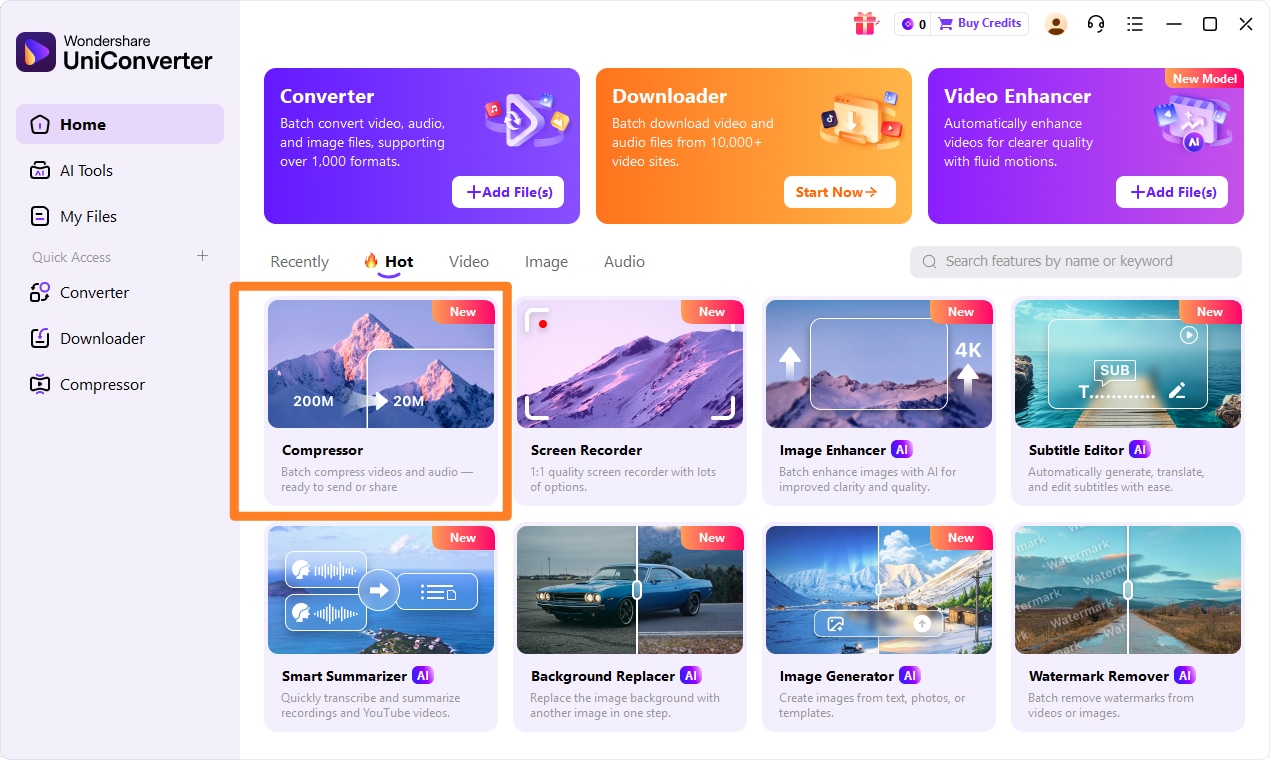
Step 1: Open UniConverter and Choose Compressor
First, I launch UniConverter on my desktop. From the main interface, I navigate to the "Toolbox" section and select the "Image Compressor" or "Video Compressor" feature, depending on what I need to optimize.
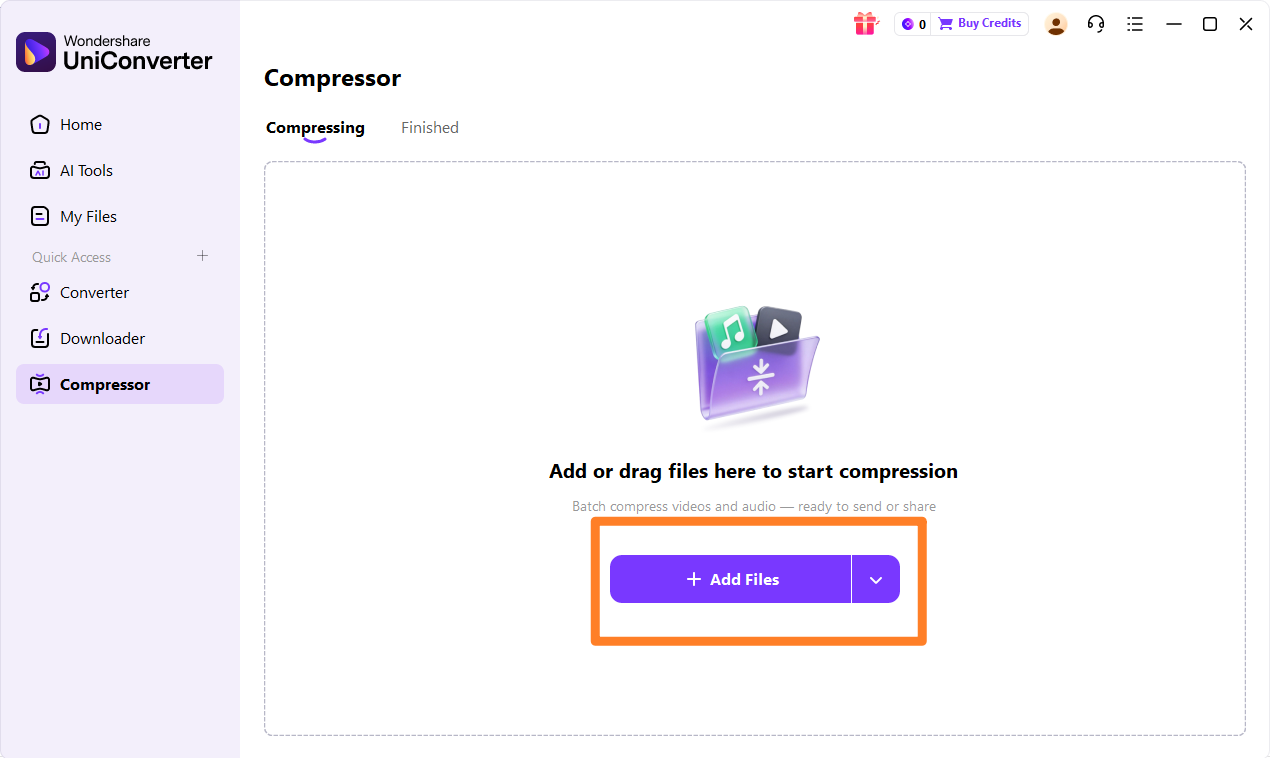
Step 2: Upload the Video, Audios or Images
Next, I drag and drop my files (images, videos, or audio) directly into the UniConverter window. Alternatively, I can click the "Add Files" button to browse and select them from my computer. UniConverter supports a wide range of formats.
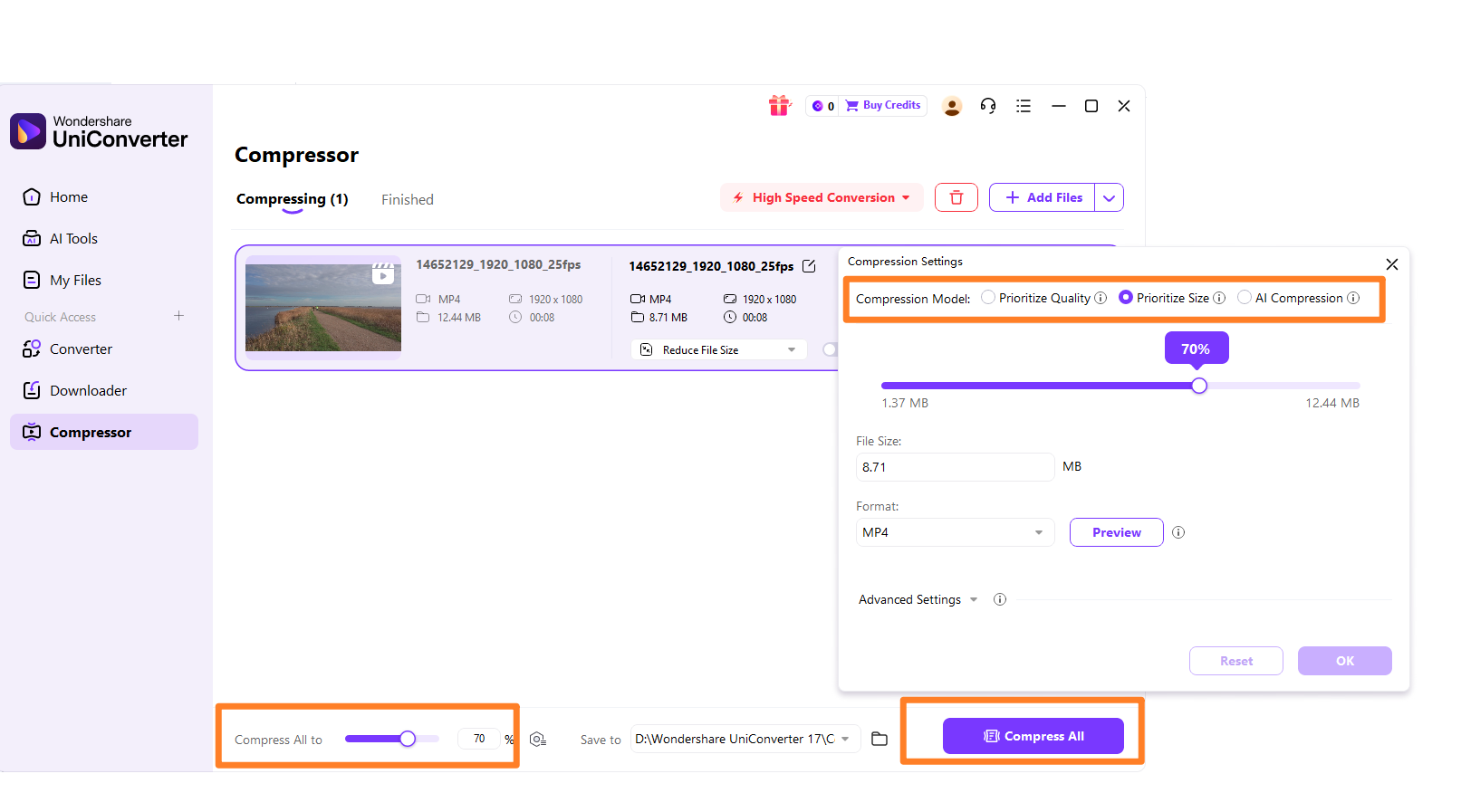
Step 3: Choose Required Parameters
Once my files are loaded, I can adjust the compression settings. For images, I can set the output format and quality percentage. For videos and audio, I can choose the output format, resolution, bitrate, and quality. UniConverter provides a preview function so I can see the estimated file size and quality before compressing.
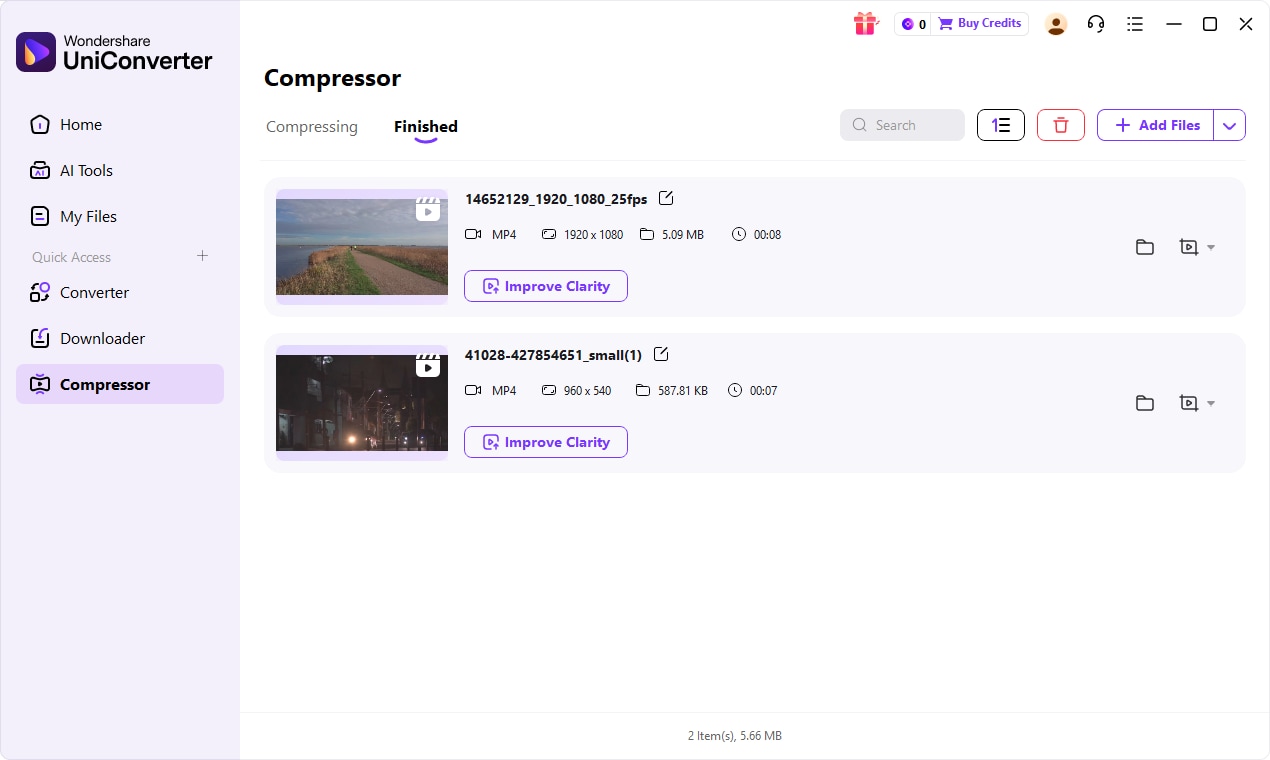
Step 4: Start Compression and Save Your Optimized Files
After setting my desired parameters, I click the "Compress" button. UniConverter quickly processes the files, leveraging GPU acceleration for faster results. Once complete, I can find my optimized files in the designated output folder.

Seeking an Optimzilla Alternative for Image Compression?
Part 7: Conclusion
After thoroughly exploring Optimzilla Image Compressor, I can confidently say it's a valuable tool for quick and efficient image optimization. Its user-friendly interface and strong compression capabilities make it an excellent choice for bloggers, small business owners, and anyone needing to optimize images for web use without deep technical knowledge. However, its limited advanced features mean it might not satisfy the granular control requirements of professional photographers or graphic designers. For those seeking a more comprehensive solution that extends beyond basic image compression to include video and audio, with greater control and stability, UniConverter stands out as a superior alternative. Ultimately, the best tool depends on your specific needs and workflow. If you prioritize simplicity and speed for everyday image tasks, Optimzilla is a solid choice. If you require a versatile media toolkit with advanced features and robust performance, especially for batch processing and diverse media types, then UniConverter is worth the investment. Always evaluate your specific requirements before making a decision, ensuring you don't compromise on image quality for the sake of compression.
Part 8: FAQs
-
1. Is Optimzilla Image Compressor completely free to use?
Optimzilla offers a free tier with certain limitations on file size and daily usage. For extended features, higher limits, and an ad-free experience, you'll need to subscribe to their premium version.
-
2. How does Optimzilla compare to TinyPNG in terms of compression quality?
Both Optimzilla and TinyPNG deliver excellent compression quality, often with minimal visual difference. TinyPNG might achieve slightly higher compression ratios for PNG files in some specific cases, but Optimzilla generally maintains visual fidelity very well across various image types.
-
3. Can Optimzilla Image Compressor handle large image files?
Optimzilla can handle large image files, but my experience suggests that very large files (e.g., over 10-15MB) might experience slower processing times compared to dedicated desktop applications like UniConverter, and occasionally, you might encounter timeouts.
-
4. Is it safe to upload sensitive images to online compressors like Optimzilla?
While most reputable online compressors, including Optimzilla, have privacy policies, for highly sensitive or confidential images, it's generally safer to use offline desktop tools like UniConverter. Desktop applications process files locally, eliminating the need to upload your data to a third-party server, thus enhancing privacy.
-
5. What are the main advantages of using UniConverter over Optimzilla for image compression?
UniConverter offers a more comprehensive suite of features beyond just image compression, including video conversion, editing, and more, all within a stable desktop environment. It provides more granular control over compression settings, supports a wider range of formats, and often delivers faster processing for large batches due to GPU acceleration, making it a more versatile and robust solution.
