
- Optimizilla Overview: Free online tool for quick JPEG/PNG compression, balancing size and quality.
- Core Features: Offers lossy compression, side-by-side comparison, adjustable levels, and batch processing.
- Ideal Users: Best for bloggers and small businesses needing fast web optimization; not for professional design.
- Comparison Insights: Simpler than TinyPNG/Compressor.io; lacks advanced controls of ImageOptim or UniConverter.
- Potential Risks: Data privacy concerns, quality degradation, internet dependency, and lack of version control.
- UniConverter Advantage: Offers robust, offline, advanced compression for images, video, and audio.
- Decision Factor: Choose Optimizilla for speed/simplicity; UniConverter for control, quality, and versatility.
In this article
- Part 1: What is Optimizilla?
- Part 2: Optimizilla Image Compressor: Core Features, Pros, and Cons
- Part 3: Optimizilla's Users and Usage Scenarios
- Part 4: Optimizilla and Alternatives Comparison
- Part 5: Risks and Pitfalls When Using Optimizilla
- Part 6: How to Use UniConverter for Efficient Image Compression
- Part 7: Conclusion
- Part 8: FAQs
When I'm working on my blog or managing e-commerce product images, the constant struggle with large file sizes is real. It slows down my website, impacts SEO, and frankly, frustrates my visitors. That's why I'm always on the lookout for effective image compression tools. Today, I'm diving deep into Optimizilla Image Compressor review, a popular online solution that promises to shrink image files without noticeable quality loss. In this comprehensive review, I'll explore its features, compare it with key competitors like TinyPNG and Compressor.io, discuss its ideal use cases, and highlight potential risks. My goal is to help you understand if Optimizilla is the right tool for your specific needs, or if you should consider more robust alternatives for a truly optimized workflow.
Part 1: What is Optimizilla?
Optimizilla is a free online image compression tool designed to reduce the file size of JPEG and PNG images. It's built for simplicity and speed, allowing users to quickly upload, compress, and download optimized images directly from their web browser. My experience with it has always been about getting the job done fast, without needing to install any software. The tool aims to strike a balance between file size reduction and maintaining visual quality, making it a go-to for many who need quick web optimizations. This review will delve into how well it achieves this balance and where it stands in the crowded market of image optimization tools.
The Landscape of Online Image Compression
The need for efficient image compression is more critical than ever in today's digital world.
* Website Performance: Large images significantly slow down page load times, impacting user experience and search engine rankings.
* Storage and Bandwidth: Smaller files consume less storage space and bandwidth, which is crucial for hosting costs and mobile data usage.
* User Experience: Faster loading websites lead to happier visitors and higher engagement rates.
* SEO Benefits: Search engines favor fast-loading sites, making image optimization a key component of a strong SEO strategy.
Part 2: Optimizilla Image Compressor: Core Features, Pros, and Cons
Optimizilla focuses on delivering a straightforward image compression experience. Its core capabilities revolve around efficiently reducing the file size of common image formats. I've found it particularly useful for quick tasks where I don't need granular control but just a good, solid compression.
Core Features:
* Lossy Compression Algorithm: Utilizes advanced algorithms to reduce file size while attempting to preserve visual quality.
* Side-by-Side Comparison: Allows you to compare the original and compressed image in real-time, adjusting quality settings.
* Adjustable Compression Level: You can manually tweak the compression level for each image to find the perfect balance.
* Drag-and-Drop Interface: Simplifies the upload process, making it incredibly user-friendly.
* Download All Option: After batch processing, you can download all compressed images in a single ZIP file.
Pros:
* Intuitive User Interface for Quick Compression: The drag-and-drop functionality and clear preview make it incredibly easy to use, even for beginners.
* Supports Multiple Image Formats (JPEG, PNG): Covers the two most widely used image formats for web content.
* Batch Processing Capability for Efficiency: I can upload up to 20 images at once, which saves a lot of time when optimizing multiple files.
Cons:
* Limited Advanced Customization Options: Beyond a basic quality slider, there aren't many options for fine-tuning compression parameters.
* Potential for Quality Degradation on Aggressive Compression: If I push the compression too far, I sometimes notice artifacts or a slight blur, especially on detailed images.
Part 3: Optimizilla's Users and Usage Scenarios
Optimizilla shines in scenarios where speed and simplicity are paramount, and the need for pixel-perfect image quality isn't the absolute top priority. I often recommend it to people who need to quickly optimize images for the web without getting bogged down in complex settings.
Best Use Case: Quick Web Optimization for Bloggers and Small Businesses
As a blogger, I frequently need to optimize images for my articles. Optimizilla is perfect for this. I can quickly upload a batch of screenshots or photos, get them compressed, and download them ready for my blog posts. Small business owners managing their own websites or e-commerce stores also benefit greatly from its ease of use for product images or promotional graphics. The goal here is fast loading times and decent visual quality, which Optimizilla delivers effectively. It’s about getting content online efficiently without a steep learning curve.
Limited Scenario: Professional Photography and High-Fidelity Design Work
For professional photographers or graphic designers, Optimizilla often falls short. When I'm working on client projects where every pixel matters, or preparing images for print, I need much more control over the compression process to avoid any perceptible quality loss. The "potential for quality degradation" I mentioned earlier becomes a critical issue here. For high-fidelity design, where color accuracy and sharpness are non-negotiable, a tool with more advanced algorithms and lossless compression options is essential. Optimizilla's basic controls simply don't offer the precision required for these demanding tasks.
Part 4: Optimizilla and Alternatives Comparison
When I look at online image compressors, it's clear that while many offer similar basic functionalities, their nuances can significantly impact my workflow and the final output. Here's how Optimizilla stacks up against some of its popular competitors, including UniConverter, which offers a more comprehensive solution.
| Feature/Tool | Optimizilla | TinyPNG | Compressor.io | ImageOptim (Desktop) | UniConverter |
| Ease of Use | Excellent | Excellent | Very Good | Good | Excellent |
| Batch Processing | Yes | Yes | Yes | Yes | Yes |
| Output Quality Control | Basic | Basic | Basic | Advanced | Advanced |
| Supported Formats | JPEG, PNG | JPEG, PNG, WebP | JPEG, PNG, SVG, GIF | JPEG, PNG, GIF | JPEG, PNG, GIF, BMP, WebP, TIFF, HEIC, etc. |
| Offline Capability | No | No | No | Yes | Yes |
| Privacy Concerns | Moderate | Moderate | Moderate | Low | Low |
| Processing Speed | Fast | Fast | Fast | Varies by system | Very Fast (GPU accelerated) |
| Additional Features | None | None | None | Lossless options | Video/Audio Compression, Editing, Conversion |
Key Differentiators:
Optimizilla's simplicity for quick, no-frills compression is its main draw. For me, it's a tool I grab when I just need to shrink a few JPEGs or PNGs without thinking too much. TinyPNG is very similar, often yielding slightly better PNG compression, and the addition of WebP support is a plus. Compressor.io offers a broader range of formats like SVG and GIF, which can be useful. ImageOptim, being a desktop tool, provides advanced output quality control and offline capability, making it a go-to for more serious users who prioritize control and privacy. UniConverter stands out as an all-in-one solution, not just for images but also for video and audio, offering advanced control, offline processing, and a wider array of supported formats with impressive speed. The trade-off between online convenience and offline control/privacy is a crucial factor in my decision-making.
Part 5: Risks and Pitfalls When Using Optimizilla
While Optimizilla offers undeniable convenience, I've learned that relying solely on free online tools, especially for sensitive or high-stakes projects, comes with its own set of considerations. It's important to be aware of these potential risks before I hit that upload button.
Data Privacy and Uploaded Images
When I upload images to any online service, I'm essentially entrusting my data to a third party. Optimizilla states that images are deleted after a short period, but there's always a lingering question about what happens during that "short period." For personal photos or proprietary business graphics, I'm always cautious about potential data breaches or unauthorized access. It's a risk I weigh against the convenience.
Impact on Image Quality for Specific Use Cases
As I mentioned, aggressive compression can lead to noticeable quality degradation. For a quick blog post, it might be acceptable, but if I'm preparing images for a client's high-resolution display or print, even subtle artifacts can be detrimental. I've had instances where I pushed the compression too far, and the resulting image looked pixelated or had color banding, requiring me to re-do the process with different settings or a different tool.
Reliance on Internet Connectivity
Being an online tool, Optimizilla is completely dependent on my internet connection. If my Wi-Fi is spotty or I'm working offline, the tool is unusable. This can be a significant bottleneck when I'm on the go or in areas with unreliable internet access, forcing me to delay my work or find an alternative solution.
Potential for Advertisements and Pop-ups
Free online tools often rely on advertising for revenue. While Optimizilla is generally clean, I've encountered other similar services that are riddled with intrusive ads or pop-ups, which can disrupt my workflow and even lead to accidental clicks on malicious content. It's a common trade-off for "free" services.
Lack of Version Control for Compressed Files
Optimizilla doesn't offer any built-in version control. Once I download a compressed image, the original is gone from their server (theoretically), and there's no way to revert to a previous compression level or compare different versions within the tool. This means I need to manage my original files and compressed versions manually, which can be cumbersome for larger projects.
Part 6: How to Use UniConverter for Efficient Image Compression
Sometimes, when online tools aren’t reliable enough—especially when batch compression is missing, results are inconsistent, or the final quality drops too much—I usually turn to UniConverter as a more dependable alternative. It offers a smoother, ad-free workflow and works well for video compression, image compression, and even audio compression, making it a practical all-in-one media solution. I also like that it can help compress videos without quality loss as much as possible, while GPU acceleration improves speed and overall efficiency. With broad format support and more stable performance than many browser-based tools, it’s a convenient option for everyday media management.
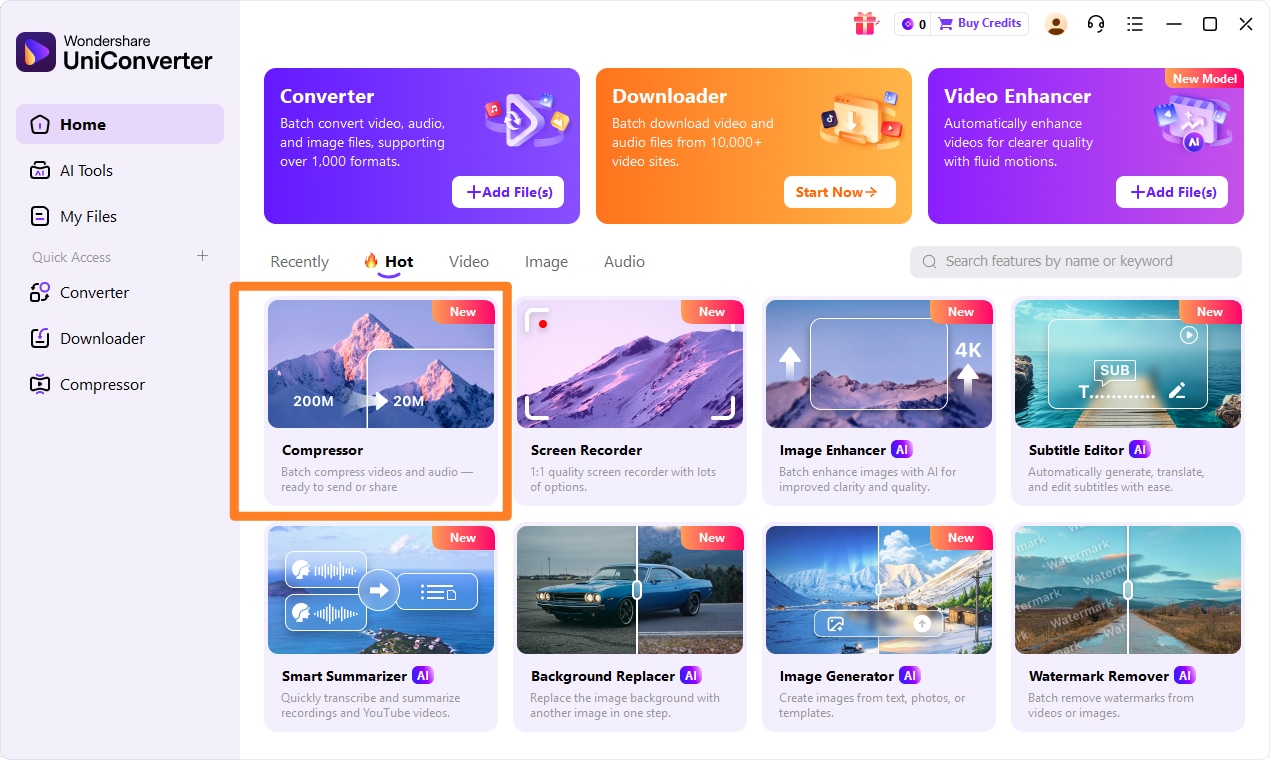
Step 1: Open UniConverter and Choose Compressor
Open UniConverter on your computer and navigate to the "Compressor" function from the main interface.
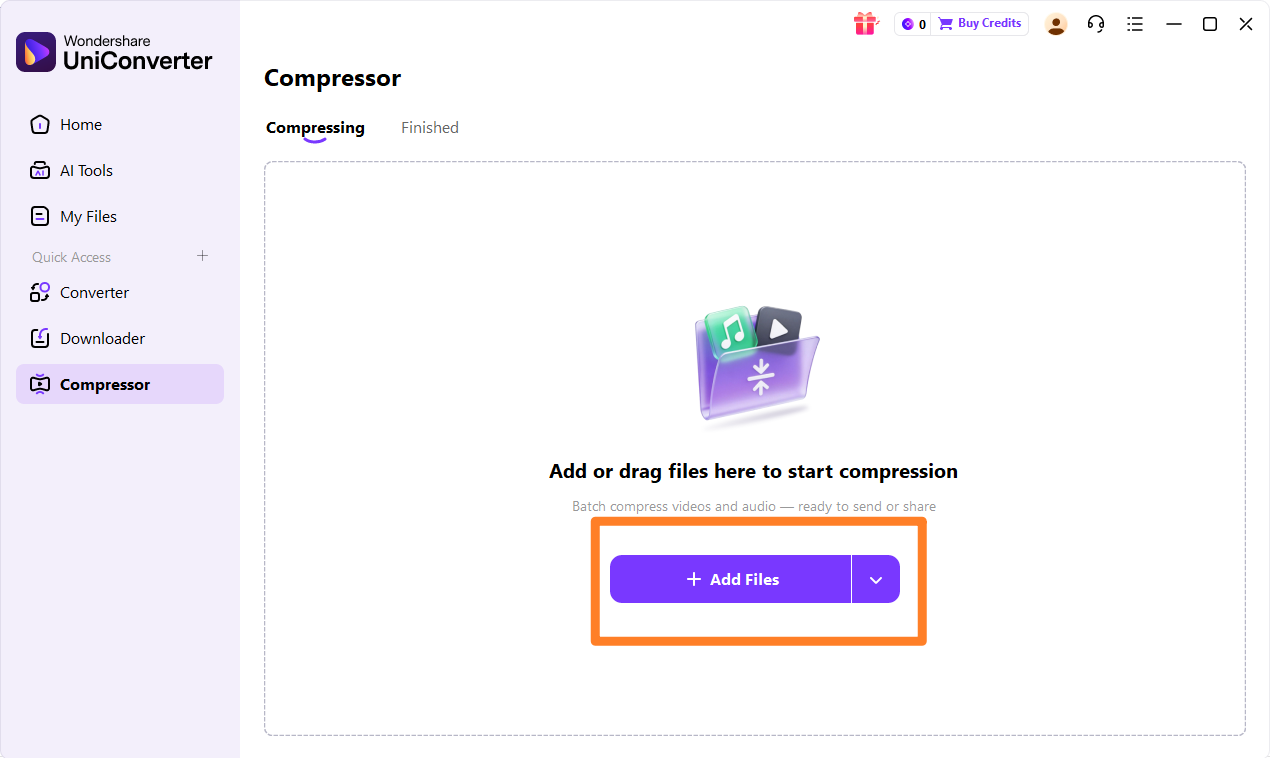
Step 2: Upload the Video, Audios or Images
Drag and drop your desired images, videos, or audio files into the compressor window. You can also click "Add Files" to browse and select them.
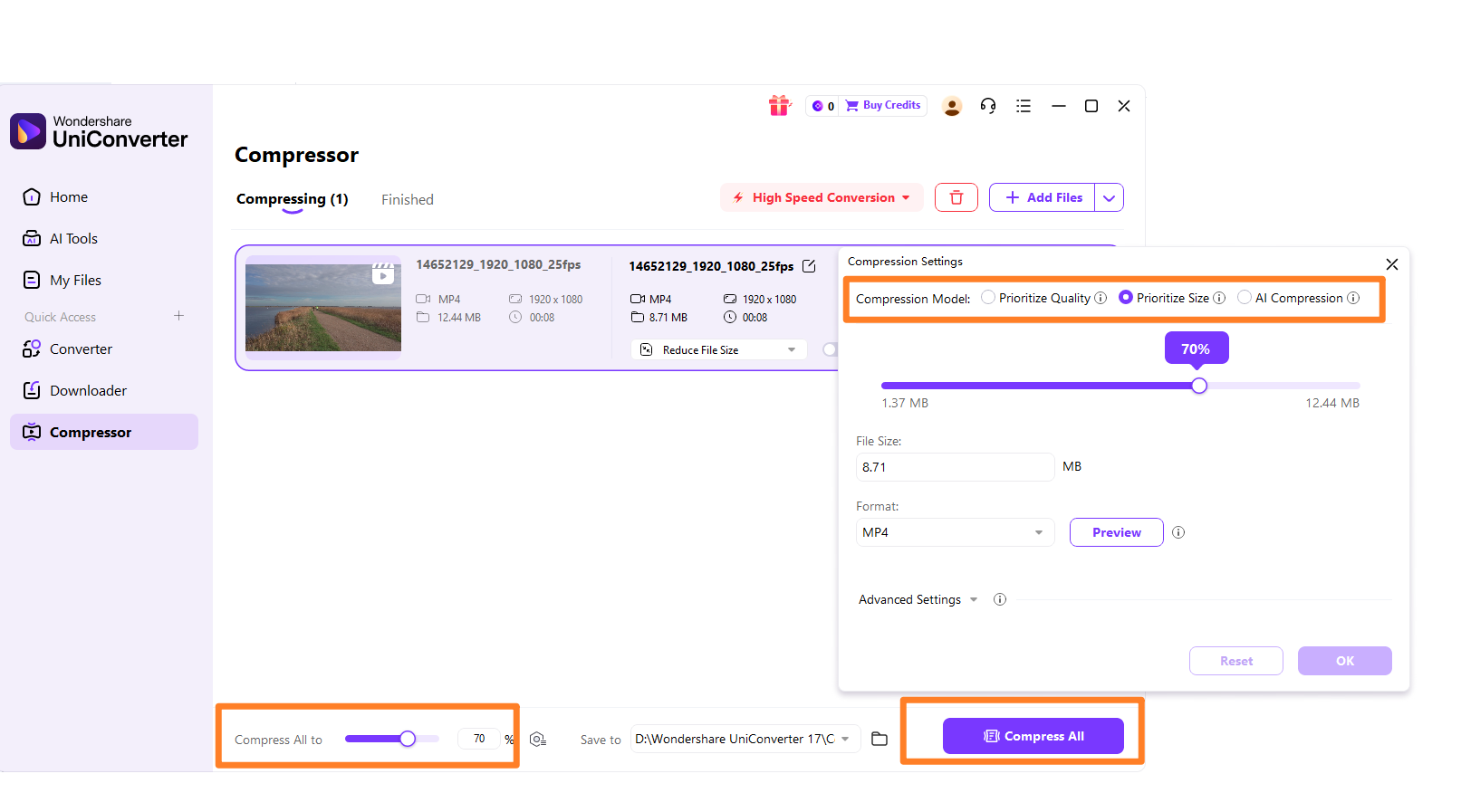
Step 3: Choose Required Parameters
Adjust the compression settings, such as output quality, resolution, and format. You can preview the changes to ensure the desired outcome.
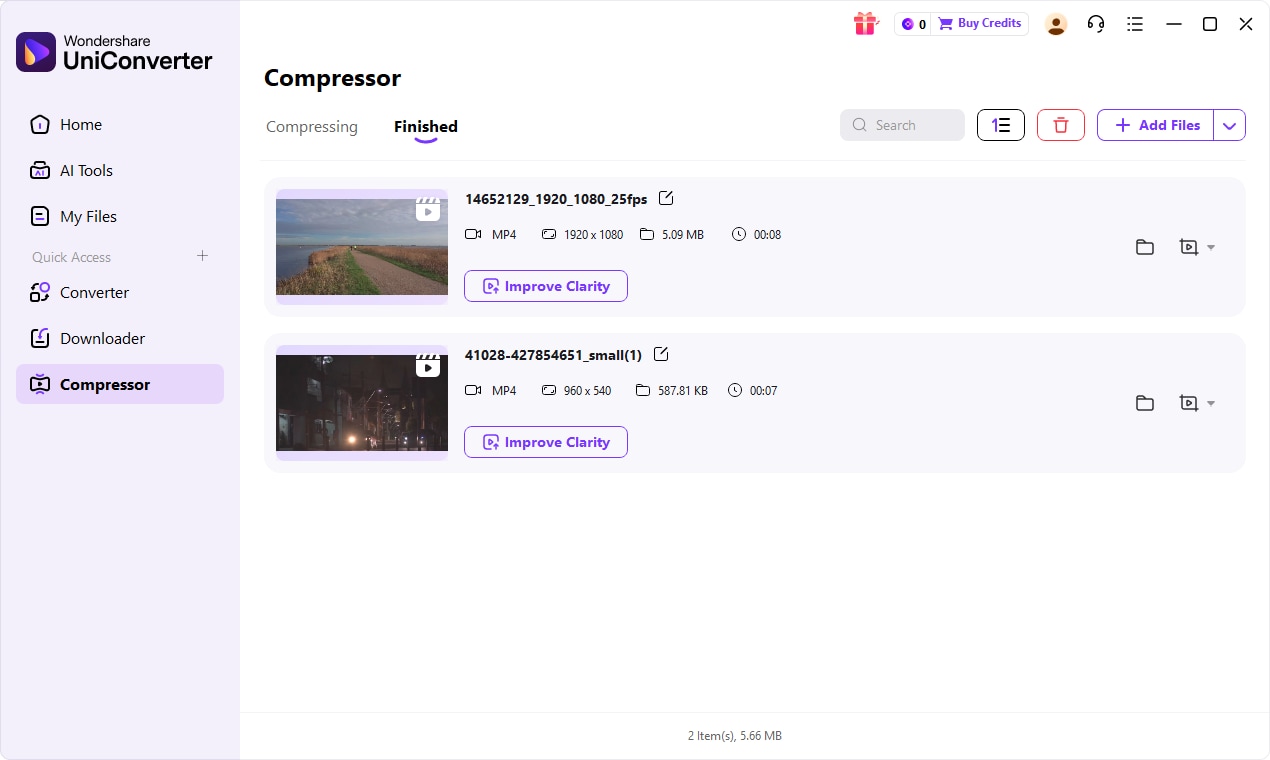
Step 4: Save the Compressed File
Once satisfied with the settings, click the "Compress" button. Your optimized files will be saved to the specified output folder.

Looking for an Optimizilla Alternative?
Part 7: Conclusion
After thoroughly exploring Optimizilla Image Compressor review and comparing it with its peers, my conclusion is that it remains a highly valuable tool for specific user groups. For casual users, bloggers, and small businesses who prioritize speed, ease of use, and free access for basic web optimization, Optimizilla is an excellent choice. It effectively reduces file sizes for JPEG and PNG images with a straightforward interface, making it ideal for quick tasks where minor quality compromises are acceptable. However, for professionals, developers, or anyone working with high-fidelity images, the limitations in advanced customization, potential for quality degradation, and lack of offline capability become significant drawbacks. In these scenarios, I strongly recommend considering alternatives like UniConverter or desktop software such as ImageOptim, which offer greater control, broader format support, and often superior compression algorithms without compromising visual integrity. Ultimately, the decision hinges on balancing file size reduction with visual fidelity and understanding when the convenience of an online tool outweighs the need for precise control and advanced features.
Part 8: FAQs
-
1. Is Optimizilla completely free to use?
Yes, Optimizilla is a free online tool, supported by ads.
-
2. Does Optimizilla store my uploaded images?
Optimizilla states that uploaded images are deleted after a short period, but users should always be mindful of privacy with any online tools. For sensitive data, consider offline alternatives like UniConverter.
-
3. Can Optimizilla compress images without losing quality?
Optimizilla uses lossy compression, meaning there will always be some quality loss, though often imperceptible to the human eye. For truly lossless compression, you'd need a different type of tool or a different compression algorithm.
-
4. What's the maximum file size Optimizilla can handle?
While there isn't a strict stated limit, very large files might take longer to process or encounter issues. For consistently large files or batch processing, a dedicated desktop application like UniConverter often performs better.
-
5. How does Optimizilla compare to desktop image compressors?
Optimizilla offers convenience for quick tasks, while desktop compressors like UniConverter or ImageOptim provide more advanced features, offline capability, and often better control over compression algorithms, making them suitable for professional use where quality and control are paramount.
