
- OpenShot Overview: Free, open-source tool for basic video compression, often bundled with OpenShot Video Editor.
- Core Features: Adjust resolution, control bitrate, convert formats, and use basic quality presets with a simple interface.
- Pros & Cons: User-friendly and free, but lacks advanced features and can have stability issues with large files.
- Ideal Users: Best for casual users needing quick, basic compression; not for professional, high-fidelity editing.
- Competitor Comparison: Simpler than HandBrake/Shutter Encoder, less powerful than paid UniConverter for advanced needs.
- Risks: Aggressive compression can degrade quality, lacks dedicated support, limited batch processing, no cloud integration.
- UniConverter Alternative: Offers stable, high-quality compression, GPU acceleration, batch processing, and extensive features for demanding users.
- Decision Point: Choose OpenShot for simple, free tasks; opt for UniConverter for professional quality, speed, and advanced features.
In this article
- Part 1: What is OpenShot Video Compressor?
- Part 2: OpenShot Video Compressor: Core Features, Pros, and Cons
- Part 3: OpenShot Video Compressor: Ideal Users and Use Cases
- Part 4: OpenShot Video Compressor vs. Competitors
- Part 5: Risks and Pitfalls to Consider
- Part 6: How to Use UniConverter to Compress Efficient Audio and Video
- Part 7: Conclusion
- Part 8: FAQs
OpenShot Video Compressor: A Comprehensive Review and Comparison
Welcome to my in-depth OpenShot Video Compressor review and comparison! I've spent countless hours wrestling with video files, trying to balance quality with manageable sizes, and I know the pain points you face. This article aims to cut through the noise, offering a candid look at OpenShot Video Compressor's capabilities, its strengths, and its weaknesses when stacked against its rivals. Whether you're a casual user looking to free up some disk space or a content creator striving for efficient workflows, I'll guide you through the landscape of video compression tools, helping you make an informed decision. By the end of this review, you'll have a clear understanding of where OpenShot stands and which alternative might be your perfect match.
Part 1: What is OpenShot Video Compressor?
OpenShot Video Compressor is a free, open-source utility designed to reduce the file size of your video clips. It's often bundled with or associated with the popular OpenShot Video Editor, sharing its commitment to accessibility and ease of use. My experience with it has shown it to be a straightforward tool for basic compression needs, allowing me to quickly shrink videos without diving into complex settings. This review will address the core question: Is OpenShot Video Compressor a viable solution for your video compression needs, especially when considering its free nature against more robust, often paid, alternatives?
The Growing Need for Efficient Video Compression
* Explosion of High-Resolution Content: With 4K and even 8K video becoming commonplace, file sizes are ballooning, making storage and sharing a nightmare.
* Bandwidth Limitations: Uploading and downloading large video files can be slow and consume significant data, impacting both creators and viewers.
* Device Storage Constraints: Mobile devices and even many laptops have limited storage, making efficient video compression essential for managing media libraries.
* Faster Web Performance: Smaller video files load quicker on websites and social media, improving user experience and SEO.
Part 2: OpenShot Video Compressor: Core Features, Pros, and Cons
OpenShot Video Compressor, in my hands-on experience, focuses on simplifying the compression process. Its core capability revolves around converting video files to smaller sizes by adjusting parameters like resolution, bitrate, and format. I've found it supports a decent array of common video formats for both input and output, making it versatile enough for most everyday tasks. The interface is intuitive, meaning I don't have to spend time learning complex menus just to get a video compressed.
Core Features:
* Resolution Adjustment: I can easily scale down video dimensions to reduce file size.
* Bitrate Control: It allows me to set the video and audio bitrates, directly impacting file size and quality.
* Format Conversion: I can convert videos between popular formats like MP4, MOV, AVI, and WebM.
* Basic Quality Presets: It offers predefined quality settings for quick compression.
* Simple User Interface: The design is clean and easy to navigate for beginners.
Pros:
* User-friendly interface for quick compression tasks: I appreciate how quickly I can get a video compressed without a steep learning curve.
* Open-source and completely free to use: This is a huge advantage for anyone on a budget.
* Decent range of output formats and quality settings: It covers most of my basic compression needs.
Cons:
* Limited advanced compression algorithms compared to paid alternatives: I've noticed it lacks some of the more sophisticated options for maximizing quality at smaller sizes.
* Occasional stability issues and slower processing on larger files: For bigger projects, I've sometimes encountered crashes or noticeably longer compression times.
Part 3: OpenShot Video Compressor: Ideal Users and Use Cases
From my perspective, OpenShot Video Compressor shines for specific user profiles and scenarios. It's not a one-size-fits-all solution, but for its intended audience, it performs admirably. I've found it particularly useful when I just need to quickly reduce a video's size without much fuss or concern for highly nuanced quality preservation.
Best Use Case: Casual Users Needing Quick, Basic Compression
If you're like me and just need to compress a family video to share with relatives, or shrink a short clip for an email attachment, OpenShot Video Compressor is perfect. I use it when I need to free up space on my phone or quickly upload a video to social media where extreme quality isn't the top priority. Its simplicity means I don't get bogged down in technical jargon, and the free price tag is unbeatable for these casual tasks.
Limited Use Case: Professional Editors Requiring High-Fidelity, Batch Processing
However, I wouldn't recommend OpenShot Video Compressor for professional video editors or content creators who deal with large volumes of high-resolution footage. When I'm working on client projects or need to compress multiple 4K videos while maintaining pristine quality, OpenShot falls short. It lacks advanced features like detailed codec control, sophisticated batch processing capabilities, and the robust stability required for demanding workflows. For these scenarios, I find myself needing a more powerful, feature-rich tool.
Part 4: OpenShot Video Compressor vs. Competitors
When I look at the video compression landscape, OpenShot Video Compressor holds its own in terms of accessibility, but it's important to see how it stacks up against other popular tools. Here's my comparison of OpenShot against some key competitors:
| Feature/Software | OpenShot Video Compressor | HandBrake | Shutter Encoder | UniConverter |
| Ease of Use | High | Medium | Medium | High |
| Compression Quality | Good | Excellent | Excellent | Excellent |
| Batch Processing | Limited | Good | Excellent | Excellent |
| Advanced Settings | Basic | Advanced | Advanced | Advanced |
| Price | Free | Free | Free | Paid (Free Trial) |
Key Differentiators: Simplicity vs. Advanced Control
From my experience, OpenShot Video Compressor's main strength is its simplicity. If I just need to quickly shrink a single video without thinking too much, it's my go-to. HandBrake and Shutter Encoder, while also free, offer significantly more advanced control over codecs, bitrates, and filters, which I appreciate when I need fine-tuned results. UniConverter, despite being a paid option, stands out for its excellent balance of ease of use and powerful features, including robust batch processing and high-quality output, making it a strong contender for more demanding users.
Part 5: Risks and Pitfalls to Consider
While OpenShot Video Compressor offers a free and easy way to shrink videos, I've learned that relying solely on it, especially for important projects, comes with its own set of risks. It's crucial to be aware of these potential pitfalls before committing to it as your primary compression tool.
Potential Loss of Video Quality with Aggressive Compression
One of the biggest concerns I have with any compressor, and OpenShot is no exception, is the trade-off between file size and quality. If I push the compression settings too aggressively in OpenShot, I often notice a significant drop in video quality, including pixelation, artifacting, and a general muddiness. This can be particularly problematic if the video is intended for a large screen or professional presentation. It requires careful balancing, and OpenShot's basic controls sometimes make this balance harder to achieve optimally.
Lack of Dedicated Customer Support
Being an open-source project, OpenShot Video Compressor doesn't offer dedicated customer support. If I run into a bug, a crash, or simply can't figure out a setting, I'm left to scour forums or community boards for answers. This can be frustrating and time-consuming, especially when I'm on a deadline. For paid alternatives, I usually have access to a support team, which can be a lifesaver.
Limited Features for Batch Processing Large Volumes
When I have a large number of videos to compress, OpenShot's limitations become very apparent. Its batch processing capabilities are quite basic, and I've found it can be slow and sometimes unstable when trying to process many files at once. This means I often have to supervise the process or even compress files one by one, which is incredibly inefficient for large workflows.
Absence of Cloud Integration for Collaborative Work
In today's collaborative work environments, cloud integration is increasingly important. OpenShot Video Compressor is a desktop-only application, meaning it doesn't offer any direct integration with cloud storage services or collaborative platforms. If I need to compress a video and immediately share it with a team or upload it to a cloud project, I have to manually handle the file transfers, adding extra steps to my workflow.
Part 6: How to Use UniConverter to Compress Efficient Audio and Video
When I've encountered situations where OpenShot's limitations become a bottleneck – like unstable compression, significant quality loss, or the inability to handle batch processing efficiently – I often turn to UniConverter. It's a robust solution that avoids many of these issues, offering a more reliable and high-quality compression experience. UniConverter provides a comprehensive suite of tools, including a powerful compressor that supports a vast array of formats, leverages GPU acceleration for speed, ensures near-lossless compression, and handles batch processing flawlessly, all without intrusive ads. It's my go-to for an all-in-one media solution.
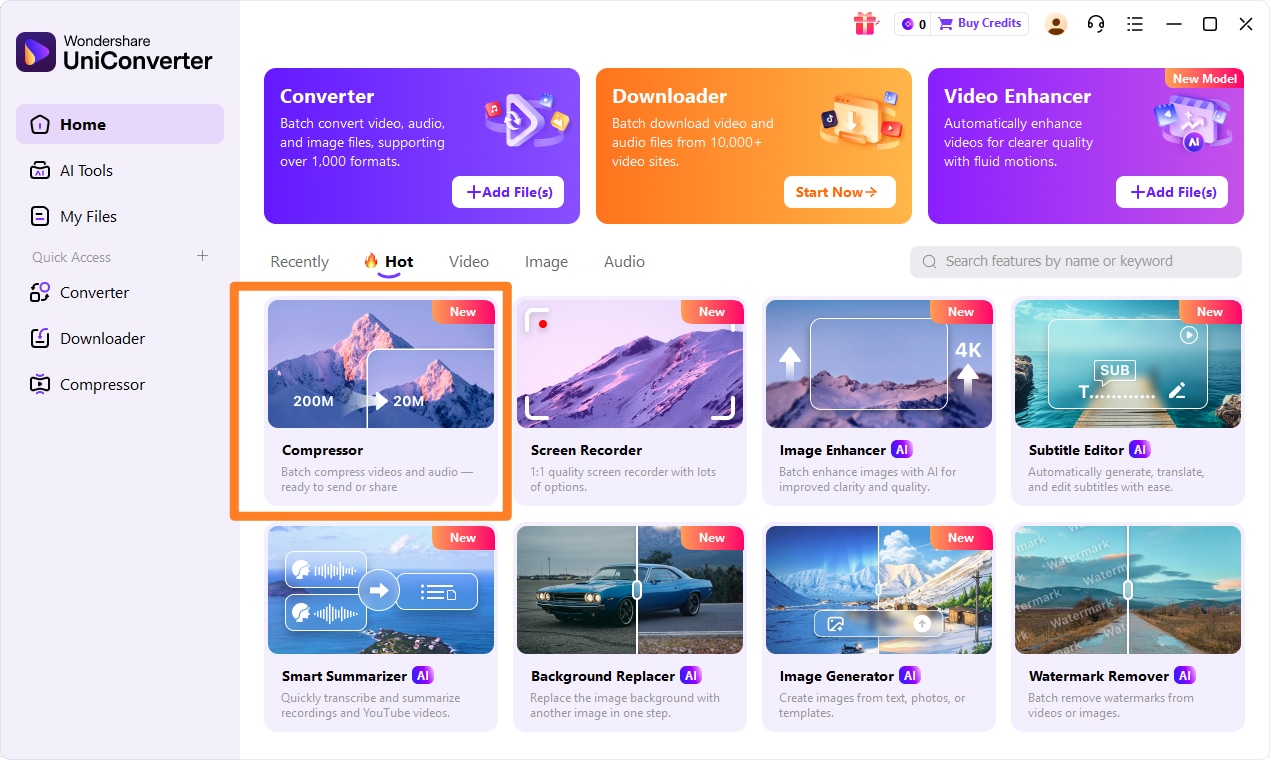
Step 1: Open UniConverter and Choose Compressor
First, I launch UniConverter and navigate to the "Compressor" tool from the main interface.
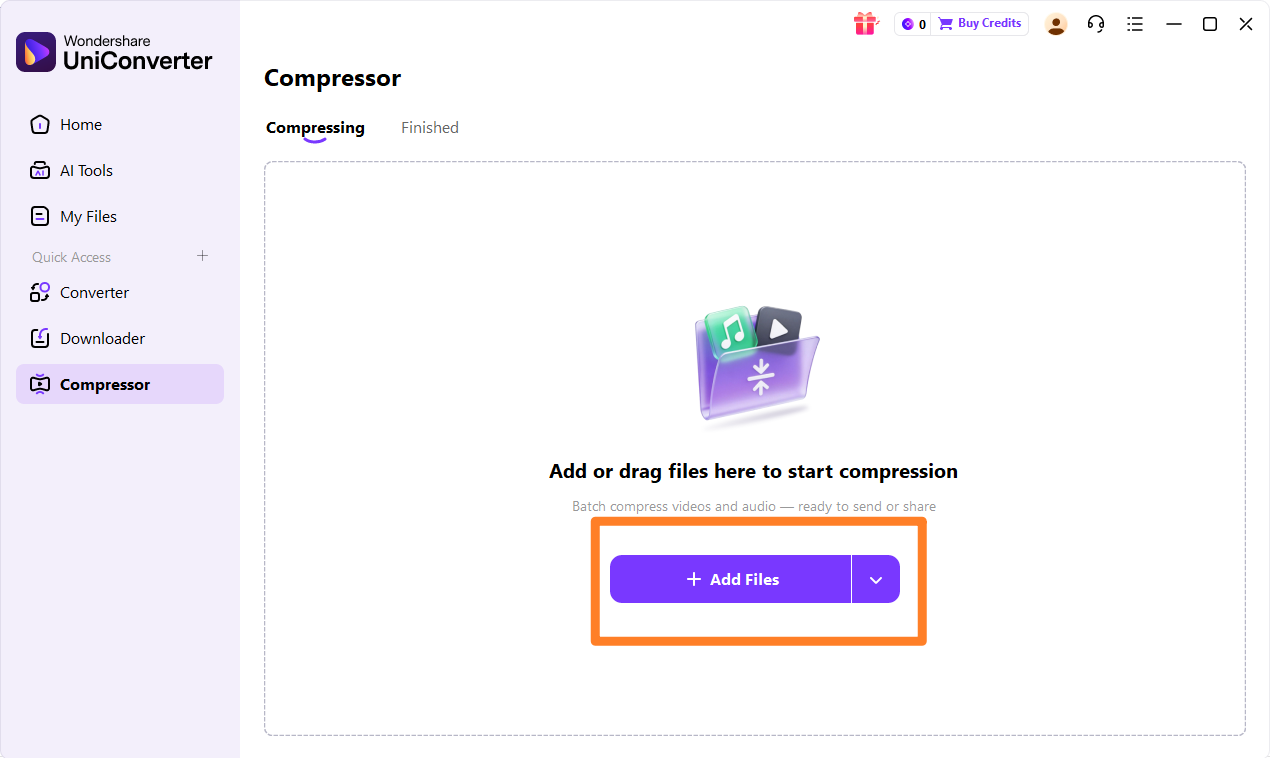
Step 2: Upload the Video, Audios or Images
Next, I drag and drop my video, audio, or image files into the UniConverter window.
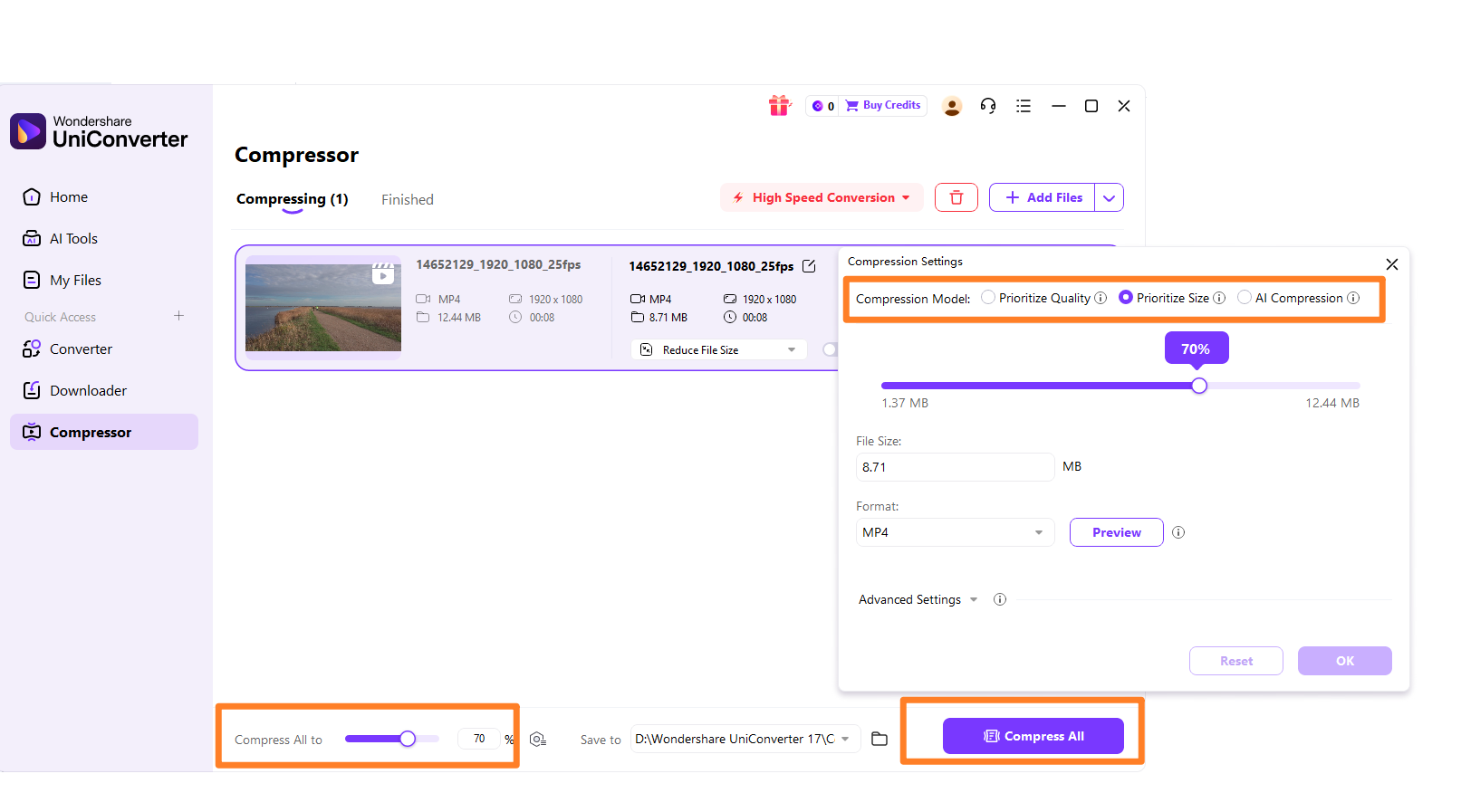
Step 3: Choose Required Parameters
Then, I select my desired output format, resolution, bitrate, and quality settings. I can preview the estimated file size before compressing.
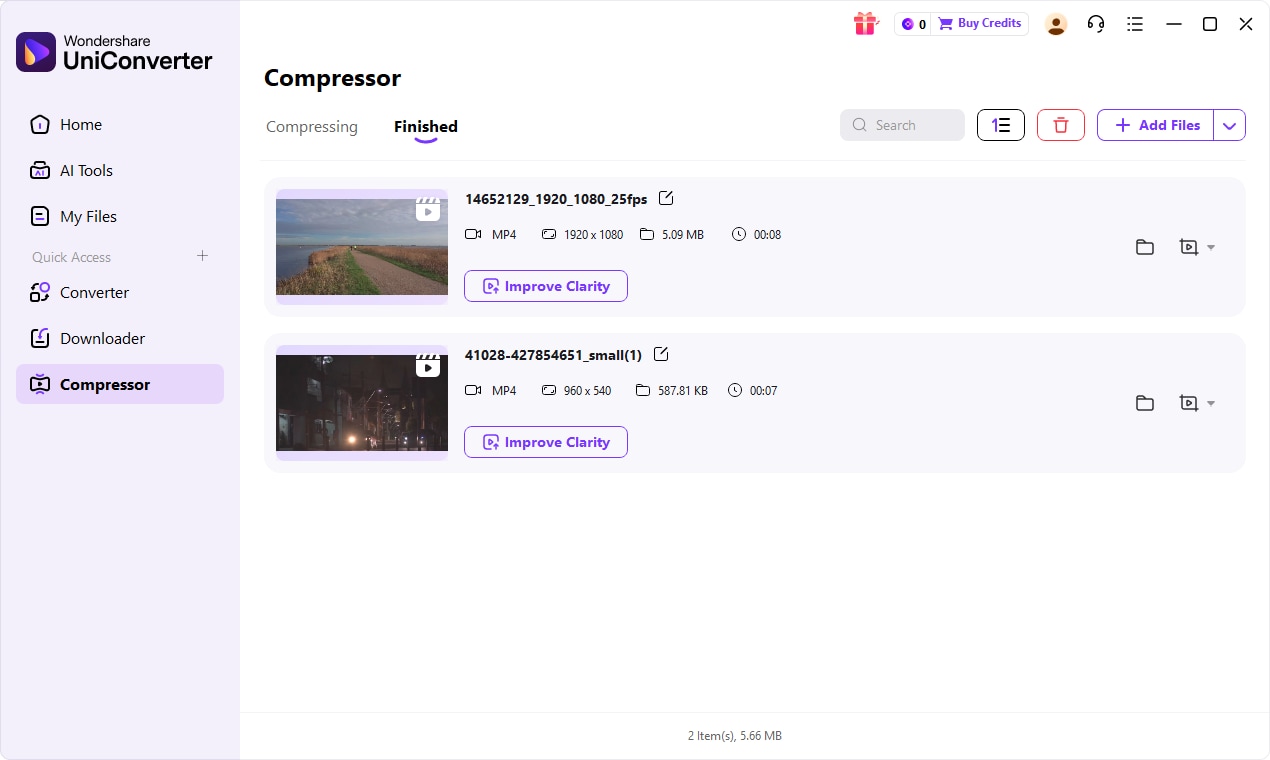
Step 4: Save the Compressed File
Finally, I click the "Compress" button, and UniConverter quickly processes my files, saving them to my chosen destination.

Seeking an OpenShot Video Compressor Alternative?
Part 7: Conclusion
After thoroughly exploring OpenShot Video Compressor review and comparing it with its alternatives, my conclusion is clear: for budget-conscious users or those with basic, infrequent compression needs, OpenShot is a solid, free choice. Its user-friendly interface and zero cost make it highly accessible for quick tasks like shrinking a video for email or social media. However, for professionals, content creators, or anyone requiring high-fidelity compression, robust batch processing, and advanced controls, investing in a feature-rich alternative like UniConverter is undoubtedly the smarter move. The key is to balance quality and file size according to your specific requirements, remembering that aggressive compression can lead to irreversible quality loss. Future-proofing your workflow by choosing a scalable solution that can handle growing demands is also a critical consideration for long-term efficiency.
Part 8: FAQs
-
1. Is OpenShot Video Compressor truly free to use?
Yes, OpenShot Video Compressor is completely free and open-source. You can download and use it without any cost or hidden fees.
-
2. Can OpenShot Video Compressor handle 4K video compression?
While OpenShot Video Compressor can technically process 4K videos, its performance and quality retention for such large files might be limited compared to more advanced tools. I've found that for optimal 4K compression, a more robust solution like UniConverter provides better results.
-
3. What are the main differences between OpenShot Video Compressor and HandBrake?
The main differences lie in complexity and features. OpenShot is simpler and more user-friendly for basic tasks. HandBrake, while also free, offers much more advanced control over codecs, filters, and settings, making it suitable for users who need fine-tuned compression but comes with a steeper learning curve.
-
4. Does OpenShot Video Compressor offer batch compression?
OpenShot Video Compressor has limited batch processing capabilities. While you can queue multiple files, I've found it can be slow and less stable when processing a large number of videos simultaneously compared to dedicated batch compressors.
-
5. How can I ensure the best quality when compressing videos?
To ensure the best quality, avoid overly aggressive compression settings. Experiment with different bitrates and resolutions, opting for higher bitrates and resolutions when quality is paramount. For critical projects, I often use a tool like UniConverter, which offers advanced algorithms to minimize quality loss during compression.
