
- Value: Online optimizers offer convenience and speed for quick, casual image compression needs.
- Comparison: Desktop software like UniConverter provides superior control, batch processing, and privacy over online tools.
- Decision: Choose online tools for quick, non-sensitive tasks; opt for desktop software for professional, high-volume, or private projects.
- Value: UniConverter ensures professional-grade compression, extensive format support, and data privacy for comprehensive image management.
- Comparison: Free online tools often have limitations in quality, batch processing, and privacy compared to dedicated software.
- Decision: Prioritize UniConverter for consistent results, advanced features, and an ad-free experience, especially for critical work.
In this article
- Part 1: Understanding Online Image Optimization
- Part 2: Online Image Optimizer & Image Compressor: Core Features, Pros & Cons
- Part 3: Who Benefits Most? Use Cases & Limitations
- Part 4: Online Image Optimizer & Image Compressor vs. Competitors
- Part 5: Risks and Pitfalls to Avoid
- Part 6: UniConverter: Your Best Alternative for Comprehensive Image Management
- Part 7: Final Verdict and Recommendations
- Part 8: FAQs
This Online Image Optimizer Image Compressor review will dive deep into the world of image compression tools, exploring both web-based solutions and their desktop counterparts. As a seasoned product reviewer, I understand the critical role optimized images play in today's digital landscape, from enhancing website performance to streamlining workflows for content creators and professionals alike. This comprehensive comparison will help you navigate the myriad of options available, highlighting core features, pros, cons, and crucial use cases. My goal is to provide you with the insights needed to make an informed decision, ensuring your images are perfectly optimized for any scenario.
Part 1: Understanding Online Image Optimization
Online image optimizers and compressors are web-based tools designed to reduce the file size of digital images without significantly compromising their visual quality. They achieve this by employing various compression algorithms, such as lossy and lossless methods, to remove redundant data or subtly reduce image detail. The primary goal is to make images load faster on websites, consume less storage space, and be more efficient for sharing and distribution. This review aims to clarify which tools excel in different scenarios and what trade-offs you might encounter.
The Growing Need for Efficient Image Compression
The demand for efficient image compression has never been higher, driven by several key factors:
* Website Performance: Large image files are a major culprit behind slow website loading times, directly impacting user experience and search engine rankings.
* Mobile-First Indexing: With the majority of internet traffic now coming from mobile devices, optimized images are crucial for fast loading on varying network conditions.
* Storage and Bandwidth Costs: Reducing image file sizes translates to lower storage costs for businesses and less bandwidth consumption for users.
* Social Media and Sharing: Optimized images upload faster and display more efficiently across social media platforms and messaging apps.
Part 2: Online Image Optimizer & Image Compressor: Core Features, Pros & Cons
When I evaluate online image optimizers and compressors, I look for a blend of functionality and user experience. These tools typically offer a range of core capabilities that cater to different needs.
Core Features:
* Lossy and Lossless Compression: Most tools provide options for both, allowing you to choose between maximum file size reduction (lossy) and preserving original quality (lossless).
* Format Support: Essential tools handle common formats like JPEG, PNG, and GIF, with advanced ones supporting WebP, SVG, and even TIFF.
* Batch Processing: The ability to upload and compress multiple images simultaneously is a significant time-saver.
* Quality Control: Many offer sliders or presets to adjust the compression level, giving you control over the quality-to-size ratio.
* Preview Functionality: Seeing a side-by-side comparison of the original and optimized image is crucial for assessing quality.
Pros:
- Accessibility and Convenience: As browser-based tools, I find them incredibly convenient. There's no software to install, and I can access them from any device with an internet connection. This makes quick optimizations on the go incredibly easy.
- Cost-Effectiveness: Many of these services offer generous free tiers, which is perfect for my personal projects or occasional use. Some are entirely free, making them a budget-friendly option.
- Speed and Efficiency: For individual images or small batches, I've found online optimizers to be remarkably fast. They quickly process files, allowing me to get optimized images almost instantly.
Cons:
- Dependence on Internet Connection: This is a major drawback for me. If I'm offline or have a slow connection, these tools are unusable. This limits their utility in certain work environments.
- Potential for Data Privacy Concerns: Uploading my images to third-party servers always raises a flag for me, especially with sensitive content. I always make sure to read their privacy policies carefully before using them.
Part 3: Who Benefits Most? Use Cases & Limitations
I've found that online image optimizers and compressors serve a specific niche of users, while falling short for others. Understanding these use cases helps me decide when to reach for an online tool versus a desktop application.
Best Use Case: Quick Optimization for Web Content Creators
- Scenario: As a blogger, I constantly need to optimize images for my new blog posts. My primary goal is to improve page load speed without sacrificing the visual quality that engages my readers. An online image optimizer is perfect for this. I can quickly upload a few images, choose a balanced compression setting, and download the optimized versions in minutes. It's fast, efficient, and doesn't require me to install any software, which is ideal for my workflow.
Limited Use Case: High-Volume, Professional Image Processing
- Scenario: When I'm working on a professional photography project, I often need to compress hundreds of high-resolution RAW images for client delivery. In this situation, an online tool simply won't cut it. I require precise control over compression settings, the ability to process large batches without file size limitations, and the assurance of data privacy for my client's valuable assets. Online tools typically have file size caps, limited batch processing, and I'm hesitant to upload such a large volume of sensitive, high-quality images to a third-party server. For this, I always turn to dedicated desktop software.
Part 4: Online Image Optimizer & Image Compressor vs. Competitors
When I compare online image optimizers and compressors, I look at how they stack up against other popular tools in the market. This table provides a quick overview, followed by my analysis.
| Feature/Tool | Online Image Optimizer & Image Compressor | TinyPNG | Compressor.io | UniConverter |
| Ease of Use | High | High | High | Medium |
| Compression Quality | Good | Excellent | Good | Excellent |
| Batch Processing | Limited | Limited | Basic | Advanced |
| Privacy Features | Varies | Moderate | Moderate | Strong |
| Pricing Model | Freemium | Freemium | Freemium | Subscription |
Key Differentiators:
From my experience, the key differentiators really boil down to a few critical aspects. Online tools like TinyPNG and Compressor.io prioritize accessibility and convenience, making them great for quick, one-off tasks. TinyPNG, in particular, often delivers excellent compression quality for PNGs. However, when I need granular control, advanced batch processing, or robust privacy features, UniConverter stands out. It offers a more comprehensive solution, especially for high-volume tasks where I can't compromise on quality or security. The trade-off is often between the immediate convenience of a web tool and the powerful, controlled environment of a desktop application.
Part 5: Risks and Pitfalls to Avoid
While online image optimizers offer undeniable convenience, I've learned that they come with their own set of risks and pitfalls that you need to be aware of.
Data Privacy and Security Concerns
When I upload my images to an online service, I'm essentially entrusting my data to a third party. This always raises questions about how my images are stored, who has access to them, and if they might be used for other purposes. For sensitive or proprietary images, this is a significant concern. Always review the service's privacy policy carefully.
Unwanted Advertisements and Pop-ups
Many free online tools rely on advertising to support their operations. I've often encountered intrusive ads, pop-ups, or even redirects that disrupt my workflow. This can be frustrating and sometimes even lead to accidental clicks on malicious content.
Loss of Image Quality and Detail
While the goal is to reduce file size without significant quality loss, some aggressive compression algorithms, especially in free tools, can lead to noticeable degradation. I've seen images become pixelated, colors shift, or fine details disappear, which is unacceptable for professional use.
File Size Limitations and Upload Caps
Most free online optimizers impose restrictions on the maximum file size or the number of images I can upload at once. This can be a major bottleneck if I have a large project or high-resolution images, forcing me to either upgrade to a paid plan or find an alternative.
Dependence on Server Uptime and Performance
Since these tools are web-based, their performance is entirely dependent on the server's uptime and my internet connection. I've experienced slow processing times, failed uploads, or even complete unavailability of a service, which can be incredibly disruptive to my work.
Part 6: UniConverter: Your Best Alternative for Comprehensive Image Management
For anyone who needs more than a basic optimizer, UniConverter is a strong all-in-one alternative. It handles audio compression, video compression, and image compression in one streamlined workflow, which makes it far more practical than many online-only tools. What stands out most is the ad-free experience, wide format support, and GPU acceleration that helps speed up processing without adding unnecessary complexity. For video projects, it can also help compress videos without quality loss as much as possible, making it a reliable choice for anyone who wants professional-looking results while keeping file sizes under control.
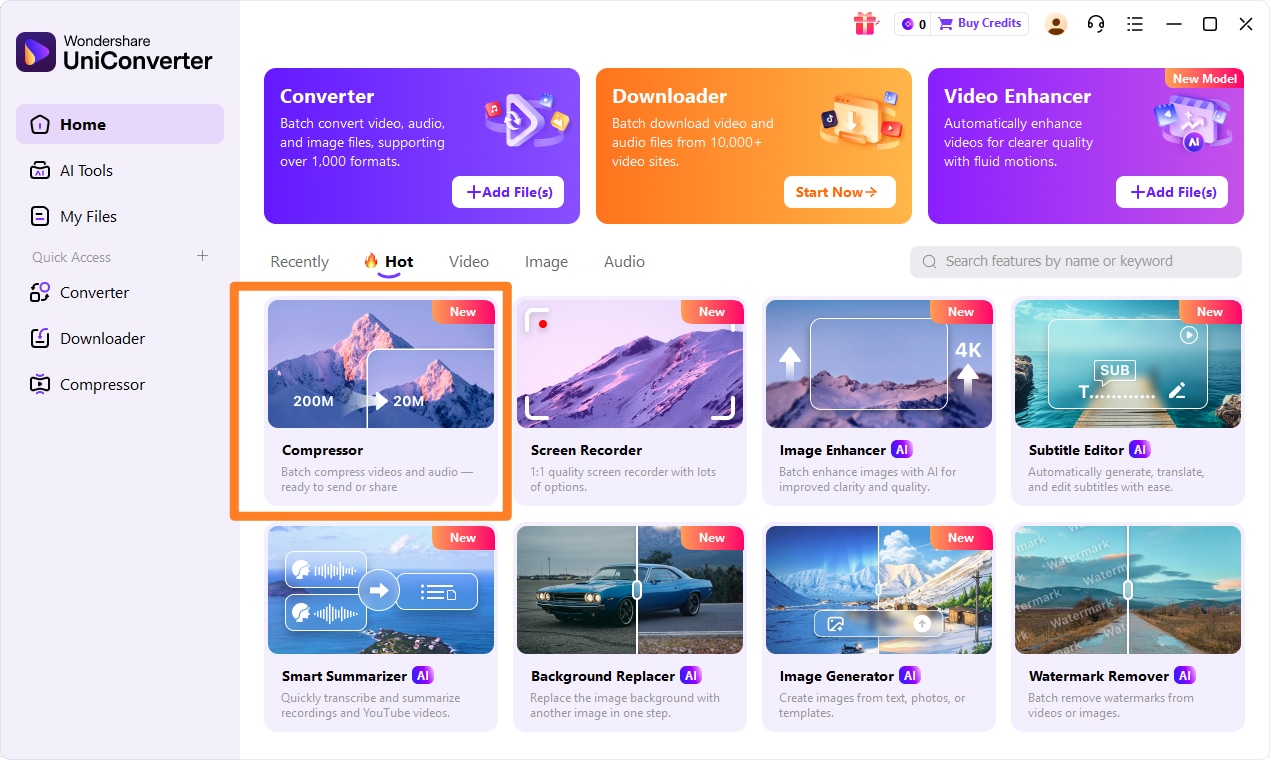
Step 1: Open UniConverter and Choose Compressor
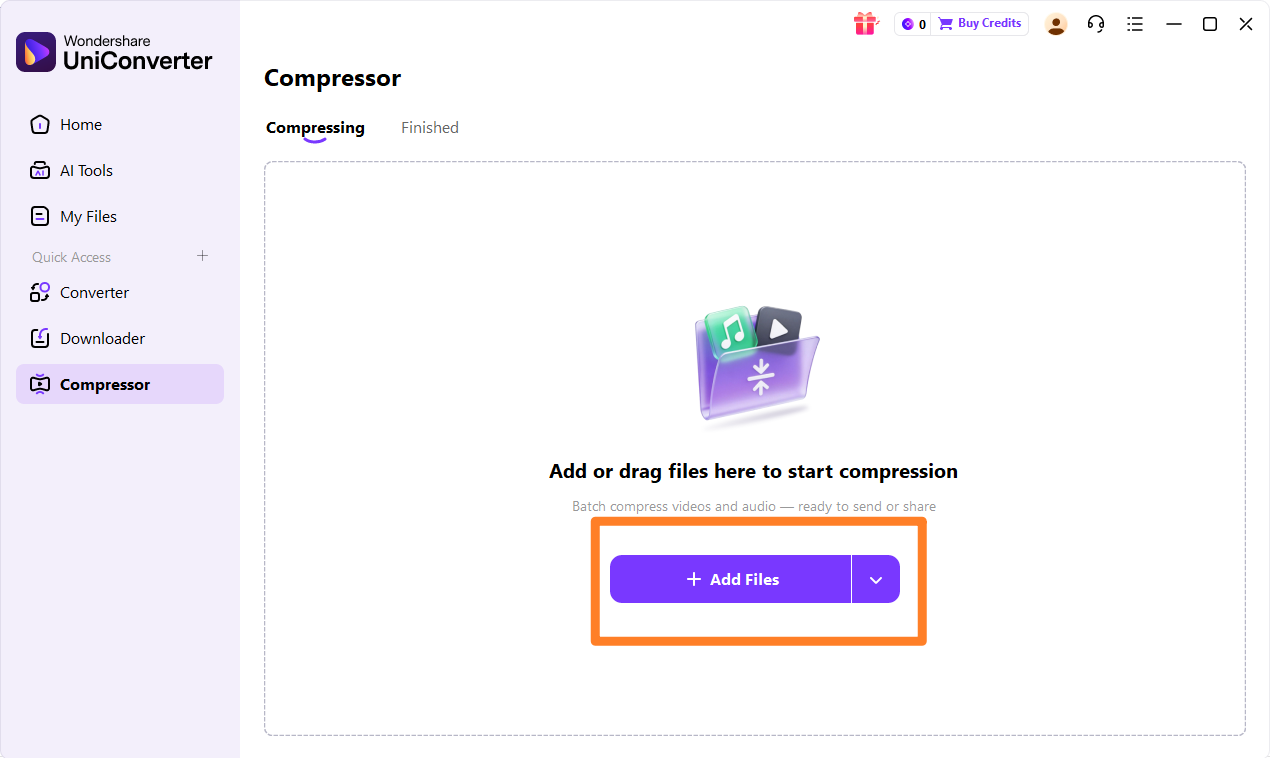
Step 2: Upload the Video, Audios or Images
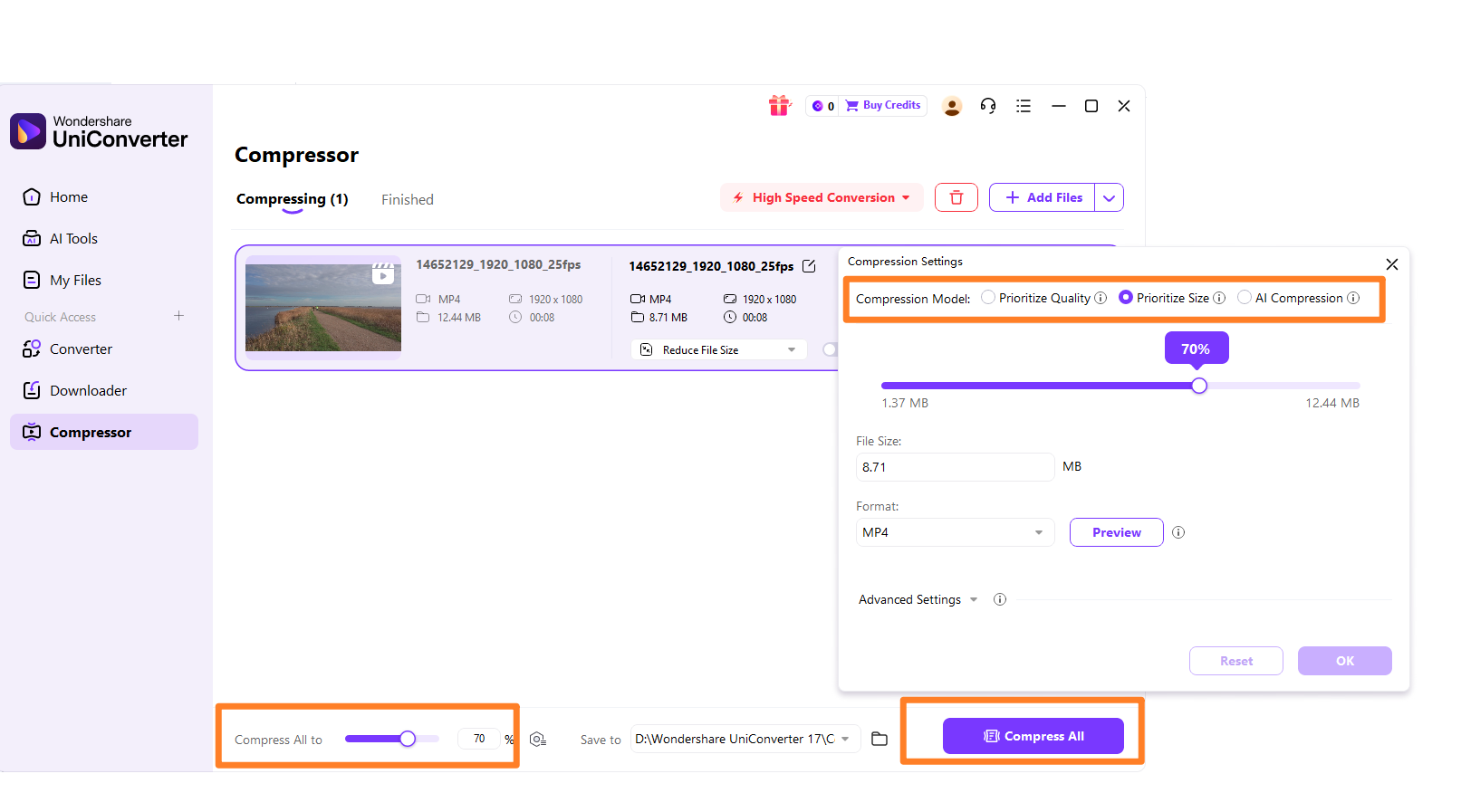
Step 3: Choose Required Parameters
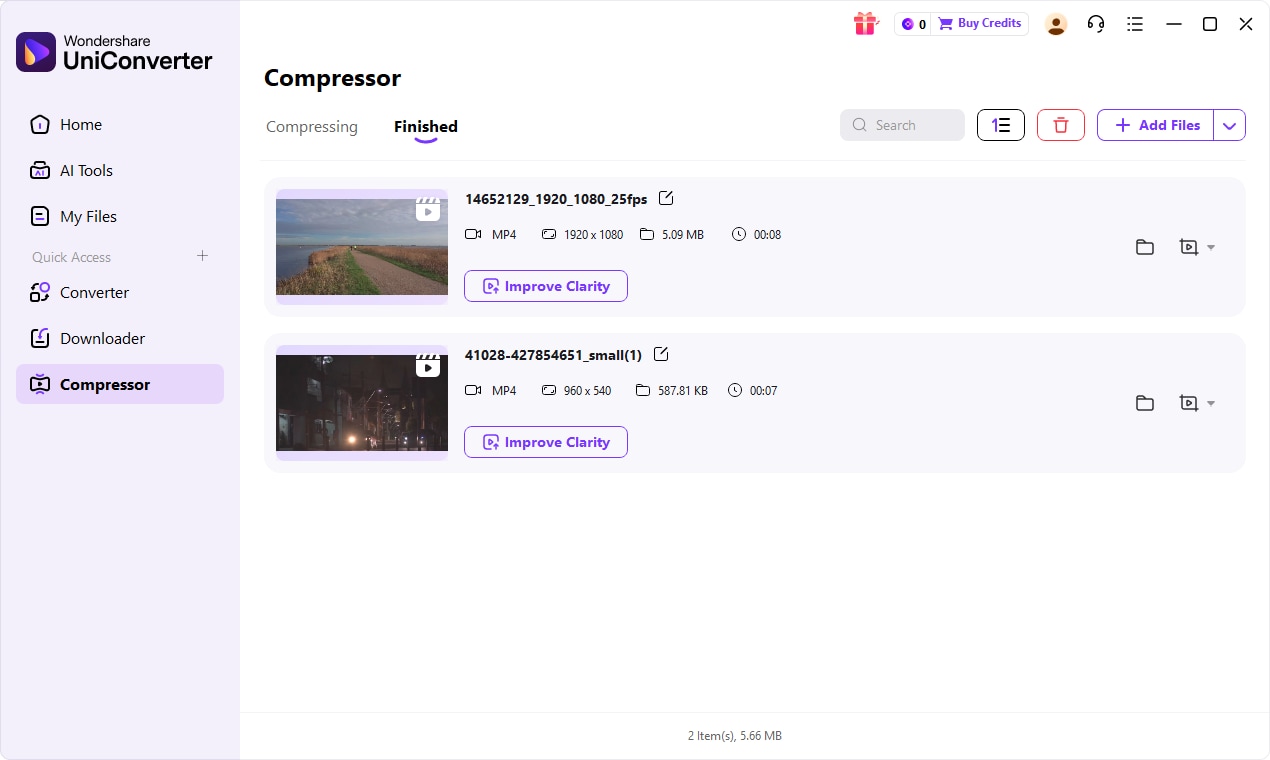
Step 4: Save the Compressed File

Need a Better Online Image Optimizer Alternative?
Part 7: Final Verdict and Recommendations
After extensively reviewing various Online Image Optimizer Image Compressor tools, my final verdict is that the best choice truly depends on your specific needs and priorities. For casual users and bloggers, prioritizing ease of use and speed, a free online tool like TinyPNG or Compressor.io will likely suffice for quick optimizations. They offer convenience without the need for software installation. For web developers and small businesses, balancing quality and performance is key; you might consider the paid tiers of online services or explore desktop alternatives that offer more control and better batch processing. Professional photographers and designers, who require precise control, advanced batch processing, and robust privacy features, will find dedicated desktop software like UniConverter to be an indispensable tool, despite the initial investment. Finally, for privacy-conscious users, I strongly recommend offline solutions to ensure your sensitive images are processed locally without being uploaded to third-party servers.
Part 8: FAQs
-
1. What is the main difference between an online image optimizer and a desktop image compressor?
Online tools are web-based, convenient, and often free, but may have limitations on file size, batch processing, and privacy. Desktop software offers more control, advanced features, and offline functionality, making it ideal for professional or high-volume use.
-
2. How much image quality will I lose when compressing images online?
The amount of quality loss depends on the compression algorithm and settings used. Most good online optimizers offer a balance between file size reduction and visual quality, often with adjustable settings. For critical projects, consider using a tool like UniConverter that provides more control over quality.
-
3. Are online image compressors safe for my private photos?
It depends on the service. Always read the privacy policy. For highly sensitive images, it's generally safer to use offline software that processes files locally on your computer, minimizing privacy risks.
-
4. Can I compress multiple images at once using online tools?
Many online tools offer some form of batch processing, but the number of images or total file size might be limited in free versions. For extensive batch processing without limitations, a desktop application like UniConverter is a more reliable choice.
-
5. What image formats can be optimized by these tools?
Most online image optimizers support common formats like JPEG, PNG, and GIF. Some advanced tools may also support WebP, SVG, and even TIFF, catering to a broader range of needs.
