
- Ocenaudio Overview: Free, cross-platform audio editor for basic manipulation and compression.
- Core Features: Integrated compressor, real-time preview, adjustable parameters, cross-platform support.
- Pros: Intuitive interface, instant feedback, broad OS compatibility for quick edits.
- Cons: Limited advanced algorithms, no batch processing for multiple files.
- Ideal Users: Casual users, students, or anyone needing quick audio file size reduction for sharing.
- Use Cases: Perfect for sending voice memos or short audio clips; unsuitable for professional mastering.
- Comparison: Simpler than Audacity, less professional than Adobe Audition, less comprehensive than UniConverter.
- Risks: Potential for over-compression, quality loss, and limited support for niche formats.
- UniConverter Solution: Offers efficient, stable, high-quality audio compression with batch processing.
- Decision: Choose Ocenaudio for simplicity; UniConverter for advanced needs and efficiency.
In this article
- Part 1: What is Ocenaudio
- Part 2: Ocenaudio Audio Compressor: Core Features, Pros, and Cons
- Part 3: Ocenaudio: Ideal Users and Use Cases
- Part 4: Ocenaudio and Alternatives: A Comparative Analysis
- Part 5: Risks and Pitfalls to Consider
- Part 6: How to Use UniConverter for Efficient Audio Compression
- Part 7: Conclusion
- Part 8: FAQs
When I'm looking to optimize my audio files, whether for sharing, archiving, or simply saving space, Ocenaudio Audio Compressor review often comes up in discussions. This tool promises a straightforward approach to audio compression, a task that can sometimes feel overly complex with other software. My goal with this Ocenaudio Audio Compressor review is to cut through the noise and provide you with a clear, scenario-based comparison. I'll delve into its core features, weigh its pros and cons, and pit it against its competitors like Audacity, Adobe Audition, and UniConverter. By the end, you'll have a solid understanding of where Ocenaudio stands in the crowded audio editing landscape and whether it's the right fit for your specific needs.
Part 1: What is Ocenaudio
Ocenaudio is a free, cross-platform audio editor that positions itself as an easy-to-use solution for basic audio manipulation, including its integrated audio compressor. It's designed for users who need quick and efficient audio editing without the steep learning curve of professional-grade digital audio workstations (DAWs). My experience suggests it's particularly appealing to those who prioritize simplicity and speed. This review aims to clarify its capabilities, especially its compression features, and help you decide if it aligns with your audio processing requirements.
The Growing Need for Efficient Audio Management
* Large File Sizes: High-quality audio files can quickly consume storage space.
* Sharing Limitations: Big audio files are cumbersome to share via email or messaging apps.
* Optimized Playback: Compressed audio loads faster on websites and streaming platforms.
* Device Compatibility: Smaller files are more manageable for portable devices with limited storage.
Part 2: Ocenaudio Audio Compressor: Core Features, Pros, and Cons
Ocenaudio's audio compressor is integrated directly into its editing suite, making it accessible for immediate use. Its core capability lies in reducing file size by adjusting audio parameters. I've found its real-time preview particularly helpful, allowing me to hear the impact of compression before committing to changes. While it handles common audio formats well, its strength is in its simplicity rather than its advanced algorithmic prowess.
Core Features:
* Integrated Audio Compressor: Easily accessible within the editing interface.
* Real-time Preview: Hear compression effects instantly.
* Adjustable Parameters: Control bitrate, sample rate, and other compression settings.
* Cross-Platform Support: Available on Windows, macOS, and Linux.
* Basic Audio Editing: Includes cut, copy, paste, and effects alongside compression.
Pros:
* Intuitive Interface for Quick Edits: I find it incredibly easy to navigate and perform basic tasks.
* Real-time Preview for Instant Feedback: This feature is a game-changer for fine-tuning compression without guesswork.
* Cross-Platform Compatibility: I can use it seamlessly across all my operating systems.
Cons:
* Limited Advanced Compression Algorithms: For highly specific or nuanced compression, I often find its options lacking.
* Lack of Batch Processing for Multiple Files: Compressing multiple files individually can be a tedious process.
Part 3: Ocenaudio: Ideal Users and Use Cases
Ocenaudio shines for individuals who need a quick and straightforward solution for audio compression without diving into complex settings. If you're a casual user, a student, or someone who occasionally needs to shrink an audio file for sharing, this tool is likely perfect for you. I often recommend it to friends who are new to audio editing because of its low barrier to entry.
Best Use Case: Quick Audio File Size Reduction for Sharing
When I need to send a voice memo, a short podcast segment, or a musical idea to a colleague or friend, Ocenaudio is my go-to. I can quickly import the file, apply a basic compression preset, and export it in a much smaller size, making it easy to attach to emails or upload to messaging apps. The real-time preview ensures I don't over-compress and lose critical quality for casual listening.
Limited Use Case: Professional Audio Mastering and Production
For professional audio mastering, complex sound design, or high-fidelity music production, Ocenaudio falls short. Its compression algorithms are too basic for the nuanced control required in these scenarios. I wouldn't rely on it for critical projects where preserving every detail and dynamic range is paramount, as it lacks the advanced tools and precision offered by dedicated DAWs.
Part 4: Ocenaudio and Alternatives: A Comparative Analysis
When it comes to audio compression and editing, Ocenaudio is just one player in a diverse field. I've often compared it against other popular tools to understand its niche. Here's how it stacks up against some key competitors:
| Feature/Software | Ocenaudio | Audacity | Adobe Audition | UniConverter |
| Primary Function | Audio Editing, Compression | Audio Editing, Recording | Professional Audio Production | Video/Audio Conversion, Compression |
| Ease of Use | High | Medium | Low | High |
| Compression Algorithms | Basic | Basic to Advanced (via plugins) | Advanced | Advanced |
| Batch Processing | No | Yes | Yes | Yes |
| Real-time Preview | Yes | Yes | Yes | Yes |
| Price | Free | Free | Subscription | One-time purchase/Subscription |
Key Differentiators:
Ocenaudio's simplicity for basic compression stands out against Audacity's open-source flexibility, which, while powerful, can feel a bit clunky for quick tasks. Adobe Audition offers professional-grade features that far exceed Ocenaudio's lightweight approach, but at a significant cost and with a much steeper learning curve. UniConverter, on the other hand, provides an all-in-one media solution that includes robust audio compression, often surpassing Ocenaudio's dedicated audio focus in terms of format support and batch processing capabilities.
Part 5: Risks and Pitfalls to Consider
While Ocenaudio is a convenient tool, I've learned that relying solely on it for all audio compression needs comes with its own set of risks and limitations. It's crucial to be aware of these potential pitfalls to avoid unexpected quality issues or workflow bottlenecks.
Potential for Over-Compression and Quality Loss
One of the biggest risks I've encountered is the ease with which you can over-compress audio, especially if you're not familiar with the nuances of audio codecs and bitrates. While the real-time preview helps, it's still possible to inadvertently degrade audio quality to an unacceptable level, particularly for speech or music with subtle dynamics. Always back up your original files!
Limited Support for Niche Audio Formats
Although Ocenaudio handles common formats like MP3, WAV, and OGG, I've found it struggles with more niche or proprietary audio formats. If your workflow involves less common codecs or high-resolution formats like FLAC or DSD, you might find yourself needing an additional converter or a more robust editor. This can interrupt your workflow and add extra steps.
Absence of Advanced Noise Reduction Tools
Unlike more comprehensive audio editors, Ocenaudio lacks sophisticated noise reduction and restoration tools. If your audio files contain hiss, hum, or other unwanted background noise, you'll need to process them in a different application before or after using Ocenaudio for compression. This means it's not an all-in-one solution for problematic audio.
Dependence on External Tools for Complex Tasks
For anything beyond basic editing and compression, I often find myself needing to switch to other software. Tasks like multi-track editing, advanced effects processing, or precise spectral analysis are simply not within Ocenaudio's scope. This fragmentation of my workflow can be inefficient if I'm dealing with complex audio projects.
Part 6: How to Use UniConverter for Efficient Audio Compression
For anyone dealing with missing batch processing, inconsistent compression results, or obvious quality loss, UniConverter is a more dependable option. It delivers a smoother experience for both video compression and audio compression, making it easier to manage large files without the usual frustration. What makes it stand out is its ad-free interface, wide format support, GPU acceleration for faster performance, and the ability to compress videos without quality loss as much as possible. Combined with solid batch processing features, it works well as a practical all-in-one solution for everyday media compression and conversion.
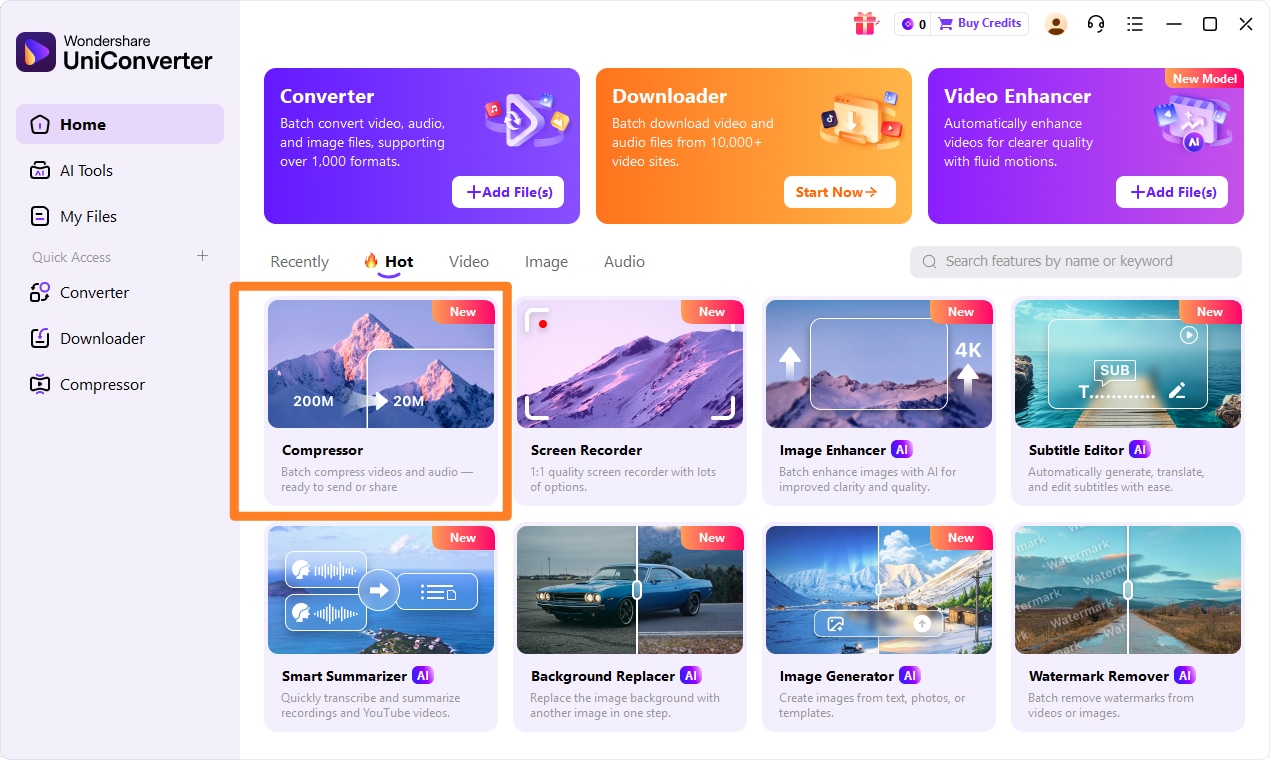
Step 1: Open UniConverter and Choose Compressor
First, I launch UniConverter and navigate to the "Compressor" tab located on the left sidebar. This is the central hub for reducing the size of my media files.
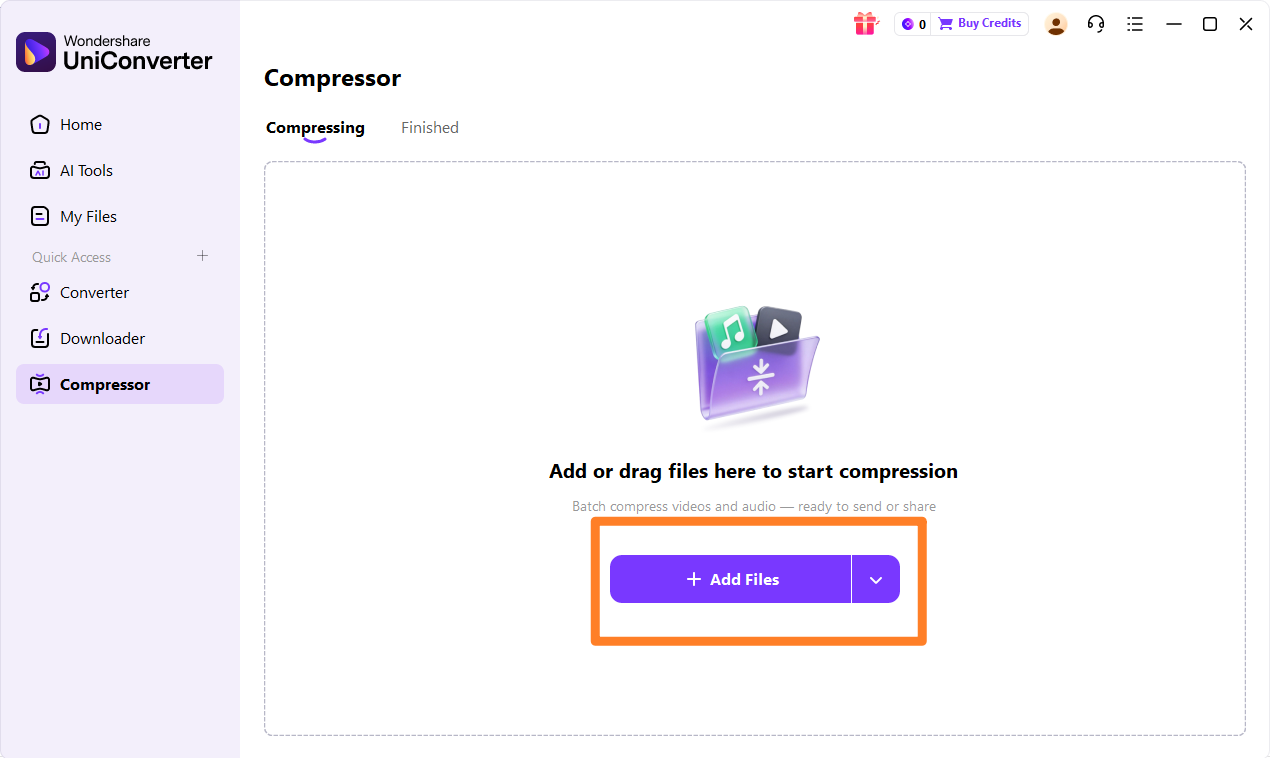
Step 2: Upload the Video, Audios or Images
Next, I simply drag and drop my audio files directly into the UniConverter window. Its extensive support for various formats means I rarely encounter compatibility problems.
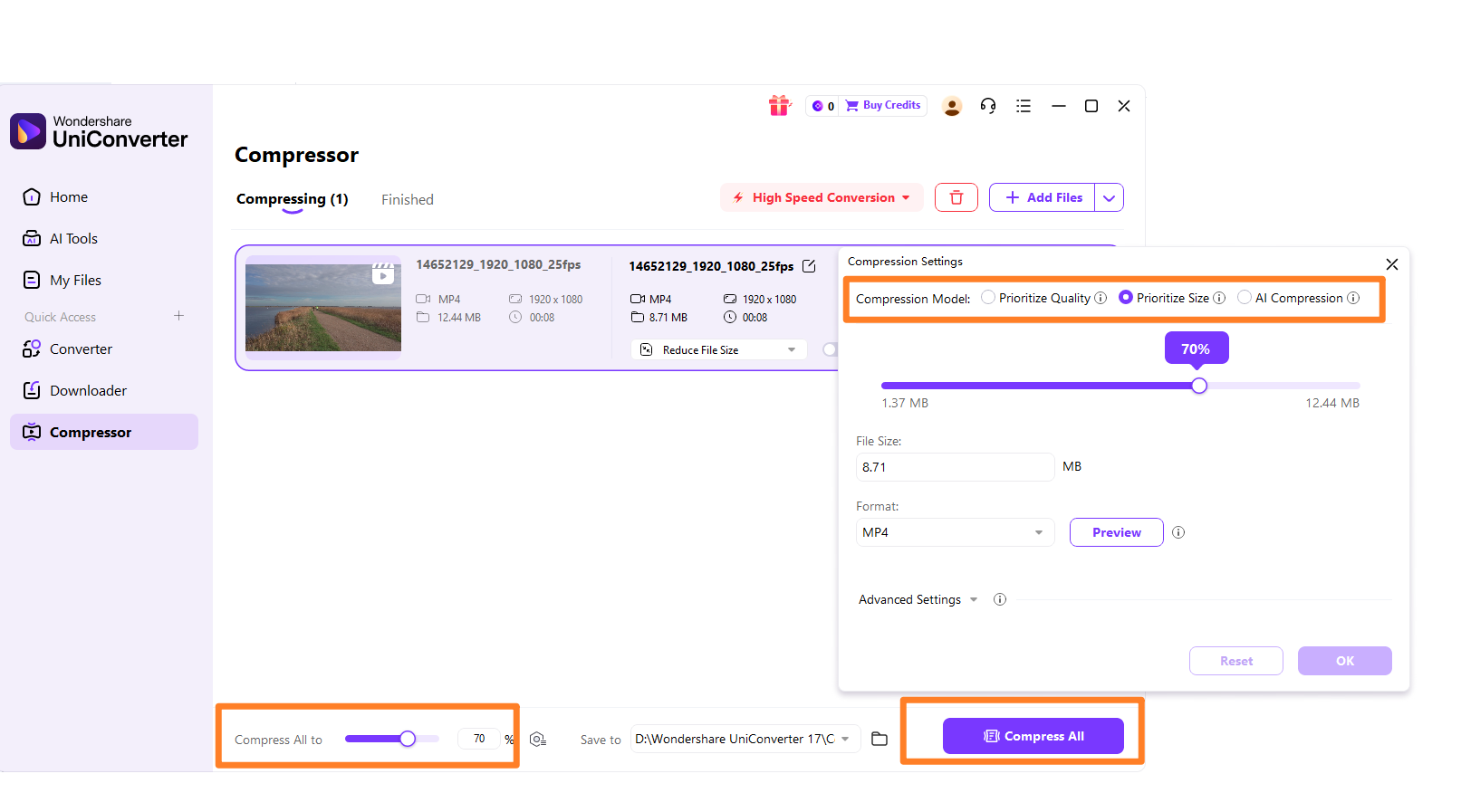
Step 3: Choose Required Parameters
I then proceed to select the desired compression settings. UniConverter provides a range of presets and allows for custom adjustments to parameters such as bitrate, sample rate, and quality, enabling me to strike the ideal balance between file size and audio fidelity.
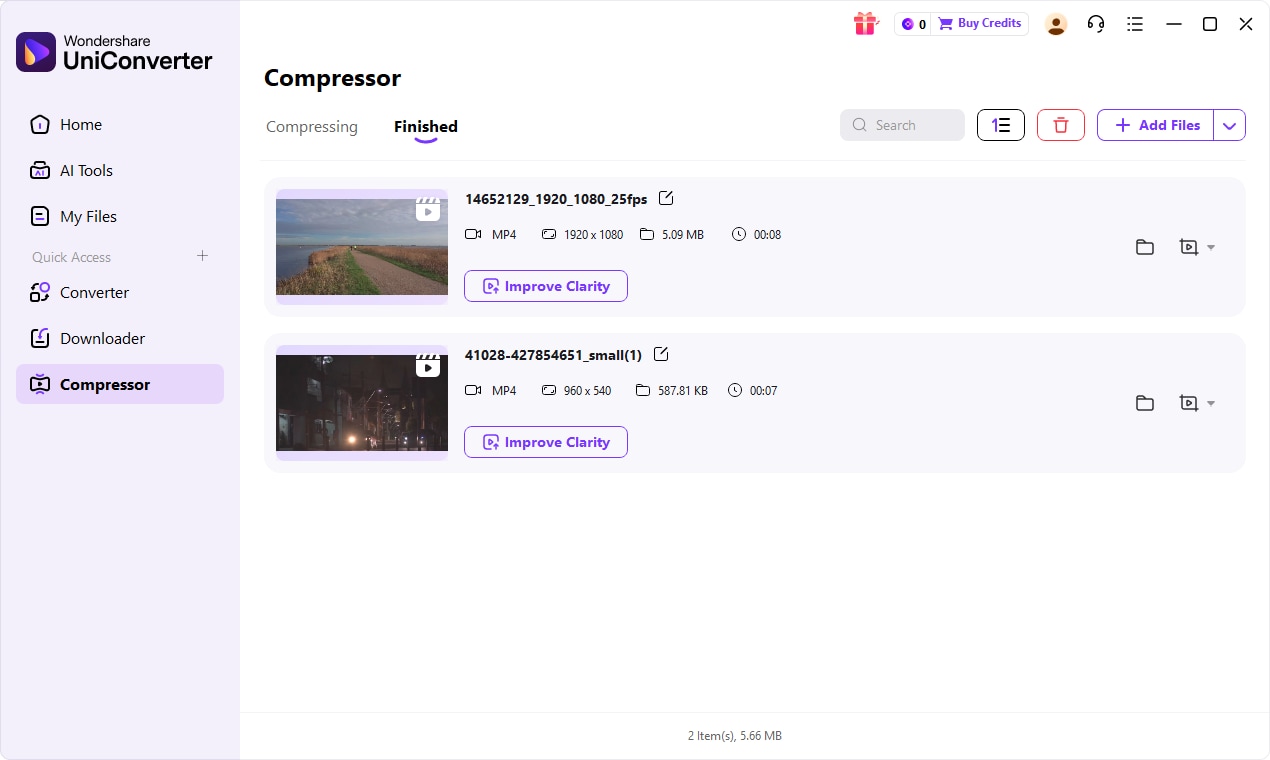
Step 4: Save the Compressed File
Finally, after reviewing the estimated file size, I click "Compress" and specify my preferred output folder. UniConverter efficiently processes the files, delivering high-quality compressed audio.

Need a Better Ocenaudio Audio Compressor Alternative?
Part 7: Conclusion
In conclusion, my Ocenaudio Audio Compressor review reveals it to be an excellent, free tool for casual users seeking quick and straightforward audio compression and basic editing. Its intuitive interface and real-time preview are definite advantages for those who prioritize ease of use over advanced features. However, for more demanding tasks such as batch processing, professional-grade compression, or handling niche audio formats, Ocenaudio's limitations become apparent. For users who frequently deal with multiple files, require advanced compression algorithms, or need a comprehensive media solution beyond just audio, alternatives like UniConverter offer a more robust and efficient workflow. Professional audio engineers, on the other hand, will find dedicated DAWs like Adobe Audition indispensable for their intricate needs. Ultimately, the best tool depends entirely on your specific use case and technical requirements.
Part 8: FAQs
-
1. Is Ocenaudio Audio Compressor completely free to use?
Yes, Ocenaudio is completely free to download and use across all supported platforms (Windows, macOS, and Linux). There are no hidden costs or premium features locked behind a paywall.
-
2. Can Ocenaudio compress multiple audio files at once?
Unfortunately, Ocenaudio does not support batch processing for compressing multiple audio files simultaneously. You will need to open and compress each file individually, which can be time-consuming for large numbers of files.
-
3. Does Ocenaudio support lossless audio compression?
Ocenaudio primarily focuses on lossy compression techniques to significantly reduce file size. While it can open and save lossless formats like WAV, its compression features are geared towards formats like MP3 or OGG, which inherently involve some data loss. For true lossless compression, you might need specialized tools.
-
4. How does Ocenaudio compare to online audio compressors?
Ocenaudio offers the advantage of being an offline desktop application, meaning you don't need an internet connection to use it, and your files remain private on your computer. Online compressors can be convenient for one-off tasks but often have file size limits, slower processing speeds, and potential privacy concerns. For regular use, Ocenaudio is generally more reliable.
-
5. What are the system requirements for running Ocenaudio?
Ocenaudio is a lightweight application and has minimal system requirements. It runs smoothly on most modern computers with Windows 7 or later, macOS 10.8 or later, and various Linux distributions. It typically requires a modest amount of RAM and processor power, making it accessible even on older machines.
