
- OBS Studio's Role: Primarily for live streaming and recording, OBS Studio offers indirect video compression through encoding settings.
- Compression Necessity: High-definition content demands compression for storage, faster uploads, bandwidth conservation, and improved playback.
- Core Capabilities: OBS features real-time encoding, multiple encoder options, bitrate control, and resolution scaling for file size management.
- Pros & Cons: Free and powerful for streaming, but has a steep learning curve and limited dedicated compression features.
- Best Use Case: Ideal for streamers and creators needing on-the-fly compression during recording, streamlining workflow.
- Limitations: Inefficient for offline batch compression; not designed for processing multiple existing video files.
- Comparison: OBS excels in real-time, while HandBrake and UniConverter offer superior offline batch processing and user-friendliness.
- Risks: Incorrect settings can degrade quality; batch compression is time-consuming; resource-intensive; lacks dedicated presets.
- UniConverter's Value: Offers efficient, stable, and near-lossless batch compression with a user-friendly interface and GPU acceleration.
- Decision: Choose OBS for real-time recording, but opt for dedicated tools like UniConverter for efficient offline batch compression.
In this article
- Part 1: What is OBS Studio
- Part 2: OBS Studio's Core Features: Performance and Capabilities
- Part 3: OBS Studio's Users and Use Cases
- Part 4: OBS Studio and Alternatives Comparison
- Part 5: Risks and Pitfalls to Avoid
- Part 6: How to Use UniConverter to Compress Efficiently
- Part 7: Conclusion
- Part 8: FAQs
When I first started my journey in content creation, I quickly realized that high-quality video files consume an enormous amount of storage and bandwidth. This often led to slow uploads, buffering issues for viewers, and a cluttered hard drive. Finding an effective solution for managing these large files became paramount. This comprehensive OBS Studio Video Compressor review aims to dissect OBS Studio's capabilities as a video compressor, compare it against dedicated tools, and guide you through making an informed decision about your video compression needs. I'll share my personal experiences and insights to help you navigate the complexities of video compression, ensuring your content is both high-quality and manageable.
Part 1: What is OBS Studio
OBS Studio, short for Open Broadcaster Software Studio, is a free and open-source software suite designed for live streaming and video recording. It's widely adopted by gamers, educators, and content creators for its robust features that allow for real-time video/audio capturing, mixing, and broadcasting. While its primary function revolves around live production, many users, myself included, often look to OBS Studio for its potential in video compression, especially when dealing with recorded footage. My goal in this review is to explore how well OBS Studio fares in this secondary role and whether it can truly serve as a reliable video compressor.
The Growing Need for Video Compression
The digital age has ushered in an era of high-definition content, making video compression an indispensable tool for everyone from casual users to professional content creators.
* Storage Management: Uncompressed video files can quickly consume vast amounts of storage space, making efficient compression crucial for managing hard drives and cloud storage.
* Faster Uploads and Downloads: Smaller file sizes translate directly to quicker upload times to platforms like YouTube or Vimeo and faster downloads for viewers, improving accessibility and user experience.
* Bandwidth Conservation: For live streamers and those sharing content, compressed videos reduce the bandwidth required, minimizing buffering and ensuring a smoother viewing experience for the audience.
* Improved Playback Performance: On devices with limited processing power or internet speed, compressed videos play back more smoothly, enhancing the overall user experience.
Part 2: OBS Studio's Core Features: Performance and Capabilities
OBS Studio, while primarily a streaming and recording powerhouse, offers a suite of features that indirectly contribute to video compression. Its core capabilities revolve around encoding and output settings, which are crucial for managing file size and quality. I've found that understanding these settings is key to leveraging OBS for any form of compression.
Core Capabilities:
* Real-time Encoding: OBS Studio encodes video in real-time during recording or streaming, allowing you to set parameters that influence file size from the outset.
* Multiple Encoder Options: It supports various encoders like x264 (CPU-based) and NVENC/AMF/QSV (GPU-based), each offering different trade-offs between quality, speed, and file size.
* Bitrate Control: I can precisely control the video and audio bitrates, which is the most direct way to manage the output file size. Lower bitrates mean smaller files but potentially lower quality.
* Resolution Scaling: OBS allows me to scale down the output resolution, effectively reducing the amount of data in each frame and thus the overall file size.
* Container Format Selection: I can choose different container formats (e.g., MP4, MKV), though this has less impact on compression than encoding settings.
Pros:
* Free and Open-Source Flexibility: Being free, OBS Studio is accessible to everyone, and its open-source nature means a vibrant community contributes to its development and plugin ecosystem.
* Powerful Live Streaming and Recording Capabilities: Its primary strength lies in its ability to handle complex live streaming setups and high-quality recordings, making it a versatile tool for content creators.
* Extensive Plugin Ecosystem: The availability of numerous plugins extends its functionality, although dedicated compression plugins are less common.
Cons:
* Steep Learning Curve for Beginners: Mastering OBS Studio, especially its encoding and output settings for optimal compression, requires significant time and experimentation.
* Limited Dedicated Compression Features: It lacks the intuitive, dedicated compression features found in specialized video compressors, making post-production compression less straightforward.
Part 3: OBS Studio's Users and Use Cases
From my experience, OBS Studio shines for a specific demographic, primarily those who need to manage file sizes during the recording or streaming process. It's not a one-size-fits-all solution for every compression need.
Best Use Case: Live Streamers and Content Creators Needing On-the-Fly Compression
If you're a live streamer or a content creator who records directly to disk and needs to keep file sizes manageable from the get-go, OBS Studio is an excellent choice. I often use it to record gameplay or tutorials, setting the bitrate and resolution beforehand to ensure the resulting file isn't astronomically large. This avoids the need for a separate compression step later, streamlining my workflow. For instance, when I record a 1080p video, I might set the bitrate to 6000-8000 kbps to achieve a good balance between quality and file size, making it easier to upload to YouTube without excessive processing time. It's perfect for those who want to minimize post-production effort related to file size.
Limitations: Users Primarily Seeking Offline Batch Compression
However, if your main goal is to compress a large library of existing video files offline, especially in batches, OBS Studio falls short. It's not designed for this purpose. I've tried to use it for compressing multiple pre-recorded videos, and it's simply not efficient. You'd have to load each video individually into a media source, set up a "recording" profile, and then "record" the video again, which is incredibly cumbersome and time-consuming. For users who need to process many files at once or compress videos that weren't originally recorded with OBS, a dedicated video compressor is undeniably superior.
Part 4: OBS Studio and Alternatives Comparison
When it comes to video compression, OBS Studio occupies a unique niche. While it can compress, it's not a dedicated tool. Let's see how it stacks up against some popular alternatives.
OBS Studio & Competitors: Feature Comparison Table
| Feature/Tool | OBS Studio | HandBrake | UniConverter | FFmpeg |
| Primary Function | Streaming/Recording | Video Transcoding | All-in-One Video Toolbox | Command-Line Multimedia Framework |
| Ease of Use | Difficult | Moderate | Easy | Very Difficult |
| Compression Quality | Good (via settings) | Excellent | Excellent | Excellent (via commands) |
| Batch Processing | Limited | Good | Excellent | Excellent (via scripts) |
| Price | Free | Free | Paid | Free |
Key Differentiators:
From my perspective, OBS Studio excels in real-time processing, allowing me to manage file sizes as I record or stream. However, dedicated compressors like HandBrake and UniConverter offer more robust offline batch options, which is crucial when I need to process multiple existing files. The user interface and learning curve vary significantly; OBS is complex for compression, HandBrake is moderate, UniConverter is very user-friendly, and FFmpeg is for the technically proficient. The price point also dictates choices: OBS, HandBrake, and FFmpeg are free, while UniConverter is a paid solution, offering a more polished experience and dedicated support.
Part 5: Risks and Pitfalls to Avoid
While OBS Studio is a powerful tool, using it for compression, especially without a clear understanding of its settings, can lead to several pitfalls. I've learned these lessons the hard way, and I want to help you avoid them.
Potential Quality Degradation with Incorrect Settings
One of the biggest risks I've encountered is inadvertently sacrificing video quality. If I set the bitrate too low, or choose an inefficient encoder, the resulting video can look pixelated, blurry, or suffer from artifacting. It's a delicate balance between file size and visual fidelity, and without dedicated compression presets, I have to manually experiment with settings, which can be frustrating. For example, a common mistake is using a very low Constant Rate Factor (CRF) value without understanding its impact, leading to unnecessarily large files or, conversely, setting it too high and destroying quality.
Time-Consuming for Large Batch Compressions
As I mentioned earlier, OBS Studio is not built for batch processing. If I have a folder full of recorded videos that need compression, using OBS means I have to load each one individually as a media source, set up a "recording" session, and then "re-record" it. This process is incredibly time-consuming and inefficient. It's not a "set it and forget it" solution for multiple files, demanding constant manual intervention.
System Resource Intensive During Compression
When OBS Studio is actively encoding or re-encoding video, it can be quite demanding on my system's CPU and GPU, especially if I'm using a software encoder like x264 at a high preset. This can lead to sluggish performance on my computer, making it difficult to perform other tasks simultaneously. If I'm trying to compress a long video, my computer can become almost unusable for anything else, which is a significant drawback for productivity.
Lack of Dedicated Compression Presets
Unlike dedicated video compressors that offer a range of pre-configured presets for different devices, platforms, or quality levels, OBS Studio requires me to manually configure all encoding settings. This means I need a good understanding of bitrates, resolutions, frame rates, and encoder options. There's no "YouTube 1080p" or "Email Friendly" preset, which forces me to either learn the technical details or rely on trial and error, increasing the likelihood of suboptimal results.
Part 6: How to Use UniConverter to Compress Efficiently
OBS Studio is great for recording, but it isn’t always the most convenient choice when I need smoother batch compression, more consistent output, or better control over file size and quality. In those cases, I usually switch to UniConverter, which gives me a cleaner, ad-free workflow and works especially well as a dedicated video compressor. Its GPU acceleration helps speed things up, and it can help compress videos without quality loss as much as possible, which is useful when preserving clarity matters. On top of that, it also supports audio compression and image compression, so it works well as a practical all-in-one solution for handling different media files in batches.
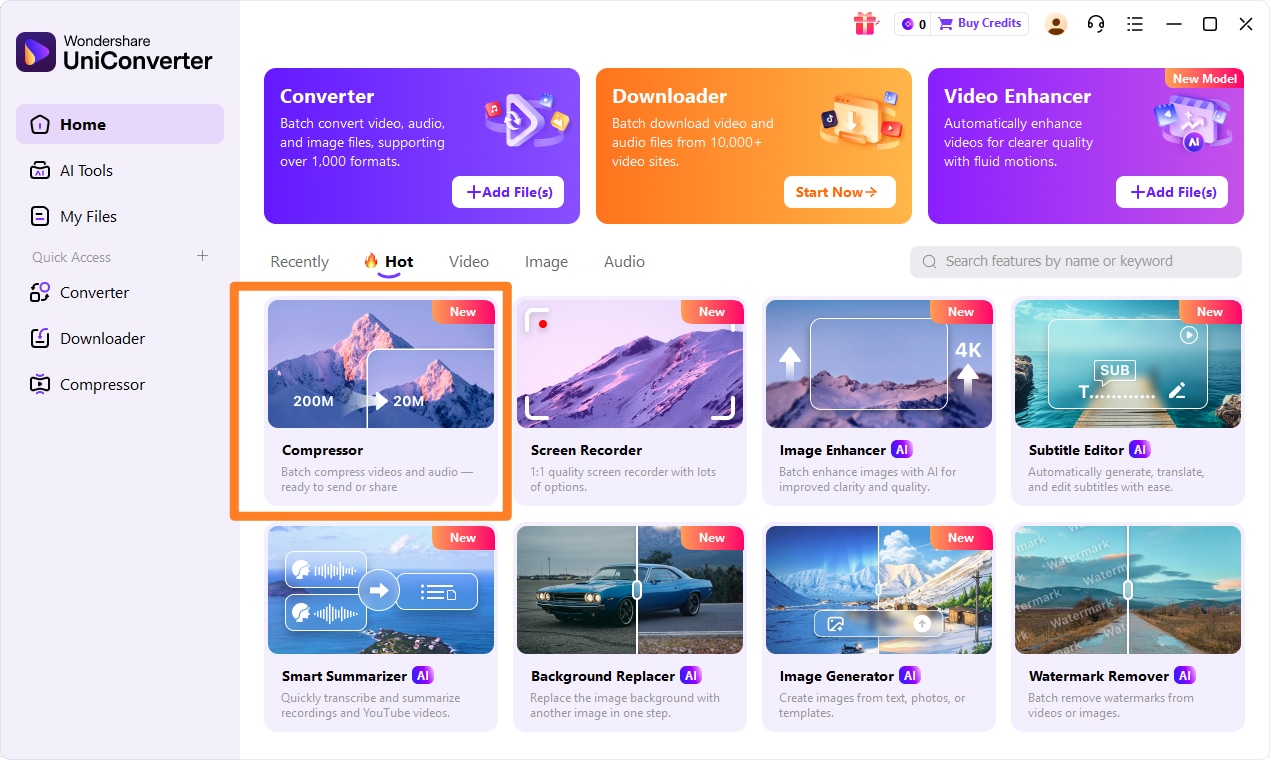
Step 1: Open UniConverter and Choose Compressor
First, I launch UniConverter and navigate to the "Video Compressor" tool from the main interface.
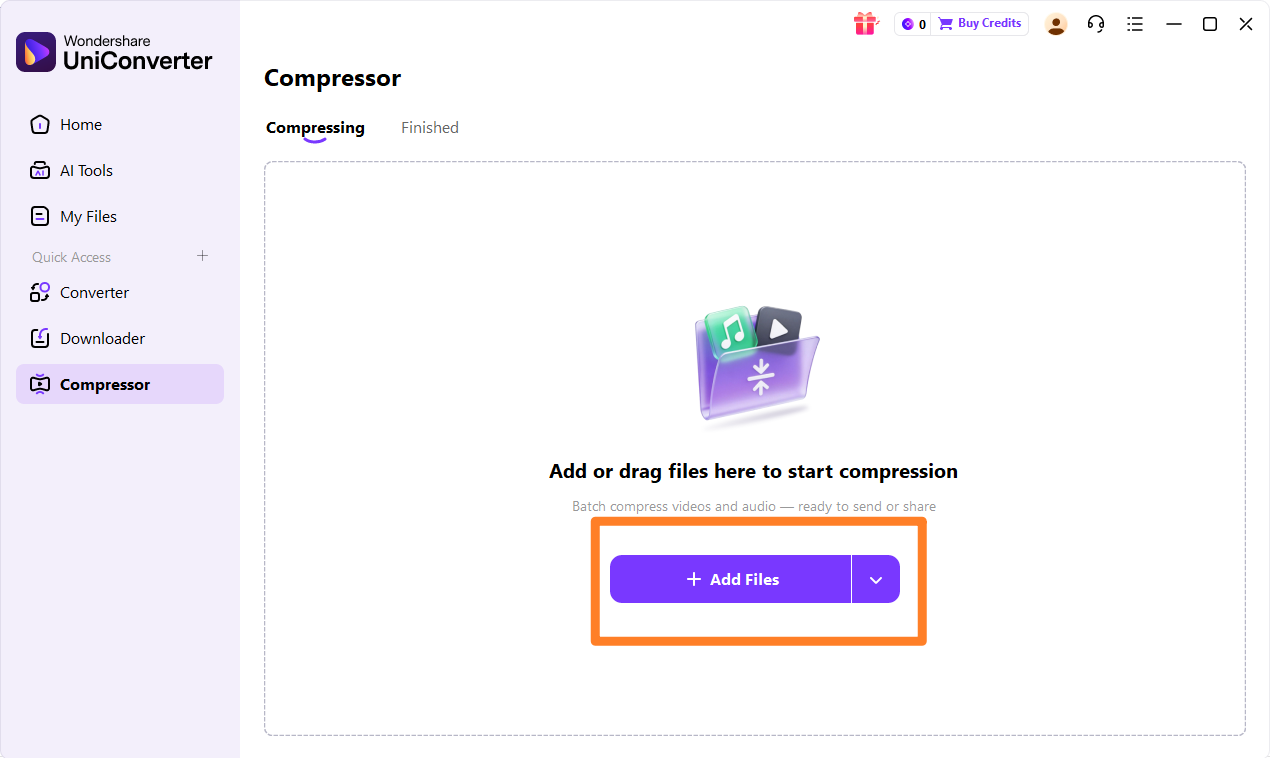
Step 2: Upload the Video, Audios or Images
Next, I drag and drop my video files (or audio/image files) into the UniConverter window. I can add multiple files for batch processing.
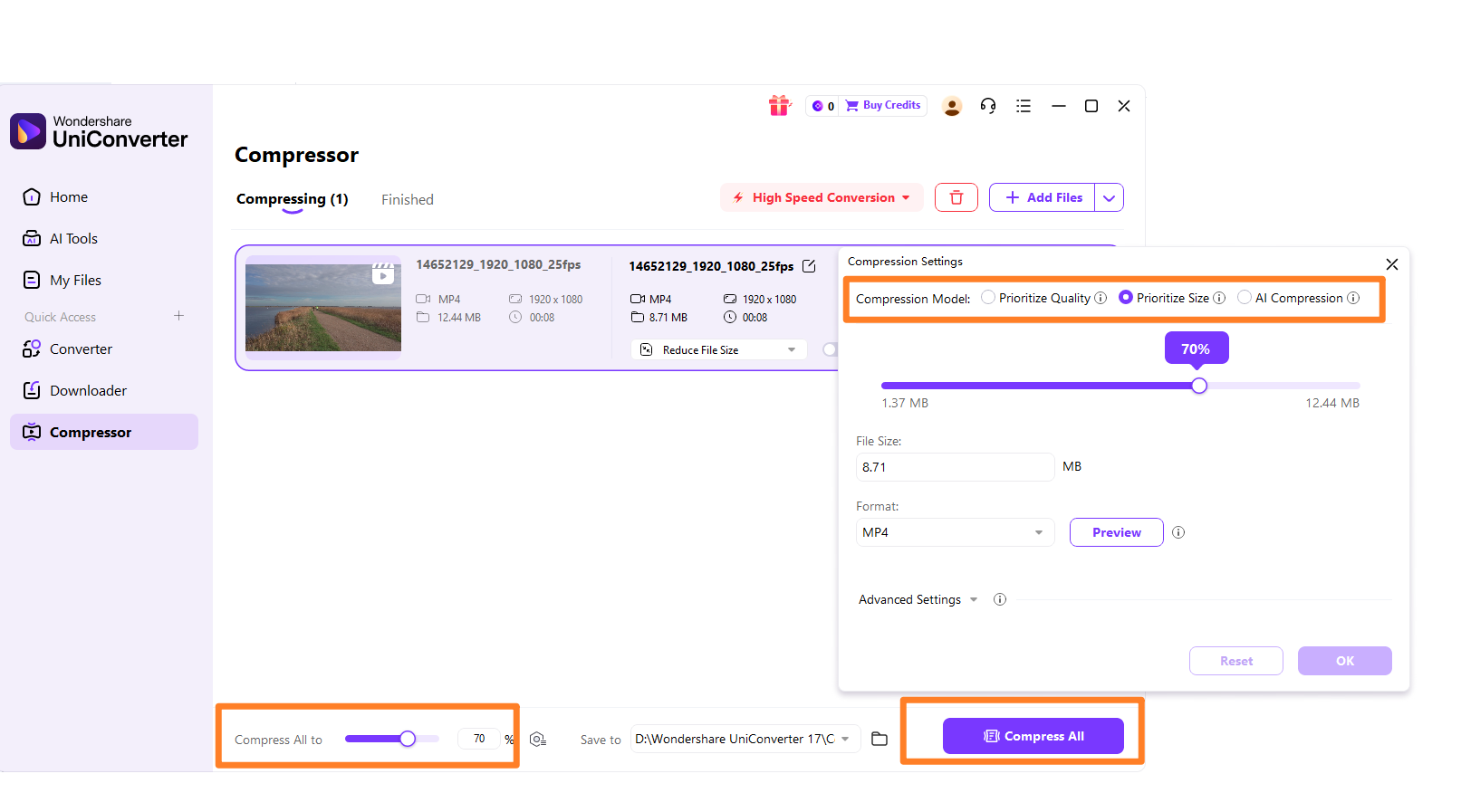
Step 3: Choose Required Parameters
Then, I select my desired compression settings. I can adjust the file size, quality, resolution, and bitrate using intuitive sliders or choose from various presets.
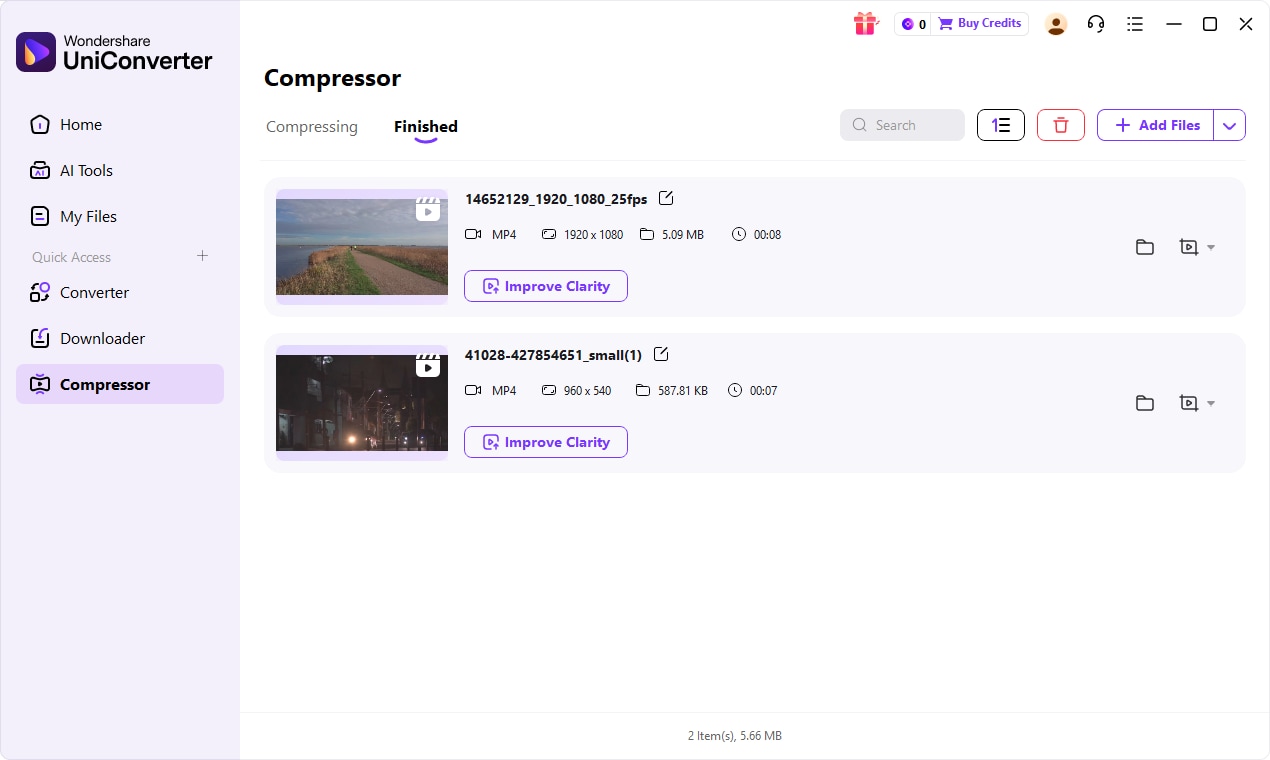
Step 4: Save the Compressed File
Finally, I click the "Compress" button. UniConverter processes the files quickly, and I can then save the compressed versions to my desired location.

Need a Better OBS Video Compressor Alternative?
Part 7: Conclusion
In conclusion, my journey through video compression, particularly with OBS Studio Video Compressor review, has shown me that no single tool fits every need. OBS Studio remains an unparalleled choice for live streamers and content creators who prioritize real-time recording and streaming with integrated file size management. Its ability to encode on-the-fly, coupled with its free and open-source nature, makes it a powerful option for those who can navigate its steep learning curve. However, for users primarily focused on offline batch compression of existing video libraries, or those seeking a more user-friendly experience with dedicated presets and robust quality control, specialized tools like HandBrake or UniConverter are far more efficient and less prone to quality degradation. Professionals requiring granular control might still lean towards command-line options like FFmpeg. Ultimately, the best tool depends on your specific workflow, technical comfort level, and the primary purpose of your video compression efforts.
Part 8: FAQs
-
1. Can OBS Studio compress videos without re-encoding?
No, OBS Studio primarily compresses through re-encoding, which means it processes the video data again. This re-encoding process is what allows for changes in file size and quality, but it can also introduce some quality loss depending on your settings.
-
2. Is OBS Studio suitable for compressing large video files for email?
While it's technically possible to use OBS Studio to compress videos for email by setting very low bitrates, it's generally not the most efficient or user-friendly method. Dedicated video compressors are typically better equipped with specific presets and a simpler workflow for this task, ensuring a good balance of file size and acceptable quality.
-
3. Does OBS Studio offer different compression presets?
OBS Studio offers various encoding settings that you can manually adjust to achieve different levels of compression. However, it does not provide pre-defined "compression presets" in the same way that dedicated video compression software does (e.g., "Email Small," "YouTube 1080p"). You'll need to understand and configure settings like bitrate, resolution, and encoder options yourself.
-
4. What's the best way to maintain video quality while compressing in OBS Studio?
To maintain video quality while compressing in OBS Studio, I recommend using efficient encoders like H.264 (x264 or hardware encoders like NVENC/AMF/QSV) and experimenting with higher bitrates. A Constant Rate Factor (CRF) mode can also be effective, where you set a quality target rather than a fixed bitrate. However, be aware that higher quality settings will result in larger file sizes.
-
5. Are there any privacy concerns when using OBS Studio for compression?
As an open-source tool, OBS Studio itself has no inherent privacy concerns related to data collection during compression. It processes files locally on your computer and does not send your video data to external servers unless you are actively streaming to a platform. This makes it a secure option for local video processing.
