
- Nero Video Compressor: Ideal for personal video archiving and sharing due to its user-friendly interface and integration.
- Professional Use: Not recommended for professional broadcast or web content requiring granular control and advanced codecs.
- Competitor Comparison: Nero excels in ease of use within its suite; HandBrake for advanced free control; Adobe Media Encoder for pros.
- Risks: Be aware of potential quality loss, system resource demands, and compatibility issues with older systems or new codecs.
- UniConverter Alternative: Offers stable, high-quality compression with extensive format support, GPU acceleration, and batch processing for efficient video management.
In this article
- Part 1: What is Nero Video Video Compressor?
- Part 2: Nero Video Video Compressor: Core Features, Pros, and Cons
- Part 3: Target Audience and Use Cases for Nero Video Video Compressor
- Part 4: Nero Video Video Compressor & Competitors: A Comparative Analysis
- Part 5: Risks and Pitfalls to Consider
- Part 6: How to Use UniConverter to Compress Efficient Videos
- Part 7: Conclusion
- Part 8: FAQs
When you're dealing with a vast collection of digital media, especially videos, the challenge of storage and sharing quickly becomes apparent. Large video files can eat up hard drive space, slow down uploads, and make sharing with friends and family a cumbersome task. This is where video compressors become indispensable tools. In this Nero Video Video Compressor review, I'll dive deep into its capabilities, comparing it against key competitors, and ultimately help you decide if it's the right solution for your media management needs. We'll explore its features, weigh its pros and cons, and analyze its performance in various real-world scenarios to provide you with a comprehensive understanding.
Part 1: What is Nero Video Video Compressor?
Nero, a name synonymous with multimedia software for decades, has consistently offered solutions for burning, editing, and managing digital content. The Nero Video Video Compressor is a component of their broader multimedia suite, designed specifically to address the common pain point of oversized video files. It aims to provide an efficient way to reduce file sizes without significant loss in visual quality, making your videos more manageable for storage, sharing, and playback across different devices. My goal in this review is to determine if Nero Video Video Compressor truly delivers on this promise and how it stacks up against other popular tools in the market.
Addressing Common Video Management Challenges
* Storage Limitations: High-resolution videos quickly consume valuable disk space.
* Slow Upload/Download Times: Large files make sharing and streaming inefficient.
* Device Compatibility Issues: Different devices have varying file size and format limitations.
* Maintaining Quality: The desire to compress without sacrificing visual fidelity.
Part 2: Nero Video Video Compressor: Core Features, Pros, and Cons
The Nero Video Video Compressor offers a robust set of functionalities aimed at simplifying video compression. Its core capabilities include support for a wide array of input and output formats, customizable compression settings, and integration within the larger Nero ecosystem. I've found its approach to be quite intuitive, making it accessible even if you're not a tech expert.
* Extensive Format Support: Handles popular video formats like MP4, AVI, MOV, and more.
* Customizable Compression Settings: Allows adjustment of bitrate, resolution, and quality.
* Batch Processing: Compresses multiple videos simultaneously for efficiency.
* Integrated with Nero Suite: Benefits from a unified interface if you use other Nero products.
* Preview Functionality: Lets you check the compressed video before finalizing.
Pros:
* Integrated Editing Suite: I appreciate how seamlessly I can transition from editing my videos in Nero Video to compressing them, saving me time and hassle.
* User-Friendly Interface: The layout is straightforward, making it easy for me to find the compression options I need without a steep learning curve.
* Diverse Output Formats: I've found it supports almost every format I've ever needed, ensuring compatibility across all my devices and sharing platforms.
Cons:
* Resource Intensive: When I'm compressing large 4K files, I notice it can really tax my system, sometimes slowing down other tasks.
* Pricing Model: While it's a one-time purchase, I sometimes feel it's less flexible compared to the subscription models of some competitors, especially if I only need it occasionally.
Part 3: Target Audience and Use Cases for Nero Video Video Compressor
The Nero Video Video Compressor is primarily designed for users who need a reliable and straightforward solution for managing their personal video collections. It strikes a good balance between ease of use and effective compression, making it suitable for a specific set of scenarios.
Best Use Case: Archiving and Sharing Personal Video Collections
Imagine this: I've just returned from a family vacation with hours of precious video footage. My goal is to compress these large files so I can easily upload them to cloud storage and share them with my relatives without them having to wait ages to download. Nero Video Video Compressor excels here. I can quickly import all my vacation videos, select a suitable compression preset that balances file size and quality, and then batch process them. The resulting files are significantly smaller, making them perfect for sharing via email or messaging apps, and they don't hog my cloud storage space. The quality remains perfectly acceptable for casual viewing on phones or tablets, which is exactly what I need for family memories.
Limited Use Case: Professional-Grade Broadcast or Web Content Production
Now, consider a different scenario: I'm a professional videographer working on a client project that requires compressing 4K footage for a high-end website. This project demands absolute precision over bitrate, specific color profiles, and the use of advanced codecs like ProRes or DNxHD to maintain broadcast-quality standards. In this situation, Nero Video Video Compressor might fall short. While it supports 4K, its granular control over advanced settings, specialized codecs, and color space management isn't as robust as dedicated professional tools. I'd find myself needing more precise control over every aspect of the compression process to meet the client's exacting specifications, which Nero Video doesn't fully offer.
Part 4: Nero Video Video Compressor & Competitors: A Comparative Analysis
When evaluating Nero Video Video Compressor, it's crucial to see how it stacks up against other prominent players in the market. This comparison will highlight where each tool shines and where it might fall short for different users.
| Feature/Scenario | Nero Video Video Compressor | HandBrake | Adobe Media Encoder | UniConverter |
| Ease of Use | High | Medium | Medium | High |
| Integration with Editing | High (Nero Suite) | Low | High (Adobe Suite) | Medium |
| Advanced Settings | Medium | High | High | Medium |
| Output Formats | Broad | Broad | Very Broad | Very Broad |
| Price | One-time purchase | Free | Subscription | One-time/Subscription |
| Batch Processing | Yes | Yes | Yes | Yes |
Key Differentiators:
Nero's strength clearly lies in its integrated ecosystem; if I'm already using other Nero products, the compression module fits right in. HandBrake, on the other hand, is a powerhouse for advanced users who want granular control over every compression parameter, and it's free, which is a huge bonus. Adobe Media Encoder is the go-to for professionals deeply embedded in the Adobe Creative Cloud, offering unparalleled integration and advanced features. For a balanced approach, UniConverter provides a user-friendly experience with a broad range of features, making it a strong contender for those who need both simplicity and capability.
Part 5: Risks and Pitfalls to Consider
When I'm compressing videos, especially with tools like Nero Video Video Compressor or any other software, there are several risks and pitfalls I always keep in mind to ensure my media workflow remains smooth and my files are safe.
Potential Loss of Video Quality During Compression
This is perhaps my biggest concern. While the goal of compression is to reduce file size, aggressive settings can lead to noticeable degradation in video quality. I've learned that finding the right balance between file size reduction and visual fidelity is crucial. Sometimes, the default settings in software might be too aggressive, resulting in blocky artifacts or a washed-out appearance. I always recommend doing a small test compression first.
Software Stability and Performance on Older Systems
I've personally experienced how demanding video compression can be on system resources. If I'm running Nero Video Video Compressor on an older computer, or one with limited RAM and a slower processor, the software can become sluggish, crash frequently, or take an incredibly long time to process files. This isn't just frustrating; it can also lead to corrupted output files if the process is interrupted.
Data Privacy Concerns with Cloud Features
While Nero Video Video Compressor is primarily a desktop application, some multimedia suites now integrate cloud features. If I were to use any cloud-based sharing or backup options within the Nero ecosystem, I'd definitely be scrutinizing their privacy policies. Uploading personal videos to a third-party server always carries a risk of data breaches or unauthorized access, so I'd want to be sure my data is encrypted and handled securely.
Hidden Costs or Upsells within the Nero Ecosystem
Nero often offers a suite of products. While I might purchase Nero Video Video Compressor as a standalone or part of a bundle, I've noticed that sometimes there are prompts or suggestions for additional modules or upgrades. These aren't necessarily "hidden" but can feel like upsells if I'm not expecting them, potentially adding to the overall cost if I'm not careful about what I click.
Compatibility Issues with Newer Codecs or Operating Systems
Software updates are critical. If Nero Video Video Compressor isn't regularly updated, I might run into compatibility issues with newer video codecs that emerge or with the latest versions of my operating system. This could mean I'm unable to compress certain files, or the software might not function correctly after an OS update, leaving me in a bind.
Part 6: How to Use UniConverter to Compress Efficient Videos
Reliable batch processing and consistent output quality are hard to find in lighter compression tools, which is why I often use UniConverter instead. It gives me a smoother, ad-free way to handle video compression, audio compression, and image compression in one place, without having to switch between separate apps. I also like its broad format support and GPU acceleration, which make processing much faster when working with multiple files. For video projects in particular, it can help compress videos without quality loss as much as possible, making it a practical all-in-one solution for everyday media conversion and compression.
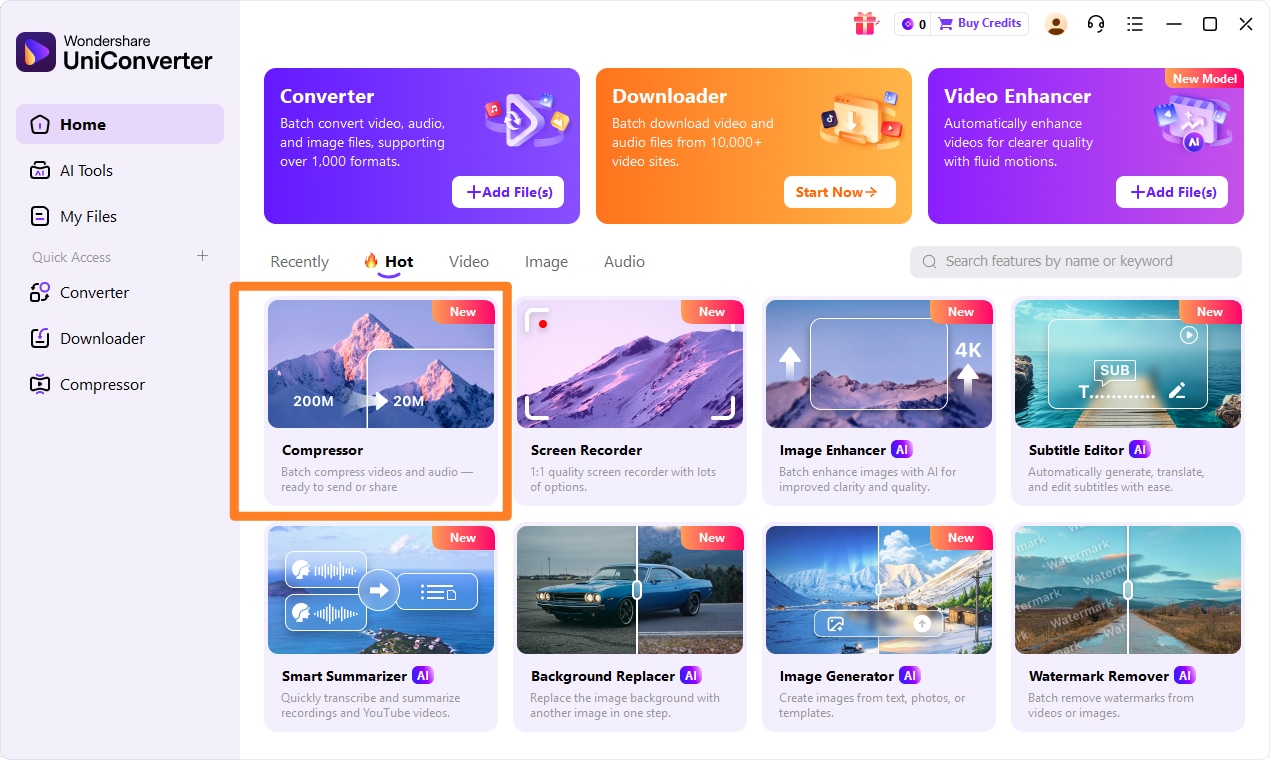
Step 1: Open UniConverter and Choose Compressor
First, I launch UniConverter on my computer. On the main interface, I navigate to the "Video Compressor" tab, which is clearly labeled and easy to find.
Step 2: Upload the Video, Audios or Images
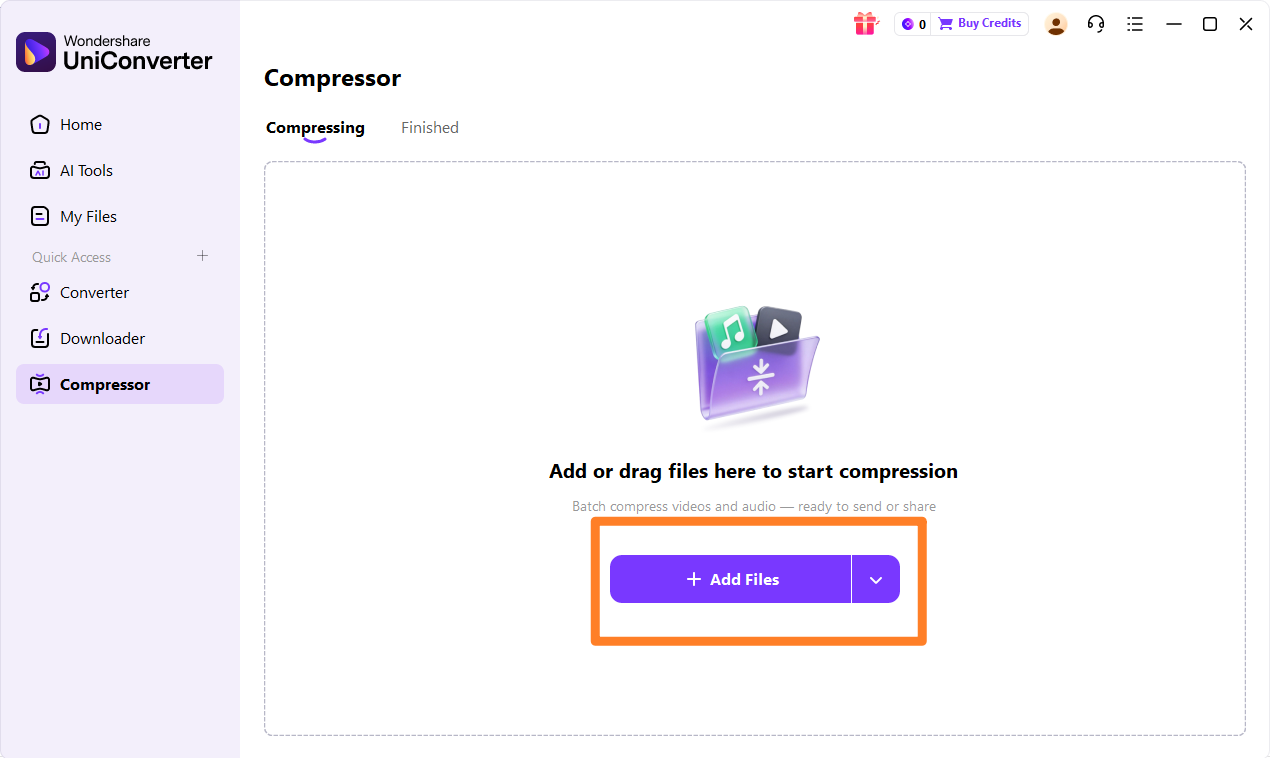
Next, I click the "Add Files" button or simply drag and drop the video, audio, or image files I want to compress into the program window. UniConverter supports a wide range of formats, so I don't usually have compatibility issues.
Step 3: Choose Required Parameters
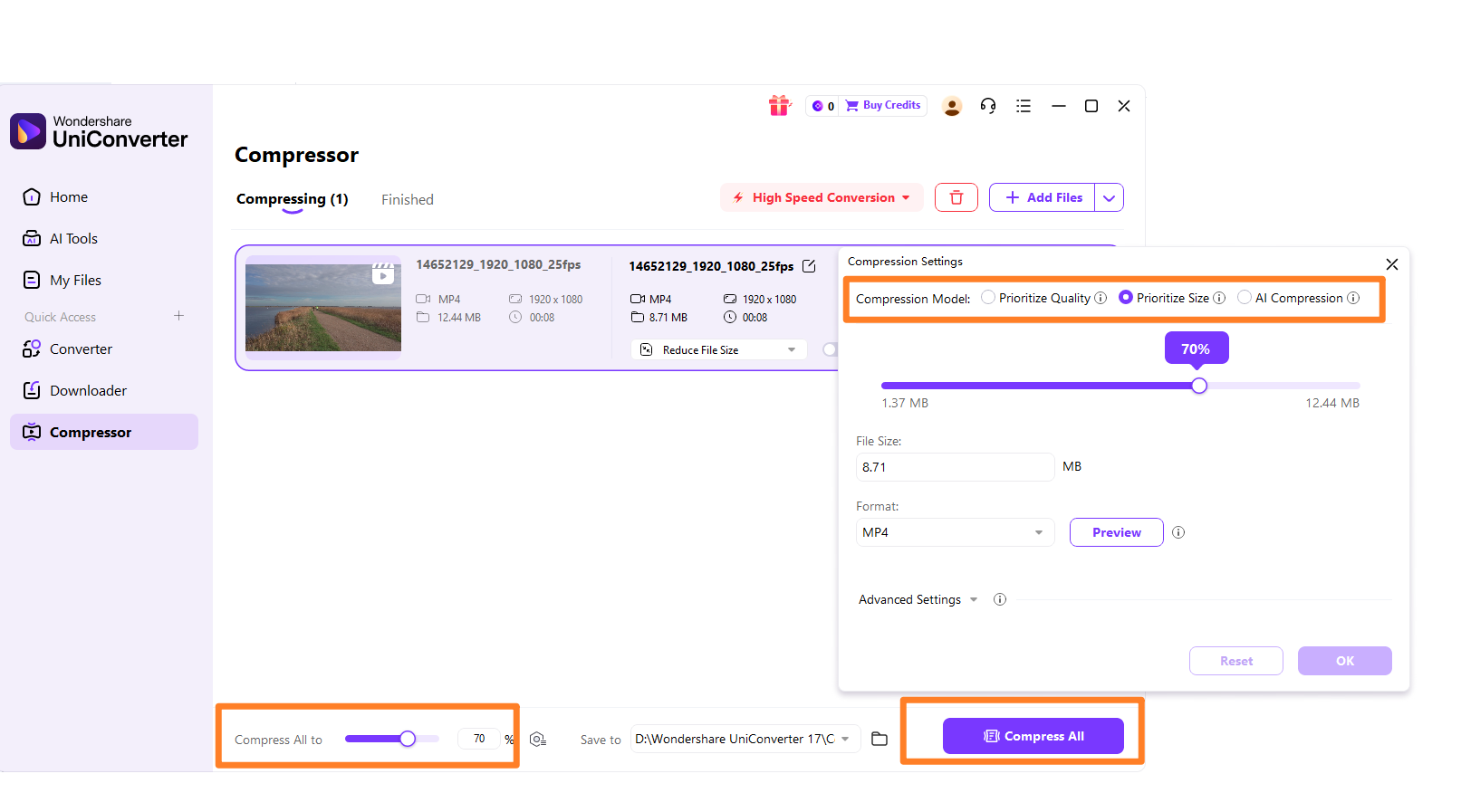
After uploading, I can customize the compression settings. I can adjust the file size, resolution, bitrate, and quality to achieve my desired balance between file size and visual fidelity. There are also preset options if I want a quick compression.
Step 4: Save the Compressed File
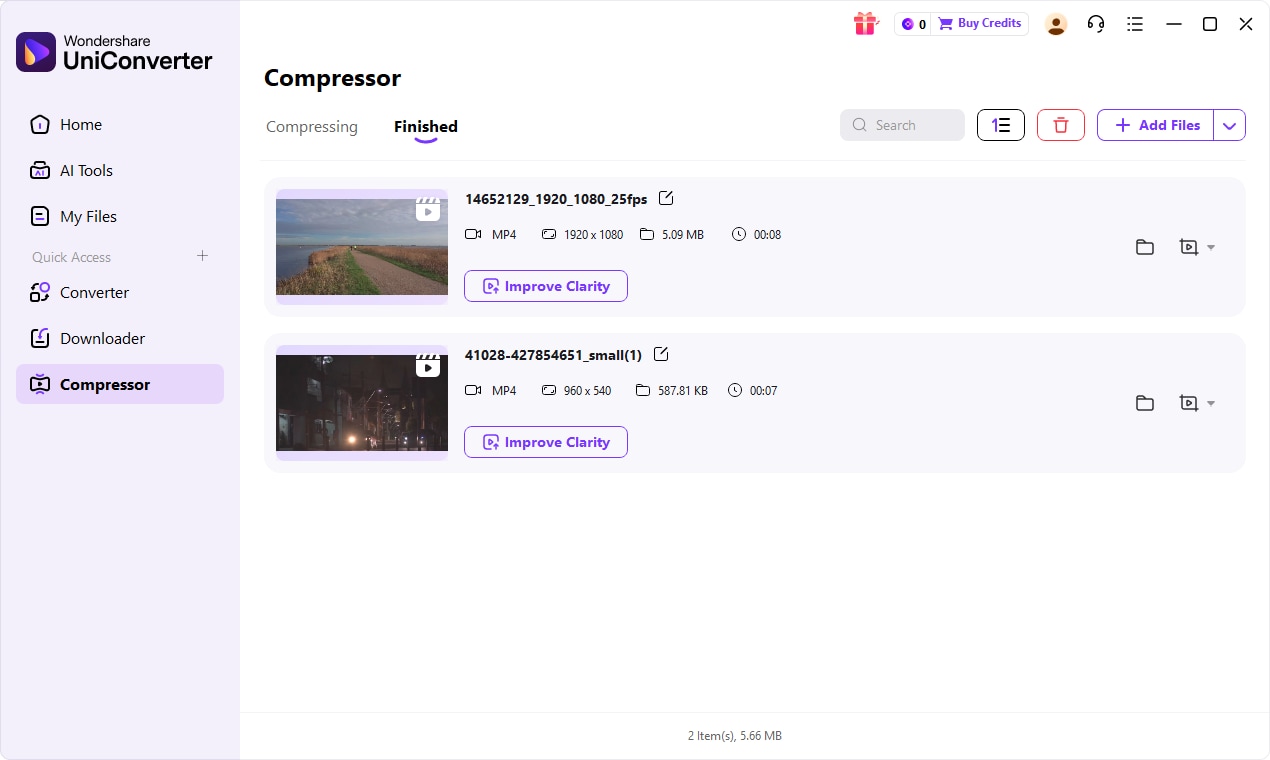
Once I'm satisfied with the settings, I choose an output folder for my compressed files and click the "Compress" button. UniConverter quickly processes the files, and I can then access my smaller, optimized media.

Nero Video Compressor Alternative: Better Video Compression?
Part 7: Conclusion
In this Nero Video Video Compressor review, I've explored its capabilities, compared it with key competitors, and analyzed its suitability for various scenarios. For casual users and home archivists, Nero Video Video Compressor remains a solid choice. Its user-friendly interface and integration within the Nero suite make it convenient for managing personal video collections, especially when the primary goal is to reduce file size for storage and sharing without needing professional-grade control. However, for professionals requiring granular control over advanced codecs, color profiles, and precise bitrate settings, specialized tools like Adobe Media Encoder or even the free HandBrake, which offers deeper customization, would be more appropriate. Budget-conscious users will find significant value in free alternatives like HandBrake. Ultimately, if you're looking for a balanced solution that offers a broad range of functionality, ease of use, and reliable performance across various media types, UniConverter stands out as an excellent all-around option, bridging the gap between simplicity and advanced features.
Part 8: FAQs
-
1. Is Nero Video Video Compressor suitable for 4K video compression?
Yes, it supports 4K compression. However, my experience shows that performance can vary significantly based on your system's specifications, especially for very large 4K files.
-
2. Does Nero Video Video Compressor offer batch processing?
Absolutely, it does. I've found the batch processing feature to be quite efficient, allowing me to compress multiple videos simultaneously, which saves a lot of time when dealing with large collections.
-
3. How does Nero Video Video Compressor compare to online video compressors?
Desktop software like Nero generally offers superior control over compression settings, faster processing speeds (as it uses your local hardware), and typically doesn't impose file size limits, unlike most online tools. For more demanding tasks, I always prefer desktop software.
-
4. Can I adjust the bitrate and resolution in Nero Video Video Compressor?
Yes, you definitely can. It provides options to customize bitrate, resolution, and other output settings, giving you control over the balance between file size and video quality.
-
5. I'm having trouble with quality loss during compression with my current software. Is there a more reliable alternative?
If you're consistently experiencing quality loss or instability with your current compression tool, I highly recommend trying UniConverter. It offers stable, high-quality compression with a user-friendly interface and excellent control over settings, ensuring your videos look great even after compression.
