
- Value: MP3Compress excels at reducing audio file sizes for storage, sharing, and streaming.
- Features: It offers adjustable bitrate, VBR/CBR support, and batch processing for efficient compression.
- Limitations: MP3Compress lacks advanced editing and may degrade quality at extreme compression settings.
- Target Audience: Ideal for casual users, podcasters, and content creators optimizing audio for web/mobile.
- Comparison: While simple, alternatives like UniConverter offer broader format support and advanced features.
- Risks: Be aware of privacy concerns, intrusive ads, software bundles, and quality loss with free/online tools.
- Recommendation: For comprehensive, stable, and ad-free compression, UniConverter is a superior alternative.
In this article
- Part 1: What is MP3Compress Audio Compressor?
- Part 2: MP3Compress: Core Features, Pros, and Cons
- Part 3: MP3Compress: Target Audience and Use Cases
- Part 4: MP3Compress and Alternatives Comparison
- Part 5: Risks and Pitfalls to Consider
- Part 6: How to Use UniConverter for Efficient Audio Compression
- Part 7: Final Verdict and Recommendations
- Part 8: FAQs
MP3Compress Audio Compressor: A Comprehensive Review and Comparison
For anyone navigating the digital world, managing audio file sizes is a constant challenge. Whether you're a budding podcaster, a casual music listener, or someone who simply wants to free up storage space, the need for efficient audio compression is undeniable. This MP3Compress Audio Compressor review delves into a tool designed to address this very need, offering a detailed look at its capabilities, comparing it against key competitors, and guiding you through its optimal use cases. We'll explore its strengths and weaknesses, highlight potential pitfalls, and ultimately help you decide if MP3Compress Audio Compressor is the right solution for your audio compression demands.
Part 1: What is MP3Compress Audio Compressor?
MP3Compress Audio Compressor is a software solution primarily designed to reduce the file size of MP3 audio files. Its core purpose is to make audio more manageable for storage, sharing, and streaming by applying various compression algorithms. In today's digital landscape, where high-quality audio can quickly consume vast amounts of storage and bandwidth, tools like MP3Compress become essential.
Why Audio Compression Matters in the Digital Age:
* Storage Optimization: Large audio files quickly fill up hard drives and cloud storage, making compression crucial for efficient data management.
* Faster Sharing and Uploads: Smaller files mean quicker uploads to platforms like YouTube, SoundCloud, or podcast hosting services, and faster sharing with friends and colleagues.
* Improved Streaming Experience: Compressed audio requires less bandwidth, leading to smoother streaming on mobile devices and slower internet connections.
* Website Performance: For web developers and content creators, optimized audio files contribute to faster website loading times, improving user experience and SEO.
Part 2: MP3Compress: Core Features, Pros, and Cons
MP3Compress focuses on delivering a straightforward solution for reducing the size of your MP3 files. Its core capabilities revolve around efficient compression, aiming to strike a balance between file size reduction and audio quality preservation.
Core Features:
* Adjustable Bitrate Settings: Allows you to control the level of compression by setting the desired bitrate for the output MP3 file.
* Variable Bitrate (VBR) Support: Offers the option to use VBR, which dynamically adjusts the bitrate based on the audio content, often resulting in better quality at smaller file sizes.
* Constant Bitrate (CBR) Support: Provides CBR for consistent quality and predictable file sizes.
* Channel Selection: Enables you to choose between stereo and mono output, further impacting file size.
* Sample Rate Adjustment: Allows modification of the audio sample rate, another factor influencing file size and quality.
Pros:
* Efficient File Size Reduction: I've found that MP3Compress significantly shrinks audio files without noticeable quality loss for most everyday listening. It's ideal for sharing and storage.
* User-Friendly Interface: The intuitive design makes it accessible for me, even though I'm not a tech expert. It's easy to navigate for users of all technical levels.
* Batch Processing Capability: Being able to compress multiple audio files simultaneously is a huge time-saver for me, especially when dealing with podcast episodes.
Cons:
* Limited Advanced Features: I've noticed it lacks advanced editing options or format conversion beyond basic compression, which can be a drawback if you need more versatility.
* Potential for Quality Degradation at Extreme Compression Ratios: If I push the compression settings too aggressively, I can sometimes hear audible artifacts, so you need to be careful.
Part 3: MP3Compress: Target Audience and Use Cases
MP3Compress is best suited for users who need a quick and efficient way to reduce the size of their MP3 audio files without delving into complex audio editing. It's a tool for practical, everyday compression needs rather than professional-grade audio manipulation.
Best Use Case: Optimizing Audio for Web and Mobile
* Scenario: As a podcaster, I constantly need to reduce the size of my episodes for faster downloads and lower bandwidth consumption on my website and mobile app. MP3Compress efficiently shrinks the files while maintaining acceptable audio quality for my listeners. This means my audience gets quicker access to new content, and I save on hosting costs. It's a perfect fit for ensuring a smooth experience for my listeners on various devices and network conditions.
Limited Use Case: Professional Audio Production
* Scenario: If I were a music producer, requiring lossless compression or highly customizable audio parameters for mastering tracks, MP3Compress's basic features would be insufficient. Its focus on lossy compression and lack of advanced controls would likely introduce unwanted artifacts or limit my creative control over the final sound. For professional-grade work, I'd need a more robust digital audio workstation (DAW) or specialized mastering software.
Part 4: MP3Compress and Alternatives Comparison
When I look at audio compression tools, I consider not just the core function but also how they stack up against others in terms of features, ease of use, and overall value. Here's how MP3Compress compares to some popular alternatives I've encountered.
| Feature/Software | MP3Compress | Audacity | Online Audio Converter | HandBrake |
| Primary Function | Dedicated MP3 Compression | Audio Editing & Compression | Online Audio Conversion & Compression | Video & Audio Compression |
| Ease of Use | High | Moderate | High | Moderate |
| Advanced Features | Low | High | Moderate | High |
| Batch Processing | Yes | Yes | Yes | Yes |
| Offline Use | Yes | Yes | No | Yes |
| Price | Free/Freemium | Free | Free/Freemium | Free |
Key Differentiators
From my experience, MP3Compress excels in straightforward, dedicated MP3 compression for quick tasks. Audacity offers a much more comprehensive audio editing suite alongside its compression capabilities, making it great for more involved projects. Online Audio Converter provides web-based convenience for various formats, which I find handy for quick, one-off conversions without installing software. HandBrake, while primarily for video, is better suited for scenarios involving video and audio together, especially if you're looking to compress media files for different devices.
Part 5: Risks and Pitfalls to Consider
While free or freemium tools like MP3Compress and its online counterparts offer convenience, I've learned that they often come with their own set of risks and potential pitfalls that you should be aware of.
Privacy Concerns with Online Versions
When I use online audio compressors, I always worry about my privacy. Uploading sensitive or personal audio files to a third-party server means I'm trusting them with my data. There's always a risk that these files could be accessed, stored, or even misused, especially if the service doesn't have robust security protocols.
Intrusive Advertisements in Free Tiers
Many free versions of these tools, especially online ones, are supported by advertisements. I've encountered everything from banner ads to pop-ups that interrupt my workflow. Sometimes, these ads can be quite intrusive and even lead to malicious websites if you're not careful where you click.
Potential for Unwanted Software Bundles
When I download free desktop software, I'm always on the lookout for unwanted software bundles. It's common for installers to include "optional" programs like browser toolbars, antivirus software, or other utilities that you didn't ask for. If you're not careful during the installation process, you might end up with bloatware that slows down your computer.
Limited Customer Support for Free Users
If I run into an issue with a free compression tool, I've found that customer support is often minimal or nonexistent. You're usually left to scour forums or FAQs for solutions, which can be frustrating and time-consuming, especially if you're on a tight deadline.
Quality Compromises at High Compression Settings
While the goal is to reduce file size, I've learned that pushing compression settings too high can severely degrade audio quality. This is particularly true for lossy formats like MP3. You might end up with noticeable artifacts, muffled sounds, or a generally unpleasant listening experience, defeating the purpose of having the audio in the first place.
Part 6: How to Use UniConverter for Efficient Audio Compression
When other tools struggle with batch processing, deliver unstable results, or cause quality loss, I consistently rely on UniConverter. It offers a practical solution for audio compression, video compression, and image compression, while providing a more stable and user-friendly experience than many basic tools. With broad format support and efficient handling of repeated tasks, UniConverter stands out as a dependable all-in-one multimedia solution.
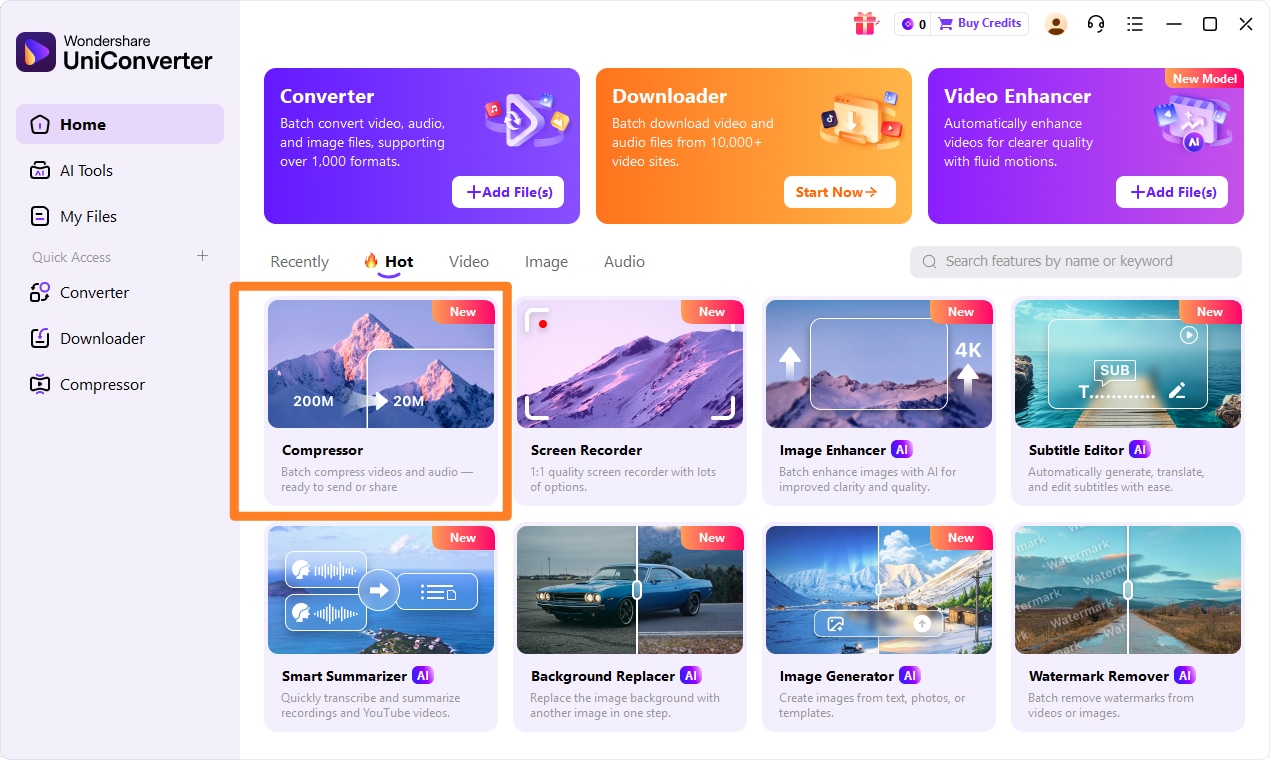
Step 1: Open UniConverter and Choose Compressor
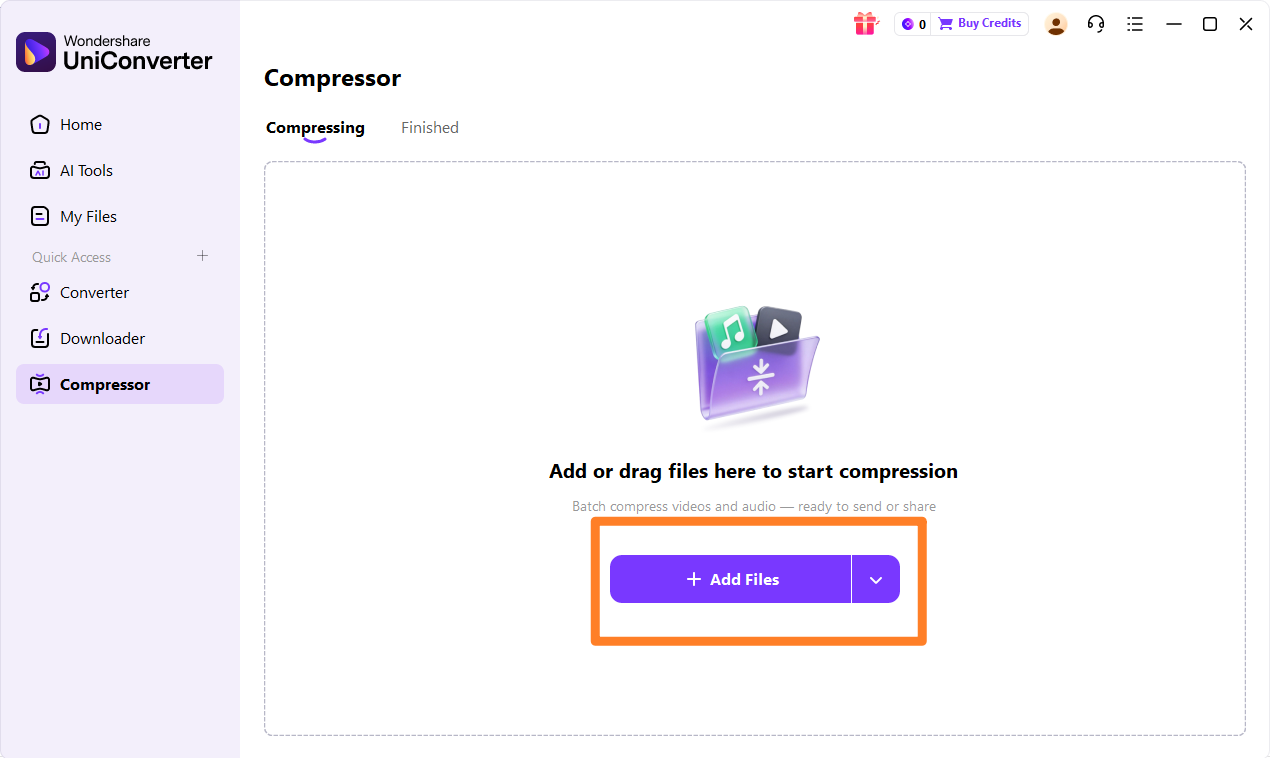
Step 2: Upload the Video, Audios or Images
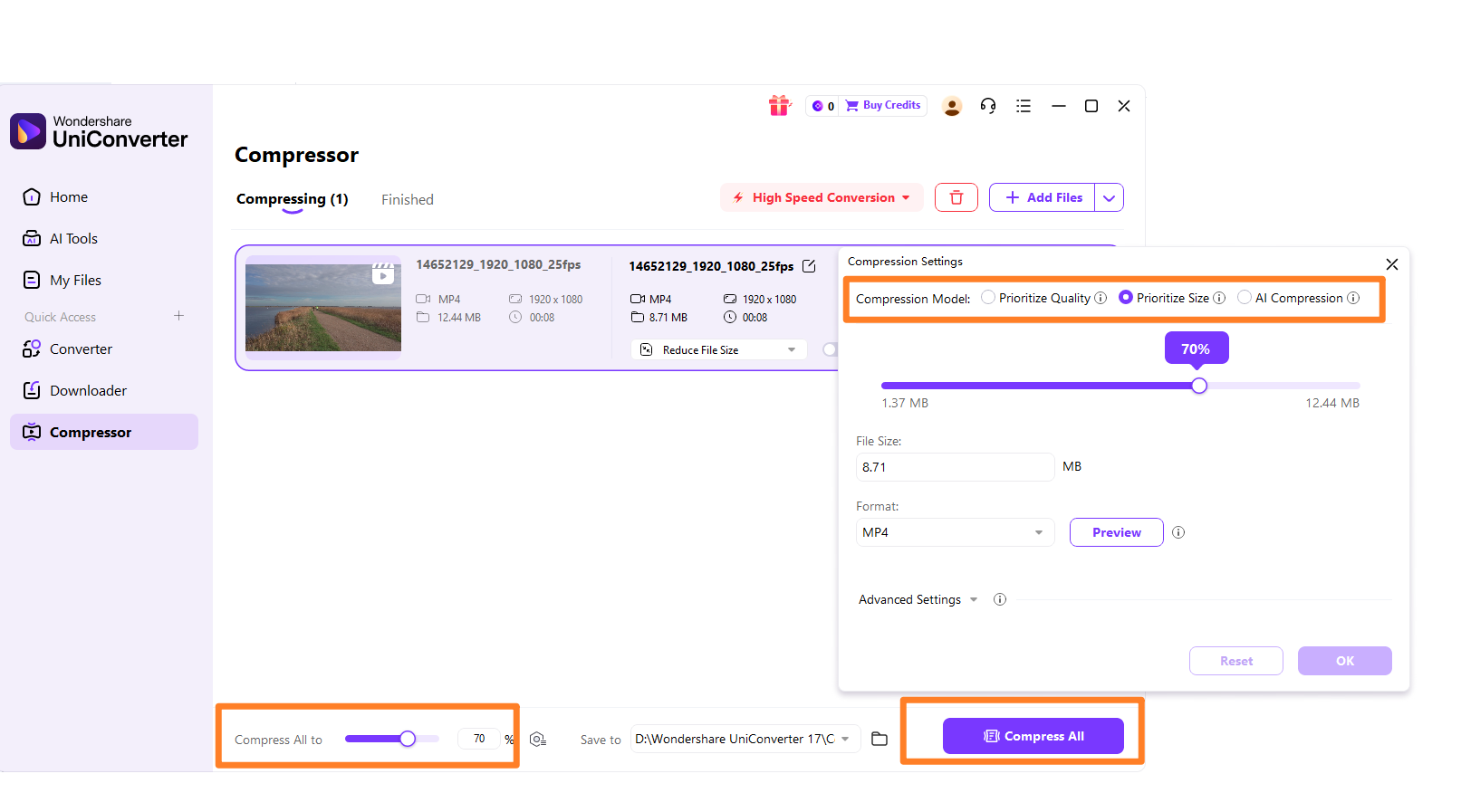
Step 3: Choose Required Parameters
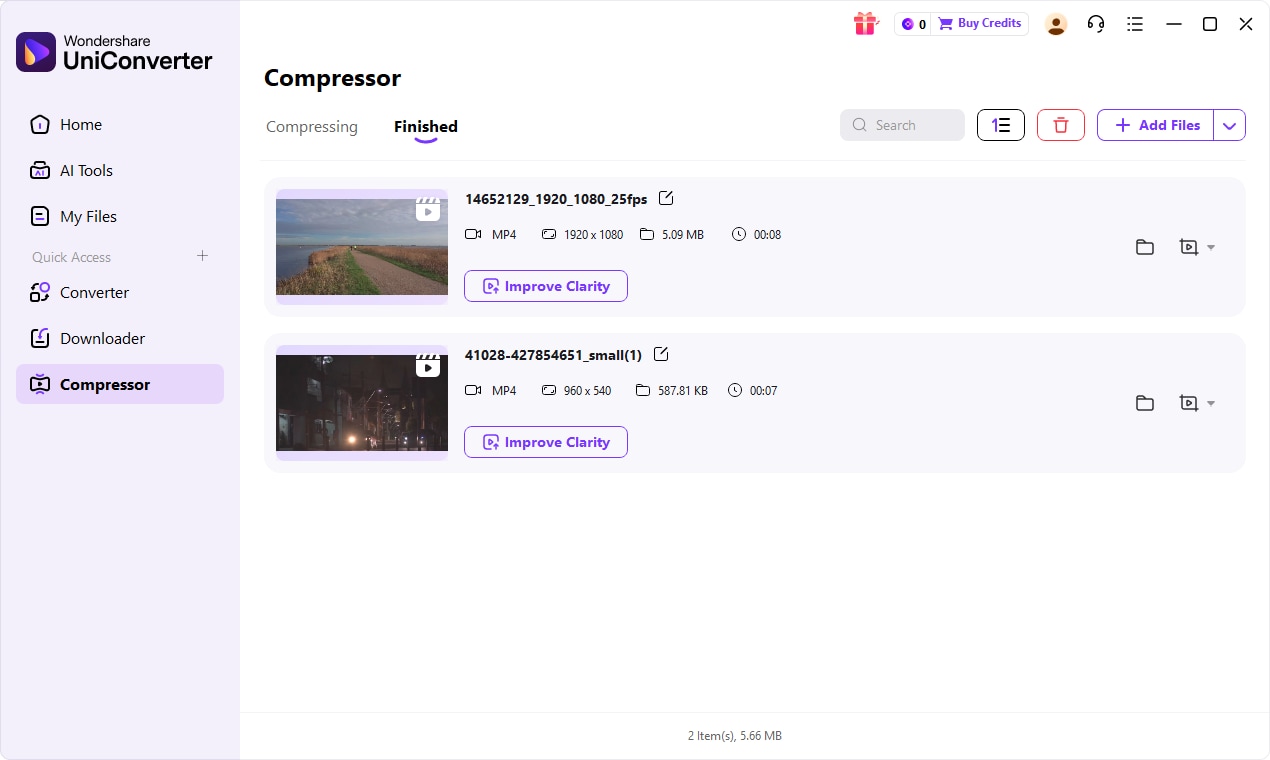
Step 4: Save the Compressed File

Need a Better MP3 Compressor Alternative?
Part 7: Final Verdict and Recommendations
After exploring MP3Compress and its alternatives, it's clear that the best tool depends entirely on your specific needs. For casual users and those who simply need to quickly reduce the size of a few MP3 files for sharing or storage, MP3Compress offers a straightforward, user-friendly experience. Its efficiency in file size reduction and batch processing capabilities make it a solid choice for quick compression tasks without much fuss. Content creators and podcasters, who frequently deal with large audio files for web and mobile distribution, will also find MP3Compress beneficial for optimizing their content for faster downloads and lower bandwidth consumption. However, for professional audio engineers or anyone requiring advanced editing features, lossless compression, or highly customizable audio parameters, MP3Compress will fall short. In such scenarios, a more robust digital audio workstation or a comprehensive multimedia tool like UniConverter would be a more appropriate choice, offering the versatility and control needed for professional-grade work. Ultimately, for users seeking an all-in-one multimedia solution that goes beyond basic compression, providing extensive format support, editing capabilities, and a stable, ad-free experience, UniConverter presents a compelling alternative to dedicated MP3Compress Audio Compressor review tools.
Part 8: FAQs
-
1. What is the best compression ratio for MP3 files?
The best compression ratio depends on your quality requirements and file size tolerance. A common recommendation is 128-192 kbps for good quality, while 256-320 kbps offers near-CD quality. For critical listening or professional use, I'd suggest higher bitrates or even lossless formats.
-
2. Does MP3Compress support other audio formats besides MP3?
While its name suggests MP3, some versions or related tools might offer limited support for other common formats like WAV or AAC. Always check the specific product's specifications. If you need broad format support, I'd recommend a tool like UniConverter.
-
3. Can I recover original audio quality after compression?
No, MP3 compression is a lossy process, meaning some data is permanently removed. You cannot fully recover the original quality after compression. That's why it's always a good idea to keep a copy of your original, uncompressed audio if quality is paramount.
-
4. Is MP3Compress safe to use?
Reputable versions of MP3Compress are generally safe. However, be cautious of unofficial downloads or websites that may bundle malware or unwanted software. Always download from official sources or trusted platforms to ensure safety.
-
5. What are the main advantages of using an audio compressor?
The main advantages include reducing file size for easier sharing and storage, faster streaming/download times, and optimizing audio for specific platforms or devices. For example, I use it to make my podcast episodes load faster for my listeners.
