
- Mixcraft Compressor Value: Ideal for beginners and home studios, offering intuitive controls and presets for quick results.
- Feature Comparison: Mixcraft offers basic, integrated compression; UniConverter provides fast, lossless, general media compression; Pro-C 2 is for advanced, transparent control.
- User Suitability: Mixcraft suits home musicians and podcasters; not for professional mastering engineers needing surgical precision.
- Limitations: Mixcraft's compressor lacks advanced sidechaining, detailed metering, and can introduce artifacts with aggressive settings.
- UniConverter Alternative: For efficient, high-quality audio/video compression beyond DAW limits, UniConverter is a powerful, user-friendly solution.
In this article
- Part 1: What is Mixcraft Audio Compressor?
- Part 2: Mixcraft Audio Compressor: Core Features, Pros, and Cons
- Part 3: Mixcraft Audio Compressor: Ideal Users and Use Cases
- Part 4: Mixcraft Audio Compressor and Alternatives Comparison
- Part 5: Risks and Pitfalls to Consider
- Part 6: How to Use UniConverter to Compress Efficient Audio and Video
- Part 7: Conclusion
- Part 8: FAQs
Mixcraft Audio Compressor: A Deep Dive into Audio Dynamics
When you're diving into music production, one of the most crucial tools in your arsenal is an audio compressor. It's the secret sauce that can make your tracks sound polished, professional, and impactful. In this Mixcraft Audio Compressor review, I'll explore how this built-in tool stacks up against the competition, helping you understand its strengths and weaknesses. I'll guide you through its features, ideal use cases, and potential pitfalls, ultimately helping you decide if it's the right fit for your audio production needs.
Part 1: What is Mixcraft Audio Compressor?
Mixcraft, a popular Digital Audio Workstation (DAW), comes equipped with a native audio compressor designed to help users manage the dynamic range of their audio. This built-in tool is part of Mixcraft's comprehensive suite of effects, aiming to provide an all-in-one solution for music creators. My goal in this review is to dissect the Mixcraft Audio Compressor's capabilities, comparing it to other industry-standard compressors and offering insights into its practical application. I want to address the common challenges faced by musicians and producers when it comes to achieving a balanced and professional sound.
The Role of Audio Compression in Music Production
* Taming Dynamics: Compression helps to reduce the difference between the loudest and quietest parts of an audio signal, making it sound more consistent.
* Adding Punch and Sustain: By reducing peaks and raising quieter sections, compression can make instruments like drums and bass sound more impactful and sustained.
* Achieving a Polished Mix: A well-compressed mix sounds more cohesive and professional, allowing individual elements to sit better together.
* Enhancing Clarity and Presence: Strategic compression can bring vocals and lead instruments to the forefront, making them more audible and present in the mix.
Part 2: Mixcraft Audio Compressor: Core Features, Pros, and Cons
The Mixcraft Audio Compressor is an integrated effect within the Mixcraft DAW, offering fundamental dynamic range control. Its core capabilities revolve around standard compression parameters like Threshold, Ratio, Attack, and Release, allowing you to shape the dynamics of your audio. It's designed for straightforward application, whether you're working on individual tracks or the master bus.
- Intuitive Interface for Beginners: The layout is clean and easy to understand, making it accessible for those new to compression.
- Versatile Presets for Quick Application: A good selection of factory presets allows for instant results on various instruments and vocals.
- Low CPU Usage for Efficient Workflow: It's light on system resources, which is great for projects with many tracks and effects.
- Real-time Visual Feedback: You can see the gain reduction happening in real-time, which helps in understanding its effect.
- Integrated within Mixcraft: No need for external plugins, it's always there when you need it within your Mixcraft projects.
- Pros:
- Intuitive Interface for Beginners
- Versatile Presets for Quick Application
- Low CPU Usage for Efficient Workflow
- Cons:
- Limited Advanced Control for Experienced Engineers
- Less Transparent Sound Compared to High-End Alternatives
Part 3: Mixcraft Audio Compressor: Ideal Users and Use Cases
From my experience, the Mixcraft Audio Compressor shines brightest for specific types of users and production scenarios. It's not a one-size-fits-all solution, and understanding its strengths and limitations in context is key to getting the most out of it.
- Best Use Case: Home Studio Musicians and Podcasters
- Scenario: As a budding musician, I often need to quickly even out vocal levels and add punch to drums without getting bogged down in complex settings. Mixcraft's compressor offers a straightforward solution for achieving a polished sound, allowing me to focus more on my creative flow and less on intricate audio engineering. It's perfect for getting my demos sounding good for sharing.
- Limiting Use Case: Professional Mastering Engineers
- Scenario: When I'm working on a commercial track that requires surgical precision and extreme transparency for mastering, Mixcraft's compressor simply doesn't cut it. It lacks the nuanced control over parameters like knee, detection types, and advanced sidechaining that I need to finalize a track for commercial release. The sonic fidelity required for such demanding tasks often necessitates more specialized and high-end compression tools.
Part 4: Mixcraft Audio Compressor and Alternatives Comparison
When I look at the landscape of audio compressors, the Mixcraft Audio Compressor occupies a specific niche. It's important to see how it stacks up against other popular options, especially when considering different needs and budgets.
| Feature/Competitor | Mixcraft Audio Compressor | UniConverter | FabFilter Pro-C 2 | Waves CLA-2A |
| Processing Speed | Fast | Very Fast (GPU Accelerated) | Fast | Medium |
| Output Quality | Good | Excellent (Lossless) | Excellent | Excellent |
| Ease of Use | High | Very High | Medium | Medium |
| Customer Support | Mixcraft Community | 24/7 Dedicated | Excellent | Good |
| Security | Local Processing | High | High | High |
| Price Point | Low (Bundled) | Medium (Subscription/Lifetime) | High | Medium |
Key Differentiators: Simplicity vs. Sophistication
From my perspective, the Mixcraft Audio Compressor excels in simplicity and ease of use, making it an excellent choice for beginners or those who need quick, effective compression without a steep learning curve. UniConverter, while not a DAW compressor, offers unparalleled ease of use for general audio compression and conversion, with a focus on speed and quality for a broader range of tasks. FabFilter Pro-C 2, on the other hand, is a powerhouse for advanced users, offering surgical control and pristine transparency, but at a higher price and with a steeper learning curve. Waves CLA-2A provides a classic analog sound emulation, great for adding character, but it's a specific flavor that might not suit every situation. If you prioritize quick, clean compression within your DAW, Mixcraft is solid. For general audio file compression with speed and quality, UniConverter is a strong contender. For professional-grade, transparent, and highly customizable compression, FabFilter Pro-C 2 is a go-to, while Waves CLA-2A is for those chasing a specific vintage vibe.
Part 5: Risks and Pitfalls to Consider
While the Mixcraft Audio Compressor is a handy tool, there are several risks and pitfalls I've encountered that you should be aware of, especially if you're aiming for professional-sounding results. Understanding these can help you avoid common mistakes and make informed decisions about your compression workflow.
Over-Compression Leading to Unnatural Sound
One of the biggest dangers with any compressor, including Mixcraft's, is over-compression. It's easy to push the settings too far in an attempt to make everything loud and consistent. However, this can lead to a "squashed" or "pumped" sound, where the audio loses its natural dynamics and sounds lifeless or artificial. Vocals can sound choked, drums can lose their punch, and the overall mix can become fatiguing to listen to. I've learned that less is often more when it comes to compression.
Lack of Sidechaining Options for Creative Effects
Mixcraft's built-in compressor is fairly basic, and one significant limitation I've noticed is the lack of advanced sidechaining capabilities. Sidechain compression is crucial for many modern production techniques, such as ducking bass with the kick drum to create space, or creating rhythmic pumping effects. Without robust sidechaining, you're limited in your creative options and might struggle to achieve certain contemporary sounds that rely heavily on this feature.
Potential for Digital Artifacts with Aggressive Settings
When you push the Mixcraft compressor to extreme settings, especially with fast attack and release times on complex audio, you might start to introduce unwanted digital artifacts. These can manifest as subtle clicks, pops, or a general harshness in the sound. While it's generally clean at moderate settings, I've found that it doesn't handle aggressive processing as gracefully as some higher-end plugins, which are designed with more sophisticated algorithms to minimize such issues.
Limited Metering for Detailed Analysis
The metering provided by the Mixcraft Audio Compressor is functional but somewhat basic. It shows gain reduction, but it lacks more detailed analysis tools like RMS metering, peak hold, or a comprehensive visual representation of the input and output waveforms. This limited feedback can make it harder to precisely understand how the compressor is affecting your audio, especially for critical mixing and mastering decisions where visual accuracy is paramount.
Part 6: How to Use UniConverter to Compress Efficient Audio and Video
For general file-size reduction outside a DAW environment, UniConverter is often the more practical choice. It gives me a much simpler workflow for both audio compression and video compression, especially when I’m dealing with multiple formats or larger batches of files. I also like that it supports GPU acceleration, broad format compatibility, and more stable output than many single-purpose tools. For video projects, it can even help compress videos without quality loss as much as possible, which makes it a dependable all-in-one option for everyday media compression and conversion. .
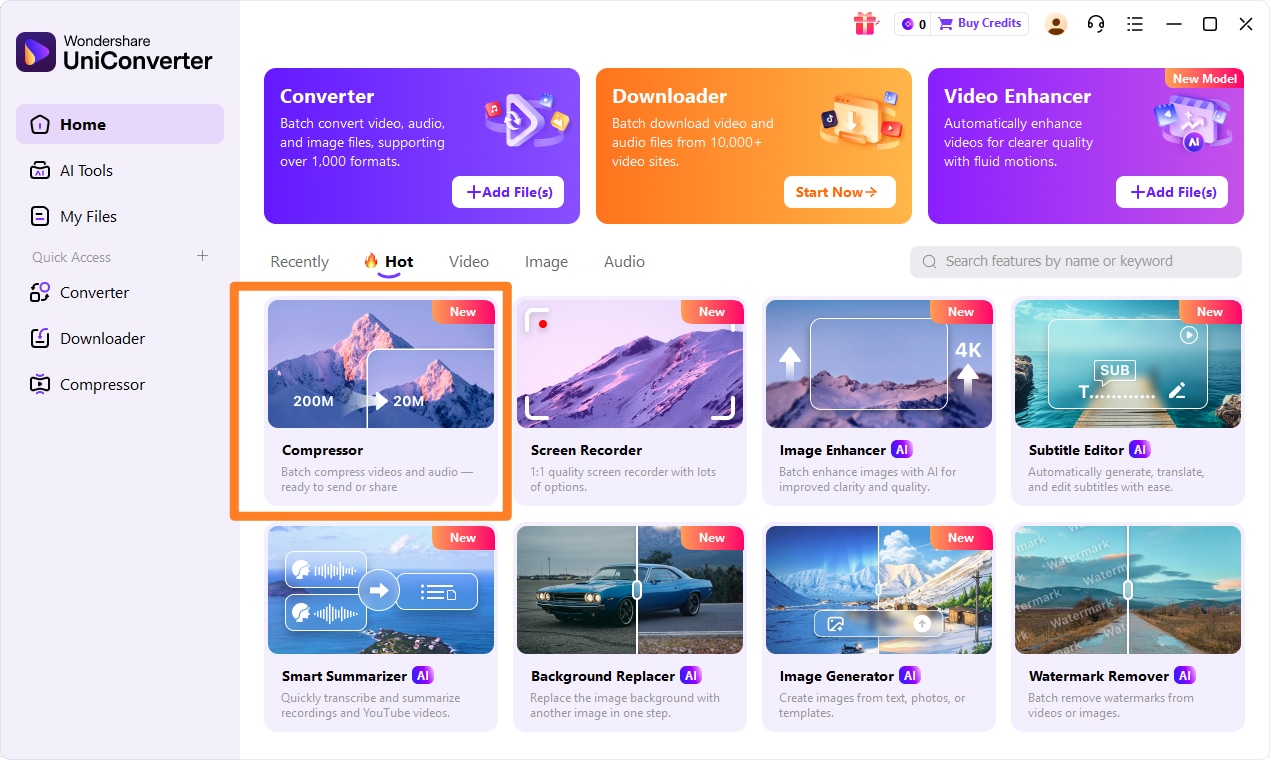
Step 1: Open UniConverter and Choose Compressor
Open UniConverter and select Compressor from the main screen.
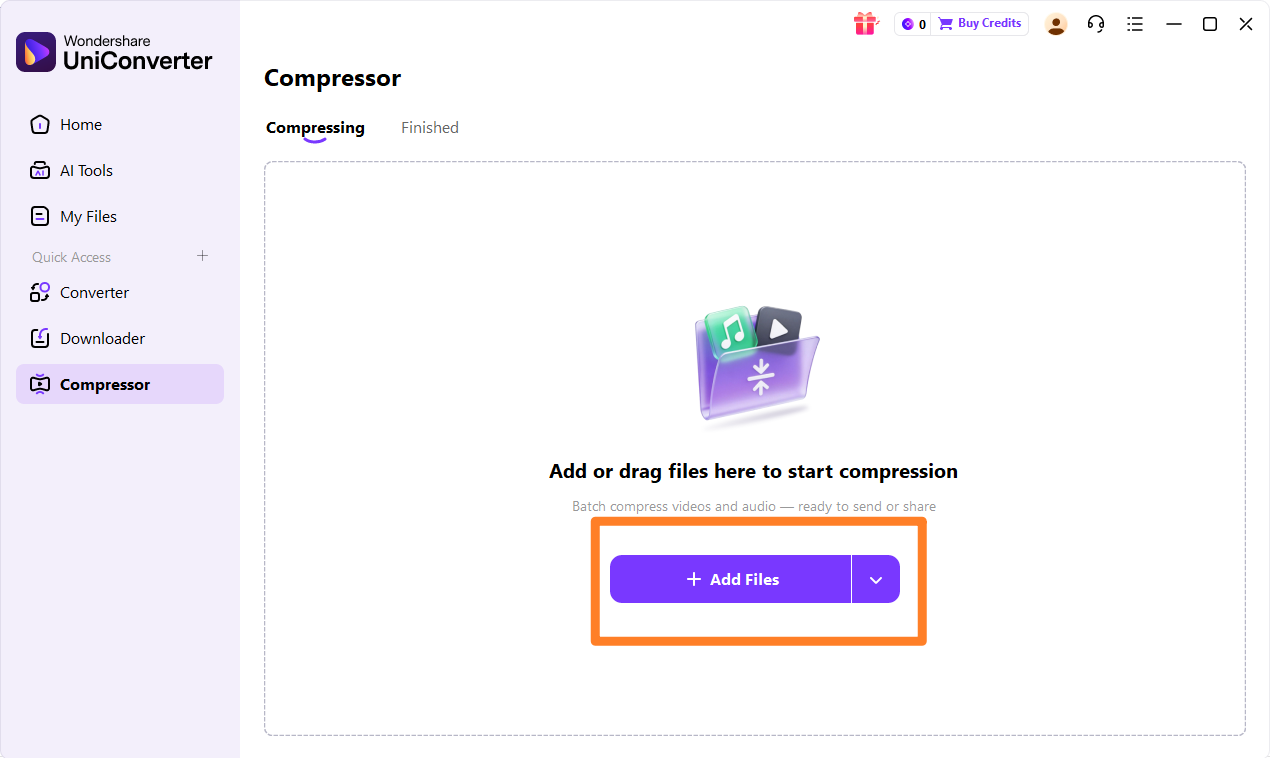
Step 2: Upload the Video, Audios or Images
Upload your video, audio, or image files.
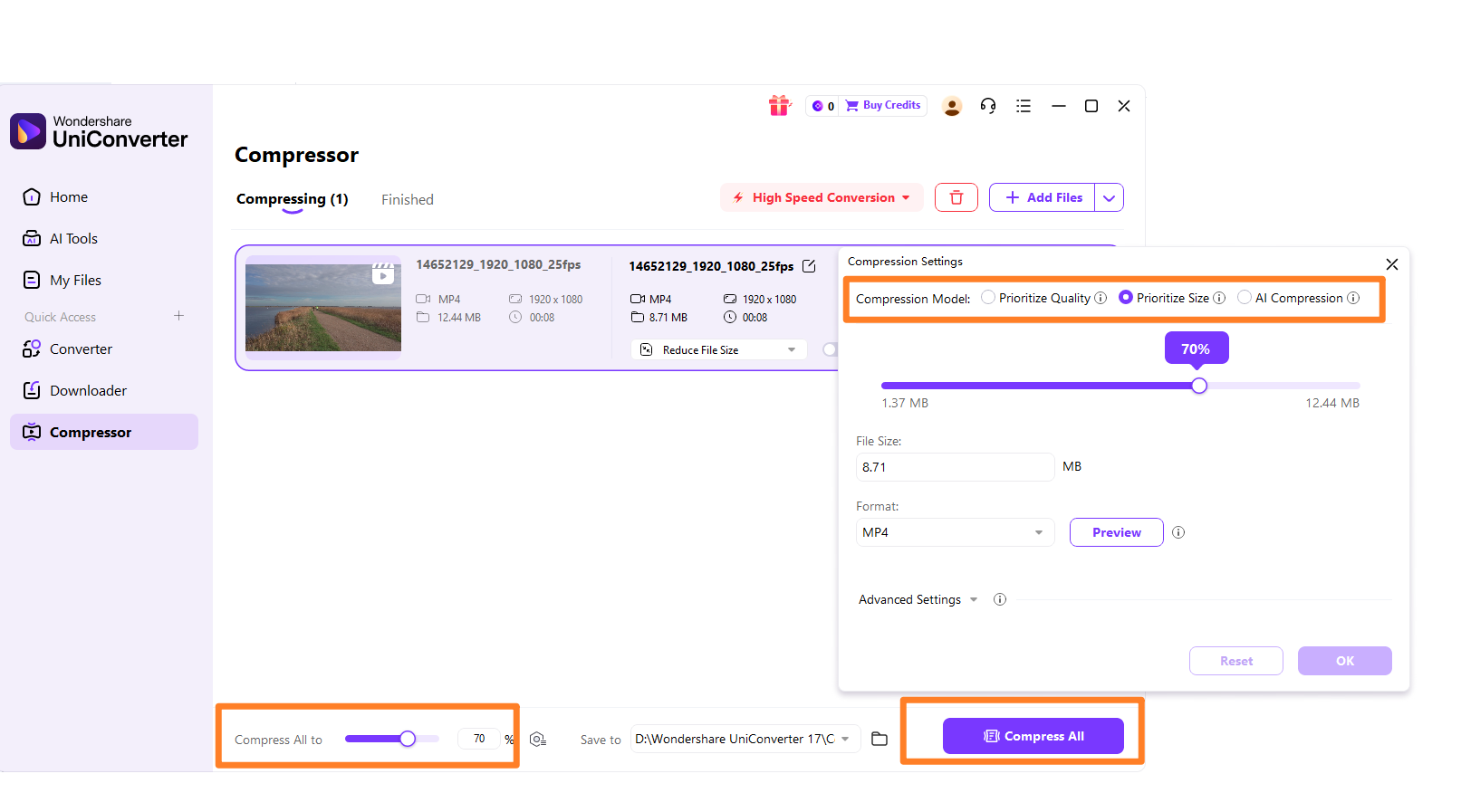
Step 3: Choose Required Parameters
Adjust the compression settings as needed.
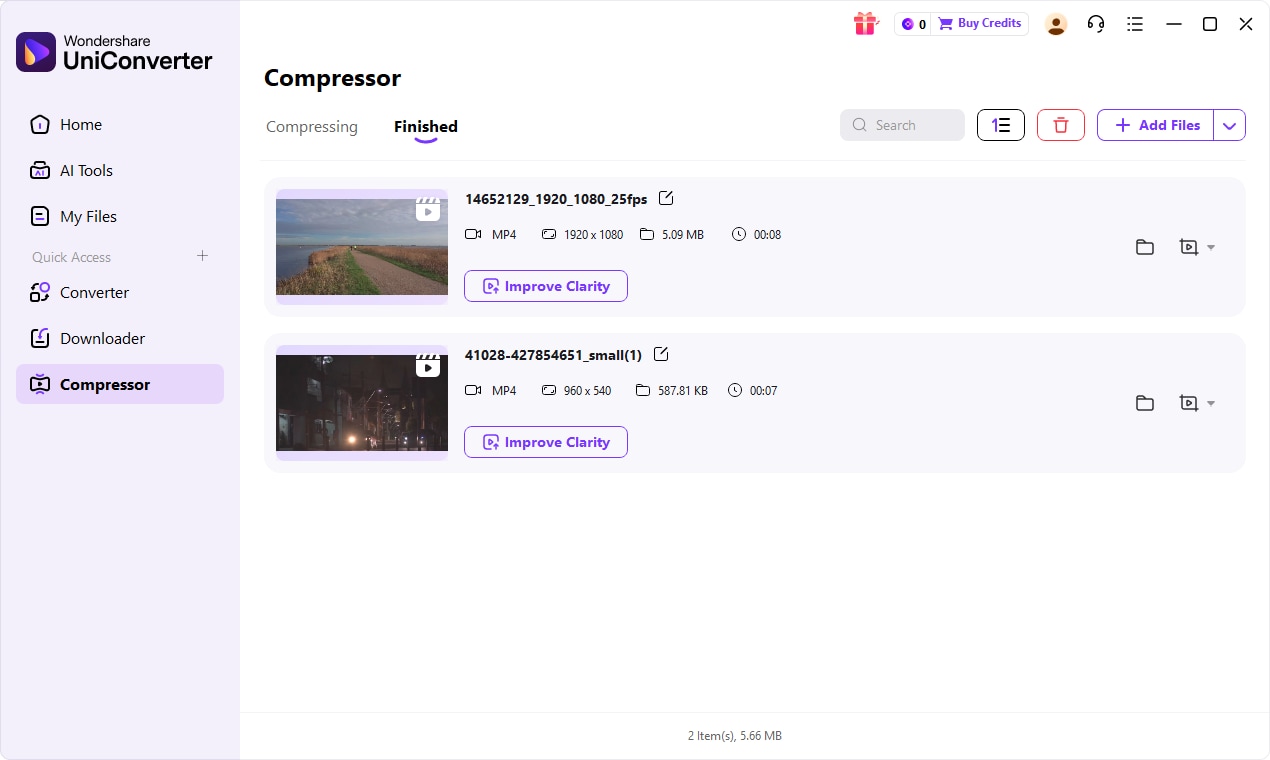
Step 4: Save the Compressed File
Click Compress and save your file.

Seeking a Mixcraft Audio Compressor Alternative?
Part 7: Conclusion
In conclusion, my Mixcraft Audio Compressor review reveals it to be a highly accessible and efficient tool, particularly for beginners and home studio enthusiasts working within the Mixcraft environment. Its intuitive interface, useful presets, and low CPU usage make it an excellent starting point for learning about and applying audio compression. However, its limitations in advanced control, transparency, and specific features like robust sidechaining mean it falls short for professional mastering engineers or those requiring surgical precision. For general audio and video compression needs outside of a DAW, UniConverter stands out as a versatile and powerful alternative, offering a seamless experience with high-quality results. Ultimately, your choice should align with your skill level, specific project requirements, and budget. For quick, integrated compression within Mixcraft, it's a solid choice, but for more demanding tasks or broader media compression, exploring dedicated plugins or tools like UniConverter is highly recommended.
Part 8: FAQs
-
1. Is Mixcraft's audio compressor suitable for mastering?
While it can be used for basic level control, it's generally not recommended for professional mastering due to its limited advanced features and transparency. For mastering, I'd suggest more specialized plugins like FabFilter Pro-C 2 or dedicated mastering suites.
-
2. Can I use Mixcraft's compressor on individual tracks and the master bus?
Yes, you can apply the compressor to both individual tracks and the master bus within Mixcraft. It's a flexible tool for managing dynamics across your entire project.
-
3. Does Mixcraft's compressor offer different compression styles (e.g., VCA, FET, Opto)?
Mixcraft's built-in compressor is more of a general-purpose tool and doesn't typically emulate specific hardware compression styles. If you're looking for those specific sonic characteristics, you'll need to explore third-party VST plugins.
-
4. How does Mixcraft's compressor compare to free VST plugins?
Mixcraft's compressor offers a convenient, integrated solution, which is a big plus for workflow. However, many free VSTs, like TDR Nova or Kotelnikov, can provide more specialized or advanced compression options, often with better transparency and control, if you're willing to integrate them into your DAW.
-
5. What are the key parameters to understand when using Mixcraft Audio Compressor?
The key parameters you'll want to focus on are Threshold (when compression starts), Ratio (how much compression is applied), Attack (how quickly compression engages), and Release (how quickly compression disengages). Mastering these will give you significant control over your audio's dynamics.
