
- Value: Media.io offers quick, cloud-based video compression for easy sharing.
- Comparison: It excels in simplicity for casual users, unlike complex tools like HandBrake or FFmpeg.
- Decision: Choose Media.io for social media and quick tasks; UniConverter for robust, offline, quality compression.
- Risk: Be aware of potential quality loss, privacy concerns, and hidden costs with online freemium tools.
In this article
- Part 1: What is Media.io Video Compressor?
- Part 2: Media.io Video Compressor: Core Features, Pros & Cons
- Part 3: Who is Media.io Video Compressor For? Use Cases & Limitations
- Part 4: Media.io Video Compressor vs. Competitors: A Comparative Analysis
- Part 5: Risks and Pitfalls to Consider
- Part 6: How to Use UniConverter to Compress Efficient Audio and Video
- Part 7: Final Verdict & Recommendations
- Part 8: FAQs
Media.io Video Compressor Review: Optimizing Your Video Workflow
Welcome to my in-depth Media.io Video Compressor review. In today's digital landscape, where video content reigns supreme, the ability to efficiently manage and share high-quality videos is paramount. However, large file sizes often hinder this process, leading to slow uploads, storage issues, and a frustrating user experience. This review aims to dissect Media.io Video Compressor, evaluating its capabilities, comparing it against key competitors, and ultimately helping you decide if it’s the right tool for your video compression needs.
Part 1: What is Media.io Video Compressor?
Media.io Video Compressor is an online, cloud-based tool designed to reduce the file size of your video content without significant loss of quality. Developed by Wondershare, a company known for its suite of creative software, Media.io positions itself as an accessible solution for anyone needing quick and easy video compression. My goal with this review is to determine if this tool truly delivers on its promise of efficient, high-quality compression, especially when faced with the diverse demands of modern video workflows. I'll be looking into its features, performance, and overall utility for various user types.
The Growing Need for Efficient Video Compression
The explosion of video content across social media, professional platforms, and personal archives has created an urgent demand for effective compression tools.
* Social Media Sharing: Platforms often have file size limits, making compression essential for quick uploads and broad reach.
* Storage Management: Large video files consume significant storage space, both locally and in the cloud, necessitating efficient compression.
* Bandwidth Conservation: Smaller files mean faster downloads and smoother streaming, improving the user experience for viewers with varying internet speeds.
* Email and Messaging: Sharing videos via email or messaging apps is often impossible without prior compression due to strict attachment size limits.
Part 2: Media.io Video Compressor: Core Features, Pros & Cons
Media.io Video Compressor offers a straightforward approach to video file size reduction. Its core capabilities revolve around simplifying the compression process for a wide audience. The platform supports a multitude of video formats, including MP4, MOV, AVI, and WMV, making it versatile for various source files. It allows you to adjust resolution, bitrate, and output format, giving you some control over the final compressed file. The cloud-based nature means you don't need to download any software, and processing is handled remotely, theoretically speeding up the process.
Pros:
* Intuitive User Interface for Quick Compression Tasks: I found the interface incredibly easy to navigate, making it perfect for quick, no-fuss compression.
* Broad Compatibility with Various Video Formats: I've thrown several different video formats at it, and Media.io has handled them all without a hitch.
* Cloud-Based Processing for Accessibility and Speed: Being able to access it from any device with an internet connection and not having to wait for local processing is a huge plus for me.
Cons:
* Limited Advanced Customization Options for Professional Users: For more granular control over codecs or specific compression algorithms, I often find myself wanting more options.
* Potential Dependency on Internet Connection for Optimal Performance: If my internet connection is spotty, the upload and download times can become a real bottleneck.
Part 3: Who is Media.io Video Compressor For? Use Cases & Limitations
Media.io Video Compressor is primarily designed for individuals who need a quick and easy way to reduce video file sizes without delving into complex settings. It's ideal for casual users, social media enthusiasts, and small business owners who frequently share video content online. If you're looking for a tool that gets the job done efficiently without a steep learning curve, this could be a great fit for you.
Best Use Case: Quick Compression for Social Media Sharing
I frequently use Media.io when I need to quickly compress a video for Instagram, Facebook, or TikTok. The platform's simplicity means I can upload a large file, choose a common output preset, and have a shareable video ready in minutes. It saves me time and ensures my videos meet platform requirements without me having to understand technical specifications.
Limited Use Case: High-Fidelity Archival or Professional Post-Production
However, for tasks requiring precise control over quality, specific codecs, or lossless compression for archival purposes, Media.io falls short. When I'm working on a professional video project where every pixel matters, or if I need to archive footage with minimal quality degradation, I wouldn't rely on Media.io. Its limited customization options mean I can't achieve the exact specifications needed for high-fidelity work or integrate it seamlessly into a complex post-production workflow.
Part 4: Media.io Video Compressor vs. Competitors: A Comparative Analysis
When it comes to video compression, Media.io Video Compressor stands out for its user-friendliness, but it's important to see how it stacks up against other popular tools. I've often found myself switching between these based on my specific needs.
| Feature/Product | Media.io Video Compressor | HandBrake | FFmpeg | Online Video Converter |
| Ease of Use | High | Medium | Low | High |
| Customization | Basic | Advanced | Expert | Basic |
| Offline Capability | No | Yes | Yes | No |
| Price Model | Freemium | Free | Free | Freemium |
| Target User | Casual | Enthusiast | Developer | Casual |
Key Differentiators: Simplicity vs. Power
From my experience, Media.io Video Compressor and Online Video Converter are fantastic for quick, casual compression tasks where I prioritize speed and ease of use over granular control. They are perfect for preparing videos for social media or sending via email. HandBrake, on the other hand, is my go-to when I need more control over the output, like specific codecs or advanced filters, and I don't mind a slightly steeper learning curve. FFmpeg is for when I need to automate tasks or perform highly specialized conversions via command line; it's incredibly powerful but definitely not for the faint of heart. Ultimately, if you're a casual user, Media.io is a strong contender, but if you're an enthusiast or developer, HandBrake or FFmpeg will offer the power you crave.
Part 5: Risks and Pitfalls to Consider
While Media.io Video Compressor offers convenience, it's crucial to be aware of potential risks and pitfalls, especially when dealing with online services and free tiers. I've learned to be cautious about these aspects.
Data Privacy and Security Concerns
As a cloud-based service, uploading your videos means entrusting your data to a third party. I always consider what kind of content I'm uploading. For sensitive or proprietary video, I'd be wary of using any online compressor without thoroughly reviewing their privacy policy. There's always a risk, however small, of data breaches or unauthorized access.
Quality Degradation in Aggressive Compression
While Media.io aims to maintain quality, aggressive compression settings can lead to noticeable degradation. I've found that pushing the compression too far, especially with complex video scenes, can result in blockiness, artifacts, and a general loss of detail. It's a trade-off: smaller file size often means some compromise on visual fidelity.
Hidden Costs or Subscription Models
The "freemium" model often means that while basic features are free, advanced options, higher quality output, or larger file size limits are locked behind a paywall. I've encountered situations where I started a compression task only to find out I needed a subscription to download the result or process a larger file. Always check the pricing structure before committing to a lengthy upload.
In-App Advertisements and User Experience
Free online tools often rely on advertisements for revenue. While Media.io is relatively clean, some online compressors can be cluttered with intrusive ads, pop-ups, or even redirects that disrupt the user experience. This can be annoying and, in some cases, even lead to accidental clicks on malicious content.
Part 6: How to Use UniConverter to Compress Efficient Audio and Video
When other tools fall short—whether through limited batch compression, inconsistent results, or noticeable quality loss—I often turn to UniConverter as a more dependable alternative. It avoids many of the common issues I’ve experienced with online compressors and works especially well as a reliable video compressor for handling files more efficiently. I also like that it can help compress videos without quality loss as much as possible, while GPU acceleration improves processing speed. Beyond video, it also supports audio compression and image compression, making it a practical all-in-one solution for different media compression needs.
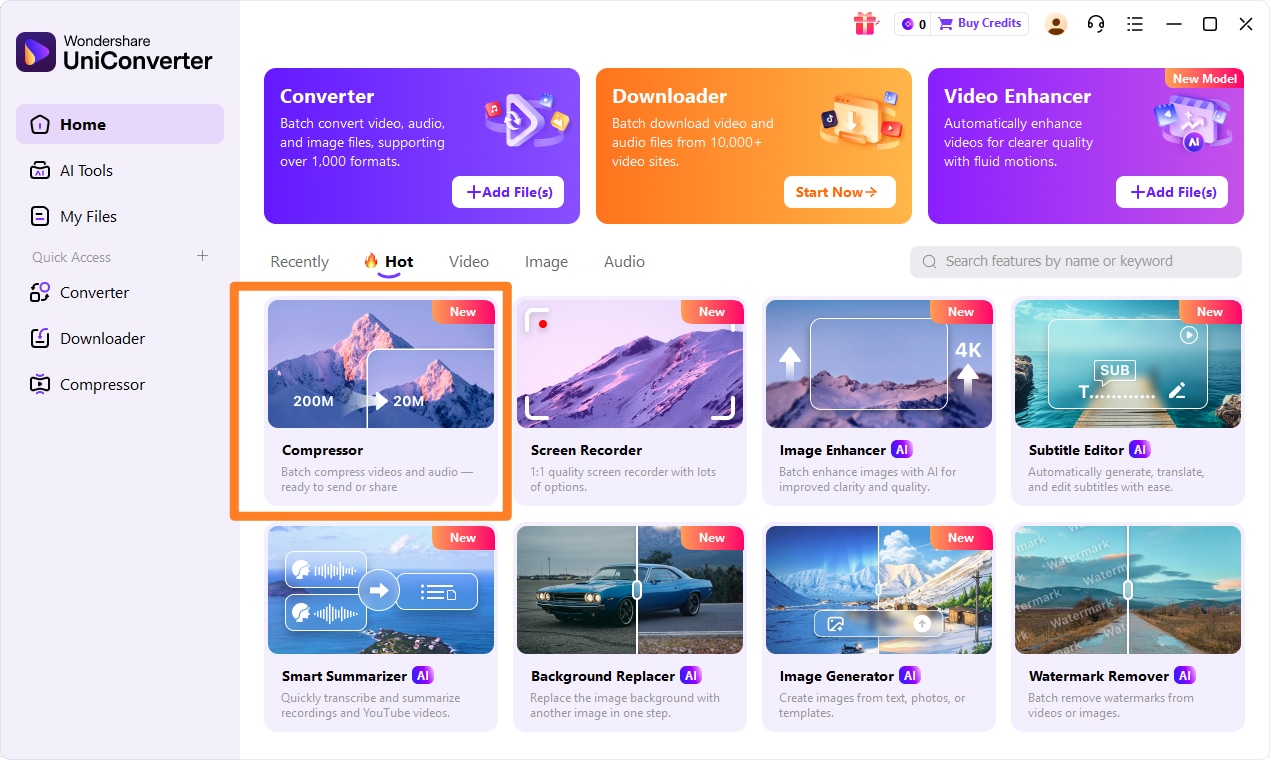
Step 1: Open UniConverter and Choose Compressor
Launch UniConverter on your desktop. On the left-hand sidebar, you'll find various tools. Click on the "Compressor" option.
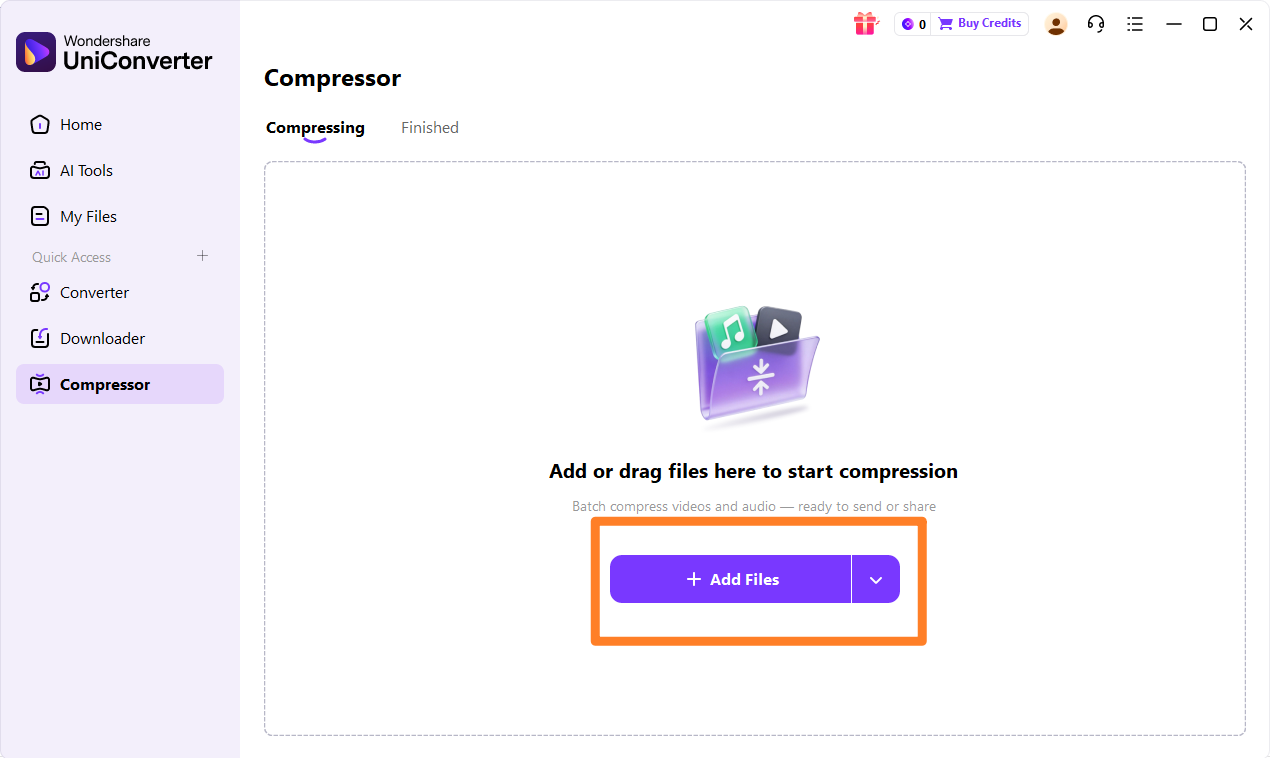
Step 2: Upload the Video, Audios or Images
Drag and drop your video, audio, or image files directly into the UniConverter window, or click "Add Files" to browse and select them from your computer.
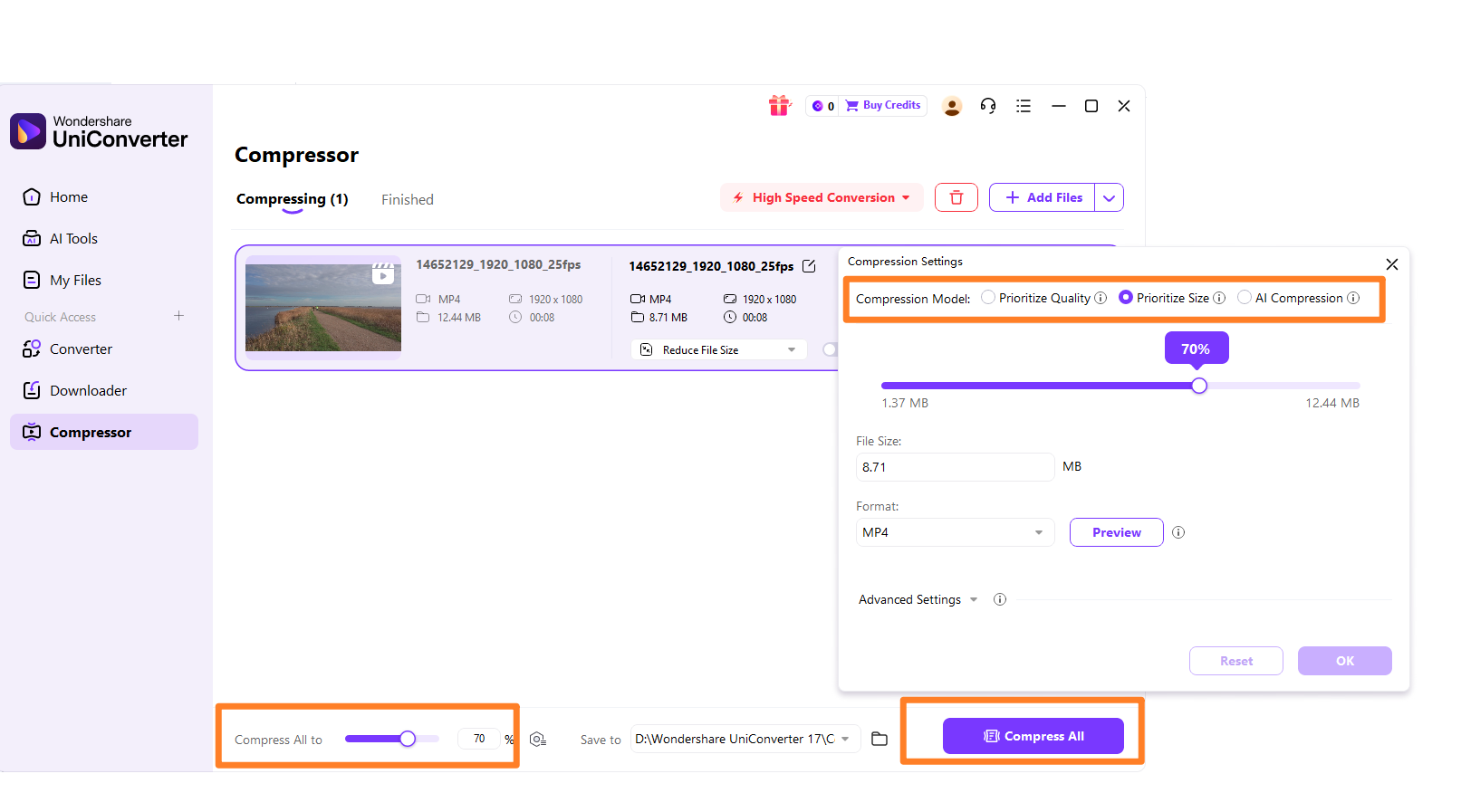
Step 3: Choose Required Parameters
Once your file is loaded, you can adjust the compression settings. Choose your desired output format, resolution, bitrate, and quality level. UniConverter provides presets or allows for custom adjustments.
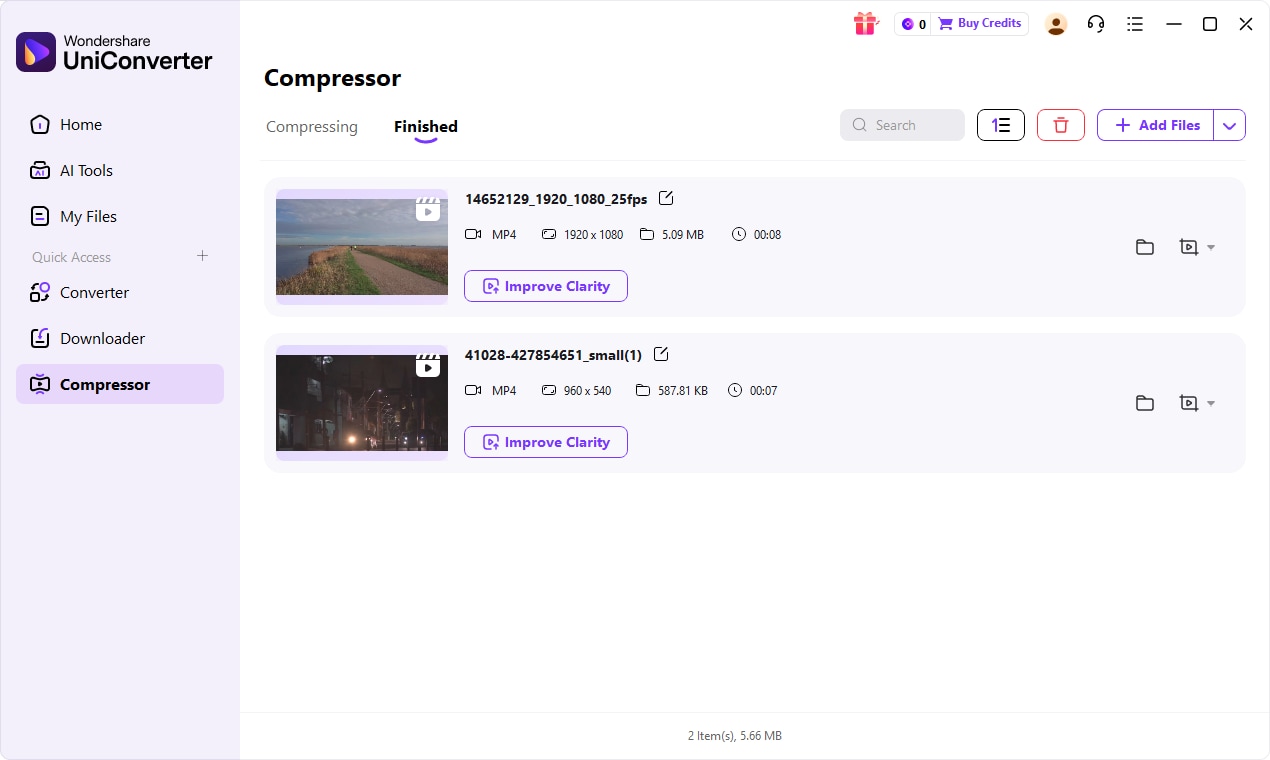
Step 4: Save the Compressed File
After setting your parameters, click the "Compress" button. UniConverter will process your file, and once complete, you can click "Save" to export the compressed file to your chosen destination.

Need a Media.io Video Compressor Alternative?
Part 7: Final Verdict & Recommendations
After thoroughly evaluating Media.io Video Compressor, I can confidently say it serves a specific niche very well. Its intuitive interface and cloud-based processing make it an excellent choice for quick, casual compression tasks, particularly for social media sharing. However, its limitations in advanced customization and dependency on internet connectivity mean it won't be the go-to for everyone. For users prioritizing simplicity and speed for everyday video sharing, Media.io is a solid option. For content creators on a budget who need more control but still want a user-friendly experience, exploring desktop alternatives like HandBrake might be a better fit, despite its slightly steeper learning curve. Professionals requiring precise control over every aspect of compression, high-fidelity output, or offline capabilities will find Media.io lacking and should look towards more robust desktop software or command-line tools like FFmpeg. Ultimately, the best tool depends entirely on your specific needs and technical comfort level. This Media.io Video Compressor review aims to guide you in making that informed decision.
Part 8: FAQs
-
1. Is Media.io Video Compressor completely free to use?
Media.io Video Compressor operates on a freemium model. You can use basic compression features for free, but there are often limitations on file size, processing speed, or the number of files you can compress. Premium features and higher limits usually require a subscription.
-
2. How does Media.io Video Compressor ensure video quality after compression?
Media.io uses various compression algorithms to reduce file size. It attempts to balance file size reduction with quality preservation. However, the degree of quality retention depends heavily on the chosen compression settings (like resolution and bitrate) and the original video's complexity. Aggressive compression will inevitably lead to some quality loss.
-
3. Can I compress multiple videos at once with Media.io Video Compressor?
Yes, Media.io Video Compressor generally supports batch compression, allowing you to upload and process multiple video files simultaneously. However, this feature might be limited in the free version, with premium plans offering more extensive batch processing capabilities.
-
4. What are the main differences between Media.io Video Compressor and desktop software?
The main differences lie in accessibility, features, and performance. Media.io is cloud-based, accessible from any browser, but relies on an internet connection. Desktop software like UniConverter offers offline capability, often more advanced customization options, faster processing (especially with GPU acceleration), and typically better privacy as files aren't uploaded to a server.
-
5. Is Media.io Video Compressor safe for my video files?
When using any online service, there's always a degree of trust involved. Media.io, being from a reputable company like Wondershare, generally adheres to privacy policies. However, for highly sensitive or confidential video files, using an offline desktop compressor like UniConverter is often a safer choice as your files never leave your local machine, minimizing privacy and security risks.
