
- Value: Media.io excels for quick, casual audio compression for sharing via email or social media.
- Comparison: Online tools like Media.io offer convenience, but desktop apps like UniConverter provide advanced control and offline functionality.
- Decision: Choose Media.io for simplicity and speed; opt for UniConverter for professional needs, batch processing, and superior quality control.
- Risk: Be aware of data privacy, potential quality loss, ads, and internet dependency with online compressors.
- Solution: UniConverter offers robust, offline audio/video compression with precise controls, bypassing online tool limitations.
In this article
- Part 1: What is Media.io Audio Compressor?
- Part 2: Media.io Audio Compressor: Core Features, Pros, and Cons
- Part 3: Media.io Audio Compressor: Users and Use Cases
- Part 4: Media.io Audio Compressor and Alternatives Comparison
- Part 5: Risks and Pitfalls to Consider
- Part 6: How to Use UniConverter to Efficiently Compress Audio and Video
- Part 7: Conclusion
- Part 8: FAQs
Media.io Audio Compressor Review: A Scenario-Based Comparison
When you're dealing with audio files, whether for work, school, or personal projects, you often encounter situations where file size becomes a critical factor. Sending large audio attachments via email, uploading them to social media platforms with strict size limits, or simply trying to save space on your device can be a real headache. This is where audio compressors come into play. They promise to shrink your files without significantly compromising quality, making your digital life much smoother. In this Media.io Audio Compressor review, I'll dive deep into one such online tool, comparing it against its competitors and exploring various scenarios to help you decide if it's the right fit for your needs.
Part 1: What is Media.io Audio Compressor?
Media.io Audio Compressor is a web-based tool designed to reduce the file size of audio tracks quickly and efficiently. It's part of the broader Media.io suite of online multimedia tools, aiming to provide accessible solutions for common digital media challenges. My goal with this review is to determine how well it lives up to its promise of easy, effective audio compression, and whether it stands out in a crowded market of similar services. I'll be looking at its features, performance, and overall utility from a user's perspective, considering different use cases and comparing it to other popular options.
The Landscape of Online Audio Compression Tools
The need for efficient audio compression has never been greater, driven by:
* Increasing demand for digital content sharing: From podcasts to voice notes, sharing audio is commonplace.
* Limitations of online platforms: Many email services and social media sites have strict file size caps.
* Storage constraints on devices: Smaller file sizes mean more space for other important data.
* The rise of remote work and collaboration: Quick sharing of audio assets is crucial for productivity.
Part 2: Media.io Audio Compressor: Core Features, Pros, and Cons
Media.io Audio Compressor is primarily built for simplicity and accessibility. Its core capabilities revolve around quickly reducing audio file sizes through various compression algorithms.
* Intuitive User Interface: The platform is designed for ease of use, allowing me to upload, compress, and download files with minimal clicks.
* Wide Range of Supported Audio Formats: It handles popular formats like MP3, WAV, M4A, OGG, and FLAC, making it versatile for most common audio files.
* Adjustable Compression Levels: I can choose between different compression ratios, balancing file size reduction with audio quality.
* Cloud-Based Processing: As an online tool, all compression happens on their servers, freeing up my local computer's resources.
* Direct Download: Once compressed, the file is immediately available for download.
Pros:
* Intuitive User Interface for Quick Tasks: I found it incredibly easy to navigate and use, even for someone who isn't tech-savvy.
* Wide Range of Supported Audio Formats: I rarely encountered a file type it couldn't handle.
* Cloud-Based Accessibility from Any Device: I could use it from my laptop, tablet, or phone without needing to install anything.
Cons:
* Limited Advanced Customization Options: For more precise control over bitrates or codecs, it falls short.
* Potential for Slower Processing with Large Files: Very large audio files sometimes took a noticeable amount of time to process.
Part 3: Media.io Audio Compressor: Users and Use Cases
Media.io Audio Compressor is a fantastic tool for specific scenarios, but it's not a one-size-fits-all solution.
Best Use Case: I've found it invaluable for quickly reducing audio file size for email attachments or social media sharing. For instance, if I record a voice memo on my phone and need to send it to a colleague, Media.io makes it a breeze to shrink it down to a manageable size without much fuss. Similarly, when I'm uploading a short audio clip to Instagram or Twitter, where file size limits are often tight, it performs admirably. It's perfect for those "get it done now" moments where speed and simplicity are paramount.
Limited Use Case: However, it's not the tool I'd reach for if I were a professional audio engineer requiring precise control over compression parameters and lossless output. For critical audio work, where every nuance of sound quality matters, Media.io's basic controls wouldn't cut it. I wouldn't use it for mastering tracks for a music album or preparing audio for broadcast, as the potential for quality degradation, even minor, is a concern in those high-stakes environments. It's a quick fix, not a professional studio tool.
Part 4: Media.io Audio Compressor and Alternatives Comparison
When I look at Media.io Audio Compressor, I see a tool that prioritizes ease of use. But how does it stack up against others?
| Feature/Scenario | Media.io Audio Compressor | Online Audio Converter | Audacity | UniConverter |
| Ease of Use for Beginners | Excellent | Good | Moderate | Excellent |
| Advanced Compression Settings | Basic | Moderate | Excellent | Excellent |
| Offline Functionality | No | No | Yes | Yes |
| Batch Processing | Limited | Yes | Yes | Yes |
| Output Quality Control | Basic | Moderate | Excellent | Excellent |
| Processing Speed (Avg. 5MB file) | ~15-30s | ~10-25s | Instant (local) | ~5-15s |
| Customer Support | Email/FAQ | Email/FAQ | Community Forum | 24/7 Live Chat/Email |
| Security | Standard SSL | Standard SSL | Local (high) | Local (high) |
Media.io shines in its simplicity, making it ideal for quick, no-fuss compressions. Online Audio Converter offers a bit more control over output settings, which is a step up if I need to specify a bitrate. Audacity, being a desktop application, gives me unparalleled control and offline capabilities, but it has a steeper learning curve. UniConverter, on the other hand, strikes a balance, offering advanced features in a user-friendly package, often with faster processing due to GPU acceleration. If I need a quick online fix, Media.io is great; for anything more serious or offline, Audacity or UniConverter are my go-to choices.
Part 5: Risks and Pitfalls to Consider
While online audio compressors like Media.io offer undeniable convenience, it's crucial to be aware of the potential risks and pitfalls, especially when dealing with your valuable audio files.
Data Privacy Concerns with Online Tools
When I upload my audio files to an online service, I'm essentially entrusting my data to a third party. While Media.io states it deletes files after a certain period, there's always a lingering question about what happens to my data during processing. For sensitive or proprietary audio, this can be a significant concern. I always recommend reviewing the privacy policy of any online tool before uploading confidential information.
Impact of Compression on Audio Fidelity
The primary goal of compression is to reduce file size, which almost always comes at the cost of some audio quality. While Media.io aims to minimize this, I've noticed that aggressive compression settings can lead to audible artifacts, a loss of dynamic range, or a "muddier" sound. For casual listening or sharing, this might be acceptable, but for any professional or high-fidelity application, I'd be very cautious. It's a trade-off I always have to consider.
Advertisements and Upsells
As a free online service, Media.io, like many others, relies on advertisements and often pushes for upgrades to premium features or other products within its ecosystem. I've found that these can sometimes interrupt the workflow or be distracting. While understandable for a free service, it's something to be prepared for, especially if I'm looking for a completely seamless experience.
Internet Dependency for Usage
Being a cloud-based tool, Media.io Audio Compressor requires a stable internet connection to function. This means if I'm offline, or my connection is slow or unreliable, I simply can't use it. This limitation can be a significant drawback if I frequently work in environments with poor connectivity or need to process files on the go without data access.
Part 6: How to Use UniConverter to Efficiently Compress Audio and Video
Once online compressors start showing their limits—whether through restricted batch processing, uneven results, or obvious quality loss—a desktop alternative usually makes far more sense. That’s why I prefer UniConverter for day-to-day media management. It gives me a smoother way to handle video compression, audio compression, and related conversion tasks without the ads or internet dependency that come with many web-based tools. Broad format support and GPU acceleration keep processing fast, and for video files it can also help compress videos without quality loss as much as possible. With compression, conversion, and editing features built into one workflow, it works well as a practical all-in-one solution for managing media files more efficiently.
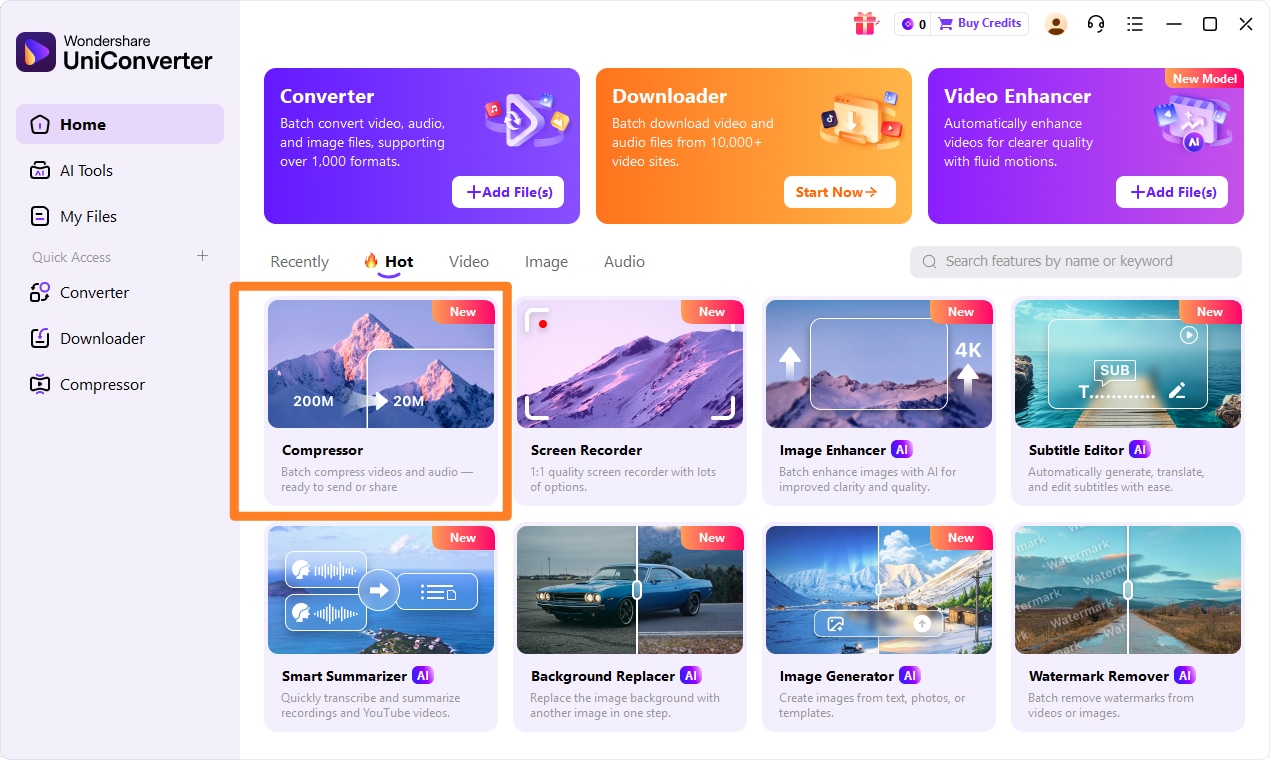
Step 1: Open UniConverter and Choose Compressor
I begin by launching UniConverter on my desktop. From the main interface, I navigate to the "Compressor" tab. This is where all my compression tasks commence.
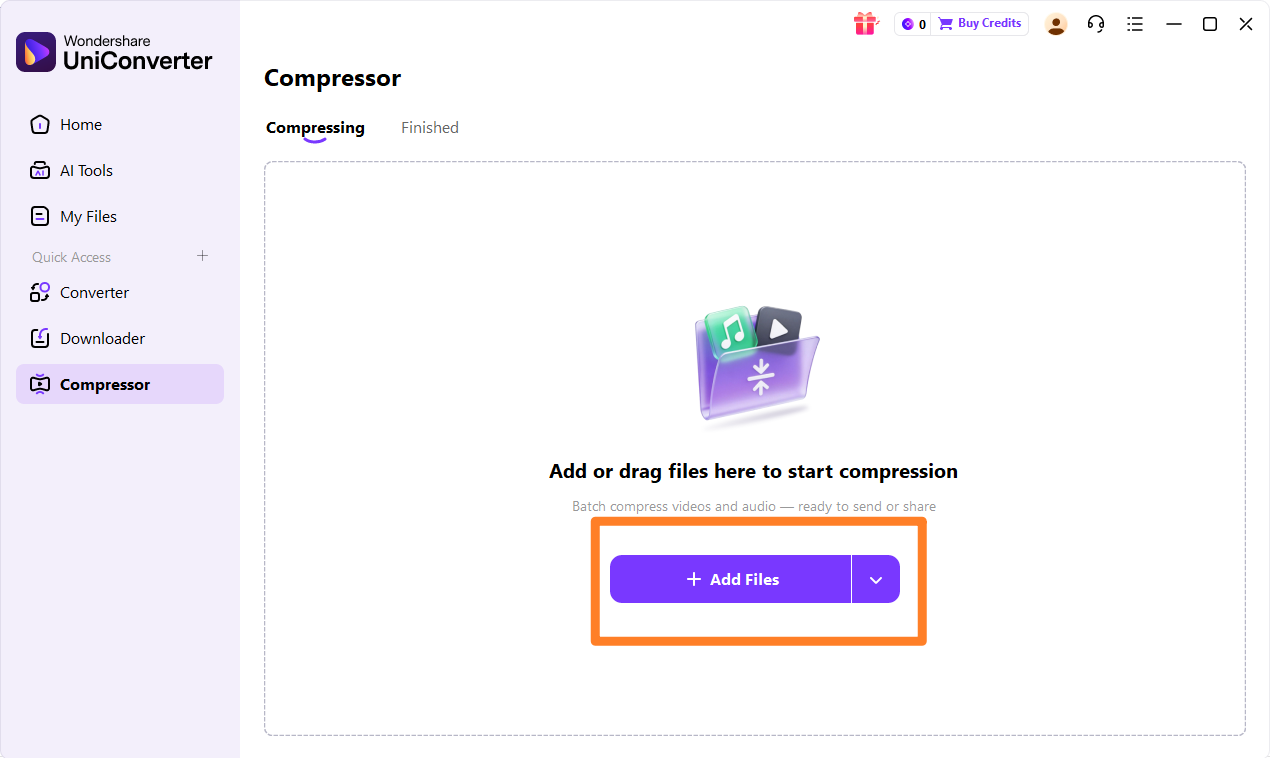
Step 2: Upload the Video, Audios or Images
Next, I simply drag and drop my audio files (or video/image files, as UniConverter handles those too) into the compressor window. Alternatively, I can click the "Add Files" button to browse and select them.
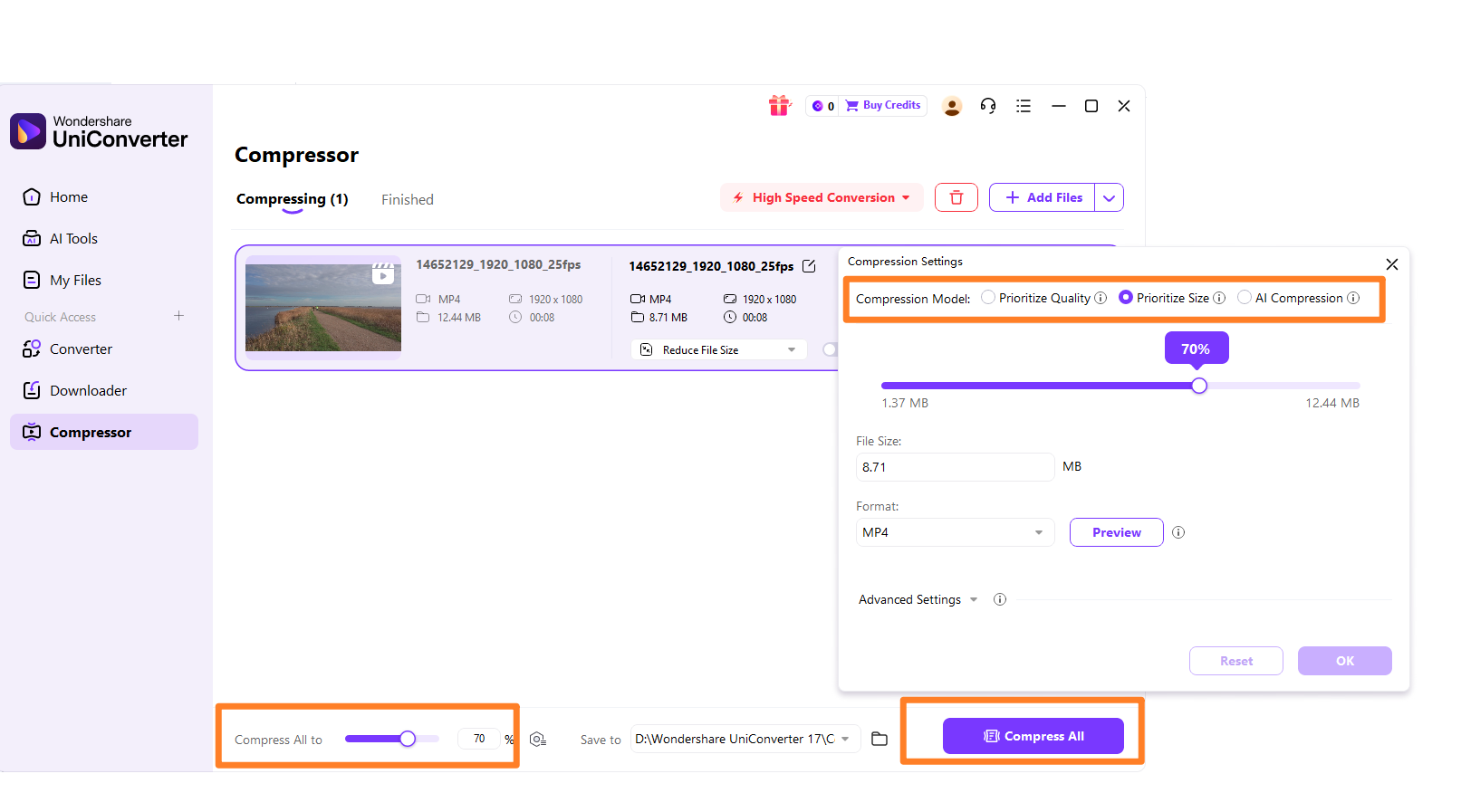
Step 3: Choose Required Parameters
Once my files are loaded, I can adjust the compression settings. UniConverter offers precise control over output size, format, bitrate, and quality, enabling me to achieve the ideal balance for my specific requirements.
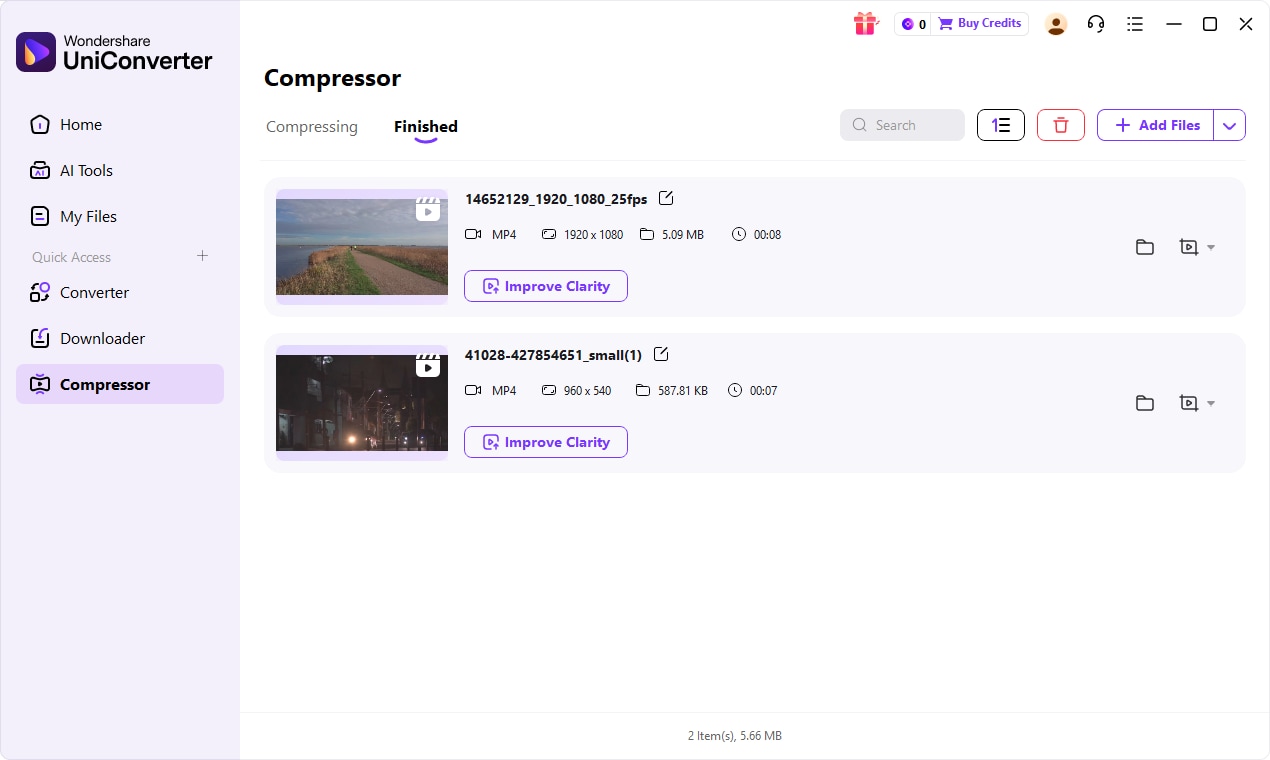
Step 4: Start Compression and Save Your Files
After configuring my desired parameters, I click the "Compress" button. UniConverter processes the files rapidly, often utilizing GPU acceleration. Upon completion, I can locate my compressed files in the designated output folder.

Need a Powerful Media.io Alternative?
Part 7: Conclusion
In conclusion, the Media.io Audio Compressor review reveals it to be an excellent choice for casual users and those needing quick, no-fuss audio file size reduction. Its intuitive interface and cloud-based accessibility make it incredibly convenient for tasks like shrinking files for email or social media. However, its limitations in advanced customization and potential for slower processing with large files mean it's not suitable for professional audio engineers or content creators who demand precise control and lossless output. For these more demanding users, or anyone prioritizing offline functionality and robust features, desktop alternatives like Audacity or UniConverter offer superior capabilities. Ultimately, your choice should align with your specific needs: convenience and speed for simple tasks versus comprehensive control and quality for professional applications.
Part 8: FAQs
-
1. Is Media.io Audio Compressor free to use?
Yes, it offers a free tier with certain limitations, typically regarding file size or daily usage.
-
2. Does Media.io Audio Compressor support batch processing?
Its batch processing capabilities are limited compared to more advanced desktop alternatives like UniConverter, which excels at handling multiple files simultaneously.
-
3. Can I compress audio without losing quality?
All compression, especially lossy compression, involves some degree of quality loss. Media.io aims to minimize this, but for truly lossless compression, you'd need specific codecs or professional software.
-
4. What are the best alternatives to Media.io Audio Compressor?
UniConverter is a strong alternative for comprehensive audio and video management, offering more control and offline functionality. Other popular options include Audacity for desktop editing and Online Audio Converter for another web-based solution.
-
5. Is Media.io Audio Compressor safe for my files?
While generally safe, users should always be aware of the data privacy policies for any online tool. For sensitive files, a secure desktop application like UniConverter might offer greater peace of mind as files are processed locally.
