
- Loom Compressor Value: Excellent for quick, convenient sharing within the Loom ecosystem.
- Feature Limitations: Lacks advanced controls for codecs, bitrates, and resolutions.
- Ideal Use Case: Perfect for rapid sharing of tutorials and demos; not for professional editing.
- Comparison Insight: Simplicity vs. control – Loom for ease, UniConverter for power and versatility.
- Potential Pitfalls: Cloud privacy, quality degradation, and reliance on Loom's ecosystem.
- UniConverter Advantage: Offers superior control, quality, and broad format support for serious compression.
In this article
- Part 1: What is Loom Video Compressor?
- Part 2: Loom Video Compressor: Core Features, Pros, and Cons
- Part 3: Loom Video Compressor: Who is it For? Ideal Scenarios vs. Limitations
- Part 4: Loom Video Compressor vs. Competitors: A Head-to-Head Battle
- Part 5: Potential Pitfalls and Considerations
- Part 6: How to Use UniConverter to Compress Efficient Videos
- Part 7: Conclusion
- Part 8: FAQs
When it comes to sharing video content, especially for tutorials, demos, or quick updates, the file size can often be a significant hurdle. Large video files consume bandwidth, take longer to upload and download, and can be a pain to manage. This is where video compressors come into play, and Loom, a popular screen recording tool, offers its own integrated solution. In this Loom Video Compressor review, I'll dive deep into its capabilities, comparing it against other market leaders to help you understand where it shines and where it falls short. My goal is to provide you with a comprehensive, scenario-based analysis so you can make an informed decision about whether Loom's offering meets your specific compression needs.
Part 1: What is Loom Video Compressor?
Loom Video Compressor is an integrated feature within the Loom ecosystem, designed to automatically optimize and reduce the file size of videos recorded and hosted on their platform. It's not a standalone application but rather a seamless part of the Loom experience, aiming to simplify the process of sharing video messages. For many users, particularly those already invested in Loom for screen recording and asynchronous communication, this built-in compressor offers a convenient solution to a common problem. However, the core question I aim to address in this review is whether this convenience comes at a cost, particularly in terms of compression quality, control, and versatility when compared to dedicated compression tools.
The Growing Need for Efficient Video Compression
* Bandwidth Limitations: Large video files strain internet connections, leading to slow uploads and downloads.
* Storage Constraints: Uncompressed videos quickly fill up cloud storage and local hard drives.
* Improved User Experience: Smaller files mean faster loading times and smoother playback for viewers.
* Mobile Accessibility: Compressed videos are more easily consumed on mobile devices with limited data plans.
Part 2: Loom Video Compressor: Core Features, Pros, and Cons
Loom Video Compressor, as an integral part of the Loom platform, focuses on providing a straightforward solution for reducing video file sizes. Its core capability lies in its automatic compression of recorded videos, making them more manageable for sharing. While it excels in simplicity, it's important to understand its specific strengths and limitations.
Core Features:
* Automatic Compression: Videos recorded with Loom are often automatically compressed upon upload.
* Cloud-Based Processing: Compression happens on Loom's servers, freeing up your local resources.
* Direct Sharing Integration: Compressed videos are immediately ready for sharing via Loom links.
* Basic Quality Adjustment: Offers some level of quality optimization, though not highly granular.
* No Additional Software Required: Operates entirely within the Loom web interface.
Pros:
* Seamless Integration with Loom's Recording Platform: If you're already using Loom for recording, the compressor is effortlessly integrated into your workflow.
* User-Friendly Interface for Quick Compressions: There's virtually no learning curve; the process is largely automated.
* Cloud-Based Processing for Accessibility: You can access and share compressed videos from any device with an internet connection.
Cons:
* Limited Advanced Compression Options: You won't find granular control over codecs, bitrates, or resolution.
* Dependency on Loom Ecosystem: It's primarily designed for videos recorded and hosted on Loom, limiting its use for external files.
Part 3: Loom Video Compressor: Who is it For? Ideal Scenarios vs. Limitations
Understanding who Loom Video Compressor is designed for is crucial in evaluating its effectiveness. It's a tool built for convenience within a specific ecosystem, and its strengths and weaknesses are directly tied to that design philosophy.
Best Use Case: Quick Sharing of Recorded Tutorials and Demos
If you're a content creator, educator, or business professional who frequently records screen captures, tutorials, or quick video messages using Loom, then its integrated compressor is incredibly useful. For example, when I need to send a quick walkthrough of a new software feature to my team, the automatic compression ensures the video is ready to share almost instantly, without me having to worry about large file sizes or manual compression steps. It's perfect for asynchronous communication where speed and ease of sharing are paramount, and the primary audience values content over pixel-perfect quality.
Limited Use Case: Professional Video Editing Workflows
However, if you're a professional video editor, filmmaker, or someone who demands precise control over video quality, codecs, and output formats, Loom Video Compressor will fall short. For instance, when I'm working on a client project that requires specific compression settings for broadcast or high-fidelity web delivery, Loom's limited options simply aren't sufficient. It doesn't offer the advanced features needed for color grading, multi-track editing, or exporting to specialized formats. It's not designed for post-production work where maintaining pristine quality and having extensive control are non-negotiable.
Part 4: Loom Video Compressor vs. Competitors: A Head-to-Head Battle
When evaluating Loom Video Compressor, it's essential to see how it stacks up against dedicated compression tools. Here's a comparison with some popular alternatives: UniConverter, HandBrake, and FFmpeg.
| Feature/Product | Loom Video Compressor | UniConverter | HandBrake | FFmpeg |
| Ease of Use | High | High | Medium | Low |
| Compression Quality | Good | Excellent | Very Good | Excellent |
| Advanced Features | Limited | Extensive | Moderate | Extensive |
| Price | Included with Loom | Subscription | Free | Free |
| Processing Speed | Fast (cloud) | Very Fast (GPU accel.) | Fast | Fast (CLI) |
| Output Formats | Limited (MP4) | Extensive (1000+) | MP4, MKV, WebM | Extensive (all) |
| Batch Processing | No | Yes | Yes | Yes |
| Offline Functionality | No | Yes | Yes | Yes |
Key Differentiators: Simplicity vs. Advanced Control
Loom Video Compressor's primary differentiator is its unparalleled simplicity and integration within the Loom ecosystem. It's a "set it and forget it" solution for Loom users. UniConverter, on the other hand, offers a user-friendly interface with a vast array of features, making it ideal for those who need both ease of use and powerful compression capabilities. HandBrake provides a good balance of control and accessibility for more technical users, while FFmpeg, a command-line tool, offers the ultimate in flexibility and power for those comfortable with coding. For me, if I need a quick share from Loom, its compressor is fine. But for any serious compression task, I'd lean towards UniConverter for its balance of power and simplicity, or HandBrake for more control without diving into command lines.
Part 5: Potential Pitfalls and Considerations
While the convenience of Loom Video Compressor is appealing, it's crucial to be aware of potential pitfalls and considerations, especially when dealing with cloud-based services and automatic compression. These factors can significantly impact your workflow and the quality of your output.
Data Privacy Concerns with Cloud Processing
When you upload videos to Loom, they are processed and stored on their cloud servers. This raises questions about data privacy and security. For sensitive internal communications or proprietary content, I always consider the implications of having my data reside on a third-party server. While Loom has security measures in place, it's a fundamental consideration for any cloud-based service. You're essentially trusting them with your video content.
Impact on Original Video Quality
Automatic compression, by its nature, involves making compromises to reduce file size. This often means a reduction in video quality. While Loom's compressor aims for a good balance, I've noticed that for videos where visual fidelity is critical – such as product demonstrations with fine details or high-resolution graphics – the compression can sometimes introduce artifacts or a noticeable drop in sharpness. It's a trade-off: convenience for potential quality degradation.
Hidden Costs or Subscription Tiers
While the basic Loom service and its compressor might seem free or included, it's important to understand the subscription tiers. Often, advanced features, higher resolution recordings, or increased storage limits are locked behind paid plans. If your compression needs grow, or you require specific functionalities, you might find yourself needing to upgrade, which can be an unexpected cost. Always check the pricing structure for the full scope of features.
Lack of Offline Functionality
Being a cloud-based tool, Loom Video Compressor requires an active internet connection. This means if I'm working offline or in an area with unreliable internet, I can't compress my videos. This limitation can be a significant bottleneck for users who frequently travel or work in environments without constant connectivity, forcing them to seek alternative desktop-based solutions for compression.
Part 6: How to Use UniConverter to Compress Efficient Videos
Sometimes, even the best online tools aren’t enough—especially when I need more control, offline access, or a broader set of media optimization features. In those situations, I usually turn to UniConverter as a more flexible all-in-one solution. It works especially well for image compression, while also supporting video compression and audio compression, which makes it much easier to manage different file types in one place. I also like that it can help compress videos without quality loss as much as possible, while GPU acceleration improves speed and overall efficiency. For me, it’s a practical alternative when online tools can’t deliver stable results or handle batch processing smoothly.
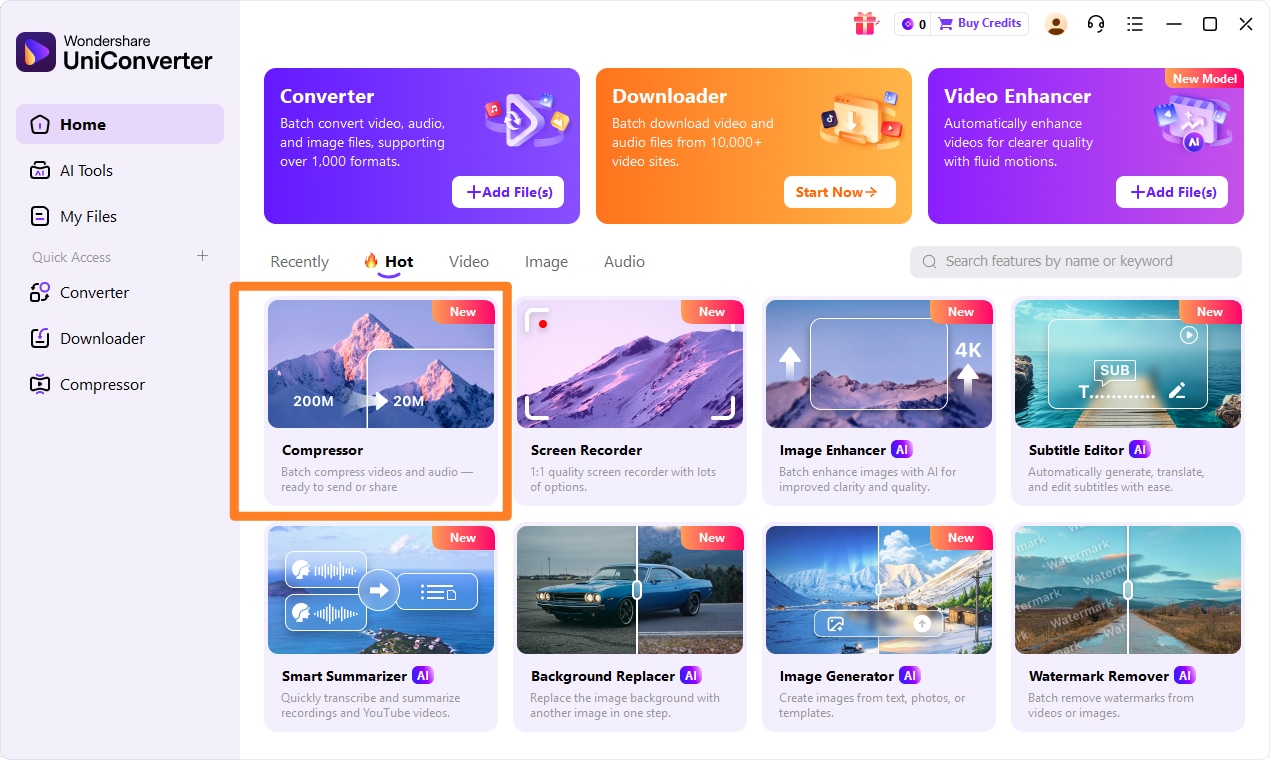
Step 1: Open UniConverter and Choose Compressor
Launch UniConverter on your computer. On the left sidebar, click on the "Video Compressor" tool.
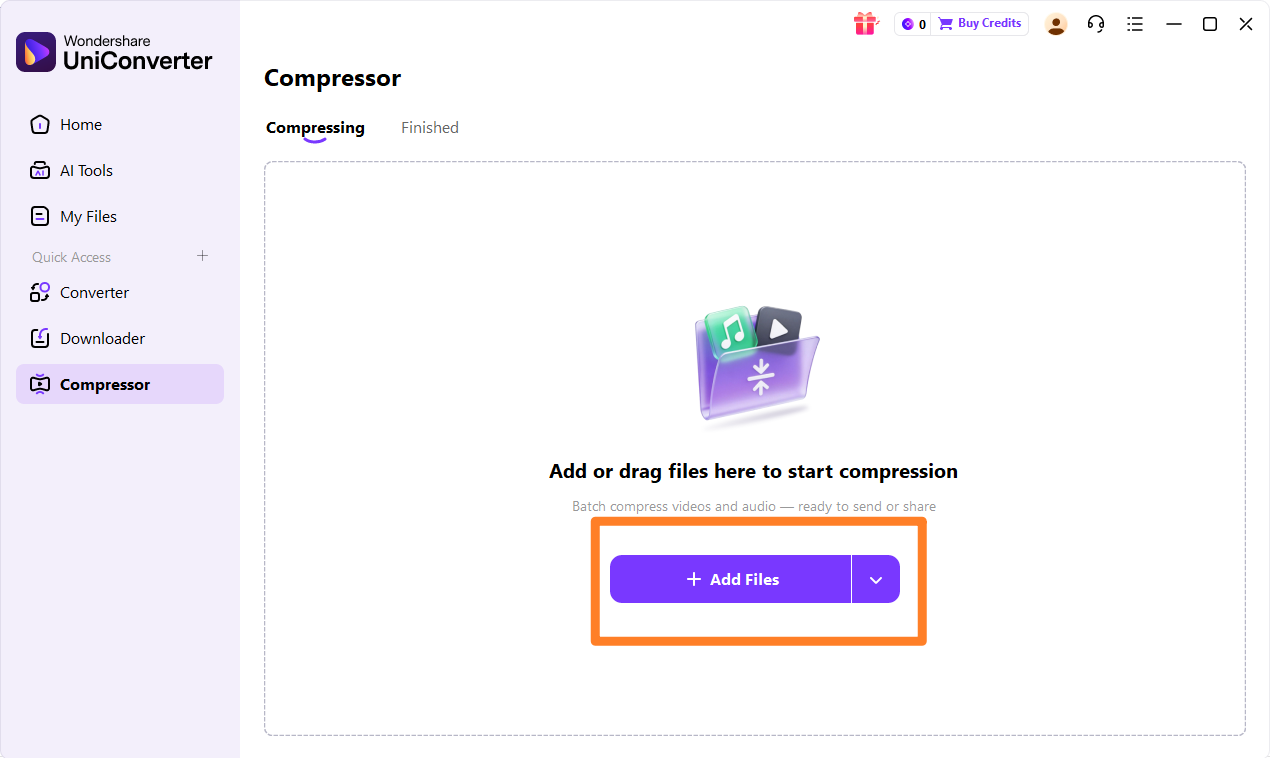
Step 2: Upload the Video, Audios or Images
Drag and drop your video file(s) into the UniConverter window, or click "Add Files" to browse and select them.
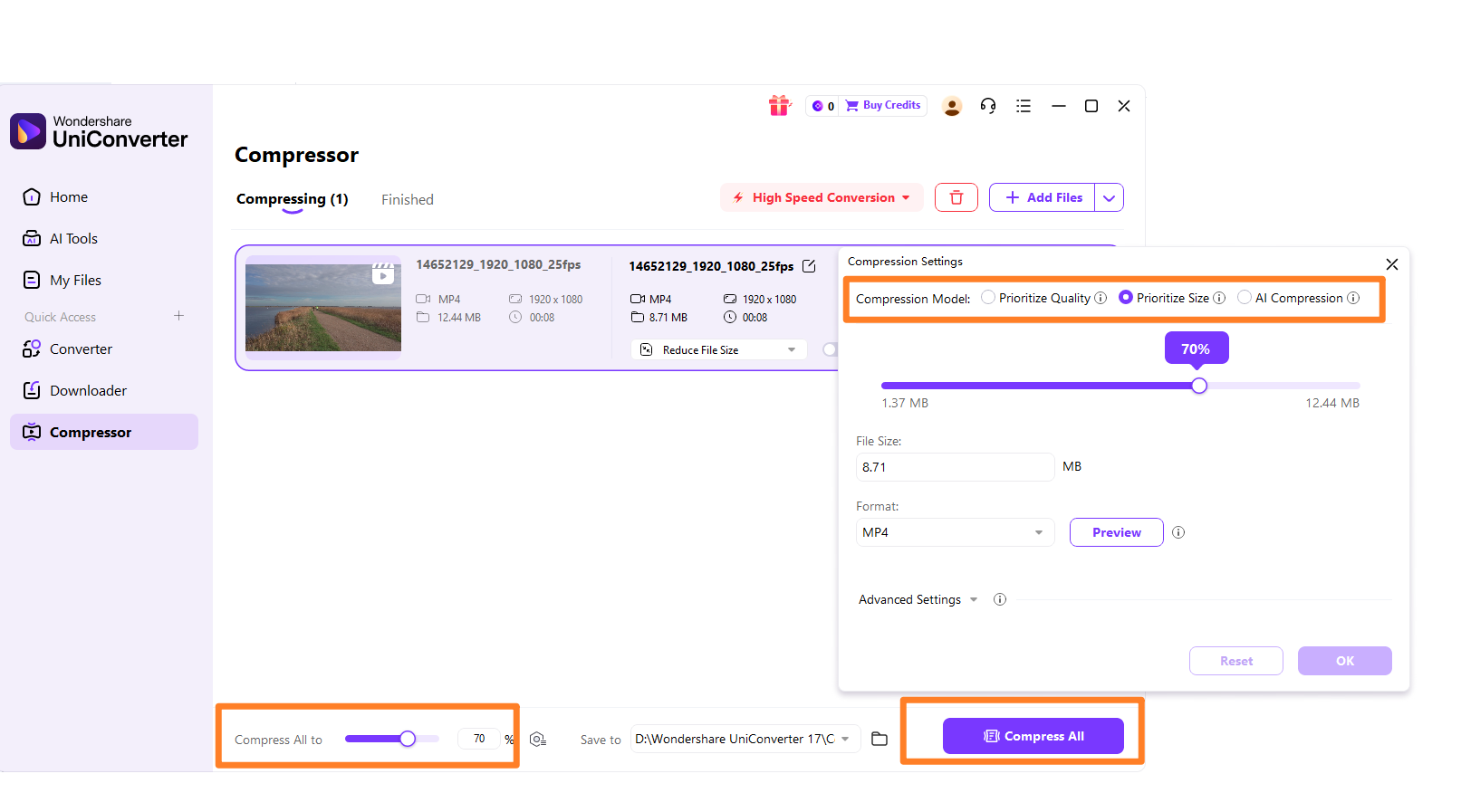
Step 3: Choose Required Parameters
Adjust the compression settings such as file size, format, resolution, and bitrate. You can utilize the smart compress feature or customize parameters manually.
Step 4: Start Compression and Export
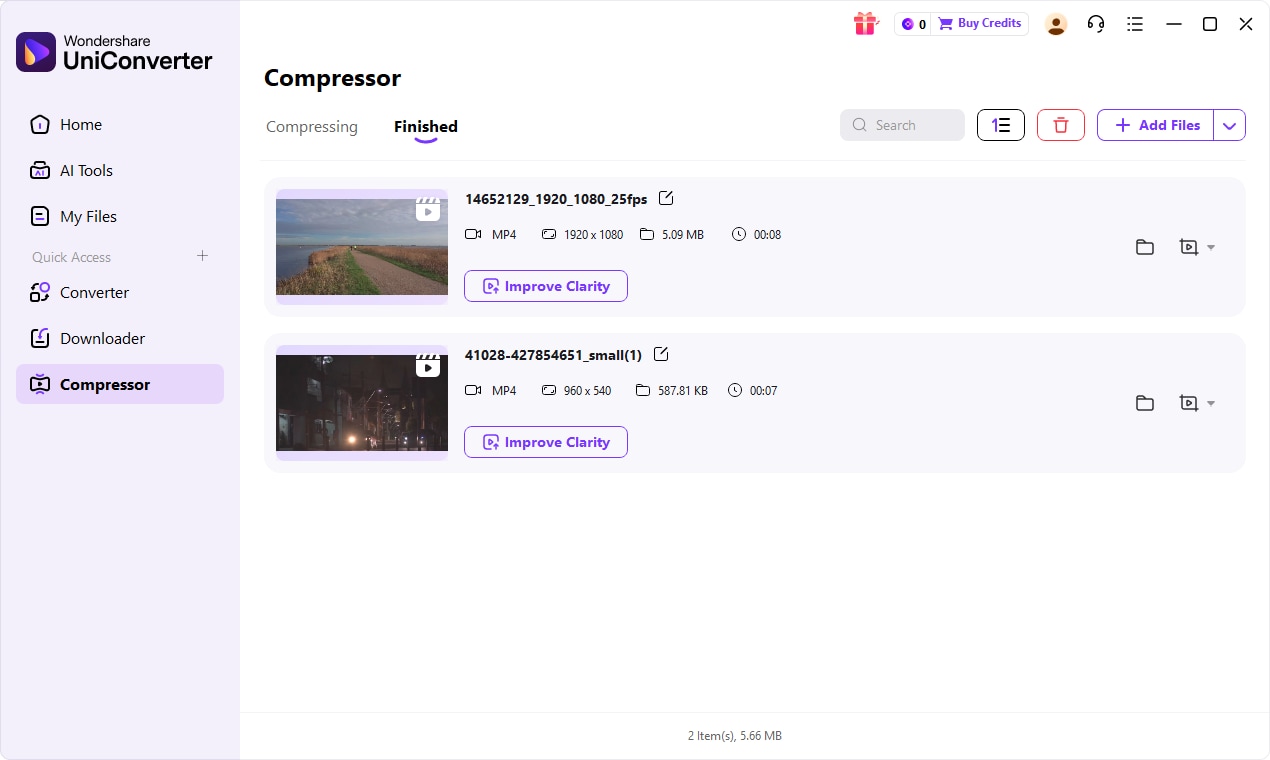
Click the "Compress" button to initiate the compression process. Once completed, you can locate your compressed video in the "Finished" tab or the designated output folder.

Need a Better Loom Video Compressor Alternative?
Part 7: Conclusion
After a thorough Loom Video Compressor review and comparison, it's clear that its value proposition lies squarely in its convenience and integration within the Loom ecosystem. For casual users and Loom enthusiasts who primarily record and share quick tutorials, demos, or internal communications, the automatic compression is a fantastic time-saver. It streamlines the workflow, making video sharing effortless without the need for additional software. However, for professionals and advanced users who demand granular control over compression settings, prioritize pristine video quality, or need to process a wide variety of external video files, Loom's offering falls short. Its limitations in advanced features, dependency on the Loom platform, and potential for quality degradation make dedicated tools like UniConverter, HandBrake, or FFmpeg far more suitable. Ultimately, the choice boils down to balancing convenience with control: if quick and easy sharing is your top priority within the Loom environment, it's a solid choice. But for any scenario requiring precision, versatility, or high-fidelity output, exploring more powerful alternatives is highly recommended.
Part 8: FAQs
-
1. Does Loom Video Compressor reduce video quality significantly?
Loom Video Compressor does reduce video quality to achieve smaller file sizes. While it aims for a good balance, for videos where visual fidelity is critical, you might notice some degradation compared to the original or to videos compressed with more advanced tools.
-
2. Can I use Loom Video Compressor without a Loom account?
No, Loom Video Compressor is an integrated feature of the Loom platform. You need a Loom account and must record or upload your video through Loom to utilize its compression capabilities.
-
3. What are the file size limits for Loom Video Compressor?
Loom's file size limits are typically tied to your subscription plan. Free accounts usually have limitations on recording length and storage, which indirectly affects the size of videos you can compress and host. Check Loom's official pricing and features page for the most up-to-date limits.
-
4. How does Loom Video Compressor compare to desktop compressors?
Loom Video Compressor offers convenience for Loom-recorded videos but lacks the advanced control, diverse format support, and offline functionality of desktop compressors like UniConverter, HandBrake, or FFmpeg. Desktop tools generally provide higher quality output and more customization options.
-
5. Is Loom Video Compressor suitable for large video files?
While Loom Video Compressor will attempt to compress large files, its primary strength is in quickly optimizing typical screen recordings and short video messages. For very large, high-resolution video files where maintaining quality is paramount, a dedicated desktop compressor like UniConverter would be a more reliable and efficient solution.
