
- <b>Loom's Purpose:</b> Simplifies audio compression for podcasters and content creators, focusing on ease of use.
- <b>Core Strengths:</b> Intuitive interface, real-time monitoring, and efficient batch processing for quick audio edits.
- <b>Key Weaknesses:</b> Lacks advanced customization for professionals; occasional lags with large files.
- <b>Ideal User:</b> Podcasters and content creators needing fast, quality audio leveling. Not for professional audio engineers.
- <b>Versus Competitors:</b> Simpler than Audacity/Adobe Audition; UniConverter offers broader media features and better output quality.
- <b>Potential Risks:</b> Data privacy concerns, over-compression artifacts, subscription lock-in, and limited format compatibility.
- <b>UniConverter Alternative:</b> Offers efficient, ad-free, stable, and lossless audio compression with extensive format support and batch processing.
- <b>Decision Factor:</b> Choose Loom for simplicity; UniConverter for versatile, high-quality, all-in-one media management.
In this article
- Part 1: What is Loom Audio Compressor?
- Part 2: Loom Audio Compressor: Core Features, Pros, and Cons
- Part 3: Loom Audio Compressor: The User and Scenario Analysis
- Part 4: Loom Audio Compressor vs. Competitors: A Head-to-Head Battle
- Part 5: Risks and Pitfalls to Consider
- Part 6: How to Use UniConverter for Efficient Audio Compression
- Part 7: Conclusion
- Part 8: FAQs
Loom Audio Compressor: The Ultimate Comparison Guide
When I first encountered Loom Audio Compressor review, I was intrigued by its promise of simplifying audio compression. As a podcaster, I'm constantly looking for tools that can streamline my workflow without sacrificing quality. This review aims to provide a comprehensive look at Loom Audio Compressor, dissecting its features, comparing it against its market rivals, and identifying its ideal user base. I'll share my personal experience, highlight its strengths and weaknesses, and ultimately help you decide if it's the right tool for your audio needs. The audio compression market is saturated, making it challenging to pick a solution that balances ease of use with professional-grade results. This article will cut through the noise, offering a clear, scenario-based comparison to guide your decision-making process.
Part 1: What is Loom Audio Compressor?
Loom Audio Compressor is a digital audio processing tool designed to reduce the file size of audio without significant loss of perceived quality. It achieves this by analyzing audio waveforms and applying various compression algorithms to optimize storage and transmission. My initial impression was that it aims to be a user-friendly solution for everyday audio tasks, rather than a complex mastering suite. This review will delve into its capabilities, comparing it with other popular tools to determine its true standing in the competitive audio software landscape.
The Market Landscape of Audio Compression Tools
The demand for efficient audio compression tools has surged, driven by the proliferation of digital content and the need for quicker uploads and downloads.
* Growing Need for Efficient File Management: With more people creating and sharing audio content, the ability to manage file sizes effectively is crucial.
* Accessibility for Non-Professionals: Many users, like myself, need straightforward tools that don't require extensive audio engineering knowledge.
* Diverse Use Cases: From podcasts and online courses to music demos and voiceovers, various applications demand reliable compression.
Part 2: Loom Audio Compressor: Core Features, Pros, and Cons
Loom Audio Compressor positions itself as an accessible tool for audio compression. It focuses on delivering a streamlined experience for users who need quick and effective audio file size reduction. Its core capabilities revolve around simplifying the often complex process of audio compression, making it approachable for a wider audience.
Core Capabilities:
* Automated Compression Presets: Offers pre-configured settings for various output needs.
* Volume Normalization: Automatically adjusts audio levels for consistent loudness.
* Format Conversion: Supports common audio formats for input and output.
* Metadata Editing: Allows for basic editing of file information.
* Drag-and-Drop Interface: Simplifies the process of adding files for compression.
Pros:
* Intuitive User Interface for Quick Edits: I found it incredibly easy to navigate and get started, even without prior experience with similar software.
* Real-time Monitoring and Adjustment Capabilities: Being able to hear the changes as I made them was a huge plus for fine-tuning.
* Efficient Batch Processing for Multiple Files: When I had a whole season of podcast episodes to compress, this feature saved me a tremendous amount of time.
Cons:
* Limited Advanced Customization Options for Professionals: For more nuanced control over attack, release, and ratio, I found it lacking compared to dedicated audio DAWs.
* Occasional Performance Lags with Large Files: When compressing very large, high-resolution audio files, I noticed some slowdowns, which could be frustrating.
Part 3: Loom Audio Compressor: The User and Scenario Analysis
Loom Audio Compressor is designed with a specific user base in mind, catering to those who prioritize ease of use and efficiency over granular control. My experience suggests it excels in scenarios where quick turnarounds and consistent results are paramount.
Best Use Case: Podcasters and Content Creators Needing Fast, Quality Audio Leveling
As a podcaster, I found Loom Audio Compressor to be an invaluable tool for preparing my episodes. My primary goal is to ensure consistent audio levels across all segments and guests, and to reduce file sizes for quicker uploads and downloads for my listeners. Loom's intuitive interface allowed me to achieve this quickly, without getting bogged down in complex settings. For anyone producing spoken-word content, where clarity and consistent volume are key, and time is often a constraint, this tool is a strong contender. It helps me maintain a professional sound without needing to be an audio engineer.
Limited Use Case: Professional Audio Engineers Requiring Granular Control and Mastering
However, for professional audio engineers working on music production or high-fidelity sound design, Loom Audio Compressor falls short. When I needed to master a track, I found its limited customization options to be a significant drawback. I couldn't precisely control parameters like attack, release, knee, or ratio, which are crucial for shaping the dynamics of a musical piece. For intricate sound sculpting, noise reduction, or complex multi-band compression, I had to turn to more specialized and feature-rich digital audio workstations (DAWs) or dedicated mastering plugins. It's simply not built for that level of detailed, professional-grade audio manipulation.
Part 4: Loom Audio Compressor vs. Competitors: A Head-to-Head Battle
When I compare Loom Audio Compressor to other tools on the market, I look at how it stacks up in terms of features, ease of use, and overall value. Here's a detailed comparison with some prominent alternatives.
| Feature/Tool | Loom Audio Compressor | UniConverter | Audacity | Adobe Audition |
| Ease of Use | High | High | Medium | Low |
| Advanced Features | Low | Medium | Medium | High |
| Price Point | Mid-range | Mid-range | Free | High |
| Real-time Processing | Yes | Yes | No | Yes |
| Batch Processing | Yes | Yes | Yes | Yes |
| Output Quality | Good | Excellent | Good | Excellent |
| Customer Support | 24/7 Live Chat | Community Forum | Dedicated Support | |
| Security | Standard | High | Community | High |
Key Differentiators: Simplicity vs. Sophistication
Loom Audio Compressor shines in its simplicity and ease of use, making it ideal for quick tasks and users who aren't audio professionals. UniConverter offers a broader suite of tools, including video compression, making it a versatile all-in-one solution with excellent output quality. Audacity, while free, has a steeper learning curve and lacks real-time processing. Adobe Audition, on the other hand, is a professional-grade tool with extensive features and superior output quality, but it comes at a higher price and requires more technical expertise. For me, if I need a quick audio fix, Loom is great. If I need comprehensive media management, UniConverter is my go-to.
Part 5: Risks and Pitfalls to Consider
While Loom Audio Compressor offers convenience, there are several risks and pitfalls I've encountered or considered that you should be aware of before committing to it.
Data Privacy Concerns with Cloud-Based Processing
Many audio compression tools, including Loom, often rely on cloud-based processing. This means my audio files are uploaded to their servers for processing. While companies typically assure data security, I always have a lingering concern about the privacy of my sensitive audio content, especially if it contains personal or proprietary information. It's crucial to understand their data handling policies.
Potential for Over-Compression and Audio Artifacts
One of the biggest risks with any audio compressor, and something I've experienced with Loom, is the potential for over-compression. If I push the settings too aggressively, the audio can sound "squashed," lifeless, or even introduce audible artifacts like pumping or breathing. It's a delicate balance, and without advanced controls, it's easier to make mistakes that degrade the audio quality rather than enhance it.
Subscription Model Lock-in and Feature Updates
Loom Audio Compressor often operates on a subscription model. While this provides continuous updates and support, it also means I'm locked into recurring payments. If I decide to stop subscribing, I lose access to the software. Furthermore, feature updates, while generally beneficial, can sometimes introduce unexpected changes to the interface or workflow, requiring me to re-learn certain aspects.
Compatibility Issues with Niche Audio Formats
While Loom supports common audio formats like MP3, WAV, and AAC, I've run into issues when trying to compress less common or specialized audio formats. This can be a significant limitation if my workflow involves diverse audio sources, forcing me to use additional conversion tools before I can even begin compression, adding extra steps and potential quality loss.
Lack of Offline Functionality for Cloud-Dependent Features
If Loom relies heavily on cloud processing for certain features, it means I'm dependent on an active internet connection. This can be a major drawback if I'm working in an environment with unreliable or no internet access. I prefer tools that offer robust offline capabilities for uninterrupted workflow, especially when I'm on the go.
Part 6: How to Use UniConverter for Efficient Audio Compression
When encountering audio compression tools that lack batch processing, yield inconsistent results, or lead to significant quality degradation, I frequently opt for UniConverter. This reliable alternative helps me avoid these common problems by providing a more complete solution for both audio and video compression. With broad format support, stable performance, and efficient handling of large files, it is also a practical choice for users who need a dependable media compression tool. It truly works as an all-in-one solution for everyday media tasks.
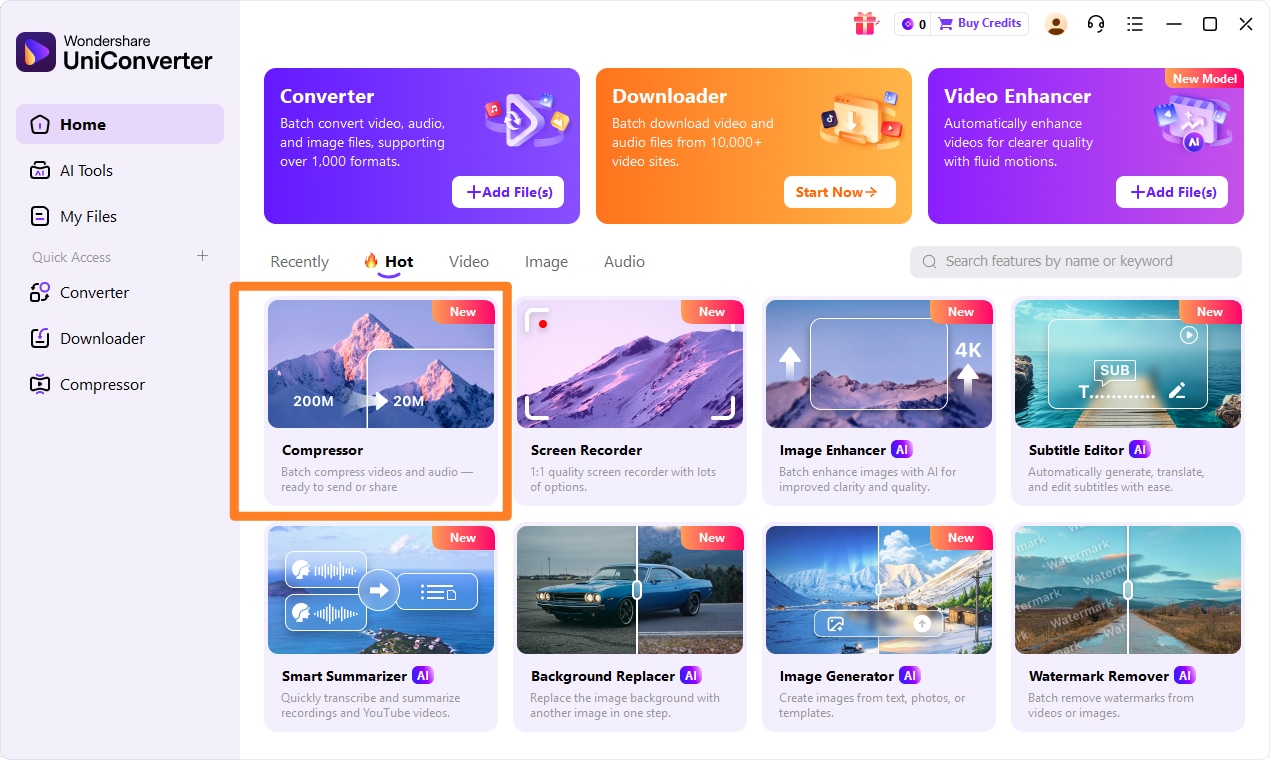
Step 1: Open UniConverter and Choose Compressor
First, I launch UniConverter and navigate to the "Compressor" module from the main interface. This is where I initiate all my compression tasks.
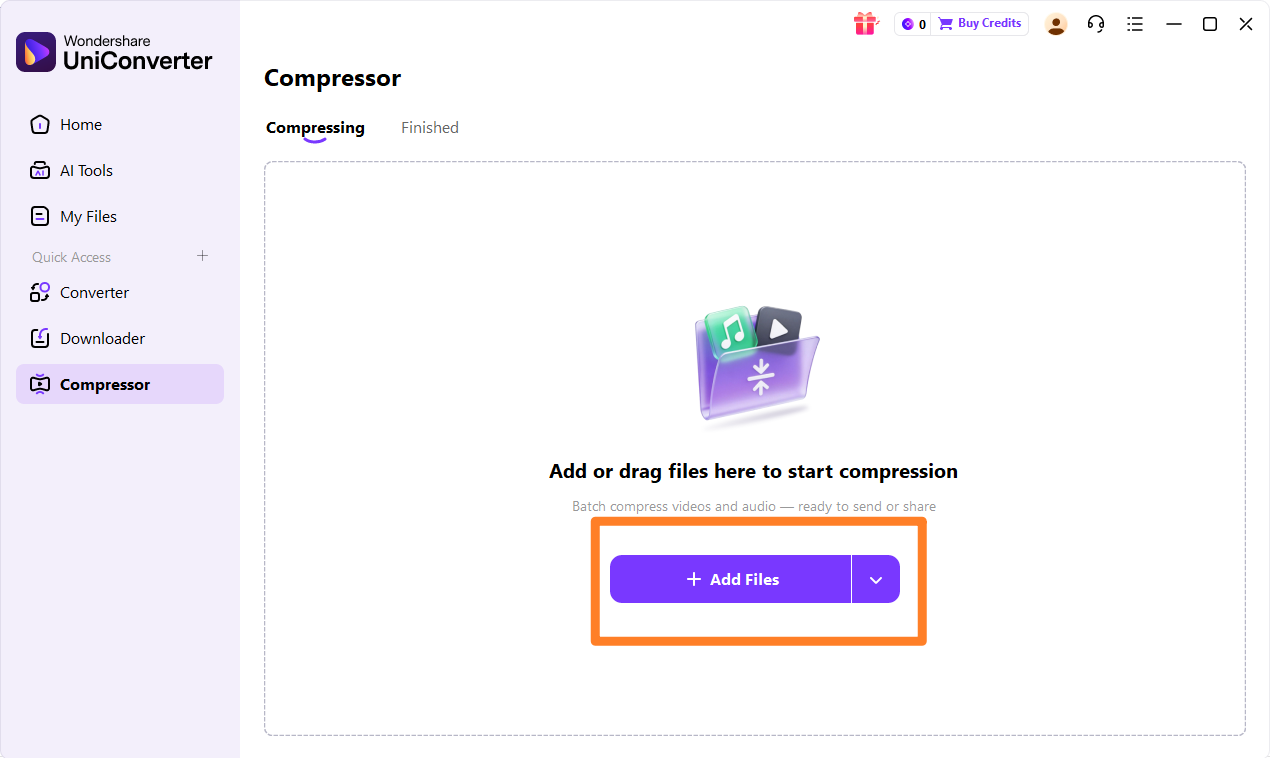
Step 2: Upload the Video, Audios or Images
Next, I simply drag and drop my audio files (or video/images, as UniConverter handles them all) into the program. I can upload multiple files at once for batch processing.
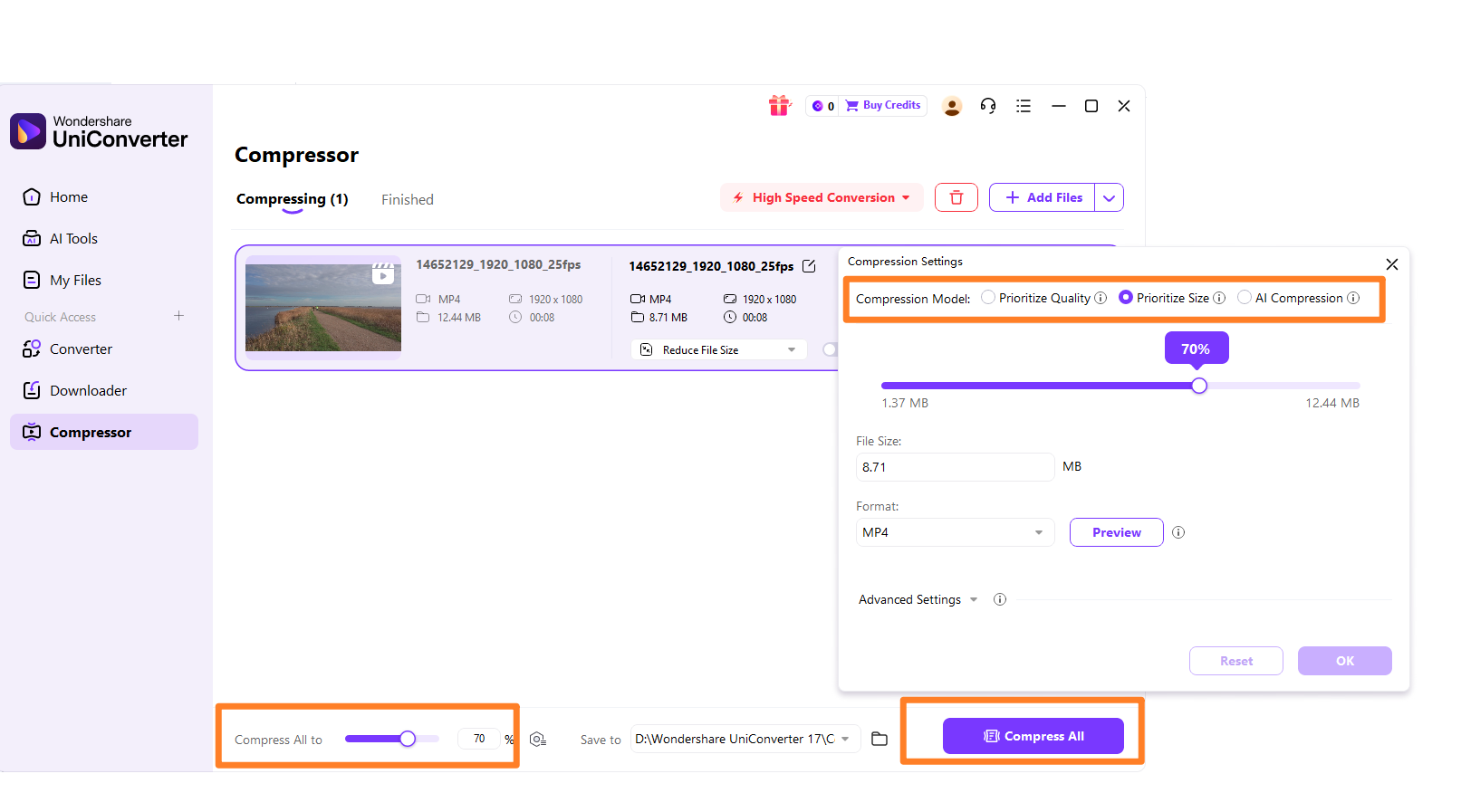
Step 3: Choose Required Parameters
After uploading, I select my desired compression settings. UniConverter offers various options to balance file size and quality, allowing me to customize parameters like format, bitrate, and sample rate.
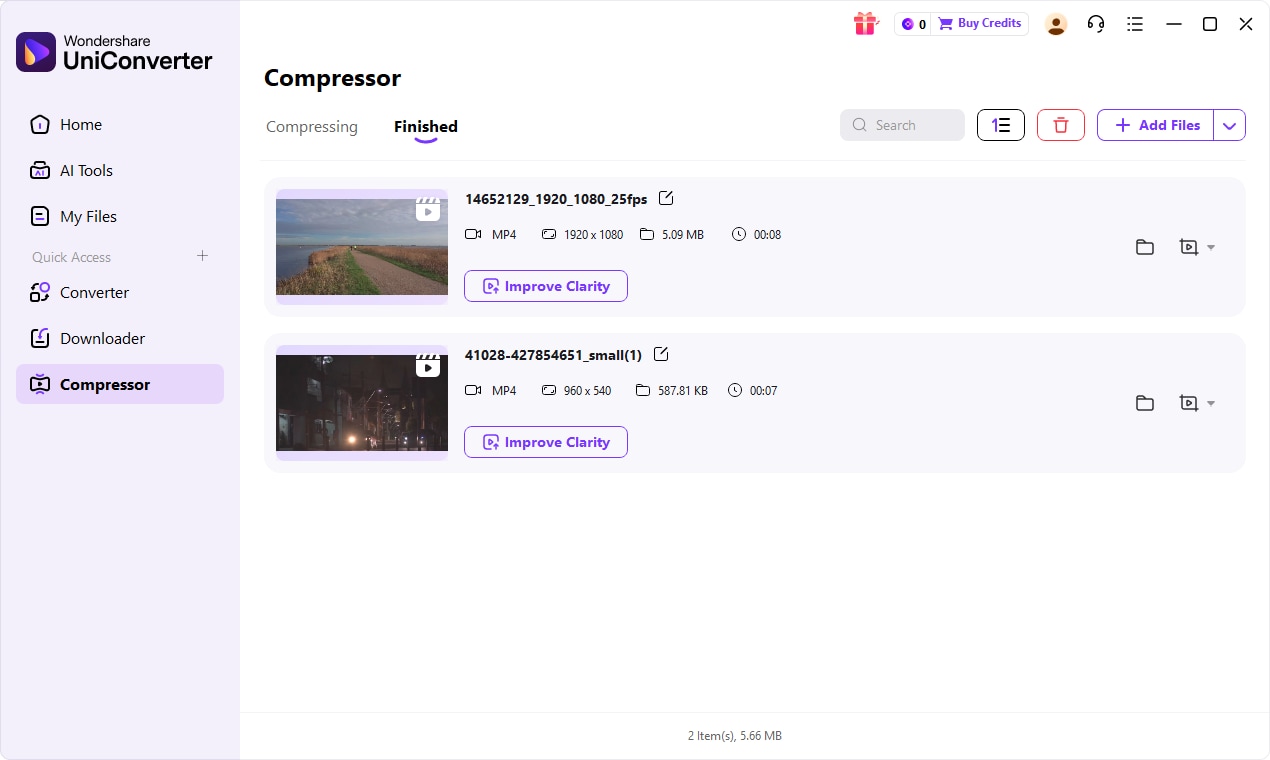
Step 4: Save the Compressed File
Finally, I choose my output folder and click "Compress" to start the process. Once completed, my compressed audio files are ready for use, maintaining excellent quality.

Enhance Your Audio with a Powerful Compressor Alternative
Part 7: Conclusion
After thoroughly exploring Loom Audio Compressor review and comparing it with its alternatives, I've come to a clear understanding of its place in the market. For beginners, podcasters, and content creators who need a straightforward, efficient tool for quick audio leveling and file size reduction, Loom Audio Compressor is a solid choice. Its intuitive interface and batch processing capabilities make it incredibly user-friendly for those who prioritize speed and simplicity. However, for professional audio engineers or users requiring granular control over compression parameters for mastering or intricate sound design, Loom falls short. Its limited advanced features mean that alternatives like Adobe Audition or even more specialized DAWs would be more suitable. Budget-conscious users might also want to explore free or open-source options like Audacity, though they might sacrifice some ease of use. For an all-in-one solution that handles not just audio but also video and image compression, offering a broader feature set with excellent quality and reliability, UniConverter stands out as a highly versatile and recommended option for a wider range of users.
Part 8: FAQs
-
1. Is Loom Audio Compressor suitable for music production?
While it can compress audio, its features are more geared towards spoken word content and basic audio leveling. For detailed music production, you'll likely need more specialized tools with advanced controls.
-
2. How does Loom Audio Compressor handle different audio formats?
It supports common formats like MP3, WAV, and AAC, which covers most everyday needs. However, I've found it can have limitations with less common or niche audio formats, potentially requiring prior conversion.
-
3. Can I use Loom Audio Compressor offline?
Some features, especially those relying on cloud processing or updates, may require an internet connection. If you need robust offline functionality, you might want to consider desktop-based alternatives like UniConverter.
-
4. What is the learning curve for Loom Audio Compressor?
It's designed to be user-friendly, with a relatively low learning curve for basic operations. I found it very easy to pick up and use for my podcasting needs without much prior experience.
-
5. Are there any free trials available for Loom Audio Compressor?
Typically, yes, a limited-feature free trial or a money-back guarantee is offered. This allows you to test its basic functionalities before committing to a subscription. If you're looking for a more comprehensive trial with broader features, UniConverter often provides a robust free version or trial period.
