
- Lightworks Niche: Ideal for professional editors within the Lightworks ecosystem, offering seamless integration and granular control.
- Casual Use Limitation: Overkill for quick social media sharing; simpler tools are more efficient for casual users.
- UniConverter Value: Offers a balanced, intuitive solution with comprehensive features for both beginners and pros.
- Quality vs. Size: Aggressive compression risks quality degradation; always prioritize visual fidelity over extreme file reduction.
- Online Compressor Risks: Be aware of privacy concerns and feature limitations when using free online tools.
- Decision Factor: Choose based on your specific needs: professional workflow, ease of use, or advanced features.
In this article
- Part 1: What is Lightworks Video Compressor?
- Part 2: Lightworks Video Compressor: Core Features, Pros, and Cons
- Part 3: Lightworks Video Compressor: Ideal Users and Use Cases
- Part 4: Lightworks Video Compressor and Alternatives Comparison
- Part 5: Risks and Pitfalls When Using Video Compressors
- Part 6: How to Use UniConverter to Compress Efficient Audio and Video
- Part 7: Final Verdict and Recommendations
- Part 8: FAQs
Lightworks Video Compressor: A Comprehensive Scenario-Based Review
Welcome to my in-depth Lightworks Video Compressor review. As a seasoned product evaluation expert, I've spent countless hours dissecting video compression tools, and today, we're diving deep into Lightworks' offering. This article will provide a detailed look at its features, compare it with leading competitors, and help you understand when it's the right tool for your specific video compression needs. We'll explore its strengths in professional workflows, its limitations for casual users, and even highlight potential pitfalls to avoid. My goal is to equip you with the knowledge to make an informed decision, whether you're a professional editor or just looking to shrink a video for social media.
Part 1: What is Lightworks Video Compressor?
Lightworks Video Compressor is an integrated component within the renowned Lightworks non-linear editing system, designed to efficiently reduce video file sizes without compromising quality, especially within a professional post-production environment. It's not a standalone application but rather a powerful utility that complements the Lightworks editor, allowing users to manage storage, optimize delivery, and streamline their video projects. This review aims to address the core question: How does Lightworks Video Compressor stack up against other dedicated compression tools in terms of performance, usability, and value for different user segments?
The Market Need for Efficient Video Compression
The ever-increasing resolution and complexity of video content have made efficient compression an absolute necessity.
* Storage Management: High-resolution video files consume vast amounts of storage space.
* Faster Uploads/Downloads: Smaller files lead to quicker transfers, crucial for collaboration and online distribution.
* Optimized Playback: Compressed videos stream more smoothly on various devices and internet speeds.
* Cost-Effectiveness: Reduced storage and bandwidth requirements can translate into significant cost savings.
Part 2: Lightworks Video Compressor: Core Features, Pros, and Cons
Lightworks Video Compressor is built to handle the rigorous demands of professional video production, offering a suite of features tailored for high-quality output and integration. Its core capabilities revolve around precise control over compression parameters, ensuring that the visual integrity of your work remains intact. I've found its ability to work seamlessly within the Lightworks editing environment to be a significant advantage for my professional projects.
Pros:
* High-Quality Compression for Professional Workflows: It consistently delivers excellent visual fidelity, crucial for broadcast or cinematic projects.
* Integrated with Lightworks Editor for Seamless Post-Production: No need to export and re-import; compression is part of the editing pipeline.
* Advanced Customization Options for Output Settings: I can fine-tune bitrates, codecs, and resolutions to meet specific delivery requirements.
Cons:
* Steep Learning Curve for New Users: If you're not already familiar with Lightworks, getting started can be challenging.
* Resource-Intensive, Requiring Powerful Hardware: My system often gets bogged down during heavy compression tasks, especially with 4K footage.
Part 3: Lightworks Video Compressor: Ideal Users and Use Cases
From my experience, Lightworks Video Compressor truly shines for a very specific audience. It's not a one-size-fits-all solution, and understanding its niche is key to leveraging its strengths. If you're deeply entrenched in the Lightworks ecosystem, this tool is a natural extension of your workflow.
Best Use Case: Professional Video Editors Optimizing Project Files
For me, as a professional editor using Lightworks, this compressor is invaluable. When I need to archive large project files, send review copies to clients, or prepare final deliverables for specific platforms, the integrated compressor allows me to maintain control over quality and format without leaving my editing suite. The granular control over codecs and bitrates ensures my output meets broadcast standards or client specifications precisely. It's about efficiency and precision within a professional pipeline.
Limited Use Case: Quick Compression for Casual Social Media Sharing
However, if you're just looking to quickly compress a video for Instagram or WhatsApp, Lightworks Video Compressor is overkill. The interface can be daunting, and the time it takes to set up a simple compression job far outweighs the benefits for a casual user. For these scenarios, I find myself reaching for much simpler, often web-based, tools that prioritize speed and ease of use over advanced control.
Part 4: Lightworks Video Compressor and Alternatives Comparison
When evaluating video compressors, I always look at how they perform across different scenarios. Here's how Lightworks Video Compressor stacks up against some popular alternatives, including UniConverter, HandBrake, and a typical online compressor.
| Feature/Scenario | Lightworks Video Compressor | UniConverter | HandBrake | Online Compressor (e.g., FreeConvert) |
| Professional Workflow Integration | Excellent (seamless with Lightworks) | Good (standalone, but robust) | Fair (standalone, open-source) | Poor (web-based, limited control) |
| Output Quality Control | Excellent (granular settings) | Excellent (AI-powered, presets) | Good (extensive settings) | Fair (basic presets) |
| Ease of Use (Beginner) | Poor (steep learning curve) | Excellent (intuitive UI) | Good (can be complex for advanced features) | Excellent (upload & compress) |
| Batch Processing | Good (within Lightworks projects) | Excellent (dedicated batch mode) | Excellent (queue system) | Poor (often one file at a time) |
| File Size Reduction | Excellent (efficient codecs) | Excellent (advanced algorithms) | Excellent (highly optimized) | Good (variable results) |
| Customer Support | Good (Lightworks community/docs) | Excellent (dedicated support) | Community-driven | Limited (FAQs, forums) |
| Security/Privacy | High (desktop app) | High (desktop app) | High (desktop app) | Moderate (data uploaded to server) |
Key Differentiators:
Lightworks excels in professional integration and granular control, making it ideal for existing Lightworks users who demand precise output. UniConverter offers a strong balance of features, ease of use, and advanced capabilities like AI-powered compression, appealing to a broad audience from beginners to pros. HandBrake provides powerful, open-source compression with extensive customization, though it can be less intuitive. Online compressors prioritize simplicity and speed for basic, one-off compression needs, but often lack control and raise privacy concerns.
Part 5: Risks and Pitfalls When Using Video Compressors
Using video compressors, especially free or online versions, isn't without its risks. I've encountered several issues over the years that can turn a simple compression task into a headache. It's crucial to be aware of these potential pitfalls before you start.
Potential Loss of Video Quality
This is the most common and frustrating issue. Aggressive compression settings, especially with lower-quality source files, can lead to noticeable artifacts, pixelation, and a general degradation of visual fidelity. I've seen perfectly good footage turn into a blurry mess because I pushed the compression too far. Always preview your compressed video carefully.
Privacy Concerns with Online Compressors
When I upload my video files to an online compressor, I'm essentially handing over my data to a third-party server. For sensitive or proprietary content, this is a significant privacy risk. I always question who has access to my files and how long they're stored. Many free online tools also rely on ads, which can sometimes lead to security vulnerabilities.
Unexpected File Size Increases with Incorrect Settings
It sounds counterintuitive, but I've definitely seen instances where misconfigured settings, especially with complex codecs or container formats, actually result in a larger file size than the original. This often happens when converting between formats or using inefficient encoding parameters. It's a waste of time and resources.
Time Consumption for Large Files
Compressing large, high-resolution video files, especially 4K or 8K footage, can be incredibly time-consuming. Even with powerful hardware, I've had compression jobs run for hours. If you're on a tight deadline, this can be a major bottleneck. Free or less optimized compressors can exacerbate this issue, turning a quick task into an all-day affair.
Watermarks and Feature Limitations in Free Versions
Many "free" desktop or online compressors come with hidden costs, such as intrusive watermarks on your compressed videos, severe limitations on file size or duration, or locked advanced features. This often forces you to upgrade to a paid version, which might not be the best value for your needs.
Part 6: How to Use UniConverter to Compress Efficient Audio and Video
When other tools aren’t reliable enough—whether they produce inconsistent compression results, reduce quality too much, or don’t support batch processing—I often turn to UniConverter for a smoother and more dependable workflow. It’s intuitive to use, ad-free, and works especially well as a dedicated video compressor for handling large files more efficiently. I also like that it supports a wide range of formats, uses GPU acceleration to speed up processing, and can help compress videos without quality loss as much as possible. With its strong batch processing features and broader media tools, it works well as a complete solution for video compression, conversion, and basic editing needs.
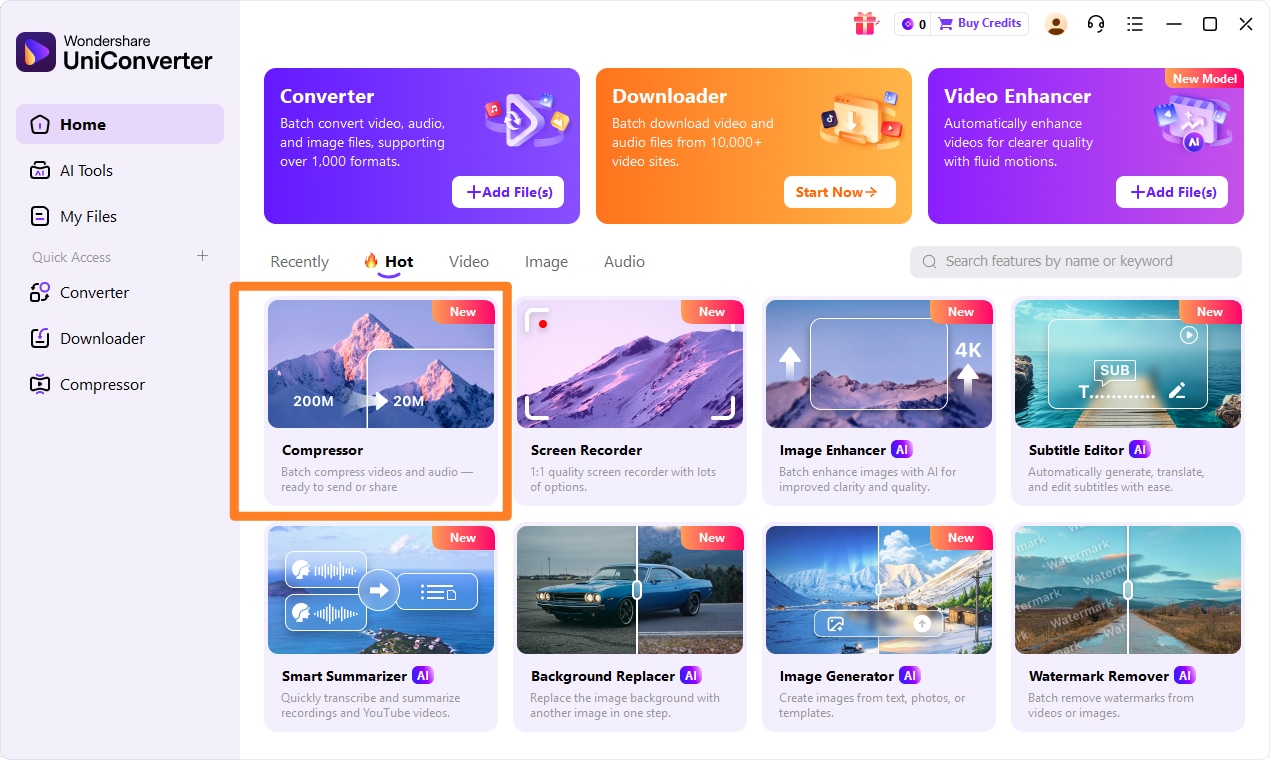
Step 1: Open UniConverter and Choose Compressor
Launch UniConverter on your computer. On the left-hand sidebar, you'll find various tools. Click on the "Compressor" option to begin.
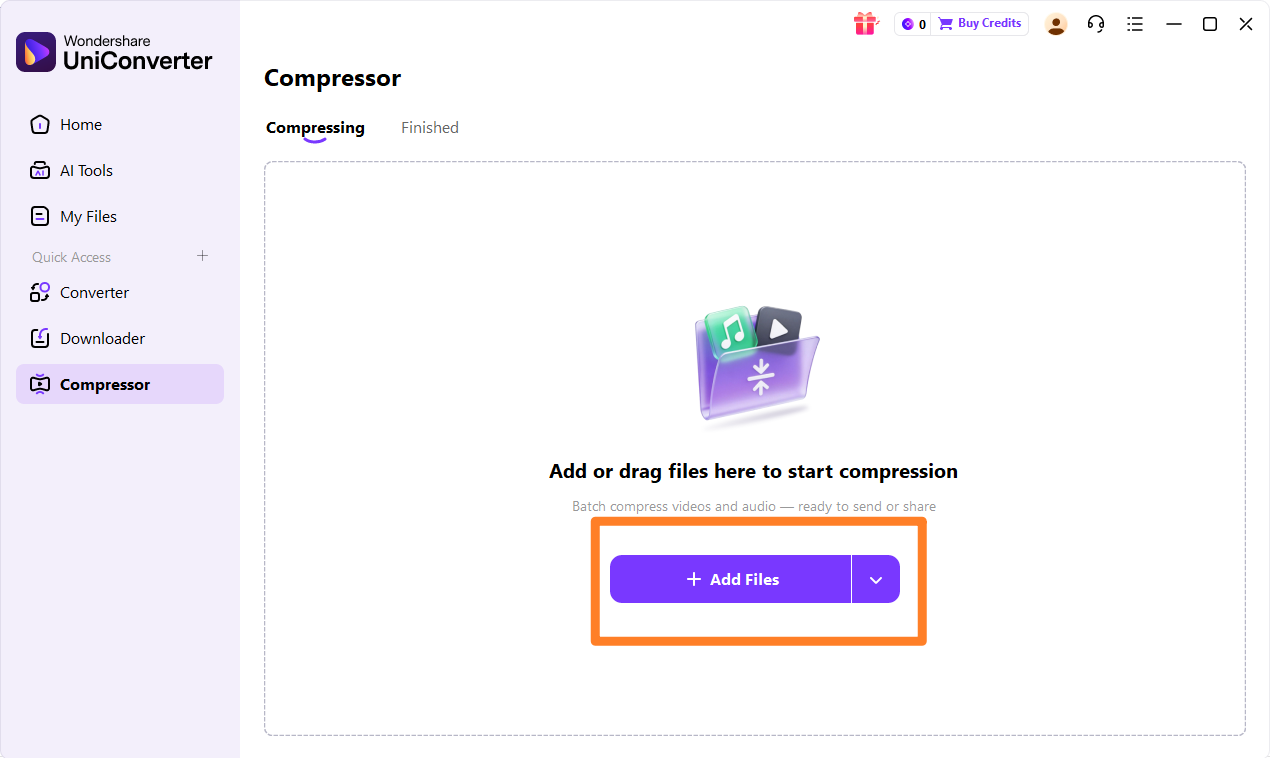
Step 2: Upload the Video, Audios or Images
Drag and drop your video, audio, or image files directly into the UniConverter window. Alternatively, click the "Add Files" button to browse and select your media.
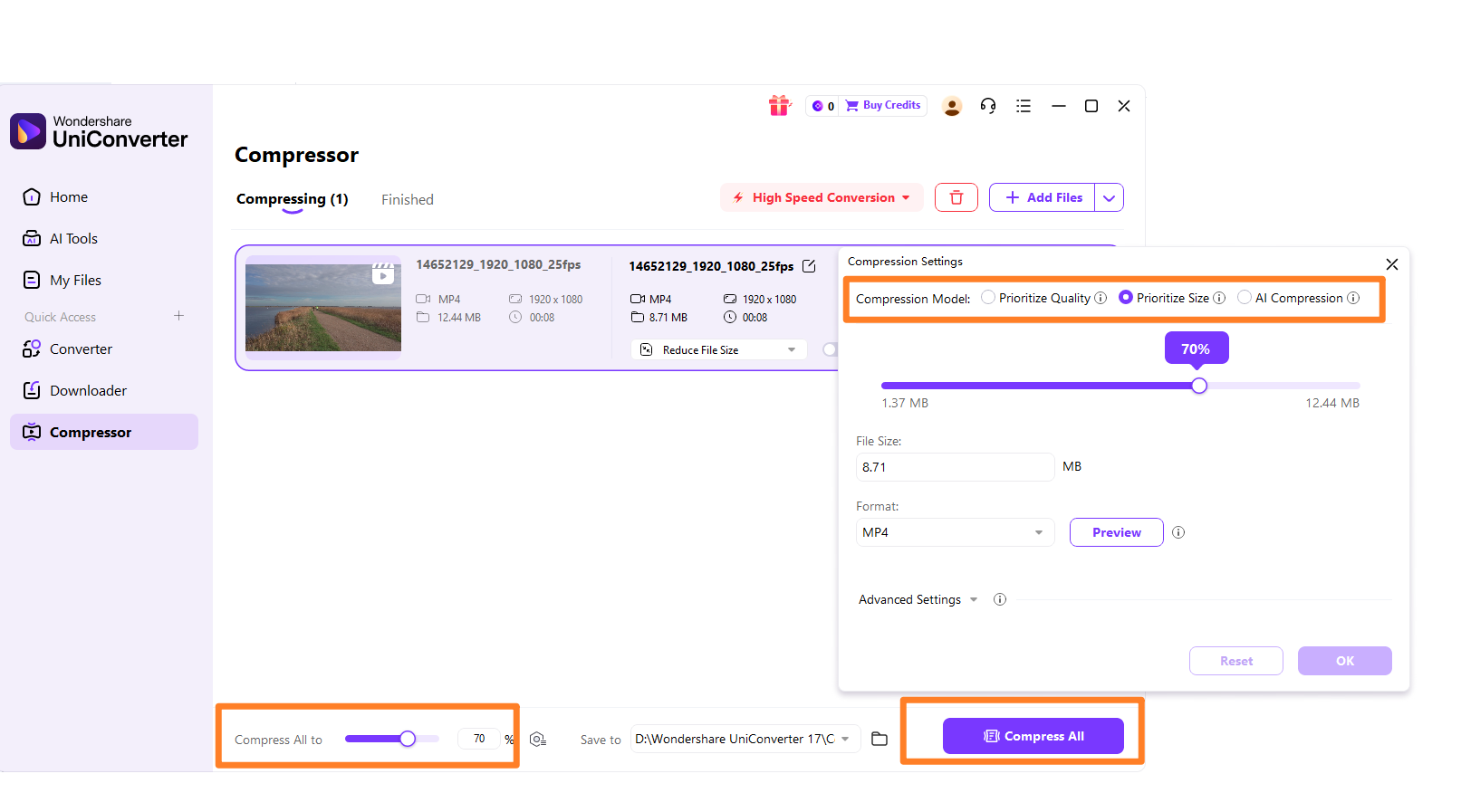
Step 3: Choose Required Parameters
Once your file is loaded, you can adjust the compression settings. UniConverter offers options to change file size, format, resolution, and bitrate. You can use the smart compression feature or customize settings manually.
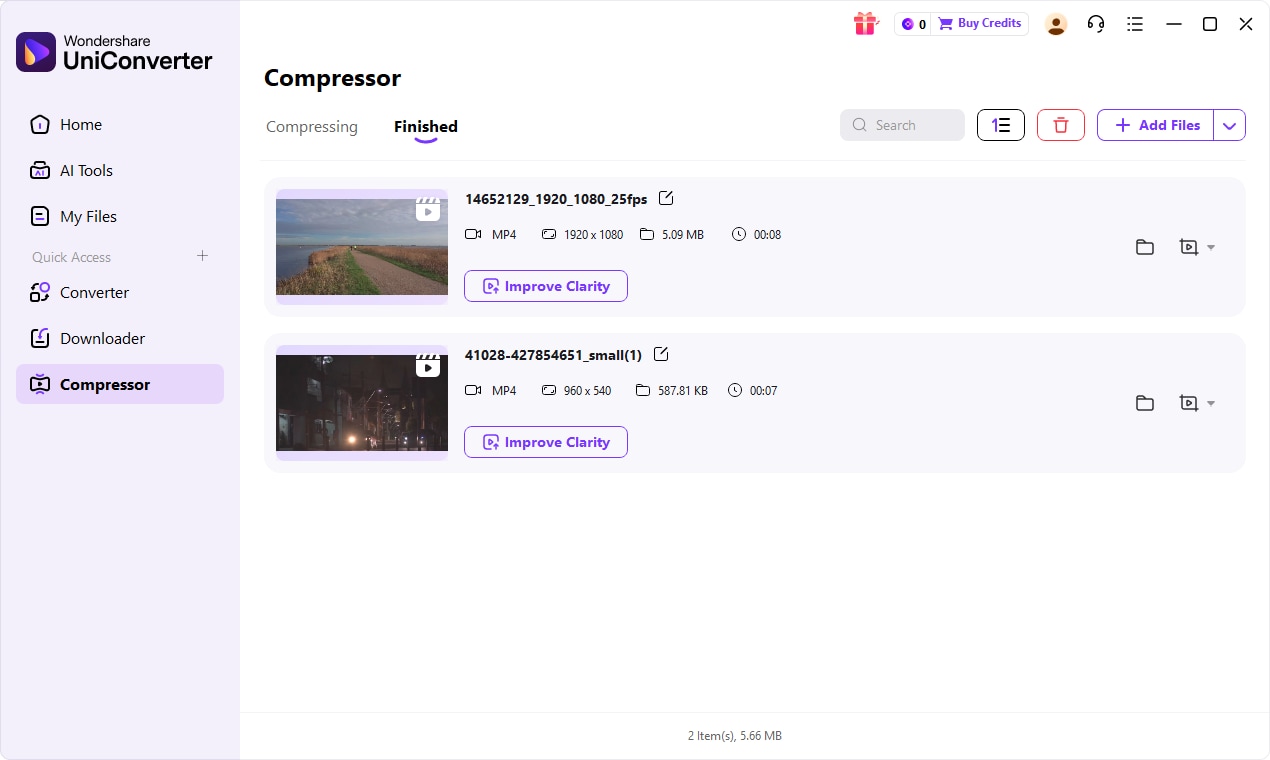
Step 4: Save the Compressed File
After selecting your desired parameters, click the "Compress" button. UniConverter will process your file. Once complete, you can find your compressed file in the designated output folder.

Lightworks Compressor Alternative for Efficient Video Editing
Part 7: Final Verdict and Recommendations
After thoroughly evaluating Lightworks Video Compressor and its alternatives, my final verdict is clear: your choice largely depends on your specific needs and existing workflow. For professional video editors who are already deeply integrated into the Lightworks ecosystem, the Lightworks Video Compressor review confirms its value as an excellent, seamless tool for managing project files and preparing high-quality deliverables. Its granular control and integration are unmatched in this niche. However, for casual users who simply need to quickly shrink a video for social media or email, Lightworks can be overly complex and resource-intensive; I'd recommend looking at simpler, more accessible alternatives. For those seeking a balanced performance, comprehensive features, and an intuitive interface that caters to both beginners and advanced users, UniConverter stands out as a strong contender. It offers a robust solution for a wide range of compression tasks without the steep learning curve or the privacy concerns of many online tools. Ultimately, always prioritize quality over extreme compression, as irreversible degradation can ruin your content.
Part 8: FAQs
-
1. Does Lightworks Video Compressor support 4K video?
Yes, Lightworks Video Compressor fully supports 4K video compression, allowing you to optimize high-resolution footage for various output needs while maintaining quality within the Lightworks editing environment.
-
2. Is Lightworks Video Compressor free to use?
Lightworks itself has a free version with some limitations, and the compressor is part of that package. However, for advanced features and professional codecs, you might need a paid Lightworks subscription.
-
3. How does video compression affect video quality?
Video compression reduces file size by removing redundant information. While efficient compression can be nearly lossless, aggressive compression can lead to a noticeable decrease in quality, introducing artifacts, pixelation, or blurriness. It's a balance between file size and visual fidelity.
-
4. Can I compress multiple videos at once with Lightworks?
Within a Lightworks project, you can manage multiple exports, which effectively means compressing multiple videos. However, it's not a dedicated batch compressor in the way some standalone tools like UniConverter are, where you can simply drag and drop a folder of unrelated videos for simultaneous processing.
-
5. What are the common reasons for video compression?
The most common reasons include saving storage space, enabling faster uploads and downloads (especially for sharing online or via email), optimizing video for streaming platforms, and ensuring compatibility with various devices and playback software. If you're struggling with large files, UniConverter can help you achieve efficient compression for all these reasons.
