
- Leawo Overview: Leawo Video Converter & Compressor converts formats and reduces file sizes effectively.
- Core Features: Leawo offers extensive format support, HD/4K conversion, and basic editing tools.
- Ideal Users: Best for casual users archiving personal videos and sharing on social media.
- Professional Gap: Lacks granular control and advanced features for professional video production workflows.
- Competitor Comparison: Leawo balances ease of use and features, while UniConverter offers a more robust all-in-one solution.
- Quality Risk: Aggressive compression can degrade video quality; careful setting management is crucial.
- UniConverter Advantage: UniConverter provides stable, high-quality compression with broad format support and GPU acceleration.
- Decision Point: Choose Leawo for simple tasks; UniConverter for comprehensive, reliable media optimization.
In this article
- Part 1: What is Leawo Video Converter & Video Compressor?
- Part 2: Leawo Video Converter & Video Compressor: Core Features, Pros, and Cons
- Part 3: Leawo Video Converter & Video Compressor: Ideal Users and Use Cases
- Part 4: Leawo Video Converter & Video Compressor vs. Competitors
- Part 5: Risks and Pitfalls to Consider
- Part 6: How to Use UniConverter to Compress High-Efficiency Video and Audio
- Part 7: Conclusion
- Part 8: FAQs
When diving into the world of digital media, managing video files often presents a dual challenge: converting them to compatible formats and compressing them to manageable sizes. This Leawo Video Converter Video Compressor review aims to cut through the noise, offering a scenario-based comparison that highlights the strengths and weaknesses of Leawo's offering against its competitors. I'll explore its features, ideal use cases, and potential pitfalls, helping you make an informed decision about whether it's the right tool for your video needs.
Part 1: What is Leawo Video Converter & Video Compressor?
Leawo Video Converter & Video Compressor is a software suite designed to address common video manipulation needs. It originates from Leawo Software, a company known for its multimedia solutions. The core purpose of this tool is to allow users to change video formats for compatibility across various devices and platforms, as well as reduce file sizes for easier storage, sharing, and streaming. My goal in this review is to determine how effectively Leawo fulfills these promises and where it stands in a competitive market.
Understanding the Market Need for Video Conversion and Compression
* Device Compatibility: Different devices and platforms support specific video formats, necessitating conversion for seamless playback.
* Storage and Bandwidth: Large video files consume significant storage space and bandwidth, making compression crucial for efficiency.
* Sharing and Uploading: Social media platforms and email services often have file size limits, requiring compression before sharing.
* Archiving and Future-Proofing: Converting older, less common video formats to widely supported ones ensures long-term accessibility.
Part 2: Leawo Video Converter & Video Compressor: Core Features, Pros, and Cons
Leawo Video Converter & Video Compressor offers a robust set of features aimed at simplifying video management. Its core capabilities revolve around format conversion and file size reduction, making it a go-to for many users. I've found it to be quite versatile in handling various video types.
* Extensive Format Support: Converts between a wide array of video and audio formats, including MP4, AVI, MOV, MKV, FLV, and more.
* HD/4K Video Conversion: Capable of processing high-definition and ultra-high-definition videos without significant quality loss.
* Video Editing Features: Includes basic editing tools like trimming, cropping, watermarking, and effect application.
* Audio Extraction: Allows users to extract audio tracks from video files and save them in various audio formats.
* Parameter Adjustment: Provides control over video and audio parameters such as codec, resolution, bitrate, and frame rate for customized output.
- Pros:
- Comprehensive format support for diverse conversion needs.
- User-friendly interface for straightforward video processing.
- Batch processing capabilities for efficiency.
- Cons:
- Potential for slower processing speeds on large files.
- Limited advanced editing features compared to dedicated editors.
Part 3: Leawo Video Converter & Video Compressor: Ideal Users and Use Cases
From my experience, Leawo Video Converter & Video Compressor caters primarily to a broad audience, from casual users to those with semi-professional needs. It strikes a good balance between functionality and ease of use, making it accessible for many.
- Best Use Case: Archiving and Sharing Personal Videos
- Scenario: I recently wanted to convert a collection of old camcorder footage (in various obscure formats) into a modern, shareable format like MP4. After conversion, I needed to compress these files for easy upload to my cloud storage and to share snippets on social media without significant quality loss. Leawo handled this perfectly, preserving the memories while making them accessible.
- Limited Use Case: Professional Video Production Workflow
- Scenario: As a professional video editor, I sometimes need to transcode high-resolution RAW footage for creating editing proxies, and then compress the final master file for broadcast. This workflow requires precise control over codecs, bitrates, color profiles, and often demands specific industry-standard outputs. While Leawo can perform basic conversions, it doesn't offer the granular control or the specialized features (like LUT support or advanced color grading) that professional tools like Adobe Media Encoder provide. For these high-stakes, precision-dependent tasks, Leawo falls short.
Part 4: Leawo Video Converter & Video Compressor vs. Competitors
When evaluating Leawo Video Converter & Video Compressor, it's crucial to see how it stacks up against other popular tools in the market. I've compared it with some key competitors to highlight their respective strengths.
| Feature/Scenario | Leawo Video Converter & Compressor | HandBrake | Adobe Media Encoder | UniConverter |
| Ease of Use (Casual User) | High | Medium | Low | High |
| Advanced Settings (Pro User) | Medium | High | Very High | Medium |
| Batch Processing Efficiency | Good | Good | Excellent | Excellent |
| Output Quality Control | Good | Very Good | Excellent | Very Good |
| Price Point | Mid-range | Free | High (Subscription) | Mid-range |
From my perspective, Leawo offers a great balance for users who need a straightforward tool without delving into overly complex settings. HandBrake, being free, excels in advanced settings for those who don't mind a steeper learning curve and desire more control over compression. Adobe Media Encoder is the undisputed champion for professional workflows, offering unparalleled control and integration, but at a premium price and with a complex interface. UniConverter, on the other hand, stands out as a robust all-in-one solution, providing excellent ease of use alongside strong batch processing and quality control, making it a strong contender for both casual and semi-professional users.
Part 5: Risks and Pitfalls to Consider
While Leawo Video Converter & Video Compressor offers many benefits, it's important to be aware of potential risks and pitfalls, especially when dealing with video files. My experience has shown that not all tools are created equal, and some common issues can arise.
Potential for Quality Degradation During Compression
One of the most common risks I've encountered with video compressors, including Leawo if settings aren't managed carefully, is quality degradation. Aggressive compression settings, while effective at reducing file size, can lead to noticeable artifacts, pixelation, or a general loss of detail. It's a delicate balance, and I always recommend testing different settings on a small clip before processing an entire project.
Hidden Costs or Upsells in Free Versions
Many software providers, including Leawo, offer free trial versions. While these trials are great for testing, they often come with limitations such as watermarks, restricted features, or time limits. I've found that these limitations can sometimes push users towards unexpected upsells or make the free experience less satisfying, leading to frustration if you're not prepared to purchase the full version.
Compatibility Issues with Niche Formats
While Leawo boasts broad format support, I've occasionally run into issues with extremely niche or proprietary video formats. Sometimes, the software might not recognize them, or the conversion process might fail. This can be a significant pitfall if your workflow relies on less common codecs or container formats, requiring you to seek out specialized converters.
Over-reliance on Default Settings for Optimal Results
It's easy to stick with default settings for conversion and compression, but this isn't always optimal. I've learned that default settings might not provide the best balance between file size and quality for every video. Over-reliance on them can lead to either unnecessarily large files or compromised video quality, especially for specific platforms or playback devices. Taking the time to understand and adjust parameters can make a huge difference.
Part 6: How to Use UniConverter to Compress High-Efficiency Video and Audio
When other tools aren’t dependable enough—especially when batch compression is limited, results are inconsistent, or the output quality drops too much—I usually turn to UniConverter for a more reliable solution. It offers a smoother experience for handling media files and works particularly well as a dedicated video compressor when I need stable results and efficient processing. I also like that it can help compress videos without quality loss as much as possible, which makes a big difference when quality matters. Beyond video, it also supports audio compression and image compression, making it a practical all-in-one tool for optimizing different types of media files.
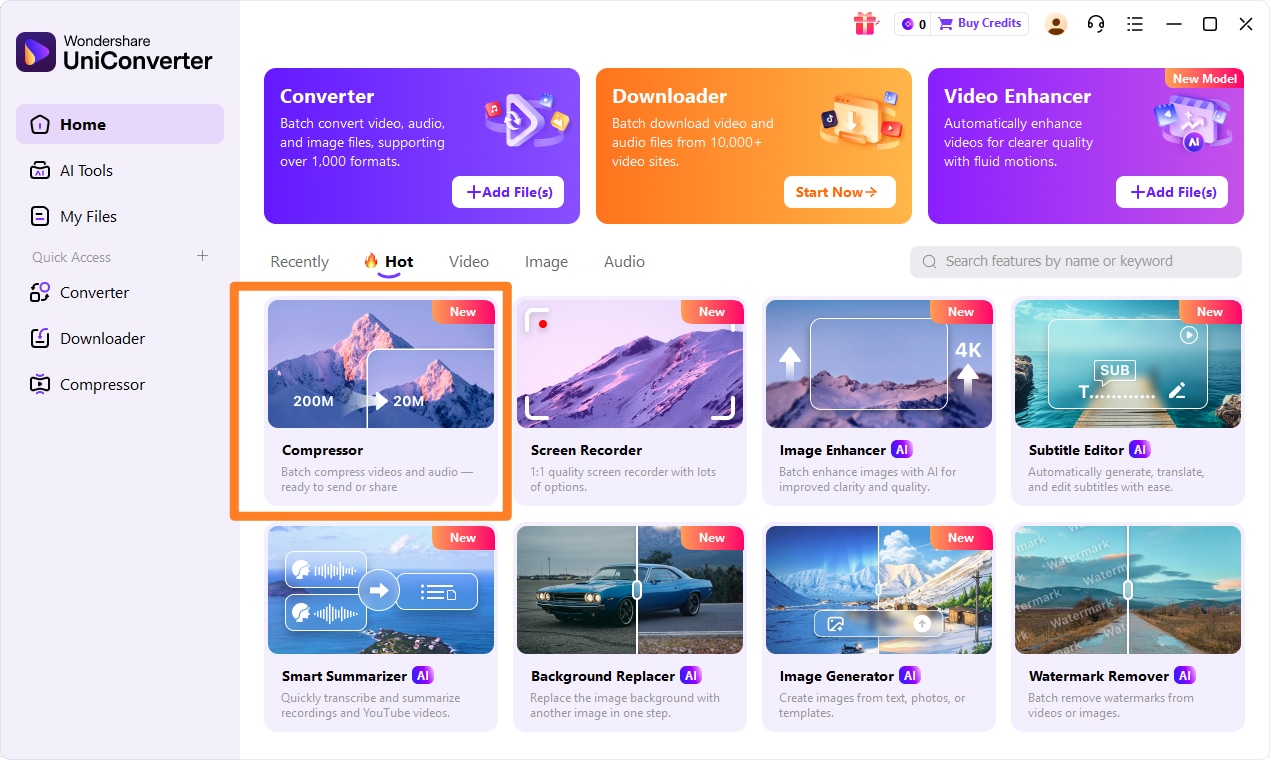
Step 1: Open UniConverter and Choose Compressor
First, I launch UniConverter on my computer. On the main interface, I navigate to the "Toolbox" section and select the "Video Compressor" option. This brings me to the dedicated compression module.
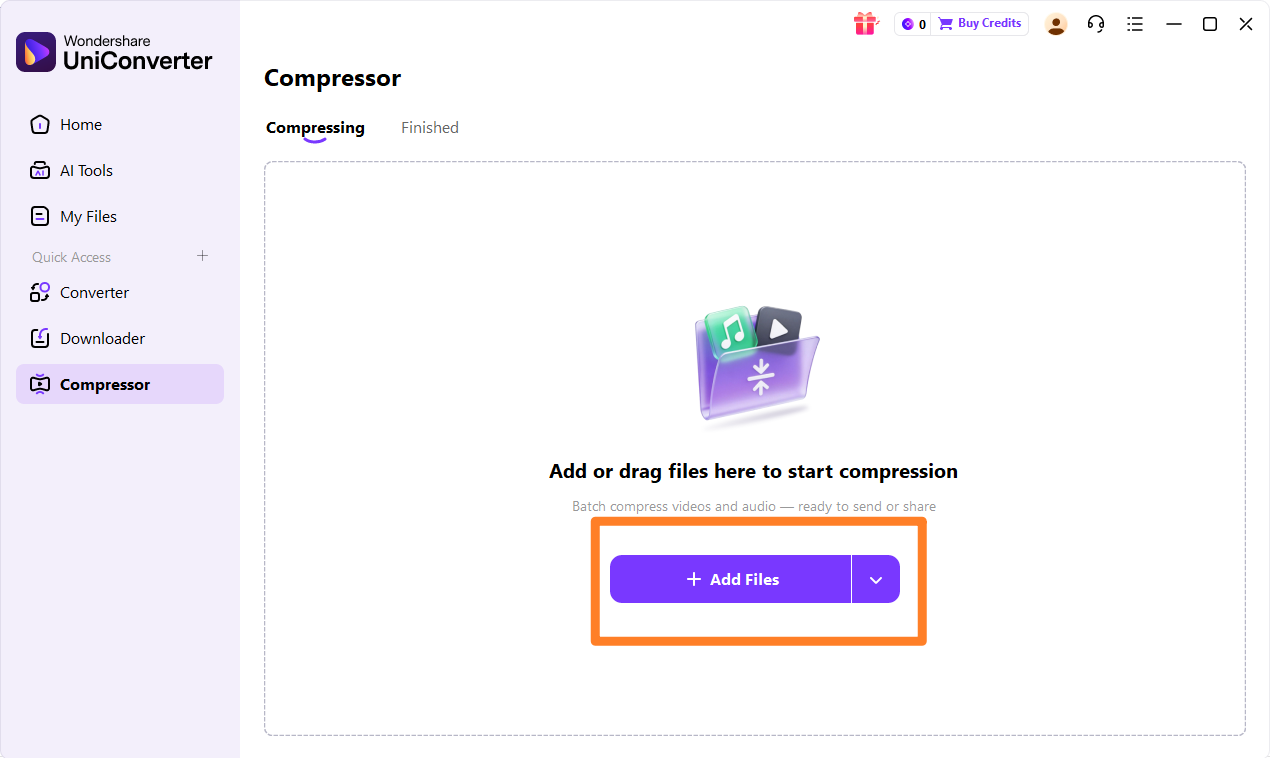
Step 2: Upload the Video, Audios or Images
Next, I click the "Add Files" button or simply drag and drop the video, audio, or image files I want to compress into the UniConverter window. I can add multiple files for batch processing.
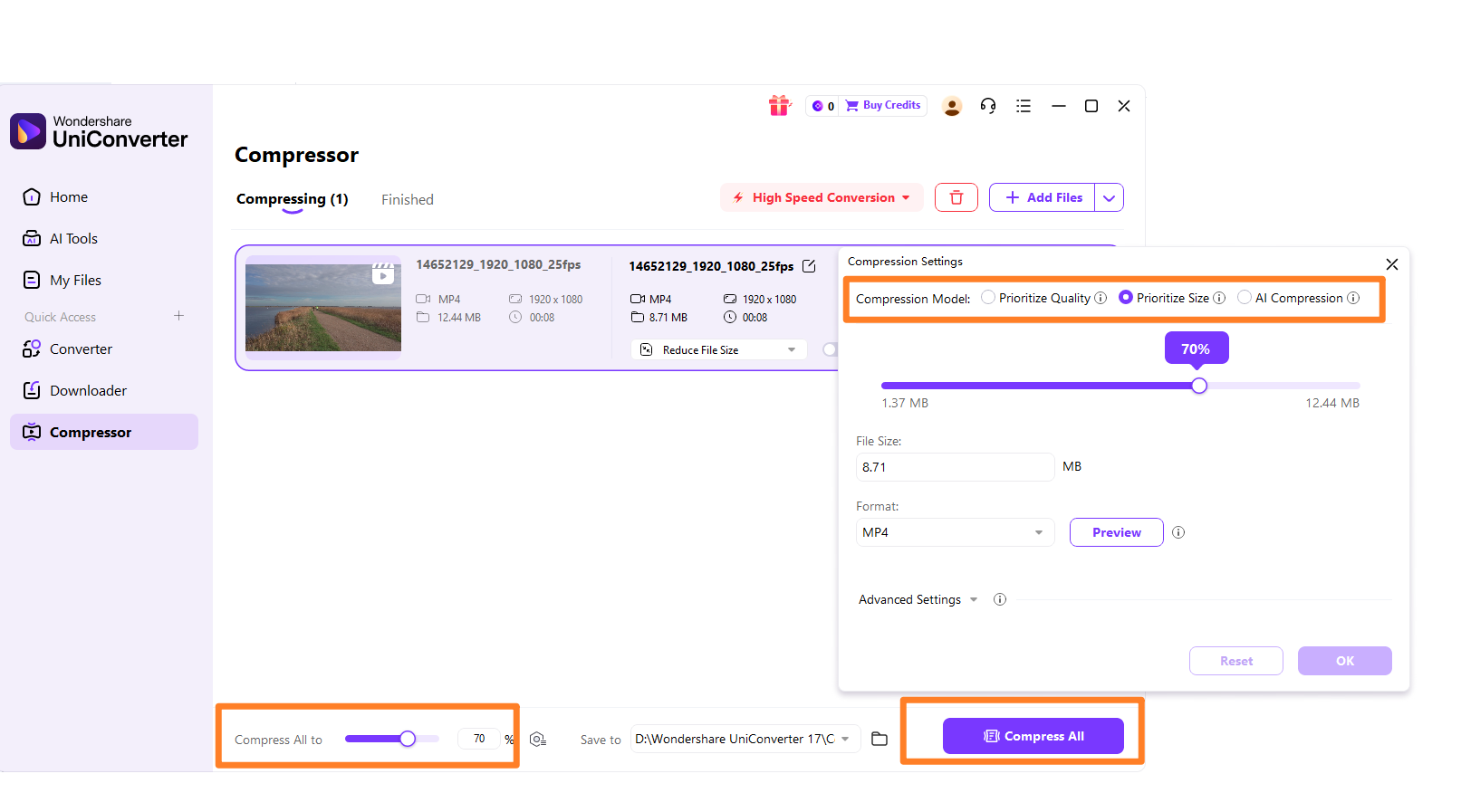
Step 3: Choose Required Parameters
Once my files are loaded, I can adjust the compression settings. UniConverter allows me to choose the output format, resolution, bitrate, and quality. I usually opt for a custom setting to balance file size and visual fidelity.
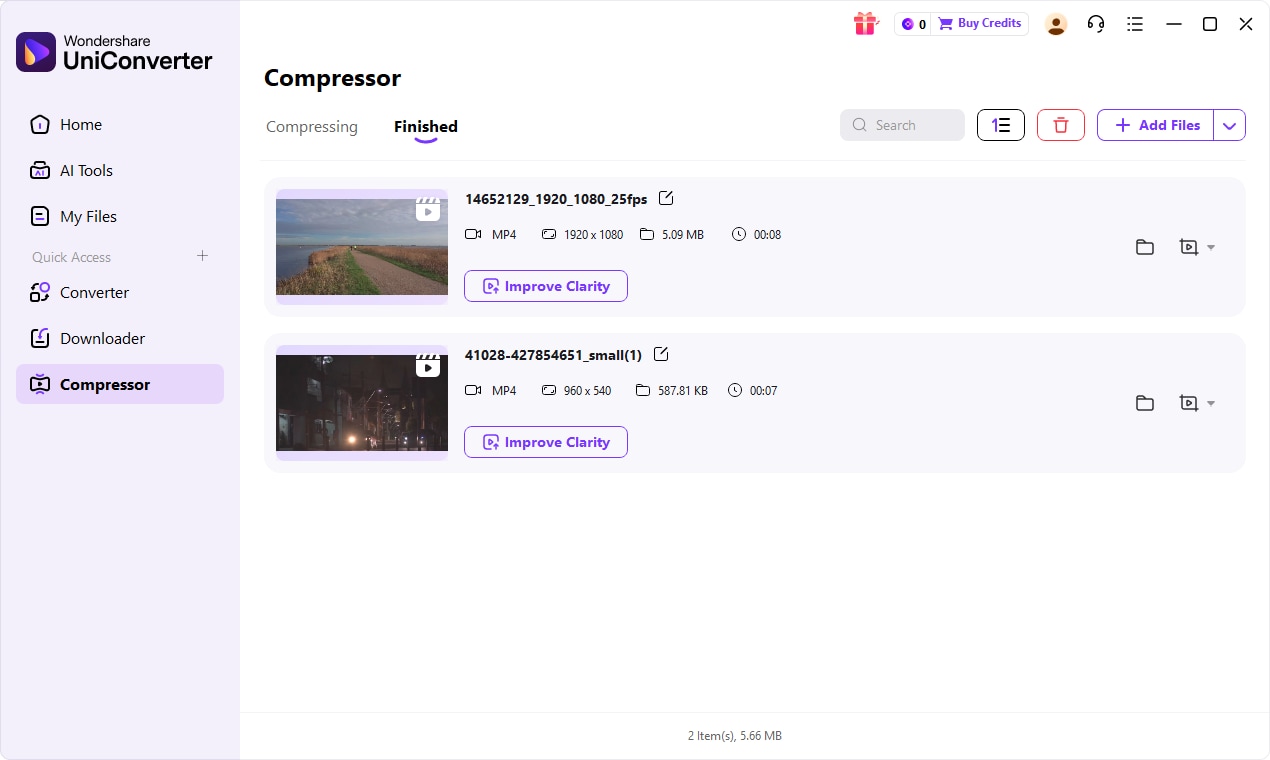
Step 4: Save the Compressed File
After configuring the settings, I click the "Compress" button. UniConverter quickly processes the files. Once done, I can find my optimized videos, audios, or images in the designated output folder.

Seeking a Better Leawo Video Converter Alternative?
Part 7: Conclusion
In conclusion, my Leawo Video Converter Video Compressor review reveals it to be a competent and user-friendly tool, particularly well-suited for casual users and those who need straightforward video conversion and compression without delving into complex professional features. Its comprehensive format support and intuitive interface make it a solid choice for everyday tasks like archiving personal videos or preparing files for sharing. However, for professional workflows demanding granular control over codecs, advanced editing, or specialized outputs, it falls short compared to industry-standard tools. While it offers a good balance of features for its price point, users should be mindful of potential quality degradation with aggressive compression and the limitations of its free trial. For those seeking a more robust, all-in-one solution that balances ease of use with advanced capabilities and reliable performance, UniConverter presents a compelling alternative, offering a smoother experience for a wider range of users.
Part 8: FAQs
-
1. Is Leawo Video Converter free to use?
Leawo offers a free trial version with limitations, such as watermarks or restricted features. To unlock its full capabilities, you'll need to purchase a paid license.
-
2. How does video compression affect video quality?
Compression reduces file size by removing redundant data, which can lead to a slight loss in quality, especially with aggressive settings. The goal is to find a balance where the file size is significantly reduced without noticeable degradation in visual or audio quality.
-
3. Can Leawo Video Converter handle 4K videos?
Yes, Leawo Video Converter supports 4K video conversion. However, processing times for 4K files can be considerably longer due to their larger data volume and higher resolution.
-
4. What are the main differences between video conversion and video compression?
Video conversion changes the video's format (e.g., MOV to MP4) to ensure compatibility across different devices or platforms. Video compression, on the other hand, reduces the file size of a video, often within the same format, to save storage space or facilitate faster sharing and streaming.
-
5. Is UniConverter a better option than Leawo for beginners?
UniConverter is often praised for its intuitive interface and comprehensive feature set, making it a strong contender for beginners seeking a powerful yet easy-to-use tool for video conversion, compression, and basic editing. It provides a more streamlined experience with robust performance.
