
- LameXP Overview: Free, open-source tool for audio compression, primarily MP3. Ideal for basic conversions.
- Core Strengths: User-friendly interface, supports many formats, customizable settings for advanced users.
- Key Limitations: Lacks advanced editing, limited modern codec support, less frequent updates.
- Best Use Case: Batch compressing large audio libraries for storage or portable devices efficiently.
- Not for Professionals: Insufficient for high-fidelity audio production or complex editing tasks.
- Comparison Value: Excels in simplicity for MP3, but falls short against feature-rich tools like UniConverter.
- Quality Risk: Aggressive compression can degrade audio quality significantly; balance file size with fidelity.
- UniConverter Advantage: Offers comprehensive, user-friendly audio and video compression with superior features and support.
In this article
- Part 1: What is LameXP Audio Compressor?
- Part 2: LameXP Audio Compressor: Core Features, Pros, and Cons
- Part 3: LameXP Audio Compressor: Ideal Users and Use Cases
- Part 4: LameXP Audio Compressor and Alternatives Comparison
- Part 5: Risks and Pitfalls of Using LameXP Audio Compressor
- Part 6: How to Use UniConverter to Efficiently Compress Audio and Video
- Part 7: Conclusion
- Part 8: FAQs
When I'm looking to optimize my audio library for storage or sharing, LameXP Audio Compressor review often comes up in discussions. It's a free, open-source tool primarily designed for converting and compressing audio files, particularly to the MP3 format. This review aims to cut through the noise and provide you with a clear, scenario-based comparison of LameXP against its competitors. I'll delve into its core features, identify its ideal users and use cases, and highlight potential pitfalls. My goal is to help you decide if LameXP is the right tool for your audio compression needs or if a more robust alternative, like UniConverter, would better serve your workflow.
Part 1: What is LameXP Audio Compressor?
LameXP is a graphical user interface (GUI) for the LAME MP3 encoder and other audio codecs, making the powerful command-line tools accessible to everyday users. It's a desktop application that allows you to compress audio files, convert formats, and even perform some basic audio processing tasks. For anyone dealing with large audio collections, especially those looking to save disk space or prepare files for portable devices, LameXP presents itself as a straightforward solution. However, the audio compression landscape is vast, with many tools offering varying degrees of functionality and ease of use. This review will help you understand where LameXP fits in and what its limitations are.
The Landscape of Audio Compression Software
* Growing Need for Efficient Storage: With high-quality audio files becoming larger, efficient compression is crucial for managing extensive music libraries.
* Diverse User Needs: From casual listeners to professional audio engineers, different users have distinct requirements for audio compression, ranging from simple format conversion to advanced quality control.
* Balancing Quality and File Size: The eternal dilemma in audio compression is finding the sweet spot between reducing file size and preserving audio fidelity.
Part 2: LameXP Audio Compressor: Core Features, Pros, and Cons
LameXP is built around the idea of making audio compression simple and accessible. Its core capabilities revolve around converting and compressing audio files using various codecs, with a strong emphasis on MP3. I've found it to be quite efficient for its primary purpose, though it certainly has its limitations when compared to more comprehensive audio suites.
Pros:
* User-friendly interface for quick compression tasks: I appreciate how easy it is to drag and drop files and start compressing.
* Supports a wide range of audio formats for input and output: It handles most common formats like WAV, FLAC, OGG, and of course, MP3.
* Highly customizable compression settings for advanced users: You can tweak bitrate, quality, and other parameters if you know what you're doing.
Cons:
* Lacks advanced audio editing capabilities: Don't expect to cut, merge, or apply effects; it's purely for compression and conversion.
* Limited support for modern audio codecs compared to some competitors: While it covers the basics, newer, more efficient codecs might not be fully supported.
Part 3: LameXP Audio Compressor: Ideal Users and Use Cases
From my experience, LameXP shines in specific scenarios, particularly for users who prioritize simplicity and efficiency for bulk tasks. It's not a Swiss Army knife for audio, but it does its job well within its niche.
Best Use Case: Batch Compressing Large Audio Libraries for Storage
If you have a massive collection of uncompressed WAV or FLAC files and you want to convert them to MP3s to save significant disk space or to load onto a portable music player, LameXP is a fantastic tool. Its batch processing capabilities make this task incredibly straightforward and efficient. I've used it myself to convert entire albums, and it handles the workload without a hitch, allowing me to set it and forget it.
Limited Use Case: Professional Audio Production Requiring High-Fidelity Editing
For professional audio engineers or anyone involved in music production, LameXP falls short. It doesn't offer any waveform editing, noise reduction, equalization, or other advanced features crucial for high-fidelity audio work. If your workflow involves anything beyond simple compression or format conversion, you'll need a dedicated digital audio workstation (DAW) or a more feature-rich audio editor. It's simply not designed for that level of detail or control.
Part 4: LameXP Audio Compressor and Alternatives Comparison
When I look at audio tools, I consider not just what they do, but how well they fit into different workflows. Here’s how LameXP stacks up against some other popular options.
| Feature/Software | LameXP | Audacity | HandBrake | FFmpeg | UniConverter |
| Primary Function | Audio Compression | Audio Editing & Compression | Video Transcoding & Compression | Multimedia Processing | Video/Audio Conversion & Compression |
| Ease of Use | High | Medium | Medium | Low | High |
| Supported Formats | Good | Excellent | Good | Excellent | Excellent |
| Advanced Features | Limited | Extensive | Moderate | Extensive | Extensive |
| Price | Free | Free | Free | Free | Paid (Free Trial) |
| Output Quality | Variable (User-defined) | High | High | High | High (Lossless options) |
| Batch Processing | Yes | Limited | Yes | Yes | Yes |
Key Differentiators:
- LameXP excels in straightforward audio compression with a focus on ease of use, especially for MP3 conversion. - Audacity offers a more comprehensive suite for audio editing alongside compression, making it versatile for light editing tasks. - HandBrake is primarily for video but can handle audio streams within video files, useful if your audio is embedded. - FFmpeg provides unparalleled flexibility but requires command-line expertise, making it powerful for those who know how to use it. - UniConverter stands out for its user-friendly interface combined with extensive format support, high-quality output, and robust batch processing for both audio and video.
Part 5: Risks and Pitfalls of Using LameXP Audio Compressor
While LameXP is a useful tool, it's important to be aware of its limitations and potential downsides, especially if you're relying on it for critical tasks. I've encountered a few issues that users should consider.
Potential for Quality Degradation with Aggressive Compression
One of the biggest risks with any audio compressor, including LameXP, is the potential for significant quality loss if you choose overly aggressive compression settings. While you can customize the bitrate and quality, if you aim for extremely small file sizes, you'll inevitably sacrifice audio fidelity. I've found that it's easy to accidentally over-compress, resulting in noticeable artifacts or a "tinny" sound, especially with lower bitrates. It's crucial to understand the trade-offs between file size and sound quality.
Lack of Built-in Security Features for Sensitive Audio
LameXP is a local desktop application, which generally means your files aren't uploaded to a server. However, it lacks any built-in encryption or security features for handling sensitive audio content. If you're working with confidential recordings, you'll need to ensure your operating system and other security measures are robust. It's not designed to protect your data beyond basic file handling.
Limited Community Support Compared to Larger Projects
As an open-source project, LameXP relies on community support. While there are forums and documentation available, the community isn't as large or active as some other open-source projects like Audacity or FFmpeg. This means if you encounter a niche bug or need advanced troubleshooting, finding quick and comprehensive help might be challenging. I've sometimes had to dig deep to find solutions for specific issues.
Absence of Regular Updates for New Codecs
LameXP's development has been less frequent in recent years. This can lead to a lack of support for newer audio codecs or optimizations that might emerge in the industry. While it handles common formats well, you might find yourself limited if you need to work with cutting-edge audio technologies or benefit from the latest compression algorithms that offer better quality at smaller file sizes. This can be a significant drawback for users who need to stay current with audio technology.
Part 6: How to Use UniConverter to Efficiently Compress Audio and Video
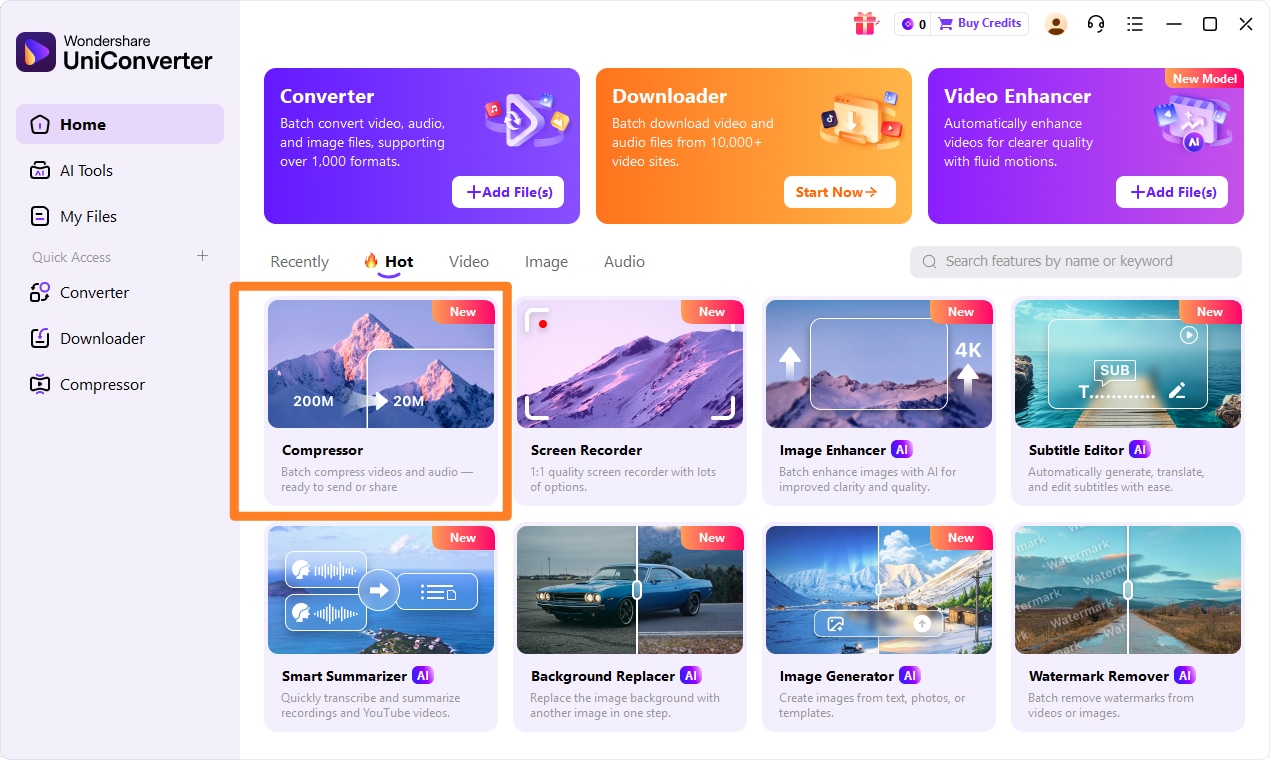
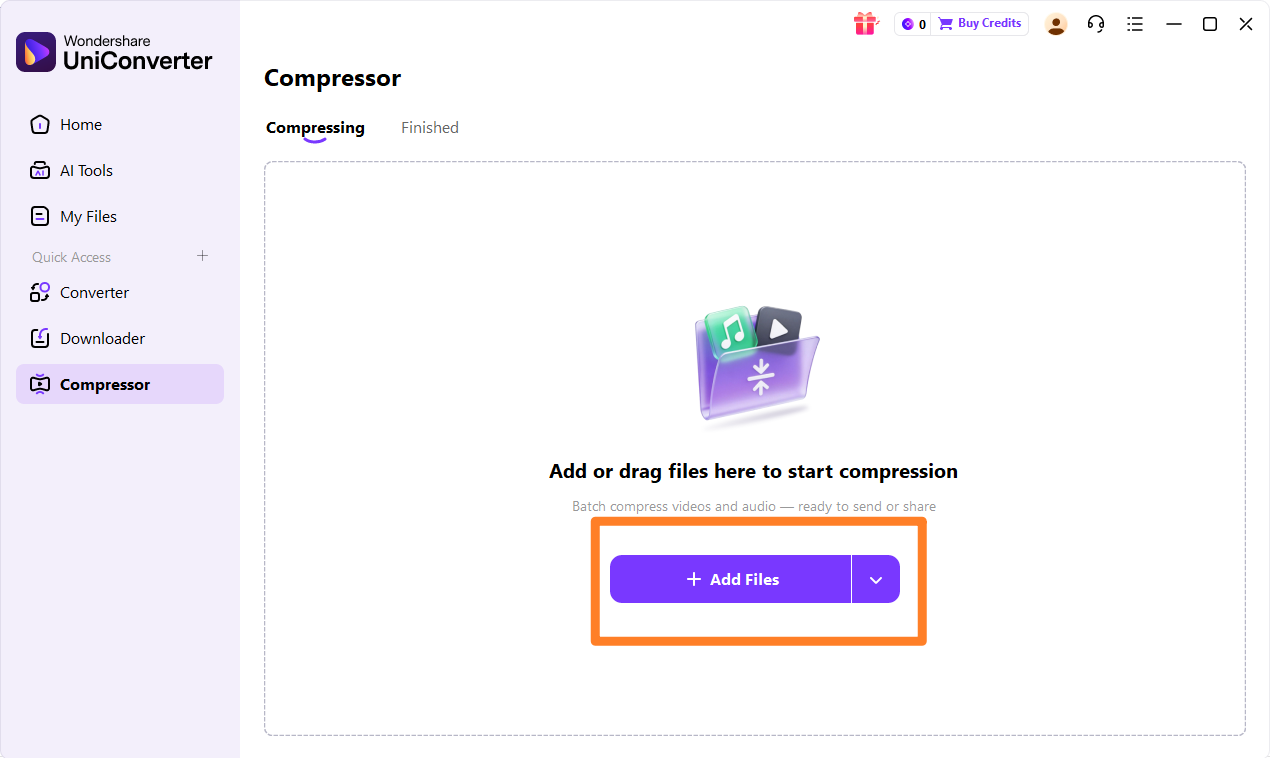
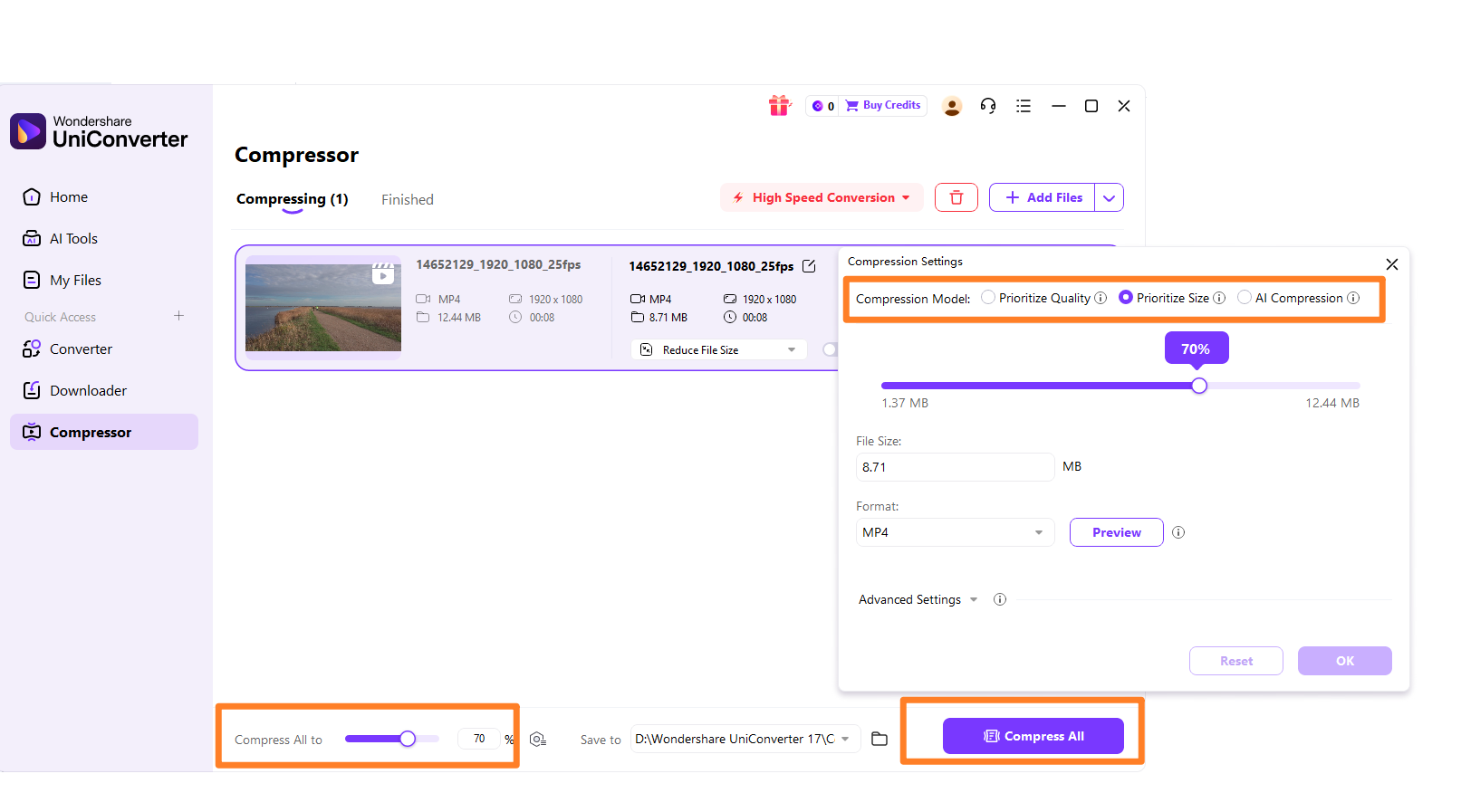
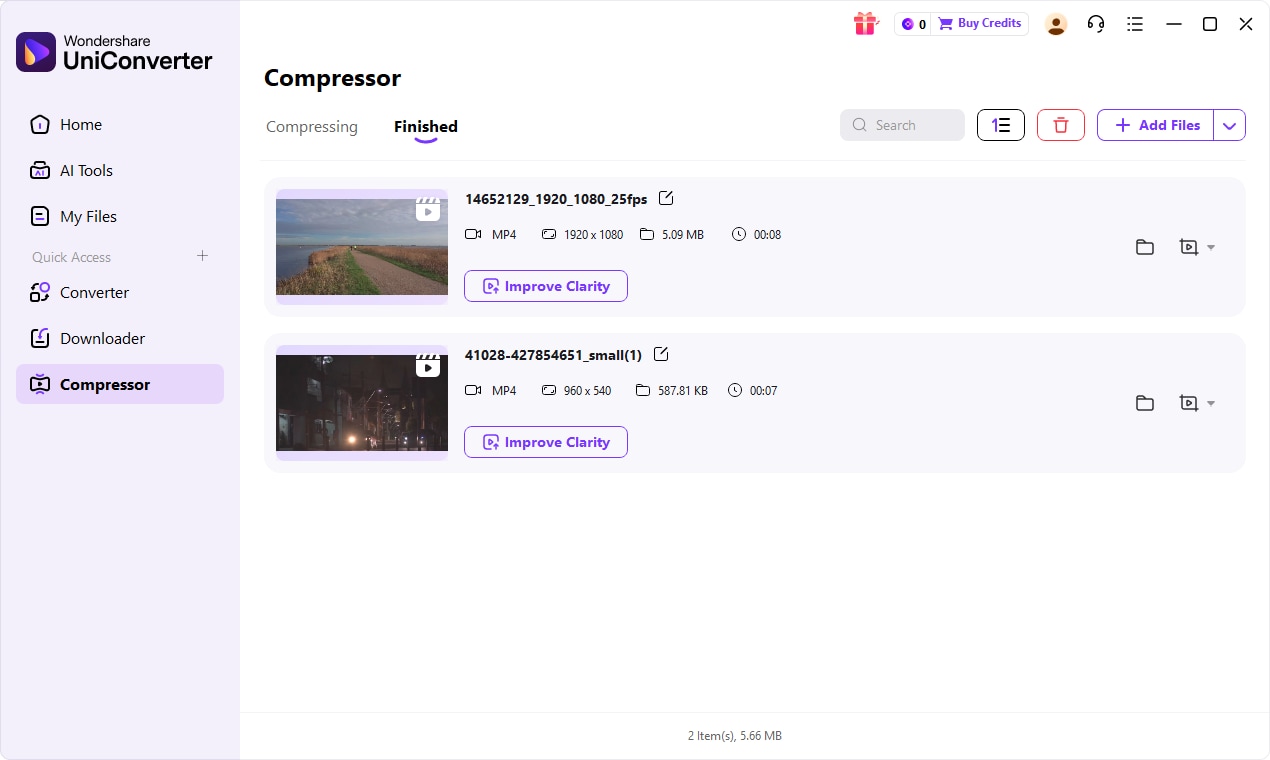
When a tool like LameXP starts to feel too limited—especially if I need broader media support, better quality control, or one workflow for both video and audio—UniConverter is usually the better fit. It handles audio compression and video compression in one place, which makes batch work and file conversion much easier to manage. I also like that it offers a cleaner, ad-free experience, wide format compatibility, and GPU acceleration to speed up larger tasks. For video files, it can also help compress videos without quality loss as much as possible, making it a practical all-in-one toolkit for everyday media conversion, compression, and basic editing.
Step 1: Open UniConverter and Choose Compressor
Step 2: Upload the Video, Audios or Images
Step 3: Choose Required Parameters
Step 4: Save the Compressed File

Seeking a LameXP Audio Compressor Alternative?
Part 7: Conclusion
After diving deep into LameXP Audio Compressor review, it's clear that this tool serves a specific, valuable niche. For casual users who prioritize simplicity and need to batch compress large audio libraries, particularly to MP3 format, LameXP is a solid, free choice. Its user-friendly interface and customizable settings make it accessible for quick tasks. However, for advanced users requiring extensive audio editing capabilities, support for modern codecs, or a more robust feature set, LameXP falls short. In such cases, alternatives like Audacity or a comprehensive solution like UniConverter offer a much broader range of functionalities. While LameXP remains competitive for storage optimization and straightforward conversions, professional workflows or scenarios demanding high-fidelity editing and diverse media handling will benefit from investing in more dedicated or feature-rich software. Ultimately, your choice should align with your specific needs and the complexity of your audio tasks.
Part 8: FAQs
-
1. Is LameXP completely free to use?
Yes, LameXP is open-source and free to download and use without any cost.
-
2. Can LameXP convert audio formats without compression?
While primarily a compressor, LameXP can also convert between various audio formats, and you can choose settings that minimize compression artifacts, effectively acting as a format converter.
-
3. Does LameXP support lossless audio compression?
LameXP primarily focuses on lossy compression (e.g., MP3) to reduce file size. While it can process lossless formats like FLAC or WAV, it typically converts them to a lossy format for compression. If you need true lossless compression, you might need a different tool or to use a lossless codec like FLAC for output.
-
4. How does LameXP compare to online audio compressors?
LameXP offers more control and privacy as a desktop application compared to many online tools. With LameXP, your files remain on your computer, whereas online compressors require uploading your audio, which can be slower and raise privacy concerns for sensitive content. For a more secure and feature-rich offline experience, UniConverter is an excellent alternative.
-
5. Is LameXP still actively developed?
LameXP's development has been less frequent in recent years compared to some other open-source projects. While it remains functional for its core purpose, it might not receive regular updates for new codecs or features as often as more actively maintained software. If you need a tool with continuous updates and support for the latest technologies, consider options like UniConverter.
