
- Kapwing Overview: Online video compressor for quick, accessible video optimization.
- Core Features: Web-based, multi-format support, adjustable compression, integrated editing, real-time preview.
- Ideal Use: Perfect for quick social media video preparation and on-the-go adjustments.
- Limitations: Not suitable for large-scale professional projects due to upload times and limited control.
- Competitor Comparison: Kapwing excels in ease/integration; HandBrake/Adobe offer professional control.
- UniConverter Solution: Desktop alternative for efficient, high-quality, offline video compression.
- UniConverter Benefits: Batch processing, stable results, minimal quality loss, extensive format support.
- Final Verdict: Kapwing is great for casual use; UniConverter is superior for demanding tasks.
In this article
- Part 1: What is Kapwing Video Compressor?
- Part 2: Kapwing Video Compressor: Core Features, Pros, and Cons
- Part 3: Kapwing Video Compressor: Ideal Users and Use Cases
- Part 4: Kapwing Video Compressor vs. Competitors
- Part 5: Risks and Pitfalls When Using Online Video Compressors
- Part 6: How to Use UniConverter for Efficient Video Compression
- Part 7: Final Verdict and Recommendations
- Part 8: Frequently Asked Questions (FAQs)
When you're constantly creating and sharing videos, whether for social media, presentations, or personal archives, you quickly realize the bottleneck that large file sizes create. Uploading takes forever, sharing is cumbersome, and storage space dwindles. This is where tools like Kapwing Video Compressor review come into play, promising to shrink your videos without sacrificing quality. This review aims to provide a comprehensive look at Kapwing's offering, comparing it against its competitors, and ultimately helping you decide if it's the right tool for your video compression needs. I'll dive into its features, ideal use cases, potential pitfalls, and even suggest a robust alternative for more demanding tasks.
Part 1: What is Kapwing Video Compressor?
Kapwing Video Compressor is an online, browser-based tool designed to reduce the file size of your video clips. As part of the larger Kapwing suite of creative tools, it offers a quick and accessible way to optimize videos for various platforms without needing to download any software. My experience with it has been largely positive for quick tasks, making it a go-to for on-the-fly adjustments.
The Growing Need for Efficient Video Compression
In today's digital landscape, video content reigns supreme. However, the convenience of creating high-quality videos often comes with the burden of large file sizes. This creates several pain points for creators and consumers alike:
* Slow Upload/Download Times: Large files can significantly delay uploading to social media or cloud storage, and downloading them can consume excessive bandwidth.
* Storage Space Constraints: High-resolution videos quickly fill up hard drives, cloud storage, and mobile device memory.
* Website Performance Impact: Embedding uncompressed videos can slow down website loading times, negatively affecting user experience and SEO.
* Sharing Difficulties: Many platforms and email services have strict file size limits, making it challenging to share large video files directly.
Part 2: Kapwing Video Compressor: Core Features, Pros, and Cons
Kapwing Video Compressor stands out with its user-friendly interface and integration within a broader creative ecosystem. It's built for speed and accessibility, making it a convenient option for many.
Core Features:
* Web-Based Accessibility: No software download required; access from any browser.
* Multiple Format Support: Handles common video formats like MP4, MOV, AVI, etc.
* Adjustable Compression Levels: Allows you to choose between different quality/size trade-offs.
* Integrated Editing Suite: Offers basic editing tools like trimming, cropping, and adding text alongside compression.
* Real-time Preview: See the compressed video before finalizing the export.
Pros:
* Intuitive Web-Based Interface for Quick Edits: I find it incredibly easy to navigate, even for someone new to video editing. The drag-and-drop functionality is a huge plus.
* Integrated Suite of Editing Tools Beyond Compression: Being able to trim a video or add a quick caption right before compressing it saves a lot of time and hassle. It's a true all-in-one for basic tasks.
* Real-time Preview of Compressed Video: This feature is a lifesaver. I can instantly see how much quality I'm sacrificing for a smaller file size, allowing me to make informed decisions.
Cons:
* Reliance on Internet Connection for All Operations: If my internet is flaky, Kapwing becomes unusable. This is a significant drawback compared to desktop software.
* Limited Advanced Compression Customization Options: While it offers basic quality settings, I often wish for more granular control over bitrates, codecs, and other technical aspects that professional tools provide.
Part 3: Kapwing Video Compressor: Ideal Users and Use Cases
Kapwing Video Compressor shines in scenarios where speed and simplicity are paramount. It's not designed for every video compression need, but it excels in its niche.
Best Use Case: Quick Social Media Video Preparation
For me, Kapwing is perfect when I need to quickly compress a video for Instagram, TikTok, or YouTube. I can upload a raw clip, trim it, add some text, compress it, and download it, all within a few minutes. The web-based nature means I can do this from any computer without installing software, which is incredibly convenient when I'm on the go or using a shared device. It’s ideal for content creators who need to churn out optimized content rapidly.
Limitation Scenario: Large-Scale Professional Video Projects
However, when I'm working on a large professional video project, Kapwing falls short. For instance, compressing a 4K, 30-minute documentary would be a nightmare. The upload times alone would be prohibitive, and the limited customization options mean I can't achieve the precise quality and file size balance required for broadcast or high-end client deliverables. In these situations, I need the power and control of desktop software.
Part 4: Kapwing Video Compressor vs. Competitors
When evaluating Kapwing, it's essential to see how it stacks up against other popular video compression tools. Each has its strengths and weaknesses, catering to different user needs.
| Feature/Tool | Kapwing Video Compressor | HandBrake | Adobe Media Encoder | Online Video Converter |
| Platform | Web-based | Desktop (Windows, macOS, Linux) | Desktop (Windows, macOS) | Web-based |
| Ease of Use | High | Medium | Low | High |
| Compression Quality | Good | Excellent | Excellent | Varies |
| Advanced Settings | Limited | Extensive | Extensive | Limited |
| Offline Capability | No | Yes | Yes | No |
| Cost | Freemium | Free | Subscription | Freemium |
Key Differentiators:
Kapwing's main advantage lies in its accessibility and integration. It's an all-in-one online editor that happens to compress, making it a quick solution for casual users. HandBrake and Adobe Media Encoder, on the other hand, are dedicated desktop compressors offering professional-grade control and superior output quality, but with a steeper learning curve. Online Video Converter represents a broader category of web-based tools, often simpler than Kapwing but lacking its integrated editing features. For me, Kapwing is great for speed, but for serious quality and offline work, I'd lean towards HandBrake or Adobe.
Part 5: Risks and Pitfalls When Using Online Video Compressors
While online video compressors like Kapwing offer convenience, it's crucial to be aware of the potential downsides, especially if you're dealing with sensitive content or require specific outcomes. I've learned these lessons the hard way.
Data Privacy and Security Concerns
When I upload my videos to an online platform, I'm essentially entrusting my content to a third-party server. For personal or sensitive footage, this raises immediate privacy concerns. While many services claim to delete files after a certain period, the initial upload and processing expose your data to potential breaches or unauthorized access. I always think twice before uploading anything confidential.
Potential for Watermarks or Ads in Free Tiers
Many online tools, including Kapwing, operate on a freemium model. This often means that if you're using the free tier, your compressed video might come with an unsightly watermark or you'll be bombarded with advertisements during the process. This can be a deal-breaker if you need a clean, professional output without paying for a subscription.
Quality Degradation with Aggressive Compression
The primary goal of a video compressor is to reduce file size, but aggressive compression can lead to noticeable quality degradation. I've seen videos become pixelated, blurry, or suffer from artifacting when I pushed the compression too far. Finding the right balance between file size and visual fidelity is a constant challenge, and online tools sometimes offer less control over this trade-off.
Internet Dependency and Upload/Download Times
As I mentioned earlier, online tools are useless without an internet connection. Furthermore, uploading large video files can take a significant amount of time, especially with slower internet speeds. After compression, you then have to download the file, adding another waiting period. This two-way transfer can be incredibly inefficient for larger projects, making desktop software a much faster option.
Part 6: How to Use UniConverter for Efficient Video Compression
When online tools fall short—or when I need more control, reliability, and offline access—I usually turn to desktop software like UniConverter. It offers a more dependable workflow than many web-based tools and works especially well as a dedicated video compressor for handling larger or more demanding tasks. I also like that it supports batch compression, delivers more stable results, and can help compress videos without quality loss as much as possible. With broad format support, GPU acceleration, and additional tools for conversion and editing, it works well as a practical all-in-one solution for everyday media management.
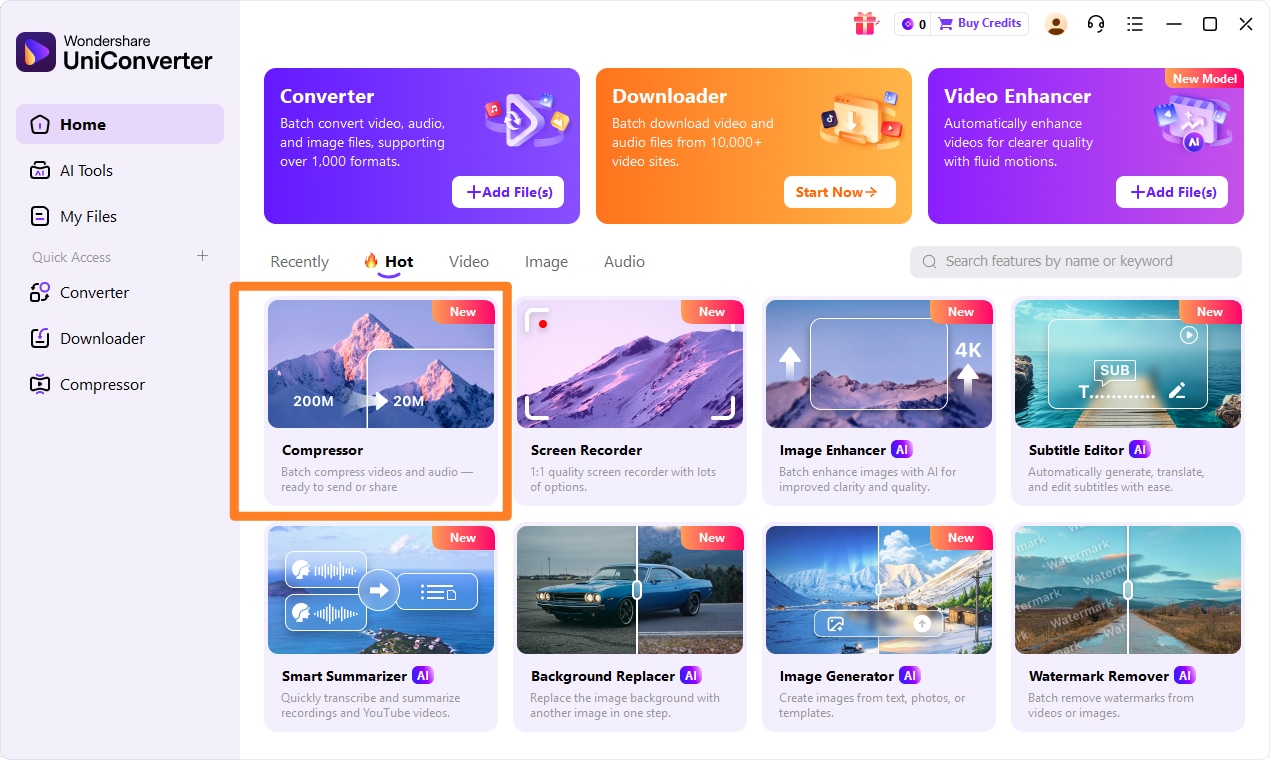
Step 1: Open UniConverter and Choose Compressor
First, I launch UniConverter on my desktop. From the main interface, I navigate to the "Video Compressor" module. This is where all the magic happens for shrinking my video files.
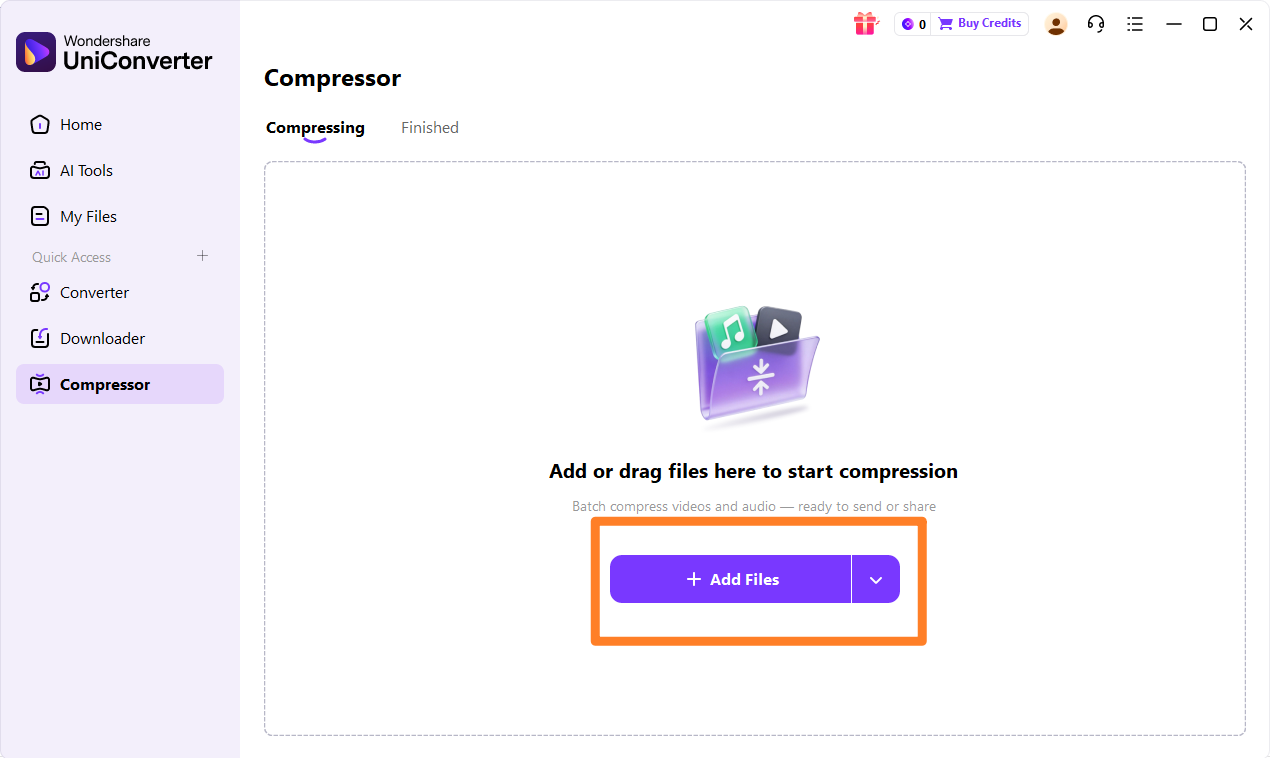
Step 2: Upload the Video, Audios or Images
Next, I click the "Add Files" button or simply drag and drop the video file I want to compress into the UniConverter window. UniConverter supports a wide range of video formats, so I rarely encounter compatibility issues.
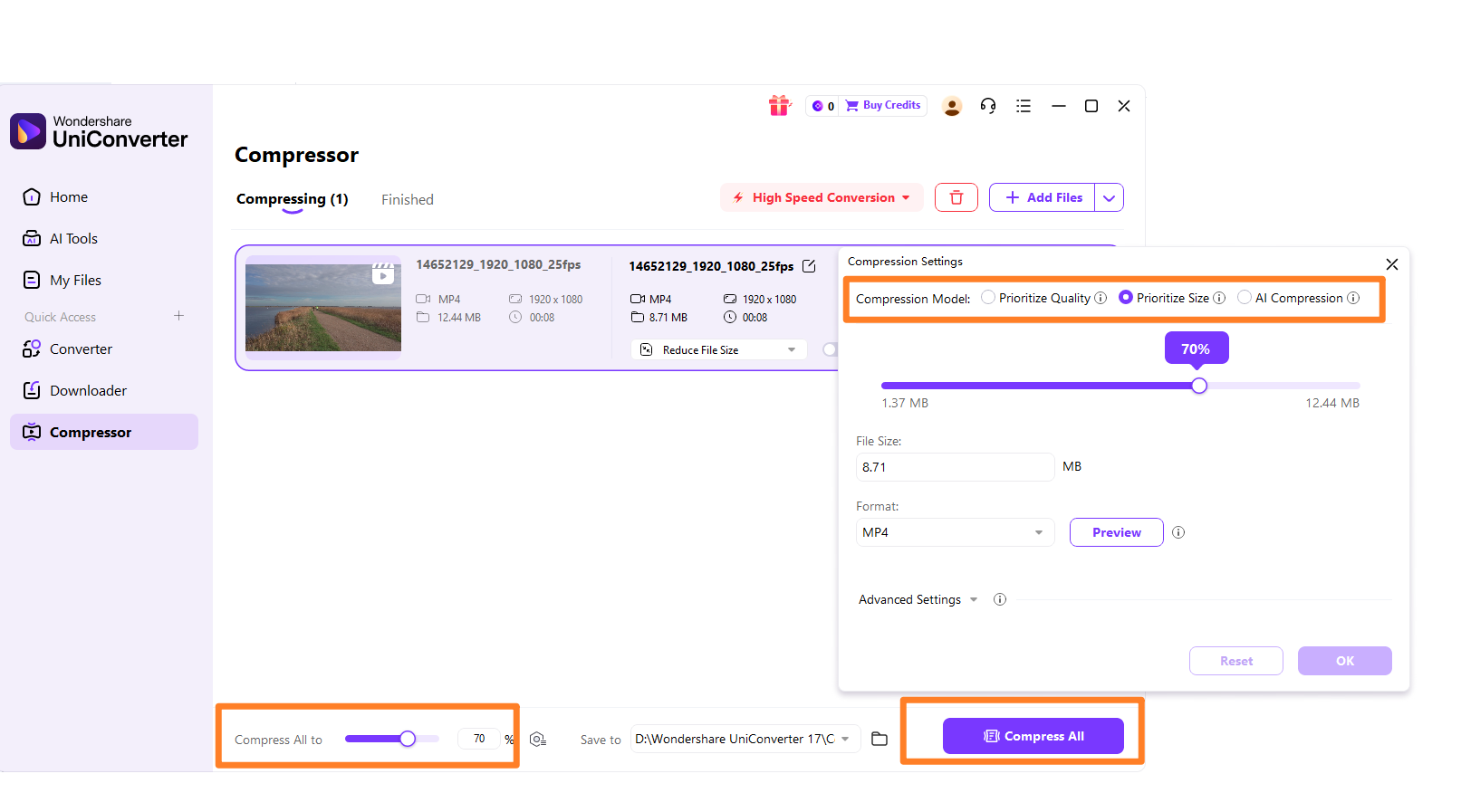
Step 3: Choose Required Parameters
Once my video is loaded, I can adjust the compression settings. UniConverter gives me granular control over parameters like resolution, bitrate, and output format. I can choose a preset or manually customize the settings to achieve the perfect balance between file size and quality.
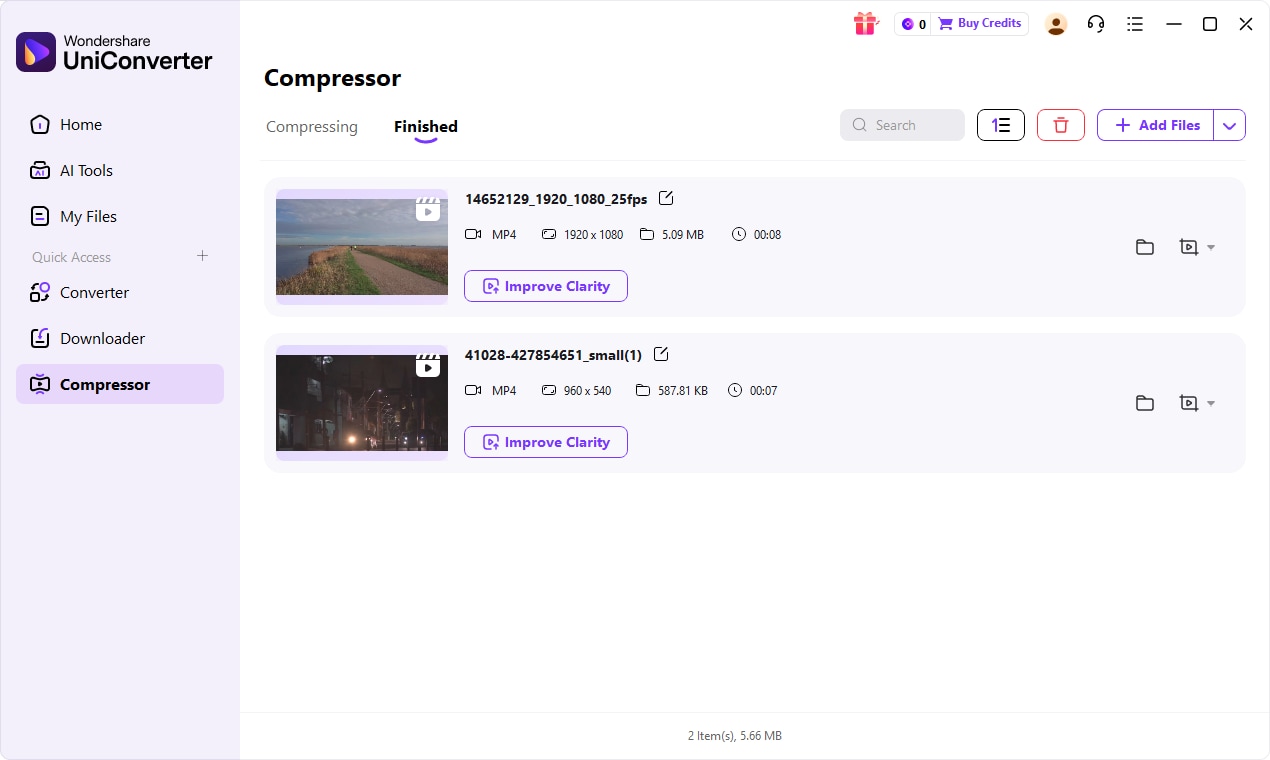
Step 4: Save the Compressed File
After setting my desired parameters, I click the "Compress" button. UniConverter processes the video quickly, often leveraging GPU acceleration for faster results. Once done, I can save the compressed file to my desired location on my computer.

Kapwing Alternative for Video Compression
Part 7: Final Verdict and Recommendations
After extensively using and comparing Kapwing Video Compressor with its alternatives, my final verdict is that it's an excellent tool for specific use cases but not a universal solution. For casual users and social media creators who prioritize speed, ease of use, and quick edits, Kapwing is a fantastic choice. Its web-based nature and integrated editing suite make it incredibly convenient for on-the-fly content creation. However, for professionals requiring high-quality output, extensive customization, and reliable performance for large projects, desktop software like HandBrake or Adobe Media Encoder is indispensable. Furthermore, for users prioritizing offline functionality, enhanced security, and comprehensive video management without compromising quality, UniConverter stands out as a superior alternative. It mitigates the risks associated with online tools and offers a robust, feature-rich environment for all video compression needs.
Part 8: Frequently Asked Questions (FAQs)
-
1. Is Kapwing Video Compressor completely free to use?
Kapwing offers a free tier with limitations on file size, export duration, and features. To unlock more capabilities, such as removing watermarks, accessing longer export times, and larger file uploads, you'll need to subscribe to one of their paid plans.
-
2. How does Kapwing ensure video quality after compression?
Kapwing employs algorithms designed to balance file size reduction with visual quality. While it aims to minimize noticeable degradation, the extent of quality preservation often depends on the chosen compression level. More aggressive compression will inevitably lead to some quality loss.
-
3. Can I compress multiple videos at once with Kapwing?
In its free tier, Kapwing typically processes one video at a time. Batch processing, which allows you to compress multiple videos simultaneously, is usually a feature reserved for paid subscriptions. For batch compression, desktop software like UniConverter is generally more efficient.
-
4. What are the main advantages of using a desktop compressor like UniConverter over Kapwing?
Desktop compressors like UniConverter offer several key advantages: offline functionality, greater control over compression settings (bitrate, codec, resolution), often faster processing for large files due to local hardware utilization, and enhanced privacy since your files aren't uploaded to external servers.
-
5. Is it safe to upload sensitive video content to online compressors?
While many online tools claim to prioritize security and data privacy, for highly sensitive or confidential video content, desktop software or self-hosted solutions are generally recommended. This minimizes the risk of data breaches or unauthorized access that can occur when files are temporarily stored on third-party cloud servers.
