
- Kapwing Value: Kapwing offers quick, web-based AI video compression for social media creators.
- Kapwing Limitations: Free tier restrictions, internet dependency, and limited control are key drawbacks.
- Comparison Insight: UniConverter provides superior offline capability, batch processing, and quality control over Kapwing.
- Decision Factor: Choose Kapwing for speed/convenience; choose UniConverter for reliability, control, and advanced features.
In this article
- Part 1: What is Kapwing AI Video Compressor?
- Part 2: Kapwing AI Video Compressor: Core Features, Pros & Cons
- Part 3: Kapwing AI Video Compressor: Ideal Users & Use Cases
- Part 4: Kapwing AI Video Compressor & Competitors: A Comparative Analysis
- Part 5: Risks & Pitfalls to Consider
- Part 6: How to Use UniConverter to Compress Efficiently
- Part 7: Conclusion
- Part 8: FAQs
When I'm scrambling to get a video uploaded for a client or shared on social media, the last thing I need is a massive file size slowing me down. That's where a tool like Kapwing AI Video Compressor review comes in. It promises to shrink videos without sacrificing too much quality, all through a web browser. In this review, I'll dive deep into how Kapwing stacks up against its competitors, exploring its features, ideal use cases, and potential pitfalls, so you can make an informed decision about whether it's the right tool for your video compression needs.
Part 1: What is Kapwing AI Video Compressor?
Kapwing AI Video Compressor is an online, browser-based tool designed to reduce video file sizes, primarily leveraging artificial intelligence to optimize compression. It's part of the broader Kapwing suite of online editing tools, aiming to provide a seamless workflow for content creators who need quick, efficient video processing without the hassle of desktop software installations. My goal in this review is to determine if Kapwing truly delivers on its promise of intelligent, high-quality compression in a convenient online package, especially when compared to more established or comprehensive alternatives.
The Rise of AI-Powered Video Compression
The demand for efficient video compression has surged due to:
* Explosion of Video Content: More people are creating and sharing videos than ever before, from social media clips to professional presentations.
* Bandwidth Limitations: Large video files consume significant bandwidth, leading to slow uploads, downloads, and buffering issues.
* Storage Constraints: Both cloud and local storage can quickly fill up with uncompressed video, making efficient compression a necessity.
Part 2: Kapwing AI Video Compressor: Core Features, Pros & Cons
Kapwing AI Video Compressor primarily focuses on making video compression accessible and quick for everyday users. Its core capability lies in its ability to take a video file and reduce its size through various compression algorithms, often with an "AI" label suggesting smart optimization. It supports a decent range of video formats for input and output, and its integration within the Kapwing platform means you can often compress a video and then immediately jump into other editing tasks like trimming or adding text. The processing speed is generally good for smaller files, making it suitable for quick turnarounds.
Pros:
* Intuitive Web-Based Interface for Quick Edits: I find it incredibly easy to navigate and use, even for someone new to video compression.
* AI-Driven Smart Compression for Optimal File Size: It often achieves a good balance between file size reduction and visual quality, which is crucial for my social media posts.
* Integrated Editing Suite for Seamless Workflow: Being able to compress and then immediately trim or add captions within the same platform saves me a lot of time.
Cons:
* Reliance on Internet Connectivity for All Operations: If my internet connection is spotty, I'm completely out of luck, which can be frustrating on the go.
* Potential Limitations on Free Tier Usage (e.g., file size, export quality): The free version often restricts file size or output quality, pushing me towards a paid plan for more serious work.
Part 3: Kapwing AI Video Compressor: Ideal Users & Use Cases
Kapwing AI Video Compressor is perfectly suited for individuals and small teams who prioritize speed and convenience for their video content. If you're constantly uploading videos to platforms like Instagram, TikTok, or YouTube, and need to quickly reduce file sizes without getting bogged down in complex settings, Kapwing is a strong contender. Its online nature means you can access it from any device, making it incredibly flexible for creators who are always on the move.
Best Use Case: Social Media Content Creators on the Go
As a social media content creator, I often need to compress videos quickly from my laptop or even a tablet before uploading. Kapwing's web-based interface and AI-driven compression allow me to get my content out fast, without needing to download heavy software or spend time tweaking intricate settings. It's perfect for those moments when I'm away from my main editing setup but still need to deliver.
Limited Use Case: Professional Videographers Requiring Offline High-Fidelity Compression
For my more professional video projects, where I need absolute control over every compression parameter and often work with very large, high-fidelity files, Kapwing falls short. The lack of offline capability and the potential for quality degradation on aggressive settings make it unsuitable for situations where preserving every detail is paramount, and I need to work without an internet connection.
Part 4: Kapwing AI Video Compressor & Competitors: A Comparative Analysis
When I look at Kapwing AI Video Compressor, I see a tool that prioritizes accessibility and quick results, especially for online content. However, it's essential to compare it with other players in the market to understand its true standing. UniConverter, HandBrake, and Clipchamp each offer different strengths, catering to varied user needs and technical proficiencies.
Comparison Table: Kapwing vs. HandBrake vs. Clipchamp vs. UniConverter
| Feature/Scenario | Kapwing AI Video Compressor | HandBrake | Clipchamp | UniConverter |
| Ease of Use (Beginner) | Excellent | Moderate | Excellent | Excellent |
| Offline Capability | No | Yes | Limited | Yes |
| AI Optimization | High | Low | Moderate | High |
| Batch Processing | Moderate | High | Low | High |
| Integrated Editing | Yes | No | Yes | Yes |
| Output Quality Control | Moderate | High | Moderate | High |
| Pricing Model | Freemium | Free | Freemium | Freemium/Subscription |
Key Differentiators:
Kapwing excels in online, AI-driven compression for quick social media uploads, making it my go-to for fast, casual edits. HandBrake offers robust offline control for advanced users, which I appreciate when I need granular precision. Clipchamp provides a user-friendly online editor with basic compression, good for quick fixes within the Microsoft ecosystem. UniConverter combines offline capability with AI features and comprehensive editing, offering a more complete package that I find incredibly versatile for both quick and complex tasks.
Part 5: Risks & Pitfalls to Consider
While Kapwing AI Video Compressor offers convenience, I've learned that relying solely on cloud-based tools, especially free or freemium ones, comes with its own set of risks. It's crucial to be aware of these potential downsides before committing your valuable content to any online service.
Data Privacy Concerns with Cloud-Based Processing
When I upload my videos to Kapwing's servers, I'm entrusting them with my content. This always raises questions about data privacy and how my files are stored, accessed, and potentially used. For sensitive or proprietary content, this is a significant concern that I always weigh carefully.
Potential for Quality Degradation on Aggressive Compression Settings
While Kapwing's AI aims for optimal compression, I've noticed that pushing for very small file sizes can sometimes lead to noticeable quality loss, especially in videos with fine details or fast motion. It's a trade-off I have to consider, and sometimes the "optimal" setting isn't quite good enough for my needs.
Hidden Costs or Upsells Beyond the Free Tier
The free tier of Kapwing is great for basic tasks, but I often hit limitations on file size, export quality, or features. This invariably leads to prompts for paid upgrades, which can feel like hidden costs if I hadn't anticipated them. It's important to understand what you're getting into before you start a project.
Dependence on Stable Internet Connection for Performance
As an online tool, Kapwing is entirely dependent on my internet connection. If my Wi-Fi is slow or drops out, my compression tasks can stall or fail, which is incredibly frustrating when I'm on a deadline. This lack of offline capability is a major drawback for me when I'm working in varied environments.
Limited Advanced Customization Options Compared to Desktop Software
While Kapwing is user-friendly, its simplicity means it lacks the granular control over compression settings that I find in desktop software like HandBrake or UniConverter. For advanced users who need to tweak codecs, bitrates, or frame rates precisely, Kapwing's options can feel quite limited.
Part 6: How to Use UniConverter to Compress Efficiently
When I run into tools that don’t support batch compression, produce inconsistent results, or cause noticeable quality loss, I usually switch to UniConverter for a more reliable experience. It offers a smoother, ad-free workflow and works especially well as a dedicated video compressor for handling different file types more efficiently. I also like that it can help compress videos without quality loss as much as possible, while GPU acceleration improves processing speed. Since it also supports audio compression and image compression, it works well as a practical all-in-one solution for everyday media compression needs.
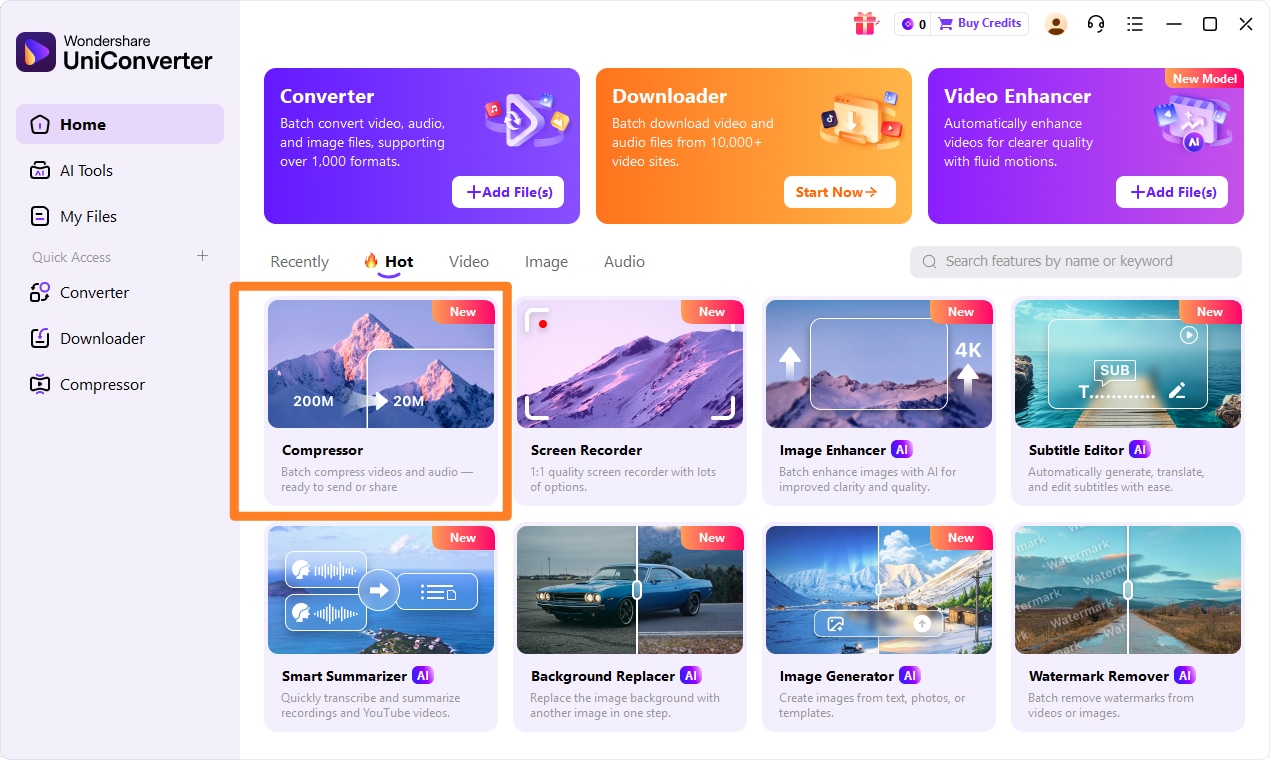
Step 1: Open UniConverter and Choose Compressor
First, I launch UniConverter on my desktop. On the left sidebar, I select the "Compressor" tool. This immediately brings me to the compression interface.
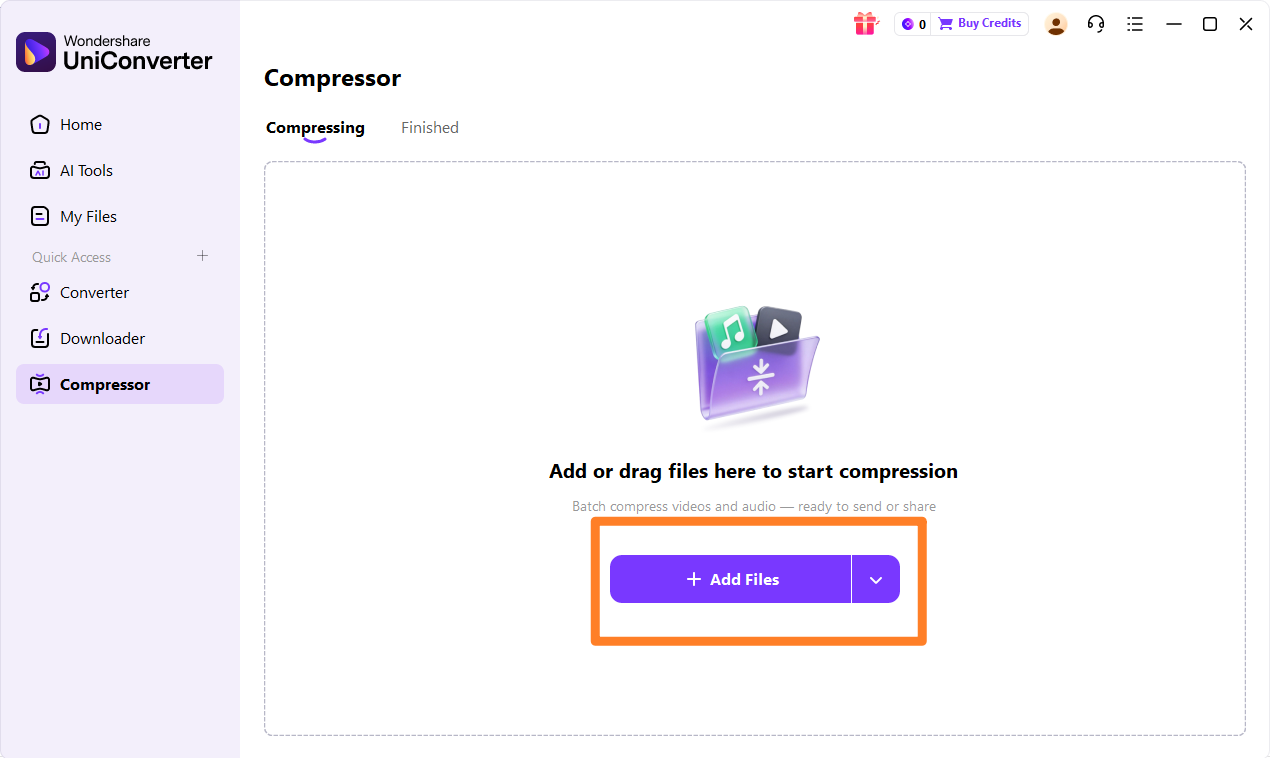
Step 2: Upload the Video, Audios or Images
Next, I click on the "Add Files" button or simply drag and drop the video, audio, or image files I want to compress into the main window. I can add multiple files for batch processing here.
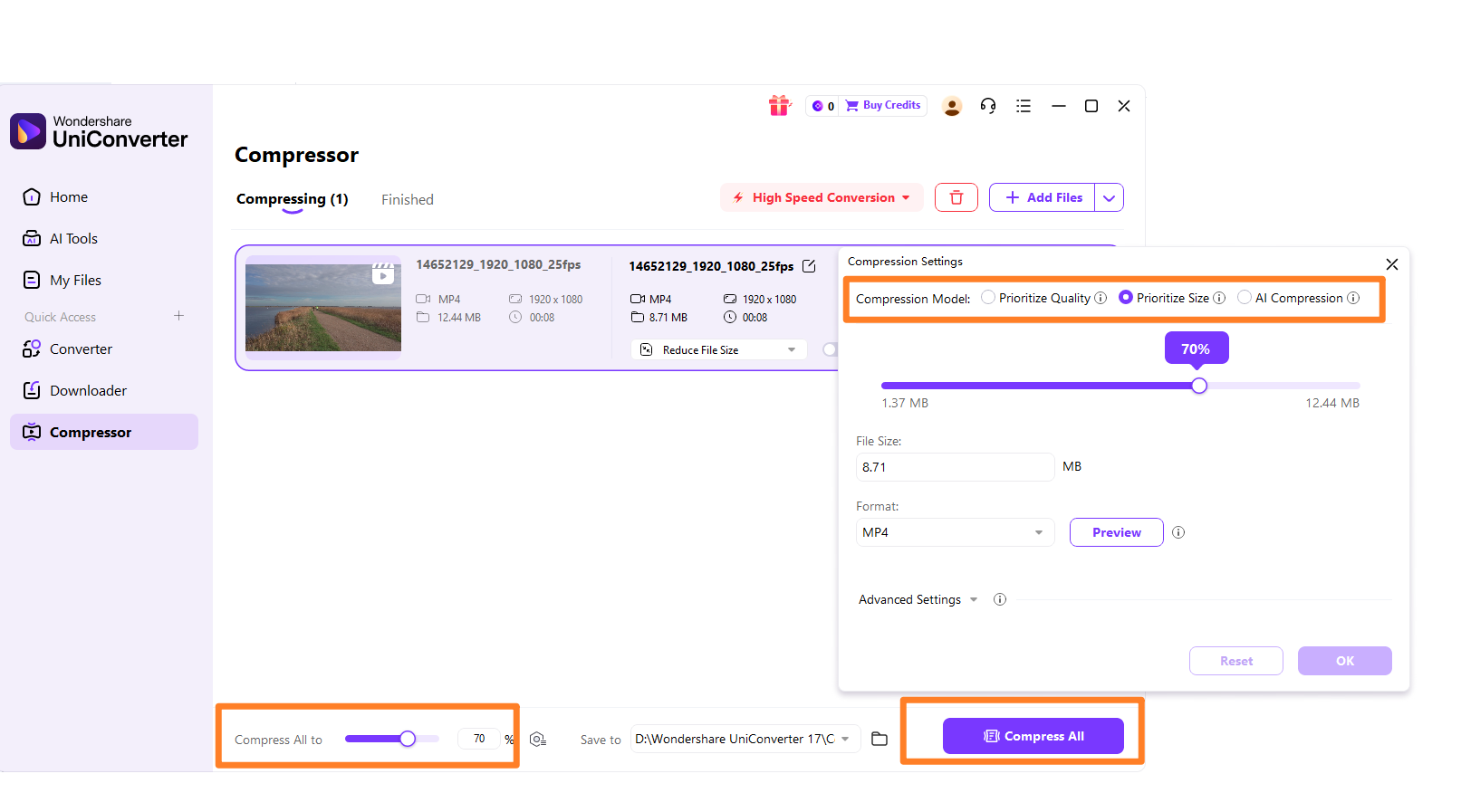
Step 3: Choose Required Parameters
After uploading, I can adjust the compression settings. UniConverter allows me to choose the output format, resolution, bitrate, and even preview the compressed file size and quality before proceeding. I can use the smart compression slider or manually input values.
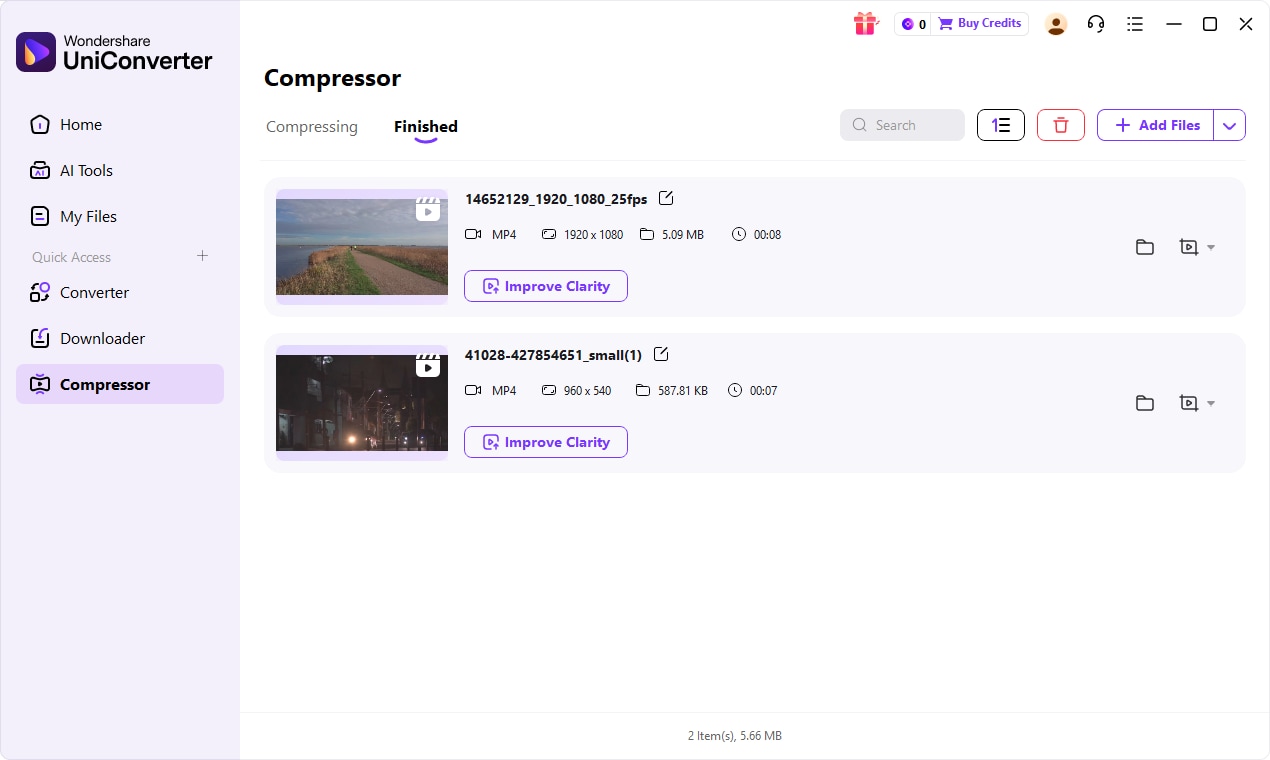
Step 4: Save the Compressed File
Once I'm satisfied with the settings, I click the "Compress" button. UniConverter quickly processes the files, and I can then choose the destination folder to save my newly compressed videos, audios, or images.

Need a Kapwing AI Video Compressor Alternative?
Part 7: Conclusion
After thoroughly exploring Kapwing AI Video Compressor and comparing it with its competitors, I can confidently say that its strengths lie in its accessibility and speed for online content creation. For quick, on-the-go compressions, especially for social media uploads, Kapwing is an excellent choice due to its intuitive web-based interface and AI-driven optimization. However, for users who require offline capabilities, granular control over compression settings, or need to process large batches of high-fidelity videos, desktop solutions like UniConverter or HandBrake offer superior performance and reliability. UniConverter, in particular, stands out as a comprehensive solution for those seeking a balance of powerful features, ease of use, and stable, high-quality results across various media types. HandBrake remains the go-to for advanced users who demand ultimate control, while Clipchamp serves well for basic online editing within the Microsoft ecosystem. Ultimately, the best tool depends on your specific workflow, technical requirements, and the importance of offline access versus online convenience.
Part 8: FAQs
-
1. Is Kapwing AI Video Compressor truly free to use?
Kapwing offers a free tier with limitations on file size, export quality, and certain features. For more extensive use or higher quality outputs, you'll likely need to subscribe to a paid plan.
-
2. How does AI compression differ from traditional compression methods?
AI compression often uses machine learning algorithms to analyze video content and intelligently determine the best compression parameters, aiming to reduce file size while minimizing perceived quality loss. Traditional methods rely more on fixed algorithms and user-defined settings.
-
3. Can I compress multiple videos at once with Kapwing?
Kapwing does offer some batch processing capabilities, but it might be limited on the free tier or for very large numbers of files. For robust batch compression, I find tools like UniConverter to be more efficient and reliable.
-
4. What are the main limitations of using an online video compressor?
Online compressors like Kapwing are dependent on your internet connection, can have file size limits, may raise data privacy concerns, and often lack the advanced customization options found in desktop software.
-
5. Does compressing a video reduce its quality significantly?
Compression always involves some degree of quality reduction. However, with smart compression (especially AI-driven) and appropriate settings, the quality loss can be minimal and often imperceptible to the human eye, particularly for web and social media use. For critical projects, I recommend using a tool like UniConverter that offers more control over quality settings to ensure minimal degradation.
