
- Value: InVideo Compressor offers quick, cloud-based video compression for social media and casual sharing.
- Comparison: It prioritizes ease of use over advanced controls, unlike desktop tools like UniConverter or HandBrake.
- Decision: Choose InVideo for simple, online compression; opt for UniConverter for professional quality, offline use, and granular control.
- Risks: Be aware of potential quality loss, internet dependency, and data privacy concerns with cloud-based tools.
- Alternative: Wondershare UniConverter provides a robust desktop solution for efficient, high-quality video compression with advanced features.
In this article
- Part 1: What is InVideo Video Compressor?
- Part 2: InVideo Video Compressor: Core Features, Pros, and Cons
- Part 3: InVideo Video Compressor: Ideal Users and Use Cases
- Part 4: InVideo Video Compressor and Competitors: A Comparative Analysis
- Part 5: Risks and Pitfalls of Using InVideo Video Compressor
- Part 6: How to Use UniConverter for Efficient Video Compression
- Part 7: Conclusion
- Part 8: FAQs about Video Compression
In this InVideo Video Compressor review, I'll dive deep into its capabilities, comparing it against leading alternatives to help you make an informed decision. As someone who frequently deals with large video files for various projects, I understand the constant struggle of balancing file size with quality. This review aims to cut through the marketing jargon and provide a practical, scenario-based analysis, highlighting where InVideo Video Compressor shines and where it falls short, ultimately guiding you to the best tool for your specific needs.
Part 1: What is InVideo Video Compressor?
InVideo Video Compressor is a cloud-based tool designed to reduce the file size of your video content. It's part of the broader InVideo suite, primarily known for its online video editing platform. The compressor aims to offer a quick and accessible solution for users who need to shrink videos without the hassle of downloading and installing desktop software. My goal here is to assess its effectiveness and determine if it truly delivers on its promise of convenient, efficient video compression.
The Need for Video Compression in Today's Digital Landscape
* Faster Uploads and Downloads: Smaller files mean less time waiting for content to transfer.
* Reduced Storage Costs: Especially crucial for cloud storage and mobile devices.
* Improved Website Performance: Compressed videos load faster, enhancing user experience and SEO.
* Seamless Social Media Sharing: Most platforms have file size limits, making compression essential.
Part 2: InVideo Video Compressor: Core Features, Pros, and Cons
InVideo Video Compressor offers a straightforward approach to reducing video file sizes. Its core capability lies in its ability to process videos online, making it accessible from any device with an internet connection. It focuses on simplicity, providing a user-friendly interface that doesn't overwhelm you with complex settings.
* Core Features:
* One-click compression for various video formats.
* Adjustable output resolution and quality settings.
* Preview compressed video before downloading.
* Supports popular formats like MP4, MOV, and WebM.
* Cloud-based processing, no software installation required.
- Pros:
- Intuitive User Interface for Quick Compression: I found it incredibly easy to navigate and compress a video in just a few clicks.
- Supports a Wide Range of Video Formats: I've thrown various file types at it, and it handled them all without a hitch.
- Cloud-Based Processing for Accessibility: Being able to compress on the go from any browser is a huge plus for me.
- Cons:
- Limited Advanced Compression Settings: For more granular control over bitrate or codecs, I felt restricted.
- Requires Internet Connection for Operation: This is a deal-breaker if I'm working offline or have an unstable connection.
Part 3: InVideo Video Compressor: Ideal Users and Use Cases
InVideo Video Compressor is primarily designed for individuals and small businesses who need a quick and easy way to reduce video file sizes without delving into technical complexities. It's perfect for those who prioritize convenience and accessibility over advanced customization.
- Best Use Case: Quick Compression for Social Media Sharing. If you're like me and constantly uploading short clips to Instagram, TikTok, or YouTube, InVideo Video Compressor is fantastic for getting those files down to a manageable size without much fuss. I often use it for sharing family videos with relatives who have slower internet connections.
- Limited Use Case: Professional Video Editing Workflows Requiring Granular Control. When I'm working on client projects that demand specific bitrates, codecs, or multi-pass encoding for optimal quality, InVideo Video Compressor simply doesn't offer the depth of control I need. For those scenarios, I have to turn to more robust desktop software.
Part 4: InVideo Video Compressor and Competitors: A Comparative Analysis
When looking at video compression tools, it's crucial to understand how they stack up against each other. I've put InVideo Video Compressor head-to-head with some popular alternatives to highlight their strengths and weaknesses.
| Feature/Tool | InVideo Video Compressor | HandBrake | UniConverter | FFmpeg |
| Ease of Use | High | Medium | High | Low (CLI) |
| Advanced Settings | Low | High | Medium | Very High (CLI) |
| Offline Capability | No | Yes | Yes | Yes |
| Batch Processing | Limited | Yes | Yes | Yes |
| Output Quality Control | Basic | Advanced | Good | Advanced (CLI) |
| Processing Speed | Medium (Cloud-dependent) | Fast | Very Fast | Very Fast |
InVideo Video Compressor excels in ease of use, making it ideal for quick, no-fuss compressions, especially for social media. However, for those who need more control over the output quality or require offline capabilities, tools like HandBrake, UniConverter, and FFmpeg offer significantly more power. UniConverter strikes a good balance between ease of use and advanced features, while HandBrake is a free, open-source powerhouse for detailed control. FFmpeg, though command-line based, provides unparalleled flexibility for technical users.
Key Differentiators: Cloud vs. Desktop, Simplicity vs. Control
The main distinction here is between cloud-based simplicity and desktop-based control. InVideo Video Compressor's cloud nature means accessibility from anywhere, but it sacrifices advanced settings and offline functionality. Desktop applications like HandBrake and UniConverter offer robust features and don't rely on an internet connection, making them suitable for professional workflows where precise control and batch processing are essential.
Part 5: Risks and Pitfalls of Using InVideo Video Compressor
While InVideo Video Compressor offers convenience, it's important to be aware of certain risks and limitations, especially when dealing with your valuable video content. I've encountered a few potential issues that you should consider before relying solely on such a tool.
Potential Data Privacy Concerns
When you upload your videos to a cloud-based service, you're entrusting your data to a third party. While InVideo likely has privacy policies in place, I always feel a slight unease about uploading sensitive or proprietary content to an online platform. There's always a risk, however small, of data breaches or unauthorized access, which is something I weigh carefully for professional projects.
Impact on Original Video Quality
While the goal is compression, there's always a trade-off with quality. InVideo Video Compressor, with its basic settings, might aggressively compress your video, leading to noticeable artifacts, pixelation, or a general loss of sharpness, especially if you're aiming for a very small file size. I've found that without granular control over bitrate, it's harder to achieve that perfect balance between file size and visual fidelity.
Reliance on Internet Connectivity
This is a significant drawback for me. If my internet connection is slow, unstable, or simply unavailable, InVideo Video Compressor becomes unusable. This can severely disrupt my workflow, especially when I'm on the go or working from a location with poor connectivity. Desktop alternatives don't have this limitation, offering consistent performance regardless of internet access.
Subscription Model Limitations
While InVideo might offer a free tier, it often comes with limitations on file size, processing time, or the number of compressions per day. To unlock full functionality, you'll likely need a paid subscription. This recurring cost might not be ideal for casual users, and for professionals, it adds another subscription to manage, potentially making a one-time purchase desktop software a more cost-effective long-term solution.
Part 6: How to Use UniConverter for Efficient Video Compression
Sometimes, online tools just aren’t reliable enough—especially when batch processing is limited, compression results are inconsistent, or image and video quality drops too much. In those situations, I usually turn to UniConverter as a more dependable alternative. It works especially well as a dedicated video compressor, offering a smoother, ad-free experience with broad format support and better stability than many free web-based tools. I also like that it can help compress videos without quality loss as much as possible, while GPU acceleration makes processing faster and more efficient. Since it also supports image compression, it works well as a practical all-in-one solution for everyday media conversion and compression needs.
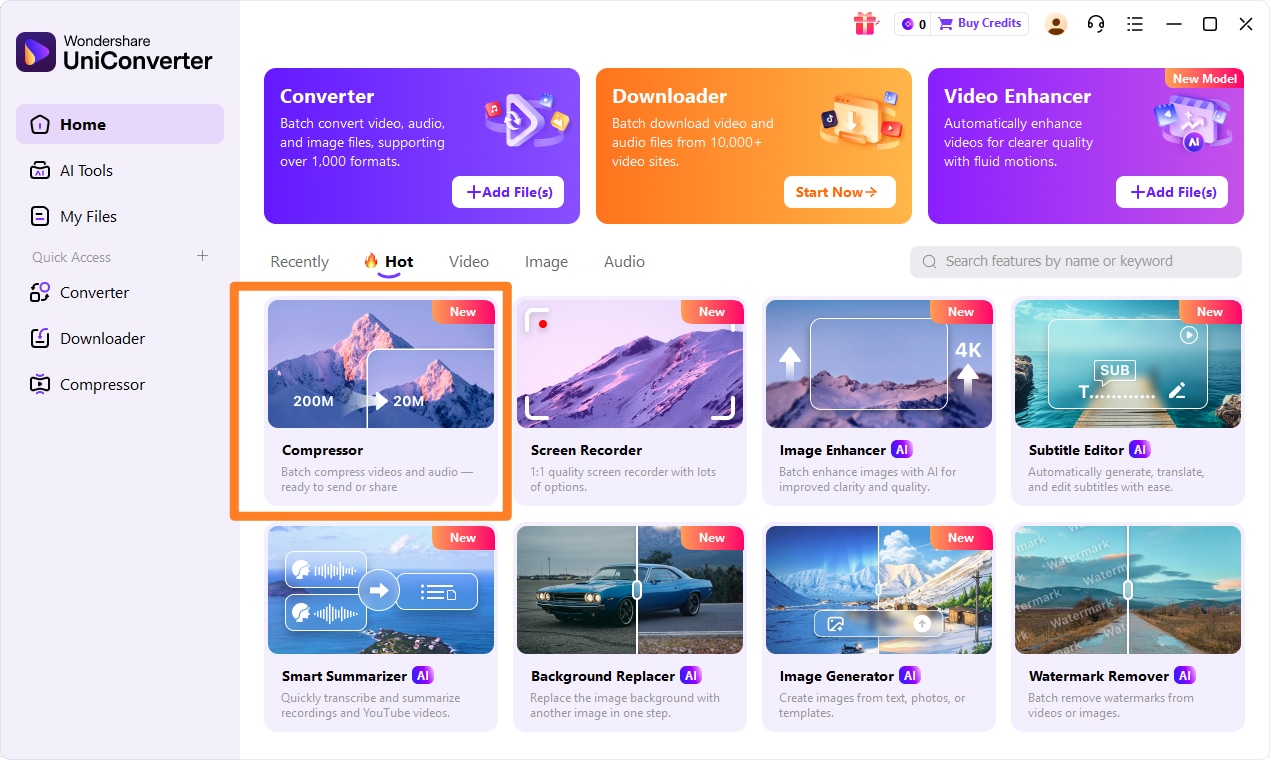
Step 1: Open UniConverter and Choose Compressor
Launch UniConverter on your computer. On the left sidebar, you'll see various tools. Click on "Compressor" to access the video compression feature.
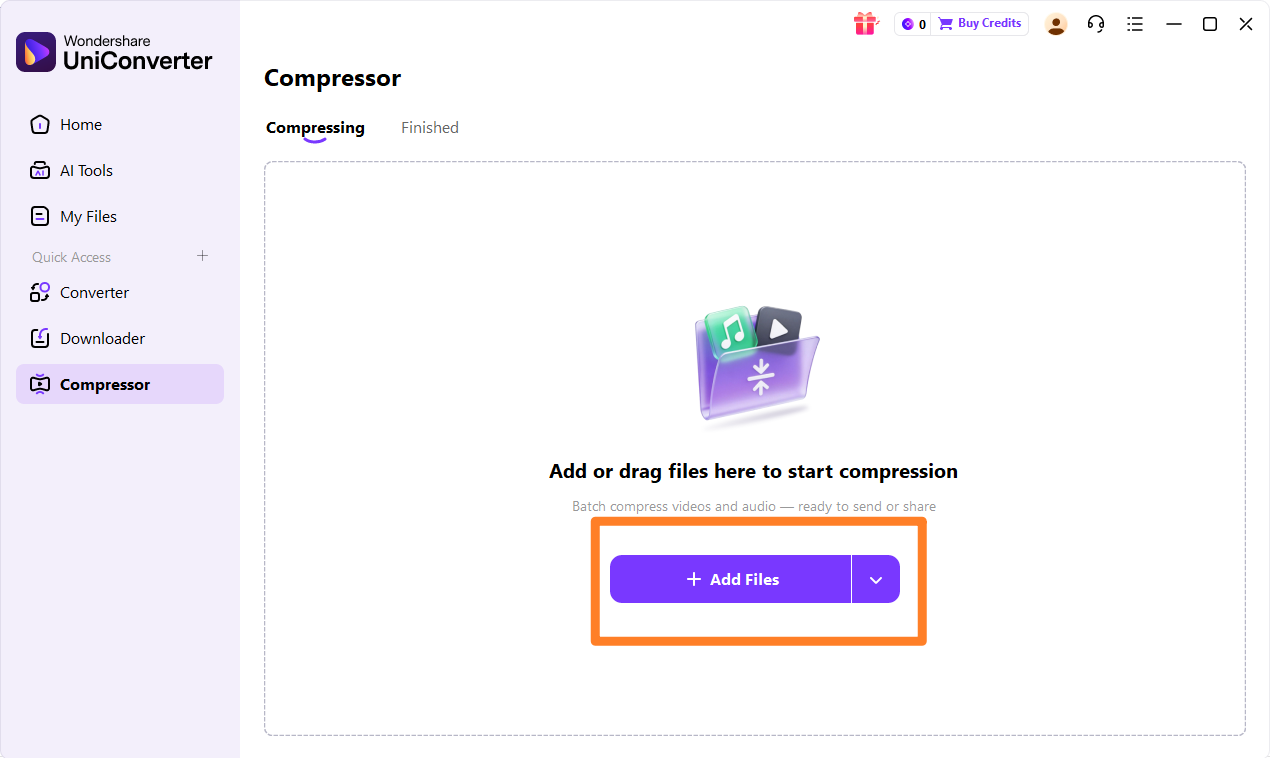
Step 2: Upload the Video, Audios or Images
Drag and drop your video files directly into the UniConverter window, or click "Add Files" to browse and select them from your computer.
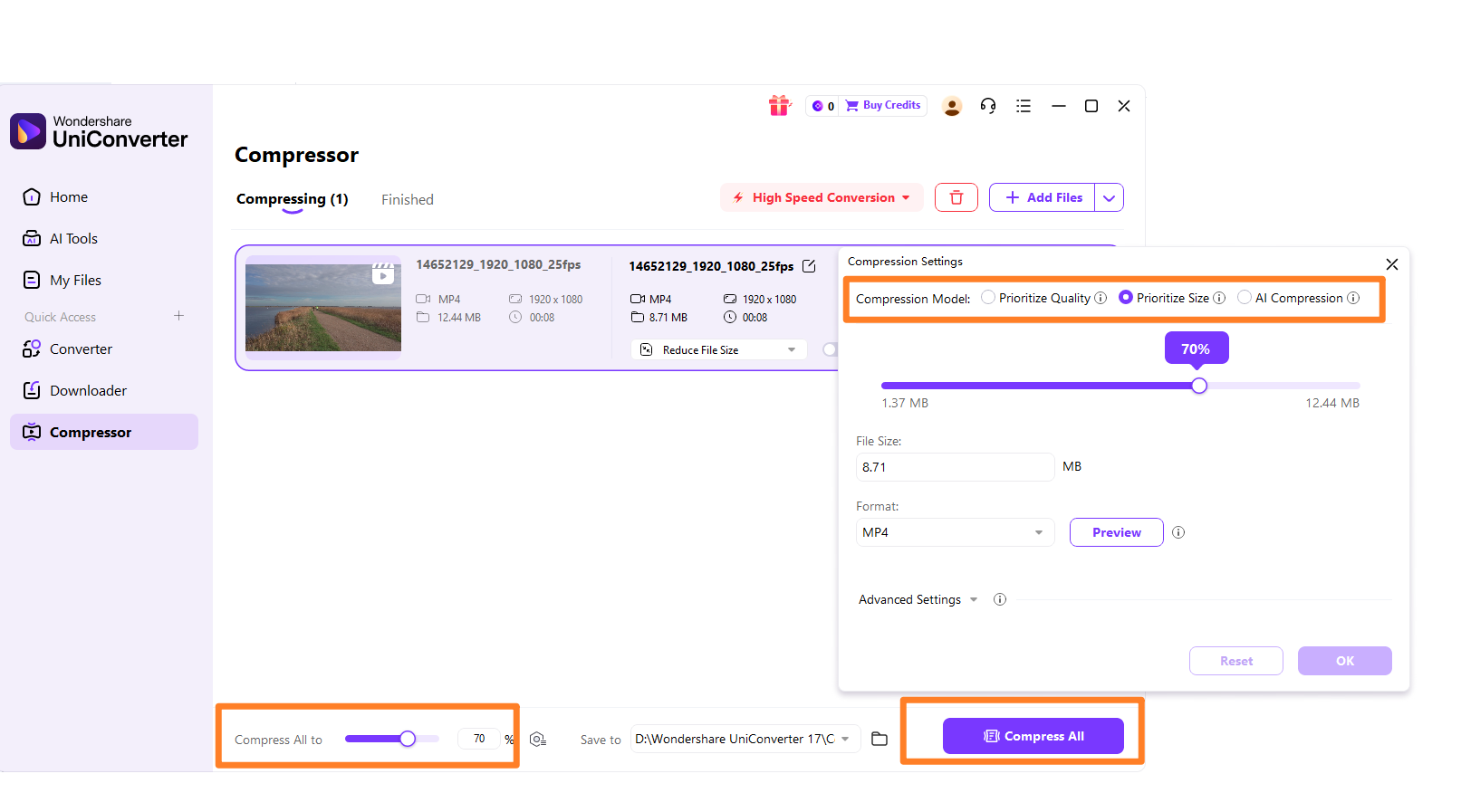
Step 3: Choose Required Parameters
Once your video is loaded, you can adjust the compression settings. You'll find options to change the video resolution, quality, and bitrate. UniConverter also provides a "Smart Compress" feature to automatically suggest optimal settings.
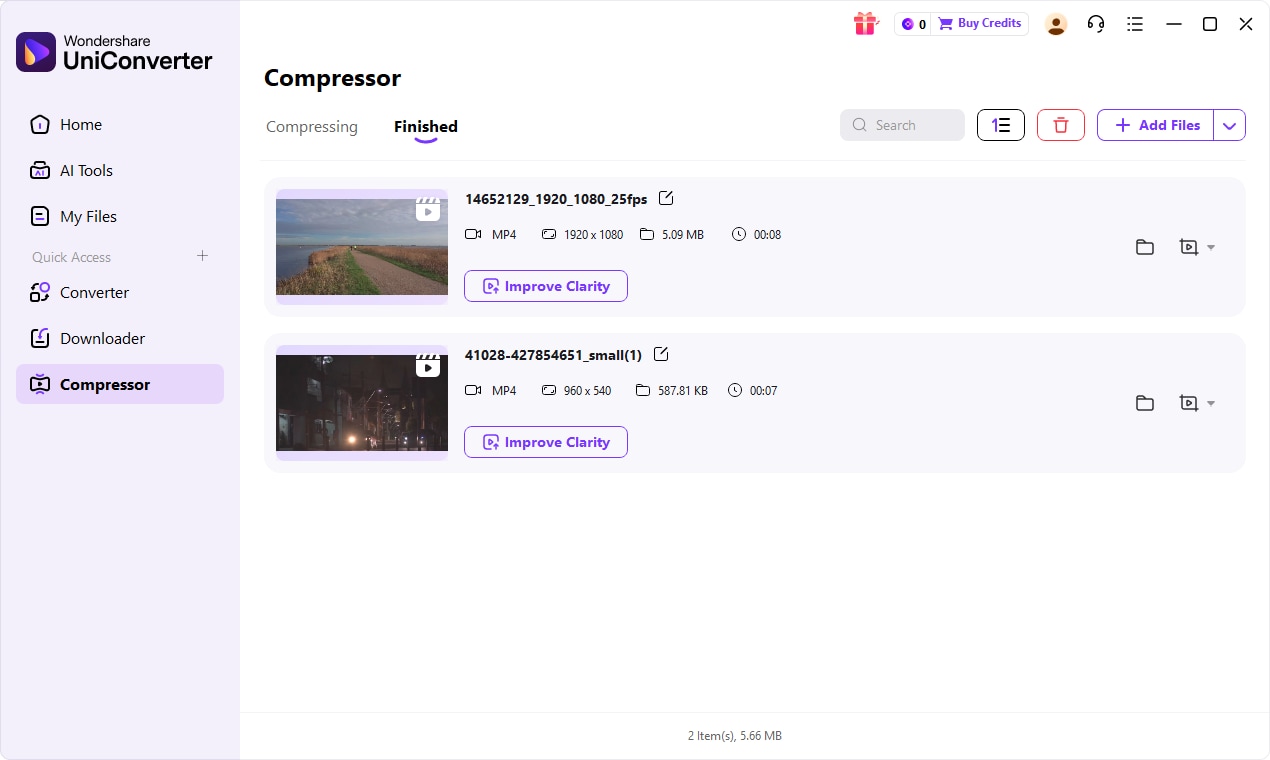
Step 4: Save the Compressed File
After setting your desired parameters, click the "Compress" button. UniConverter will process your video, and once finished, you can find the compressed file in the designated output folder.

Seeking an InVideo Video Compressor Alternative?
Part 7: Conclusion
In this InVideo Video Compressor review, I've explored its strengths as a convenient, cloud-based tool for quick video compression. It excels in ease of use and accessibility, making it a solid choice for casual users needing to shrink videos for social media or email. However, its limitations in advanced settings, reliance on internet connectivity, and potential impact on quality make it less suitable for professional workflows or situations demanding granular control. For those who prioritize speed and simplicity for everyday sharing, InVideo Video Compressor is a viable option. However, if you require precise quality control, offline capabilities, batch processing, or are concerned about data privacy, desktop alternatives like UniConverter or HandBrake offer a more robust and reliable solution, providing the flexibility and power needed for more demanding tasks. Ultimately, your choice should align with your specific compression needs and technical comfort level.
Part 8: FAQs about Video Compression
-
1. What is the best video compressor for beginners?
For beginners, online tools like InVideo Video Compressor are often recommended due to their simple, intuitive interfaces. They typically offer one-click solutions without requiring any technical knowledge.
-
2. Does video compression reduce quality significantly?
It depends on the compression settings and the tool used. While some quality loss is inherent in most compression processes, good compressors allow you to balance file size and visual fidelity. Aggressive compression or low-quality tools can lead to noticeable degradation.
-
3. Can I compress videos without losing quality?
"Lossless" compression exists, but it typically results in much smaller file size reductions compared to "lossy" compression. For significant file size reduction, some quality loss is almost always involved. However, tools like UniConverter offer advanced algorithms to minimize perceived quality loss.
-
4. Is InVideo Video Compressor free to use?
InVideo Video Compressor typically offers a free tier with limitations on file size, video length, or the number of compressions. Full features and unlimited usage usually require a paid subscription.
-
5. What are the benefits of using a desktop video compressor over an online one?
Desktop compressors, such as UniConverter, offer several advantages: they don't require an internet connection, provide more advanced settings for granular control over output quality, often support batch processing, and can handle larger files more efficiently without upload/download time constraints. They also generally offer better data privacy as your files remain on your local machine.
