
- ImageMagick Deep Dive: Comprehensive review of ImageMagick's features, pros, and cons for image compression.
- Target Audience: ImageMagick is ideal for developers and system administrators needing automated, precise image optimization.
- Comparative Analysis: ImageMagick offers granular control, while UniConverter provides a user-friendly, versatile alternative for various media.
- Risks & Pitfalls: Be aware of potential quality degradation, security concerns, and performance overhead with ImageMagick.
- UniConverter Solution: Discover UniConverter for reliable, intuitive compression of images, audio, and video with excellent batch processing.
In this article
- Part 1: What is ImageMagick
- Part 2: ImageMagick Image Compressor: Core Features, Pros, and Cons
- Part 3: ImageMagick Image Compressor: Target Audience and Use Cases
- Part 4: ImageMagick Image Compressor & Competitors: A Comparative Analysis
- Part 5: Risks and Pitfalls When Using ImageMagick
- Part 6: How to Use UniConverter to Compress Efficient Audio and Video
- Part 7: Conclusion
- Part 8: FAQs
ImageMagick Image Compressor: A Comprehensive Scenario-Based Review
When I first delved into the world of image optimization, I quickly realized that efficient compression was key to faster loading times and reduced storage costs. My journey led me to discover ImageMagick Image Compressor, a powerful, open-source toolkit that promised unparalleled control over image manipulation. This review aims to provide a deep dive into ImageMagick, comparing it with other popular tools, and ultimately helping you decide if it's the right solution for your image compression needs. I’ll explore its core features, ideal use cases, potential pitfalls, and offer a clear comparison to alternatives, ensuring you have all the information to make an informed decision.
Part 1: What is ImageMagick
ImageMagick is a free and open-source software suite designed for creating, editing, composing, or converting bitmap images. It's not just a simple image compressor; it's a comprehensive toolkit for image manipulation, often used by developers and system administrators for automated tasks. My experience with it has shown me its incredible versatility, but also its demanding nature for those unfamiliar with command-line interfaces. This review will address the core questions surrounding its utility, especially when it comes to image compression.
The Landscape of Image Compression Tools
* The Need for Speed: In today's digital age, website and application performance are paramount, with image size being a critical factor.
* Balancing Act: Striking the right balance between image quality and file size is a constant challenge for content creators and developers alike.
* Diverse Requirements: Different projects and users have vastly different needs, from quick, casual compression to highly precise, automated workflows.
Part 2: ImageMagick Image Compressor: Core Features, Pros, and Cons
From my perspective, ImageMagick stands out due to its robust set of features that cater to a wide range of image processing tasks, with compression being a significant one. Its core capabilities extend far beyond what many casual users might expect from an "image compressor."
* Extensive Format Support: It handles over 200 image formats, including JPEG, PNG, GIF, TIFF, DPX, EXR, WebP, Postscript, PDF, and SVG.
* Advanced Compression Algorithms: Offers a multitude of compression methods and parameters, allowing for highly customized output.
* Batch Processing Power: Designed for scripting, it excels at processing large numbers of images automatically.
* Image Transformation: Beyond compression, it can resize, rotate, crop, flip, mirror, distort, shear, and transform images.
* Special Effects and Filters: Includes capabilities for applying various artistic effects, drawing, and adding text to images.
- Pros:
- Highly customizable compression algorithms for fine-grained control.
- Supports a vast array of image formats, including obscure ones.
- Command-line interface for powerful scripting and automation.
- Cons:
- Steep learning curve for non-technical users.
- Lack of a user-friendly graphical interface for quick tasks.
Part 3: ImageMagick Image Compressor: Target Audience and Use Cases
Based on my extensive use, ImageMagick isn't for everyone. Its power comes with a certain level of complexity, making it a specialized tool rather than a general-purpose one. I've found it particularly useful in specific scenarios where other tools fall short.
- Best Use Case: Automating image optimization for large-scale web deployments or content management systems where precise control over compression parameters is crucial. For instance, I've used it to automatically resize and compress thousands of product images for an e-commerce site, ensuring consistent quality and optimal file sizes without manual intervention. Its scripting capabilities make this kind of repetitive task incredibly efficient.
- Limited Use Case: Quick, one-off image compression for casual users who prioritize ease of use and visual feedback. If I just need to compress a single image to email to a friend, I wouldn't typically reach for ImageMagick. The time it takes to open a terminal and type out the command far outweighs the benefit for such a simple task, especially when there are many user-friendly online or desktop alternatives.
Part 4: ImageMagick Image Compressor & Competitors: A Comparative Analysis
When I compare ImageMagick Image Compressor to its competitors, the differences become quite clear, especially when considering various scenarios.
| Feature/Scenario | ImageMagick | TinyPNG | Photoshop | UniConverter |
| Batch Processing | Excellent (CLI) | Good (Web UI/API) | Moderate (Actions) | Excellent (Desktop) |
| Compression Quality Control | Granular | Automatic/Limited | Manual/Advanced | Good (Presets/Custom) |
| Ease of Use | Low | High | Moderate | High |
| Supported Formats | Extensive | Common (PNG, JPEG, WebP) | Common (Many) | Extensive |
| Integration | API/CLI | API/Web | Desktop App | Desktop App |
ImageMagick truly shines in its granular control and extensive format support, making it indispensable for developers who need to script complex image workflows. TinyPNG, on the other hand, is my go-to for quick, high-quality compression of common web formats, thanks to its simplicity. Photoshop offers powerful manual control for professional designers, but its batch processing isn't as streamlined as ImageMagick's CLI. UniConverter provides a great balance, offering a user-friendly interface with strong batch processing and good quality control for a wider range of formats, making it a versatile option for many users.
Part 5: Risks and Pitfalls When Using ImageMagick
While ImageMagick is incredibly powerful, my experience has taught me that it's not without its challenges and potential risks, especially if you're not careful.
Potential for Quality Degradation if Parameters are Incorrectly Set
One of the biggest pitfalls I've encountered is inadvertently destroying image quality. Because ImageMagick offers such fine-grained control over compression algorithms and parameters, it's easy to set values that result in excessive compression, leading to noticeable artifacts, color banding, or a blurry appearance. Without a clear understanding of what each parameter does, you can quickly end up with an unusable image, especially when dealing with lossy formats like JPEG. It requires careful experimentation and a good eye to find the sweet spot for quality and file size.
Security Concerns with Untrusted Input Files
As a command-line tool, ImageMagick processes files directly on your system. This opens up a potential security vulnerability if you're processing untrusted or malicious image files. There have been instances of vulnerabilities (like "ImageTragick") where specially crafted image files could lead to remote code execution. While these vulnerabilities are usually patched quickly, it's a constant reminder that you should always be cautious about the source of the images you're processing, especially in automated environments.
Performance Overhead for Complex Operations on Large Images
While ImageMagick is generally efficient, performing complex operations, especially on very large images or a huge batch of images, can be resource-intensive. I've seen it consume significant CPU and memory, potentially slowing down other processes on your system. If you're running it on a server, this can impact the performance of other applications. Optimizing your commands and understanding the computational cost of different operations is crucial to avoid performance bottlenecks.
Lack of Direct Cloud Integration for Some Workflows
For modern cloud-native workflows, ImageMagick, being a local command-line tool, sometimes requires additional setup to integrate seamlessly. While you can run it on cloud instances, it doesn't offer direct, out-of-the-box integrations with cloud storage services or serverless functions in the same way some modern APIs or cloud-based tools do. This means I often have to write additional scripts to handle file transfers to and from cloud storage before and after processing.
Dependency Management and Installation Complexity
Installing ImageMagick, especially with all its delegates (libraries for different image formats), can sometimes be a bit complex, particularly on systems where you need specific versions or configurations. Managing these dependencies and ensuring everything is correctly linked can be a hurdle for users who aren't comfortable with system administration tasks. I've spent my fair share of time troubleshooting installation issues on different operating systems.
Part 6: How to Use UniConverter to Compress Efficient Audio and Video
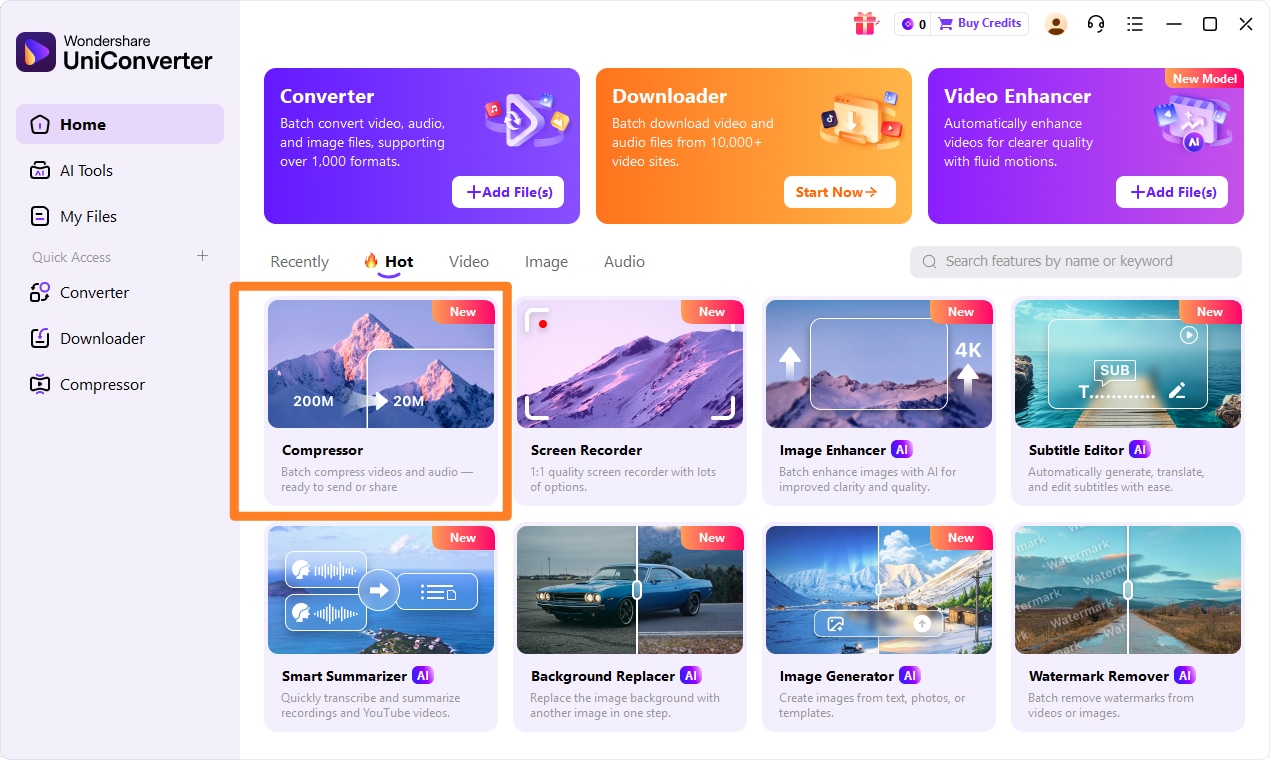
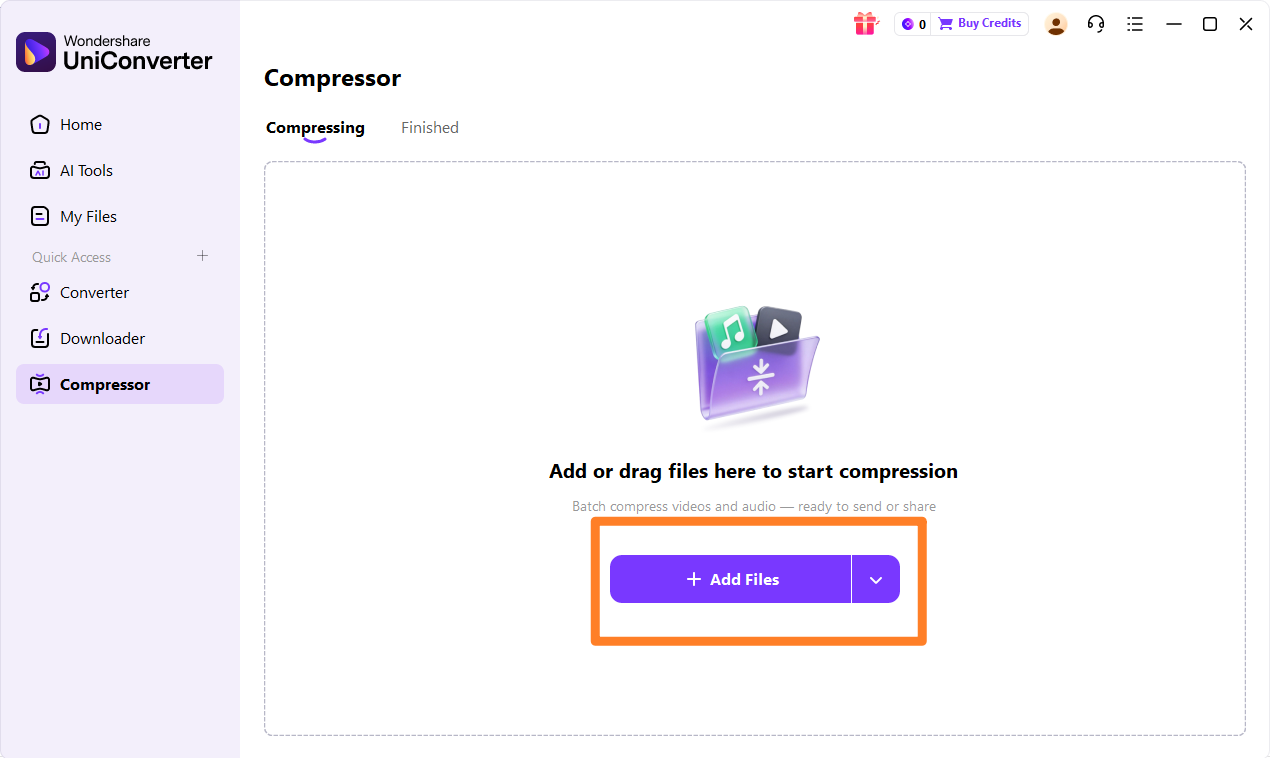
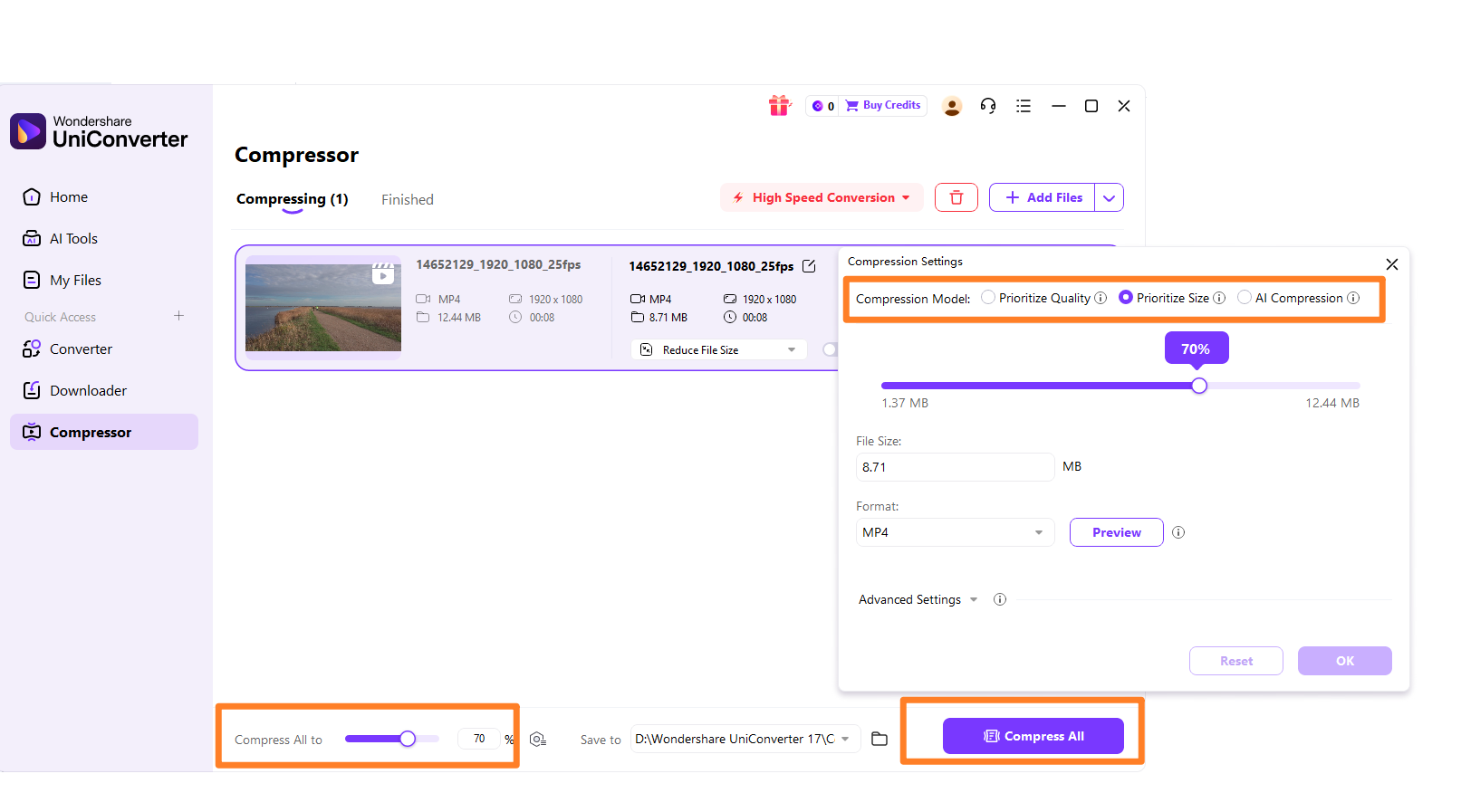
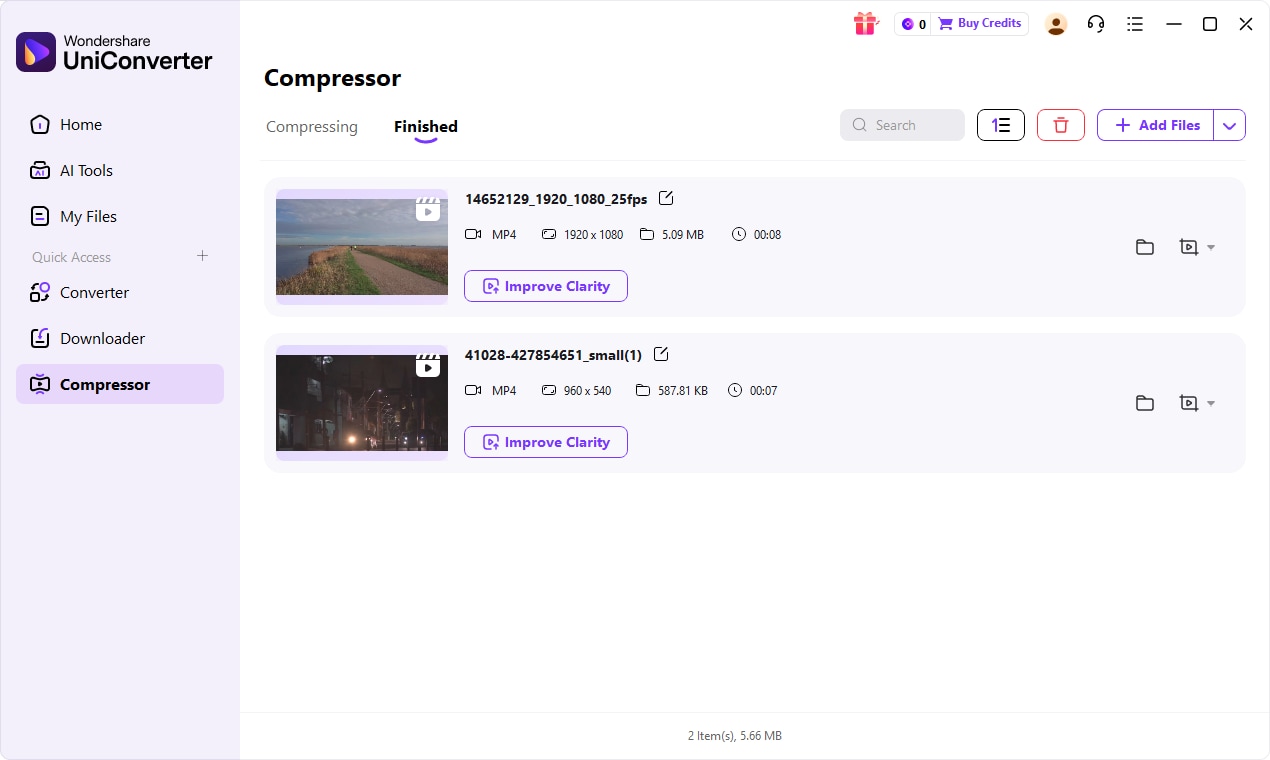
Sometimes, when encountering tools that lack batch compression support, yield inconsistent results, or lead to substantial quality degradation, I opt for UniConverter. It provides a dependable and intuitive solution for compressing not only images but also audio and video files, effectively bypassing many common issues found in other software. UniConverter stands out as a comprehensive, ad-free solution supporting a vast array of formats, utilizing GPU acceleration for enhanced speed, guaranteeing stable and lossless compression, and excelling in batch processing. It truly serves as an all-in-one ultimate solution for my media compression requirements.
Step 1: Open UniConverter and Choose Compressor
Step 2: Upload the Video, Audios or Images
Step 3: Choose Required Parameters
Step 4: Save the Compressed File

ImageMagick Alternative for Image Compression
Part 7: Conclusion
After thoroughly exploring ImageMagick Image Compressor and comparing it with various alternatives, my conclusion is clear: ImageMagick is an incredibly powerful and versatile tool, but its suitability depends entirely on your specific needs and technical proficiency. For developers, system administrators, and power users who require deep control, automation, and extensive format support, ImageMagick remains an unparalleled choice. Its command-line interface, while daunting at first, unlocks a world of possibilities for scripting complex workflows and achieving precise compression results. However, for casual users or those who prioritize ease of use and a graphical interface for quick, one-off tasks, ImageMagick can be overkill. In such scenarios, user-friendly alternatives like TinyPNG or UniConverter offer a much more straightforward experience without sacrificing too much quality. Ultimately, if you're looking for a robust, customizable solution for large-scale, automated image optimization, ImageMagick is a powerful investment of your time to learn. But for simpler, more frequent compression needs, I'd recommend exploring options that offer a more intuitive user experience.
Part 8: FAQs
-
1. Is ImageMagick free to use?
Yes, ImageMagick is open-source and completely free to use. You can download and install it without any licensing fees.
-
2. Can ImageMagick compress animated GIFs?
Absolutely. ImageMagick has robust support for animated GIFs, allowing you to compress, optimize, and even manipulate individual frames within the animation.
-
3. How does ImageMagick compare to online image compressors in terms of quality?
ImageMagick generally offers far more control over compression parameters than most online tools. This means that if you know how to optimize the settings, you can often achieve superior quality-to-file-size ratios compared to the pre-set algorithms used by many online compressors. However, for quick, decent results without technical knowledge, online tools are more convenient. If you're looking for a good balance of quality and ease of use, UniConverter is an excellent desktop alternative.
-
4. Is there a graphical user interface (GUI) for ImageMagick?
While ImageMagick itself is primarily a command-line tool, there are several third-party GUIs available that provide a more visual way to interact with its functionalities. However, these GUIs are not officially maintained by the ImageMagick project, so their features and stability can vary.
-
5. What are the system requirements for running ImageMagick?
ImageMagick is relatively lightweight and can run on most modern operating systems, including Windows, macOS, and various Linux distributions. The actual performance will largely depend on the size and complexity of the images you're processing and the specific operations you're performing. For very large images or extensive batch processing, more RAM and CPU power will naturally lead to faster results.
