
- ImageEngine Value: Real-time image optimization and CDN for superior website performance and user experience.
- Core Features: Dynamic resizing, intelligent format conversion (WebP/AVIF), and device-aware delivery.
- Best Use Case: Ideal for large-scale e-commerce platforms needing global, instant image loading.
- Comparison Insight: ImageEngine excels in real-time optimization; UniConverter offers versatile batch processing for all media.
- Decision Factor: Balance performance needs, budget, and technical expertise when choosing your optimization tool.
- UniConverter Advantage: User-friendly desktop solution for efficient batch compression of images, video, and audio.
- Potential Pitfalls: Watch for aggressive compression quality loss, vendor lock-in, and unexpected costs.
- Integration: ImageEngine offers various integration methods; complexity depends on your CMS and tech stack.
In this article
- Part 1: What is ImageEngine?
- Part 2: ImageEngine's Core Features, Pros & Cons
- Part 3: ImageEngine's Users and Use Cases
- Part 4: ImageEngine and Alternatives Comparison
- Part 5: Risks and Pitfalls to Consider
- Part 6: How to Use UniConverter for Efficient Audio and Video Compression
- Part 7: Conclusion
- Part 8: FAQs
The digital landscape is increasingly visual, making image optimization a critical factor for website performance and user experience. Slow-loading images can deter visitors, impact SEO rankings, and ultimately hurt conversion rates. This ImageEngine Image Compressor review delves into a leading solution designed to tackle this challenge head-on, offering real-time image optimization and delivery. We'll explore its features, compare it with key competitors, and provide insights to help you make an informed decision about the best image compression tool for your specific needs.
Part 1: What is ImageEngine?
ImageEngine is a sophisticated image optimization and CDN service that intelligently resizes, compresses, and converts images in real-time based on the user's device, browser, and network conditions. Its primary goal is to deliver the smallest possible image file without compromising visual quality, thereby accelerating website load times and improving overall performance. This ImageEngine Image Compressor review aims to dissect its capabilities and understand where it stands in the competitive market.
The Critical Need for Efficient Image Compression in Modern Web Development
* Enhanced User Experience: Faster loading times lead to happier users and lower bounce rates.
* Improved SEO Rankings: Search engines prioritize fast-loading websites, boosting visibility.
* Reduced Bandwidth Costs: Smaller image files mean less data transfer, saving money for both website owners and users.
* Mobile-First Imperative: Optimizing images for diverse mobile devices is crucial in today's mobile-dominated web.
Part 2: ImageEngine's Core Features, Pros & Cons
ImageEngine stands out with its dynamic approach to image optimization, offering a suite of features designed for peak performance. Its core capabilities revolve around intelligent, real-time adaptation.
Core Capabilities:
* Real-time Image Optimization: Dynamically adjusts image size, quality, and format based on the requesting device and network.
* Advanced CDN Integration: Leverages a global content delivery network for lightning-fast image delivery worldwide.
* Intelligent Format Conversion: Automatically converts images to modern formats like WebP and AVIF when supported by the browser.
* Device-Aware Delivery: Detects device characteristics (screen size, pixel density) to serve perfectly scaled images.
* Client Hints Support: Utilizes HTTP Client Hints to further refine image delivery based on browser capabilities.
Pros:
* Unparalleled real-time optimization, ensuring optimal image delivery for every user.
* Seamless integration with a robust global CDN, guaranteeing speed and reliability.
* Automatic adoption of cutting-edge image formats significantly boosts performance.
Cons:
* The cost can be a barrier for smaller businesses or projects with tight budgets.
* Requires a degree of technical integration and configuration, potentially challenging for novices.
Part 3: ImageEngine's Users and Use Cases
ImageEngine is engineered for specific scenarios where image performance is paramount, catering to businesses that demand speed and efficiency at scale.
Best Use Case: E-commerce Platforms with Global Audiences
For e-commerce sites, every millisecond counts. ImageEngine's real-time optimization and global CDN ensure product images load instantly, regardless of the user's location or device. This directly translates to improved conversion rates and a superior shopping experience. Imagine a customer browsing products on a slow mobile connection; ImageEngine ensures they see high-quality, fast-loading images, preventing frustration and abandonment.
Limited Use Case: Small Personal Blogs with Minimal Traffic and Technical Resources
For a personal blog with low traffic and limited technical expertise, ImageEngine might be overkill. The cost and integration complexity could outweigh the benefits. A simple WordPress plugin or a free online compressor might suffice for occasional image optimization, as the performance gains wouldn't justify the investment for such a small scale.
Part 4: ImageEngine and Alternatives Comparison
When evaluating image compression solutions, it's crucial to compare ImageEngine against its primary competitors to understand their strengths and weaknesses across various dimensions.
| Feature/Scenario | ImageEngine | UniConverter | Cloudinary | ShortPixel |
| Real-time Optimization | Yes | No (batch processing) | Yes | No (static/batch) |
| CDN Integration | Built-in | No (local processing) | Built-in | Optional/Third-party |
| Pricing Model | Usage-based | One-time purchase/Subscription | Tiered/Usage-based | Credit-based |
| Ease of Integration | Moderate | Very Easy (desktop app) | Moderate | Easy (plugins) |
| Advanced Features | High (device-aware, client hints) | Medium (video/audio compression) | High (AI, transformations) | Medium (lossy/lossless) |
| Output Quality | Excellent | Excellent (adjustable) | Excellent | Good (adjustable) |
| Customer Support | Responsive | Responsive | Responsive | Responsive |
| Security | High | High (local processing) | High | High |
ImageEngine excels in real-time, device-aware optimization and global CDN delivery, making it ideal for dynamic, high-traffic websites. UniConverter, on the other hand, offers a user-friendly desktop solution for batch processing and is particularly strong for video and audio compression, providing excellent output quality and ease of use. Cloudinary provides a comprehensive media management platform with advanced AI features and transformations, while ShortPixel is a solid choice for static image optimization, especially for WordPress users, offering a good balance of quality and cost.
Part 5: Risks and Pitfalls to Consider
While image optimization tools offer significant advantages, it's essential to be aware of potential risks and pitfalls, especially when dealing with cloud-based services or aggressive compression settings.
Potential Impact on Image Quality with Aggressive Compression Settings
Pushing compression settings too high, even with intelligent tools, can lead to noticeable degradation in image quality. What might look acceptable on a small mobile screen could appear pixelated or blurry on a larger display. It's crucial to strike a balance between file size reduction and visual fidelity, often requiring testing across different devices and resolutions.
Vendor Lock-in and Migration Challenges
Committing to a specific image optimization service, especially one deeply integrated into your tech stack, can lead to vendor lock-in. Migrating away from such a service later can be complex and time-consuming, requiring significant development effort to reconfigure image delivery pipelines and potentially re-optimize existing assets.
Understanding Pricing Tiers and Unexpected Costs
Cloud-based image optimization services often have complex pricing models based on usage (e.g., number of optimized images, bandwidth delivered). It's easy to underestimate usage, leading to unexpected and higher-than-anticipated costs, especially during traffic spikes or when scaling operations. Always thoroughly review pricing structures and monitor your usage.
Data Privacy and Compliance for Image Processing
When images are processed and stored on third-party servers, data privacy and compliance become critical concerns. Depending on your industry and target audience, you might need to ensure the service complies with regulations like GDPR or CCPA. Understanding where your data is processed and stored, and the security measures in place, is paramount.
Integration Complexity with Existing Tech Stacks
While many services offer straightforward integration, complex websites with custom frameworks or legacy systems might face challenges. Integrating a new image optimization solution can require significant development time, testing, and potential refactoring of existing code, adding to the project's overall cost and timeline.
Part 6: How to Use UniConverter for Efficient Audio and Video Compression
Sometimes, the complexity or cost of dedicated image CDNs isn't the right fit, or you need a robust solution for video and audio compression as well. When other tools fall short with batch processing, unstable results, or quality loss, UniConverter emerges as a reliable alternative, offering a user-friendly experience for diverse media optimization needs. It's an all-in-one solution that avoids ads, supports a wide range of formats, leverages GPU acceleration for speed, ensures stable and near-lossless compression, and handles batch processing effortlessly.
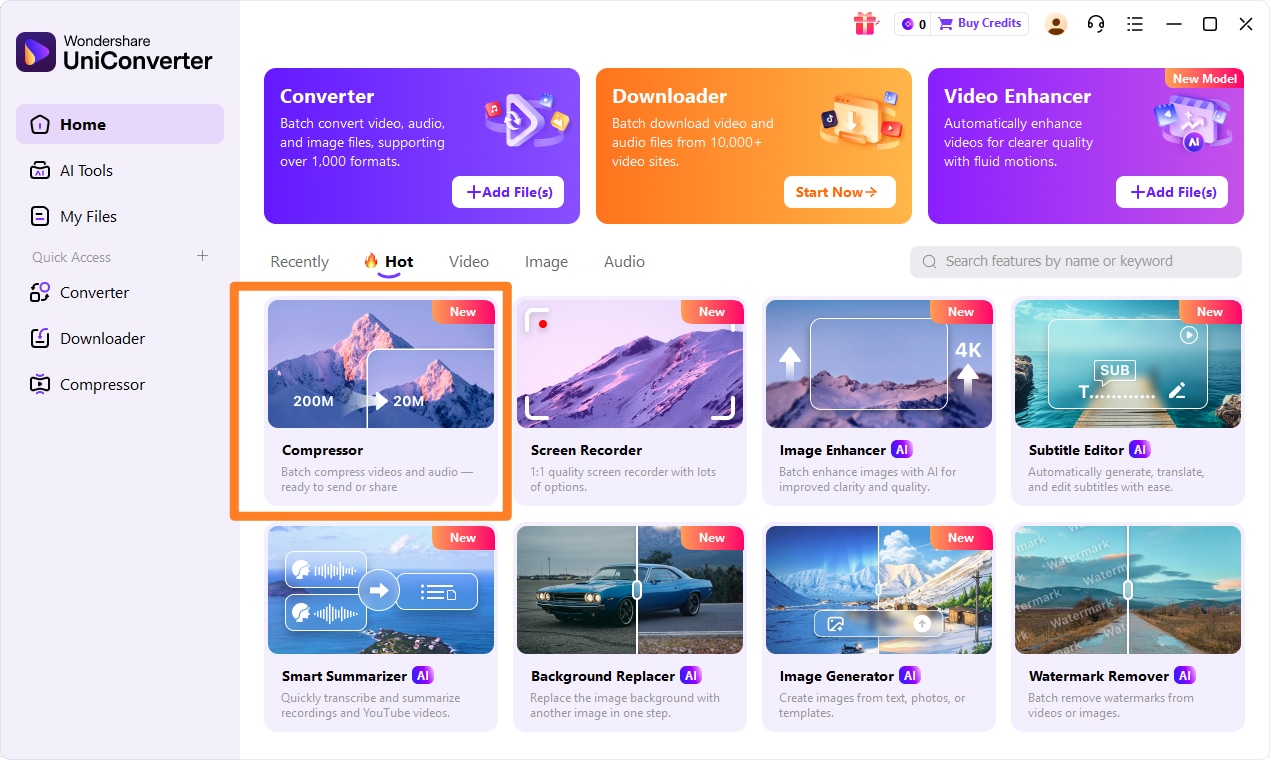
Step 1: Open UniConverter and Choose Compressor
Launch UniConverter on your desktop. From the main interface, navigate to the "Compressor" tool, which is designed for efficient reduction of file sizes for videos, audios, and images.
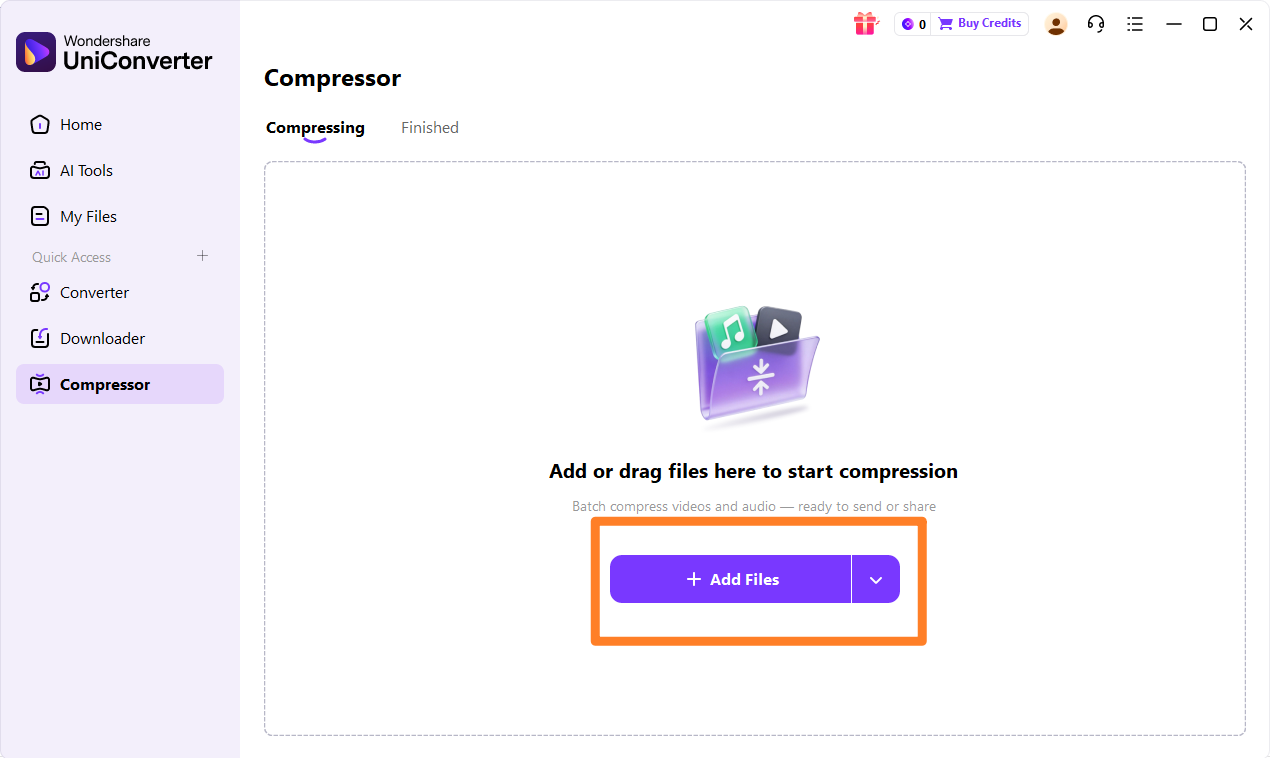
Step 2: Upload the Video, Audios or Images
Click on the "Add Files" button or simply drag and drop your desired video, audio, or image files into the UniConverter window. You can add multiple files for batch compression.
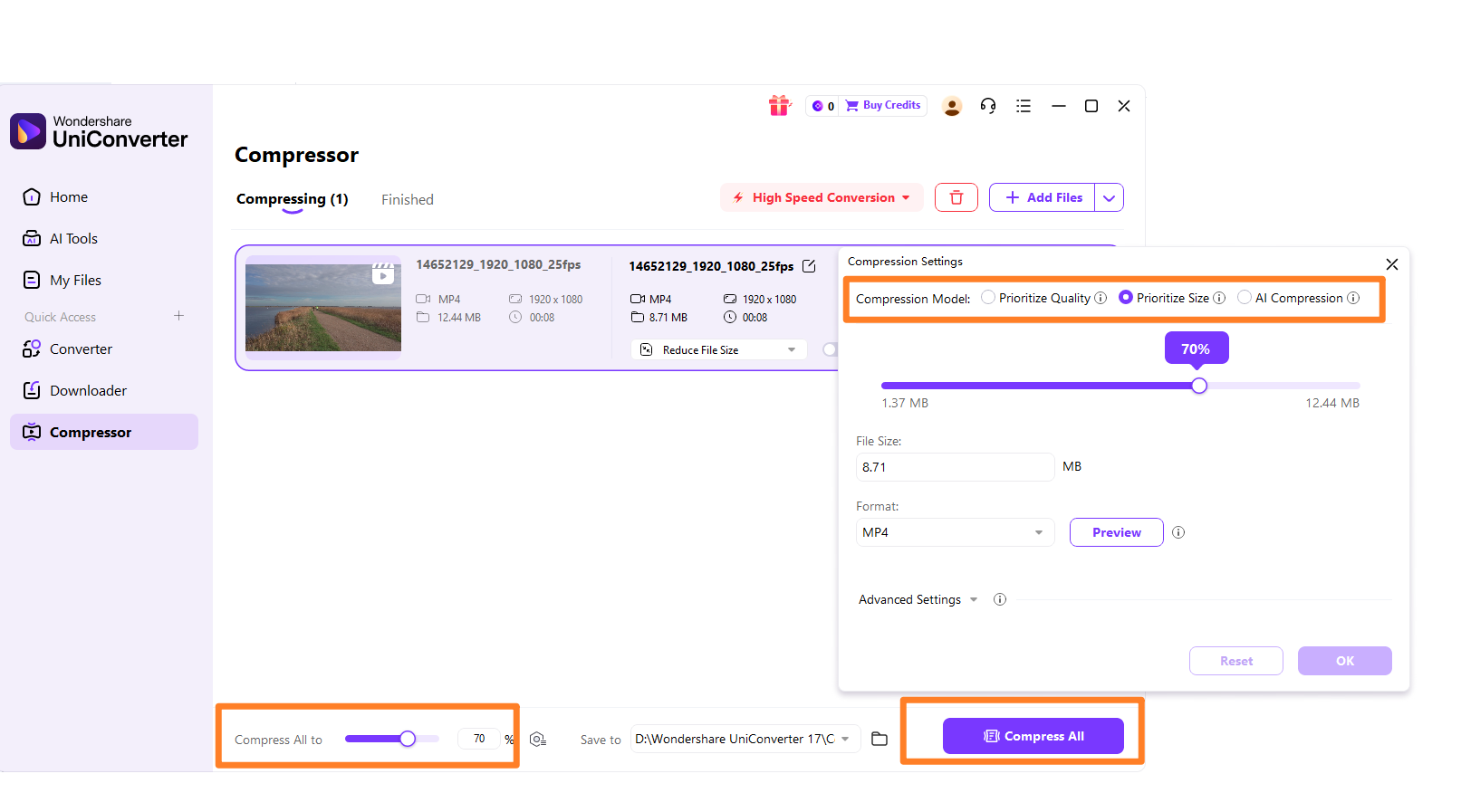
Step 3: Choose Required Parameters
Once your files are loaded, you can adjust various compression settings. For videos and audios, you can modify resolution, bitrate, and format. For images, you can set the quality percentage. UniConverter provides a preview function to check the output quality before final compression.
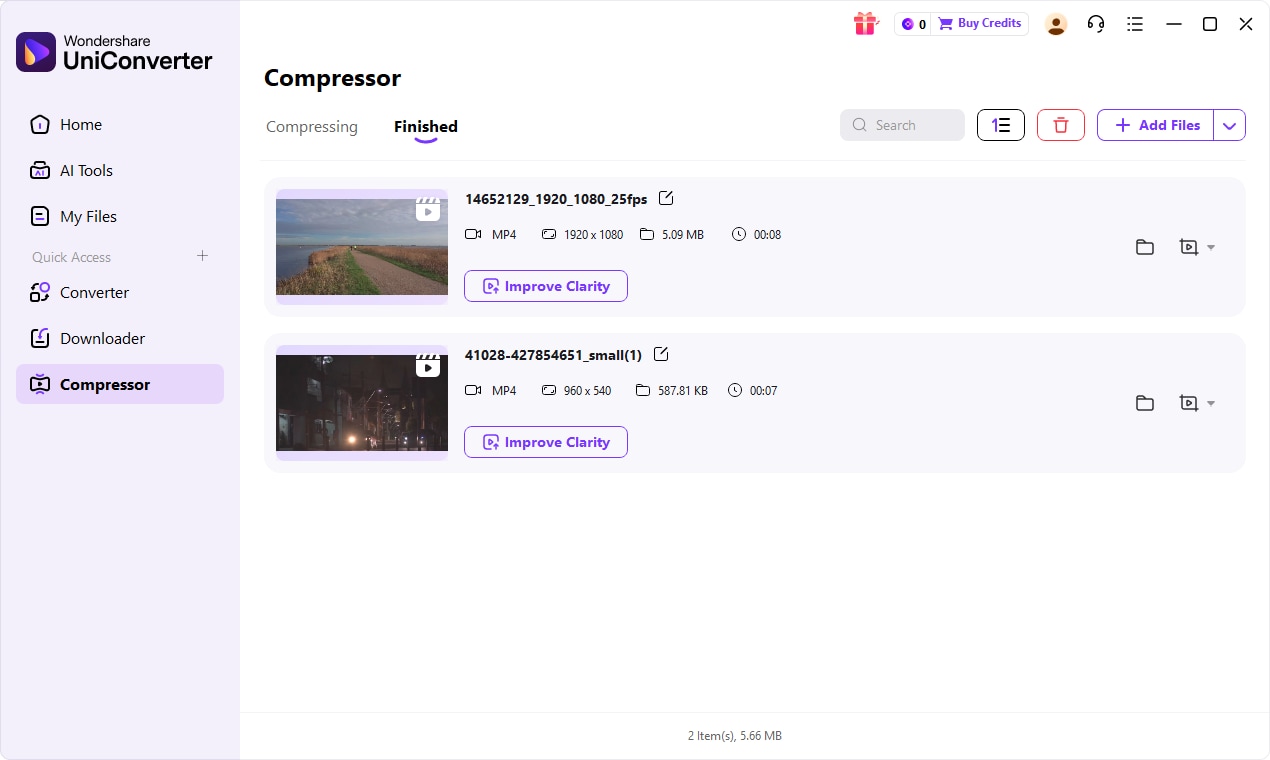
Step 4: Save the Compressed File
After configuring your settings, choose your desired output folder. Click the "Compress" button to start the process. UniConverter will quickly optimize your files, and you can then access the compressed versions in your chosen directory.

Seeking a Powerful ImageEngine Image Compressor Alternative?
Part 7: Conclusion
This ImageEngine Image Compressor review has highlighted its strengths as a top-tier solution for real-time image optimization, particularly for large-scale, performance-critical websites like e-commerce platforms with global audiences. Its ability to dynamically adapt images to various devices and network conditions, coupled with a robust CDN, makes it an excellent choice for businesses where every millisecond of load time impacts revenue. However, its cost and integration complexity might be prohibitive for smaller projects. For those with budget constraints or a need for a versatile desktop tool for batch processing images, videos, and audios, UniConverter offers a compelling, user-friendly alternative. Developers seeking granular control and advanced media transformations might find Cloudinary more suitable, while ShortPixel remains a strong contender for static image optimization, especially for WordPress users. Ultimately, the best choice hinges on balancing performance requirements, budget, technical expertise, and specific use cases.
Part 8: FAQs
-
1. How does ImageEngine handle different image formats?
ImageEngine intelligently detects the user's browser and device capabilities and automatically converts images to the most efficient format supported, such as WebP or AVIF, while falling back to JPEG or PNG for older browsers.
-
2. Is ImageEngine suitable for video optimization as well?
No, ImageEngine is specifically designed for image optimization. For video optimization, you would need a separate solution. UniConverter, for instance, is an excellent tool for compressing videos and audios efficiently.
-
3. What are the main differences between ImageEngine and a standard CDN?
A standard CDN primarily caches and delivers static assets. ImageEngine, while utilizing a CDN, adds a layer of real-time image optimization, dynamically resizing, compressing, and converting images on the fly based on the requesting device and network conditions, which a standard CDN does not do.
-
4. Can I integrate ImageEngine with my existing CMS?
Yes, ImageEngine offers various integration methods, including direct integration via its API, plugins for popular CMS platforms like WordPress, and general integration instructions for custom setups. The complexity can vary depending on your specific CMS and existing tech stack.
-
5. How much can ImageEngine reduce my image file sizes?
The reduction varies significantly based on the original image size, format, and the device requesting it. However, ImageEngine commonly achieves 60-80% file size reductions without perceptible loss in visual quality, leading to substantial improvements in page load times.
