
- Value: Helium Audio Converter excels in straightforward audio conversion and compression for everyday tasks.
- Comparison: While good for basics, it lacks advanced editing features found in professional DAWs or comprehensive tools like UniConverter.
- Decision: Choose Helium for simple format changes and file size reduction; opt for UniConverter for robust, high-quality, all-in-one media management.
- Pitfalls: Beware of quality loss with aggressive compression, privacy risks with online tools, and intrusive ads in free versions.
In this article
- Part 1: What is Helium Audio Converter & Audio Compressor?
- Part 2: Helium Audio Converter & Audio Compressor: Core Features, Pros, and Cons
- Part 3: Target Audience and Use Cases
- Part 4: Helium Audio Converter & Audio Compressor vs. Competitors
- Part 5: Risks and Pitfalls to Avoid
- Part 6: How to Use UniConverter for Efficient Audio and Video Compression
- Part 7: Final Verdict and Recommendations
- Part 8: FAQs
Helium Audio Converter vs. Audio Compressor: A Scenario-Based Comparison
When it comes to managing digital audio, the need for efficient conversion and compression tools is undeniable. Whether you're a music enthusiast with a vast collection or a content creator dealing with large audio files, optimizing your audio for various platforms and devices is crucial. This Helium Audio Converter Audio Compressor review will delve into two prominent tools, Helium Audio Converter and Audio Compressor, examining their features, strengths, and weaknesses. We'll explore their suitability for different scenarios, compare them against competitors, and highlight potential pitfalls to help you make an informed decision in the ever-evolving landscape of digital audio management.
Part 1: What is Helium Audio Converter & Audio Compressor?
Helium Audio Converter and Audio Compressor are software solutions designed to streamline the process of managing digital audio files. Helium Audio Converter focuses primarily on changing audio file formats, allowing you to convert between a wide array of types like MP3, WAV, FLAC, and OGG. Audio Compressor, as its name suggests, is dedicated to reducing the file size of your audio, often by adjusting bitrates or applying lossy compression algorithms. Both tools aim to simplify tasks that can otherwise be complex and time-consuming, catering to users who need quick and reliable audio processing without delving into professional-grade audio editing software. This review will address the core challenges users face when dealing with diverse audio formats and large file sizes.
The Evolving Landscape of Digital Audio Management
* Diverse Device Compatibility: Audio needs to be playable across smartphones, car stereos, and home theater systems, each with its preferred formats.
* Storage and Bandwidth Constraints: Large audio files consume significant storage space and bandwidth, especially for sharing or streaming.
* Quality vs. Size Trade-offs: Users constantly seek the optimal balance between audio fidelity and manageable file sizes.
Part 2: Helium Audio Converter & Audio Compressor: Core Features, Pros, and Cons
Helium Audio Converter and Audio Compressor offer a robust set of functionalities aimed at simplifying audio file management. Their core capabilities revolve around format conversion and file size reduction, making them indispensable for many users. I've found their ability to handle a wide range of audio formats particularly useful, from common MP3s to lossless FLAC files, ensuring I can always get my audio into the format I need. The compression features are straightforward, allowing me to quickly reduce file sizes for sharing without too much hassle.
* Comprehensive format support: Converts between virtually all popular audio formats.
* Adjustable compression settings: Allows control over bitrate and quality for compression.
* Batch processing: Processes multiple files simultaneously, saving time.
* Metadata editing: Enables modification of ID3 tags and other file information.
* Integrated player: Previews audio files before and after processing.
Pros of Helium Audio Converter & Audio Compressor:
* Comprehensive format support for diverse audio needs.
* Intuitive user interface for quick and easy operations.
* Batch processing capabilities for efficiency.
Cons of Helium Audio Converter & Audio Compressor:
* Limited advanced editing features compared to professional DAWs.
* Potential for quality degradation with aggressive compression settings.
Part 3: Target Audience and Use Cases
Helium Audio Converter and Audio Compressor are primarily designed for users who need straightforward solutions for audio format conversion and file size reduction, without the complexity of professional audio editing suites. I find these tools perfect for everyday audio tasks, especially when I'm not looking to do any intricate sound design. If you're someone who frequently downloads music in various formats and needs to standardize your collection, or if you're looking to free up space on your devices, these tools are right up your alley.
Best Use Case: Archiving and Sharing Digital Music Collections
I often use these tools to convert my high-quality FLAC files into MP3s for my portable music player or to compress large WAV files before uploading them to cloud storage. The batch processing feature is a lifesaver when I'm dealing with an entire album. It's also great for ensuring compatibility when sharing music with friends who might have different device preferences.
Limited Use Case: Professional Audio Mastering and Production
While these tools are excellent for basic tasks, they fall short for professional audio work. If you're a musician or a sound engineer needing precise EQ adjustments, noise reduction, or multi-track editing, you'll find their features too basic. They don't offer the granular control or the suite of effects required for mastering an album or producing a podcast with studio-quality sound.
Part 4: Helium Audio Converter & Audio Compressor vs. Competitors
When comparing Helium Audio Converter & Audio Compressor to other tools, it's clear where its strengths lie. While it excels in its primary functions, other applications offer different advantages.
| Feature/Tool | Helium Audio Converter & Audio Compressor | Audacity | HandBrake | UniConverter |
| Primary Function | Conversion & Compression | Editing & Recording | Video Conversion (with audio) | All-in-one Video/Audio Solution |
| Ease of Use | High | Medium | Medium | High |
| Advanced Features | Moderate | High | Moderate | High |
| Price | Paid | Free | Free | Paid |
| Output Quality | Excellent | Excellent | Good | Excellent |
| Batch Processing | Yes | Limited | Yes | Yes |
| Customer Support | Community Forum | Community Forum | 24/7 Live Chat/Email |
Key Differentiators: Focus on Simplicity vs. Feature Richness
Helium Audio Converter & Audio Compressor stands out for its high ease of use and excellent output quality, making it a strong contender for users prioritizing straightforward conversion and compression. Audacity, while free and offering high advanced features, has a steeper learning curve for basic tasks. HandBrake, primarily a video converter, is less specialized for audio. UniConverter, on the other hand, offers a comprehensive solution with high ease of use and advanced features, making it a strong all-rounder, especially with its 24/7 customer support. For me, the choice often comes down to whether I need a quick, simple conversion or a more robust, feature-rich tool.
Part 5: Risks and Pitfalls to Avoid
While audio conversion and compression tools are incredibly useful, there are several risks and pitfalls I've learned to navigate, especially when dealing with less reputable software or aggressive settings.
Potential Loss of Audio Fidelity with Aggressive Compression
One of the biggest dangers is over-compressing your audio. While it's tempting to aim for the smallest file size possible, aggressive compression, especially with lossy formats like MP3, can lead to a noticeable degradation in sound quality. I've made the mistake of compressing an audio file too much only to find it sounded tinny or had artifacts, making it unusable for its intended purpose. Always listen to the compressed output and compare it to the original.
Privacy Concerns with Cloud-Based Converters
Many free online converters require you to upload your audio files to their servers. This raises significant privacy concerns, especially if you're dealing with sensitive or proprietary audio. I'm always wary of these services and prefer desktop applications where my files remain on my local machine. You never know who might have access to your data once it's in the cloud.
Annoying Advertisements in Free Versions
A common trade-off for free software is the presence of advertisements. While some are subtle, others can be intrusive, popping up frequently or even bundling unwanted software. I've encountered free converters that are almost unusable due to the sheer volume of ads, making the "free" aspect not worth the hassle. It's a constant reminder that if you're not paying for the product, you might be the product.
Compatibility Issues with Niche Audio Formats
While many converters boast "comprehensive format support," I've occasionally run into issues with very niche or older audio formats. The converter might claim to support it but then either fail to convert or produce a corrupted output. This can be frustrating, especially when you have a rare audio file you desperately need to convert. Always test with a small sample first if you're dealing with an unusual format.
Lack of Customer Support for Freeware
When you use free software, you often forgo dedicated customer support. If you encounter a bug, a compatibility issue, or simply need help understanding a feature, you're usually left to scour forums or figure it out yourself. This can be a significant drawback, especially for less tech-savvy users who rely on guidance.
Part 6: How to Use UniConverter for Efficient Audio and Video Compression
Reliable batch processing and consistent output quality are hard to get from many lightweight compressors, which is why I often choose UniConverter instead. It gives me a smoother way to handle both audio compression and video compression, without the instability, quality drops, or limited batch support that show up in weaker tools. I also like that it keeps the workflow simple and ad-free while supporting a wide range of formats and using GPU acceleration to speed things up. For video files in particular, it can even help compress videos without quality loss as much as possible, which makes it a practical all-in-one solution for everyday media compression.
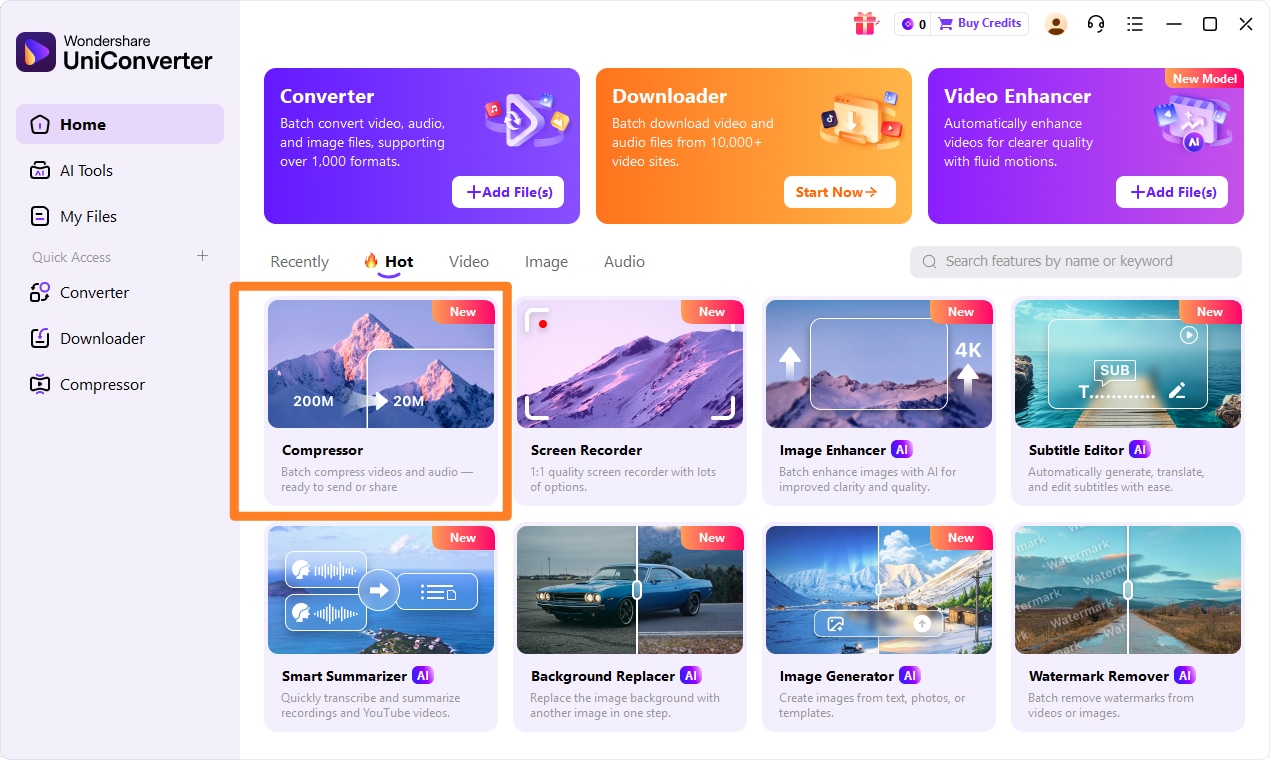
Step 1: Open UniConverter and Choose Compressor
Run Wondershare UniConverter and access the main dashboard. Click on the Compressor option to begin the file size reduction process.
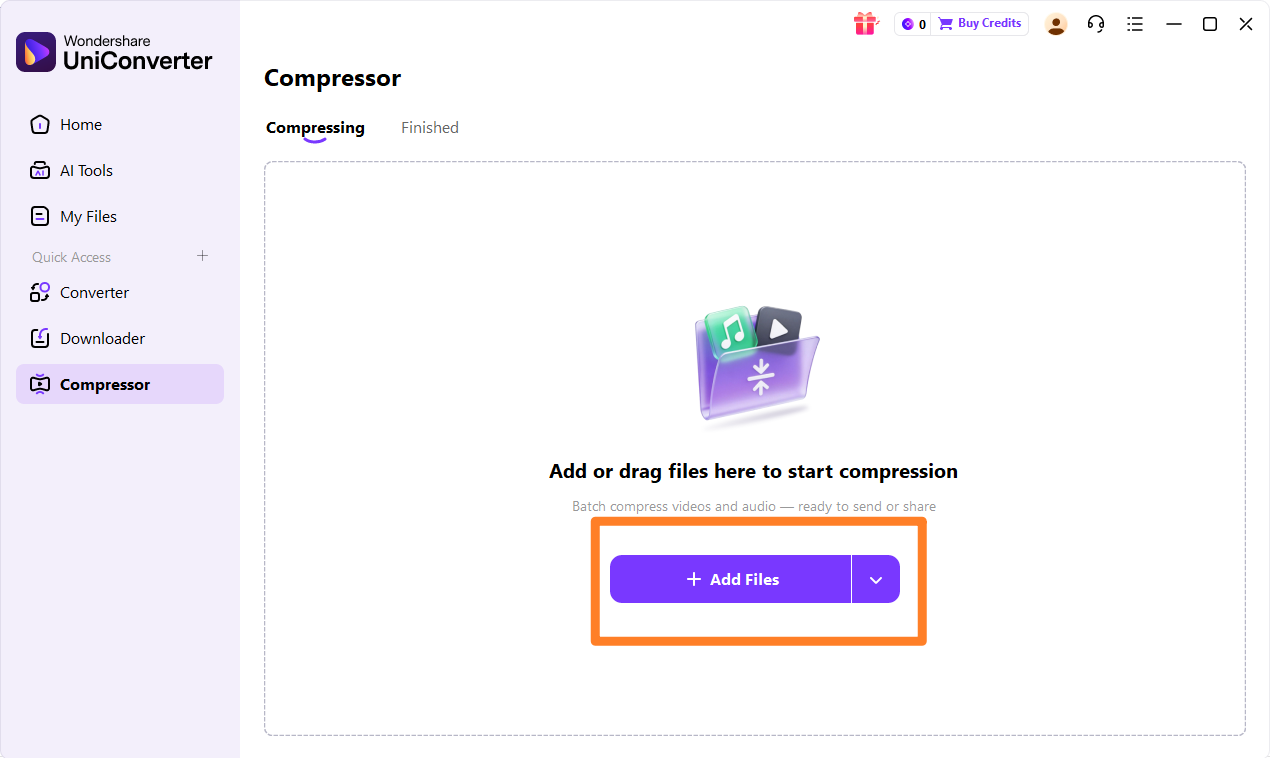
Step 2: Upload the Video, Audios or Images
Import the files you wish to compress by selecting Add Files or dragging them directly into the interface. The tool supports a variety of media types, including videos, audio, and images.
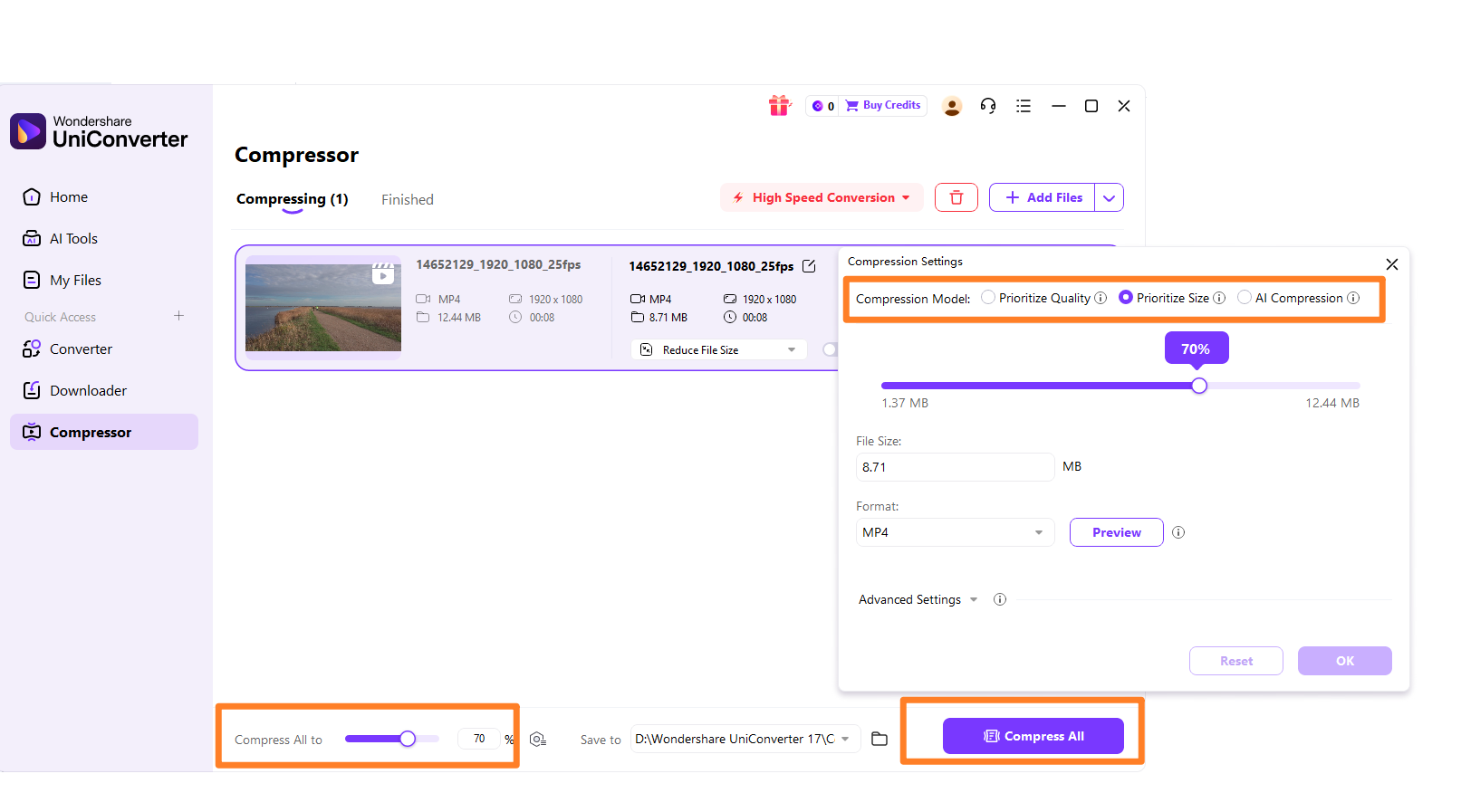
Step 3: Choose Required Parameters
Set your preferred compression level by adjusting parameters such as resolution, format, bitrate, and output size. These settings help control the balance between file size and quality.
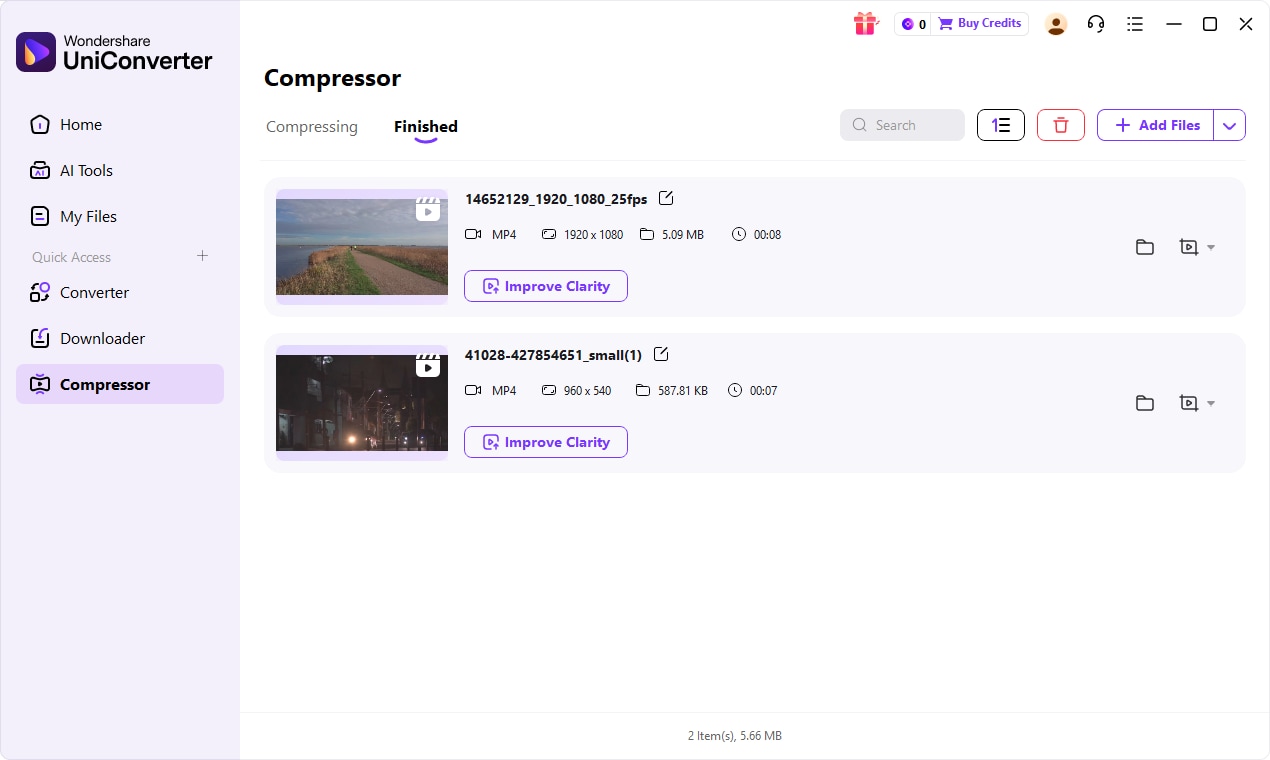
Step 4: Save the Compressed File
Select a destination folder, then click Compress to start processing. After completion, your compressed file will be saved and ready for use.

Seeking a Better Helium Audio Converter Alternative?
Part 7: Final Verdict and Recommendations
After extensively reviewing Helium Audio Converter and Audio Compressor, along with their competitors, my final verdict is that these tools serve a specific and valuable niche in digital audio management. For casual users who primarily need to convert audio formats or reduce file sizes for everyday use, their intuitive interfaces and efficient batch processing capabilities make them excellent choices. However, for those with more demanding needs, such as professional audio mastering or intricate editing, dedicated digital audio workstations (DAWs) remain the superior option. The key takeaway from this Helium Audio Converter Audio Compressor review is to align your choice with your specific requirements and technical comfort level.
For casual users, prioritize ease of use and basic functionality. If you're simply looking to convert an MP3 to a WAV or compress a few files for email, Helium Audio Converter or Audio Compressor will likely suffice. For enthusiasts, balance features with performance. You might need a tool that offers a bit more control over compression settings or supports a wider range of codecs, but still maintains a user-friendly interface. For professionals, consider dedicated audio editing software. These tools offer the granular control, advanced effects, and multi-track capabilities essential for high-quality audio production. Ultimately, understanding your own usage patterns and priorities will guide you to the best audio management solution.
Part 8: FAQs
-
1. What is the main difference between audio conversion and audio compression?
Audio conversion changes the file format (e.g., MP3 to WAV) while audio compression reduces file size, often by removing data.
-
2. Can Helium Audio Converter & Audio Compressor preserve original audio quality?
Conversion generally preserves quality, but compression can lead to some loss, especially with aggressive settings. For lossless compression, you might consider UniConverter which offers advanced algorithms to maintain quality.
-
3. Are there any free alternatives to Helium Audio Converter & Audio Compressor?
Yes, tools like Audacity or freeware converters offer basic functionalities, but may lack advanced features or support.
-
4. How do I choose the right compression settings for my audio files?
It depends on your needs. For web streaming, smaller files are better. For archiving, prioritize higher quality. Experiment to find the balance. UniConverter provides clear presets that can help you find the right balance easily.
-
5. Is UniConverter suitable for both beginners and advanced users?
Yes, UniConverter offers an intuitive interface for beginners and advanced options for more experienced users, making it a versatile choice for various skill levels.
