
- Value: HandBrake offers powerful, free video compression for advanced users and archiving.
- Comparison: UniConverter provides a user-friendly, faster alternative with dedicated support.
- Decision: Choose HandBrake for granular control; UniConverter for ease and speed.
- Value: HandBrake excels in archiving large libraries, balancing size and quality.
- Decision: Avoid HandBrake for quick social media uploads due to complexity and time.
- Comparison: HandBrake's open-source nature versus UniConverter's polished, supported experience.
- Value: UniConverter ensures efficient, lossless compression with broad format support.
- Decision: UniConverter is ideal for consistent results and avoiding HandBrake's pitfalls.
In this article
- Part 1: What is HandBrake?
- Part 2: HandBrake: Core Features, Pros, and Cons
- Part 3: HandBrake: Ideal Users and Use Cases
- Part 4: HandBrake and Alternatives Comparison
- Part 5: Risks and Pitfalls to Avoid
- Part 6: How to Use UniConverter for Efficient Audio and Video Compression
- Part 7: Final Verdict and Recommendations
- Part 8: FAQs
HandBrake Video Compressor: A Comprehensive Scenario-Based Review
When it comes to managing digital media, video compression is an essential task for many of us. Whether you're a professional videographer, a content creator, or just someone with a vast collection of home videos, finding the right tool to reduce file sizes without sacrificing quality can be a real challenge. I've personally wrestled with overflowing hard drives and slow upload speeds, which led me on a quest for the ultimate video compressor. This HandBrake video compressor review will dive deep into one of the most popular free solutions, exploring its capabilities, comparing it to alternatives, and guiding you through its best and worst use cases. My goal is to help you make an informed decision about whether HandBrake is the right tool for your specific needs.
Part 1: What is HandBrake?
HandBrake is a free, open-source video transcoder available for macOS, Windows, and Linux. It's designed to convert video from nearly any format to a selection of modern, widely supported codecs. Think of it as a digital Swiss Army knife for video files, allowing you to shrink their size, change their format, and even prepare them for specific devices. My journey with HandBrake began years ago when I needed to archive old DVDs and Blu-rays, and it quickly became my go-to for many compression tasks.
The Landscape of Video Compression Tools
The world of video compression is vast and varied, with tools ranging from simple online converters to complex professional suites. This diversity often leaves me wondering:
* How can I reduce file size without noticeable quality loss? This is the eternal question for anyone dealing with video.
* Which tool offers the best balance of features, ease of use, and performance? It's a tricky balance to strike.
* Are there free options that can truly compete with paid software? HandBrake certainly aims to be one of them.
Part 2: HandBrake: Core Features, Pros, and Cons
HandBrake is a powerhouse when it comes to video compression, offering a robust set of features that cater to both casual users and seasoned professionals. Its core strength lies in its ability to handle a wide array of video and audio formats, allowing me to convert almost anything I throw at it. I particularly appreciate its extensive customization options, which let me fine-tune everything from video codecs (like H.264, H.265, VP8, VP9) and frame rates to audio tracks and subtitles. It also supports batch processing, which is a lifesaver when I have multiple files to compress.
Key Features:
* Extensive Format Support: Accepts almost any video input, outputs to MP4, MKV, WebM.
* Codec Flexibility: Supports modern codecs like H.264, H.265, VP8, VP9, and Theora.
* Advanced Audio Control: Allows selection of audio tracks, codecs, and sample rates.
* Subtitle Integration: Can pass through existing subtitles or burn them into the video.
* Batch Processing: Queue multiple jobs for automated compression.
Pros:
* Open-source and entirely free, providing powerful compression capabilities without any cost.
* Offers extensive format support for both input and output, making it highly versatile.
* Provides advanced customization options for video and audio settings, giving me granular control.
Cons:
* Steep learning curve for beginners due to its complex interface and numerous options.
* Can be quite slow for large files or when aiming for high-quality, efficient compression.
Part 3: HandBrake: Ideal Users and Use Cases
HandBrake truly shines for a specific type of user and in particular scenarios. From my experience, it's not a one-size-fits-all solution, but when it fits, it fits perfectly.
Best Use Case: Archiving Large Video Libraries
Imagine this: I'm a videographer, and I've just finished a massive project with hundreds of gigabytes of raw footage. I need to compress all this for long-term storage without significant quality loss, but also without breaking the bank on cloud storage. This is where HandBrake becomes indispensable. Its fine-tuned control over codecs, bitrates, and resolution allows me to achieve an optimal balance between file size and visual fidelity. I can set up a queue of files, walk away, and come back to a perfectly organized, space-efficient archive. The ability to experiment with different settings to find that sweet spot for my specific footage is something few other free tools offer.
Limiting Scenario: Quick Social Media Uploads
Now, consider a different scenario: I'm a content creator, and I've just shot a short, fun video for Instagram or TikTok. I need to compress it quickly and upload it immediately to catch a trend. In this case, HandBrake feels like using a sledgehammer to crack a nut. Its multi-step process, the need to select specific presets, and the lack of direct social media integration make it less efficient than dedicated mobile apps or simpler desktop tools designed for quick sharing. By the time I've configured HandBrake, the trend might have passed, and my audience has moved on. For speed and convenience in social media uploads, I often look elsewhere.
Part 4: HandBrake and Alternatives Comparison
When I'm looking for a video compressor, I often weigh HandBrake against other popular options to see what best suits my current task. Here's how it stacks up against some of its notable competitors: UniConverter, Freemake Video Converter, and Shutter Encoder.
| Feature/Tool | HandBrake | UniConverter | Freemake Video Converter | Shutter Encoder |
| Ease of Use | Moderate | High | High | Moderate |
| Advanced Settings | High | High | Low | High |
| Output Quality | Excellent | Excellent | Good | Excellent |
| Speed | Moderate | Fast | Fast | Moderate |
| Cost | Free | Paid (Free Trial) | Free (with ads/limitations) | Free |
| Customer Support | Community Forums | Dedicated | Limited | Community Forums |
| Security | High | High | Moderate | High |
Key Differentiators:
HandBrake truly excels in granular control, making it perfect for experienced users who know exactly what settings they need. UniConverter, on the other hand, offers a fantastic balance of advanced features and a user-friendly interface, making it a strong contender for those who want power without the steep learning curve. Freemake Video Converter is great for absolute beginners who just need a quick, simple conversion, but it often comes with ads or limitations in its free version. Shutter Encoder is another open-source gem, offering similar depth to HandBrake but with a slightly different workflow that some might find more intuitive. While HandBrake's open-source nature provides transparency and a strong community, UniConverter's dedicated support and polished experience often win me over for more critical projects.
Part 5: Risks and Pitfalls to Avoid
While HandBrake is a powerful tool, I've learned that it's not without its potential pitfalls. Being aware of these can save you a lot of headaches and wasted time.
Potential Quality Degradation with Aggressive Settings
One of the biggest traps I've fallen into is getting too aggressive with compression settings. It's tempting to try and squeeze every last megabyte out of a video, but pushing the bitrate too low or choosing an unsuitable preset can lead to noticeable quality degradation. I've ended up with blocky artifacts, washed-out colors, and blurry details on more than one occasion. It's a delicate balance, and often, a slight increase in file size is worth preserving visual integrity. Always preview your output!
Time Consumption for Large Batches
While HandBrake supports batch processing, it's not a speed demon, especially when dealing with large files or aiming for high-quality, efficient codecs like H.265. I've initiated batch compressions of several hours' worth of footage only to find my computer tied up for an entire day, sometimes even longer. This can be a significant bottleneck if you have tight deadlines or need your machine for other tasks. Planning ahead and perhaps running compressions overnight is often my strategy.
Interface Complexity for Novice Users
For someone just starting out with video compression, HandBrake's interface can be incredibly daunting. The sheer number of tabs, dropdowns, and advanced settings can feel overwhelming. I remember feeling lost trying to understand the difference between RF and average bitrate, or which encoder preset was best. This steep learning curve can lead to frustration and, worse, incorrect settings that result in poor output quality or unnecessarily large files. It definitely requires some patience and willingness to learn.
Lack of Direct Cloud/Social Media Integration
In today's interconnected world, many of us compress videos specifically for sharing online. HandBrake, being a desktop application focused purely on transcoding, lacks any direct integration with cloud storage services or social media platforms. This means after compression, I still have to manually upload the files, which adds an extra step to my workflow. For quick shares, this absence of a streamlined upload process can be a minor inconvenience, but for frequent content creators, it can be a significant time sink.
Part 6: How to Use UniConverter for Efficient Audio and Video Compression
When other tools struggle with batch compression, inconsistent results, or quality degradation, I consistently rely on UniConverter. It serves as a dependable alternative, effectively sidestepping many of these common problems by providing a smooth experience for compressing audio, video, and even images. UniConverter distinguishes itself with an ad-free interface, broad format compatibility, GPU acceleration for quicker processing, stable and lossless compression choices, and powerful batch processing features. It genuinely feels like a comprehensive solution for all my media requirements.
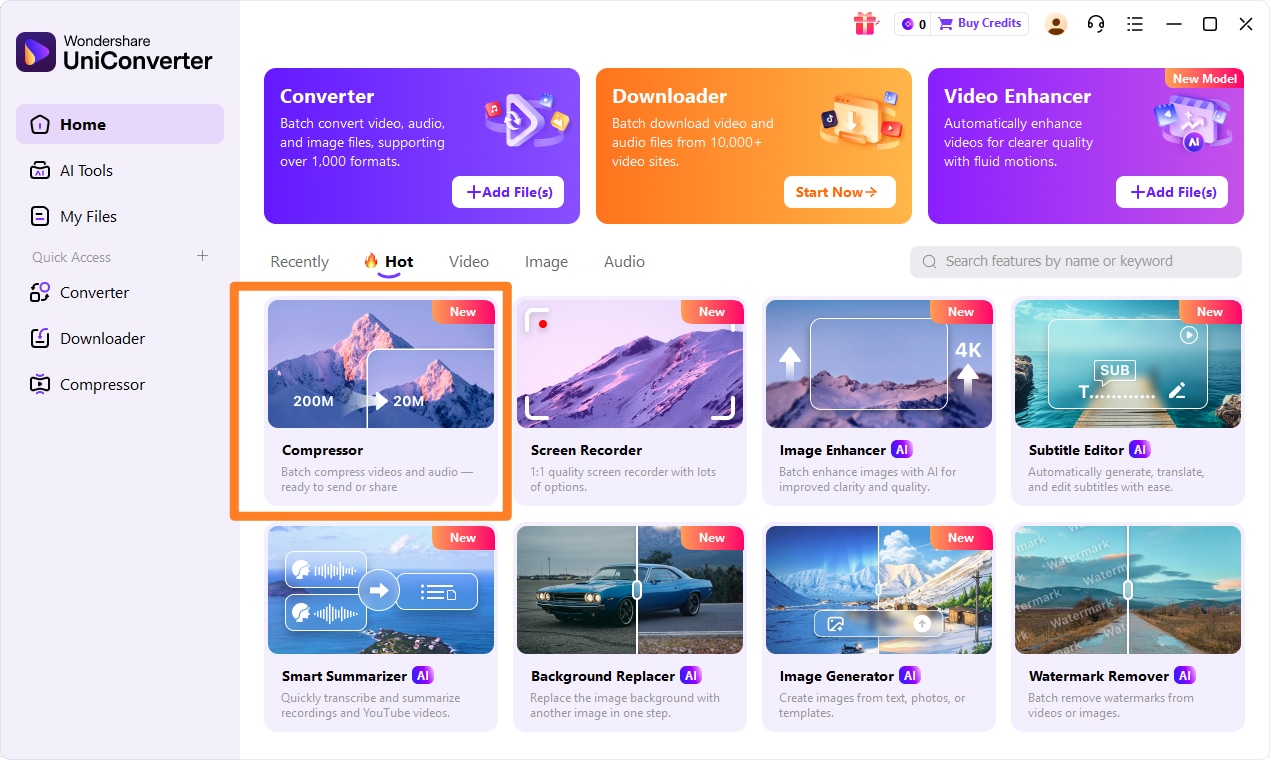
Step 1: Open UniConverter and Choose Compressor
Launch UniConverter on your computer. On the left-hand sidebar, you'll find various tools. Click on the "Video Compressor" option to open the compression interface.
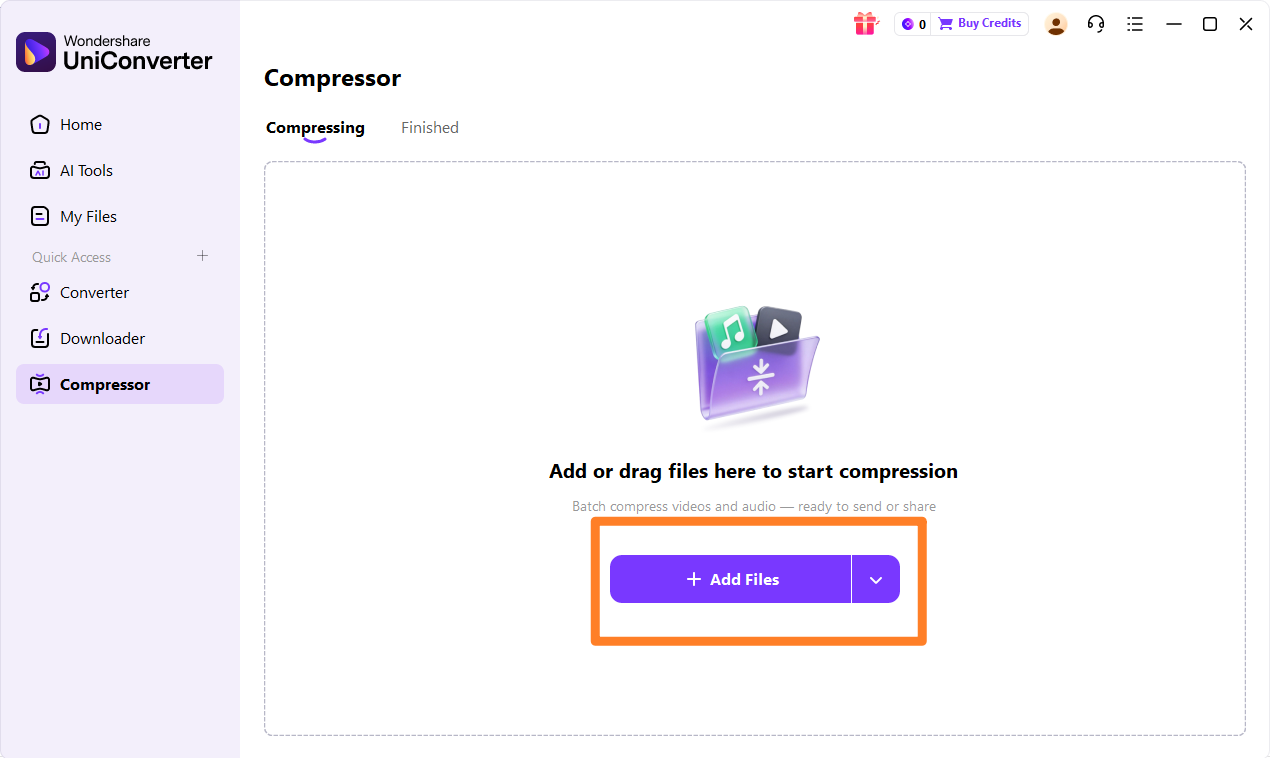
Step 2: Upload the Video, Audios or Images
Drag and drop your video, audio, or image files directly into the UniConverter window. Alternatively, click the "Add Files" button to browse and select your media from your computer.
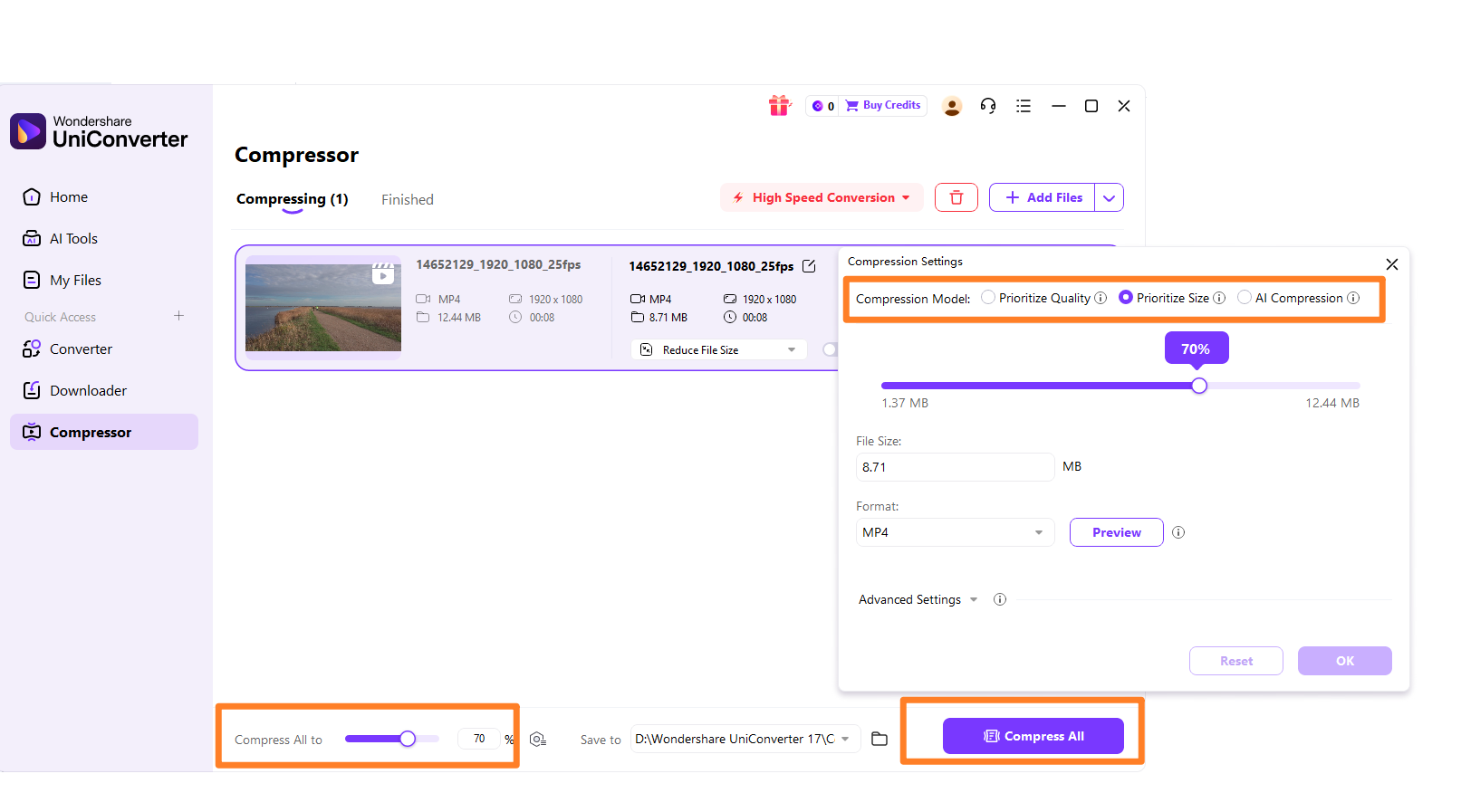
Step 3: Choose Required Parameters
Once your files are loaded, you can adjust the compression settings. UniConverter allows you to choose output format, resolution, quality, and bitrate. You can also use the smart compression feature for automatic optimization.
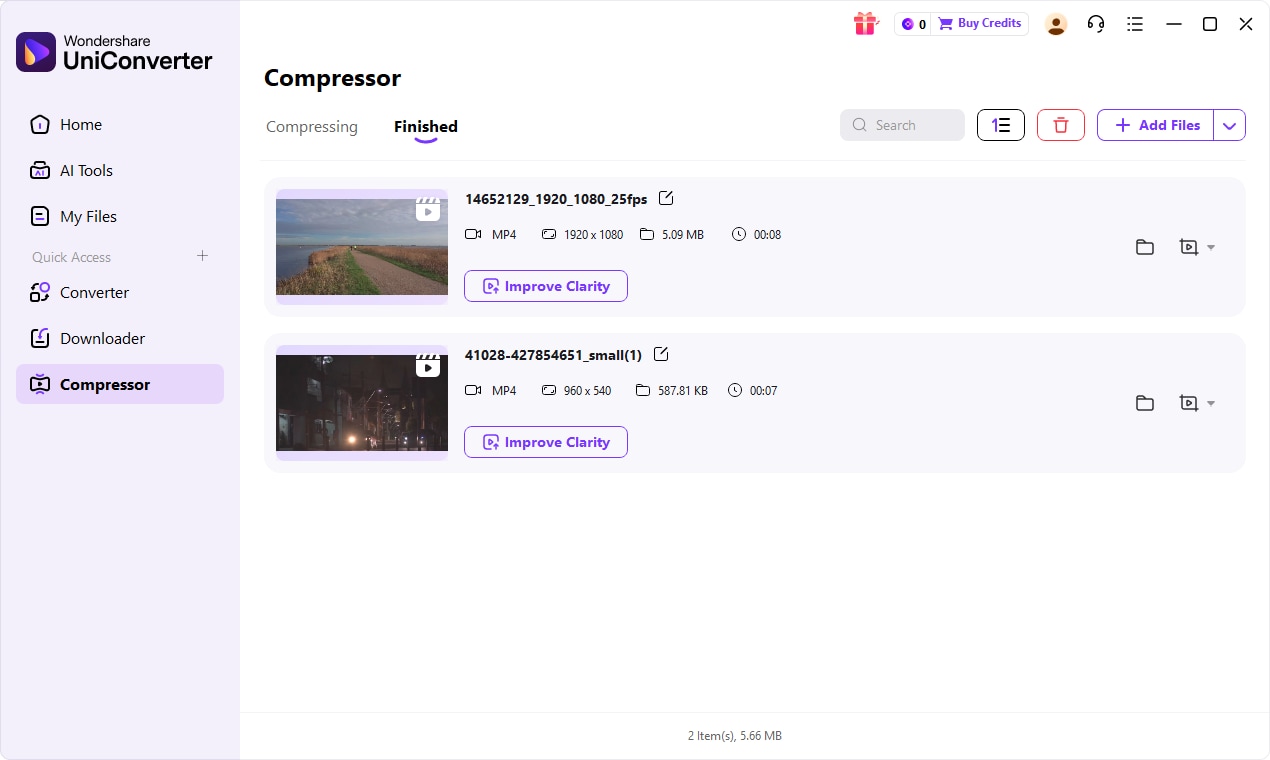
Step 4: Save the Compressed File
After selecting your desired settings, click the "Compress" button. UniConverter will process your files. Once complete, you can find your compressed media in the designated output folder.

Need a HandBrake Video Compressor Alternative?
Part 7: Final Verdict and Recommendations
After extensive use and comparison, my HandBrake video compressor review concludes that it remains an incredibly powerful and valuable tool, especially given its open-source and free nature. For advanced users and those focused on archiving large video libraries, HandBrake's granular control over codecs, bitrates, and other settings is unparalleled among free options. It allows for a precise balance between file size reduction and quality preservation, making it ideal for long-term storage and professional workflows where customization is key. However, its steep learning curve and sometimes slow processing speeds mean it's not the best fit for everyone. Beginners or those needing quick compressions for social media uploads might find its interface overwhelming and its workflow too cumbersome. In such cases, user-friendly alternatives like UniConverter offer a more streamlined experience without sacrificing too much in terms of quality or features. Ultimately, the best choice depends on your technical comfort level and the specific demands of your compression task, always remembering that balancing quality and file size is a constant trade-off.
Part 8: FAQs
-
1. Is HandBrake completely free to use?
Yes, HandBrake is open-source and entirely free to download and use on macOS, Windows, and Linux. There are no hidden costs or premium features.
-
2. Can HandBrake compress 4K videos?
Absolutely, HandBrake supports 4K video compression. However, compressing 4K files can be very time-consuming and resource-intensive, so be prepared for longer processing times.
-
3. Does HandBrake support batch processing?
Yes, HandBrake allows you to queue multiple videos for batch compression. You can add several files to the queue and let HandBrake process them one after another, which is great for large projects.
-
4. What's the best output format for HandBrake?
For most users, MP4 (using H.264 or H.265 codecs) is generally recommended. It offers a good balance of quality, file size, and widespread compatibility across devices and platforms. MKV is also a good choice if you need to retain multiple audio tracks or subtitles.
-
5. Is HandBrake safe to download and use?
Yes, HandBrake is a legitimate and safe software. To ensure safety, always download it from its official website (handbrake.fr) to avoid modified or malicious versions. If you're looking for an alternative with a more polished user experience and dedicated support, UniConverter is a safe and reliable option.
