
- Value: Guetzli excels in delivering superior visual quality at significantly smaller JPEG file sizes.
- Comparison: It achieves 20-30% smaller files than other encoders for the same perceived quality.
- Decision: Ideal for critical, static web images where visual fidelity is paramount and processing time is not a constraint.
- Value: Guetzli's open-source nature makes it a cost-free solution for advanced image optimization.
- Comparison: Unlike faster tools, Guetzli prioritizes perceptual quality over speed, leading to slower processing times.
- Decision: Best for users with specific, high-impact image needs, not for real-time or bulk processing.
- Value: UniConverter offers a fast, user-friendly GUI for compressing various media, including images, audio, and video.
- Comparison: UniConverter provides a balanced solution of speed, quality, and ease-of-use, unlike Guetzli's command-line interface.
- Decision: Choose UniConverter for versatile, efficient, and user-friendly compression across multiple media types.
- Value: Be aware of potential risks like quality loss, slow processing, privacy concerns, and hidden costs with image compressors.
- Comparison: Cloud-based tools (like TinyPNG) pose privacy risks, while local tools (Guetzli, UniConverter) offer more security.
- Decision: Evaluate tools based on security, speed, and quality needs to avoid pitfalls; UniConverter offers local processing.
In this article
- Part 1: What is Guetzli Image Compressor?
- Part 2: Guetzli Image Compressor: Core Features, Pros, and Cons
- Part 3: Guetzli Image Compressor: Users and Use Cases
- Part 4: Guetzli Image Compressor and Alternatives Comparison
- Part 5: Risks and Pitfalls of Using Image Compressors
- Part 6: How to Use UniConverter to Compress High-Efficiency Audio and Video
- Part 7: Conclusion
- Part 8: FAQs
Guetzli Image Compressor: A Deep Dive into Image Optimization
For anyone working with digital content, image optimization is a constant challenge. High-quality images are crucial for engaging audiences, but large file sizes can severely impact website loading times, user experience, and storage costs. This Guetzli Image Compressor review delves into Google's open-source JPEG encoder, designed to produce smaller, yet visually indistinguishable, image files. We'll explore its unique approach to compression, compare it against other popular tools, and provide a comprehensive guide to help you decide if Guetzli is the right solution for your image optimization needs. My goal is to offer a clear, scenario-based analysis to inform your decision-making process.
Part 1: What is Guetzli Image Compressor?
Guetzli Image Compressor is an open-source JPEG encoder developed by Google. Its primary goal is to produce smaller image files while maintaining perceptual quality that is indistinguishable from the original, even at lower bitrates. Unlike traditional JPEG compressors that focus purely on reducing file size, Guetzli employs a sophisticated "perceptual color encoding" algorithm. This means it prioritizes how humans perceive image quality, making intelligent decisions about which details to preserve and which to discard, resulting in files that are often 20-30% smaller than those produced by other encoders at the same visual quality. My review aims to address the core problem of balancing image quality with file size, a critical concern for web developers, content creators, and anyone managing large image libraries.
The Landscape of Image Compression
* The Need for Speed: Slow-loading websites due to large images are a major pain point for users and a significant factor in bounce rates.
* Storage and Bandwidth Costs: Unoptimized images consume valuable server space and bandwidth, leading to increased operational expenses.
* User Experience Expectations: Modern users expect fast, seamless experiences, making efficient image delivery paramount.
* SEO Impact: Search engines increasingly prioritize website performance, with image optimization playing a key role in search rankings.
Part 2: Guetzli Image Compressor: Core Features, Pros, and Cons
Guetzli Image Compressor stands out for its unique approach to JPEG encoding. Its core capability lies in its "perceptual color encoding," which allows it to create smaller files without a noticeable drop in visual quality. I've found that it consistently delivers impressive compression ratios, often reducing file sizes by 20-30% compared to other encoders, while maintaining a high level of fidelity. However, this comes at a cost.
Core Features:
* Perceptual Color Encoding: Optimizes for human visual perception rather than purely mathematical metrics.
* High Compression Ratio: Achieves significant file size reductions for JPEG images.
* Open-Source: Freely available for use and modification.
* Command-Line Interface: Primarily operated via command-line, offering flexibility for developers.
* Quality Parameter Control: Allows for fine-tuning of the output quality (though often less granular than other tools).
Pros:
* Superior Visual Quality at Smaller Sizes: I've consistently been impressed by how well Guetzli preserves image quality even after substantial compression.
* Significant File Size Reduction: It genuinely delivers on its promise of smaller JPEGs.
* Open-Source and Free: No licensing costs, making it accessible to everyone.
Cons:
* Slow Compression Speed: This is its biggest drawback; compressing a single image can take minutes, making it unsuitable for real-time or bulk processing without significant computational resources.
* High Memory Usage: Guetzli can be quite memory-intensive, especially for larger images.
Part 3: Guetzli Image Compressor: Users and Use Cases
Guetzli Image Compressor is best suited for users who prioritize maximum image quality at the smallest possible file size, and who are not constrained by processing time. I've found it to be an excellent tool for specific, high-impact scenarios where visual fidelity is paramount. It's definitely not a tool for everyone, but for the right use case, it's invaluable.
Suitable for: Web developers, content managers, graphic designers, and anyone preparing static, high-quality images for web or archival purposes.
Best Use Case:
* Optimizing Hero Images and Key Visuals: For a website's main banner images, product photos, or critical visual content where every kilobyte counts and visual perfection is non-negotiable, Guetzli shines. I'd use it for images that are displayed prominently and are loaded infrequently, allowing for the longer processing time. For example, a portfolio website where each image is carefully curated and needs to load quickly without any perceived quality loss.
Limited Use Case:
* Real-time Image Processing or Dynamic Content: Guetzli's slow compression speed makes it completely impractical for scenarios requiring on-the-fly image optimization, such as user-uploaded content, image galleries with hundreds of photos, or e-commerce sites with constantly changing product images. If you need to process images quickly or in large batches, its performance limitations become a significant bottleneck.
Part 4: Guetzli Image Compressor and Alternatives Comparison
When it comes to image compression, Guetzli is a strong contender, but it's important to see how it stacks up against other popular tools. Here’s a comparison focusing on key aspects:
| Feature | Guetzli Image Compressor | UniConverter | TinyPNG/TinyJPG | ImageOptim |
| Processing Speed | Very Slow | Fast (GPU-accelerated) | Moderate | Moderate |
| Output Quality | Excellent (perceptual) | Excellent (lossless/lossy) | Good | Good |
| Ease of Use | Command-line | GUI (User-friendly) | Web-based (GUI) | GUI (Desktop) |
| Customer Support | Community (Open-source) | Dedicated Support | Email/FAQ | Community/Email |
| Security | Local processing | Local processing | Cloud-based | Local processing |
| Batch Processing | Possible (scripting) | Yes | Yes | Yes |
From my experience, Guetzli Image Compressor excels in delivering the absolute best visual quality at the smallest file size, making it ideal for critical, static images. However, its speed is a major drawback. UniConverter, on the other hand, offers a fantastic balance of speed, quality, and ease of use, especially for video and audio, but also for images, with its GPU acceleration. TinyPNG/TinyJPG is great for quick, web-based compression, while ImageOptim provides a solid desktop solution for various image formats. If you need ultimate quality and have time, Guetzli is your pick. For a versatile, fast, and user-friendly experience across media types, UniConverter is a strong recommendation.
Part 5: Risks and Pitfalls of Using Image Compressors
While image compressors like Guetzli are incredibly useful, it's crucial to be aware of potential risks and pitfalls, especially when dealing with various tools, including free or less reputable ones. My experience has taught me that not all compression is created equal, and some choices can lead to unexpected problems.
1. Unacceptable Quality Loss
The biggest risk with any image compressor is losing too much quality. While Guetzli is designed to minimize perceptible loss, aggressive settings on other tools can lead to pixelation, color banding, or a general "muddy" appearance. I've seen situations where images become unusable after compression because the tool prioritized file size over everything else. Always preview your compressed images carefully.
2. Slow Processing Times
As I've highlighted with Guetzli, some high-quality compressors can be incredibly slow. This isn't a risk to your image quality, but it's a significant operational risk. If you need to process hundreds or thousands of images, a tool that takes minutes per image will quickly become a bottleneck, delaying projects and consuming valuable computing resources.
3. Privacy Concerns with Cloud-Based Tools
Many popular image compressors are cloud-based (like TinyPNG). While convenient, uploading your images to a third-party server always carries a privacy risk. For sensitive or proprietary images, I'm always cautious about using cloud services unless I fully trust their privacy policies and security measures. You're essentially giving a third party access to your visual data.
4. Hidden Costs and Feature Limitations in "Free" Versions
Many "free" image compressors come with limitations. These might include daily processing limits, restrictions on file size or dimensions, or the addition of watermarks. I've also encountered tools that offer a free tier but then push you aggressively towards a paid subscription for essential features, which can be frustrating if you're relying on the free version for a project.
5. Compatibility Issues and Workflow Integration
Some compressors might not support all image formats you work with, or they might not integrate smoothly into your existing workflow. For instance, a command-line tool like Guetzli requires scripting knowledge, which can be a barrier for some users. If a tool doesn't fit your technical comfort level or your existing software ecosystem, it can create more problems than it solves.
Part 6: How to Use UniConverter to Compress High-Efficiency Audio and Video
When other tools fall short, struggling with batch compression, inconsistent results, or unacceptable quality loss, I often turn to UniConverter. It's a robust, all-in-one solution that handles not just images, but also audio and video compression with remarkable efficiency and quality. UniConverter avoids common pitfalls like ads, watermarks, and format limitations, offering a stable and often lossless compression experience thanks to its wide format support and efficient processing. It truly is a comprehensive solution for media compression needs.
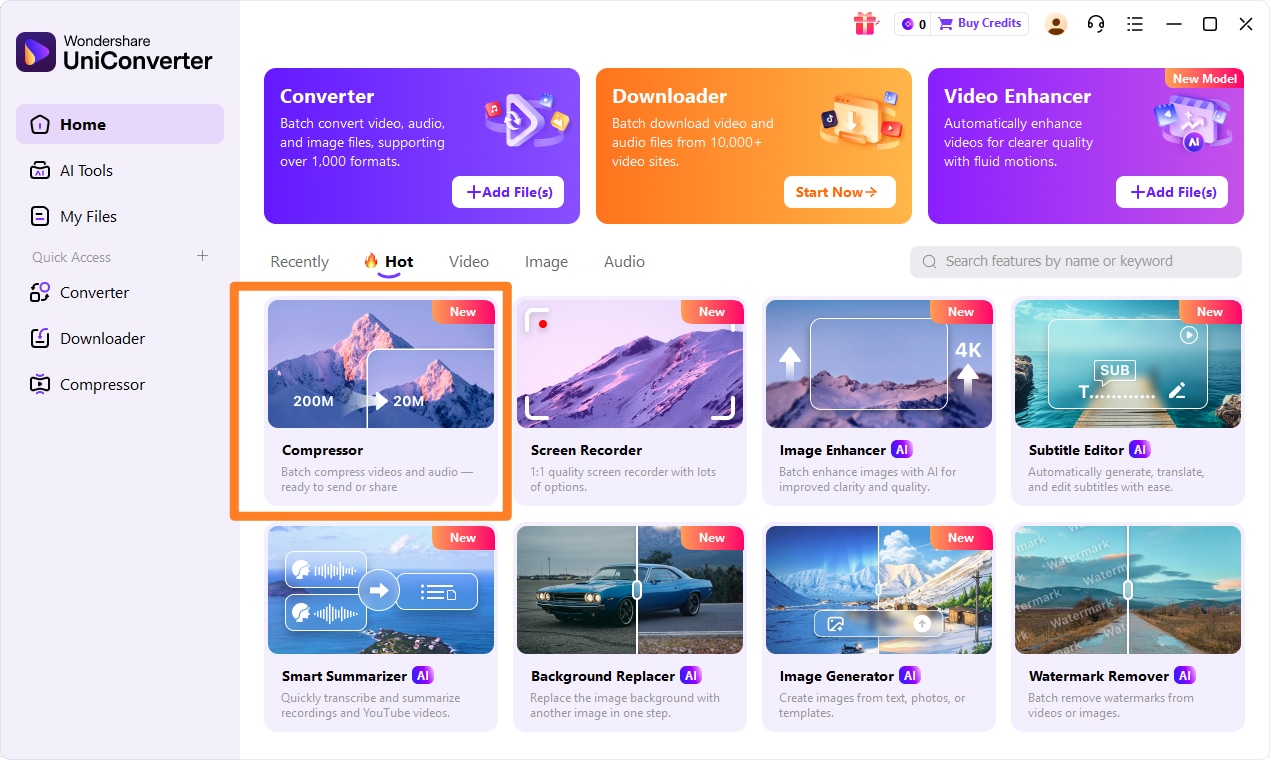
Step 1: Open UniConverter and Choose Compressor
Launch UniConverter on your computer. On the main interface, navigate to the "Toolbox" section and select the "Compressor" function.
Step 2: Upload the Video, Audios or Images
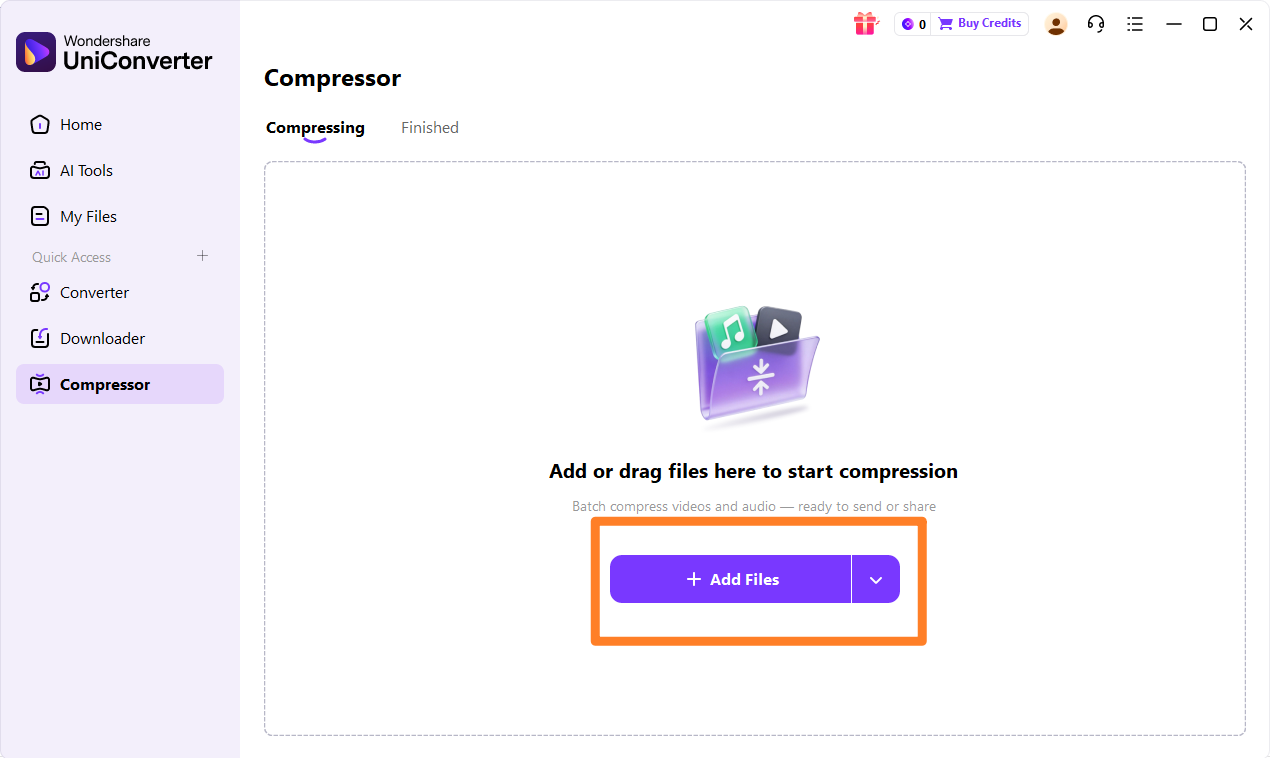
Click on the "Add Files" button or simply drag and drop the video, audio, or image files you wish to compress into the program window.
Step 3: Choose Required Parameters
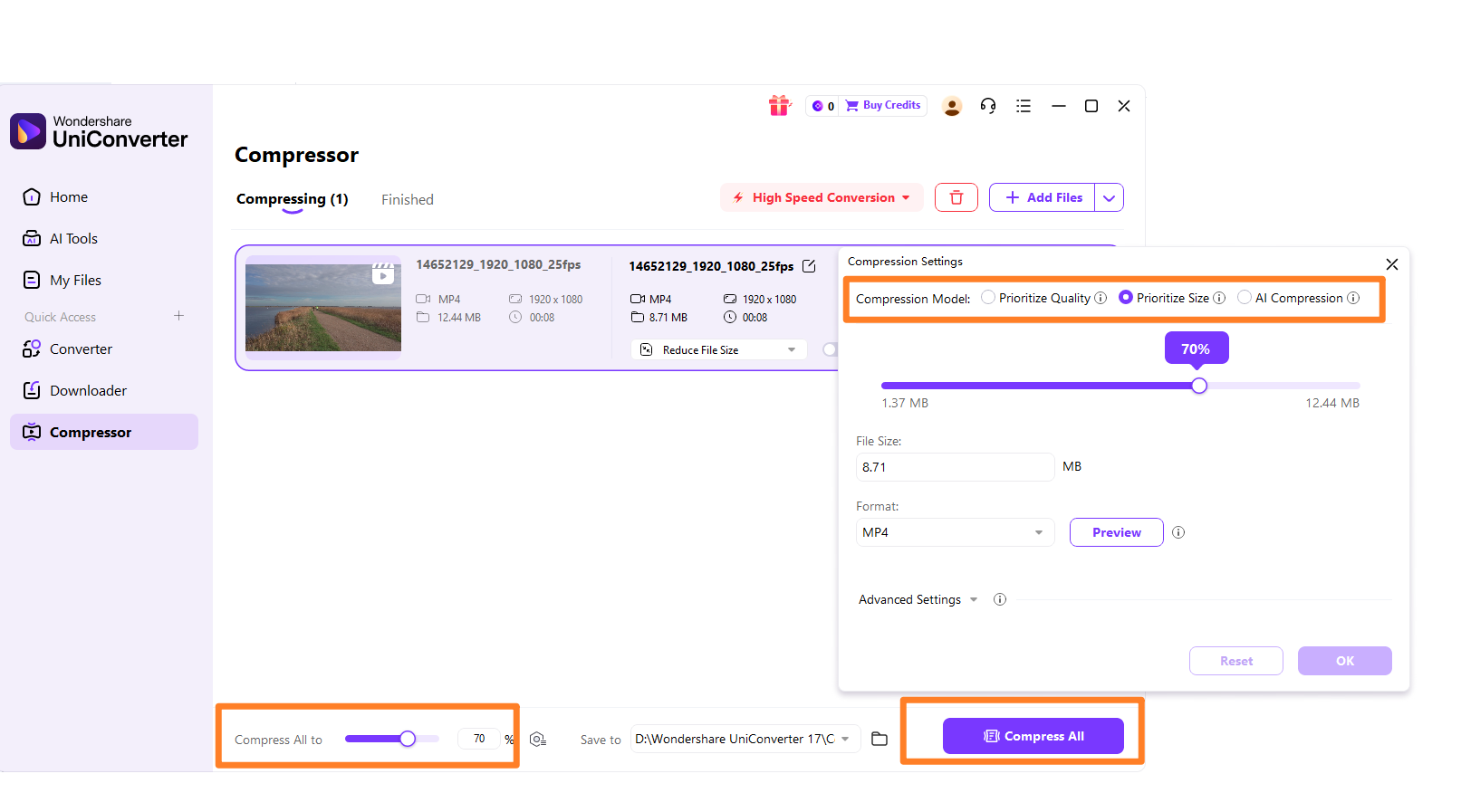
After uploading, you can adjust the compression settings. UniConverter allows you to customize output size, quality, and format. You can use the slider to easily set the desired compression ratio.
Step 4: Save the Compressed File
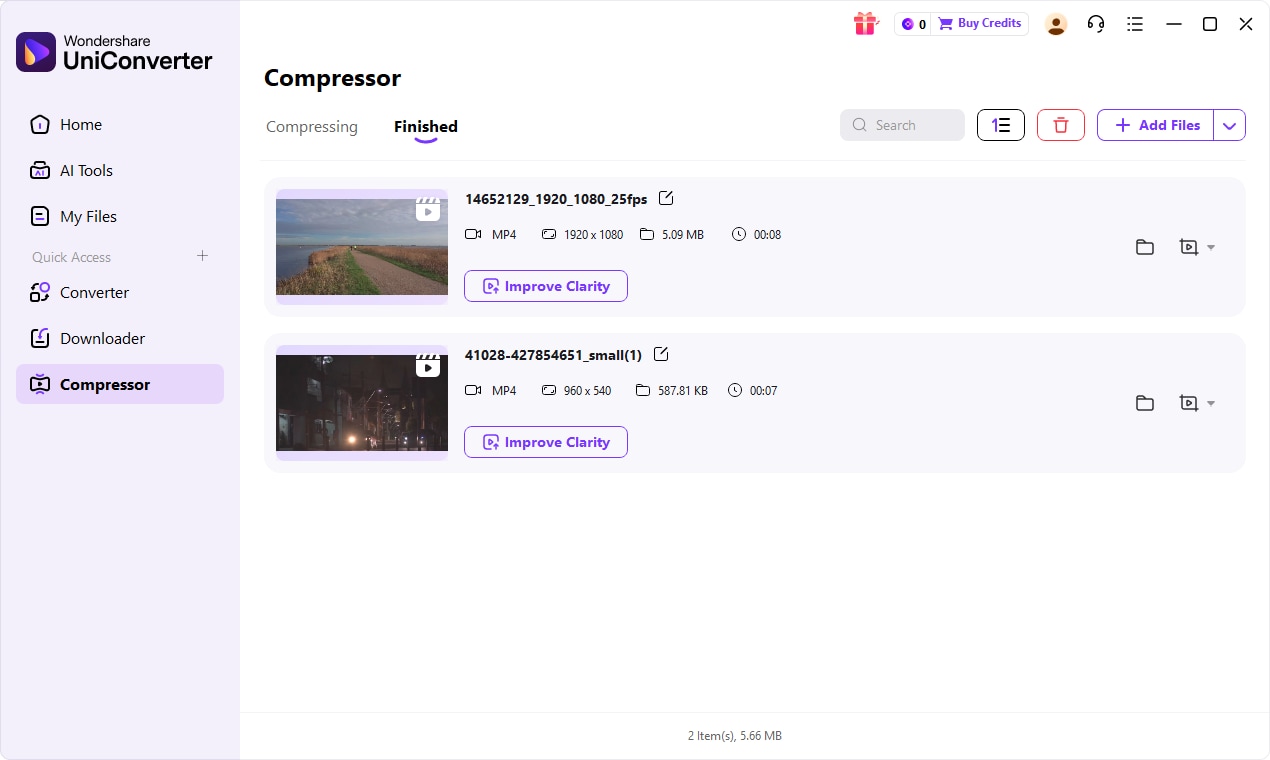
Once you're satisfied with the settings, click the "Compress" button. UniConverter will process your files quickly. After compression, you can find your optimized files in the specified output folder.

Seeking a Guetzli Alternative for Image Compression?
Part 7: Conclusion
In conclusion, the Guetzli Image Compressor review reveals a powerful, albeit niche, tool for achieving superior JPEG compression. Its strength lies in its ability to produce perceptually indistinguishable images at significantly smaller file sizes, making it an excellent choice for critical web assets where visual fidelity is paramount and processing time is not a constraint. However, its slow speed and command-line interface mean it's not a one-size-fits-all solution. For web developers and designers who need the absolute best quality for static, high-impact images, Guetzli is invaluable. For those requiring fast, batch processing across various media types, or a more user-friendly interface, alternatives like UniConverter offer a more versatile and efficient workflow. Ultimately, the best tool depends on your specific project requirements, technical comfort, and the balance you seek between speed, quality, and ease of use.
Part 8: FAQs
-
1. **What is the main advantage of Guetzli Image Compressor over other JPEG compressors?**
Guetzli's main advantage is its "perceptual color encoding," which allows it to create smaller JPEG files that are visually indistinguishable from the original, often achieving 20-30% smaller file sizes than other encoders at the same perceived quality.
-
2. **Why is Guetzli Image Compressor so slow, and how can I mitigate this?**
Guetzli's slowness is due to its complex, iterative compression algorithm designed for maximum quality. You can mitigate this by running it on powerful machines, processing images in batches during off-peak hours, or using it only for critical, static images rather than dynamic content.
-
3. **Can Guetzli Image Compressor be used for formats other than JPEG?**
No, Guetzli is specifically designed as a JPEG encoder. For other image formats like PNG, or for video and audio compression, you'll need to use different tools. For a comprehensive solution covering various formats including video and audio, I recommend UniConverter.
-
4. **Are there any good graphical user interface (GUI) alternatives to Guetzli for image compression?**
Yes, many tools offer GUI interfaces for image compression. TinyPNG/TinyJPG is a popular web-based option, and desktop applications like ImageOptim (for macOS) or UniConverter (for Windows/Mac, also for video/audio) provide user-friendly interfaces with robust compression capabilities.
-
5. **Is it safe to use free online image compressors for sensitive images?**
I generally advise caution when using free online image compressors for sensitive or proprietary images. Many of these services require you to upload your files to their servers, which can pose privacy and security risks. For sensitive content, local processing tools like Guetzli or UniConverter are a safer choice as your files never leave your computer.
