
- Value: GraphicsMagick excels for developers needing automated, high-performance image processing via command-line.
- Comparison: Unlike GUI tools, GraphicsMagick offers unparalleled control but demands technical expertise.
- Decision: Choose GraphicsMagick for server-side automation; opt for UniConverter for user-friendly, efficient desktop compression.
- Risk: Incorrect commands in GraphicsMagick can lead to data loss; UniConverter provides a safer, intuitive alternative.
- Efficiency: UniConverter simplifies image and video compression with a GUI, batch processing, and offline capability.
In this article
- Part 1: What is GraphicsMagick Image Compressor?
- Part 2: GraphicsMagick Image Compressor: Core Features, Pros, and Cons
- Part 3: GraphicsMagick Image Compressor: Ideal Users and Scenarios
- Part 4: GraphicsMagick Image Compressor vs. Competitors
- Part 5: Risks and Pitfalls of Using GraphicsMagick Image Compressor
- Part 6: How to Use UniConverter to Compress Efficiently
- Part 7: Conclusion
- Part 8: FAQs
GraphicsMagick Image Compressor: A Comprehensive Review and Comparison
Welcome to my in-depth GraphicsMagick Image Compressor review and comparison. In today's digital landscape, where visual content reigns supreme, efficient image compression isn't just a luxury—it's a necessity. From web performance to storage optimization, the ability to shrink image file sizes without compromising quality is crucial for developers, designers, and everyday users alike. This article will dive deep into GraphicsMagick, evaluating its strengths and weaknesses, and pitting it against its closest competitors to help you make an informed decision.
Part 1: What is GraphicsMagick Image Compressor?
GraphicsMagick Image Compressor is a robust, open-source image processing system that provides a powerful collection of tools and libraries for manipulating images. Originating as a fork of ImageMagick, it focuses on stability, performance, and efficiency, making it a go-to solution for developers and system administrators who need to automate image tasks. My goal in this review is to explore whether GraphicsMagick lives up to its reputation for power and flexibility, and to help you understand if it's the right tool for your specific image compression needs, especially when compared to more user-friendly alternatives.
The Role of Image Compression in Modern Digital Workflows
In my experience, effective image compression is no longer just about saving disk space; it's fundamental to several critical aspects of modern digital operations:
* Website Performance: Large image files significantly slow down page load times, impacting user experience and SEO rankings.
* Storage Efficiency: Managing vast libraries of images, whether for e-commerce, photography, or archives, demands efficient storage solutions.
* Bandwidth Conservation: Reducing image sizes helps conserve bandwidth, which is crucial for mobile users and those with limited data plans.
* Workflow Automation: For businesses handling thousands of images daily, automated compression is key to maintaining productivity.
Part 2: GraphicsMagick Image Compressor: Core Features, Pros, and Cons
GraphicsMagick Image Compressor stands out for its comprehensive image manipulation capabilities, extending far beyond simple compression. I've found its core strength lies in its command-line interface, which, while daunting for some, offers unparalleled control and scripting possibilities.
Core Features:
* Extensive Format Support: Handles over 88 major image formats, including JPEG, PNG, GIF, TIFF, and WebP.
* Advanced Image Manipulation: Offers resizing, cropping, rotation, color adjustments, and various special effects.
* Batch Processing: Efficiently processes large volumes of images through scripting.
* Metadata Handling: Allows for reading, writing, and stripping image metadata.
* Drawing Primitives: Supports drawing shapes, text, and lines directly onto images.
Pros:
* High-performance batch processing for large image sets: When I need to process thousands of images, GraphicsMagick handles it with remarkable speed.
* Extensive format support and advanced image manipulation capabilities: I've rarely encountered an image format or manipulation task it couldn't handle.
* Open-source and highly customizable for technical users: Its open-source nature means I can tailor it precisely to my project's requirements.
Cons:
* Steep learning curve for non-technical users due to command-line interface: If you're not comfortable with command lines, getting started can be a real struggle.
* Lack of a graphical user interface (GUI) for intuitive operation: I often wish there was a simple GUI for quick, visual adjustments.
Part 3: GraphicsMagick Image Compressor: Ideal Users and Scenarios
Based on my experience, GraphicsMagick Image Compressor is a specialized tool that shines in particular environments and for specific user types. It's not a one-size-fits-all solution, and understanding its ideal context is key to leveraging its power effectively.
Best Use Case:
* Automating image optimization for web servers or large-scale digital archives by experienced developers or system administrators: I've seen GraphicsMagick excel in scenarios where I need to automatically resize, watermark, and compress images uploaded to a web server, or when migrating vast archives of historical images to a new format. Its scripting capabilities allow for robust, hands-off processing, which is invaluable in these high-volume, technical environments. If you're a developer building an image-heavy application or managing a content delivery network, this is where GraphicsMagick truly shines.
Limited Use Case:
* Quick, one-off image compression for casual users or those without programming knowledge: If I just need to compress a single JPEG for an email or quickly resize a few photos for social media, GraphicsMagick is overkill and frankly, frustrating. The overhead of learning command-line syntax for a simple task makes it impractical for casual users who prioritize ease of use and immediate results. For these scenarios, a drag-and-drop GUI tool is far more efficient.
Part 4: GraphicsMagick Image Compressor vs. Competitors
When I look at image compression tools, I consider a balance of power, ease of use, and specific features. Here's how GraphicsMagick Image Compressor stacks up against some popular alternatives:
| Feature/Product | GraphicsMagick Image Compressor | ImageMagick | TinyPNG/TinyJPG | UniConverter |
| Interface | Command-line | Command-line | Web-based GUI | Desktop GUI |
| Batch Processing | Excellent | Excellent | Good (limited free tier) | Excellent |
| Customization | High | High | Low | Moderate |
| Ease of Use | Low | Low | High | High |
| Offline Capability | Yes | Yes | No | Yes |
| Video Conversion | No | No | No | Yes |
From my perspective, GraphicsMagick and ImageMagick are powerhouses for developers, offering deep customization and batch processing capabilities that web-based tools like TinyPNG/TinyJPG simply can't match. However, their command-line interface makes them inaccessible for many. TinyPNG/TinyJPG excels in simplicity and effective lossy compression for web images, but it's online-only and less flexible. UniConverter, on the other hand, strikes a balance, offering a user-friendly desktop GUI with excellent batch processing and offline capabilities, plus the added bonus of video conversion, making it a versatile choice for a broader audience.
Part 5: Risks and Pitfalls of Using GraphicsMagick Image Compressor
While GraphicsMagick Image Compressor is incredibly powerful, my experience has shown me that it comes with its own set of challenges and potential pitfalls, especially if you're not accustomed to command-line tools. It's not a tool for the faint of heart or those who prefer a guided experience.
Steep Learning Curve and Time Investment
The most significant hurdle I've faced with GraphicsMagick is its learning curve. Unlike GUI-based tools where options are visually presented, GraphicsMagick requires me to learn specific commands, parameters, and their syntax. This isn't a tool you can just pick up and use intuitively. I've spent considerable time poring over documentation and experimenting with commands to achieve the desired results. For someone new to command-line interfaces, this can be a frustrating and time-consuming process, diverting valuable time from other tasks.
Potential for Data Loss with Incorrect Commands
One of the scariest aspects of using a command-line tool like GraphicsMagick is the potential for irreversible data loss. A single typo or incorrect parameter in a command can lead to unintended modifications or even deletion of original image files, especially when performing batch operations. For instance, if I accidentally overwrite source files without proper backups, the consequences can be severe. This risk necessitates a meticulous approach to scripting and a robust backup strategy, which adds another layer of complexity to the workflow.
Lack of Direct Customer Support
As an open-source project, GraphicsMagick doesn't offer a dedicated customer support line or a ticketing system. While there's a community and forums where I can seek help, getting timely and specific assistance can be challenging. If I encounter a complex bug or an obscure issue, I'm largely on my own to troubleshoot it, relying on community knowledge or my own technical expertise. This lack of official support can be a significant drawback for businesses or individuals who require reliable assistance.
Dependency on Technical Expertise
Ultimately, effectively using GraphicsMagick Image Compressor hinges on a certain level of technical expertise. It's not just about knowing the commands; it's about understanding image processing concepts, scripting languages, and potentially even system administration. If I'm not comfortable with these areas, I'll find myself constantly struggling. This dependency means that for teams without dedicated developers or system administrators, integrating GraphicsMagick into their workflow can be a non-starter or require significant investment in training.
Part 6: How to Use UniConverter to Compress Efficiently
When other tools prove inadequate, struggling with batch compression, inconsistent results, or quality degradation, I frequently rely on UniConverter. It's a dependable, comprehensive solution that bypasses the complexities of command-line tools, offering a smoother experience for both video compression and image compression. Whether I need a reliable video compressor for PC, a practical way to compress 4K video, or an easy method for compressing JPG images, it handles the job efficiently. UniConverter also distinguishes itself with an ad-free interface, broad format compatibility, flexible compression options, GPU acceleration for enhanced speed, stable and lossless compression choices, and robust batch processing capabilities. It genuinely serves as an ultimate solution for all my media conversion and compression requirements.
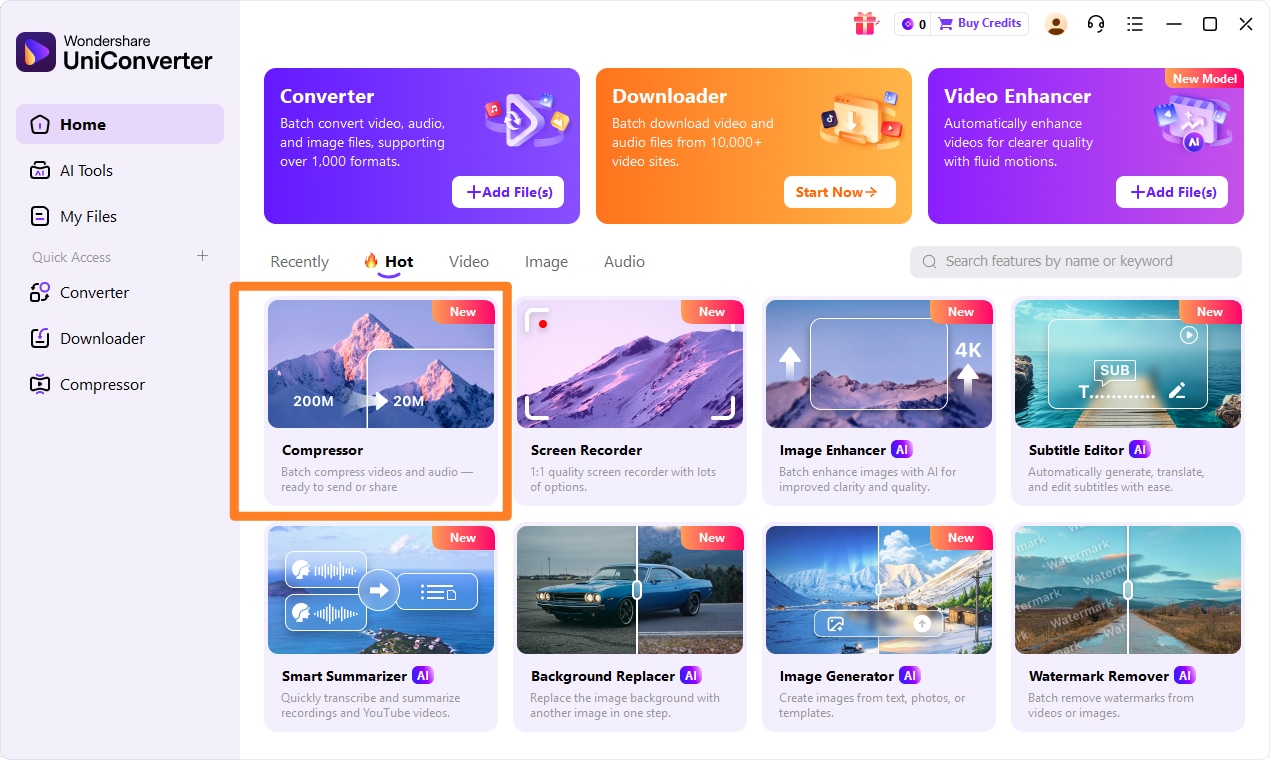
Step 1: Open UniConverter and Choose Compressor
Launch UniConverter on your computer. From the main interface, navigate to the "Toolbox" section and select the "Image Compressor" or "Video Compressor" option, depending on your file type.
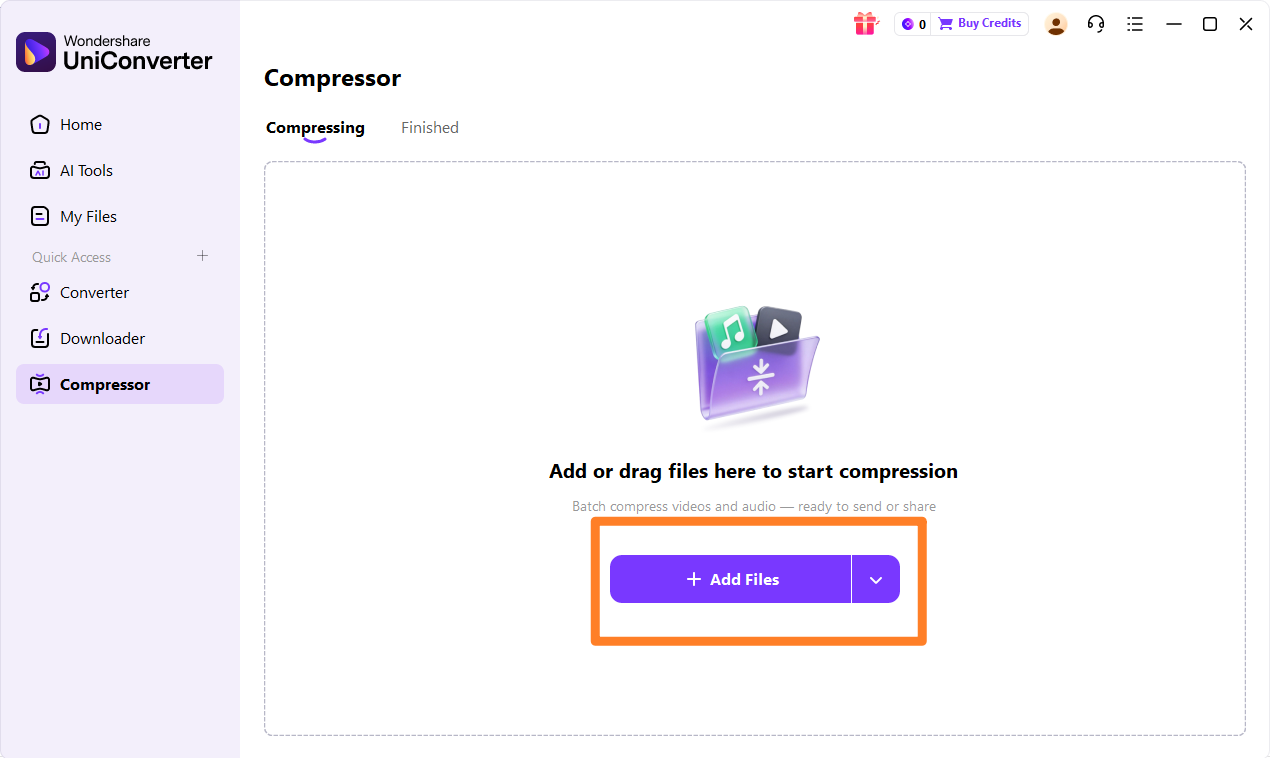
Step 2: Upload the Video, Audios or Images
Click the "Add Files" button or simply drag and drop your images, videos, or audio files into the program window. You can add multiple files for batch processing.
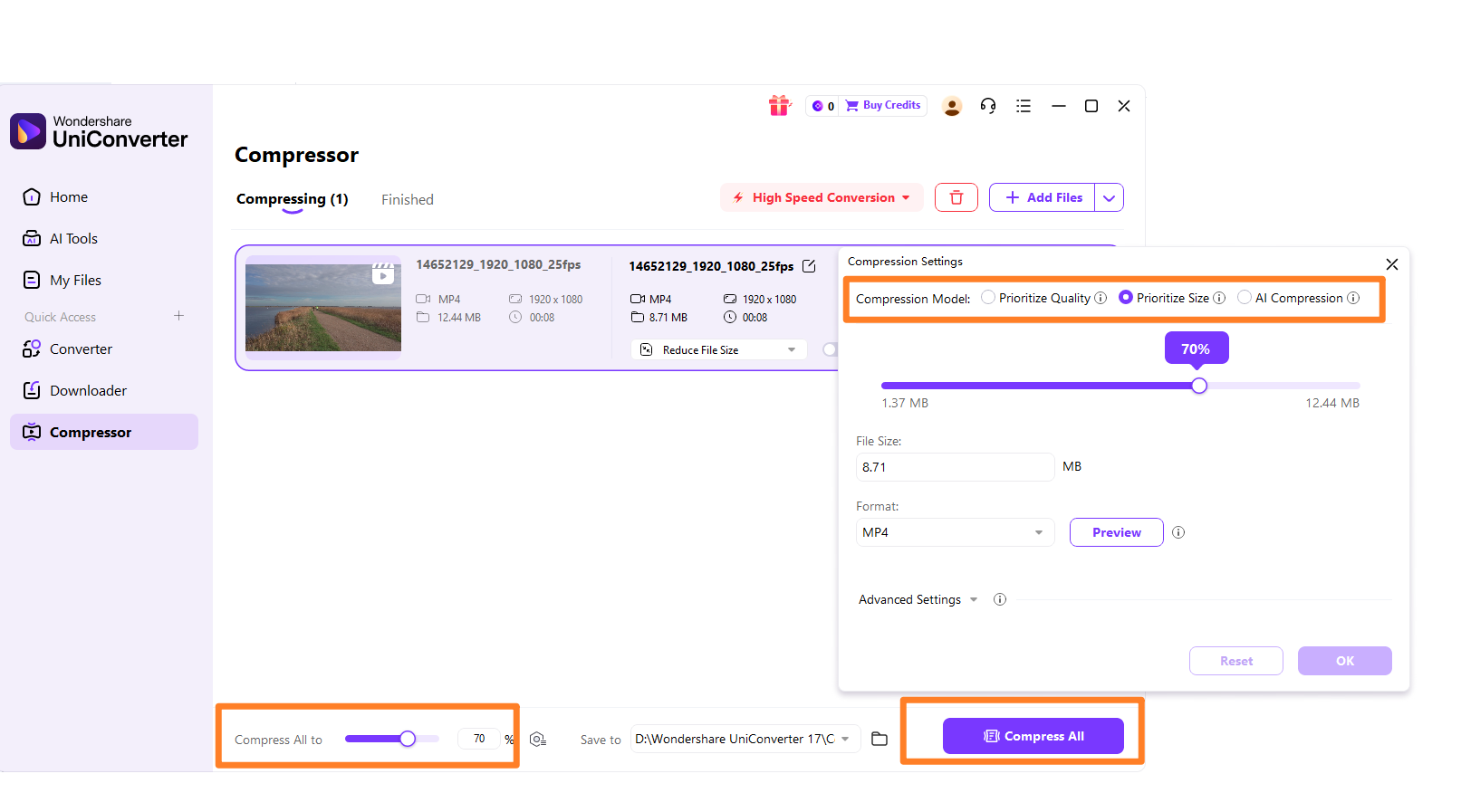
Step 3: Choose Required Parameters
Once your files are loaded, you can adjust the compression settings. UniConverter allows you to choose the output format, resolution, and compression quality. You can preview the compressed file size before processing.
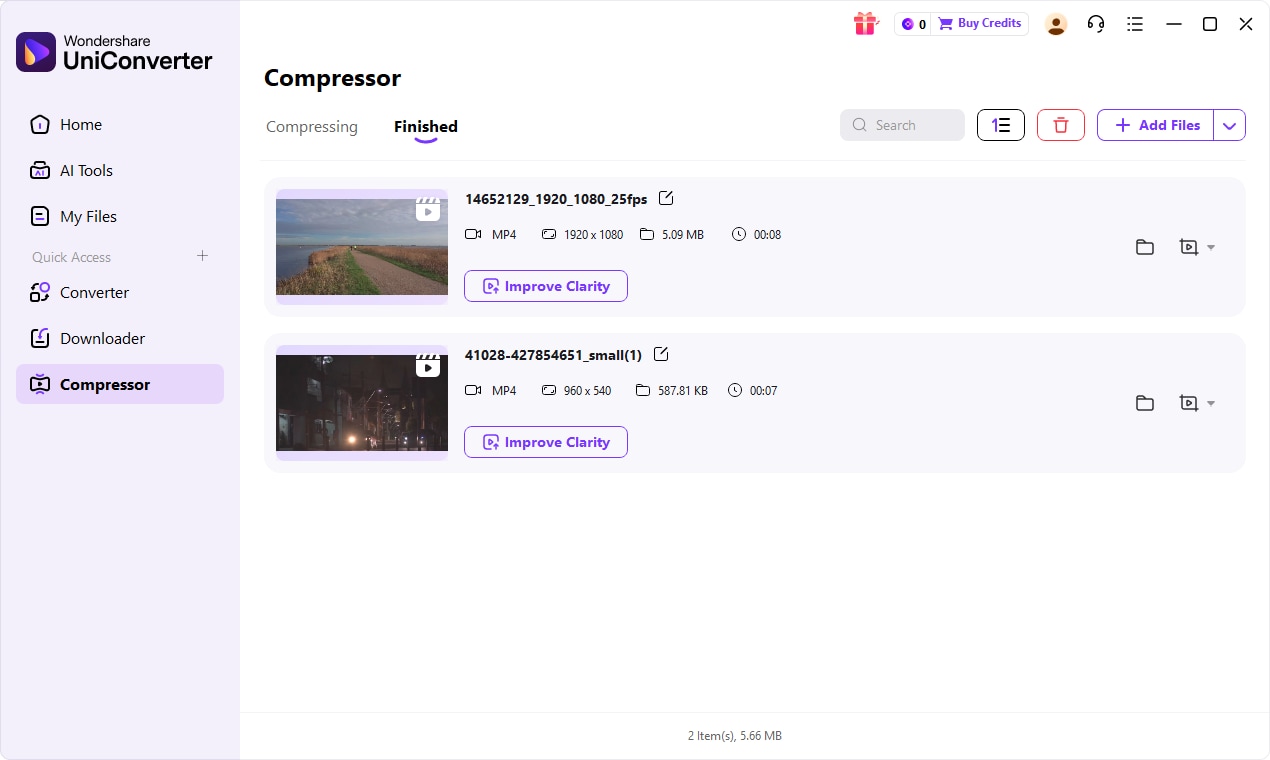
Step 4: Save the Compressed File
After configuring your settings, click the "Compress" or "Start All" button. UniConverter will quickly process your files. Once complete, you can find your compressed files in the designated output folder.

Need a Simpler GraphicsMagick Alternative?
Part 7: Conclusion
In conclusion, my GraphicsMagick Image Compressor review reveals a powerful, versatile, and highly efficient tool, particularly for those with technical expertise. Its command-line interface and extensive customization options make it an invaluable asset for developers and system administrators needing to automate large-scale image processing tasks. However, its steep learning curve and lack of a graphical user interface present significant barriers for casual users or those without programming knowledge. For such users, the risks of incorrect commands and the absence of direct customer support can outweigh its benefits. While GraphicsMagick excels in performance and flexibility for specific niches, tools like UniConverter offer a more balanced and user-friendly experience, providing excellent compression quality with an intuitive interface and added functionalities like video conversion. The choice ultimately depends on your technical comfort level, the scale of your projects, and your priority between raw power and ease of use.
Part 8: FAQs
-
1. **Is GraphicsMagick Image Compressor free to use?**
Yes, GraphicsMagick is an open-source project, meaning it's completely free to download and use.
-
2. **Can GraphicsMagick compress images without losing quality?**
GraphicsMagick supports various compression algorithms, including lossless options like PNG optimization. However, for significant file size reduction, lossy compression (like JPEG) is often employed, which involves some quality degradation, though often imperceptible.
-
3. **What is the main difference between GraphicsMagick and ImageMagick?**
GraphicsMagick is a fork of ImageMagick, generally aiming for greater stability and performance. ImageMagick often has more frequent updates and features, while GraphicsMagick emphasizes a more conservative development approach focused on reliability.
-
4. **Is there a GUI for GraphicsMagick?**
No, GraphicsMagick is primarily a command-line tool. While third-party GUIs might exist, they are not officially supported or developed by the GraphicsMagick project. If you prefer a GUI, I recommend looking into alternatives like UniConverter.
-
5. **How does UniConverter compare to GraphicsMagick in terms of compression quality?**
Both tools can achieve high-quality compression. GraphicsMagick offers granular control via command-line parameters, allowing for precise adjustments. UniConverter, on the other hand, provides a user-friendly interface for selecting quality settings, making it easier for me to achieve good results without diving into complex commands. For most users, UniConverter's quality output is more than sufficient and much easier to manage.
