
- GOM Tools Explained: GOM Video Converter changes formats; GOM Video Compressor shrinks file sizes. Understand their distinct roles.
- Core Strengths: Both GOM tools offer user-friendly interfaces, extensive format support, and efficient batch processing for quick tasks.
- Key Limitations: GOM tools lack advanced editing features and risk quality loss with aggressive compression. Not for professional use.
- Target Audience: Ideal for casual users, students, or professionals needing basic video preparation for sharing or presentations.
- Competitive Edge: GOM products excel in ease of use for simple tasks, but HandBrake offers superior compression and advanced settings.
- Potential Pitfalls: Beware of quality loss, intrusive ads in free versions, and limited customer support with GOM products.
- UniConverter Alternative: For robust, high-efficiency compression without quality loss or ads, UniConverter provides a comprehensive solution.
- Informed Decision: Choose GOM for quick, simple tasks; opt for UniConverter for demanding projects requiring advanced features and quality.
In this article
- Part 1: What are GOM Video Converter and Video Compressor?
- Part 2: GOM Video Converter & Video Compressor: Core Features, Pros, and Cons
- Part 3: Target Audience and Use Cases for GOM Video Converter & Video Compressor
- Part 4: GOM Video Converter & Video Compressor vs. Competitors
- Part 5: Risks and Pitfalls to Consider
- Part 6: How to Use UniConverter to Compress High-Efficiency Videos
- Part 7: Conclusion
- Part 8: FAQs
When I'm looking for tools to handle my video files, especially for converting formats or shrinking their size, I often come across a plethora of options. Among them, GOM Video Converter and Video Compressor are two names that pop up frequently. This review aims to cut through the noise and provide you with a clear, scenario-based comparison of these tools, helping you understand their strengths and weaknesses in real-world applications. I’ll delve into their features, ideal use cases, and even highlight potential pitfalls, ensuring you can make an informed decision about which tool best suits your needs.
Part 1: What are GOM Video Converter and Video Compressor?
GOM Video Converter and GOM Video Compressor are two distinct, yet related, software applications developed by GOM & Company, a South Korean software company known for its multimedia products, most notably GOM Player. While both tools deal with video files, their primary functions differ. GOM Video Converter is designed to change the format of video files, allowing you to play them on various devices or platforms that might not support the original format. GOM Video Compressor, on the other hand, focuses on reducing the file size of videos, which is crucial for storage, sharing, or uploading to the internet.
This review will explore the core functionalities of both GOM Video Converter and GOM Video Compressor, comparing them against each other and other market alternatives. My goal is to help you understand when to use each tool, what to expect in terms of performance and quality, and ultimately, to guide you toward the best solution for your specific video processing needs.
The Landscape of Video Conversion and Compression Tools
The digital world is awash with video content, and the need for efficient video processing tools has never been greater. I often find myself needing to:
* Convert videos for device compatibility: My phone might not play a specific video format, or I need a video to work on an older TV.
* Reduce file sizes for sharing: Sending large video files via email or messaging apps is often impossible without compression.
* Prepare videos for web upload: Social media platforms and video hosting sites often have file size or format restrictions.
* Optimize storage space: Large video collections can quickly eat up hard drive space, making compression a necessity.
Part 2: GOM Video Converter & Video Compressor: Core Features, Pros, and Cons
When I use GOM Video Converter and GOM Video Compressor, I'm looking for specific capabilities that make my video tasks easier. Both tools offer a range of features, but they excel in different areas. GOM Video Converter's core strength lies in its ability to convert videos between a vast array of formats, ensuring compatibility across devices. GOM Video Compressor, as its name suggests, is all about shrinking file sizes efficiently.
Here are some of the core capabilities I've experienced:
* Extensive Format Support: Both tools handle a wide variety of input and output formats, from common MP4 and AVI to less common ones.
* User-Friendly Interface: I find both applications to be straightforward and easy to navigate, even for beginners.
* Batch Processing: This is a lifesaver when I have multiple files to convert or compress, saving me a lot of time.
* Basic Quality Control: I can usually adjust resolution, bitrate, and frame rate to some extent, balancing file size and visual quality.
* Device Presets: GOM Video Converter often includes presets for popular devices like smartphones and tablets, simplifying the conversion process.
Pros of GOM Video Converter & Video Compressor
* Intuitive Interface for Quick Tasks: I appreciate how quickly I can get started with either tool. The interfaces are clean and don't overwhelm me with too many options right away.
* Wide Range of Supported Formats: I rarely encounter a video file that GOM Video Converter can't handle, and GOM Video Compressor also supports a good variety.
* Efficient Batch Processing Capabilities: When I have a folder full of videos, the batch processing feature is incredibly useful. I can set them all up and let the software do its work.
Cons of GOM Video Converter & Video Compressor
* Limited Advanced Editing Features: If I need to trim, merge, or add effects, I usually have to look for another tool. These GOM products are purely for conversion and compression.
* Potential for Quality Degradation on Aggressive Compression: While GOM Video Compressor does a good job, pushing the compression too far can noticeably reduce video quality, which is a trade-off I always have to consider.
Part 3: Target Audience and Use Cases for GOM Video Converter & Video Compressor
I've found that GOM Video Converter and Video Compressor are particularly well-suited for certain types of users and scenarios, while falling short in others. Understanding these distinctions is key to deciding if they are the right tools for me.
For someone like me, who often needs to perform quick, straightforward video tasks without getting bogged down in complex settings, these tools are quite effective. They cater to a broad audience who prioritize ease of use and efficiency over advanced functionalities.
Best Use Cases
* Scenario 1: Casual Users Needing Quick Format Changes or Size Reduction for Sharing
* For example, I often convert a home video from my camera to an MP4 format so I can easily upload it to social media platforms like Facebook or Instagram.
* Another common use is compressing a large video file from a family event so I can email it to relatives without hitting attachment limits.
* Scenario 2: Students or Professionals Requiring Basic Video Preparation for Presentations
* When I'm preparing a presentation, I sometimes need to ensure a video clip is compatible with the projector system in a lecture hall, and GOM Video Converter helps me quickly change its format.
* I also use GOM Video Compressor to reduce the file size of video segments for cloud storage or to embed them into presentation slides without making the file excessively large.
Limitations in Specific Scenarios
* Scenario 1: Professional Video Editors Requiring Lossless Compression or Advanced Codec Control
* If I were preparing footage for broadcast or maintaining high fidelity for archival purposes, GOM Video Compressor wouldn't be my first choice. It lacks the granular control over codecs and the lossless compression options that professional editors demand. I'd worry about subtle quality loss that wouldn't be acceptable in a professional context.
* Scenario 2: Content Creators Demanding Integrated Editing Suites with Advanced Effects
* As a content creator, if I need to add complex transitions, perform color grading, or integrate special effects, GOM Video Converter or Compressor simply won't cut it. These tools are not designed for creative editing; they are purely for conversion and compression. I'd need a full-fledged video editing suite for those tasks.
Part 4: GOM Video Converter & Video Compressor vs. Competitors
When I'm evaluating video tools, I don't just look at GOM's offerings in isolation. I always compare them to other popular options to see where they truly stand out, or where they might fall short. This helps me understand their competitive edge and make a more informed decision.
GOM Video Converter & Video Compressor vs. Competitors: Feature Comparison Table
| Feature/Tool | GOM Video Converter | GOM Video Compressor | HandBrake | Freemake Video Converter |
| Ease of Use | High | High | Medium | High |
| Supported Formats | Extensive | Extensive | Extensive | Extensive |
| Compression Efficiency | Good | Very Good | Excellent | Good |
| Advanced Settings | Basic | Basic | Advanced | Basic |
| Editing Features | Minimal | Minimal | Minimal | Basic |
| Price | Free/Paid | Free/Paid | Free | Free/Paid |
Key Differentiators
From my experience, GOM Video Converter and GOM Video Compressor excel in their user-friendliness, making them ideal for quick, no-fuss tasks. HandBrake, while offering superior compression efficiency and advanced settings, has a steeper learning curve. Freemake Video Converter is similar to GOM in ease of use and format support but often comes with more intrusive ads in its free version. If I need deep control over compression parameters, HandBrake is my go-to, but for simple, fast conversions or compressions, GOM products are highly competitive, especially for their intuitive interfaces.
Part 5: Risks and Pitfalls to Consider
While GOM Video Converter and Video Compressor offer convenient solutions for my video needs, I've learned that it's crucial to be aware of potential risks and pitfalls, especially when using free versions or pushing the tools to their limits. These aren't necessarily deal-breakers, but they are important considerations that can impact my overall experience and the quality of my output.
Potential for Quality Loss During Compression
This is perhaps the most significant risk when using any video compressor, including GOM Video Compressor. While it aims to reduce file size, aggressive compression settings can lead to a noticeable drop in video quality. I've seen instances where fine details become blurry, colors shift, or blockiness appears, especially in fast-moving scenes. It's a delicate balance between file size and visual fidelity, and I always recommend experimenting with settings on a small clip before committing to a large batch.
Intrusive Advertisements in Free Versions
Like many free software offerings, the free versions of GOM Video Converter and Video Compressor can sometimes come with advertisements. These can range from small banners within the application to pop-up ads that interrupt my workflow. While often manageable, they can be annoying and detract from the user experience. I've found that sometimes these ads can even lead to other software installations if I'm not careful during the setup process.
Limited Customer Support for Free Users
If I encounter a technical issue or have a question while using the free versions, I've found that customer support can be quite limited. Often, I'm left to scour forums or FAQs for solutions. This isn't unique to GOM products, but it's a common drawback of free software. For critical projects, relying solely on free tools without dedicated support can be a significant risk.
Compatibility Issues with Newer Operating Systems
While GOM products are generally well-maintained, I've occasionally run into compatibility issues, particularly after major operating system updates. Sometimes, the software might crash, certain features might not work correctly, or the interface might appear glitched. While updates usually address these problems, there can be periods where the software isn't fully optimized for the latest OS, which can be frustrating if I need to get work done urgently.
Part 6: How to Use UniConverter to Compress High-Efficiency Videos
Sometimes, basic tools like GOM Video Compressor can feel a bit limited—especially when batch compression isn’t efficient, the output is inconsistent, or the final video quality drops more than expected. In those situations, I usually turn to UniConverter as a more reliable alternative. It offers a smoother workflow and works especially well as a dedicated video compressor for handling different file types more efficiently. I also like that it can help compress videos without quality loss as much as possible, while GPU acceleration speeds up the entire process. With its broad format support and additional audio compression features, it works well as an all-in-one solution for everyday media compression needs.
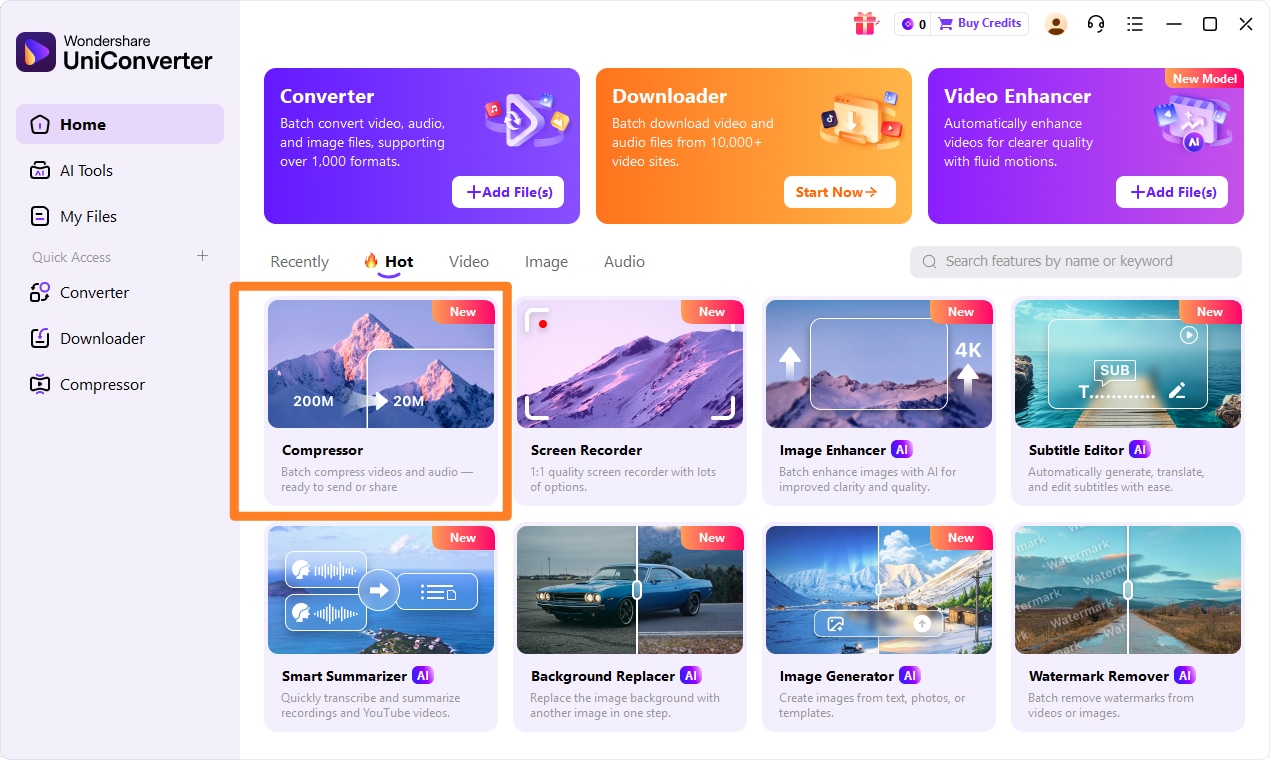
Step 1: Open UniConverter and Choose Compressor
I start by launching UniConverter. On the main interface, I navigate to the "Video Compressor" tool. It's usually prominently displayed, making it easy to find.
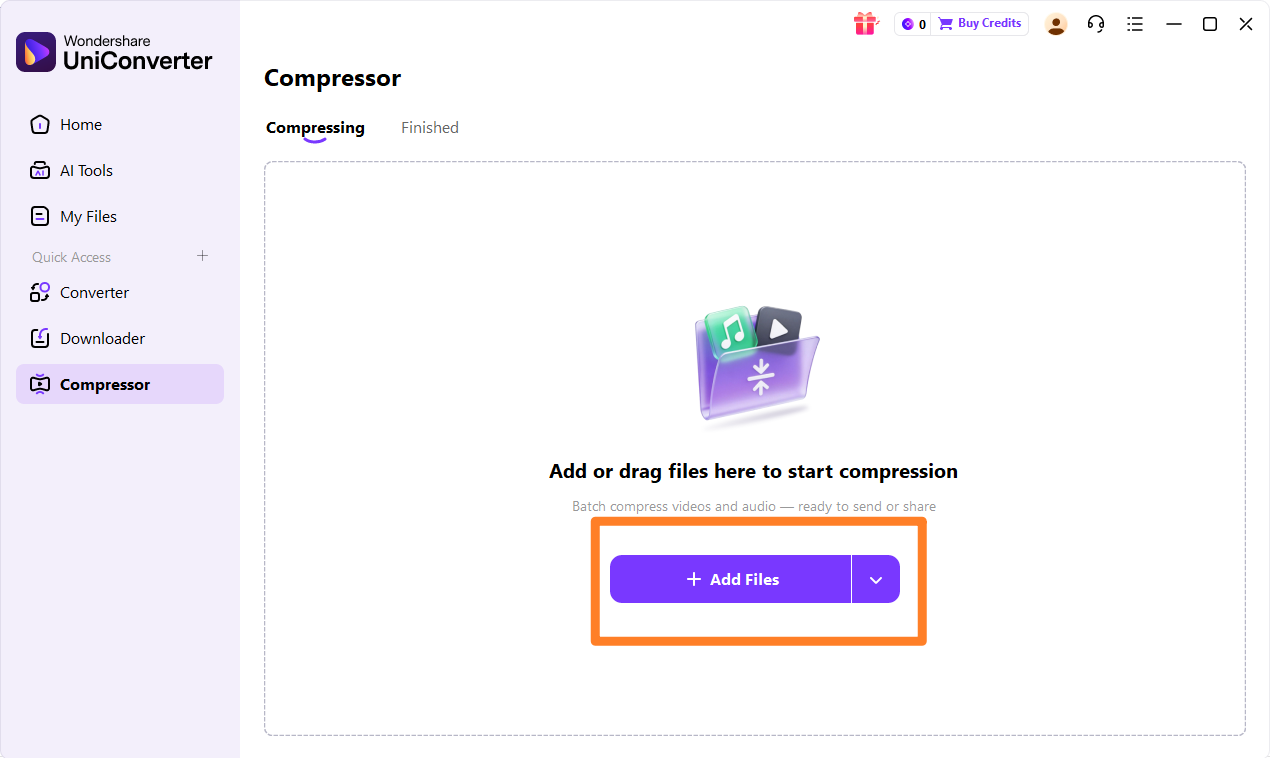
Step 2: Upload the Video, Audios or Images
Next, I click on the "Add Files" button or simply drag and drop my video files directly into the compressor window. UniConverter supports various video formats, so I don't usually worry about compatibility.
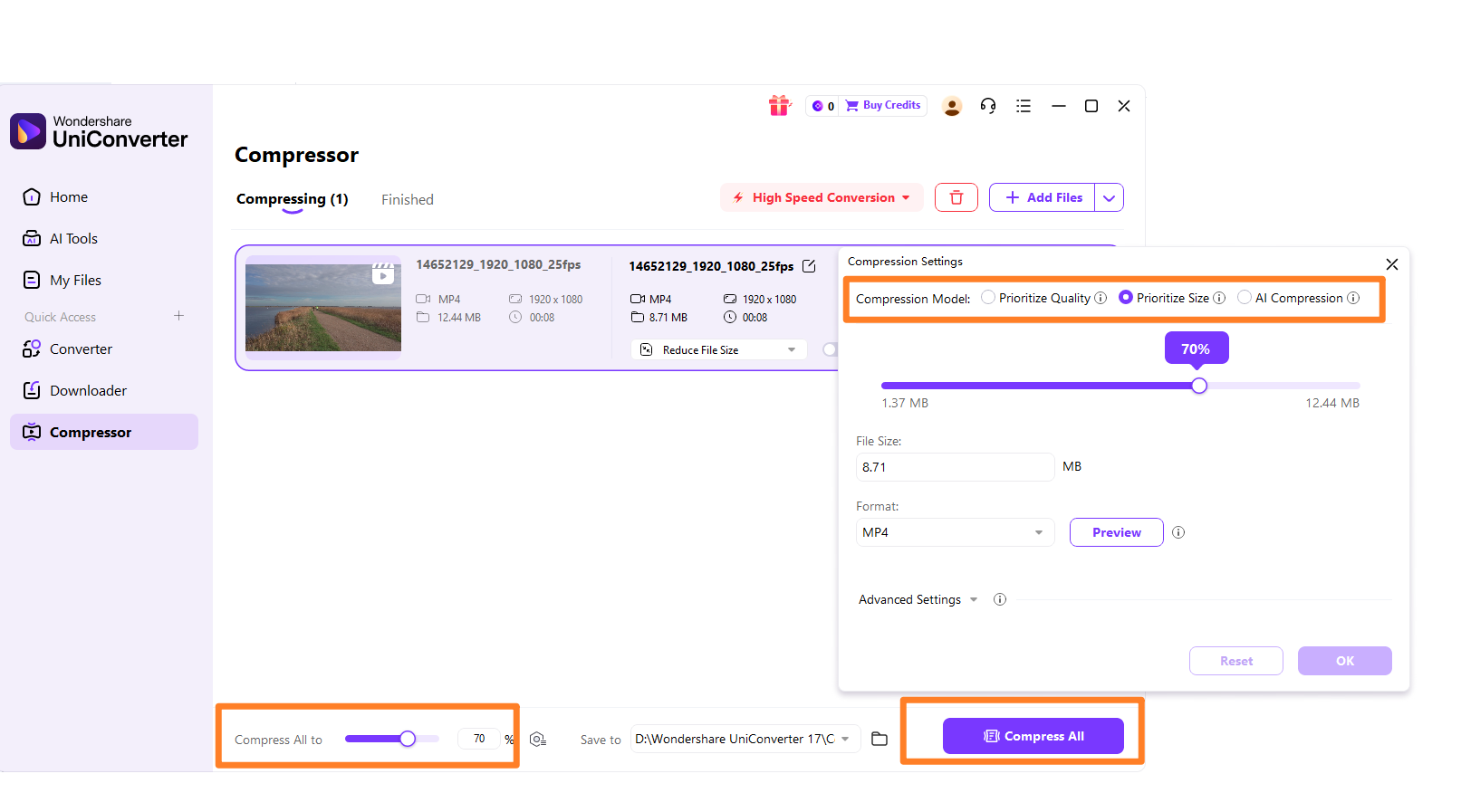
Step 3: Choose Required Parameters
Once my files are loaded, I can adjust the compression settings. I can choose the output format, resolution, bitrate, and even preview the compressed file size. UniConverter offers intelligent compression suggestions to help me maintain quality.
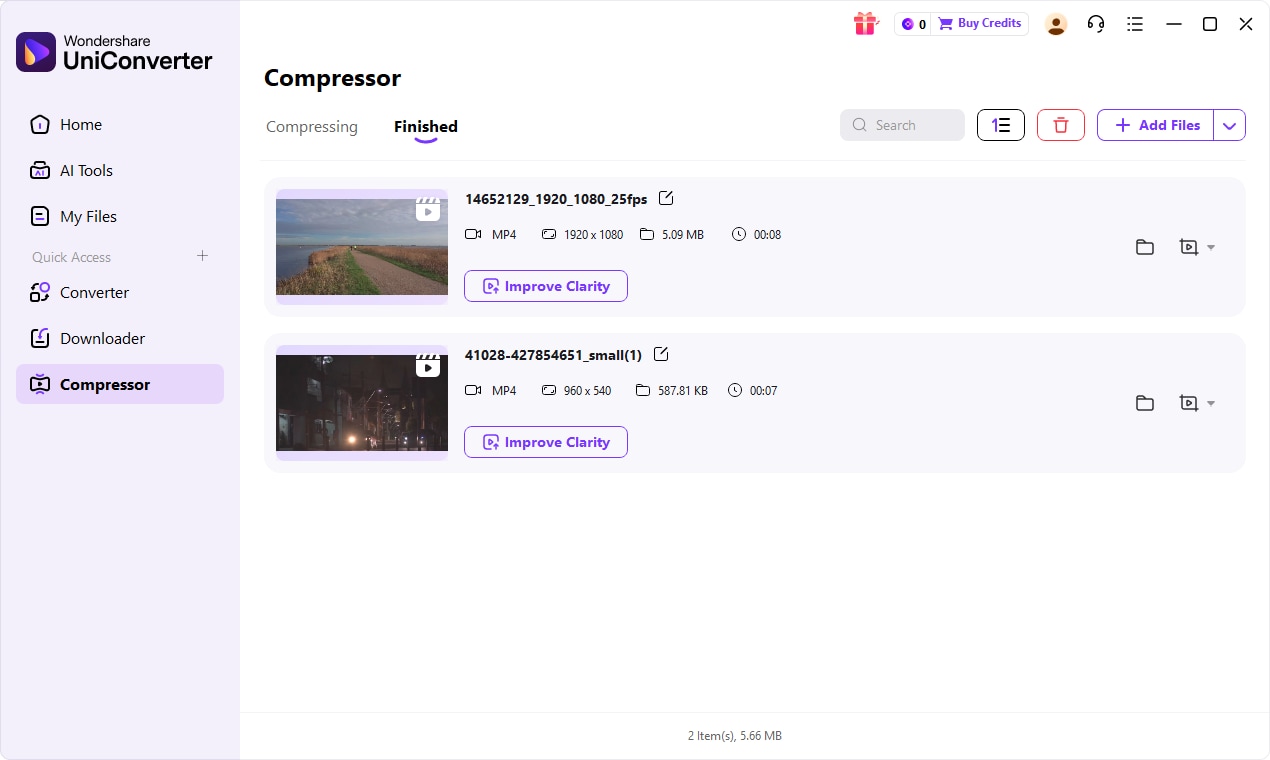
Step 4: Save the Compressed File
After setting my desired parameters, I click the "Compress" button. UniConverter quickly processes the files, and once done, I can find my compressed videos in the specified output folder.

GOM Video Converter Alternative for Better Compression?
Part 7: Conclusion
After thoroughly exploring GOM Video Converter and Video Compressor, I can confidently say that these tools serve a specific, valuable niche in the video processing landscape. For me, they are excellent choices when I need quick, straightforward video format conversions or file size reductions without delving into complex settings. Their intuitive interfaces and broad format support make them highly accessible for casual users, students, and professionals who require basic video preparation for presentations or sharing. However, I've also recognized their limitations; for professional video editors demanding lossless compression or content creators needing advanced editing features, these tools fall short. The potential for quality degradation with aggressive compression, the presence of ads in free versions, and limited customer support are factors I always consider. Ultimately, if I prioritize speed and simplicity for everyday tasks, GOM products are a strong contender. But for more demanding projects where quality and advanced control are paramount, I would look towards more comprehensive solutions like UniConverter.
Part 8: FAQs
-
1. Is GOM Video Converter completely free to use?
While GOM Video Converter offers a free version, it often comes with limitations, such as watermarks on output videos or advertisements. There's usually a paid premium version that unlocks all features and removes these restrictions.
-
2. Can GOM Video Compressor reduce video size without losing quality?
GOM Video Compressor aims to reduce file size while minimizing quality loss, but aggressive compression settings will almost always result in some degree of quality degradation. It's a trade-off between file size and visual fidelity. For truly lossless compression, you'd typically need specialized software or different compression techniques.
-
3. What are the main differences between GOM Video Converter and GOM Video Compressor?
GOM Video Converter's primary function is to change the format of a video file (e.g., MP4 to AVI), ensuring compatibility across different devices. GOM Video Compressor's main purpose is to reduce the file size of a video, often for easier sharing or storage, while keeping the format the same or converting it to a more compressed format.
-
4. Are there any privacy concerns when using GOM products?
Like any software, it's always wise to review the privacy policy. GOM products are generally considered safe, but free versions might collect anonymous usage data or display ads. If you have significant privacy concerns, consider using paid versions or reputable open-source alternatives.
-
5. How does UniConverter compare to GOM products in terms of features and price?
UniConverter is a more comprehensive multimedia toolkit compared to GOM's specialized tools. It offers advanced features like video editing, DVD burning, and screen recording, alongside robust conversion and compression capabilities. While GOM products have free versions, UniConverter is typically a paid software, offering a more feature-rich and ad-free experience, making it a better choice for users needing an all-in-one solution.
