
- GoldWave Overview: GoldWave offers precise audio compression, ideal for detailed manipulation and consistent loudness.
- Core Features: Granular control over parameters, extensive format support, and batch processing are GoldWave's strengths.
- Use Cases: Best for professional audio mastering; less suitable for quick, casual compression due to complexity.
- Comparison: GoldWave balances advanced features with a one-time cost, unlike free Audacity or subscription-based Adobe Audition.
- Risks: Over-compression, outdated UI, and lack of cloud integration are potential drawbacks to consider.
- UniConverter Alternative: UniConverter provides efficient, high-quality compression with a user-friendly interface and robust features.
In this article
- Part 1: What is GoldWave Audio Compressor?
- Part 2: GoldWave Audio Compressor: Core Features, Pros, and Cons
- Part 3: Ideal Use Cases and Limitations of GoldWave Audio Compressor
- Part 4: GoldWave Audio Compressor vs. Competitors
- Part 5: Risks and Pitfalls to Consider
- Part 6: How to Use UniConverter to Compress Efficiently
- Part 7: Conclusion
- Part 8: FAQs
GoldWave Audio Compressor: A Comprehensive Review and Comparison
Welcome to my in-depth review of GoldWave Audio Compressor. In this article, I'll be diving deep into its features, exploring its strengths and weaknesses, and comparing it against its main competitors. As someone who frequently deals with audio editing, I understand the critical need for effective audio compression. Whether you're a professional looking for granular control or a casual user needing quick adjustments, finding the right tool is paramount. This comprehensive analysis aims to equip you with the knowledge to make an informed decision, highlighting not just what GoldWave offers, but also where other solutions might shine brighter for your specific needs.
Part 1: What is GoldWave Audio Compressor?
GoldWave Audio Compressor is a long-standing digital audio editing software that includes a powerful compression tool. It's designed for users who need precise control over their audio dynamics, allowing them to reduce the dynamic range of audio signals, making quiet sounds louder and loud sounds quieter. This process is crucial for achieving consistent loudness and clarity across various audio projects. My experience with GoldWave dates back years, and it has always been positioned as a robust solution for detailed audio manipulation. This review will address whether it still holds up in today's fast-evolving digital audio landscape, especially when compared to newer, more streamlined alternatives.
Understanding Audio Compression in the Digital Age
The necessity of audio compression has grown significantly with the proliferation of digital media.
* Consistent Listening Experience: Compression ensures that listeners don't have to constantly adjust their volume, whether they're streaming a podcast or listening to music.
* Optimized File Sizes: For online distribution, compressing audio can reduce file sizes, leading to faster downloads and smoother streaming.
* Enhanced Clarity: By bringing up quieter elements and taming louder ones, compression can make dialogue and intricate musical passages more intelligible.
* Meeting Broadcast Standards: Many platforms and broadcasters have specific loudness requirements, which compression helps to meet.
Part 2: GoldWave Audio Compressor: Core Features, Pros, and Cons
GoldWave's core strength lies in its comprehensive suite of audio editing tools, with the compressor being a standout feature. It allows you to manipulate various parameters like attack, release, ratio, and threshold, giving you fine-tuned control over how your audio dynamics are managed. Beyond compression, it supports a vast array of audio formats, making it highly versatile for different project types. I've personally used it to clean up old recordings and prepare tracks for online distribution, appreciating its depth of functionality.
* Precise Control: Granular adjustments for attack, release, ratio, and threshold.
* Extensive Format Support: Handles WAV, MP3, OGG, AIFF, VOX, and many more.
* Batch Processing: Efficiently apply compression settings to multiple files.
* Real-time Previews: Listen to changes before applying them permanently.
* Visual Feedback: Waveform display helps in understanding compression effects.
- Pros:
- Precise control over compression parameters for professional audio editing.
- Wide range of supported audio formats for versatile use.
- Batch processing capabilities for efficient workflow.
- Cons:
- Steep learning curve for beginners due to advanced features.
- Outdated user interface compared to modern alternatives.
Part 3: Ideal Use Cases and Limitations of GoldWave Audio Compressor
GoldWave Audio Compressor truly shines in scenarios demanding meticulous audio control, making it a go-to for specific professional tasks. However, its complexity can be a drawback for simpler, more casual needs. Understanding these distinctions is key to deciding if it's the right tool for you.
- Best Use Case: Professional Audio Mastering for Podcasts and Music Production
- Scenario: An independent music producer needs to normalize audio levels and reduce dynamic range for a new album, ensuring consistent sound quality across all tracks. GoldWave's granular control over attack, release, threshold, and ratio allows for meticulous adjustments, crucial for a polished final product. I find its detailed controls indispensable when I'm trying to achieve a specific sonic character for my music.
- Limited Use Case: Quick Compression for Casual Social Media Sharing
- Scenario: A vlogger wants to quickly compress a large audio file from their camera to upload to Instagram, prioritizing speed and simplicity over fine-tuned control. GoldWave's extensive options and multi-step process might be overkill and time-consuming for this casual need. For such tasks, I often look for simpler, more automated solutions that don't require diving into complex settings.
Part 4: GoldWave Audio Compressor vs. Competitors
When it comes to audio compression, GoldWave stands out for its detailed control, but it's not the only player in the field. Let's see how it stacks up against some popular alternatives.
| Feature/Scenario | GoldWave Audio Compressor | Audacity | Adobe Audition | Online Audio Converter |
| Professional Mastering | Excellent (granular control) | Good (basic tools) | Excellent (industry standard) | Poor (limited options) |
| Batch Processing | Yes | Limited | Yes | No |
| Ease of Use (Beginner) | Low | Medium | Medium | High |
| Supported Formats | Extensive | Good | Extensive | Moderate |
| Cost | Paid | Free | Subscription | Free (with ads) |
Key Differentiators:
- GoldWave excels in offering a balance of advanced features for a one-time purchase, appealing to semi-professionals. I appreciate that I don't have to deal with recurring subscriptions. - Audacity is a strong free alternative for basic to intermediate tasks, perfect if you're just starting out or have simple needs. - Adobe Audition is the industry standard for professionals with a subscription model, offering a comprehensive suite for those deeply embedded in creative workflows. - Online tools are best for quick, no-install compression, ideal for one-off tasks where convenience trumps control.
Part 5: Risks and Pitfalls to Consider
While GoldWave offers powerful compression capabilities, it's essential to be aware of potential risks and pitfalls that can impact your audio quality and workflow. My own experiences have taught me to approach advanced tools with caution.
Potential for Over-Compression and Audio Artifacts
One of the biggest dangers with any powerful compressor, including GoldWave, is the risk of over-compression. If you push the settings too hard, you can introduce unwanted audio artifacts like pumping, breathing, or a squashed, lifeless sound. This can ruin the natural dynamics of your audio, making it sound unnatural and fatiguing to listen to. I've made this mistake myself, and it's a steep learning curve to find the right balance.
Compatibility Issues with Newer Operating Systems
As an older piece of software, GoldWave occasionally faces compatibility challenges with the latest operating systems. While generally stable, I've encountered minor glitches or unexpected behavior after major OS updates. This can be frustrating, especially if you rely on it for critical projects and suddenly find it not performing optimally. Always check for the latest updates or community forums if you run into such issues.
Lack of Cloud Integration for Collaborative Projects
In today's collaborative environment, cloud integration is almost a necessity. GoldWave, being a desktop-centric application, lacks built-in cloud features. This means sharing files and collaborating on projects can be more cumbersome, requiring manual uploads and downloads. If you're working with a team across different locations, this can significantly slow down your workflow.
Limited Customer Support for Free/Older Versions
While paid versions typically come with some level of support, users of older or free versions might find customer support to be limited. This can be a significant drawback if you encounter complex technical issues or need guidance on advanced features. Relying on community forums or self-help resources might be your only option, which isn't always ideal for urgent problems.
Part 6: How to Use UniConverter to Compress Efficiently
When other tools don’t perform reliably—whether the compression is unstable, the output quality drops too much, or batch processing is missing—UniConverter is a solid alternative. It handles video compression, audio compression, and image compression in one place, which makes the workflow much simpler when different media types are involved. I also appreciate its user-friendly interface, broad format support, and GPU acceleration, all of which help make processing faster and more efficient. For video files, it can also help compress videos without quality loss as much as possible, making it a practical all-in-one toolkit for everyday media tasks.
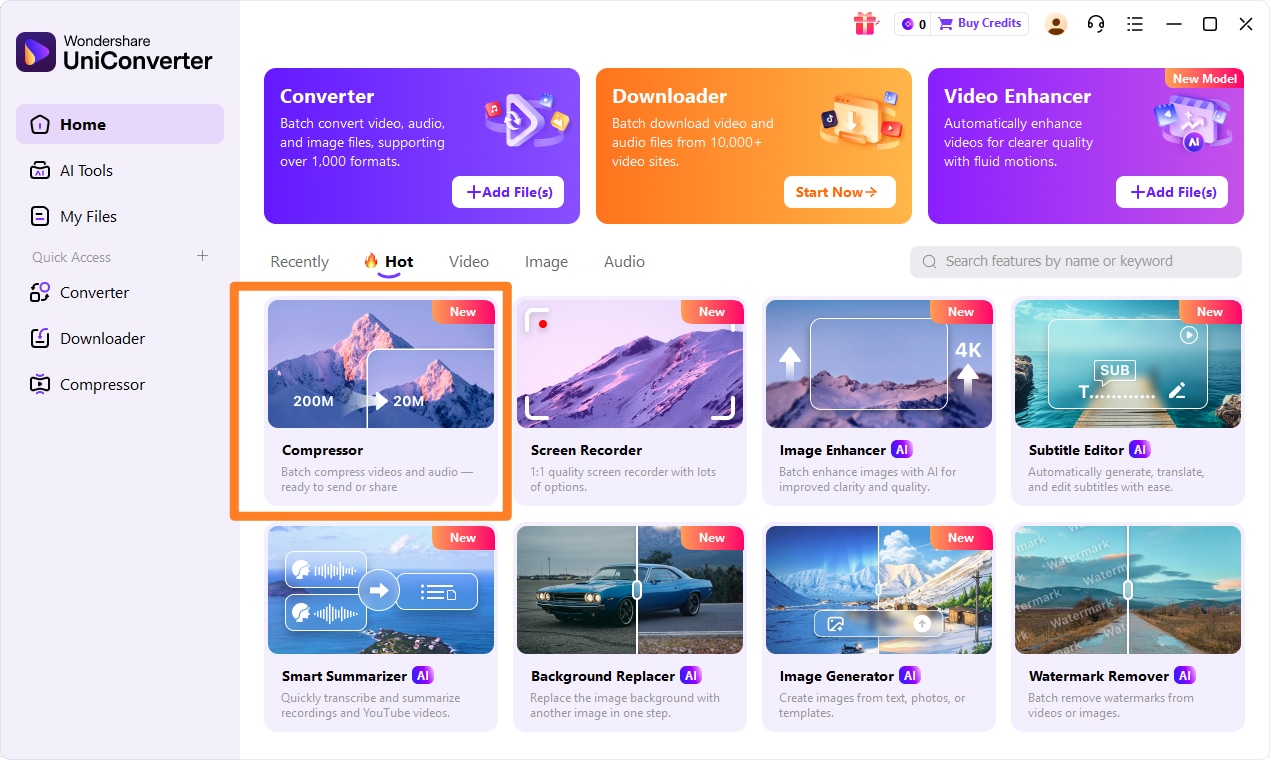
Step 1: Open UniConverter and Choose Compressor
Launch UniConverter on your computer. From the main interface, navigate to the "Compressor" tool.
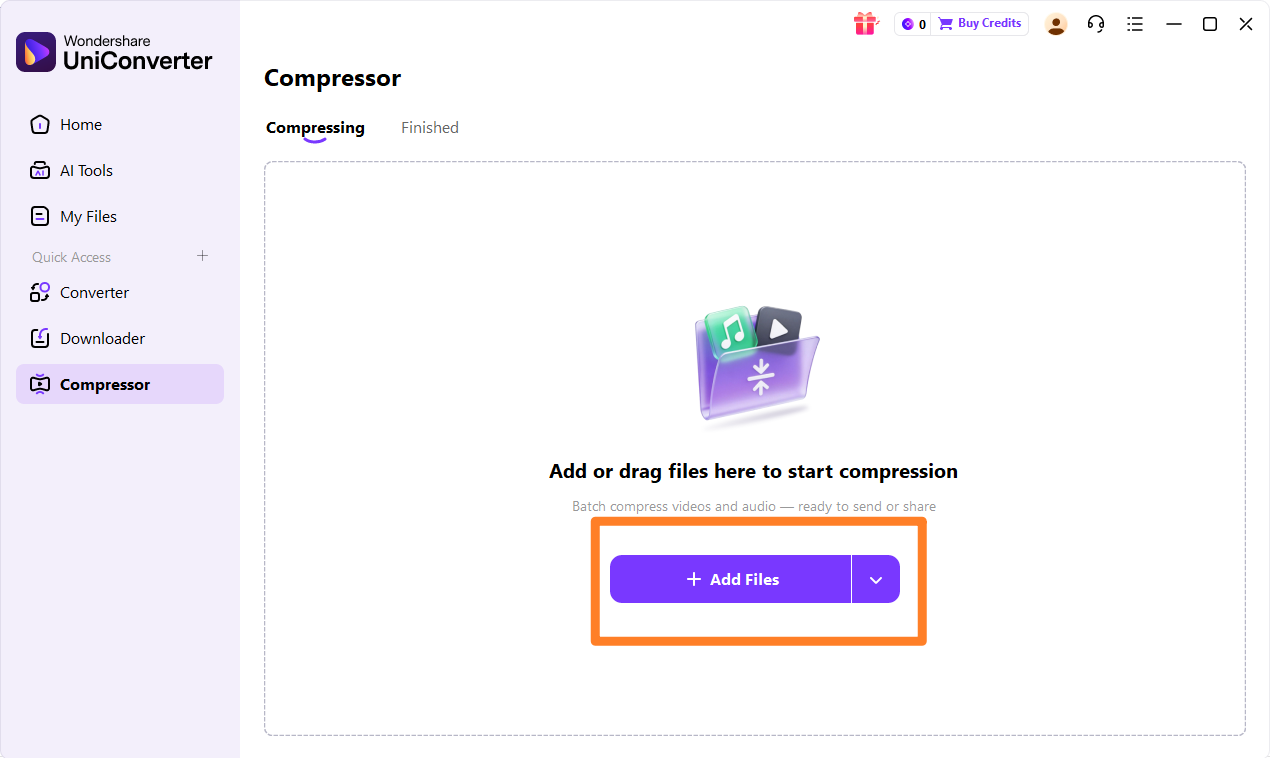
Step 2: Upload the Video, Audios or Images
Drag and drop your audio files into the compressor window, or click "Add Files" to browse and select them.
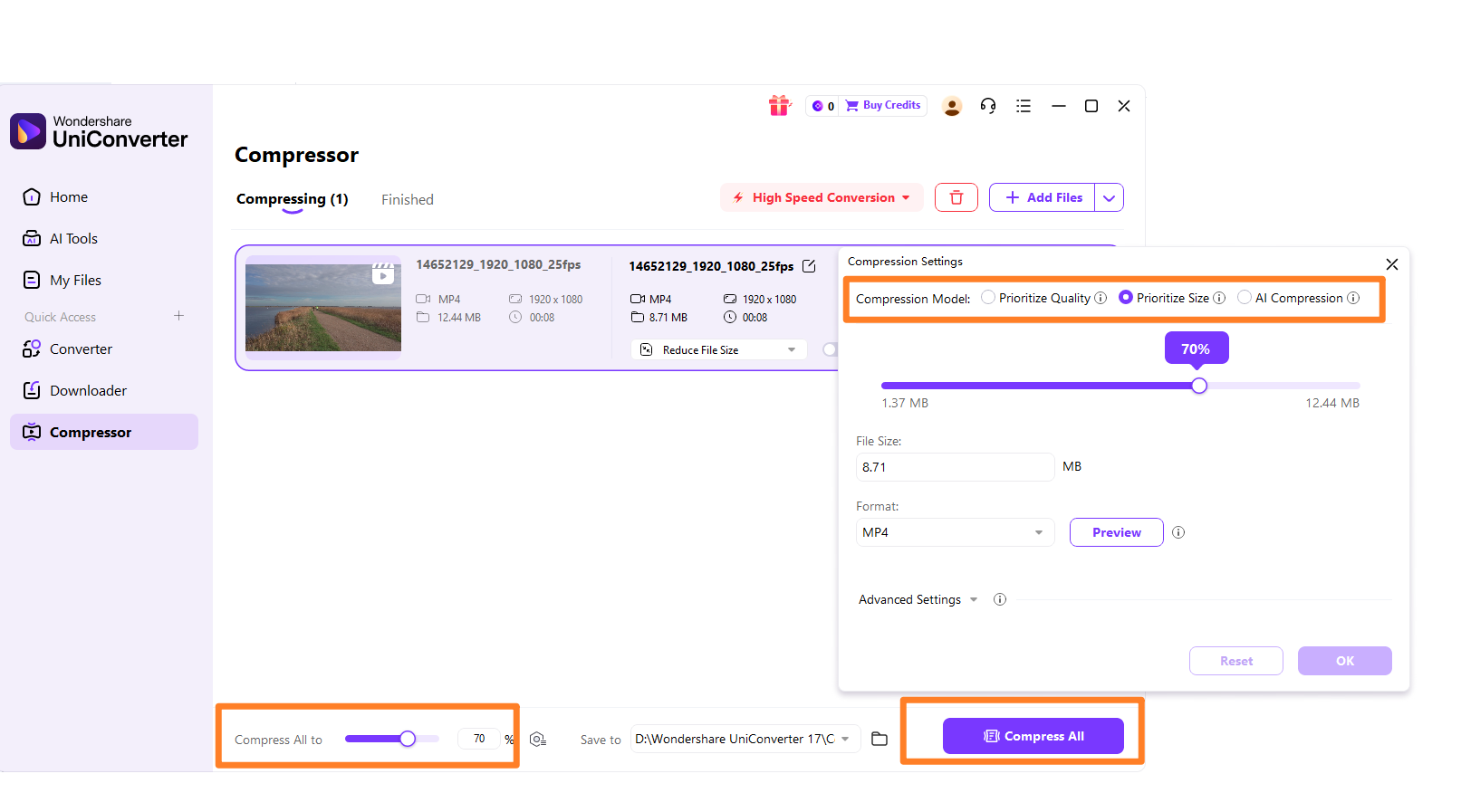
Step 3: Choose Required Parameters
Adjust the compression settings such as output format, quality, and file size. You can use presets or customize them.
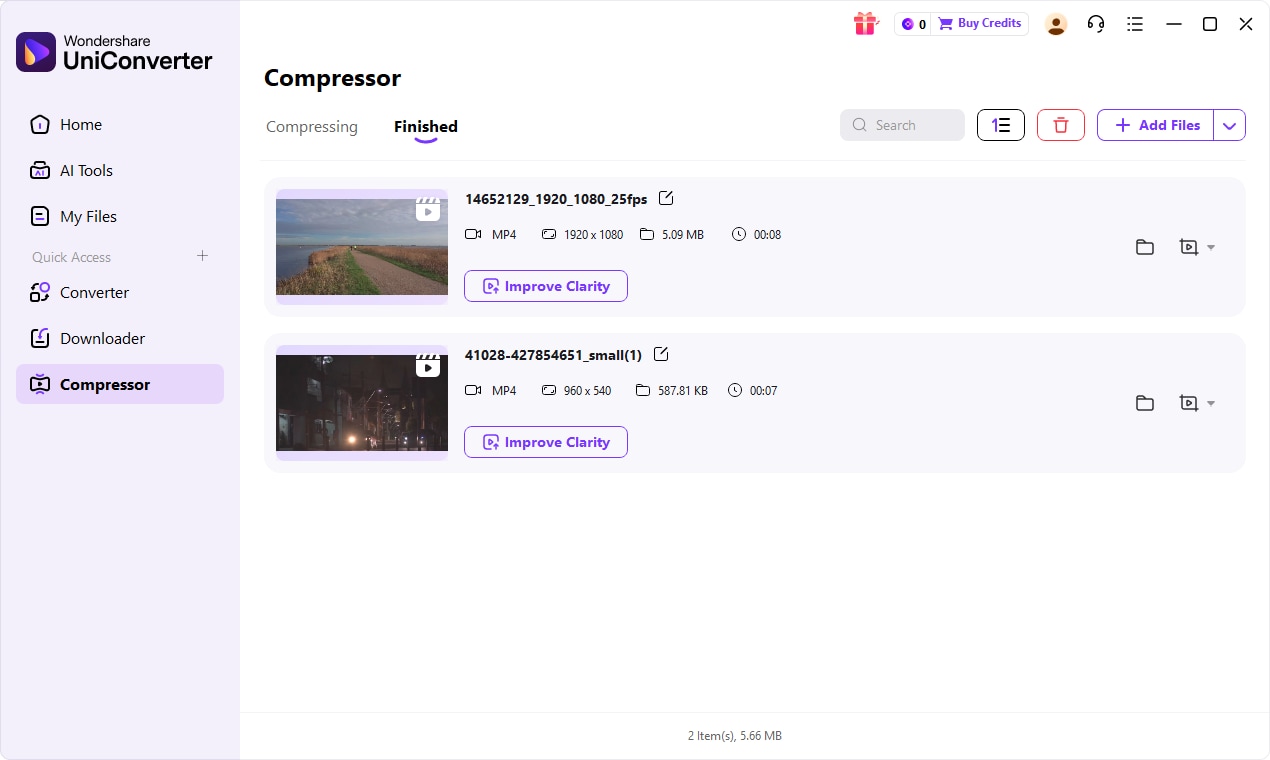
Step 4: Save the Compressed File
Click the "Compress" button. Once the process is complete, you can find your compressed audio files in the designated output folder.

GoldWave Audio Compressor Alternative?
Part 7: Conclusion
In conclusion, the GoldWave Audio Compressor review reveals it as a powerful and highly capable tool, particularly for experienced users and those requiring granular control over their audio dynamics. Its extensive feature set and one-time purchase model make it an attractive option for semi-professionals and dedicated hobbyists. However, its dated interface and steeper learning curve might deter beginners or those seeking quick, casual compression. For such users, free alternatives like Audacity offer a good starting point, while industry professionals might lean towards Adobe Audition for its comprehensive ecosystem. For a balanced approach that combines ease of use with robust features, especially for batch processing and diverse media types, UniConverter stands out as an excellent modern alternative. Ultimately, your choice should align with your specific needs, technical proficiency, and budget.
Part 8: FAQs
-
1. Is GoldWave Audio Compressor suitable for beginners?
GoldWave has a steeper learning curve due to its advanced features. Beginners might find simpler tools more approachable initially.
-
2. Can GoldWave compress video files?
GoldWave is primarily an audio editor and compressor. While it can extract audio from video, it doesn't compress video files directly. For video compression, I'd recommend a dedicated tool like UniConverter.
-
3. What are the main advantages of using a dedicated audio compressor over general-purpose software?
Dedicated audio compressors like GoldWave offer more precise control over compression parameters, leading to higher quality results and better dynamic range management.
-
4. Does GoldWave support lossless audio compression?
GoldWave supports various audio formats, including lossless ones. However, compression inherently involves reducing file size, which often means some data loss for lossy formats.
-
5. How does GoldWave compare to online audio compressors in terms of security?
Desktop software like GoldWave processes files locally, offering better privacy and security compared to online tools where files are uploaded to a server. If privacy is a major concern, desktop software like UniConverter is always a safer bet.
