
- Freemake Audio Converter: Best for basic format changes, simple compression, and casual users needing quick conversions.
- Limitations: Freemake lacks advanced editing, precise compression control, and may include adware or privacy risks.
- UniConverter: Offers robust features, high-fidelity output, ad-free experience, and dedicated support for demanding tasks.
- Decision: Choose Freemake for quick, free conversions; opt for UniConverter for precision, reliability, and comprehensive audio management.
In this article
- Part 1: What is Freemake Audio Converter and Audio Compressor?
- Part 2: Freemake Audio Converter: Core Features, Pros, and Cons
- Part 3: Freemake Audio Converter: Ideal Users and Scenarios
- Part 4: Freemake Audio Converter & Alternatives: A Comparative Analysis
- Part 5: Risks and Pitfalls to Consider
- Part 6: How to Use UniConverter to Compress High-Quality Audio
- Part 7: Conclusion
- Part 8: FAQs
Freemake Audio Converter vs. Audio Compressor: A Scenario-Based Comparison
When it comes to managing your audio files, whether it's converting them to a different format or reducing their size for easier storage and sharing, you've likely come across various tools. Among the myriad options, Freemake Audio Converter and Audio Compressor stand out as popular choices, each promising to simplify these tasks. This review delves into a detailed comparison, exploring their features, ideal use cases, and potential pitfalls. My goal is to equip you with the insights needed to make an informed decision, ensuring your audio management experience is as seamless and efficient as possible.
Part 1: What is Freemake Audio Converter and Audio Compressor?
In today's digital age, audio files are ubiquitous, from music libraries to podcasts and voice recordings. However, these files often come in various formats and sizes, posing challenges for compatibility and storage. This is where tools like Freemake Audio Converter and Audio Compressor become indispensable. Freemake Audio Converter is primarily designed to change the format of audio files, allowing you to play them on different devices or platforms that might not support the original format. Audio Compressor, on the other hand, focuses on reducing the file size, which is crucial for saving disk space or facilitating faster sharing over the internet.
The Landscape of Audio Conversion and Compression Tools
* Format Incompatibility: Many devices and software have specific format requirements, making conversion tools essential.
* Storage Limitations: Large audio files can quickly consume valuable storage space on your devices.
* Sharing Challenges: Sending or uploading large audio files can be time-consuming and bandwidth-intensive.
* Quality vs. Size: Users often seek a balance between reducing file size and maintaining acceptable audio quality.
Part 2: Freemake Audio Converter: Core Features, Pros, and Cons
Freemake Audio Converter is a desktop application that I've used for years to handle various audio conversion needs. It's known for its straightforward approach to changing audio formats.
Core Features:
* Extensive Format Support: Converts between a wide array of formats like MP3, WMA, WAV, FLAC, AAC, M4A, OGG.
* Extract Audio from Video: Allows you to pull audio tracks directly from video files.
* Merge Audio Files: Combine multiple audio files into a single track.
* Basic Audio Editing: Offers simple cut and trim functionalities.
* Batch Conversion: Process multiple files simultaneously, saving significant time.
Pros:
* Wide range of supported audio formats for conversion.
* User-friendly interface for quick operations.
* Batch processing capability for multiple files.
Cons:
* Limited advanced audio editing features.
* Potential for bundled adware during installation.
Part 3: Freemake Audio Converter: Ideal Users and Scenarios
From my experience, Freemake Audio Converter shines in specific situations, catering to users who prioritize simplicity and broad format support.
Best Use Case: Converting a Large Music Library for Different Devices
I often find myself needing to convert my extensive music collection to be compatible with various devices, like an old MP3 player that only supports WAV or a new smartphone that prefers AAC. Freemake Audio Converter is perfect for this. I can drag and drop hundreds of songs, select the desired output format, and let it batch convert everything efficiently. It saves me the hassle of converting each file individually and ensures my music is playable everywhere I go.
Limitation Scenario: Professional Audio Mastering and Advanced Compression Needs
However, when I'm working on a professional audio project that requires precise compression ratios, advanced equalization, or intricate sound engineering, Freemake Audio Converter falls short. Its compression capabilities are basic, often resulting in a noticeable drop in quality if I push for significant file size reduction. For tasks demanding high-fidelity output and granular control over audio parameters, I have to turn to more specialized software. It's simply not designed for the nuanced demands of professional audio mastering or complex compression algorithms.
Part 4: Freemake Audio Converter & Alternatives: A Comparative Analysis
When I look at audio tools, I consider several factors beyond just conversion. Here's how Freemake Audio Converter stacks up against some other popular options, including UniConverter.
| Feature/Product | Freemake Audio Converter | UniConverter | Audacity | HandBrake |
| Compression Ratio Control | Basic | Advanced | Manual/Advanced | Basic (Video Focus) |
| Output Quality Options | Standard | High-Fidelity | Customizable | Customizable |
| Batch Processing | Yes | Yes | Limited | Yes |
| User Interface | Simple | Professional | Complex | Moderate |
| Price | Free | Paid (Free Trial) | Free (Open Source) | Free (Open Source) |
| Customer Support | Community/FAQ | Dedicated | Community | Community |
| Security | Adware Risk | High | High | High |
From my perspective, Freemake Audio Converter is great for quick, straightforward conversions, especially if you're not overly concerned with the most advanced compression settings or absolute pristine quality. UniConverter, on the other hand, offers a more robust solution, particularly if you need precise control over output quality and compression ratios, making it suitable for more demanding tasks. Audacity is fantastic for detailed audio editing and offers powerful compression tools, but its interface can be daunting for beginners. HandBrake, while primarily a video transcoder, can also handle audio compression, though it's not its main strength. For a balance of ease of use and advanced features, UniConverter often comes out on top for me.
Part 5: Risks and Pitfalls to Consider
While free software like Freemake Audio Converter can be appealing, I've learned to be cautious about potential risks and pitfalls, especially when dealing with audio files.
Data Privacy Concerns with Free Software
When I use free software, I always wonder about my data. Many free tools, including some versions of Freemake, might collect anonymous usage data or even more personal information. It's crucial to review their privacy policies, if available, to understand what you're agreeing to. I've found that sometimes, the "free" aspect comes at the cost of your privacy.
Presence of Advertisements and Upsells
A common trade-off for free software is the presence of ads or constant prompts to upgrade to a "premium" version. Freemake Audio Converter, in my experience, can sometimes display pop-up ads or try to upsell you on other products during installation or even while using the application. This can be disruptive and detract from the user experience.
Potential for Quality Degradation During Compression
While compression is about reducing file size, the method used can significantly impact audio quality. With basic compressors, I've noticed that aggressive compression settings can lead to audible artifacts, a loss of dynamic range, or a "muffled" sound. It's a delicate balance, and not all tools handle it equally well. Always test with a small file first.
Compatibility Issues with Newer Operating Systems
Free and older software sometimes struggles to keep up with the rapid updates of operating systems. I've encountered instances where Freemake Audio Converter had compatibility issues with the latest Windows or macOS versions, leading to crashes or unexpected behavior. This can be frustrating when you rely on the tool for your daily tasks.
Lack of Dedicated Customer Support
One of the biggest drawbacks of free software is the absence of dedicated customer support. If I run into a bug or have a question, I'm usually left to scour online forums or FAQs. This can be a significant time sink, especially if the issue is complex. Paid alternatives often provide more reliable and responsive support channels.
Part 6: How to Use UniConverter to Compress High-Quality Audio
For workflows where batch compression is missing, output quality is inconsistent, or file size reduction comes at too high a visual cost, UniConverter is the option I usually prefer. It handles both audio compression and video compression in a much smoother, more reliable way, without the clutter of ads or a complicated setup. Its wide format support and GPU acceleration also make processing faster, especially when working with larger files or multiple items at once. For video projects, it can also help compress videos without quality loss as much as possible, which makes it a practical all-in-one choice for everyday media management.
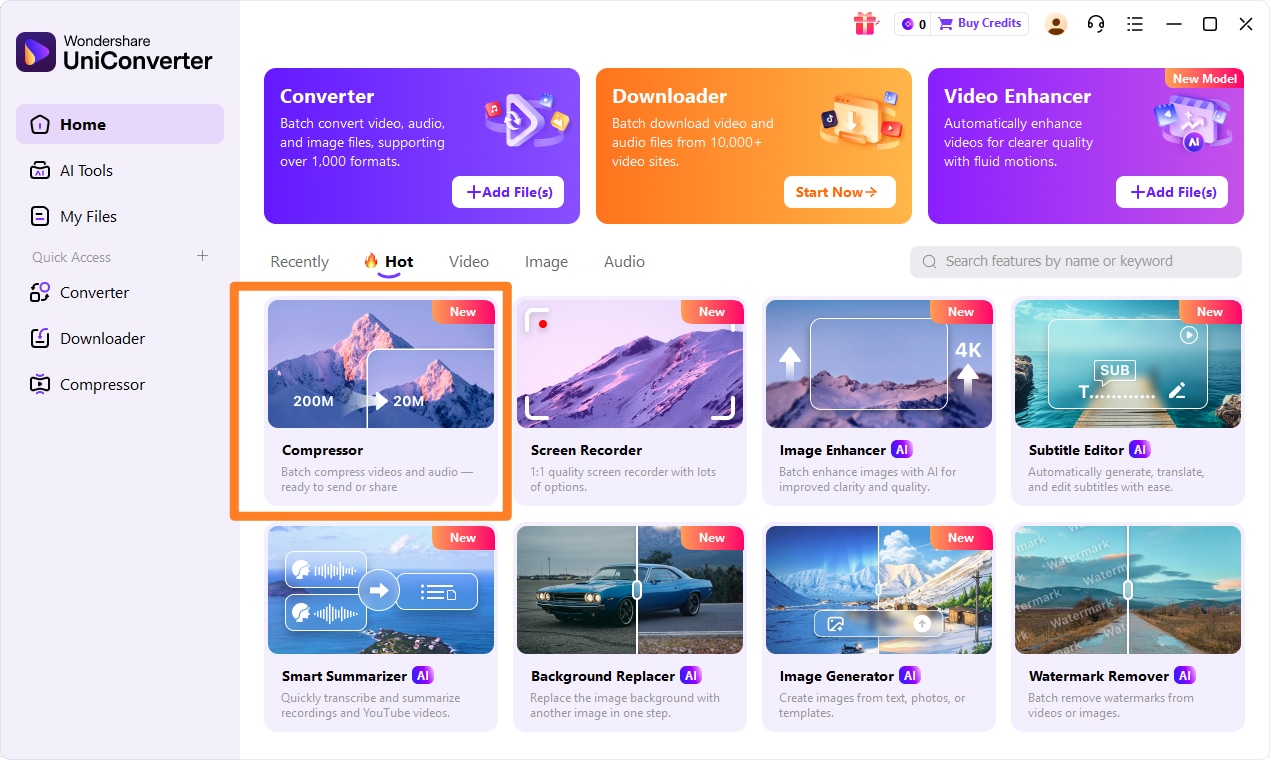
Step 1: Open UniConverter and Choose Compressor
Launch Wondershare UniConverter on your computer. Once the main interface loads, navigate to the “Compressor” tool from the homepage or the toolbox section. This feature is specifically designed to reduce file size while maintaining optimal quality, making it ideal for videos, audio files, and images.
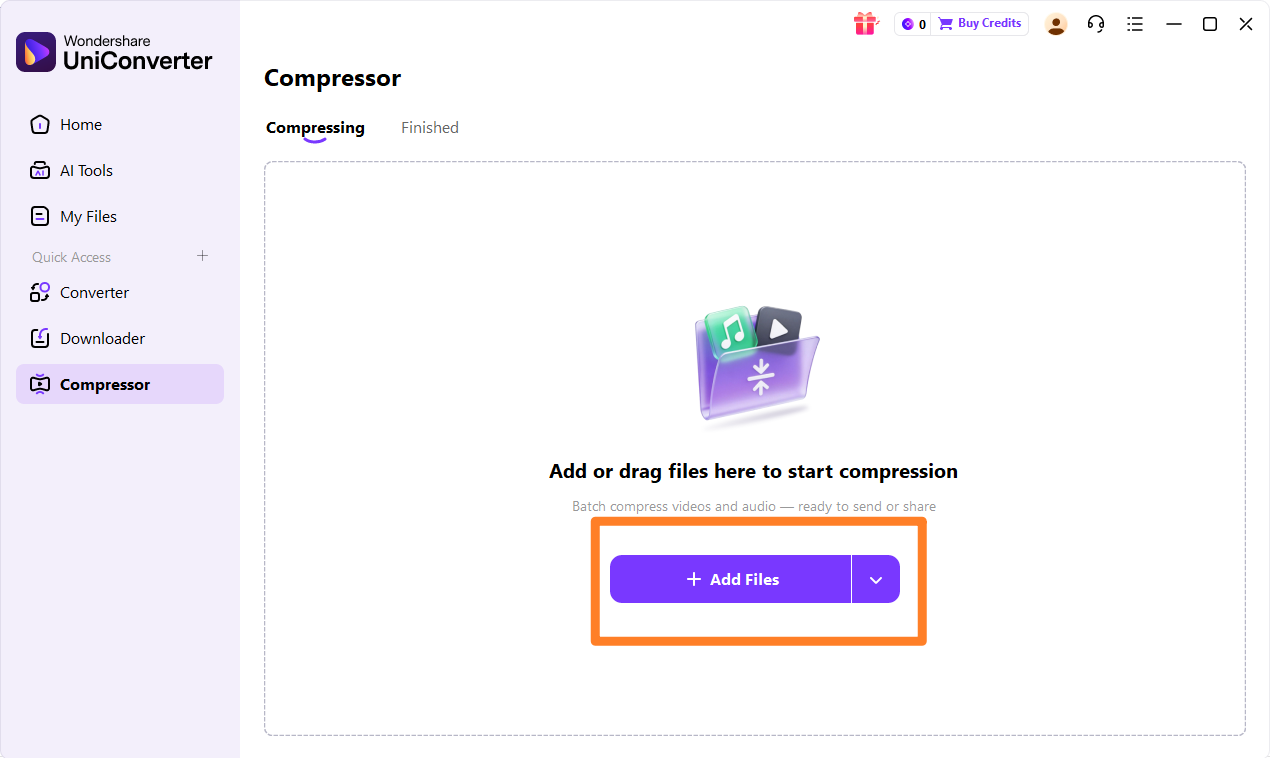
Step 2: Upload the Video, Audios or Images
Click the “+ Add Files” button to import the media you want to compress. You can also drag and drop files directly into the interface for quicker access. UniConverter supports a wide range of formats, so you can upload videos, audio tracks, or images without worrying about compatibility.
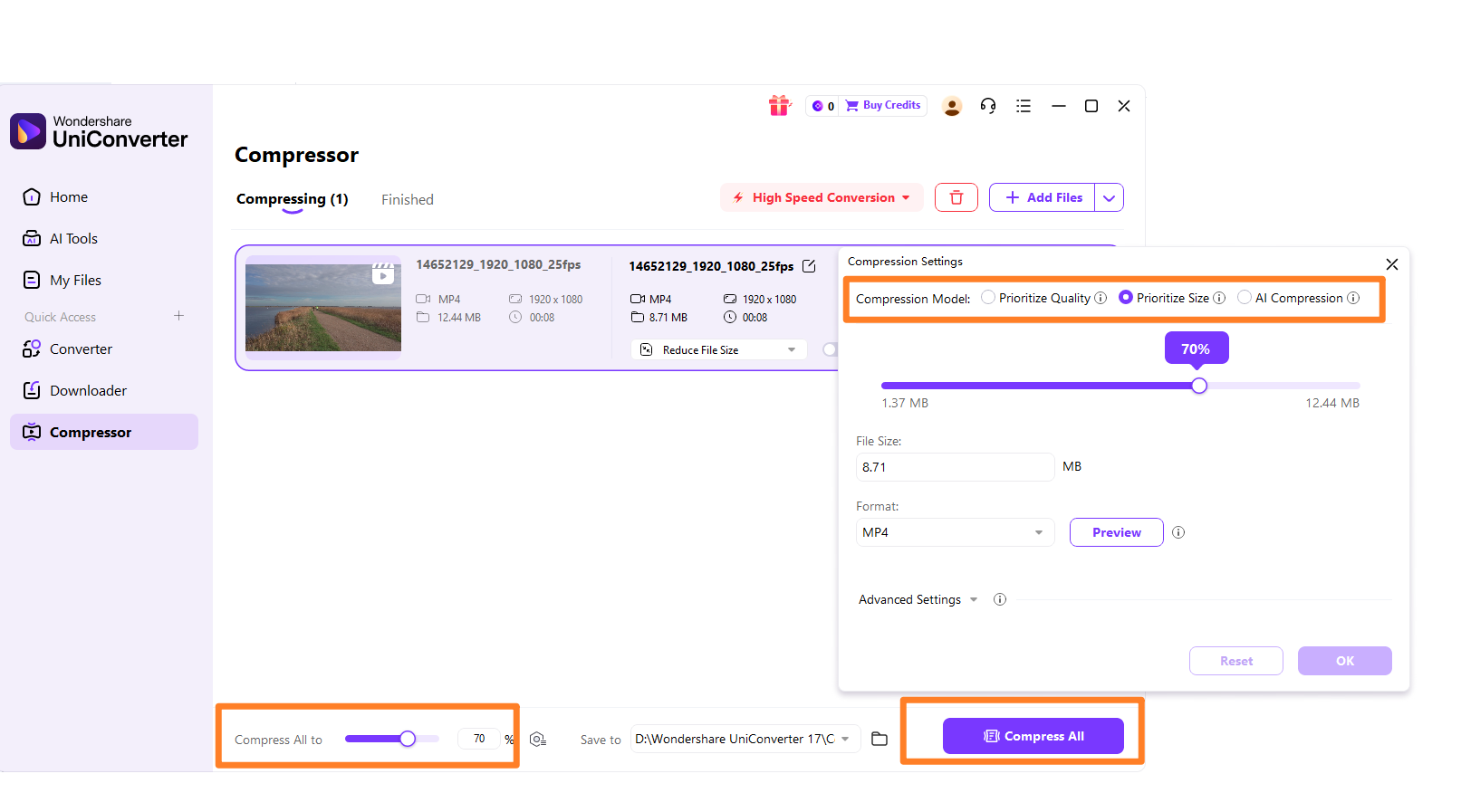
Step 3: Choose Required Parameters
After uploading your files, customize the compression settings according to your needs. You can adjust parameters such as file size, resolution, bitrate, format, and quality level. UniConverter often provides a preview or estimated output size, helping you balance compression efficiency and output quality.
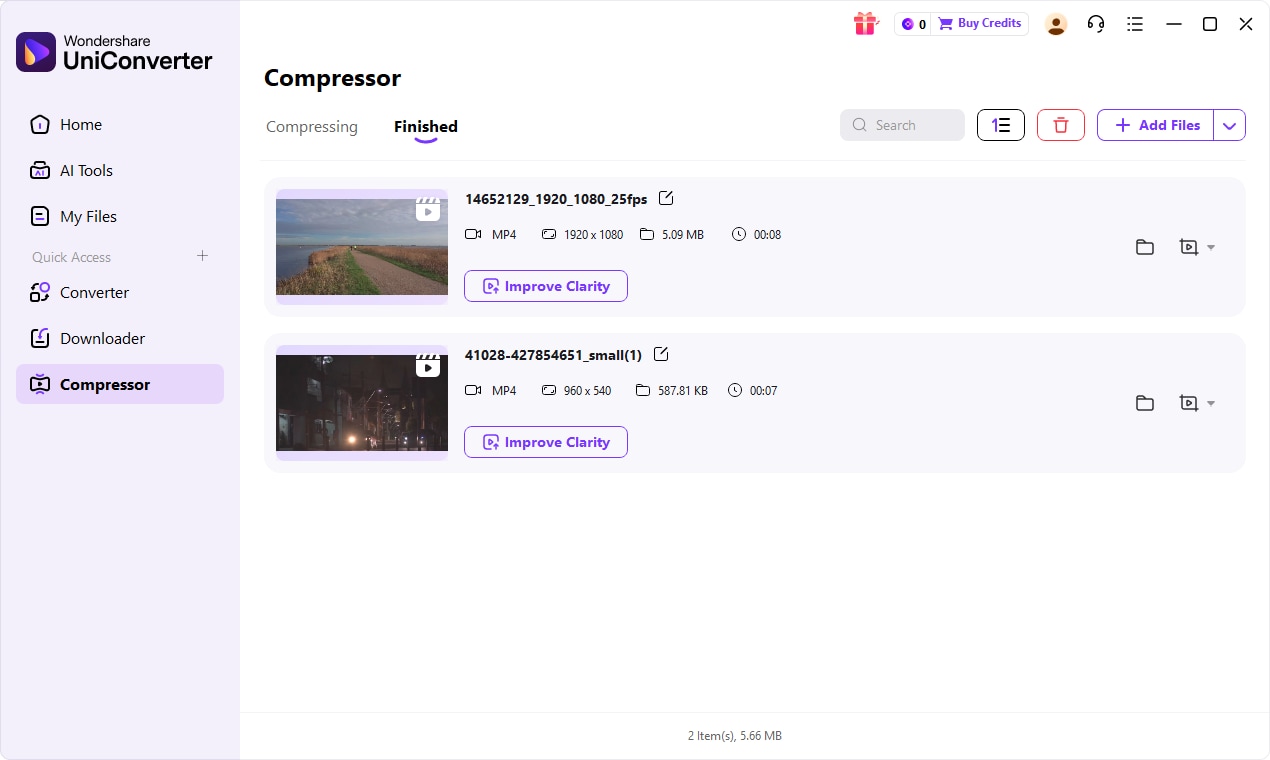
Step 4: Save the Compressed File
After uploading your files, customize the compression settings according to your needs. You can adjust parameters such as file size, resolution, bitrate, format, and quality level. UniConverter often provides a preview or estimated output size, helping you balance compression efficiency and output quality.

Seeking a Better Alternative to Freemake Audio Converter?
Part 7: Conclusion
In conclusion, my journey through audio management tools has shown me that while Freemake Audio Converter offers a straightforward and free solution for basic format conversion and simple compression, it comes with limitations. Its ease of use and broad format support make it ideal for casual users who need quick conversions for personal use, such as adapting a music library for various devices. However, for those requiring advanced compression controls, high-fidelity output, or a guarantee against bundled adware and privacy concerns, its capabilities fall short. The potential for quality degradation, lack of dedicated support, and occasional compatibility issues are significant drawbacks. For professionals or users who demand precision, reliability, and a clean, ad-free experience, exploring alternatives like UniConverter is a much wiser investment. UniConverter provides a more comprehensive and stable platform, balancing powerful features with user-friendliness, ensuring your audio files are managed efficiently and without compromise.
Part 8: FAQs
-
1. Is Freemake Audio Converter completely free to use?
While the basic version is free, it may include ads or offer premium features for purchase, and sometimes bundles third-party software during installation.
-
2. Can Freemake Audio Compressor reduce file size without losing quality?
Some quality loss is inherent in compression, but Freemake aims to minimize it for common formats. For truly lossless or high-fidelity compression, more advanced tools like UniConverter or specialized audio software are generally recommended.
-
3. What are the main differences between audio conversion and audio compression?
Audio conversion changes the file format (e.g., MP3 to WAV), making it compatible with different players or software. Audio compression, on the other hand, reduces the file size, often within the same format, to save storage space or facilitate faster sharing.
-
4. Are there any privacy risks associated with using free audio software?
Yes, free software can sometimes collect user data, display targeted advertisements, or bundle third-party applications. It's important to review terms and conditions and be cautious about what you install.
-
5. Why is UniConverter recommended as an alternative?
UniConverter offers a more robust feature set, better output quality control, a cleaner user experience without ads or bundled software, and dedicated customer support, making it a superior choice for both casual and professional users seeking reliable audio management.
