
- Value: Freemake offers free, simple audio conversion and compression for basic needs.
- Comparison: It's user-friendly but lacks advanced features and has potential adware, unlike UniConverter.
- Decision: Choose Freemake for quick, casual tasks; opt for UniConverter for robust, secure, ad-free experience.
- Pitfalls: Beware of bundled software and potential privacy concerns with Freemake installations.
- Efficiency: UniConverter provides efficient, high-quality audio/video compression with extensive format support.
- Recommendation: For professional or privacy-conscious users, UniConverter is a superior, safer alternative.
In this article
- Part 1: What is Freemake Audio Converter & Audio Compressor?
- Part 2: Freemake Audio Converter & Audio Compressor: Core Features, Pros & Cons
- Part 3: Freemake Audio Converter & Audio Compressor: Ideal Users & Use Cases
- Part 4: Freemake Audio Converter & Audio Compressor & Competitors: A Comparative Analysis
- Part 5: Risks & Pitfalls When Using Freemake Audio Converter & Audio Compressor
- Part 6: How to Use UniConverter to Compress Audio and Video Efficiently
- Part 7: Conclusion
- Part 8: FAQs
When I'm looking to manage my audio files, whether it's for converting formats or compressing them for smaller sizes, Freemake Audio Converter & Audio Compressor review often pops up as a free option. It's known for its straightforward approach, aiming to simplify tasks that can sometimes feel overly complicated with other software. This review will delve into its core functionalities, weigh its pros and cons, and compare it against popular alternatives like Audacity and UniConverter, helping you decide if it’s the right tool for your audio needs. I'll focus on real-world scenarios and potential pitfalls, giving you an honest assessment to guide your choices.
Part 1: What is Freemake Audio Converter & Audio Compressor?
Freemake Audio Converter & Audio Compressor is a desktop application designed to help you convert audio files between various formats and reduce their file size through compression. It’s part of the Freemake suite of multimedia tools, which generally targets users looking for free, easy-to-use solutions for common media tasks. My experience with Freemake products suggests they prioritize simplicity and accessibility, making them appealing to those who aren't tech-savvy or don't want to invest in premium software. This review aims to address whether its simplicity comes at a cost and if it truly meets the diverse needs of today's audio users.
Addressing Common User Pain Points in Audio Management:
* Complexity of Professional Tools: Many powerful audio tools are overwhelming for casual users.
* Compatibility Issues: Different devices and platforms require specific audio formats.
* Storage Limitations: Large audio files consume significant space on devices.
* Cost of Premium Software: Users often seek free or affordable alternatives for basic tasks.
Part 2: Freemake Audio Converter & Audio Compressor: Core Features, Pros & Cons
Freemake Audio Converter & Audio Compressor offers a range of core capabilities that make it a go-to for many. Its primary function is to convert audio files into different formats, supporting a wide array from MP3 to WAV, FLAC, AAC, and WMA. Beyond conversion, it also includes an audio compressor feature, allowing you to reduce file sizes, which is incredibly useful for saving space or sharing files more easily. I've found its batch processing capability particularly helpful when dealing with large music libraries, as it saves a lot of time. The interface is generally intuitive, making it easy to navigate even for first-time users.
Pros
* Versatile Audio Format Conversion for Diverse Devices: I can easily convert my music for my phone, car, or home stereo.
* Intuitive User Interface for Quick Audio Compression: It’s straightforward to reduce file sizes without digging through complex menus.
* Batch Processing Capability for Large Audio Libraries: I can convert or compress an entire album in one go, which is a huge time-saver.
Cons
* Potential for Bundled Adware/Bloatware During Installation: I've had to be very careful during installation to avoid unwanted extra software.
* Limited Advanced Audio Editing Features: If I need to trim, merge, or apply effects, I have to look elsewhere.
Part 3: Freemake Audio Converter & Audio Compressor: Ideal Users & Use Cases
Freemake Audio Converter & Audio Compressor is best suited for individuals who need a quick and easy solution for basic audio tasks without diving into complex settings. If you're someone who just wants to convert a few songs for your phone or compress a podcast to save space, this tool is designed for you. It's not for the audiophile or professional who demands granular control over every aspect of their audio.
Best Use Case: Quick Audio Preparation for Mobile Devices
Scenario: I have a vast collection of high-quality FLAC music files on my computer, but my smartphone has limited storage and prefers MP3s. I need to convert hundreds of these tracks to MP3 format, ensuring a reasonable file size (e.g., 192kbps) so they fit on my device without noticeable quality degradation for casual listening. Freemake allows me to drag and drop my entire FLAC library, select MP3 as the output, choose a quality preset, and convert them all in one batch, making the process incredibly efficient for mobile syncing.
Limited Use Case: Professional Audio Production & Mastering
Scenario: As an audio engineer, I'm working on a studio project that requires precise dynamic range compression, advanced equalization, noise reduction, and multi-track editing. I need to control attack, release, threshold, and ratio parameters for compression, apply specific EQ curves to individual instruments, and remove subtle background hums. Freemake Audio Converter & Audio Compressor would be entirely inadequate for this task, as it lacks the sophisticated tools and real-time monitoring capabilities necessary for professional audio production and mastering. I would instead turn to dedicated digital audio workstations (DAWs) like Pro Tools or Logic Pro.
Part 4: Freemake Audio Converter & Audio Compressor & Competitors: A Comparative Analysis
When I look at audio tools, I consider ease of use, control over compression, batch processing, and security. Freemake Audio Converter & Audio Compressor shines in simplicity for basic tasks, making it incredibly user-friendly. However, when I need more control or a cleaner experience, I turn to other options.
| Feature/Scenario | Freemake Audio Converter & Audio Compressor | Audacity | HandBrake | UniConverter |
| Ease of Use (Basic Conversion) | Very High | Moderate | Moderate | Very High |
| Audio Compression Control | Basic | Advanced | Basic (Video-focused) | Advanced |
| Batch Processing | Yes | Limited | Yes | Yes |
| Adware/Bundled Software | Potential | No | No | No |
| Supported Formats | Extensive | Extensive | Extensive | Extensive |
| Output Quality | Good | Excellent | Good | Excellent |
| Customer Support | Limited | Community | Community | Dedicated |
| Security | Moderate (due to bundles) | High | High | High |
Freemake excels in user-friendliness for basic conversions and compression, making it a quick pick for simple tasks. Audacity offers much more granular control over audio compression and editing, making it ideal for those who need to fine-tune their sound, though its interface can be a bit daunting initially. HandBrake, while excellent for video, has basic audio capabilities that are secondary to its main function. UniConverter strikes a great balance, offering both ease of use and advanced features without the bundled software concerns, providing a more robust and secure experience for a wider range of needs.
Part 5: Risks & Pitfalls When Using Freemake Audio Converter & Audio Compressor
Using Freemake Audio Converter & Audio Compressor, especially the free version, comes with certain risks and potential pitfalls that I've learned to be wary of. While the software itself performs its core functions adequately, the surrounding experience can be less than ideal. It's important to be aware of these issues before committing to using it.
Privacy Concerns with Data Collection
I've often wondered about the data collection practices of free software. Freemake, like many freeware applications, might collect usage data, which could raise privacy concerns for some users. While they usually state this in their privacy policy, it's something I always consider when using free tools that connect to the internet.
Unwanted Advertisements and Software Bundles
This is perhaps the most common complaint I hear and experience myself. During installation, Freemake often tries to bundle additional software, toolbars, or change browser settings. If I'm not extremely careful and don't opt for a "Custom Installation," I can easily end up with unwanted programs on my system, which can be annoying and difficult to remove.
Potential for Reduced Audio Quality with Aggressive Compression
While the tool offers compression, I've noticed that if I push for very aggressive compression to achieve tiny file sizes, the audio quality can suffer significantly. It's a trade-off, and for critical listening, I wouldn't rely on Freemake for high-fidelity compression without very careful testing.
Lack of Regular Updates and Security Patches
Free software, especially older versions, can sometimes lag in terms of updates and security patches. This can leave your system vulnerable to new threats or lead to compatibility issues with newer operating systems. I prefer software that is regularly maintained for peace of mind.
Limited Customer Support Options
If I run into a problem or have a question, the customer support for free software like Freemake is often limited to FAQs or community forums. There's usually no direct, dedicated support channel, which can be frustrating when I need quick assistance.
Part 6: How to Use UniConverter to Compress Audio and Video Efficiently
When compression tools start falling short—whether batch processing is limited, the results are inconsistent, or the output quality drops too much—UniConverter is usually a more dependable option. It offers a smoother, ad-free workflow for both audio compression and video compression, making it practical for everyday media conversion tasks. I also like its broad format support and GPU acceleration, which help speed up processing without making the tool harder to use. For video files, it can also help compress videos without quality loss as much as possible, while its batch features make larger jobs much easier to handle.
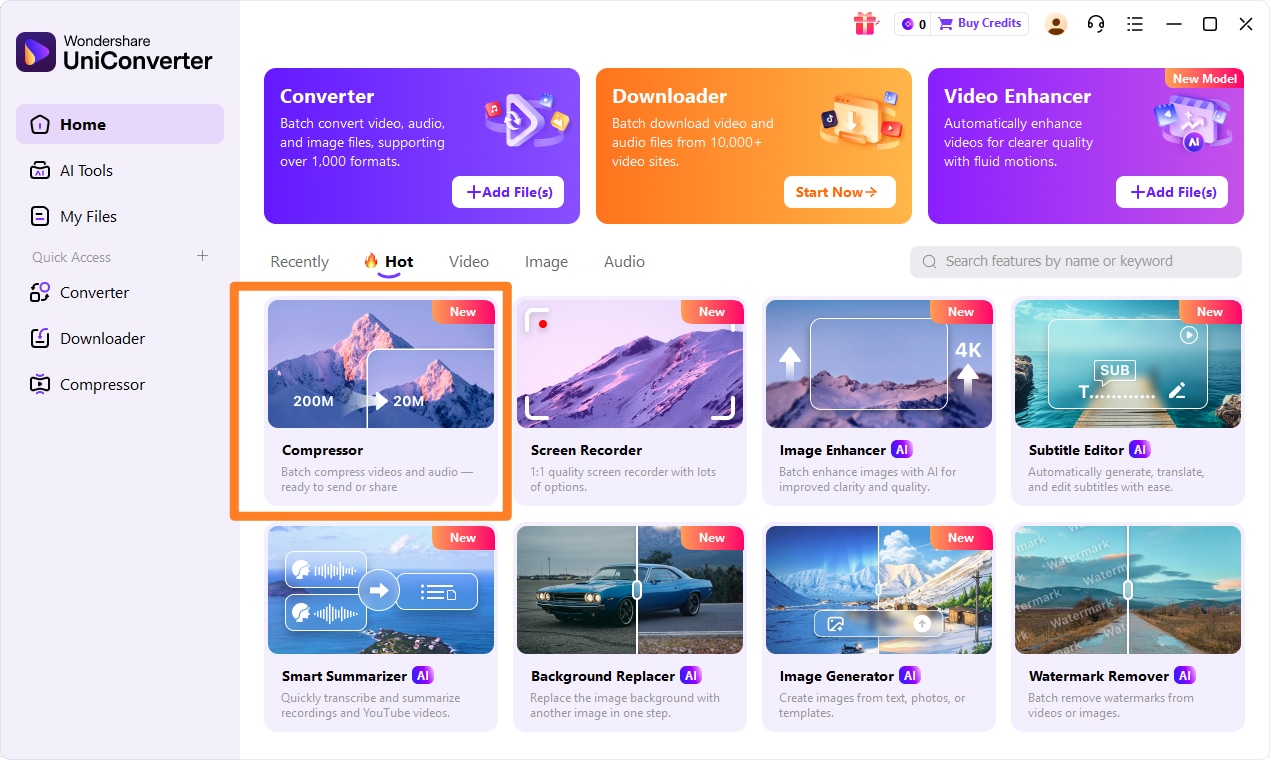
Step 1: Open UniConverter and Choose Compressor
Launch UniConverter on your computer. On the left sidebar, you'll find various tools. Click on the "Compressor" option to begin.
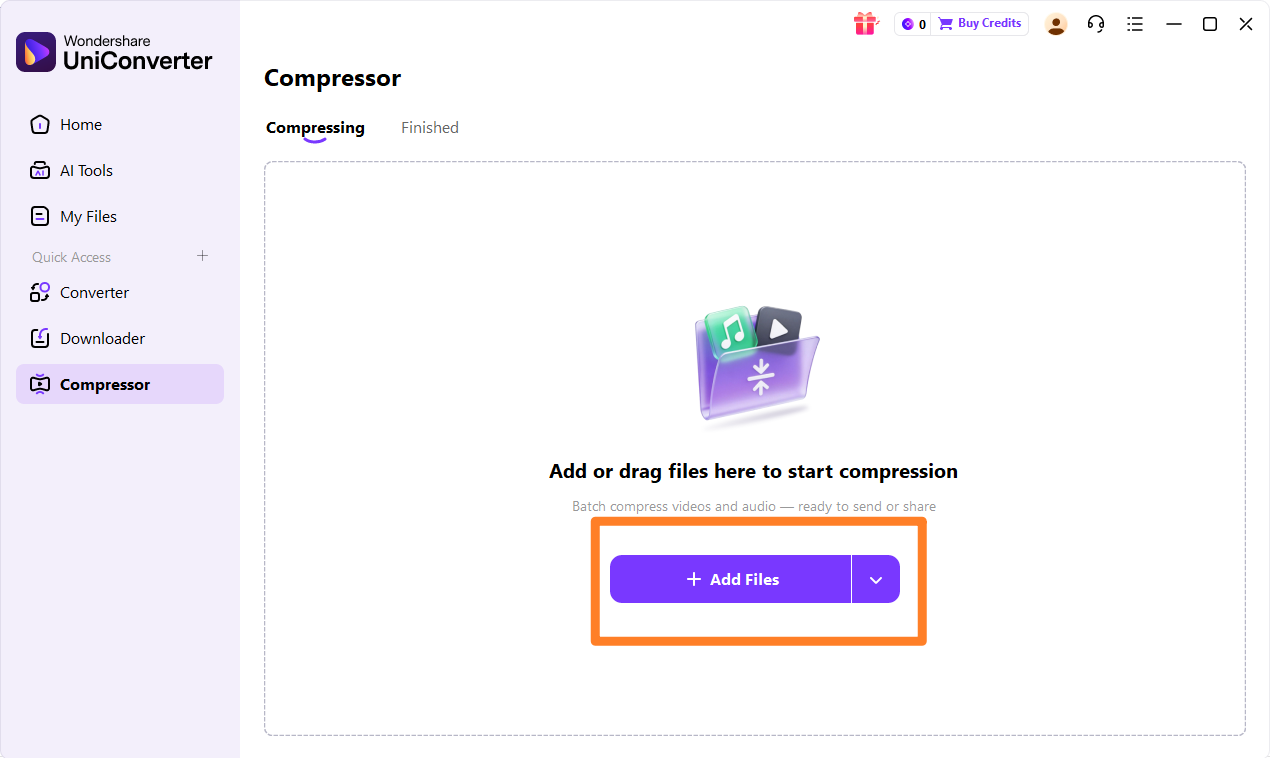
Step 2: Upload the Video, Audios or Images
Drag and drop your audio files directly into the UniConverter window, or click "Add Files" to browse and select the audio you want to compress.
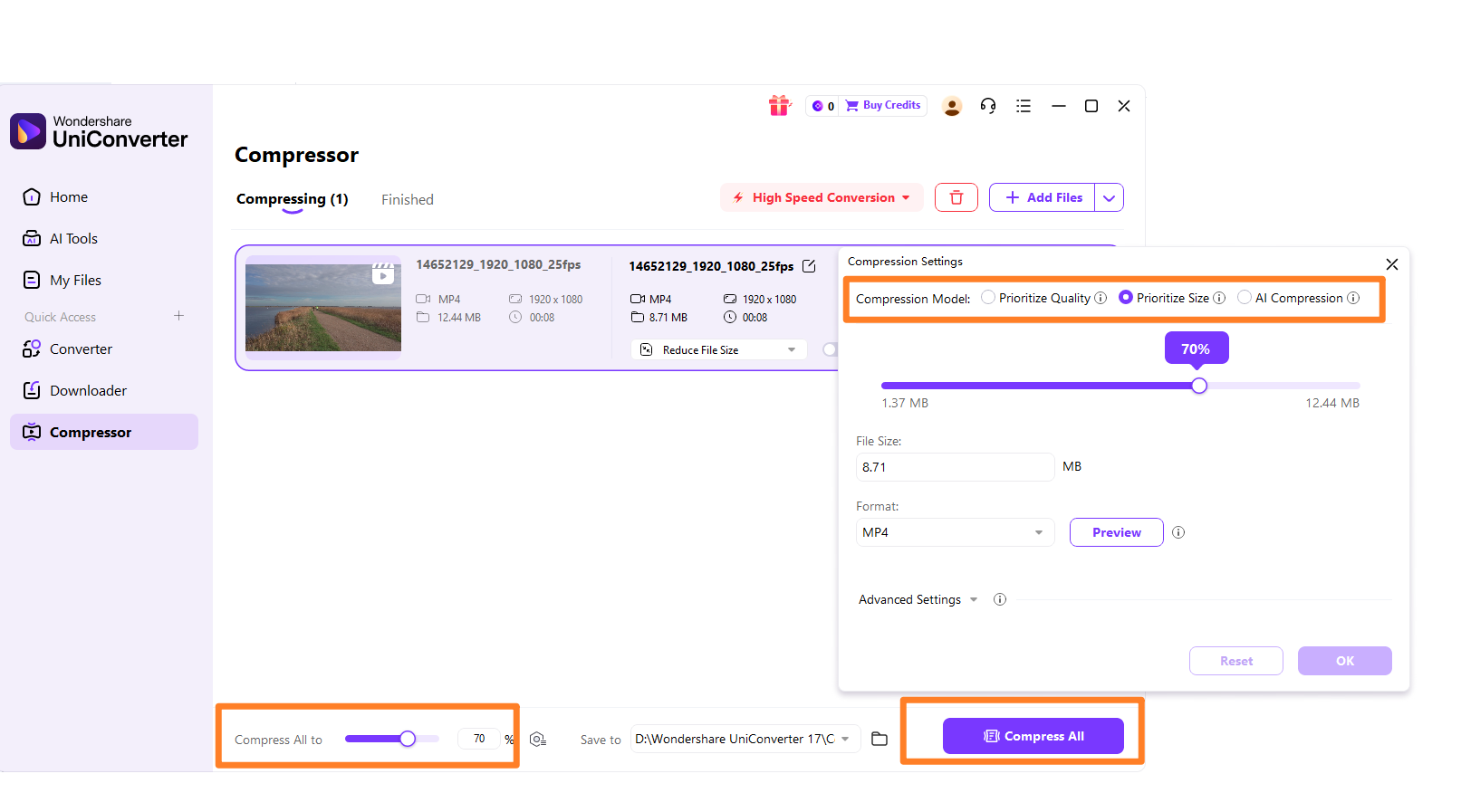
Step 3: Choose Required Parameters
Once your files are loaded, you can adjust the compression settings. Choose your desired output format, quality, and file size. UniConverter provides presets or allows for custom adjustments.
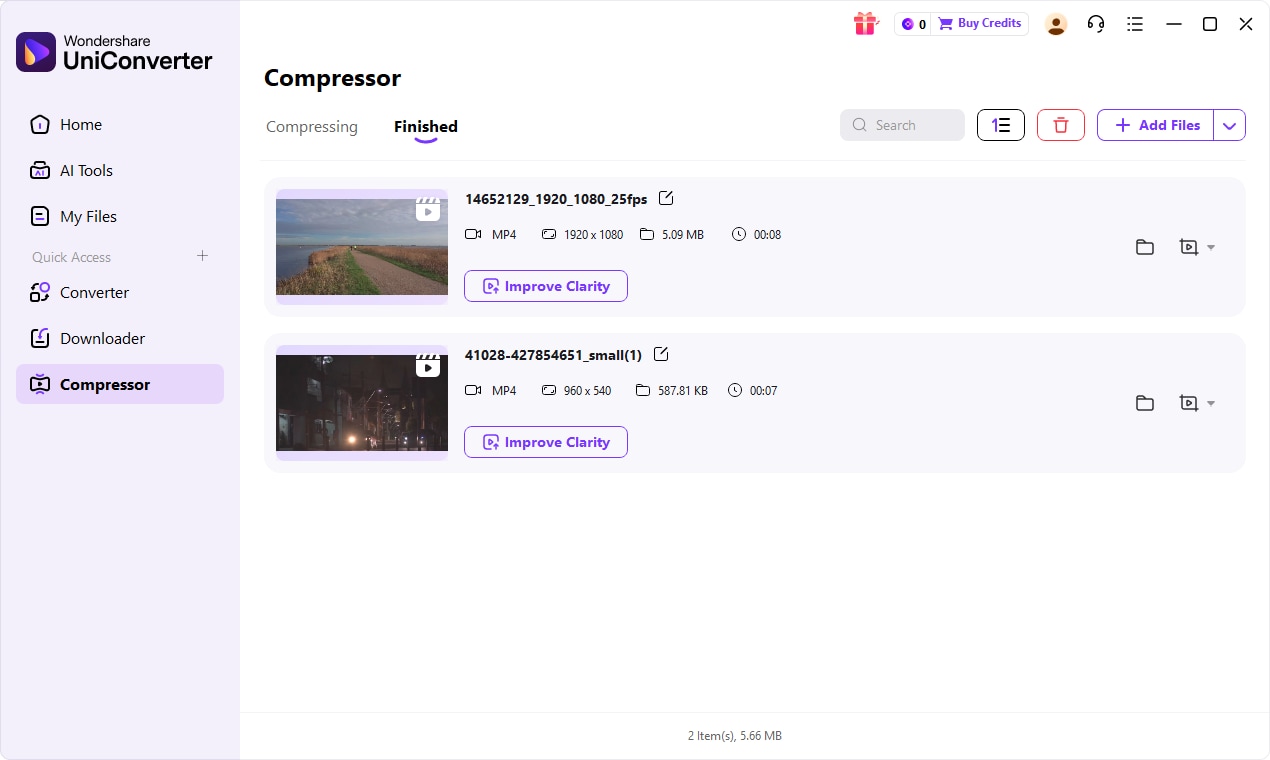
Step 4: Save the Compressed File
After configuring your settings, click the "Compress" button. UniConverter will process your files, and you can then save the optimized audio to your desired location.

Seeking a Better Alternative to Freemake Audio Converter?
Part 7: Conclusion
After exploring Freemake Audio Converter & Audio Compressor review, it's clear that it serves a specific niche. For casual users who need a straightforward, free tool for basic audio conversions and simple compression, it can be a convenient option. Its intuitive interface and batch processing capabilities are definite advantages for quick tasks like preparing music for mobile devices. However, the potential for bundled adware, limited advanced features, and privacy concerns are significant drawbacks that I always weigh carefully. For anyone requiring more precise control over audio parameters, a guarantee of no unwanted software, or dedicated customer support, alternatives like Audacity or UniConverter offer a superior experience. Ultimately, my recommendation is to use Freemake with caution, always opting for custom installations to avoid bloatware. For professional use, privacy-conscious individuals, or those who prioritize a clean, feature-rich experience, investing in a more robust and regularly updated solution is undoubtedly the better choice.
Part 8: FAQs
-
1. Is Freemake Audio Converter & Audio Compressor free to use?
Yes, it offers a free version, but I've found it often comes with limitations or bundled software during installation, so I always proceed with caution.
-
2. Can Freemake Audio Converter & Audio Compressor compress audio without losing quality?
Lossless compression is possible for certain formats, but most compression involves some degree of quality reduction. If I need truly lossless compression, I usually look for specific tools designed for that purpose, or use UniConverter which offers near-lossless options.
-
3. Are there any privacy concerns with using Freemake products?
Some users, including myself, have reported concerns regarding data collection and the bundling of third-party software. It's always wise to review their privacy policy and be vigilant during installation.
-
4. What are the best alternatives to Freemake Audio Converter & Audio Compressor?
UniConverter, Audacity, and HandBrake are popular alternatives depending on your specific needs. UniConverter is great for an all-in-one solution without ads, while Audacity offers powerful editing for free.
-
5. How do I avoid installing unwanted software with Freemake?
I always choose "Custom Installation" and carefully deselect any bundled offers or additional software during the setup process. It's crucial to read every prompt carefully to avoid unwanted installations.
