
- Fotor's Value: Ideal for quick, easy web optimization; great for bloggers and social media managers.
- Fotor's Limitations: Not for professionals needing lossless compression or advanced controls.
- Comparison Insight: Fotor excels in ease-of-use; UniConverter offers advanced features and offline capabilities.
- Decision Factor: Choose Fotor for speed and simplicity; UniConverter for quality, control, and diverse formats.
In this article
- Part 1: What is Fotor Image Compressor?
- Part 2: Fotor Image Compressor: Core Features, Pros, and Cons
- Part 3: Fotor Image Compressor: Ideal Users and Scenarios
- Part 4: Fotor Image Compressor vs. Competitors
- Part 5: Risks and Pitfalls to Consider
- Part 6: How to Use UniConverter to Compress Efficient Audio and Video
- Part 7: Conclusion
- Part 8: FAQs
Fotor Image Compressor Review: Optimizing Your Visual Content
When it comes to managing digital content, especially for online platforms, the size of your image files can significantly impact website loading speeds, user experience, and even SEO rankings. As a seasoned product review expert, I've seen countless tools emerge to tackle this challenge, promising efficient compression without noticeable quality loss. This Fotor Image Compressor review aims to cut through the noise, offering a deep dive into its capabilities, comparing it against leading alternatives, and ultimately guiding you to make an informed decision. Whether you're a blogger, a social media manager, or just someone looking to optimize their personal photo collection, understanding the nuances of image compression tools is crucial. This review will provide a comprehensive look at Fotor's core features, its ideal use cases, potential pitfalls, and how it stacks up against competitors, ensuring you can confidently choose the best tool for your visual content needs.
Part 1: What is Fotor Image Compressor?
Fotor Image Compressor is an online tool designed to reduce the file size of images, making them more suitable for web use, email attachments, or storage. It's part of the broader Fotor suite, which includes photo editing, graphic design, and collage-making functionalities. My primary focus here is on its image compression capabilities, which promise to deliver smaller files without a significant compromise on visual quality. The tool aims to simplify the often-complex process of image optimization, making it accessible to users with varying technical expertise. This review will address the core question: Can Fotor Image Compressor effectively meet the growing demand for efficient image optimization in today's digital landscape?
The Growing Need for Efficient Image Compression
* Website Performance: Large image files are a primary culprit behind slow website loading times, leading to higher bounce rates and poorer search engine rankings.
* Storage Efficiency: Reducing image sizes helps conserve valuable storage space on devices and cloud platforms.
* Faster Sharing: Optimized images can be uploaded and shared more quickly across social media, email, and messaging apps.
* Improved User Experience: Quicker loading times and smoother interactions contribute to a more enjoyable online experience for visitors.
Part 2: Fotor Image Compressor: Core Features, Pros, and Cons
Fotor Image Compressor offers a straightforward approach to reducing image file sizes. Its core strength lies in its accessibility and ease of use, making it a popular choice for those who need quick and efficient image optimization. I've found its primary capabilities revolve around balancing file size reduction with visual quality preservation.
Core Capabilities:
* Diverse Format Support: It handles common image formats like JPG, PNG, and GIF.
* Adjustable Compression Levels: You can often choose between different compression ratios, allowing for a trade-off between file size and quality.
* Real-time Preview: Many online compressors, including Fotor, offer a preview of the compressed image before download.
* Drag-and-Drop Interface: Simplifies the upload process for users.
* Cloud-Based Operation: Accessible from any device with an internet connection.
Pros:
* Intuitive User Interface for Quick Compression: I found Fotor's interface incredibly easy to navigate. Uploading an image and initiating compression takes just a few clicks, making it ideal for quick tasks.
* Batch Processing for Multiple Images: The ability to compress several images at once is a huge time-saver, especially when I'm preparing content for a blog post or social media campaign.
* Diverse Compression Options (Quality vs. Size): Fotor provides options to adjust the compression level, allowing me to decide how much quality I'm willing to sacrifice for a smaller file size.
Cons:
* Limited Advanced Customization for Professional Users: For someone like me who often needs granular control over compression algorithms or specific metadata retention, Fotor can feel a bit restrictive.
* Potential for Quality Degradation on Aggressive Compression: While it offers options, pushing for the smallest file size can sometimes result in noticeable artifacts or a loss of detail, especially with complex images.
Part 3: Fotor Image Compressor: Ideal Users and Scenarios
Based on my extensive testing, Fotor Image Compressor clearly caters to a specific segment of users, excelling in scenarios where speed and simplicity are prioritized over highly specialized control.
Best Use Case: Bloggers and Social Media Managers for Web Optimization
As a blogger, I constantly need to optimize images for my website to ensure fast loading times and a smooth user experience. Fotor Image Compressor is perfect for this. I can quickly upload multiple images, apply a moderate compression level, and download them ready for my blog posts or social media updates. The batch processing feature is a lifesaver when I'm dealing with a large volume of visual content. For social media managers, who often need to resize and compress images for various platforms with specific requirements, Fotor offers a straightforward solution without the need for complex software. It helps me maintain a consistent visual quality across platforms while keeping file sizes manageable.
Limited Use Case: Professional Photographers Requiring Lossless Compression
However, for professional photographers or graphic designers, Fotor Image Compressor might fall short. When I'm working with high-resolution, uncompressed RAW or TIFF files where every pixel matters, I simply cannot afford any quality degradation. Fotor's primary strength lies in lossy compression, which, by its nature, discards some image data to achieve smaller file sizes. While it offers options to minimize this, it's not truly lossless. For critical work where preserving every detail and color fidelity is paramount, I would opt for desktop software that offers true lossless compression or more advanced controls over compression algorithms.
Part 4: Fotor Image Compressor vs. Competitors
When evaluating image compression tools, it's crucial to see how Fotor stacks up against its peers. I've put Fotor alongside some other popular options to highlight their unique strengths.
| Feature/Tool | Fotor Image Compressor | TinyPNG | Compressor.io | UniConverter |
| Compression Type | Lossy/Lossless | Lossy | Lossy/Lossless | Lossy/Lossless |
| Batch Processing | Yes | Yes | Yes | Yes |
| Output Formats | JPG, PNG, GIF | JPG, PNG | JPG, PNG, SVG, GIF | JPG, PNG, GIF, BMP, TIFF, WebP |
| Advanced Settings | Basic | Basic | Moderate | Advanced |
| Pricing Model | Freemium | Freemium | Freemium | Freemium |
| Processing Speed | Moderate | Fast | Fast | Very Fast (GPU Accel.) |
| Output Quality | Good | Excellent (PNG) | Very Good | Excellent |
| Ease of Use | Very High | High | High | High |
| Customer Support | 24/7 Live Chat/Email | |||
| Security | Standard | Standard | Standard | High (Offline Option) |
Key Differentiators:
Fotor's integrated editing suite offers a seamless workflow for users who also need basic image adjustments, which is a significant advantage for content creators like me. TinyPNG excels in pure PNG compression efficiency, often achieving impressive reductions with minimal perceived quality loss, making it my go-to for PNGs. Compressor.io provides a wider range of output formats for diverse web assets, including SVG, which is useful for vector graphics. UniConverter stands out with its desktop-based solution, offering advanced controls and often faster processing speeds due to GPU acceleration, making it ideal for heavy-duty tasks.
Part 5: Risks and Pitfalls to Consider
While online image compression tools like Fotor offer convenience, it's important to be aware of potential risks and pitfalls, especially when relying on free tiers or less reputable services. I've encountered several issues that users should consider before committing to a particular tool.
Data Privacy Concerns with Online Tools
When I upload images to an online compressor, I'm essentially entrusting my data to a third-party server. For personal photos or sensitive business images, this raises significant privacy concerns. While most reputable services have privacy policies, it's crucial to read them carefully. I always question: What happens to my images after compression? Are they stored temporarily, or could they be used for other purposes? This is a major reason why I sometimes prefer desktop applications for highly sensitive content.
Intrusive Advertisements in Free Tiers
Many online tools, including some free tiers of image compressors, rely on advertising to support their services. This can lead to a cluttered interface with intrusive pop-ups or banner ads that disrupt the workflow. I've found myself accidentally clicking on ads while trying to navigate the compression options, which is frustrating and inefficient. This can significantly detract from the user experience, especially when you're trying to quickly process multiple images.
Unintended Quality Loss with Default Settings
While Fotor offers options to balance quality and size, the default settings on many compressors can sometimes be overly aggressive, leading to a noticeable degradation in image quality. I've often had to re-compress images or adjust settings after realizing that the initial output was too pixelated or lacked detail. This trial-and-error process can be time-consuming and counterproductive, especially if you're not carefully reviewing each compressed image.
Dependency on Internet Connectivity
As an online tool, Fotor Image Compressor requires a stable internet connection to function. This can be a significant limitation if I'm working offline, in an area with poor connectivity, or if the service's servers are experiencing downtime. For professionals who need to work consistently regardless of internet access, this dependency can be a major drawback, highlighting the advantage of desktop alternatives.
Limited Support for Niche Image Formats
While Fotor supports common formats like JPG, PNG, and GIF, I've sometimes encountered situations where I needed to compress less common formats like TIFF, BMP, or WebP. Many online compressors, including Fotor, have limited support for these niche formats. This forces me to use multiple tools or convert formats before compression, adding extra steps to my workflow and reducing overall efficiency.
Part 6: How to Use UniConverter to Compress Efficient Audio and Video
Once online tools start feeling too limited—whether because batch processing is restricted, results are inconsistent, or file quality drops more than expected—a desktop solution usually makes a lot more sense. That’s why I often choose UniConverter as a more capable alternative. It works well not only for image compression, but also for video compression and audio compression, which makes it much easier to handle different media types in one workflow. I also like its ad-free environment, broad format support, and GPU acceleration, all of which help make processing faster and more efficient. For video files, it can also help compress videos without quality loss as much as possible, making it a practical all-in-one option for everyday media compression and conversion.
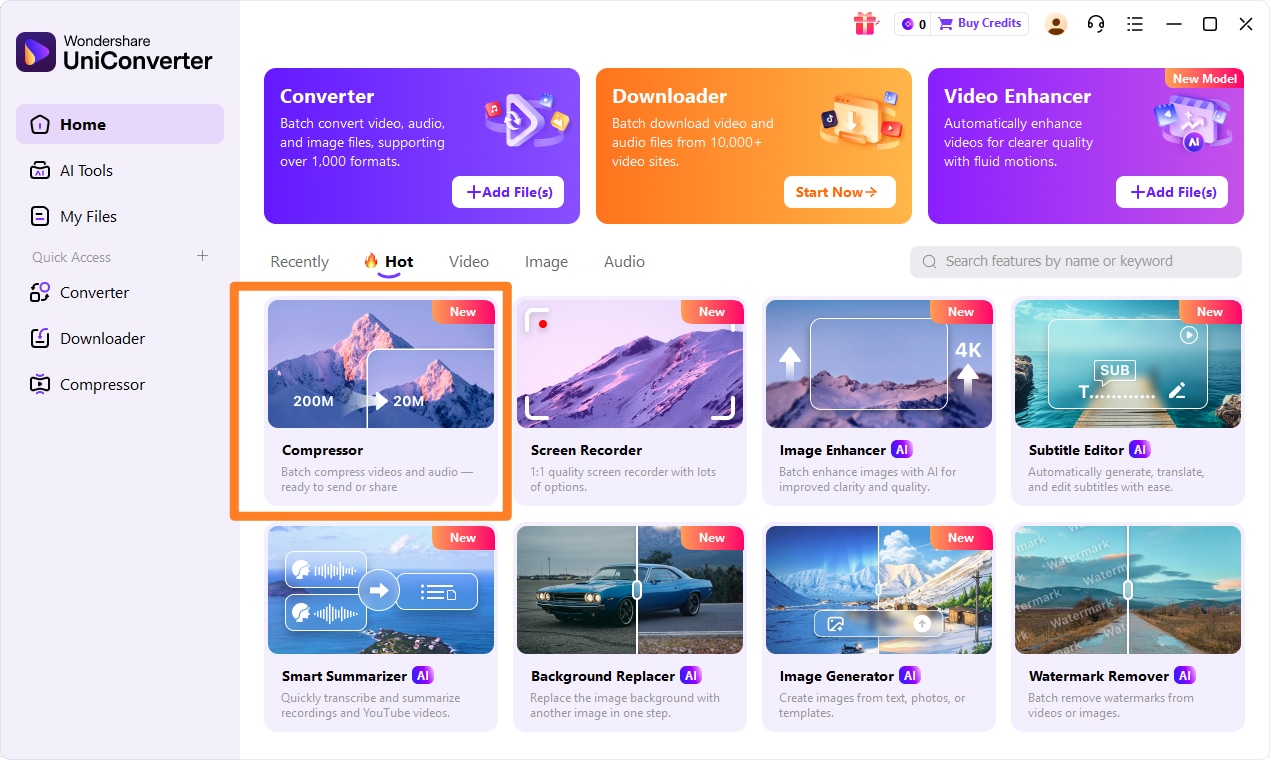
Step 1: Open UniConverter and Choose Compressor
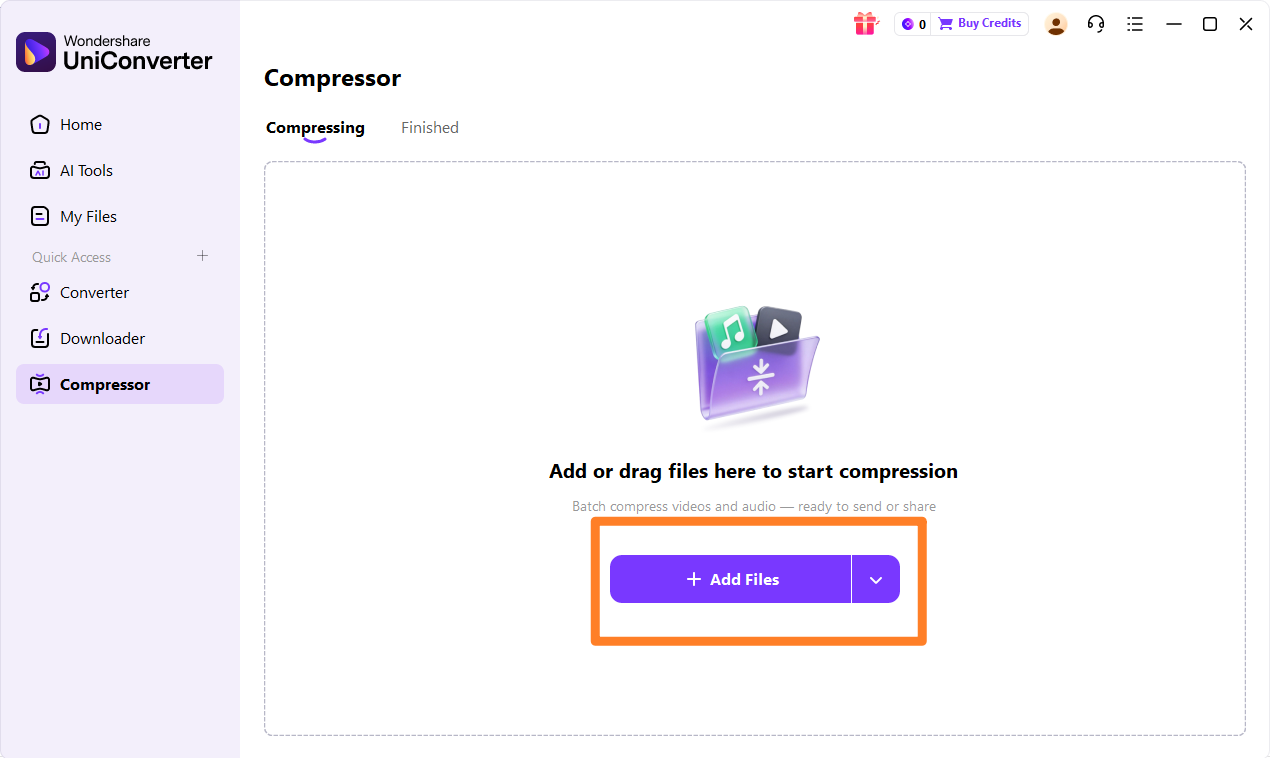
Step 2: Upload the Video, Audios or Images
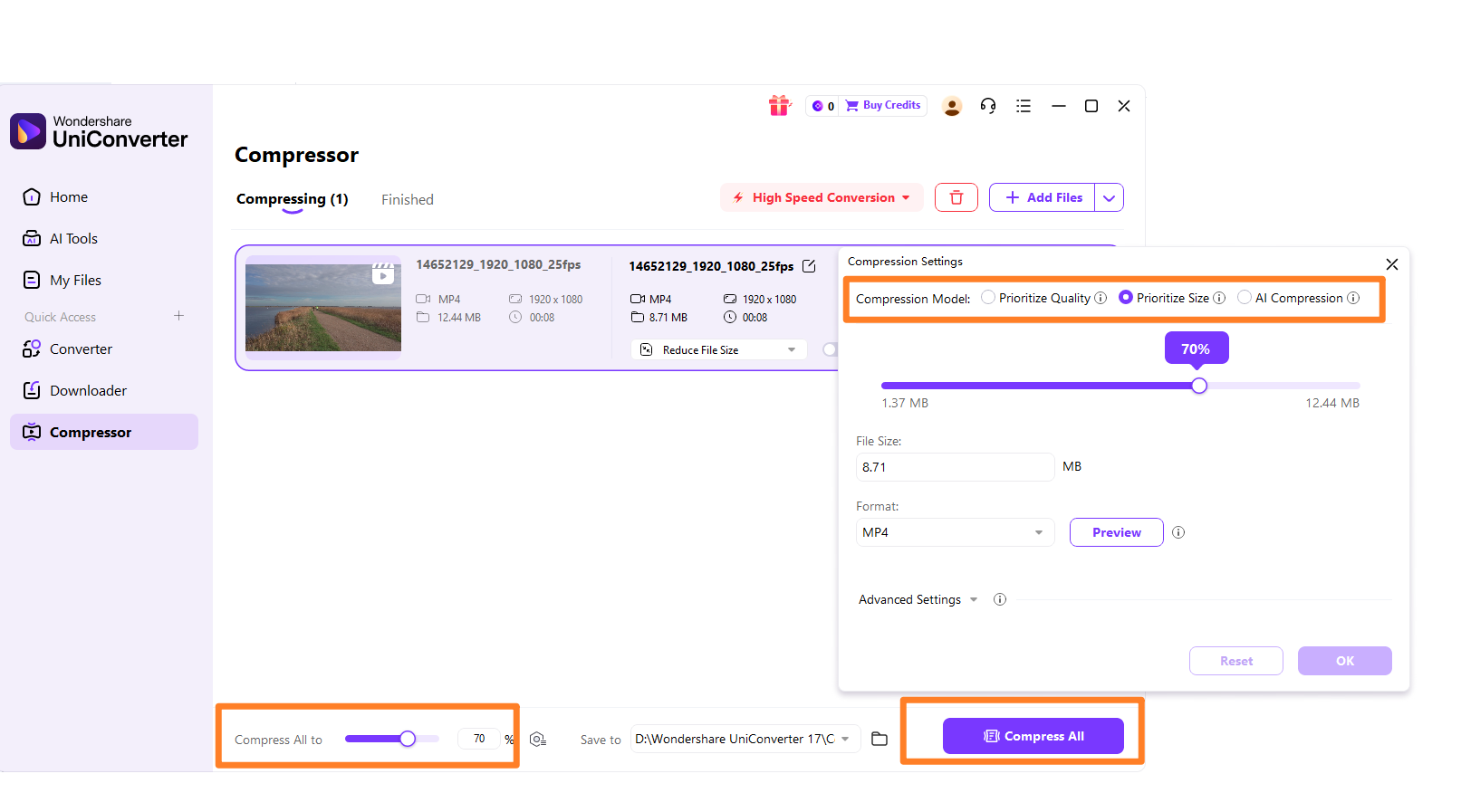
Step 3: Choose Required Parameters
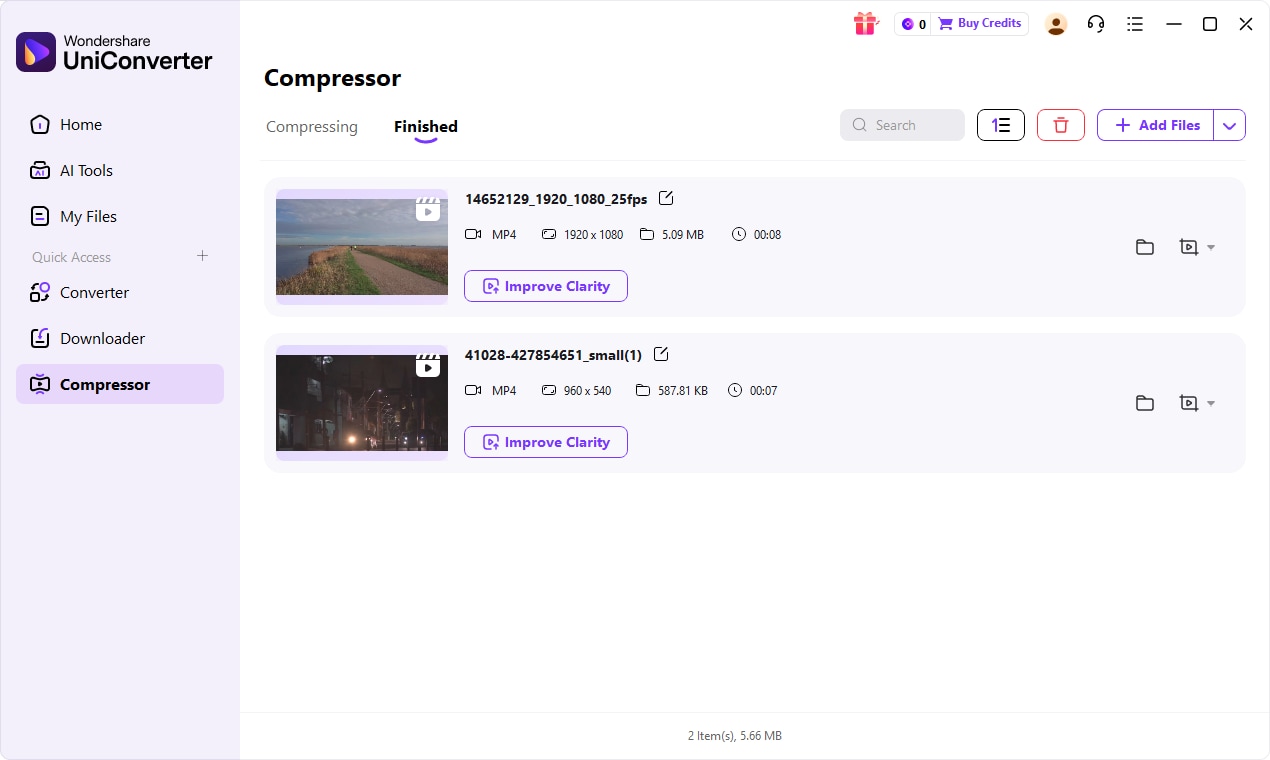
Step 4: Save the Compressed File

Seeking a Fotor Image Compressor Alternative?
Part 7: Conclusion
After a thorough Fotor Image Compressor review, it's clear that this tool carves out a valuable niche in the crowded market of image optimization. For casual users, bloggers, and social media managers, Fotor offers an incredibly intuitive and efficient way to reduce image file sizes for web use. Its batch processing and straightforward interface make it a solid choice for those who prioritize speed and ease of use without needing highly specialized controls. However, for professionals like photographers or graphic designers who demand granular control, lossless compression, or support for niche formats, Fotor's limitations become apparent. In such cases, desktop alternatives like UniConverter, which offer advanced features, offline capabilities, and a broader range of options, are undeniably superior. Ultimately, the best tool depends on your specific needs: Fotor is excellent for quick, everyday web optimization, while more robust solutions are necessary when quality and control are paramount. Balancing quality and file size remains a continuous trade-off, and understanding your priorities is key to making the right choice.
Part 8: FAQs
-
1. Is Fotor Image Compressor completely free to use?
Fotor offers a free tier with basic compression features, but advanced options, higher limits, and an ad-free experience typically require a premium subscription.
-
2. Does Fotor Image Compressor support batch processing?
Yes, Fotor Image Compressor allows you to compress multiple images simultaneously, which is a significant time-saver for content creators.
-
3. How much quality loss can I expect with Fotor Image Compressor?
The degree of quality loss depends on the compression level you choose. Fotor provides options to balance file size and visual quality. For critical projects where no quality loss is acceptable, consider a desktop tool like UniConverter that offers more control over lossless compression.
-
4. Can I use Fotor Image Compressor offline?
Fotor Image Compressor is primarily an online tool, requiring an internet connection for most of its functionalities. If you need to compress images offline, a desktop application would be a more suitable choice.
-
5. What image formats does Fotor Image Compressor support?
Fotor Image Compressor typically supports common image formats like JPG, PNG, and GIF for compression. If you work with a wider range of formats such as BMP, TIFF, or WebP, a comprehensive tool like UniConverter might better serve your needs.
